Cellular communication system for reducing the effects of radiation emitted from cellular phone antennas
US20080287161A1
2008-11-20
12/064,281
2006-08-21
✅ Patent granted
US 9,037,191 B2
2015-05-19
WO; PCT/IL2006/000971; 20060821
WO; WO2007/023490; 20070301
Olumide T Ajibade Akonai
Merchant & Gould P.C.
2030-03-22
Abstract:
A cellular communication system includes a cellphone interface unit that includes a transceiver for low power RF communication; a microphone; an earphone; a display; a keypad; a hub device that includes a transceiver for low power RF communication; an antenna for high power RF communication and circuitry and appropriate software components for establishing a communication channel between the hub and a base station.
Applicant:
Interested in similar patents?
Get notified when new applications in this technology area are published.
Classification:
H04W48/20 » CPC main
Access restriction ; Network selection; Access point selection Selecting an access point
H04B7/15507 » CPC further
Radio transmission systems, i.e. using radiation field; Relay systems; Active relay systems; Ground-based stations Relay station based processing for cell extension or control of coverage area,
H04M1/72412 » CPC further
Substation equipment, e.g. for use by subscribers; Mobile telephones; Cordless telephones, i.e. devices for establishing wireless links to base stations without route selection; User interfaces specially adapted for cordless or mobile telephones with means for local support of applications that increase the functionality by interfacing with external accessories using two-way short-range wireless interfaces
H04W4/80 » CPC further
Services specially adapted for wireless communication networks; Facilities therefor Services using short range communication, e.g. near-field communication [NFC], radio-frequency identification [RFID] or low energy communication
H04W8/005 » CPC further
Network data management Discovery of network devices, e.g. terminals
H04W76/10 » CPC further
Connection management Connection setup
H04W88/06 » CPC further
Devices specially adapted for wireless communication networks, e.g. terminals, base stations or access point devices; Terminal devices adapted for operation in multiple networks or having at least two operational modes , e.g. multi-mode terminals
Y02B70/30 » CPC further
Technologies for an efficient end-user side electric power management and consumption Systems integrating technologies related to power network operation and communication or information technologies for improving the carbon footprint of the management of residential or tertiary loads, i.e. smart grids as climate change mitigation technology in the buildings sector, including also the last stages of power distribution and the control, monitoring or operating management systems at local level
Y02B70/30 » CPC further
Technologies for an efficient end-user side electric power management and consumption Systems integrating technologies related to power network operation and communication or information technologies for improving the carbon footprint of the management of residential or tertiary loads, i.e. smart grids as climate change mitigation technology in the buildings sector, including also the last stages of power distribution and the control, monitoring or operating management systems at local level
Y02D30/70 » CPC further
Reducing energy consumption in communication networks in wireless communication networks
Y02D30/70 » CPC further
Reducing energy consumption in communication networks in wireless communication networks
H04M1/00 IPC
Substation equipment, e.g. for use by subscribers
H04B1/3838 » CPC main
Details of transmission systems, not covered by a single one of groups - ; Details of transmission systems not characterised by the medium used for transmission; Transceivers, i.e. devices in which transmitter and receiver form a structural unit and in which at least one part is used for functions of transmitting and receiving; Portable transceivers; Hand-held transceivers Arrangements for reducing RF exposure to the user, e.g. by changing the shape of the transceiver while in use
H04M1/6066 » CPC further
Substation equipment, e.g. for use by subscribers including speech amplifiers for providing handsfree use or a loudspeaker mode in telephone sets; Portable telephones adapted for handsfree use involving the use of a headset accessory device connected to the portable telephone including a wireless connection
H04M2250/02 » CPC further
Details of telephonic subscriber devices including a Bluetooth interface
H04B1/38 IPC
Details of transmission systems, not covered by a single one of groups - ; Details of transmission systems not characterised by the medium used for transmission Transceivers, i.e. devices in which transmitter and receiver form a structural unit and in which at least one part is used for functions of transmitting and receiving
H04M1/725 IPC
Substation equipment, e.g. for use by subscribers; Mobile telephones; Cordless telephones, i.e. devices for establishing wireless links to base stations without route selection Cordless telephones
H04W88/02 » CPC further
Devices specially adapted for wireless communication networks, e.g. terminals, base stations or access point devices Terminal devices
H04M1/60 IPC
Substation equipment, e.g. for use by subscribers including speech amplifiers
H04W84/12 » CPC further
Network topologies; Hierarchically pre-organised networks, e.g. paging networks, cellular networks, WLAN [Wireless Local Area Network] or WLL [Wireless Local Loop]; Small scale networks; Flat hierarchical networks WLAN [Wireless Local Area Networks]
Description
FIELD OF THE INVENTION
The present invention relates in general to cellular phones. In particular, the present invention relates to a cellular communication system for reducing the effects of radiation emitted from cellular phone antennas.
BACKGROUND OF THE INVENTION
Over the passed decade or so, people have become more and more accustomed to using and relying on cellular phones as a way of keeping in communication with others. As technology has advanced, cellular phones have become more than mere portable telephones. Today, cellular phones are used for a wide range of functions, including as an organizer, a video camera and a Web browser. Cellular phones generally may also store the contact information, including phone numbers, addresses, etc. of all of a person's friends, relatives and business associates. It is obvious, therefore, that such a device is of extreme importance to its owner. Loss or theft of one's cellular phone may mean the loss of irreplaceable information.
Constant use of cellular phones means frequently removing and replacing the device to and from its storage location, e.g. one's pocket, one's belt or one's purse or bag. Sometimes, for instance, when expecting to receive or to make phone calls, a user may carry the cellular phone in his hand for long periods of time, instead of having to remove and replace the device to and from its storage location. This continual handling of the cellular phone can result in temporarily setting the cellular phone down, e.g. on the table in a restaurant, at a cash register in the supermarket, etc., and not remembering to take it when leaving the location. This is due to the user thinking, consciously or subconsciously, that the cellular phone was in its storage location, when, in fact, it was not.
A dishonest person who finds, or a thief who steals, a cellular phone that does not belong to him, may use the phone to make calls, which would be charged to the cellular phone's owner. He may even utilize the information stored in the phone, for unlawful or damaging purposes. Thus, the owner not only has to deal with replacing all of the lost information stored in his phone, he must additionally deal with any costs incurred by the criminal who obtained and made use of the phone.
Many studies have shown that constant exposure to the electromagnetic radio frequency (RF) emissions from cellular phone antennas has been linked to cancer, brain tumors, Alzheimer's disease, and other undesirable ailments. Thus, although people may enjoy communicating using their cellular phones, it is preferable to keep the cellular phone antennas as far away from them as possible. To this end, a wide range of solutions have already been provided. One, very prevalent solution, is to provide an external earpiece and microphone that are connected via a wire to the cellular phone. This device comes in various forms, ranging from an entire headset comprising earphones and a microphone for the user to wear over his head, to a tiny earpiece that the user may lodge in his ear, having a microphone that is either connected to the earpiece, or situated along the wire. During the conversation, the user may, therefore, hold the cellular phone at a distance from his body, or, at least from his head, in order to minimize exposure to the dangerous radiation.
However, these solutions have drawbacks associated with them. The headset is a bulky accessory that is not convenient to carry around, and is awkward and uncomfortable to wear. Although an earpiece is more compact, many people find that it is uncomfortable to have an earpiece lodged in their ear. Additionally, earpieces often provide poor sound quality for the user.
An additional disadvantage associated with both of the above-mentioned solutions is that both the headset and the earpiece require a wired connection to the cellular phone. The wire often gets tangled when in storage in one's pocket or bag, as well as during use. Moreover, if one mistakenly pulls the cellular phone too far away from the headset or earpiece, the wire may detach, or the earpiece may be pulled out of the user's ear, thereby loosing the connection in the middle of a phone call until the wire or earpiece is properly replaced.
In order to solve the problems related to the wired connection, a relatively recently developed technology called Bluetooth may be utilized. Bluetooth is a wireless radio standard primarily designed for low power consumption, with a short range transceiver microchip in each communicating device. A Bluetooth chip is installed in the cellular phone and in the wireless earpiece. The user wears the earpiece (with microphone), which communicates with the cellular phone that may be situated at a distance from the user, and the cellular phone communicates with the nearest base station. Using Bluetooth, one still requires additional earpiece and microphone accessories, but not any connecting wires.
Nevertheless, some cell phone users prefer to hold the phone directly to their ear, without using unpleasant earphones.
US 2003/0232597 discloses a bluetooth cellular phone wherein the antenna is removed and replaced by a short range low energy wireless communication device, such as a Bluetooth chip. Instead of communicating with the cellular company's nearest base station, the cellular phone of US 2003/0232597 communicates with a proxy device, which is a transducer that transfers information to and from the cellular phone through another Bluetooth chip. The proxy devices also communicates, through a normal cellular antenna, with the cellular company's nearest cell or cells.
The above-mentioned solutions provide means for a cellular phone user to reduce his exposure to RF radiation by dividing the cellular phone into two devices, one with the antenna, and another with all of the remaining standard cellular phone features. Nevertheless, no solution has been provided for a user who prefers to hold his cellular phone during a phone call over using an earpiece, and who wants to avoid inconveniences involved with loss or theft of the device, as described above.
It is therefore an object of the present invention to provide a cellular communication system for reducing the inconveniences involved with loss or theft of a cellular phone.
It is an additional object of the present invention to provide a cellular communication system for reducing exposure to radiation emitted from a cellular phone antenna.
Additional objects and advantages of the present invention shall become apparent as the description proceeds.
SUMMARY OF THE INVENTION
The present invention relates to a cellular communication system comprising:
-
- a. A cell phone interface unit comprising:
- i. a transceiver for low power RF communication;
- ii. a microphone;
- iii. an earphone;
- iv. a display;
- v. a keypad;
- b. a hub device comprising at least:
- i. a transceiver for low power RF communication;
- ii. an antenna for high power RF communication;
- iii. circuitry and appropriate software components for establishing a communication channel between the hub and a base station.
- a. A cell phone interface unit comprising:
The transceiver may be a Bluetooth chip.
Preferably, the interface device is in the form of a cellular phone.
Preferably, the circuitry and software components comprise:
-
- a. a Flash memory chip;
- b. an ROM chip;
- c. an RF and power section;
- d. RF amplifiers;
- e. a SIM card.
The low power RF communication of the system takes place between the cell phone and the hub device.
The high power RF communication of the system takes place between the hub device and a cellular base station.
Optionally, recharging of the interface unit and the hub device may be chosen from any one of the group consisting of:
-
- a. individually; and,
- b. as a unit.
Optionally, the interface unit further comprises a secondary identification card for providing a unique identification code for authenticating communication with the hub device.
Additionally, any one of the interface unit and the hub device may comprise an additional port chosen from any one of the group consisting of:
-
- a. USB;
- b. fire wire;
- c. audio in/out;
- d. video in/out;
- e. headphone;
- f. microphone; and,
- g. any combination thereof.
BRIEF DESCRIPTION OF THE DRAWINGS
In the drawings:
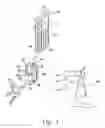
FIG. 1 illustrates a preferred embodiment of the present invention, schematically showing the cell phone and wireless hub device of the present invention, in communication with each other as well as the hub device in communication with a cellular base station;
FIG. 2 illustrates an additional embodiment of the present invention, wherein a secondary identification card is provided in the cell phone for transmitting a unique identification code to the hub device; and
FIG. 3 illustrates the cell phone and hub device capable of being recharged while joined to each other.
The present invention is defined by the claims, the contents of which are to be read as included within the disclosure of the specification, and will now be described by way of example with reference to the accompanying figures.
DETAILED DESCRIPTION OF THE PREFERRED EMBODIMENTS
Cellular phones typically contain information that is valuable to the owner, including contact information, memos, or even entire computer files. Loss or theft of the cellular phone, therefore, often means loss of all of the information stored therein. The present invention relates to a cellular communication system comprising a cellular phone interface that communicates with a hub device, which, in turn, communicates with a cellular base station. The hub device contains the cellular antenna, as well as circuitry and appropriate software components for establishing a communication channel between the hub and a base station, which, in conventional cellular phones, is found in the phone itself, and may be attached to a keychain, or stored in one's bag. Thus, if the cellular phone is lost or stolen, no valuable information is lost.
The term, “base station” as used herein refers to typically a tower but can be any station comprising at least one antenna mounted thereon, which emits RF electromagnetic radiation, and communicates with a cellular phone.
A preferred embodiment of the present invention, shown schematically in FIG. 1, comprises an interface, which, in this embodiment takes the form of a cellular phone (10), having a microphone (12), earphone (14), display (16), keypad (18) and a short range low energy wireless communication device, such as a Bluetooth transceiver (22). Wireless hub device (30) comprises the cellular phone's (10) antenna (34), circuitry and appropriate software components (not shown) for establishing a communication channel between hub (30) and a base station (50) and a Bluetooth transceiver (32). Hub (30) may be attached to a keychain (36) or necklace (not shown) for convenience.
The cell phone (10) circuitry and software components typically include the ROM and Flash memory chips, which provide storage for the phone's (10) operating system, and customizable features, such as the phone directory; the RF and power section, which handle power management and recharging; the RF amplifiers, which handle signals traveling to and from the antenna. Hub device (30) stores the System Identification Number (SID) and Mobile Identification Number (MIN) codes either in the internal memory, or on any identification chip or smartcard, such as a Subscriber Identification Module (SIM) card.
Cell phone (10) communicates with hub device (30) via Bluetooth low power RF transceiver (20), and hub device (30) transfers information to and from cell phone (10) via Bluetooth lower power RF transceiver (32), and to and from a cellular base station (50) via high power RF antenna (34). It should be noted that other methods of wireless communication, e.g. infrared, WiMax, and Wi-Fi can be employed with the present invention.
If cell phone (10) is lost or stolen, the owner does not loose any valuable information, as all valuable information is stored in hub device (30). Since hub device (30) is not required to be regularly removed and replaced to and from its storage location, as described above, the chances of loosing hub device (30) are much lower than that of loosing the cell phone (10) itself.
Additionally, and importantly, since the cell phone antenna is separated from the cell phone itself, the radiation that the user is exposed to is greatly reduced.
According to one embodiment of the present invention, hub device (30) is water proof.
According to another embodiment of the present invention, hub device (30) is enclosed by RF shielding material for allowing only directional electromagnetic radiation to exit the hub (30), and preventing multidirectional radiation.
Different embodiments of the invention can be provided having one or more of the following features available on either the phone, the hub device, or both:
-
- Expandable memory that allows for synchronization of the information entered on either the phone or hub to be stored in the memory of both devices, so that the loss of one of them does not mean the loss of valuable information such as lists of contacts, diary, etc.;
- Vibration option;
- Software, e.g. APPS, games, MP3, caller ID, ringtones, wed browser, MMS/MME;
- Camera; and
- FM radio.
Optionally, cellular phone (10) further comprises a secondary identification card (35), as shown in FIG. 2, such as a SIM card or identification chip for providing a unique identification code or personal identification number (PIN) that is required for authenticating communication with hub (30). The code may be automatically transmitted to hub (30), or the user may be prompted to input his PIN before dialing. Additional cellular phones (10n) may be provided with a unique identification card (35n) for enabling communication with a single hub (30). This feature allows multiple users to share information, such as video or audio data, games, etc., via hub (30). Additionally or alternatively, a secure communication channel may be provided, for instance, by sending encrypted signals.
Cell phone (10) and hub device (30) may be each rechargeable individually, as a stand-alone device, and/or they may be recharged as a unit, for example, as shown in FIG. 3, wherein charging plug (48) is removably connected to hub device (30), which, in turn, is connected to cell phone (10). Additionally, hub device (30) may be utilized to charge cell phone (10) or vice versa via an internal or external charging source. Hub device (30) may remain attached to cell phone (10) during non-use, and detached therefrom when using cell phone (10).
At least one additional memory card may be removably inserted to hub (30) for increasing the storage and/or memory capabilities of the system.
With reference to FIG. 1, cell phone (10) and/or hub device (30) may additionally comprise additional ports (58), (59), including USB, fire wire, audio in/out, video in/out, headphone, microphone, etc. for inserting external hardware components thereto, as well as appropriate control buttons (62) for performing desired operations.
If cell phone (10) is misplaced amongst one's belongings, by pressing a button on hub device (30), a signal is transmitted to cell phone (10), which, in turn, causes a beeping or ringing noise to be sounded from cell phone (10). A similar operation may be performed on cell phone (10) if hub device (30) is misplaced.
According to another embodiment of the present invention, each of the cellular phone (10) and hub device (30) is capable of communicating with other Bluetooth containing devices, such as a television or computer.
Optionally, hub device (30) additionally comprises a coupling mechanism such as a clip (60) for removably attaching to a belt, shirt or purse, or to any other convenient accessory.
While some embodiments of the invention have been described by way of illustration, it will be apparent that the invention can be carried into practice with many modifications, variations and adaptations, and with the use of numerous equivalents or alternative solutions that are within the scope of persons skilled in the art, without departing from the spirit of the invention or exceeding the scope of the claims.
Claims
1. A cellular communication system for a user, comprising:
a. A short-range phone interface unit comprising the following hardware:
i. a transceiver for low power for providing short-range wireless communication with a cellular hub device;
ii. a microphone;
iii. an earphone;
iv. a display;
v. a keypad;
vi. first circuitry and appropriate software for controlling the operation of said hardware and for establishing a short-range wireless communication channel to said hub device;
b. a cellular hub device comprising:
i. a transceiver for establishing short-range wireless communication with said phone interface unit;
ii. an antenna for transmitting and receiving high power RF communication signals to and from a cellular base station;
iii. second circuitry and appropriate software for allowing communication betweens said user and said base station by establishing a high power RF communication channel between said cellular hub and said base station and short-range wireless communication channel to said phone interface unit;
iv. a user identification module; and
v. a memory for storing valuable information for said user.
2. A system according to claim 1, wherein the transceiver is a Bluetooth chip.
3. A system according to claim 1, wherein the short-range phone interface unit comprises a cellular phone.
4. A system according to claim 1, wherein the second circuitry and software components comprise:
a. a Flash memory chip;
b. an ROM chip;
c. an RF and power section;
d. RF amplifiers;
e. a SIM card.
5. A system according to claim 1, wherein short-range wireless communication takes place between the short-range phone interface unit and the cellular hub device.
6. A system according to claim 1, wherein high power RF communication takes place between the hub device and a cellular base station.
7. A system according to claim 1, wherein recharging of the short-range phone interface unit and the cellular hub device may be chosen from any one of the group consisting of:
a. individually; and
b. as a unit.
8. A system according to claim 1, wherein the short-range phone interface unit further comprises a secondary identification card for providing a unique identification code for authenticating communication with the cellular hub device.
9. A system according to claim 1, wherein both the short-range phone interface unit and the cellular hub device comprises an additional port chosen from any one of the group consisting of:
a. USB;
b. fire wire;
c. audio in/out;
d. video in/out;
e. headphone;
f. microphone; and,
g. any combination thereof.
Images & Drawings included:



Sources:
- United States Patent and Trademark Office - verify current appl. status at the USPTO↗
Similar patent applications:
Recent applications in this class:
- » 20250294446 2025-09-18
METHODS, SYSTEMS AND DEVICES FOR DYNAMICALLY DETECTING CELLS FOR UNMANNED AERIAL VEHICLES OVER MOBILE NETWORKS - » 20250294445 2025-09-18
COMMUNICATION METHOD AND APPARATUS - » 20250294444 2025-09-18
CELL SELECTION BASED ON USER CAPABILITY - » 20250294443 2025-09-18
CELL SELECTION IN NON-TERRESTRIAL NETWORKS - » 20250294442 2025-09-18
USER EQUIPMENT SUPPORT FOR PROVISION OF EDGE SERVICES WITH SESSION CONTINUITY DURING MOBILITY - » 20250287300 2025-09-11
ELECTRONIC APPARATUS, CONTROL METHOD THEREOF, AND COMPUTER-READABLE STORAGE MEDIUM STORING A PROGRAM - » 20250287299 2025-09-11
EXTERNAL NETWORK CONNECTIVITY BASED ON ACCESS POINT HANDOVER THROUGH MESH NETWORK - » 20250280361 2025-09-04
INFORMATION PROCESSING METHOD, NETWORK SIDE DEVICE AND TERMINAL - » 20250274856 2025-08-28
INVERSE BASIC SERVICE SET TRANSITION MANAGEMENT FOR TEMPORAL ROAMING AVOIDANCE - » 20250274855 2025-08-28
COMMUNICATION DEVICE AND COMMUNICATION CONTROL METHOD