Antiseptic body glide
US20080293752A1
2008-11-27
11/805,386
2007-05-22
Abstract:
An antiseptic body glide is a body glide with antiseptic properties. The antiseptic components do not interfere with other body glide components such as lubricants or preservatives. Additionally, the antiseptic body glide does not react unfavorably with latex. The antiseptic components do not have a bad taste or react with the other components to produce a bad taste. As such, the antiseptic body glide enhances intimate activities without compromising those activities in any way.
Interested in similar patents?
Get notified when new applications in this technology area are published.
Classification:
A01N25/02 » CPC further
Biocides, pest repellants or attractants, or plant growth regulators, characterised by their forms, or by their non-active ingredients or by their methods of application, e.g. seed treatment or sequential application ; Substances for reducing the noxious effect of the active ingredients to organisms other than pests containing liquids as carriers, diluents or solvents
A01N33/12 » CPC further
Biocides, pest repellants or attractants, or plant growth regulators containing organic nitrogen compounds; Amines; Quaternary ammonium compounds Quaternary ammonium compounds
A01N47/44 » CPC main
Biocides, pest repellants or attractants, or plant growth regulators containing organic compounds containing a carbon atom not being member of a ring and having no bond to a carbon or hydrogen atom, e.g. derivatives of carbonic acid the carbon atom having a double or triple bond to nitrogen, e.g. cyanates, cyanamides containing —N=CX groups, e.g. isothiourea Guanidine; Derivatives thereof
A01N2300/00 » CPC further
Combinations or mixtures of active ingredients covered by classes - with other active or formulation relevant ingredients, e.g. specific carrier materials or surfactants, covered by classes -
A01N43/34 IPC
Biocides, pest repellants or attractants, or plant growth regulators containing heterocyclic compounds having rings with one nitrogen atom as the only ring hetero atom
A01N37/52 IPC
Biocides, pest repellants or attractants, or plant growth regulators containing organic compounds containing a carbon atom having three bonds to hetero atoms with at the most two bonds to halogen, e.g. carboxylic acids containing groups, e.g. carboxylic acid amidines
A01P1/00 IPC
Disinfectants; Antimicrobial compounds or mixtures thereof
Description
TECHNICAL FIELD
Embodiments relate to body glides and personal lubricants. Embodiments also relate to antiseptics and in particular to flavorful antiseptic personal lubricants and body glides.
BACKGROUND OF THE INVENTION
Body glides and personal lubricants, referred to herein simply as glides, are specialized lubricants designed for reducing friction during intimate acts. Glides should provide an appropriate level of viscosity without also causing irritation, stains, or unpleasant odors.
Current technology provides water based glides and oil based glides. Oil based glides produce an oily film that is not water soluble and can be difficult to remove. As such, oil based glides are generally considered inappropriate for penetrative sex because they can remain in situ for considerable time and provide a welcoming environment for bacteria and other infectious organisms.
Water based glides provide viscosity but can dry out, be absorbed, or wash away. Normally, washing away is a good thing except in hot tubs, spas, pools, waterfalls, and other aquatic environments where many water based glides, including the body's natural lubrication, prematurely wash away. Some glides contain a silicone component that can maintain viscosity in aquatic settings.
Astroglide is a personal lubricant containing water, glycerin, and propylene glycol as lubricants. Astroglide contains polyquaternium 15, methylparaben, and propylparaben as preservatives. Biofilm, Inc, the manufacturer of Astroglide, claims to use a special formulation, discovered in 1977 in support of the space shuttle program that keeps Astroglide from getting as thick and gummy. A body glide marketed as “Wet” contains water, glycerin, carbomer, PEG, propylene glycol, hydroxyethylcellulose, methylparaben, aloe vera, citric acid, and other compounds.
In the United States (US), personal lubricants are regulated by the Food and Drug Administration (FDA) and must meet certain health and safety requirements while being manufactured in conformance with federal regulations. Current products meet the FDA regulations.
Although the current art does provide a number of glides, systems and methods to provide antiseptic properties without compromising other desirable properties or violating FDA regulations are needed.
BRIEF SUMMARY
The following summary is provided to facilitate an understanding of some of the innovative features unique to the embodiments and is not intended to be a full description. A full appreciation of the various aspects of the embodiments can be gained by taking the entire specification, claims, drawings, and abstract as a whole.
It is therefore an aspect of the embodiments that a body glide comprises a preservation component, lubrication component, and an antiseptic component.
The main purpose of a body glide is to lubricate. Glycerin and propylene glycol work well as body glide lubricants. Water, while not itself a good body glide lubricant, can enhance the lubrication effects of other components, particularly glycerin.
A body glide should contain a preservative to prolong shelf life. Parabens are a class of preservatives including methylparaben, ethylparaben, propylparaben, and butylparaben. Methylparaben and polyparaben work very well as body glide preservative. Polyquaternium 15 also has some preservative properties and works well in body glides.
Body glides do not need to contain antiseptic components, but antiseptics do kill micro organisms and can thereby help prevent the spread of some human pathogens. Chlorhexidine glucanate and cetylpyridinium chloride are antiseptics that can be included in body glides without comprising lubrication or shelf life.
BRIEF DESCRIPTION OF THE DRAWINGS
The accompanying figures, in which like reference numerals refer to identical or functionally similar elements throughout the separate views and which are incorporated in and form a part of the specification, further illustrate aspects of the embodiments and, together with the background, brief summary, and detailed description serve to explain the principles of the embodiments.
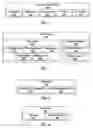
FIG. 1 illustrates components of an antiseptic body glide in accordance with aspects of the embodiments;
FIG. 2 illustrates classifications of certain preservatives in accordance with aspects of the embodiments;
FIG. 3 illustrates a couple antiseptics in accordance with aspects of the embodiments;
FIG. 4 illustrates a couple lubricants in accordance with aspects of the embodiments; and
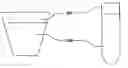
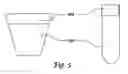
FIG. 5 illustrates shot packaging in accordance with aspects of the embodiments.
DETAILED DESCRIPTION
The particular values and configurations discussed in these non-limiting examples can be varied and are cited merely to illustrate at least one embodiment and are not intended to limit the scope thereof. In general, the figures are not to scale.
An antiseptic body glide is a body glide with antiseptic properties. The antiseptic components do not interfere with other body glide components such as lubricants or preservatives. Additionally, the antiseptic body glide does not react unfavorably with latex or other common barrier materials. The antiseptic components do not have a bad taste or react with the other components to produce a bad taste. As such, the antiseptic body glide enhances intimate activities without compromising those activities in any way.
FIG. 1 illustrates components of an antiseptic body glide 100 in accordance with aspects of the embodiments. The antiseptic body glide can contain antiseptics 103, lubricants 101, preservatives 102, water 104, and flavorants 105.
FIG. 2 illustrates classifications of certain preservatives 102 in accordance with aspects of the embodiments. Parabens 201, polyquaterniums 207, and ethyl alcohol 209 are three types of preservatives 102 that can help increase the shelf life of antiseptic body glides. Parabens 201 are exemplified by methylparaben 203, ethylparaben 205, propylparaben 202, butylparaben 206, and polyparaben 204. Methylparaben 203 and polyparaben 204 have proven to be good choices for antiseptic body glides because they do not react unfavorably with other body glide components while also retaining their preservative properties.
FIG. 3 illustrates a couple of antiseptics 103 in accordance with aspects of the embodiments. There are many different types of antiseptics available, but few of them are appropriate for an antiseptic body glide because they smell, taste bad, react with other components, or irritate the skin. Particularly important properties of appropriate antiseptics is that they are edible and do not irritate the sensitive skin and membranes in body cavities. Tests of chlorhexidine glucanate 301 and cetylpyridinium chloride 302 have shown them to have the proper characteristics for use as antiseptics in body glides.
FIG. 4 illustrates a couple lubricants 101 in accordance with aspects of the embodiments. Glycerin 401 and propylene glycol 402 work well as components of personal lubricants and body glides. Other components, such as antiseptics and preservatives, should not compromise the properties of glycerin 401 or propylene glycol 402.
Flavorants are substances that confer a flavor. Body glide flavorants confer a flavor to body glides while also not compromising the other body glide components. For example, lye is not a body glide flavorant because it destroys other components and irritates the skin. Table 1 lists flavorants that can be used in a body glide.
| Body Glide Flavorants |
| Flavorant | Flavor | |
| Diacetyl | Buttery | |
| Isoamyl acetate | Banana | |
| Cinnamic aldehyde | Cinnamon | |
| Ethyl propionate | Fruity | |
| Limonene | Orange | |
| Octyl Acetate | Orange | |
| Ethyl-(E, Z)-2,4-decadienoate | Pear | |
| Allyl hexanoate | Pineapple | |
| Ethyl maltol | Sugar, Cotton candy | |
| Methyl salicylate | Wintergreen | |
| Benzaldehyde | Bitter almond | |
| Methyl Anthranilate | Grape | |
| Geranyl Butyrate | Cherry | |
FIG. 5 illustrates shot packaging in accordance with aspects of the embodiments. A shot container 501 can contain a flavored body glide 502. Generally, a shot is about 1 ounce of liquid. Ethyl alcohol, discussed previously as a preservative because of its bactericide and bacteriostatic properties, also imparts flavor and can transform an antiseptic body glide into a libation. Clearly, all of the components of such a body glide must be safe for human consumption.
It will be appreciated that variations of the above-disclosed and other features and functions, or alternatives thereof, may be desirably combined into many other different systems or applications. Also that various presently unforeseen or unanticipated alternatives, modifications, variations or improvements therein may be subsequently made by those skilled in the art which are also intended to be encompassed by the following claims.
Claims
The embodiments of the invention in which an exclusive property or right is claimed are defined as follows. Having thus described the invention what is claimed is:1. An antiseptic body glide comprising:
at least one paraben;
a lubricant;
water; and
chlorhexidine glucanate.
2. The antiseptic body glide of claim 1 further comprising polyquaternium 15.
3. The antiseptic body glide of claim 1 wherein the lubricant comprises glycerin.
4. The antiseptic body glide of claim 1 wherein the lubricant comprises propylene glycol.
5. The antiseptic body glide of claim 1 further comprising ethyl alcohol.
6. The antiseptic body glide of claim 1 wherein the at least one paraben comprises methylparaben.
7. The antiseptic body glide of claim 1 wherein the at least one paraben comprises polyparaben.
8. The antiseptic body glide of claim 1 further comprising a flavorant.
9. The antiseptic body glide of claim 1 wherein the body glide is packaged as shots.
10. An antiseptic body glide comprising:
a paraben;
a lubricant;
water;
chlorhexidine glucanate; and
cetylpyridinium chloride.
11. The antiseptic body glide of claim 10 further comprising polyquaternium 15.
12. The antiseptic body glide of claim 10 wherein the lubricant comprises propylene glycol.
13. The antiseptic body glide of claim 10 further comprising ethyl alcohol.
14. The antiseptic body glide of claim 10 wherein the at least one paraben comprises methylparaben.
15. The antiseptic body glide of claim 10 wherein the at least one paraben comprises polyparaben.
16. The antiseptic body glide of claim 10 further comprising a natural flavorant.
17. The antiseptic body glide of claim 10 further comprising:
polyquaternium 15, ethyl alcohol, and an artificial flavorant;
wherein the carrier comprises glycerin and propylene glycol;
wherein the at least one paraben comprises methylparaben and polyparaben;
18. The antiseptic body glide of claim 1 wherein the body glide is packaged as a shot.
19. A method comprising:
obtaining a non-antiseptic lubricant comprising at least one paraben, glycerin, and propylene glycol;
obtaining an antiseptic comprising chlorhexidine glucanate;
combining the non-antiseptic lubricant and the antiseptic to produce an antiseptic body glide.
Images & Drawings included:
Sources:
- United States Patent and Trademark Office - verify current appl. status at the USPTO↗
Recent applications in this class:
- » 20240397950 2024-12-05
DISINFECTANT COMPOSITION - » 20240381873 2024-11-21
Compositions, Methods and Uses for Cleaning, Disinfecting and/or Sterilizing - » 20240373854 2024-11-14
SELF-ASSEMBLED ACTIVE AGENTS - » 20240341310 2024-10-17
ANTIPATHOGENIC NANOSTRUCTURES - » 20240334935 2024-10-10
ANTISEPTIC COMPOSITION - » 20240315250 2024-09-26
Biofilm Penetrating Compositions and Methods - » 20240315249 2024-09-26
DISINFECTANT AND DISINFECTION METHOD FOR EFFECTIVELY KILLING ENDOSPORES - » 20240315248 2024-09-26
NOVEL ANTIMICROBIAL COMPOSITIONS AND ARTICLES MADE THEREFROM - » 20240292841 2024-09-05
Preparation method and application of water-soluble chlorhexidine hyaluronate antibacterial agents - » 20240260579 2024-08-08
ANTIMICROBIAL COMPOSITIONS WITH ENHANCED EFFICACY