Airport vehicular gate entry access system
US20090039155A1
2009-02-12
11/895,656
2007-08-27
✅ Patent granted
US 7,639,844 B2
2009-12-29
-
-
Wesley Tucker | Nancy Bitar
2028-07-03
Abstract:
A method of securing airport vehicular gate entries by providing mechanisms to check airport employee escorting a vehicle, as well as vehicle driver and passengers and match them against the TSA NO-FLY and SELECTEE lists. The system provides means of authenticating drivers' licenses, verifying employee status, printing temporary passes, printing a temporary vehicle entry pass and certificate, providing the airport police with a handheld apparatus capable of reading the entry certificate and wirelessly verifying its authenticity. The system provides a method of allowing entry for a group of individuals escorted by an airport employee. The system provides also a method for allowing entry of multiples vehicles, escorted by one airport employee. The system is fully automated and is touch screen capable, thus requiring a minimal amount of human interaction.
Interested in similar patents?
Get notified when new applications in this technology area are published.
Classification:
G07C9/27 » CPC main
Individual registration on entry or exit involving the use of a pass with central registration
G07C2209/41 » CPC further
Indexing scheme relating to groups -; Indexing scheme relating to groups - with means for the generation of identity documents
G06K5/00 IPC
Methods or arrangements for verifying the correctness of markings on a record carrier; Column detection devices
G06K9/00 IPC
Methods or arrangements for recognising patterns
Description
CROSS-REFERENCE TO RELATED APPLICATIONS
This application is in continuation in part of application Ser. No. 10/330,981 filed on Dec. 30, 2002 and a continuation in part of application Ser. No. 11/220,282 filed on Sep. 7, 2005.
FIELD OF THE INVENTION
The invention relates to a method of securing airport vehicular entry/exit gates, using application Ser. No. 10/330,981 and its continuation in part application Ser. No. 11/220,282 information recovery device, an authentication device and other computer peripherals.
BACKGROUND OF THE INVENTION
Airport vehicular entry gates rely on human intervention and manual data entry and are prone to excessive error rates, lower security standards, increased inefficiencies and decreased reliability.
Nonetheless, securing gates often require rapid data entry to support granting access for vendors, and certain categories of employees.
Traditional logging methods involve a human attendant station, and a hand-written logbook.
BRIEF SUMMARY OF THE INVENTION
It is an objective of this invention to provide:
A method of securing vehicles entry into secured areas such as airports. Such method allows security personnel to process a vehicle entry as a group of verifiable objects inter-related, including an employee host, a vehicle registration card, a vehicle driver and vehicle passengers. Such method uses a computer system, the apparatus of application Ser. No. 11/220,282, and the software application of application Ser. No. 11/220,282 customized for the purpose, a commercial Identification card authentication apparatus, and various computer peripherals.
The present invention delivers a time-sensitive photo pass with machine-readable media and other pertinent printed information, and a temporary vehicle entry certificate to be displayed on the vehicle windshield.
The present invention provides a computerized wireless handheld for the airport police to read the encoded temporary vehicle certificate within the airport secured perimeter and wirelessly access the database to instantly verify certificate content.
The present invention also incorporates critical data on known and suspected criminals, saboteurs, and terrorists such as Transportation Security Agency supplied NO-FLY and SELECTEE lists, or any other list that could be supplied otherwise, by the US Department of Homeland Security, the Federal Bureau of Investigation and other security agencies.
In accordance with the above, the Airport Vehicular Gate Entry Access System application automatically collects data and builds visitor records that can be viewed at any time, individually or as a part of an entry group, reuses individual photo scanned from the individual identification card to be used for printing entry media, automatically checks individual credentials against the TSA terrorists lists, and subsequently displays a warning window, in case of a match, automatically checks employee ID against the airport employee database records to verify employee status, automatically prints a temporary entry pass, and automatically prints a temporary vehicle entry certificate.
BRIEF DESCRIPTION OF THE DRAWINGS
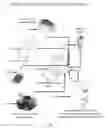
FIG. 1 is a schematic of the entry/Exit Access Control System Building block
FIG. 2 is a view of the software application initial start.
FIG. 3 is a view of the navigational buttons in ESCORTER mode.
FIG. 4 is a view of the navigational buttons in Registration Card Mode
FIG. 5 is a view of the navigational buttons in DRIVER Mode
FIG. 6 is view of the navigational buttons in PASSENGER Mode
FIG. 7 is a view of the bottom vehicle destinations buttons
FIG. 8 is a view of the Vehicle Registration certificate processing form
FIG. 9 is a view of the temporary vehicle entry certificate
FIG. 10 is a view of the list upload certificate
FIG. 11 is a view of the Entry Group Data
FIG. 12 is a view of the wireless reader apparatus
DETAILED DESCRIPTION OF THE INVENTION
Description of Airport Vehicular Gate Entry System
FIG. 1 schematically illustrates the elements of an entry/exit workstation, which would be located at an airport vehicular gate booth. Each entry/exit access control system is composed of a reader for standardized personal identification credentials, 3, a suitable camera, 2, Central Processing Unit, 1, one Color Plastic Card Printers, 5, one ID card authenticator, 4, Keyboard, a laser printer, 6, and a Display Monitor.
The display monitor is preferably a touch screen LCD, however, any display monitor could be used.
An Airport Vehicular Gate Entry System is an enterprise platform where multiple airport vehicular gates comprise one workstation each, interconnected in a network configuration, controlled by a central database server. All workstations collect and store data in the central database server. In such a network, all data is immediately available at all workstations. Such a strategy permits vehicles entering from one particular gate to exit from another gate.
FIG. 2 shows the initial startup of the system software application. A data collection form is displayed. The left touch buttons provides a mechanism to navigate through the different steps of the vehicle entry process. The bottom touch buttons provides an easy mechanism to select the vehicle destination within the airport secured perimeter.
FIG. 3 illustrates the navigation set of touch buttons, with the “ESCORTER” button, 8, highlighted in red, thus notifying the gate attendant of the system readiness to process the “ESCORTER”.
For the purpose of this patent application, a vehicle entry is formed of a group of collected records, processed sequentially. Thus an entry group includes the following records:
-
- 1—ESCORTER
- 2—DMV Vehicle Registration Information
- 3—Driver Information
- 4—Passengers information
Upon the arrival of a vehicle at an airport vehicular entry gate, an airport employee is accompanying the vehicle as “ESCORTER”. “ESCORTER” presents its airport ID to the reader for standardized personal identification credentials device, 3. Following the reading, the employee is requested to enter a security code in the numeric keypad, 7. The code is verified for accuracy against the employee database. It is rejected if not correct. The information read from the ID serves to locate the ESCORTER record in the airport employee database. The system verifies employment status. If active, the employee is matched against the TSA NO-FLY and SELECTEE lists. The system provides a security alert if the employee is:
-
- not active
- matched during the TSA NO-FLY and SELECTEE lists search.
Thus, security is very much enhanced since an airport employee is always checked before entering the airport secured perimeter. Furthermore, a system security rule prohibits an airport employee from using a personal ID card to enter the airport secured perimeter.
After processing the employee, the employee becomes the ESCORTER of the entry group. The system automatically moves into the vehicle registration mode, as illustrated in FIG. 4. This causes the touch button labeled “REG CARD”, 9, to be highlighted in red, the “ESCORTER” touch button, 8, to be highlighted in green, and the window of FIG. 8 to be displayed. The gate attendant places the DMV vehicle registration card in the authenticator, as requested by the displayed message. The authenticator acquires an image of the registration card and sends the image to the system for proceeding with character recognition. This data becomes the second record in the entry group.
The system automatically moves into the DRIVER mode, as illustrated in FIG. 5. This mechanism causes the “DRIVER” touch button, 10, to be highlighted in red and the “REG CARD” touch button, 9, to be highlighted in green.
The gate attendant follows the following operational steps in the following functional sequence:
-
- 1—A credential, in this case a driver license, is presented to the reading apparatus, 3.
- 2—The system decodes the encoded data and encrypts the sensitive information before displaying it on the workstation monitor for verification by the station guard.
- 3—The system checks database information to determine whether the individual is an employee.
- 4—If this is an airport employee, the system rejects the ID, since an employee can only use an airport ID to enter.
- 5—The system proceeds by checking the ID information against the TSA NO-FLY and SELECTEE lists to determine security exposure.
- 6—If such checks are positive, a warning window is displayed, which requires the intervention of a security manager. The system would not admit the individual unless the security manager enters a unique security code to permit such admission.
- 7—The system displays a message requiring the gate attendant to insert the ID card in the authenticator apparatus. The authentication process provides a mean of determining and rating ID physical aspects security risks. The authenticator matches the ID against stored templates, and looks for the ID security features to determine the possibility of any ID tempering.
- 8—If all checks are negative, the process continues. The system picks up the individual photo provided by the authenticator returned record, and prints a time sensitive encoded temporary pass.
Upon completing the DRIVER entry record, the system moves automatically into the “PASSENGER” mode, as illustrated in FIG. 6. This causes the touch button “PASSENGER”, 11, to be highlighted in red and the “DRIVER” touch button, 10, to be highlighted in green.
The gate attendant proceeds with collecting passengers' records, one after another, in a sequential manner, following the same functional steps mentioned earlier during the DRIVER ID processing.
FIG. 7 provides an illustration of the destination touch buttons. These buttons must be customized for each airport as possible destinations within different airports vary.
At any time, the gate attendant is able to review the records that have been collected during the entry process. “VIEW GROUP” touch button, 12, provides a mean of displaying the entry group. Entry group is displayed in a tabbed window form, as illustrated in FIG. 11.
“CERTIFICATE” touch button, 13, causes the printing of the Temporary Vehicle Entry Certificate and Permit, as illustrated in FIG. 9. The certificate includes the following information:
-
- 1—ESCORTER
- 2—DRIVER
- 3—Up to 4 PASSENGERS
- 4—EXPIRATION DATE
- 5—DESTINATION
- 6—ISSUE DATE
- 7—ENTRY Gate
- 8—Vehicle information
- 9—A barcode
- 10—Other.
The certificate is to be displayed at the vehicle windshield.
A wireless handheld apparatus reader, as illustrated in FIG. 12, is provided to the airport police to read the certificate on the premises and instantly verify the displayed certificate records, through a wireless access to the system database.
“NEW VEHICLE” touch button, 14, is to be pressed at the start of each new entry group.
Multiple Vehicles—One Escorter
An ESCORTER is allowed to accompany multiple vehicles. “MULTIPLES” touch button, 15, is to be pressed for this purpose. This causes the button to be highlighted in red.
While “MULTIPLES” button is highlighted, gate attendant touches “NEW VEHICLE” button, 14. The first vehicle record is processed as above. Gate attendant touches “NEW VEHICLE” button, 14, repeatedly, for every vehicle thereafter. ESCORTER is processed only once within the first vehicle entry group and the same ESCORTER record is used as part of the following vehicle entry groups.
When there are no more vehicles to be processed within the “MULTIPLES”, gate attendant touches “MUTIPLES” button to signal the end of the Multiples entry. This action causes the “MULTIPLES” button, 15, to become disabled or green.
Group of Individuals Entry
One ESCORTER may accompany a group of individuals, entering the airport secured perimeter.
The ESCORTER must upload the list of individuals through an intranet web page. The uploaded file is in a Microsoft excel format. A successful upload causes the intranet package to print an encoded upload certificate, as illustrated in FIG. 10.
At the gate, when the ESCORTER badge is read, a form is displayed allowing the upload certificate to be read and all individuals within the uploaded list are checked against the TSA NO-FLY and SELECTEE lists, thus lowering airport security exposure. Any list match is immediately highlighted.
Claims
What is claimed:1- A method for controlling airport vehicular gate entry through a combination of processes and diverse apparatus.
2- The method of claim 1 whereas the method is based on a system that comprises a computer, a credential reader, an ID card authenticator device, a card printer, a laser printer, a camera, a touch screen LCD monitor, a wireless barcode reader, an intranet package, and other computer peripherals.
3- The method of claim 1 whereas an airport vehicular gate entry is considered as an interrelated group of records. Such records include the airport employee as ESCORTER, the DMV vehicle registration card information, the driver identification record and the passengers' identification records.
4- The method of claim 1 whereas a set of navigational buttons is provided and are automatically controlled allowing the entry process to include processing step, starting with the ESCORTER, Vehicle Registration, DRIVER and PASSENGERS.
5- The method of claim 1 whereas the group data can be viewed at any time through a tabbed form.
6- The method of claim 1 whereas, the ESCORTER airport ID is read, the ESCORTER enters an access code and whereas the system instantly verifies employee status and checks employee credentials against the TSA NO-FLY and SELECTEE lists.
7- The method of claim 1 whereas the DMV vehicle registration card is read, characters are recognized and record is stored.
8- The method of claim 1 whereas the system includes a credentials reading apparatus and a credentials authentication apparatus.
9- The method of claim 1 whereas driver and passengers ID are read and individual information is matched against the TSA NO-FLY and SELECTEE list or any other TSA lists, and alert is provided in case of a match.
10- The method of claim 1 whereas an Identification card is authenticated and determined free of any possible forgery.
11- The method of claim 1 whereas an individual picture is acquired from the identification card.
12- The method of claim 1 whereas a temporary time sensitive photo pass is printed for allowed individuals.
13- The method of claim 1 whereas a temporary vehicle entry and certificate is printed that includes entry relevant information and pictures. Such certificate is to be displayed at the vehicle windshield.
14- The method of claim 1 whereas multiple vehicles can be processed for one ESCORTER.
15- The method of claim 1 whereas a mean is provided to upload a list of individuals and an encoded upload certificate is printed.
16- The method of claim 1 whereas the uploaded certificate can be read following a reading of the ESCORTER ID, and whereas all individuals in the list are instantly checked against the TSA NO-FLY and SELECTEE lists, or any other list.
17- The method of claim 1 whereas the airport police is provided with a wireless reading apparatus capable of reading the encoded temporary vehicle entry and certificate and capable of wirelessly accessing the system database to verify information authenticity.
Images & Drawings included:



Sources:
- United States Patent and Trademark Office - verify current appl. status at the USPTO↗
Recent applications in this class:
- » 20250285483 2025-09-11
ENTRY ACCESS SYSTEM AND METHOD WITH QUESTIONNAIRE SCREENING - » 20250285482 2025-09-11
HANDS-FREE GATE ACCESS CONTROL SYSTEM AND METHOD OF USE - » 20250265882 2025-08-21
WIRELESS COMMUNICATION APPARATUS, AUTHENTICATION APPARATUS, WIRELESS COMMUNICATION METHOD AND AUTHENTICATION METHOD - » 20250252797 2025-08-07
TECHNOLOGIES FOR USING NFC OR QR CODE TO COMMISSION A DEVICE TO THE CLOUD - » 20250239121 2025-07-24
MERCHANDISE DISPLAY SECURITY SYSTEMS AND METHODS - » 20250232628 2025-07-17
A METHOD FOR CONTROLLING PEOPLE FLOW WITHIN A CONTROL AREA - » 20250209877 2025-06-26
SCANNERLESS VENUE ENTRY AND LOCATION TECHNIQUES - » 20250209876 2025-06-26
ACCESS CONTOL SYSTEM - » 20250201045 2025-06-19
SYSTEM AND METHOD FOR MODIFYING USER ACCESS RIGHTS BASED ON AN ACCESS CONTROL TRIPLET - » 20250174064 2025-05-29
TRACKING LOCATION HISTORY VIA ACCESS CONTROL DEVICES