FLOOR CARPET UNDERLAY
US20090047464A1
2009-02-19
11/839,725
2007-08-16
Abstract:
A carpet underlay for a floor carpet, the underlay having a foam base layer having an upper surface, and a cross-linked closed cell polyolefin foam upper layer having a first surface and a second surface, wherein the first surface is bonded to the upper surface of the base layer and the second surface is adapted to contact the carpet in abutment. Preferred foam base layer comprises a polyurethane foam, particularly, chipfoam; and the cross-linked closed cell foam layer comprises polyethylene, polyolefine, polyamide and mixtures, thereof. Apparatus and process of manufacture are provided. The underlay provides improved resistance to odour and toxic vapour penetration from the base foam layer through the carpet into the atmosphere above the carpet.
Inventors:
- David G. Foxall 1 🇨🇦 Brantford, Canada
- Joseph M. Gallant 1 🇨🇦 Brantford, Canada
- Jitesh B. Patel 1 🇨🇦 Brantford, Canada
Interested in similar patents?
Get notified when new applications in this technology area are published.
Classification:
B29C66/71 » CPC further
General aspects of processes or apparatus for joining preformed parts characterised by the composition, physical properties or the structure of the material of the parts to be joined; Joining with non-plastics material characterised by the composition of the plastics material of the parts to be joined
D05C17/023 » CPC main
Embroidered or tufted products; Base fabrics specially adapted for embroidered work; Inserts for producing surface irregularities in embroidered products; Tufted products characterised by the base fabric
A47G27/0468 » CPC further
Floor fabrics; Fastenings therefor; Carpet fasteners; Carpet-expanding devices ; Laying carpeting; Tools therefor; Laying carpeting, e.g. wall-to-wall carpeting Underlays; Undercarpets
B29C65/14 » CPC further
Joining of preformed parts ; Apparatus therefor by heating, with or without pressure using wave energy or particle radiation
B29C66/1122 » CPC further
General aspects of processes or apparatus for joining preformed parts; General aspects dealing with the joint area or with the area to be joined; Particular design of joint configurations particular design of the joint cross-sections; Joint cross-sections comprising a single joint-segment, i.e. one of the parts to be joined comprising a single joint-segment in the joint cross-section; Single lapped joints Single lap to lap joints, i.e. overlap joints
B29C66/45 » CPC further
General aspects of processes or apparatus for joining preformed parts; General aspects of joining substantially flat articles, e.g. plates, sheets or web-like materials; Making flat seams in tubular or hollow articles; Joining single elements to substantially flat surfaces; Joining substantially flat articles ; Making flat seams in tubular or hollow articles Joining of substantially the whole surface of the articles
B29C66/727 » CPC further
General aspects of processes or apparatus for joining preformed parts characterised by the composition, physical properties or the structure of the material of the parts to be joined; Joining with non-plastics material characterised by the structure of the material of the parts to be joined being porous, e.g. foam
B29C66/73755 » CPC further
General aspects of processes or apparatus for joining preformed parts characterised by the composition, physical properties or the structure of the material of the parts to be joined; Joining with non-plastics material characterised by the intensive physical properties of the material of the parts to be joined, by the optical properties of the material of the parts to be joined, by the extensive physical properties of the parts to be joined, by the state of the material of the parts to be joined or by the material of the parts to be joined being a thermoplastic or a thermoset characterised by the state of the material of the parts to be joined uncured, partially cured or fully cured the to-be-joined area of at least one of the parts to be joined being fully cured, i.e. fully cross-linked, fully vulcanized
B29C66/7394 » CPC further
General aspects of processes or apparatus for joining preformed parts characterised by the composition, physical properties or the structure of the material of the parts to be joined; Joining with non-plastics material characterised by the intensive physical properties of the material of the parts to be joined, by the optical properties of the material of the parts to be joined, by the extensive physical properties of the parts to be joined, by the state of the material of the parts to be joined or by the material of the parts to be joined being a thermoplastic or a thermoset characterised by the material of the parts to be joined being a thermoplastic or a thermoset characterised by the material of at least one of the parts being a thermoset
B29C66/83413 » CPC further
General aspects of processes or apparatus for joining preformed parts; General aspects of machine operations or constructions and parts thereof characterised by the movement of the joining or pressing tools moving with the parts to be joined; Roller, cylinder or drum types; Band or belt types; Ball types; Roller, cylinder or drum types cooperating rollers, cylinders or drums
B29C66/83415 » CPC further
General aspects of processes or apparatus for joining preformed parts; General aspects of machine operations or constructions and parts thereof characterised by the movement of the joining or pressing tools moving with the parts to be joined; Roller, cylinder or drum types; Band or belt types; Ball types; Roller, cylinder or drum types the contact angle between said rollers, cylinders or drums and said parts to be joined being a non-zero angle
B29C66/934 » CPC further
General aspects of processes or apparatus for joining preformed parts; Measuring or controlling the joining process by measuring or controlling the speed by controlling or regulating the speed
B29C66/939 » CPC further
General aspects of processes or apparatus for joining preformed parts; Measuring or controlling the joining process by measuring or controlling the speed characterised by specific speed values or ranges
B32B5/32 » CPC further
Layered products characterised by the non- homogeneity or physical structure, i.e. comprising a fibrous, filamentary, particulate or foam layer; Layered products characterised by having a layer differing constitutionally or physically in different parts characterised by the presence of two or more layers which are next to each other and are fibrous, filamentary, formed of particles or foamed layers being foamed
B32B37/0007 » CPC further
Methods or apparatus for laminating, e.g. by curing or by ultrasonic bonding involving treatment or provisions in order to avoid deformation or air inclusion, e.g. to improve surface quality
D06N7/0089 » CPC further
Flexible sheet materials not otherwise provided for, e.g. textile threads, filaments, yarns or tow, glued on macromolecular material; Floor covering on textile basis comprising a fibrous top layer being coated at the back with at least one polymer layer, e.g. carpets, rugs, synthetic turf Underlays
B29C66/72341 » CPC further
General aspects of processes or apparatus for joining preformed parts characterised by the composition, physical properties or the structure of the material of the parts to be joined; Joining with non-plastics material characterised by the structure of the material of the parts to be joined being multi-layered comprising a barrier layer for gases
B29C66/72343 » CPC further
General aspects of processes or apparatus for joining preformed parts characterised by the composition, physical properties or the structure of the material of the parts to be joined; Joining with non-plastics material characterised by the structure of the material of the parts to be joined being multi-layered comprising a barrier layer for liquids
B29C66/7352 » CPC further
General aspects of processes or apparatus for joining preformed parts characterised by the composition, physical properties or the structure of the material of the parts to be joined; Joining with non-plastics material characterised by the intensive physical properties of the material of the parts to be joined, by the optical properties of the material of the parts to be joined, by the extensive physical properties of the parts to be joined, by the state of the material of the parts to be joined or by the material of the parts to be joined being a thermoplastic or a thermoset characterised by the extensive physical properties of the parts to be joined Thickness, e.g. very thin
B29K2023/00 » CPC further
Use of polyalkenes or derivatives thereof as moulding material
B29K2023/06 » CPC further
Use of polyalkenes or derivatives thereof as moulding material; Polymers of ethylene PE, i.e. polyethylene
B29K2105/04 » CPC further
Condition, form or state of moulded material or of the material to be shaped cellular or porous
B29K2105/046 » CPC further
Condition, form or state of moulded material or of the material to be shaped cellular or porous with closed cells
B29K2105/24 » CPC further
Condition, form or state of moulded material or of the material to be shaped crosslinked or vulcanised
B29L2009/00 » CPC further
Layered products
B29L2031/7322 » CPC further
Other particular articles; Floor coverings Carpets
B29L2031/7652 » CPC further
Other particular articles; Articles provided with piles, e g. nap on cloth Pile carpets
B32B37/06 » CPC further
Methods or apparatus for laminating, e.g. by curing or by ultrasonic bonding characterised by the heating method
B32B37/203 » CPC further
Methods or apparatus for laminating, e.g. by curing or by ultrasonic bonding characterised by the properties of the layers with all layers existing as coherent layers before laminating involving the assembly of continuous webs only One or more of the layers being plastic
B32B2266/025 » CPC further
Composition of foam; Organic; Materials belonging to Polyolefin
B32B2266/0257 » CPC further
Composition of foam; Organic; Materials belonging to Polyamide
B32B2266/0278 » CPC further
Composition of foam; Organic; Materials belonging to Polyurethane
B32B2266/08 » CPC further
Composition of foam Closed cell foam
B32B2305/022 » CPC further
Condition, form or state of the layers or laminate; Cellular or porous Foam
B32B2305/70 » CPC further
Condition, form or state of the layers or laminate Scrap or recycled material
B32B2309/14 » CPC further
Parameters for the laminating or treatment process; Apparatus details Velocity, e.g. feed speeds
B32B2471/02 » CPC further
Floor coverings Carpets
Y10T428/23979 » CPC further
Stock material or miscellaneous articles; Pile or nap type surface or component Particular backing structure or composition
B29K2023/12 » CPC further
Use of polyalkenes or derivatives thereof as moulding material; Polymers of propylene PP, i.e. polypropylene
B29K2023/0691 » CPC further
Use of polyalkenes or derivatives thereof as moulding material; Polymers of ethylene; PE, i.e. polyethylene PEX, i.e. crosslinked polyethylene
B32B3/26 IPC
Layered products comprising a layer with external or internal discontinuities or unevennesses, or a layer of non-planar form ; Layered products having particular features of form characterised by a particular shape of the outline of the cross-section of a continuous layer; characterised by a layer with cavities or internal voids ; characterised by an apertured layer
B29C65/00 IPC
Joining of preformed parts ; Apparatus therefor
D05C15/00 IPC
Making pile fabrics or articles having similar surface features by inserting loops into a base material
Description
FIELD OF THE INVENTION
This invention relates to underlay for floor carpets, particularly foam based underlay, process of manufacture, thereof, and apparatus for use in said process.
BACKGROUND OF THE INVENTION
Typical underlay or underpads for floor carpets is formed of a foam material, particularly, a polyurethane foam, either as virgin material, or as reclaimed and recycled material. The latter material is generally termed “chipfoam” and comprises small pieces or fragments of a plurality of used polyurethane foams of different sizes, shapes, densities and weights, and often containing pieces of harder materials, such as plastic materials. The underlay generally comes in about 13.7 m rolls having a width of about 1.83 m, a typical thickness of about 6.5-13 mm, and a density of about 3.5-10 tbs/cu. ft.
Although polyurethane chipfoam has been extensively used for a long time as underlay for floor carpets in residential, commercial and industrial buildings, it is prone to release gaseous toxic chemicals into the atmosphere of a room or the like through the carpet which rests on the underlay, to varying degrees from the date of its installation and continually over the life of the underfoam. Examples of such unwanted chemicals includes, formaldehyde, ammonia, hydrochloric acid and, particularly, butylated hydroxy toluene (BHT).
Production of these and more dangerous gaseous toxic chemicals, including carcinogens is enhanced in the event of a fire. To reduce the risk or likelihood of the foam burning, a fire retardant is commonly present.
Chipfoam further comprising a plastic film layer on the upper side face of the chipfoam, which contacts the bottom surface of the carpet, is also known and commercially available. The plastic layer is intended to provide a moisture barrier if a liquid spill penetrates the carpet backing.
Further, anti-microbial agents for microbe control and odour-treating agents to eliminate organic odours, which may emanate from the foam have been incorporated into the foam.
However, there is still a long-felt want to have a foam underlay which minimizes the release of the aforesaid toxic gaseous chemicals into the atmosphere of a room, or the like, through the carpet above the underlay and provide an improved moisture barrier.
The use of cross-linked closed cell polyolefin foams as sound insulation material in flooring systems has been described in Canadian Patent No. 2,454,972, issued 22 May 2007 to F. C. & F.
SUMMARY OF THE INVENTION
It is an object of the present invention to provide a foam underlay for floor carpeting having an improved moisture resistant and gaseous toxic chemical imperious barrier.
It is a further object to provide a process and apparatus for the manufacture of said improved underlay.
Accordingly, in one aspect the invention provides a carpet underlay for a floor carpet, said underlay comprising
-
- a foam base layer having an upper surface, and
- a cross-linked closed cell polyolefin foam upper layer having a first surface and a second surface, wherein said first surface is bonded to said upper surface of said base layer and said second surface is adapted to contact said carpet in abutment.
Preferably, the base layer comprises a polyurethane foam; preferably having a thickness selected from 5.0 mm to 2.0 cm, and, more preferably, selected from 6.5 mm to 1.4 cm.
The polyolefin foam preferably comprises a cross-linked, closed-cell polyethylene, polypropylene or polyamide, or blends, thereof. Examples of such foams are manufactured by Toray Plastics (America), Inc., and Sekisui Voltek LLC, a division of Sekisui America Corp. Other suitable examples of closed cell polyolefin foams will be appreciated by those skilled in the art.
The polyolefin foam upper layer preferably has a thickness selected from 0.5 mm to 2.5 mm, and more preferably, 0.65 mm to 2.0 mm.
We have found that when the thickness of the cross-linked closed cell polyolefin foam layer is preferably not less than 0.5 mm, it smoothes out irregularities in the base foam layer caused by particles of different sizes, shapes and materials, particularly when the latter is a plastics material. This results in less abrasion of the underside of the carpet.
In preferred embodiments, either or both of the layers contain fire-retardant, anti-microbial and odour absorbing chemicals.
In a further aspect, the invention provides a process for the manufacture of an underlay as hereinabove defined.
Accordingly, in a further aspect the invention provides a process of forming a carpet underlay comprising
-
- a foam base layer having an upper surface, and
- a cross-linked closed cell polyolefin foam upper layer having a first surface and a second surface, wherein said first surface is bonded to said upper surface of said base layer and said second surface is adapted to contact said carpet in abutment;
- said process comprising continuously bringing a foam base layer and a cross-linked closed cell polyolefin foam layer into contact, wherein said upper surface of said foam base layer contacts said first surface of said polyolefin foam layer;
- heat treating said layers to effect bonding to produce said underlay, and collecting said underlay.
We have noticed that heat treatment of the polyolefin foam layer to the softening temperature of the foam, per se, causes expansion of the foam, while subsequent cooling of the foam effects contraction to its original dimensions. However, we have found that when the polyolefin foam layer and the base layer are heat treated to their softening temperatures for bonding, one to the other, for unnecessary, relatively long periods of time, the polyolefin foam layer is unable to satisfactorily contract and its upper surface becomes rippled. Without being bound by theory, we believe that this is a result of overheating because the feed rate of the two layers is too slow and/or the heating temperature is too high and, thus, effecting too much heat transfer.
Thus, while the process of the invention requires both layer foam materials to become soft and tacky for effective bonding, the heat transfer most preferably, should not be excessive as to cause the aforesaid rippling of the polyolefin layer. The presence of the ripples on the upper surface of the underlay presents a problem to the carpet installer and uneven surface contact with the carpet.
Accordingly, in a further aspect the invention provides a process as hereinabove defined wherein said foam base layer and said polyolefin foam layer are suitably heat treated at a temperature and feed rate as to effect bonding without the production of excessive amounts of ripples on said second surface of said polyolefin foam. A feed rate of at least 10 m per minute at an effective softening temperature is preferred.
In a further aspect, the invention provides apparatus for carrying out the process for the manufacture of an underlay as hereinabove defined.
Accordingly, the invention provides apparatus for manufacturing a carpet underlay comprising
-
- a foam base layer having an upper surface, and
- a cross-linked closed cell polyolefin foam upper layer having a first surface and a second surface, wherein said first surface is bonded to said upper surface of said base layer and said second surface is adapted to contact said carpet in abutment,
- said apparatus comprising
- (i) heating and pressure contacting means for effecting bonding of said foam base layer to said cross-linked closed cell polyolefin foam to form said underlay;
- (ii) means for feeding a roll of said foam base layer to said heating and pressure contacting means;
- (iii) means for feeding a roll of said polyolefin foam layer to said heating and pressure contacting means; and
- (iv) means for collecting said underlay.
BRIEF DESCRIPTION OF THE DRAWINGS
In order that the invention may be better understood, preferred embodiments will now be described, by way of example only with reference to the drawings, wherein
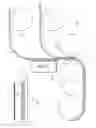
FIG. 1 is a diagrammatic cross-section of a carpet underlay, according to the invention, in associate with a carpet; and
FIG. 2 is a diagrammatic block diagram of the apparatus of use in the manufacture of an underlay, according to the invention; and wherein the same numerals denote like parts.
DETAILED DESCRIPTION OF PREFERRED EMBODIMENTS
With reference to FIG. 1, this shows generally as 10, an underlay having a chipfoam polyurethane foam base layer 12 having an upper surface 14 bonded to the lower surface 16 of a cross-linked closed cell polyethylene layer 18. Layer 18 has an upper surface 20 upon which carpet 22 contacts and abuts upon installation on floor 24. Base layer 12 has a thickness of about 6.5 mm and polyethylene layer 18 has a thickness of about 0.8 mm. Chipfoam base layer 12 comprises a mixture of polyurethane particles 26, interspaced with hard fragments of plastics materials 28. Layers 12 and 18 have been bonded together by heat treatment, as hereinafter described.
In alternative embodiments, an adhesive is used to effect bonding of layers 12 and 18. The underlay 10 may be manufactured in any suitable length and width as desired and rolled for transportation and subsequent handling by a carpet installer.
With reference to FIG. 2, this shows generally as 100, apparatus and process for manufacturing underlay 10 from individual rolls of polyurethane base layer 12 and cross-linked closed cell polyethylene layer 18.
Apparatus 100 has polyethylene foam feed rollers 102, polyurethane chipfoam rollers 104 forwarding polyolefin foam layer 18 having a thickness of 0.8 mm and polyurethane layer 12, respectively, past heater 106 to soften both materials which are pulled into abutment under contact pressure and bonded by rolls 108 at a feed rate of about 20 m per minute. Underlay product 10 is optionally cooled and collected on roll 110.
Although this disclosure has described and illustrated certain preferred embodiments of the invention, it is to be understood that the invention is not restricted to those particular embodiments. Rather, the invention includes all embodiments, which are functional or mechanical equivalence of the specific embodiments and features that have been described and illustrated.
Claims
1. A carpet underlay for a floor carpet, said underlay comprising
a foam base layer having an upper surface, and
a cross-linked closed cell polyolefin foam upper layer having a first surface and a second surface, wherein said first surface is bonded to said upper surface of said base layer and said second surface is adapted to contact said carpet in abutment.
2. An underlay as claimed in claim 1 wherein said foam base layer comprises polyurethane foam.
3. An underlay as claimed in claim 1 wherein said base layer has a thickness selected from 5.0 mm to 2.0 cm.
4. An underlay as claimed in claim 3, wherein said base layer has a thickness selected from 6.5 mm to 1.4 cm.
5. An underlay as claimed in claim 1 wherein said polyolefin foam comprises cross-linked closed cell polyethylene foam.
6. An underlay as claimed in claim 1 wherein said polyolefin foam comprises cross-linked closed cell polypropylene foam.
7. An underlay as claimed in claim 1 wherein said polyolefin foam comprises cross-linked closed cell polyamide foam.
8. An underlay as claimed in claim 1 wherein said polyolefin foam upper layer has a thickness selected from 0.5 mm to 2.5 mm.
9. An underlay as claimed in claim 8 wherein said polyolefin foam upper layer has a thickness selected from 0.65 mm to 2.0 mm.
10. A process of forming a carpet underlay comprising
a foam base layer having an upper surface, and
a cross-linked closed cell polyolefin foam upper layer having a first surface and a second surface, wherein said first surface is bonded to said upper surface of said base layer and said second surface is adapted to contact said carpet in abutment;
said process comprising continuously bringing a foam base layer and a cross-linked closed cell polyolefin foam layer into contact, one to the other, wherein said upper surface of said foam base layer contacts said first surface of said polyolefin foam layer;
heat treating said layers to effect bonding to produce said underlay, and collecting said underlay.
11. A process as claimed in claim 10 wherein said foam base layer and said cross-linked closed cell polyolefin foam layer are suitably heat treated at a temperature and feed rate as to effect said bonding without the production of excessive amounts of ripples on said second surface of said polyolefin foam.
12. A process as claimed in claim 11, comprising bringing said foam base layer and said polyolefin foam layer into contact at a feed rate of at least 10 m per minute at an effective softening and bonding temperature of said layers.
13. Apparatus for manufacturing a carpet underlay comprising a foam base layer having an upper surface, and
a cross-linked closed cell polyolefin foam upper layer having a first surface and a second surface, wherein said first surface is bonded to said upper surface of said base layer and said second surface is adapted to contact said carpet in abutment,
said apparatus comprising
(i) heating and pressure contacting means for effecting bonding of said foam base layer to said cross-linked closed cell polyolefin foam to form said underlay;
(ii) means for feeding a roll of said foam base layer to said heating and pressure contacting means;
(iii) means for feeding a roll of said polyolefin foam layer to said heating and pressure contacting means; and
(iv) means for collecting said underlay.
Images & Drawings included:

Sources:
- United States Patent and Trademark Office - verify current appl. status at the USPTO↗
Recent applications in this class:
- » 20240035217 2024-02-01
CHENILLE CARPET AND PREPARATION METHOD THEREFOR - » 20230064875 2023-03-02
Tufted carpet - » 20210292953 2021-09-23
PILE FABRICS AND SYSTEMS AND METHODS FOR FORMING PILE FABRICS - » 20190112740 2019-04-18
Primary base fabric for tufted carpet, and method of manufacturing same - » 20190017206 2019-01-17
Machine for manufacturing artificial turf - » 20180258570 2018-09-13
Patch and method of manufacture - » 20180030632 2018-02-01
Method for manufacturing a laminated textile product, a primary backing for use in this method and a method to manufacture this primary backing - » 20170152619 2017-06-01
MAT FOR FORMING AN ARTIFICIAL LAWN AND PROCESS FOR PRODUCING SUCH A MAT - » 20130236683 2013-09-12
LAMINATED FLOOR COVERING - » 20110242803 2011-10-06
Padding for a carpet and carpet-padding combination