Method for producing carboxamides
US20090054660A1
2009-02-26
11/917,835
2006-06-07
✅ Patent granted
US 7,919,632 B2
2011-04-05
WO; PCT/EP2006/005435; 20060607
WO; WO2006/136287; 20061228
Kamal A Saeed
2027-10-12
Abstract:
The present invention relates to a novel process for preparing known fungicidally active 1,3-dimethyl-5-fluoro-1H-pyrazole-4-carboxamides from the corresponding acid fluoride and aniline derivatives in the absence of an acid acceptor.
Assignee:
- Bayer CropScience AG 1,003 🇩🇪 Monheim, Germany
- BAYER CROPSCIENCE AKTIENGESELLSCHAFT 3 🇩🇪 40789 Monheim, Germany
Interested in similar patents?
Get notified when new applications in this technology area are published.
Classification:
A61P31/04 » CPC further
Antiinfectives, i.e. antibiotics, antiseptics, chemotherapeutics Antibacterial agents
C07D231/16 » CPC main
Heterocyclic compounds containing 1,2-diazole or hydrogenated 1,2-diazole rings not condensed with other rings having two or three double bonds between ring members or between ring members and non-ring members with hetero atoms or with carbon atoms having three bonds to hetero atoms with at the most one bond to halogen, e.g. ester or nitrile radicals, directly attached to ring carbon atoms Halogen atoms or nitro radicals
Description
The present invention relates to a novel process for preparing known fungicidally active 1,3-dimethyl-5-fluoro-1H-pyrazole-4-carboxamides from the corresponding acid fluoride and aniline derivatives in the absence of an acid acceptor.
It is already known that 1,3-dimethyl-5-fluoro-1H-pyrazole-4-carboxamides are obtained by reacting the corresponding acid fluoride with the desired aniline derivative (cf. EP-A 0 776 889). According to this description, preference is given to using bicyclic tertiary amines such as diazabicyclooctane (DABCO), diazabicyclononene (DBN) or diazabicycloundecene (DBU) as an acid acceptor. The reaction with DABCO affords only a yield of 80%. Moreover, DABCO is unsuitable for industrial scale implementations, since this reagent is very expensive and cannot be recycled.
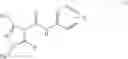
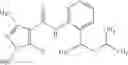
It has now been found that carboxamides of the formula (I)
in which
- R is C3-C12-cycloalkyl, C3-C22-cycloalkenyl, C6-C12-bicycloalkyl, C2-C12-oxacycloalkyl, C4-C12-oxacycloalkenyl, C3-C12-thiacycloalkyl, C4-C12-thiacycloalkenyl, C2-C12-azacycloalkyl, each of which may optionally be mono- or polysubstituted, identically or differently, by C1-C8-alkyl, C1-C8-alkoxy, halogen and/or cyano,
- or phenyl which is optionally mono- to pentasubstituted identically or differently, where the substituents are each selected from the list W1,
- or unsubstituted C2-C20-alkyl,
- or C1-C20-alkyl which is mono- or polysubstituted, identically or differently, by halogen, C1-C6-alkylthio, C1-C6-alkylsulfinyl, C1-C6-alkylsulfonyl, C1-C6-alkoxy, C1-C6-alkylamino, di(C1-C6-alkyl)amino, C1-C6-haloalkylthio, C1-C6-haloalkylsulfinyl, C1-C6-haloalkylsulfonyl, C1-C6-haloalkoxy, C1-C6-haloalkylamino, halodi(C1-C6-alkyl)amino, —SiR1R2R3 and/or C3-C6-cycloalkyl, where the cycloalkyl moiety may in turn optionally be mono- to tetrasubstituted, identically or differently, by halogen, C1-C4-alkyl and/or C1-C4-haloalkyl,
- W1 is halogen, cyano, nitro, amino, hydroxyl, C1-C8-alkyl, C1-C8-alkoxy, C1-C8-alkylthio, C1-C8-alkylsulfinyl, C1-C8-alkylsulfonyl, C2-C6-alkenyl, C2-C6-alkenyloxy; C1-C6-haloalkyl, C1-C6-haloalkoxy, C1-C6-haloalkylthio, C1-C6-haloalkylsulfinyl or C1-C6-haloalkylsulfonyl having in each case from 1 to 13 identical or different halogen atoms; C2-C6-haloalkenyl or C2-C6-haloalkenyloxy having in each case from 1 to 11 identical or different halogen atoms; C3-C6-cycloalkyl or C3-C6-cycloalkyloxy;
- R1 and R2 are each independently hydrogen, C1-C8-alkyl, C1-C8-alkoxy, C1-C4-alkoxy-C1-C4-alkyl, C1-C4-alkylthio-C1-C4-alkyl or C1-C6-haloalkyl,
- R3 is hydrogen, C1-C8-alkyl, C1-C8-alkoxy, C1-C4-alkoxy-C1-C4-alkyl, C1-C4-alkylthio-C1-C4-alkyl, C2-C8-alkenyl, C2-C8-alkynyl, C1-C6-haloalkyl, C2-C6-haloalkenyl, C2-C6-haloalkynyl, C3-C6-cycloalkyl, or in each case optionally substituted phenyl or phenylalkyl,
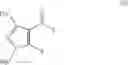
characterized in that - 5-fluoro-1,3-dimethyl-1H-pyrazole-4-carbonyl fluoride of the formula (II)
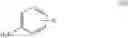
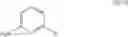
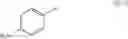
is reacted with aniline derivatives of the formula (III)
in which R is as defined above,
in the absence of an acid acceptor.
Surprisingly, the carboxamides of the formula (I) can be prepared under the inventive conditions with good yields in high purity and selectivity. A further advantage of the process according to the invention is that the workup is simpler, since the use of an acid acceptor is dispensed with. The process according to the invention also becomes more economically viable as a result. In addition, the reaction time can be shortened.
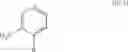
When, for example, 5-fluoro-1,3-dimethyl-1H-pyrazole-4-carbonyl fluoride and 2-(1,3-dimethylbutyl)phenylamine are used as starting materials, the process according to the invention can be illustrated by the following formula scheme:
The 5-fluoro-1,3-dimethyl-1H-pyrazole-4-carbonyl fluoride of the formula (II) used as a starting material in the performance of the process according to the invention is known (cf. EP-A 0 776 889).
The aniline derivatives also used as starting materials in the performance of the process according to the invention are defined in general by the formula (III).
- R is preferably C3-C8-cycloalkyl, C3-C8-cycloalkenyl, C6-C10-bicycloalkyl, C2-C7-oxacycloalkyl, C4-C7-oxacycloalkenyl, C3-C7-thiacycloalkyl, C4-C7-thiacycloalkenyl, C2-C7-azacycloalkyl, each of which may optionally be mono- to tetrasubstituted, identically or differently, by C1-C4-alkyl, C1-C4-alkoxy, fluorine, chlorine, bromine and/or cyano,
- or phenyl which is mono- to trisubstituted identically or differently, where the substituents are selected from the list W1,
- or unsubstituted C2-C,2-alkyl (such as ethyl and straight-chain or branched propyl, butyl, pentyl, hexyl, heptyl, octyl, nonyl, decyl, undecyl and dodecyl)
- or C1-C,2-alkyl (such as methyl, ethyl and straight-chain or branched propyl, butyl, pentyl, hexyl, heptyl, octyl, nonyl, decyl, undecyl and dodecyl) which is mono- or polysubstituted, identically or differently, by fluorine, chlorine, bromine, iodine, C1-C6-alkylthio, C1-C4-alkylsulfinyl, C1-C4-alkylsulfonyl, C1-C4-alkoxy, C1-C4-alkylamino, di(C1-C4-alkyl)amino, C1-C4-haloalkylthio, C1-C4-haloalkylsulfinyl, C1-C4-haloalkylsulfonyl, C1-C4-haloalkoxy, C1-C4-haloalkylamino, halodi(C1-C4-alkyl)amino having in each case from 1 to 9 fluorine, chlorine and/or bromine atoms, —SiR1R2R3, cyclopropyl, dichlorocyclopropyl, cyclobutyl, cyclopentyl or cyclohexyl.
- R is more preferably cyclopentyl, cyclohexyl, cycloheptyl, bicyclo[2.2.1]heptyl, or mono4-substituted phenyl, phenyl disubstituted identically or differently in the 3,4-, 2,3-, 2,4- or 3,5-position, or phenyl trisubstituted identically or differently in the 2,4,6-position, where the substituents are each selected from the list W1,
- or unsubstituted C3-C10-alkyl (such as propyl, 1-methylethyl, butyl, 1-methylpropyl, 2-methylpropyl, 1,1-dimethylethyl, n-pentyl, 1-methylbutyl, 2-methylbutyl, 3-methylbutyl, 1,2-dimethylpropyl, 1,1-dimethylpropyl, 2,2-dimethylpropyl, 1-ethylpropyl, n-hexyl, 1-methylpentyl, 2-methylpentyl, 3-methylpentyl, 4-methylpentyl, 1,2-dimethylbutyl, 1,3-dimethylbutyl, 2,3-dimethylbutyl, 1,1-dimethylbutyl, 2,2-dimethylbutyl, 3,3-dimethylbutyl, 1,1,2-trimethylpropyl, 1,2,2-trimethylpropyl, 1-ethylbutyl, 2-ethylbutyl, 1-ethyl-3-methylpropyl, n-heptyl, 1-methylhexyl, 1-ethylpentyl, 2-ethylpentyl, 1-propylbutyl, octyl, 1-methylheptyl, 2-methylheptyl, 1-ethylhexyl, 2-ethylhexyl, 1-propylpentyl, 2-propylpentyl, nonyl, 1-methyloctyl, 2-methyloctyl, 1-ethylheptyl, 2-ethylheptyl, 1-propylhexyl, 2-propylhexyl, decyl, 1-methylnonyl, 2-methylnonyl, 1-ethyloctyl, 2-ethyloctyl, 1-propylheptyl and 2-propylheptyl) or C1-C10-alkyl (such as methyl, ethyl, propyl, 1-methylethyl, butyl, 1-methylpropyl, 2-methylpropyl, 1,1-dimethylethyl, n-pentyl, 1-methylbutyl, 2-methylbutyl, 3-methylbutyl, 1,2-di-methylpropyl, 1,1-dimethylpropyl, 2,2-dimethylpropyl, 1-ethylpropyl, n-hexyl, 1-methylpentyl, 2-methylpentyl, 3-methylpentyl, 4-methylpentyl, 1,2-dimethylbutyl, 1,3-dimethylbutyl, 2,3-di-methylbutyl, 1,1-dimethylbutyl, 2,2-dimethylbutyl, 3,3-dimethylbutyl, 1,1,2-trimethylpropyl, 1,2,2-trimethylpropyl, 1-ethylbutyl, 2-ethylbutyl, 1-ethyl-3-methylpropyl, n-heptyl, 1-methylhexyl, 1-ethylpentyl, 2-ethylpentyl, 1-propylbutyl, octyl, 1-methylheptyl, 2-methylheptyl, 1-ethylhexyl, 2-ethylhexyl, 1-propylpentyl, 2-propylpentyl, nonyl, 1-methyloctyl, 2-methyloctyl, 1-ethylheptyl, 2-ethylheptyl, 1-propylhexyl, 2-propylhexyl, decyl, 1-methylnonyl, 2-methylnonyl, 1-ethyloctyl, 2-ethyloctyl, 1-propylheptyl and 2-propylheptyl) which is mono- or polysubstituted identically or differently by fluorine, chlorine, methylthio, ethylthio, n- or isopropylthio, n-, iso-, sec-, tert-butylthio, pentylthio, hexylthio, methylsulfonyl, ethylsulfonyl, n- or isopropylsulfonyl, n-, iso-, sec-, tert-butylsulfonyl, methoxy, ethoxy, n- or isopropoxy, n-, iso-, sec-, tert-butoxy, methylamino, ethylamino, n- or isopropylamino, n-, iso-, sec-, tert-butylamino, dimethylamino, diisopropylamino, trifluoromethylthio, trifluoromethoxy, —SiR1R2R3, cyclopropyl, dichlorocyclopropyl, cyclobutyl, cyclopentyl or cyclohexyl.
- W1 is preferably fluorine, chlorine, bromine, methyl, ethyl, n- or i-propyl, n-, i-, s- or t-butyl, methoxy, ethoxy, n- or i-propoxy, trifluoromethyl, trifluoroethyl, difluoromethoxy, trifluoromethoxy, difluorochloromethoxy, trifluoroethoxy.
- W1 is more preferably fluorine, chlorine or bromine.
- R1 and R2 are each independently preferably C1-C6-alkyl, C1-C6-alkoxy, C1-C3-alkoxy-C1-C3-alkyl or C1-C3-alkylthio-C1-C3-alkyl.
- R1 and R2 are each independently more preferably methyl, ethyl, methoxy, ethoxy, methoxymethyl, ethoxymethyl, methoxyethyl, ethoxyethyl, methylthiomethyl, ethylthiomethyl, methylthioethyl or ethylthioethyl.
- R1 and R2 are each independently most preferably methyl, methoxy, methoxymethyl or methylthiomethyl.
- R1 and R2 are especially preferably each methyl.
- R3 is preferably C1-C6-alkyl, C1-C6-alkoxy, C1-C3-alkoxy-C1-C3-alkyl, C1-C3-alkylthio-C1-C3-alkyl, C3-C6-cycloalkyl, phenyl or benzyl.
- R3 is more preferably methyl, ethyl, n- or isopropyl, n-, sec-, iso- or tert-butyl, methoxy, ethoxy, n- or isopropoxy, n-, sec-, iso- or tert-butoxy, methoxymethyl, ethoxymethyl, methoxyethyl, ethoxyethyl, methylthiomethyl, ethylthiomethyl, methylthioethyl, ethylthioethyl, cyclopropyl, phenyl or benzyl.
- R3 is most preferably methyl, ethyl, n- or isopropyl, iso- or tert-butyl, methoxy, isopropoxy, iso- or tert-butoxy.
- R3 is especially preferably methyl.
Preference is given to using aniline derivatives of the formula (III-1)
in which R is as defined above,
in the process according to the invention.
Preference is also given to using aniline derivatives of the formula (III-2)
in which R is as defined above,
in the process according to the invention.
Preference is also given to using aniline derivatives of the formula (III-3)
in which R is as defined above,
in the process according to the invention.
Particular preference is given to using aniline derivatives of the formula (III-1).
Aniline derivatives of the formula (III) or (III-1), (III-2) and (III-3) are known or can be prepared in a known manner (cf. EP-A 0 776 889, WO 03/010149).
The process according to the invention can be performed in the presence of a diluent. Useful diluents for this purpose include all inert organic solvents, preferably aliphatic, alicyclic or aromatic hydrocarbons, for example petroleum ether, hexane, heptane, cyclohexane, methylcyclohexane, benzene, toluene, xylene or decalin; halogenated hydrocarbons, for example chlorobenzene, dichlorobenzene, dichloromethane, chloroform, tetrachloromethane, dichloroethane or trichloroethane; ethers such as diethyl ether, diisopropyl ether, methyl t-butyl ether, methyl t-amyl ether, dioxane, tetrahydrofuran, 1,2-dimethoxyethane, 1,2-diethoxyethane or anisole; ketones such as acetone, butanone, methyl isobutyl ketone or cyclohexanone; nitriles such as acetonitrile, propionitrile, n- or i-butyronitrile or benzonitrile; amides such as N,N-dimethylformamide, N,N-dimethylacetamide, N-methylformanilide, N-methylpyrrolidone or hexamethylphosphoramide, more preferably chlorobenzene or toluene.
The reaction temperatures in the performance of the process according to the invention can be varied within a relatively wide range. In general, temperatures of from 120° C. to 150° C., preferably temperatures of from 130° C. to 140° C., are employed.
In the performance of the process according to the invention, generally between 0.8 and 1.5 mol, preferably equimolar amounts, of aniline derivatives of the formula (III) are used per mole of the 5-fluoro-1,3-dimethyl-1H-pyrazole-4-carbonyl fluoride of the formula (II).
Depending on the reactivity of the reactants, the reaction time may be up to 10 hours, but the reaction can also be terminated even earlier in the case of complete conversion. Preference is given to reaction times of 5 hours.
All processes according to the invention are generally performed under standard pressure. However, it is possible to work under elevated or reduced pressure—generally between 0.1 bar and 10 bar.
The carboxamides of the formula (I) preparable by the process according to the invention are value fungicides (cf, for example, WO 03/010149).
The inventive preparation of carboxamides of the formula (I) is described in the examples which follow, which further illustrate the above description. However, the examples should not be interpreted in a restrictive manner.
PREPARATION EXAMPLES
Under protective gas (argon), a solution of 2-(1,3-dimethylbutyl)phenylamine 18.05 g (100 mmol) in 40 ml of chlorobenzene is initially charged. 16.17 g (100 mmol) of 5-fluoro-1,3-dimethyl-1H-pyrazole-4-carbonyl fluoride are added and the mixture is stirred at 130° C. for a further 5 h. For workup, the mixture is allowed to cool, 100 ml of water are added and the mixture is extracted three times with 100 ml each time of ethyl acetate. The combined organic phases are washed once with 100 ml of water, dried over magnesium sulfate and concentrated under reduced pressure. The resulting suspension is stirred at room temperature with 100 ml for a further 2 h. This gives 28.2 g (89% of theory) of N-[2-(1,3-dimethylbutyl)phenyl]-5-fluoro-1,3-dimethyl-1H-pyrazole-4-carboxamide in the form of crystals (melting point 104-106° C.).
Claims
1. A process for preparing a carboxamide of formula (I)
in which
R is C3-C12-cycloalkyl, C3-C12-cycloalkenyl, C6-C12-bicycloalkyl, C2-C12-oxacycloalkyl, C4-C12-oxacycloalkenyl, C3-C12-thiacycloalkyl, C4-C12-thiacycloalkenyl, C2-C12-azacycloalkyl, each of which may optionally be mono- or polysubstituted, identically or differently, by C1-C8-alkyl, C1-C8-alkoxy, halogen and/or cyano, or phenyl which is optionally mono- to pentasubstituted identically or differently, where the substituents are each selected from the list W1,
or unsubstituted C2-C20-alkyl,
or C1-C20-alkyl which is mono- or polysubstituted, identically or differently, by halogen, C1-C6-alkylthio, C1-C6-alkylsulfinyl, C1-C6-alkylsulfonyl, C1-C6-alkoxy, C1-C6-alkylamino, di(C1-C6-alkyl)amino, C1-C6-haloalkylthio, C1-C6-haloalkylsulfinyl, C1-C6-haloalkylsulfonyl, C1-C6-haloalkoxy, C1-C6-haloalkylamino, halodi(C1-C6-alkyl)amino, —SiR1R2R3 and/or C3-C6-cycloalkyl, where the cycloalkyl moiety may in turn optionally be mono- to tetrasubstituted, identically or differently, by halogen, C1-C4-alkyl and/or C1-C4-haloalkyl,
W1 is halogen, cyano, nitro, amino, hydroxyl, C1-C8-alkyl, C1-C8-alkoxy, C1-C8-alkylthio, C1-Cs-alkylsulfinyl, C1-Cs-alkylsulfonyl, C2-C6-alkenyl, C2-C6-alkenyloxy; C1-C6-haloalkyl, C1-C6-haloalkoxy, C1-C6-haloalkylthio, C1-C6-haloalkylsulfinyl or C1-C6-haloalkylsulfonyl having in each case from 1 to 13 identical or different halogen atoms; C2-C6-haloalkenyl or C2-C6-haloalkenyloxy having in each case from 1 to 11 identical or different halogen atoms; C3-C6-cycloalkyl or C3-C6-cycloalkyloxy;
R1 and R2 are each independently hydrogen, C1-C8-alkyl, C1-C8-alkoxy, C1-C4-alkoxy-C1-C4-alkyl, C1-C4-alkylthio-C1-C4-alkyl or C1-C6-haloalkyl,
R3 is hydrogen, C1-C8-alkyl, C1-C8-alkoxy, C1-C4-alkoxy-C1-C4-alkyl, C1-C4-alkylthio-C1-C4-alkyl, C2-C8-alkenyl, C2-C8-alkynyl, C1-C6-haloalkyl, C2-C6-haloalkenyl, C2-C6-haloalkynyl, C3-C6-cycloalkyl, or in each case optionally substituted phenyl or phenylalkyl,
said process comprising:
reacting 5-fluoro-1,3-dimethyl-1H-pyrazole-4-carbonyl fluoride of formula (II)
with aniline derivatives of formula (III)
in which R is as defined above,
in the absence of an acid acceptor.
2. The process as claimed in claim 1 wherein a temperature of from 120° C. to 150° C. are is employed.
4. The process as claimed in claim 1 wherein 2-(1,3-dimethylbutyl)phenylamine is used as the aniline derivative of the formula (III).
5. The process as claimed in claim 2, wherein a temperature of from 120° C. to 150° C. is employed.
6. The process as claimed in claim 2, wherein 2-(1,3-dimethylbutyl)phenylamine is used as the aniline derivative of the formula (III).
7. The process as claimed in claim 3, wherein 2-(1,3-dimethylbutyl)phenylamine is used as the aniline derivative of the formula (III).
8. A carboxamide of formula I
in which
R is C3-C12-cycloalkyl, C3-C12-cycloalkenyl, C6-C12-bicycloalkyl, C2-C12-oxacycloalkyl, C4-C12-oxacycloalkenyl, C3-C12-thiacycloalkyl, C4-C12-thiacycloalkenyl, C2-C12-azacycloalkyl, each of which may optionally be mono- or polysubstituted, identically or differently, by C1-C8-alkyl, C1-C8-alkoxy, halogen and/or cyano, or phenyl which is optionally mono- to pentasubstituted identically or differently, where the substituents are each selected from the list W1,
or unsubstituted C2-C20-alkyl,
or C1-C20-alkyl which is mono- or polysubstituted, identically or differently, by halogen, C1-C6-alkylthio, C1-C6-alkylsulfinyl, C1-C6-alkylsulfonyl, C1-C6-alkoxy, C1-C6-alkylamino, di(C1-C6-alkyl)amino, C1-C6-haloalkylthio, C1-C6-haloalkylsulfinyl, C1-C6-haloalkylsulfonyl, C1-C6-haloalkoxy, C1-C6-haloalkylamino, halodi(C1-C6-alkyl)amino, —SiR1R2R3 and/or C3-C6-cycloalkyl, where the cycloalkyl moiety may in turn optionally be mono- to tetrasubstituted, identically or differently, by halogen, C1-C4-alkyl and/or C1-C4-haloalkyl,
W1 is halogen, cyano, nitro, amino, hydroxyl, C1-C8-alkyl, C1-C8-alkoxy, C1-C8-alkylthio, C1-C8-alkylsulfinyl, C1-C8-alkylsulfonyl, C2-C6-alkenyl, C2-C6-alkenyloxy; C1-C6-haloalkyl, C1-C6-haloalkoxy, C1-C6-haloalkylthio, C1-C6-haloalkylsulfinyl or C1-C6-haloalkylsulfonyl having in each case from 1 to 13 identical or different halogen atoms; C2-C6-haloalkenyl or C2-C6-haloalkenyloxy having in each case from 1 to 11 identical or different halogen atoms; C3-C6-cycloalkyl or C3-C6-cycloalkyloxy;
R1 and R2 are each independently hydrogen, C1-C8-alkyl, C1-C8-alkoxy, C1-C4-alkoxy-C1-C4-alkyl, C1-C4-alkylthio-C1-C4-alkyl or C1-C6-haloalkyl,
R3 is hydrogen, C1-C8-alkyl, C1-C8-alkoxy, C1-C4-alkoxy-C1-C4-alkyl, C1-C4-alkylthio-C1-C4-alkyl, C2-C8-alkenyl, C2-C8-alkynyl, C1-C6-haloalkyl, C2-C6-haloalkenyl, C2-C6-haloalkynyl, C3-C6-cycloalkyl, or in each case optionally substituted phenyl or phenylalkyl,
that has been prepared in the absence of an acid acceptor.
Images & Drawings included:



Sources:
- United States Patent and Trademark Office - verify current appl. status at the USPTO↗
Similar patent applications:
- » 20170015632
METHOD FOR PRODUCING CARBOXAMIDES - » 20090054661
Method for producing carboxamides - » 20160009655
Method for producing carboxamides - » 20170022168
Method for producing carboxamides - » 20140275568
Crystal of 5-hydroxy-1H-imidazole-4-carboxamide 3/4 hydrate, method for producing the same and crystal of 5-hydroxy-1H-imidazole-4-carboxamide hydrate - » 20200247759
Method for producing 5-hydroxy-1H-imidazole-4 carboxamide 3/4 hydrate - » 20160229870
Methods of producing substituted (3S,11aR)-6-hydroxy-3-methyl-5,7-dioxo-2,3,5,7,11,11a-Hexahydrooxazolo[3,2-a]pyrido[1,2-d]pyrazine-8-carboxamides - » 20150038702
Methods of producing substituted (4R,12AS)-7-hydroxy-4-methyl-6,8-dioxo-3,4,6,8,12,12A-hexahydro-2H-pyrido[1′,2′:4,5]pyrazino[2,1-B][1,3]oxazine-9-carboxamides
Recent applications in this class:
- » 20240300901 2024-09-12
METHODS FOR THE PREPARATION OF 5-BROMO-2-(3-CHLORO-PYRIDIN-2-YL)-2H-PYRAZOLE-3-CARBOXYLIC ACID - » 20240182428 2024-06-06
PRODRUG OF CELECOXIB, PREPARATION METHOD THEREFOR AND APPLICATION THEREOF - » 20230391728 2023-12-07
DENDRENE AMIDE COMPOUND, BACTERICIDE AND USE THEREOF - » 20230382870 2023-11-30
N-AROMATIC AMIDE COMPOUNDS, PREPARATION METHODS AND USES THEREOF - » 20230312478 2023-10-05
HERBICIDAL COMPOUNDS - » 20230242489 2023-08-03
Highly efficient process for the preparation of 4-Fluoro-1H-pyrazole or salts thereof - » 20230002326 2023-01-05
Selective androgen receptor degrader (SARD) ligands and methods of use thereof - » 20220372000 2022-11-24
New Process for the Synthesis of 5-Fluoro-3-(Difuoromethyl)-5-Fluoro-1-Methyl-1H-Pyrazole-4-Carboxylic Acid Derivatives and the Free Acid Thereof - » 20220081401 2022-03-17
SELECTIVE ANDROGEN RECEPTOR DEGRADER (SARD) LIGANDS AND METHODS OF USE THEREOF - » 20210380537 2021-12-09
PYRAZOLE DERIVATIVES AS MODULATORS OF THE 5-HT2A SEROTONIN RECEPTOR USEFUL FOR THE TREATMENT OF DISORDERS RELATED THERETO
Recent applications for this Assignee:
- » 20210053924 2021-02-25
Heterocyclic compounds as pesticides - » 20190367459 2019-12-05
Heterocyclic compounds as pesticides - » 20190239514 2019-08-08
Compositions comprising a biological control agent and an insecticide - » 20190092765 2019-03-28
N-CYCLOALKYL-N-[(HETEROCYCLYLPHENYL)METHYLENE]-(THIO)CARBOXAMIDE DERIVATIVES - » 20180327776 2018-11-15
AXMI554 delta-endotoxin gene and methods for its use - » 20180258036 2018-09-13
Method for producing bis(3-aminophenyl)disulfides and 3-aminothiols - » 20180098540 2018-04-12
Ternary fungicidal mixtures - » 20170339959 2017-11-30
Chemical stabilization of iodosulfuron-methyl sodium salt by hydroxystearates - » 20170305864 2017-10-26
Heterocyclic compounds as pesticides - » 20170245504 2017-08-31
Composition comprising a biological control agent and a fungicide