Video signal transmitting device for computer system having analog and digital video signal output functionality
US20090061675A1
2009-03-05
12/288,729
2008-10-22
✅ Patent granted
US 7,563,129 B2
2009-07-21
-
-
Tanh Q Nguyen
2028-10-22
Abstract:
A video signal transmitting device having analog and digital video signal output functionality is adapted to transmit a video signal, and has a cable unit, a digital visual interface integrated input port disposed at one end of the cable unit and adapted to receive the video signal, and a digital visual interface output port and an analog video signal output port disposed at the other end of the cable unit. The digital visual interface integrated input port has a first pin set for digital video signals, and a second pin set for analog video signals. The digital visual interface output port is connected to the first pin set through the cable unit, and the analog video signal output port is connected to the second pin set through the cable unit so as to achieve an effect of respectively outputting digital video signals and analog video signals.
Assignee:
- Aopen Inc. 46 🇹🇼 Taipei Hsien, Taiwan
Interested in similar patents?
Get notified when new applications in this technology area are published.
Classification:
H01R27/00 IPC
Coupling parts adapted for co-operation with two or more dissimilar counterparts
H01R29/00 IPC
Coupling parts for selective co-operation with a counterpart in different ways to establish different circuits, e.g. for voltage selection, for series-parallel selection, programmable connectors
G06F3/00 IPC
Input arrangements for transferring data to be processed into a form capable of being handled by the computer; Output arrangements for transferring data from processing unit to output unit, e.g. interface arrangements
G06F13/00 IPC
Interconnection of, or transfer of information or other signals between, memories, input/output devices or central processing units
H04N9/641 » CPC main
Details of colour television systems; Circuits for processing colour signals Multi-purpose receivers, e.g. for auxiliary information
G06F3/1423 » CPC further
Input arrangements for transferring data to be processed into a form capable of being handled by the computer; Output arrangements for transferring data from processing unit to output unit, e.g. interface arrangements; Digital output to display device ; Cooperation and interconnection of the display device with other functional units controlling a plurality of local displays, e.g. CRT and flat panel display
G09G5/006 » CPC further
Control arrangements or circuits for visual indicators common to cathode-ray tube indicators and other visual indicators; Details of a display terminal, the details relating to the control arrangement of the display terminal and to the interfaces thereto Details of the interface to the display terminal
H04N5/46 » CPC further
Details of television systems; Receiver circuitry for the reception of television signals according to analogue transmission standards for receiving on more than one standard at will
H04N21/4122 » CPC further
Selective content distribution, e.g. interactive television or video on demand [VOD]; Client devices specifically adapted for the reception of or interaction with content, e.g. set-top-box [STB]; Operations thereof; Structure of client; Structure of client peripherals; Peripherals receiving signals from specially adapted client devices additional display device, e.g. video projector
H04N21/4143 » CPC further
Selective content distribution, e.g. interactive television or video on demand [VOD]; Client devices specifically adapted for the reception of or interaction with content, e.g. set-top-box [STB]; Operations thereof; Structure of client; Structure of client peripherals; Specialised client platforms, e.g. receiver in car or embedded in a mobile appliance Personal Computer [PC] embedded in a
H04N21/43632 » CPC further
Selective content distribution, e.g. interactive television or video on demand [VOD]; Client devices specifically adapted for the reception of or interaction with content, e.g. set-top-box [STB]; Operations thereof; Processing of content or additional data, e.g. demultiplexing additional data from a digital video stream; Elementary client operations, e.g. monitoring of home network or synchronising decoder's clock; Client middleware; Interfacing a local distribution network, e.g. communicating with another STB or one or more peripheral devices inside the home; Adapting the video or multiplex stream to a specific local network, e.g. a IEEE 1394 or Bluetooth® network involving a wired protocol, e.g. IEEE 1394
G09G2370/047 » CPC further
Aspects of data communication; Exchange of auxiliary data, i.e. other than image data, between monitor and graphics controller using multiple communication channels, e.g. parallel and serial using display data channel standard [DDC] communication
H04N21/426 » CPC further
Selective content distribution, e.g. interactive television or video on demand [VOD]; Client devices specifically adapted for the reception of or interaction with content, e.g. set-top-box [STB]; Operations thereof; Structure of client; Structure of client peripherals Internal components of the client ; Characteristics thereof
H01R13/56 IPC
Details of coupling devices of the kinds covered by groups or - Means for preventing chafing or fracture of flexible leads at outlet from coupling part
Description
CROSS-REFERENCE TO RELATED APPLICATION
This application claims priority of Taiwanese Application No. 095111787, filed on Apr. 3, 2006.
BACKGROUND OF THE INVENTION
1. Field of the Invention
The invention relates to a video signal transmitting device for transmitting video signals between a display and a computer device, more particularly to a computer system that has both analog and digital video signal output functionality to enable dual screen displaying on a digital display and an analog display, and to a computer device and a video signal transmitting device of the computer system.
2. Description of the Related Art
Conventional computer devices generally use a video signal transmission line to connect to a display so as to transmit video signals to the display. Currently, there are two types of video signals, i.e., analog video signals and digital video signals. A conventional analog video signal transmission port is D-Sub, which is used, e.g., in a conventional cathode ray tube (CRT) display. A digital video signal transmission port is a digital visual interface (DVI) for use in, e.g., a liquid crystal display.
Although the image display quality of digital video signals is better and will become a mainstream in the future, since analog video devices have been popular for a long time, many users still have displays or computer devices that use analog video signals. In order to be compatible with specifications of existing analog video signal transmission ports, recently launched displays or computer devices, in addition to having a digital video signal transmission port, still need to be provided with an analog transmission port or to be used in conjunction with a video signal transmission line having an adapting or converting function, such as DVI TO VGA.
Furthermore, with the image processing capability of the conventional computer device becoming more and more powerful, the computer device can now support dual screen output displaying via a one-to-two video signal transmission line or two video signal transmission ports provided at a rear part of the computer device. However, dual screen output displaying which uses a one-to-two video signal transmission line requires the video signal transmission ports of two associated displays to have the same specification, i.e., both are for either analog video signals or digital video signals. Dual screen displaying is not possible with one display device supporting analog video signals and the other supporting digital video signals, which can be inconvenient to the user.
SUMMARY OF THE INVENTION
Therefore, the object of the present invention is to provide a computer system having analog and digital video signal output functionality to enable dual screen displaying on different specifications of displays, and a computer device and a video signal transmitting device of the computer system.
Accordingly, the video signal transmitting device having analog and digital video signal output functionality of the present invention is adapted to transmit video signals, and includes a cable unit, a digital visual interface integrated input port, a digital visual interface output port, and an analog video signal output port. The digital visual interface integrated input port is disposed at one end of the cable unit, and is adapted to receive the video signals. The digital visual interface integrated input port has a first pin set for digital video signals, and a second pin set for analog video signals. The digital visual interface output port is disposed at the other end of the cable unit, and is connected to the first pin set through the cable unit. The analog video signal output port is disposed at the other end of the cable unit, and is connected to the second pin set through the cable unit.
Thus, the video signal transmitting device having analog and digital video signal output functionality of the present invention can output digital video signals and analog video signals simultaneously for respective use by a digital display and an analog display, so that displays of different specifications can be used at the same time to perform dual screen displaying.
BRIEF DESCRIPTION OF THE DRAWINGS
Other features and advantages of the present invention will become apparent in the following detailed description of the preferred embodiment with reference to the accompanying drawings, of which:
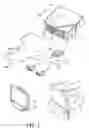
FIG. 1 is an exploded perspective view of the preferred embodiment of a computer system having analog and digital video signal output functionality according to the present invention;
FIG. 2 is a schematic diagram to illustrate video signal transmission in a motherboard of the preferred embodiment;
FIG. 3 is a schematic diagram to illustrate a pin layout of a DVI-I transmission port of the preferred embodiment;
FIG. 4 is a schematic diagram to illustrate the pins of the DVI-I transmission port of the preferred embodiment;
FIG. 5 is a schematic diagram to illustrate pins of an analog video signal output port of the preferred embodiment;
FIG. 6 is a schematic diagram to illustrate wiring of a transmission line connecting a digital visual interface integrated input port to a digital visual interface output port in a video signal transmitting device of the preferred embodiment; and
FIG. 7 is a schematic view to illustrate wiring of a transmission line connecting the digital visual interface integrated input port to an analog video signal output port in the video signal transmitting device of the preferred embodiment.
DETAILED DESCRIPTION OF THE PREFERRED EMBODIMENT
Referring to FIG. 1, the preferred embodiment of a computer system having both analog and digital video signal output functionality according to this invention is shown to include a computer device 30, a video signal transmitting device 40, and a digital display 50, such as a liquid crystal display (LCD), and an analog display 60, such as a cathode ray tube (CRT) display.
The computer device 30 has a housing 31 and a motherboard 32 received in the housing 31. It is noted that the computer device 30 further has other basic computer components, such as a microprocessor (not shown), a power supply 33, a memory (not shown), etc., and should not be limited to the disclosure of the preferred embodiment herein.
A conventional digital visual interface (DVI) is configured to transmit digital video signals, and is also configured to transmit analog video signals. For instance, a DVI-Integrated (DVI-I) transmission port can transmit both digital and analog video signals. Therefore, the computer device 30 of this preferred embodiment employs a DVI. Specifically, referring to FIGS. 1 and 2, the motherboard 32 has a North Bridge 321 responsible for video, a digital visual interface (DVI) transmitter 322, and a DVI-I transmission port 323 for connecting with the video signal transmitting device 40. The DVI-I transmission port 323 has a first pin set for digital video signals, and a second pin set for analog video signals. The North Bridge 321 sends the digital video signals to the DVI transmitter 322 for format conversion, and the converted digital video signals are sent to the first pin set. The North Bridge 321 sends the analog video signals to the second pin set. Thus, the DVI-I transmission port 323 can output both digital and analog video signals.
In order to support a plug-and-play functionality, a main communications interface between the displays 50, 60 and the computer device 30 is a display data channel (DDC). The DDC is set by the Video Electronic Standards Association (VESA) responsible for establishing video signal standards in the industry, and permits transmission of a series of numerical signals from the display 50 or 60 to the computer device 30. These numerical signals include basic product identification, basic parameters, and display specification. When the computer device 30 detects such information, it will perform automatic configuration to display an optimum resolution so as to transmit the most suitable video signals to the display 50 or 60. Therefore, the first pin set of the conventional DVI-I transmission port is configured to have pins for transmitting DDC signals so that the computer device 30 can enable the digital display 50 to correctly display digital video signals. However, the second pin set for analog video signals of the conventional DVI-I transmission port is not configured to transmit DDC signals so that the computer device 30 may not be able to allow the analog display 60 to properly display analog video signals.
Furthermore, although the first pin set of the conventional DVI-I transmission port is generally configured with two TDMS channels, since use of two TDMS channels requires the determination and conversion of the timing of use of the TDMS channels in real time, the design is comparatively complicated. Besides, the image resolution when one TDMS channel is used is already sufficient. For example, when a TDMS channel is used for transmission, at a screen updating speed of 85-Hz, the resolution may reach 1280*1024 (SXGA). When the screen updating speed is reduced to 60-Hz, the resolution can even reach 1600*1200 (UXGA). Therefore, generally, only one TDMS channel is actually used in practice. The other TDMS channel is allowed to lie idle. Accordingly, the preferred embodiment configures two pins of the idle TDMS channel for transmitting DDC signals for analog video signals to the North Bridge 321. Thus, the pin definitions as indicated in FIGS. 3 and 4 and the following table are different from those of the conventional DVI-I transmission ports. The second pin set of the DVI-I transmission port 323 of the preferred embodiment is configured to include pins 20, 21 for transmitting DDC signals, i.e., the pins 20, 21 are used as pins for a display data channel, in which the pin 20 is a clock pin and the pin 21 is a data pin. It is noted that some grounding pins, such as pins 5, C5, etc., are shared by the first pin set and the second pin set.
| PIN | PIN DEFINITION | FUNCTION | |
| First | 01 | TMDS DATA 2− | Digital video signal |
| pin | TDC2-0, i.e., the | ||
| set | first TDMS channel | ||
| 02 | TMDS DATA 2+ | Digital video signal | |
| TDC2 0, i.e., the | |||
| first TDMS channel | |||
| 03 | TMDS DATA 2/4 SHIELD | Grounding | |
| 04 | TMDS DATA 4− | Idle, i.e., the | |
| second TDMS channel | |||
| 05 | TMDS DATA 4+ | Idle, i.e., the | |
| second TDMS channel | |||
| 06 | DDC CLK | DDC clock of digital | |
| video signal | |||
| 07 | DDC DATA | DDC data of digital | |
| video signal | |||
| 09 | TMDS DATA 1− | Digital video signal | |
| TDC1-0, i.e., the | |||
| first TDMS channel | |||
| 10 | TMDS DATA 1+ | Digital video signal | |
| TDC1 0, i.e., the | |||
| first TDMS channel | |||
| 11 | TMDS DATA 1/3 SHIELD | Grounding | |
| 12 | TMDS DATA 3− | Idle, i.e., the | |
| second TDMS channel | |||
| 13 | TMDS DATA 3+ | Idle, i.e., the | |
| second TDMS channel | |||
| 14 | +5 V Power | For use by DDC of | |
| digital video signal | |||
| 15 | GND (ANALOG) | Grounding | |
| 16 | Hot Plug Detect | Hot plug detection | |
| 17 | TMDS DATA 0− | Digital video signal | |
| TDC0-0, i.e., the | |||
| first TDMS channel | |||
| 18 | TMDS DATA 0+ | Digital video signal | |
| TDC0 0, i.e., the | |||
| first TDMS channel | |||
| 19 | TMDS DATA 0/5 SHIELD | Grounding | |
| 22 | TMDS CLK SHIELD | Grounding | |
| 23 | TMDS CLK+ | Clock TLC of digital | |
| video signal | |||
| 24 | TMDS CLK− | Clock TLC of digital | |
| video signal | |||
| 25 | Mounting1 | Grounding | |
| 26 | Mounting2 | Grounding | |
| C5 | A GND | Grounding | |
| Second | 08 | V SYNC | Vertical |
| Pin | synchronization | ||
| Set | signal of analog | ||
| video signal | |||
| 15 | GND (ANALOG) | Grounding | |
| 20 | TMDS DATA 5− | DDC clock of analog | |
| video signal, i.e., | |||
| the second TDMS | |||
| channel | |||
| 21 | TMDS DATA 5+ | DDC data of analog | |
| video signal, i.e., | |||
| the second TDMS | |||
| channel | |||
| C1 | RED | Red signal | |
| C2 | GREEN | Green signal | |
| C3 | BLUE | Blue signal | |
| C4 | H SYNC | Horizontal | |
| synchronization | |||
| signal of analog | |||
| video signal | |||
| C5 | A GND | Grounding | |
| C5A | A GND | Grounding | |
Hence, when the North Bridge 321 outputs analog video signals, pins 20, 21 of the second pin set can be used to acquire the DDC of the analog display 60 so as to ensure that the analog display 60 can display normally.
As shown in FIG. 1, the video signal transmitting device 40 of the preferred embodiment is a one-to-two video signal transmission line, and has a cable unit 41, a digital visual interface integrated input port 42, a digital visual interface output port 43, and an analog video signal output port 44.
The digital visual interface integrated input port 42 cooperates with and has the same specification as the DVI-I transmission port 323 of the computer device 30, and has a first pin set and a second pin set that have the same definitions as those set forth in the above table, and that are used for connection with the DVI-I transmission port 323 to receive video signals from the computer device 30, i.e., the pin layout of the digital visual interface integrated input port 42 is the same as the pin layout of the DVI-I transmission port 323 shown in FIG. 4. The cable unit 41 has two transmission lines 411, 412. The transmission line 411 enables the pins of the digital visual interface output port 43 to be electrically connected to the first pin set, whereas the transmission line 412 enables the pins of the analog video signal output port 44 to be electrically connected to the second pin set.
In this embodiment, the specification of a transmission port 501 of the digital display 50 is digital visual interface digital (DVI-Digital, hereinafter referred to as DVI-D). The specification of the digital visual interface output port 43 may be DVI-I or DVI-D. In this embodiment, the digital visual interface output port 43 is DVI-I, whereas the specification of a transmission port 601 of the analog display 60 is D-Sub. Therefore, as shown in FIG. 5, the specification of the analog video signal output port 44 is also D-Sub. As shown in FIG. 6, the transmission line 411 connects the first pin set of the digital visual interface integrated input port 42 to the digital visual interface output port 43, and the idle pins 4, 5, 12, and 13 of the first pin set are not connected to the digital visual interface output port 43. Furthermore, as shown in FIG. 7, the transmission line 412 connects the second pin set of the digital visual interface integrated input port 42 to the pins of the analog video signal output port 44. Moreover, to ensure better signal transmission, as shown in FIGS. 6 and 7, in this embodiment, pairs of adjacent lead wires in the transmission line 411 for connecting pairs of pins 1 and 2, 6 and 7, 9 and 10, 17 and 18, and 23 and 24 in the digital visual interface integrated input port 42 which are provided for transmitting digital video signals, DDC and clock signals, respectively, are intertwined, and pairs of adjacent lead wires in the transmission line 412 for connecting pairs of pins 15 and 12, and 5 and 10 in the analog video signal output port 44 which are provided for transmitting DDC and grounding signals, respectively, are intertwined.
As shown in FIG. 1, accordingly, the computer device 30 only needs to be provided with a single DVI-I transmission port 323 in combination with a video signal transmitting device 40 to permit displaying through one or both of the digital display 50 and the analog display 60. Specifically, when the preferred embodiment is employed in conjunction with the digital display 50, it is only necessary to connect the digital visual interface integrated input port 42 of the video signal transmitting device 40 to the DVI-I transmission port 323 of the computer device 30, and to connect the digital visual interface output port 43 to the transmission port 501 of the digital display 50. After reading the DDC of the digital display 50, the North Bridge 321 of the computer device 30 sends the digital video signals to the DVI transmitter 322 for format conversion, and the converted digital video signals are sent to the digital display 50 via the video signal transmitting device 40 for display. On the other hand, when the preferred embodiment is used in conjunction with the analog display 60, the digital visual interface integrated input port 42 of the video signal transmitting device 40 has to be connected to the DVI-I transmission port 323 of the computer device 30, and the analog video signal output port 44 is connected to the transmission port 601 of the analog display 60. The computer device 30 reads the DDC of the analog display 60, and correct analog video signals are sent to the analog display 60 for display. Furthermore, when it is desired to conduct dual screen output displaying, the digital visual interface integrated input port 42 of the video signal transmitting device 40 is connected to the DVI-I transmission port 323 of the computer device 30; the digital visual interface output port 43 is connected to the transmission port 501 of the digital display 50; and the analog video signal output port 44 is connected to the transmission port 601 of the analog display 60. The computer device 30 will first read the DDC of the digital display 50 and the analog display 60, and send the correct digital video signals and analog video signals through the video signal transmitting device 40 to the digital display 50 and the analog display 60, respectively, for displaying, thereby achieving the purpose of displaying on the screens of two displays 50, 60 that have different specifications.
Given the foregoing, the computer system having dual outputs of analog and digital video signals according to the present invention configures the second pin set of the DVI-I transmission port 323 for analog video signals to have the pins 20, 21 for transmitting DDC signals so that the computer device 30 can be used to read DDC of the analog display 60 so as to correctly drive the analog display 60 for displaying. Furthermore, the computer device 30 used in combination with the video signal transmitting device 40 can cooperate with either the digital display 50 or the analog display 60, or both of the digital display 50 and the analog display 60 to allow dual screen displaying so as to achieve the object of the present invention to permit dual screen displaying on different specifications of displays.
While the present invention has been described in connection with what is considered the most practical and preferred embodiment, it is understood that this invention is not limited to the disclosed embodiment but is intended to cover various arrangements included within the spirit and scope of the broadest interpretation so as to encompass all such modifications and equivalent arrangements.
Claims
1. A video signal transmitting device having analog and digital video signal output functionality, which is adapted to transmit a video signal, said video signal transmitting device comprising:
a cable unit;
a digital visual interface integrated input port disposed at one end of said cable unit and adapted to receive the video signal, said digital visual interface integrated input port having a first pin set for digital video signals, and a second pin set for analog video signals;
a digital visual interface output port disposed at the other end of said cable unit and connected to said first pin set of said digital visual interface integrated input port through said cable unit; and
an analog video signal output port disposed at said other end of said cable unit and connected to said second pin set of said digital visual interface integrated input port through said cable unit.
2. The video signal transmitting device according to claim 1, wherein said cable unit has two transmission lines for connecting said digital visual interface output port and said analog video signal output port to said digital visual interface integrated input port, respectively.
3. The video signal transmitting device according to claim 1, wherein said second pin set of said digital visual interface integrated input port includes a pin unit for a display data channel.
4. The video signal transmitting device according to claim 3, wherein said pin unit for a display data channel of said second pin set includes a data pin and a clock pin.
5. The video signal transmitting device according to claim 1, wherein said digital visual interface output port has a specification that is digital visual interface-digital.
6-8. (canceled)
Images & Drawings included:



Sources:
- United States Patent and Trademark Office - verify current appl. status at the USPTO↗
Similar patent applications:
Recent applications in this class:
- » 20190098273 2019-03-28
Electronic apparatus and controlling method thereof - » 20170302899 2017-10-19
FACILITATING INTERACTION BETWEEN VIDEO RENDERERS AND GRAPHICS DEVICE DRIVERS - » 20160330421 2016-11-10
Color metadata for a downlink data channel - » 20120320007 2012-12-20
Input source search support method, and image display apparatus and projector using the search support method - » 20120081602 2012-04-05
Filter module for a video decoding system - » 20110157372 2011-06-30
MULTIMEDIA APPARATUS HAVING FUNCTION OF DETECTING VIDEO SIGNAL CONNECTION - » 20110109806 2011-05-12
System and apparatus for selectively terminating a video signal based on the presence or absence of a terminating device - » 20100271486 2010-10-28
Method and apparatus for providing robust display digital channel transmission - » 20100146429 2010-06-10
Input source search support method, and image display apparatus and projector using the search support method - » 20100103195 2010-04-29
Video, audio and graphics decode, composite and display system
Recent applications for this Assignee:
- » 20140048658 2014-02-20
Back frame module - » 20120290757 2012-11-15
ELECTRONIC APPARATUS AND UNIVERSAL SERIAL BUS 3.0 MODULE - » 20120286635 2012-11-15
COMPUTER CASE - » 20120234994 2012-09-20
Back frame module - » 20110242752 2011-10-06
Fixing mechanism and electronic device having the same - » 20110228480 2011-09-22
Heat-dissipating apparatus and electronic device having the same - » 20110182009 2011-07-28
Display device and housing structure of the display device - » 20100133967 2010-06-03
Foldable frame and a computer housing including the foldable frame - » 20100053887 2010-03-04
Face panel for a computer housing - » 20100053869 2010-03-04
Computer housing and computer including the same