Method And Reactor For Biomass Pyrolytic Conversion
US20090064583A1
2009-03-12
11/910,351
2006-03-30
Abstract:
A method and apparatus performing high temperature fast pyrolysis of dry biomass are described. High yield of gases with medium caloric value and low tar content are claimed. Passing electric current through the mixture of biomass with conductive particles in the stirred bed inside the reactor provides the intensive direct heating of the biomass in the pyrolytic reactor.
Assignee:
- Genova Ltd. 1 🇮🇱 Misgav, Israel
Interested in similar patents?
Get notified when new applications in this technology area are published.
Classification:
C10B53/02 » CPC main
Destructive distillation, specially adapted for particular solid raw materials or solid raw materials in special form of cellulose-containing material
C10B19/00 » CPC further
Heating of coke ovens by electrical means
C10G1/02 » CPC further
Production of liquid hydrocarbon mixtures from oil-shale, oil-sand, or non-melting solid carbonaceous or similar materials, e.g. wood, coal by distillation
Y02E50/10 » CPC further
Technologies for the production of fuel of non-fossil origin Biofuels, e.g. bio-diesel
Y02E50/10 » CPC further
Technologies for the production of fuel of non-fossil origin Biofuels, e.g. bio-diesel
Y02P20/145 » CPC further
Technologies relating to chemical industry; Feedstock the feedstock being materials of biological origin
Y02P20/145 » CPC further
Technologies relating to chemical industry; Feedstock the feedstock being materials of biological origin
C10B47/02 IPC
Destructive distillation of solid carbonaceous materials with indirect heating, e.g. by external combustion with stationary charge
Description
FIELD OF THE INVENTION
The present invention relates to biomass conversion into energy. More particular, the present invention relates to biomass pyrolytic conversion to fuels; mainly in gaseous form.
BACKGROUND OF THE INVENTION
Biomass resources can be used as bioenergy. Biomass in general is the biodegradable fraction of products, waste and residues from agriculture (including vegetal and animal substances), forestry and related industries, as well as the biodegradable fraction of industrial and municipal waste. Usage of biomass resources is developed in three ways: biomass for heating purposes (bio-heating); biomass for electricity production (bio-electricity); and biomass for transport fuels (transportation biofuels).
As mentioned, many types of biomass are available for conversion into energy. The efficiency of converting biomass into energy is determined by specific characteristics of the applied biomass technology. The profitability of the applied technology is strongly determined by the amount of the biomass available. One of the problems associated with biomass usage is the relatively high cost of biomass transportation that reduces the profitability.
At present, the following technologies are developed and applied for biomass conversion into electric energy:
-
- Firing in boilers (Fluid Beds as a rule) with generation of steam and its utilization in Rankin cycle; application of this method is limited by the necessity of gathering big amounts of biomass.
- Gasification of biomass and further firing of the gases in gas turbines or engines; low calorific value of the generated fuel gases seriously limits its efficiency.
- Pyrolysis of the biomass. This method, if successful, provides gaseous or liquid fuels with high calorific value for power generation and seems to be especially convenient for small power units (˜0.5 MW) destined for in situ heat generation.
Pyrolysis of biomass is taught in the art and is the scope of the present invention due to the high caloric value of the product and the massive possibility for in situ use that eliminates the biomass transportation cost. As an example, U.S. Pat. No. 5,387,321 “Apparatus for Waste Pyrolysis” filed in 1992 by Holland describes a pyrolyser where a pulverulent material is heated by electromagnetic microwaves and transfers its thermal energy to the biomass. The use of microwaves is costly and requires, for the amount of energy required, sophisticated electrical installations. Another example disclosed in U.S. Pat. No. 5,618,321 “Pyrolysis Gasifier with Inner Sleeve Member” by Beierle et al. describes a pyrolyser wherein a paddle distributes the biomass on a vertical fluid bed. The heat required is supplied by burning in situ part of the biomass by controlled introduction of air, a hose nitrogen dilutes the final fuel-gas product.
A unique pyrolyser is described in U.S. Pat. No. 6,048,374 “Process and Device for Pyrolysis of Feedstock” by Green. The patent describes a pyrolyser where an auger moves, mixes and improves the heating of the biomass. The heat required is supplied by burning part of the solid residue in a combustion chamber in a zone situated below the pyrolyser, and the gases from the combustion dilute the pyrolysis gas. U.S. Pat. No. 4,308,103 “Apparatus for the Pyrolysis of Comminuted Solid Carbonizable Materials” filed in 1980 by Rotter describes a horizontal cylindrical pyrolyser with a shaft having mixing paddles. The pyrolyser is heated by firing fuel in a bracketed mantel around the pyrolyser.
The available solutions that are brought herein as references as well as other solutions fail to provide an efficient pyrolyser for biomass conversion into energy. Most of those solutions do not deal with in situ reactors and therefore, do not solve the high costs of biomass transportation involved in biomass-to-energy conversion.
SUMMARY OF THE INVENTION
It is an object of the present invention to provide a reactor for biomass pyrolytic conversion to energy such as electric power and heat generation.
It is another object of the present invention to provide a reactor for biomass pyrolytic conversion to energy that is in situ and eliminate the high cost involved in biomass transportation.
It is yet another object of the present invention to provide a method for biomass pyrolytic conversion to energy that is both effective and economical.
It is therefore provided in accordance with a preferred embodiment of the present invention a method for pyrolytic processing of biomass comprising:
-
- feeding crushed dried biomass into a pyrolytic reactor comprising a body, a revolving shaft, and electricity conductive particles;
- mixing the dried biomass and said conductive particles;
- applying a current to the electricity conductive particles so as to allow the conductive particles as well as the biomass to heat up;
- partially cooling vapors-gaseous products created by pyrolysis and producing fuel-gas;
- whereby a pyrolysis process is realized within the pyrolytic reactor and fuels for power generation production.
Furthermore in accordance with another preferred embodiment of the present invention, the biomass within said pyrolytic reactor is heated at a high heating rate up to a temperature between 700 and 1000° C.
Furthermore in accordance with another preferred embodiment of the present invention, said temperature is between 750 and 850° C.
Furthermore in accordance with another preferred embodiment of the present invention, the biomass is any type of dry solid waste biomass.
Furthermore in accordance with another preferred embodiment of the present invention, said biomass is selected from a group of biomasses such as olive husks, wood, forest and agricultural residues such as bagasse, coconut shell, corn stalks, wheat straw, rice husk and rice straw, dried sludge from water treatments.
It is also provided in accordance with yet another preferred embodiment of the present invention, a pyrolytic reactor for biomass processing comprising:
-
- a cylindrical body;
- a revolving shaft within said cylindrical body, wherein said shaft is adapted to mix the biomass;
- at least one raw material feeder provided to said cylindrical body;
- at least one product coke discharge system;
- at least one pipe for volatile products evacuation;
- conductive particles provided within said cylindrical body;
- Whereby electric current that is supplied through said shaft and through said cylindrical body is transmitted through said conductive particles so as to allow sufficient heating of the conductive particles as well as the biomass that is mixed with them while pyrolysis of the biomass occurs.
Furthermore in accordance with another preferred embodiment of the present invention, said cylindrical body is equipped with a chamber for additional (secondary) pyrolysis.
BRIEF DESCRIPTION OF THE FIGURES
In order to better understand the present invention and appreciate its practical applications, the following Figures are attached and referenced herein. Like components are denoted by like reference numerals.
It should be noted that the figures are given as examples and preferred embodiments only and in no way limit the scope of the present invention as defined in the appending Description and Claims.
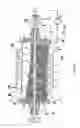
FIG. 1a illustrates a cross sectional side view of a reactor-pyrolyser in accordance with a preferred embodiment of the present invention.
DETAILED DESCRIPTION OF THE INVENTION AND FIGURES
The method for converting biomass to available energy described in the present invention is based on very rapid and intensive heating of the biomass within a specially designed reactor or pyrolyser. Rapid heating is achieved by mixing the biomass with conductive solid particles through which an electric current is passed.
It was found unexpectedly that the application of a low voltage of electric current through a steered bead of conductive particles allows fast heating of this bed. When introducing in this heated bed of particles dry organic waste particles, the electric heating goes on and an efficient pyrolysis is obtained.
The explanation of the efficiency of the pyrolysis is due to both the Joel effect on the bed of steered particles and due to the local micro-sparkles of high intensity that occur between the particles.
The method of the present invention enables conversion of different types of biomass into fuels; mainly in gaseous form.
According to one aspect of the present invention, the method for generating fuels from biomass involves an initial stage in which a dedicated reactor as will be comprehensively explained herein after is filled to about 50% of its volume with conductive particles. Examples of conductive particles can be coke, metal particles etc. The conductive particles are heated by passing an electric current through them. The current passes between two electrodes and preferably the reactor body and the stirrer and through the conductive particles within the reactor. The particles are heated up to about 850 degrees Celsius.
Then, dried and crushed biomass is added continuously. These biomass particles are mixed with the conductive particles in a way that prevents the decrease of the total reactor content conductivity, and are rapidly heated. The conductivity of the mixture is controlled by the ratio between the biomass and the conductive particles.
The stirred biomass is decomposed in the reactor under combined action of high temperature and electricity, yielding gases, vapors and coke.
Primary volatiles created by the pyrolysis process such as gases, organic vapors and steam undergo a secondary pyrolysis on the surface of the conductive particles all along the reactor.
Primary organic vapors that contain large amounts of oxygen in their molecules are decomposed by the secondary pyrolysis and are converted mainly into fuel gases. The presence of primary pyrogenic water (steam) reduces the entrainment of “fly” coke through secondary pyrolysis.
Primary pyrogenic water (steam) reacts with organic substances, e.g. according to the following gasifying reaction:
CmHn+mH2O<->mCO+m+n/2H2.
This secondary pyrolytic gasification decreases the amount of organic vapors and steam, and increases the amount of fuel gas produced.
Reference is now made to FIG. 1 illustrating a side view of a reactor-pyrolyser in accordance with a preferred embodiment of the present invention. The reactor comprises a horizontal cylindrical body 1 having a chamber 10 for secondary pyrolysis of primary volatile products. A horizontal revolving shaft 5 is provided within cylindrical body for mixing the materials. Shaft 5 holding at least one of a plurality of paddles 6 also passes the processed material through the cylindrical body and provides intensive mixing. At least one system for raw material feeding 7 is provided on top of cylindrical body 1 and at least one solid discharge system 8 is provided in the bottom part of the body. A pipe for volatile products evacuation 16 is provided at the end of chamber 10. The inner face of the side covers 2 and part of the shaft 5 are coated with insulation, preferably ceramics, in order to supply the necessary electric insulation.
Seal systems 3 are provided at the shaft outlets.
Electric current is supplied by electrical connections 13 through shaft 5 and its mixing paddles 6 that form one branch of the circuit, and through the reactor's body 1, which is the second branch of the circuit. The circuit is closed by the electro-conductive particles 12 that fill a part of the reactor's volume. Both branches are electrically connected to a low voltage high intensity source 15.
An apparatus similar to the reactor shown in FIG. 1 was built and tested. Table 1 shows typical compositions of gaseous products produced according to the method of the present invention. LHV stands for low heating value. The results represent an average value of multiple experiments.
It should be mentioned that any type of biomass can be used and converted into energy using the method of the present invention. The apparatus of the present invention is especially designed for olive oil production waste; however, any other type of biomass is covered by the scope of the present invention.
It should be clear that the description of the embodiments and attached Figures set forth in this specification serves only for a better understanding of the invention, without limiting its scope as covered by the following Claims.
It should also be clear that a person skilled in the art, after reading the present specification can make adjustments or amendments to the attached Figures and above described embodiments that would still be covered by the following Claims.
| TABLE 1 |
| Typical Composition of the Gaseous Products |
| (in mass %, nitrogen* and water free basis). |
| Experiments |
| Component | LHV(kcal/kg) | mass, % | LHV(kcal/kg) |
| Methane CH4 | 11,948 | 5.74 | 686 |
| Ethylene C2H4 | 11,276 | 3.25 | 366 |
| Ethane C2H6 | 11,351 | 1.94 | 220 |
| CO2 | — | 5.79 | 0 |
| CO | 2,415 | 56.9 | 1374 |
| H2 | 28,679 | 6.43 | 1844 |
| O2 | — | 1.59 | |
| N2 | — | 7.66 | 0 |
| Total LHV average | 4,491 | ||
| (kcal/kg) | |||
| Total LHV average | 18.8 | ||
| (MJ/kg) | |||
| *The fuel-gas is supposed to contain very little amounts of nitrogen, from air introduced by the waste granules or from organic nitrogen in the waste. |
Claims
1. A method for pyrolytic processing of biomass comprising:
feeding crushed dried biomass into a pyrolytic reactor comprising a body, a revolving shaft, and electricity conductive particles;
mixing the dried biomass and said conductive particles;
applying a current to the electricity conductive particles so as to allow the conductive particles as well as the biomass to heat up;
partially cooling vapors-gaseous products created by pyrolysis and producing fuel-gas;
whereby a pyrolysis process is realized within the pyrolytic reactor and fuels for power generation production.
2. The method as claimed in claim 1, wherein the biomass within said pyrolytic reactor is heated at a high heating rate up to a temperature between 700 and 1000° C.
3. The method as claimed in claim 2, wherein said temperature is between 750 and 850° C.
4. The method as claimed in claim 1, wherein the biomass is any type of dry solid waste biomass.
5. The method as claimed in claim 4, wherein said biomass is selected from a group of biomasses such as olive husks, wood, forest and agricultural residues such as bagasse, coconut shell, corn stalks, wheat straw, rice husk and rice straw, dried sludge from water treatments.
6. A pyrolytic reactor for biomass processing comprising:
a cylindrical body;
a revolving shaft within said cylindrical body, wherein said shaft is adapted to mix the biomass;
at least one raw material feeder provided to said cylindrical body;
at least one product coke discharge system;
at least one pipe for volatile products evacuation;
conductive particles provided within said cylindrical body;
Whereby electric current that is supplied through said shaft and through said cylindrical body is transmitted through said conductive particles so as to allow sufficient heating of the conductive particles as well as the biomass that is mixed with them while pyrolysis of the biomass occurs.
7. The reactor as claimed in claim 8, wherein said cylindrical body is equipped with a chamber for additional (secondary) pyrolysis.
Images & Drawings included:

Sources:
- United States Patent and Trademark Office - verify current appl. status at the USPTO↗
Recent applications in this class:
- » 20250154413 2025-05-15
LABORATORY GRAM-SCALE PYROLYSIS REACTOR - » 20250092314 2025-03-20
Pyrolysis plant and method for thermal mineralization of biomass and production of combustible gases, liquids and biochar - » 20250043189 2025-02-06
PYROLYSIS METHOD AND PYROLYSIS DEVICE FOR PRODUCING PYROLYSIS GAS AND PYROLYSIS COKE - » 20250002788 2025-01-02
BIOMASS-BASED METHOD AND COMPOSITION - » 20240384174 2024-11-21
PROCESS TO CONVERT A SOLID BIOMASS TO A CRUDE FUEL - » 20240368473 2024-11-07
CHARCOAL MAKING APPARATUS - » 20240327714 2024-10-03
Biomass Reactor - » 20240318082 2024-09-26
Catalytic conversion of carbonaceous feedstock material into a biochar product - » 20240301294 2024-09-12
Pyrolysis Reactor System and Method - » 20240301293 2024-09-12
ORTHOGONAL PYROLYSIS SYSTEM AND ASSOCIATED METHODS