Method for removing sulfur from a hydrocarbon fuel
US20090101544A1
2009-04-23
12/024,653
2008-02-01
✅ Patent granted
US 7,785,380 B2
2010-08-31
-
-
N. Bhat
2029-04-22
Abstract:
Method and apparatus for removing sulfur from a hydrocarbon fuel. The apparatus includes a combustion reactor (3) and a sulfur trap (4) and the combustion reactor (3) is adapted to operate with an air-to-fuel ratio below 1 and in the presence of steam. The sulfur trap (4) is located downstream the combustion reactor (3) and is adapted to remove sulfur compounds formed in the combustion reactor (3).
Assignee:
- Powercell Sweden AB 2 🇸🇪 , Sweden
Interested in similar patents?
Get notified when new applications in this technology area are published.
Classification:
B01D53/52 » CPC further
Separation of gases or vapours; Recovering vapours of volatile solvents from gases; Chemical or biological purification of waste gases, e.g. engine exhaust gases, smoke, fumes, flue gases, aerosols,; Chemical or biological purification of waste gases; Removing components of defined structure; Sulfur compounds Hydrogen sulfide
F02B27/04 IPC
Use of kinetic or wave energy of charge in induction systems, or of combustion residues in exhaust systems, for improving quantity of charge or for increasing removal of combustion residues in exhaust systems only, e.g. for sucking-off combustion gases
H01M8/0675 » CPC main
Fuel cells; Manufacture thereof; Combination of fuel cells with means for production of reactants or for treatment of residues; Treatment of gaseous reactants or gaseous residues, e.g. cleaning Removal of sulfur
C01B3/38 » CPC further
Hydrogen; Gaseous mixtures containing hydrogen; Separation of hydrogen from mixtures containing it ; Purification of hydrogen; Production of hydrogen or of gaseous mixtures containing a substantial proportion of hydrogen by reaction of gaseous or liquid organic compounds with gasifying agents, e.g. water, carbon dioxide, air by reaction of hydrocarbons with gasifying agents using catalysts
B01D2253/10 » CPC further
Adsorbents used in seperation treatment of gases and vapours Inorganic adsorbents
B01D2257/304 » CPC further
Components to be removed; Sulfur compounds Hydrogen sulfide
B01D2257/306 » CPC further
Components to be removed; Sulfur compounds Organic sulfur compounds, e.g. mercaptans
B01D2257/308 » CPC further
Components to be removed; Sulfur compounds Carbonoxysulfide COS
C01B2203/0233 » CPC further
Integrated processes for the production of hydrogen or synthesis gas; Processes for making hydrogen or synthesis gas containing a reforming step containing a catalytic reforming step the reforming step being a steam reforming step
C01B2203/0244 » CPC further
Integrated processes for the production of hydrogen or synthesis gas; Processes for making hydrogen or synthesis gas containing a reforming step containing a catalytic reforming step the reforming step being an autothermal reforming step, e.g. secondary reforming processes
C01B2203/0261 » CPC further
Integrated processes for the production of hydrogen or synthesis gas; Processes for making hydrogen or synthesis gas containing a partial oxidation step containing a catalytic partial oxidation step [CPO]
C01B2203/044 » CPC further
Integrated processes for the production of hydrogen or synthesis gas containing a purification step for the hydrogen or the synthesis gas; Catalytic purification Selective oxidation of carbon monoxide
C01B2203/0455 » CPC further
Integrated processes for the production of hydrogen or synthesis gas containing a purification step for the hydrogen or the synthesis gas Purification by non-catalytic desulfurisation
C01B2203/0485 » CPC further
Integrated processes for the production of hydrogen or synthesis gas containing a purification step for the hydrogen or the synthesis gas; Composition of the impurity the impurity being a sulfur compound
C01B2203/066 » CPC further
Integrated processes for the production of hydrogen or synthesis gas; Integration with other chemical processes with fuel cells
C01B2203/1258 » CPC further
Integrated processes for the production of hydrogen or synthesis gas; Feeding the process for making hydrogen or synthesis gas Pre-treatment of the feed
Y02E60/50 » CPC further
Enabling technologies; Technologies with a potential or indirect contribution to GHG emissions mitigation; Hydrogen technology Fuel cells
Y02E60/50 » CPC further
Enabling technologies; Technologies with a potential or indirect contribution to GHG emissions mitigation; Hydrogen technology Fuel cells
C10G45/00 IPC
Hydrotreatment processes
C10G45/00 IPC
Refining of hydrocarbon oils using hydrogen or hydrogen-generating compounds
C10K3/06 IPC
Modifying the chemical composition of combustible gases containing carbon monoxide to produce an improved fuel, e.g. one of different calorific value, which may be free from carbon monoxide by mixing with gases
Description
CROSS-REFERENCE TO RELATED APPLICATIONS
The present application is a divisional application of, and claims priority from, U.S. Ser. No. 11/537,992, filed Oct. 2, 2006, which is a continuation patent application of International Application No. PCT/SE2005/000490 filed Apr. 1, 2005, which is published in English pursuant to Article 21(2) of the Patent Cooperation Treaty and which claims priority to Swedish Application No. 0400904-9 filed Apr. 2, 2004. Said applications are expressly incorporated herein by reference in their entireties.
FIELD
The invention generally relates to an apparatus and method for removing sulfur from a hydrocarbon fuel. In particular, the invention relates to a system for catalytic treatment of a hydrocarbon fuel.
BACKGROUND
Hydrocarbon fuels, such as diesel, gasoline and natural gas, have generally a sulfur content that in most cases needs to be reduced of environmental reasons and/or because sulfur is a potent poison for catalysts and catalytic processes.
Sulfur is present in hydrocarbon fuels in the form of a variety of sulfur compounds. The sulfur can be removed from the fuel in an industrial hydrodesulfurization process (HDS) before the hydrocarbon fuel comes into actual use, such as in combustion or reformation. HDS may be suitable for large-scale industrial processes where large quantities of hydrogen are available, but it is a costly and complicated process and therefore not suitable in other applications, such as automotive and fuel cell applications.
Another method is to remove sulfur after a fuel reforming step, such as steam reforming or partial oxidation, in which step the fuel is catalytically reformed into smaller hydrocarbons and hydrogen, and in which the sulfur is converted into H2S. This method is relatively effective and useful in many situations. H2S can readily be removed from a gaseous stream by passing the sulfur-containing gas over a material that can react with the sulfur, such as ZnO, and thereby purge the gas stream of sulfur. However, this method has the disadvantage that the catalyst in the reactor will suffer from poisoning which results in short lifetimes for the catalytic system.
U.S. 2003/0188475 describes an example of a fuel reforming system where the sulfur trap has been incorporated after the catalytic reformer. In the disclosed system the fuel is initially vaporized and then catalytically converted in an autothermal reformer into a hydrogen rich gas before passed over the sulfur trap. The product is then fed via a water gas shift reactor and a catalytic preferential oxidation reactor to a fuel cell.
To avoid or at least reduce the problems related to sulfur contamination of catalysts, focus has generally been set on developing catalysts that are more resistant to sulfur or catalysts that are less expensive so that each replacement of poisoned catalyst becomes less costly.
SUMMARY
One object of the present invention is to provide an apparatus and a method for removing sulfur from a hydrocarbon fuel that eliminates or at least reduces the problems related to sulfur contamination of catalysts in a system for catalytic treatment of a hydrocarbon fuel.
The invention concerns an apparatus for removing sulfur from a hydrocarbon fuel, and the invention is characterized in that the apparatus comprises a combustion reactor and a sulfur trap. The combustion reactor is adapted to operate with an air-to-fuel ratio below 1.0 and in the presence of steam. The sulfur trap is located downstream of the combustion reactor and is adapted to remove sulfur compounds formed in the combustion reactor. Such a combustion reactor operates in the absence of catalysts and converts parts of the fuel into smaller components as well as converts the fuel content of sulfur compounds into easily removable compounds such as H2S. By locating the sulfur trap between the combustion reactor and a subsequent catalytic reactor, the sulfur can be removed from a catalytic system before the catalysts in the system have come into contact with the sulfur. The present invention thereby eliminates, or at least minimizes sulfur poisoning of the catalysts in the catalytic reactor and thereby increases the life time of the catalytic part of the system.
The invention also concerns a method for removing sulfur from a hydrocarbon fuel that is characterized in that the fuel in a first step is fed to a combustion reactor that operates with an air-to-fuel ratio below 1.0 and in the presence of steam. In a second step the fuel is fed to a sulfur trap located downstream of the combustion reactor and the sulfur trap is adapted to remove sulfur compounds formed in the combustion reactor. This method makes it possible to remove the sulfur from the fuel before the fuel comes into contact with any catalysts that would be present in a catalytic reactor in a subsequent step of a method for catalytic treatment of a hydrocarbon fuel.
BRIEF DESCRIPTION OF THE DRAWINGS
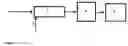
The invention will now be described in more detail with reference to the following drawings in which FIG. 1 schematically illustrates one advantageous embodiment of the invention.
DETAILED DESCRIPTION
In this context, hydrocarbon fuel relates to any hydrocarbon fluid suitable for being used as a fuel, such as diesel, gasoline, ethanol, methanol, di-methyl ether and aviation fuels.
FIG. 1 schematically shows an advantageous embodiment of the invention. Hydrocarbon fuel 1 and steam/air 2 is fed to a combustion reactor 3 in which the hydrocarbon fuel is combusted under fuel rich conditions; i.e., the air-to-fuel ratio is below 1, in the presence of steam. In this combustion reaction the hydrocarbon fuel is partially broken down into smaller molecules and all or most of the sulfur is converted into H2S. A sulfur trap 4 is located downstream the combustion reactor 4. By contacting the outgoing flow from the combustion reactor 3 with the sulfur trap 4, the sulfur compounds, generally H2S, are removed from the hydrocarbon fuel. A catalytic reactor 5, in which the fuel is further converted catalytically, is located further downstream in the system. Typically, the catalytic reactor 5 could be a steam reformer or a partial oxidation reactor.
The combination of a combustion reactor 3 and a sulfur trap 4; i.e., the apparatus for removing sulfur from a hydrocarbon fuel according to the invention, is located upstream of the catalytic reactor 5 thus providing an effective way of preventing catalysts in a catalytic system from being exposed to sulfur from the combusted hydrocarbon fuel.
It is noteworthy that the combustion reactor 3 converts the various sulfur compounds into certain sulfur compounds, such as H2S, that are easily separated from the fuel. To achieve this, it is important that the fuel-to-steam and air-to-fuel ratios be adapted to the selected fuel so that the rich fuel combustion process is stable. In many situations it is a principle aim to reform or convert the fuel to a large degree, and in these cases it is advantageous if the combustion reactor 3 not only converts sulfur compounds, but also converts the hydrocarbon fuel into smaller molecules as efficiently as possible. In such a situation, the combustion reactor 3 works as a pre-reformer. To enhance such pre-reforming reactions, it is advantageous to mix the steam with the air before injecting the air/steam into the combustion reactor 3.
The combustion reactor 3 is optimally operated with air-to-fuel ratios (lamda) between around 0.2-0.5, depending on the hydrocarbon used, but other air-to-fuel ratios can also give a satisfactory result. Steam is required in this step because it is used in the conversion of the sulfur compounds and it is also used for controlling the temperature in the reactor. Suitable temperature depends on such things as the type of hydrocarbon fuel used, but a typical suitable temperature is 350° C. The steam-to-fuel ratio depends to a large degree on the type of fuel.
The operating temperature of catalytic fuel reforming reactors such as steam reformers and partial oxidation reactors, in which the fuel is close to completely converted to small molecules, is much higher than in the combustion reactor 3. Typical temperatures are in the approximate range of 800-1200° C.
A suitable combustion process for the combustion reactor 3 is the so called “cold flame combustion” process or the “cool blue flame combustion” process, each of which are well known combustion reaction scenarios.
Most of the sulfur compounds formed in the combustion reactor 3 in the type of combustion reaction described above will be H2S. This compound can easily be separated by means of conventional sulfur traps such as those containing ZnO. Another sulfur compound that may be formed in the combustion reactor 3 is COS. The amounts of COS formed depends on the operational conditions of the combustion reactor 3, but generally the amounts will be much smaller than the amounts of H2S. By choosing a sulfur trap with a suitable material, both H2S and COS can be simultaneously removed. The sulfur trap is preferably a separate unit that can be replaced after some time when the adsorption material has been consumed to a certain prescribed degree. It should be noted that FIG. 1 only gives a schematic view of the system. Naturally, the system may comprise further catalytic reactors and/or sulfur traps. For instance, in some cases it may be necessary to implement a further sulfur trap downstream the catalytic reactor 5, as in a catalytic reforming system where some of the catalysts in subsequent catalytic reactors are ultra-sensitive to sulfur.
The invention is not limited to the above described embodiments, but a number of modifications are possible within the frame of the patent claims.
For instance, the catalytic reactor 5, or plurality of catalytic reactors located downstream of the sulfur trap 4 can be of various types relating to, for instance, the following catalytic processes: autothermal reforming, catalytic reforming, partial oxidation, steam reforming, exhaust gas catalytic oxidation, exhaust gas catalytic reduction, catalytic combustion, preferential oxidation and fuel cells. In these processes the fuel is further broken down and in many cases it is an advantage if the combustion reactor 3 works as a pre-reformer as mentioned above.
Claims
1. A method for removing sulfur from a hydrocarbon fuel, said method comprising:
feeding hydrocarbon fuel to a combustion reactor (3) and in which combustion of the fuel is performed with an air-to-fuel ratio below 1 and in the presence of steam; and
feeding the fuel to a sulfur trap (4) located downstream of the combustion reactor (3), said sulfur trap (4) being adapted to remove sulfur compounds formed in the combustion reactor (3).
2. The method as recited in claim 1, wherein the combustion reactor (3) operates with an air-to-fuel ratio between 0.2 and 0.5.
3. The method as recited in claim 1, wherein the combustion reactor (3) breaks down at least long hydrocarbon molecules into smaller molecules.
4. The method as recited in claim 1, wherein the combustion reactor (3) converts a large fraction of the fuel content of sulfur compounds into H2S.
5. The method as recited in claim 1, wherein the combustion reactor (3) operates at a temperature of approximately 300-400° C.
6. The method as recited in claim 1, wherein the sulfur trap (4) is of a type containing ZnO.
7. The method as recited in claim 1, wherein the method further comprises utilizing a catalytic reactor (5) for removing sulfur from the hydrocarbon fuel, and wherein said combustion chamber (3) and sulfur trap (4) are located upstream the catalytic reactor (5).
8. The method as recited in claim 7, wherein the catalytic reactor (5) operates as a fuel reforming reactor, such as a steam reformer or a partial oxidation reactor.
9. The method as recited in claim 7, wherein the fuel is further treated in at least one of catalytic reactors and sulfur traps.
Images & Drawings included:

Sources:
- United States Patent and Trademark Office - verify current appl. status at the USPTO↗
Similar patent applications:
Recent applications in this class:
- » 20250266480 2025-08-21
SOLID OXIDE FUEL CELL SYSTEM CHROMIUM POISONING PREVENTION MATERIALS - » 20250125392 2025-04-17
SOLID OXIDE FUEL CELL SYSTEM CHROMIUM POISONING PREVENTION MATERIALS - » 20250038237 2025-01-30
MIXED MEDIA DESULFURIZATION SYSTEMS AND FUEL CELL SYSTEMS INCLUDING THE SAME - » 20250023076 2025-01-16
FUEL PROCESSING UNIT FOR A FUEL CELL SYSTEM AND METHOD OF OPERATING THEREOF AT AN ELEVATED TEMPERATURE - » 20240297319 2024-09-05
LARGE SITE FUEL CELL POWER SYSTEM INCLUDING HOT GAS DESULFURIZER AND METHOD OF OPERATING THEREOF - » 20220407099 2022-12-22
DESULFURIZATION UNIT, SOFC SYSTEM AND VEHICLE - » 20210057769 2021-02-25
Desulfurizer - » 20200099076 2020-03-26
FUEL CELL SYSTEM INCLUDING SULFUR OXIDATION SUBSYSTEM AND METHOD OF OPERATING THE SAME - » 20200091531 2020-03-19
Fuel cell system including high-temperature desulfurization subsystem and method of operating the same - » 20200052314 2020-02-13
FUEL CELL SYSTEM AND METHOD FOR PERFORMING THERMAL REGENERATION OF DESULFURIZATION ADSORBATES
Recent applications for this Assignee:
- » 10248304 2010-09-07
Polymer fuel cell structure