Field electron emission source
US20090146547A1
2009-06-11
12/180,210
2008-07-25
✅ Patent granted
US 8,350,459 B2
2013-01-08
-
-
Mariceli Santiago | Glenn Zimmerman
2029-06-27
Abstract:
A method for manufacturing a field electron emission source includes: providing an insulating substrate; patterning a cathode layer on at least one portion of the insulating substrate; forming a number of emitters on the cathode layer; coating a photoresist layer on the insulating substrate, the cathode layer and the emitters; exposing predetermined portions of the photoresist layer to radiation, wherein the exposed portions are corresponding to the emitters; forming a mesh structure on the photoresist layer; and removing the exposed portions of photoresist layer. The method can be easily performed and the achieved the field electron emission source has a high electron emission efficiency.
Inventors:
- SHOU-SHAN FAN 1,506 🇨🇳 Beijing, China
- LIANG LIU 506 🇨🇳 Beijing, China
- LI QIAN 175 🇨🇳 Beijing, China
Assignee:
- HON HAI PRECISION INDUSTRY CO., LTD. 12,833 🇹🇼 Tu-Cheng, Taiwan
- Tsinghua University 3,118 🇨🇳 Beijing, China
- HON HAI PRECISION INDUSTRY CO., LTD. 10,014 🇹🇼 New Taipei, Taiwan
Interested in similar patents?
Get notified when new applications in this technology area are published.
Classification:
H01J1/52 IPC
Details of electrodes, of magnetic control means, of screens, or of the mounting or spacing thereof, common to two or more basic types of discharge tubes or lamps Screens for shielding; Guides for influencing the discharge; Masks interposed in the electron stream
H01J31/127 » CPC main
Cathode ray tubes; Electron beam tubes having a screen on or from which an image or pattern is formed, picked up, converted, or stored; Image or pattern display tubes, i.e. having electrical input and optical output; Flying-spot tubes for scanning purposes with luminescent screen; Flat display tubes provided with control means permitting the electron beam to reach selected parts of the screen, e.g. digital selection using large area or array sources, i.e. essentially a source for each pixel group
H01J1/304 » CPC further
Details of electrodes, of magnetic control means, of screens, or of the mounting or spacing thereof, common to two or more basic types of discharge tubes or lamps; Main electrodes; Cold cathodes, e.g. field-emissive cathode Field-emissive cathodes
H01J3/021 » CPC further
Details of electron-optical or ion-optical arrangements or of ion traps common to two or more basic types of discharge tubes or lamps; Electron guns Electron guns using a field emission, photo emission, or secondary emission electron source
H01J9/025 » CPC further
Apparatus or processes specially adapted for the manufacture, installation, removal, maintenance of electric discharge tubes, discharge lamps, or parts thereof; Recovery of material from discharge tubes or lamps; Manufacture of electrodes or electrode systems of cold cathodes of field emission cathodes
H01J2201/30484 » CPC further
Electrodes common to discharge tubes; Cold cathodes; Field emission cathodes characterised by the emitter material Carbides
H01J2201/30492 » CPC further
Electrodes common to discharge tubes; Cold cathodes; Field emission cathodes characterised by the emitter material Borides
H01J2201/30496 » CPC further
Electrodes common to discharge tubes; Cold cathodes; Field emission cathodes characterised by the emitter material Oxides
H01J2203/0272 » CPC further
Electron or ion optical arrangements common to discharge tubes or lamps; Electron guns using cold cathodes, e.g. field emission cathodes; Insulation layer for gate electrodes
H01J1/62 IPC
Details of electrodes, of magnetic control means, of screens, or of the mounting or spacing thereof, common to two or more basic types of discharge tubes or lamps; Screens on or from which an image or pattern is formed, picked-up, converted, or stored; Luminescent coatings on vessels Luminescent screens; Selection of materials for luminescent coatings on vessels
H01J9/00 IPC
Apparatus or processes specially adapted for the manufacture, installation, removal, maintenance of electric discharge tubes, discharge lamps, or parts thereof; Recovery of material from discharge tubes or lamps
H01J1/46 IPC
Details of electrodes, of magnetic control means, of screens, or of the mounting or spacing thereof, common to two or more basic types of discharge tubes or lamps Control electrodes, e.g. grid ; Auxiliary electrodes
H01J17/04 IPC
Gas-filled discharge tubes with solid cathode; Details Electrodes; Screens
H01J17/12 IPC
Gas-filled discharge tubes with solid cathode; Details; Electrodes; Screens Control electrodes
H01J19/38 IPC
Details of vacuum tubes of the types covered by group; Non-electron-emitting electrodes; Screens Control electrodes, e.g. grid
H01J19/40 IPC
Details of vacuum tubes of the types covered by group; Non-electron-emitting electrodes; Screens Screens for shielding
H01J21/10 IPC
Vacuum tubes; Tubes with a single discharge path having electrostatic control means only with one or more immovable internal control electrodes, e.g. triode, pentode, octode
Description
BACKGROUND
1. Field of the Invention
The present invention relates to field electron emission sources and, more particularly, to a field electron emission source and a method for manufacturing the same.
2. Discussion of Related Art
Field emission displays (FEDs) are relatively new, rapidly developing flat panel display technologies. FEDs are based on emission of electrons in a vacuum, and light emitted by electrons emitted from micron-sized tips in a strong electric field, accelerating, and colliding with a fluorescent material. FEDs are thin and light with high brightness. Compared to conventional technologies, e.g., cathode-ray tube (CRT) and liquid crystal display (LCD) technologies, FEDs are superior in having a wider viewing angle, lower energy consumption, a smaller size, and a higher quality display. A field electron emission source is an essential component in the FEDs.
The field electron emission source operates in a vacuum environment, where an electrical field is applied to the emitters to generate electrons. The emitters are connected to a cathode electrode. A positive gate extracts electrons from the emitters through a vacuum gap. In order for emission to occur, a strong electric field is required. A high field emission efficiency can be achieved by sharpening the emitters to a high aspect ratio and by lowering a distance between the emitters and the gate.
The widest known field emission electron source is the Spindt-type field emitter, which uses a conical or pyramid micro-tip closer to the gate as emitter. However, a current leakage is possible between the emitter and the gate, which prevents a wide application thereof. Recently, various nano-structures, such as nanotubes and nano-wire, have been successfully synthesized. They have a high aspect ratio. However, the field emission electron source having nano-structures has low stability. Further, because distances between adjacent nano-structures is small, a strong shielding effect is produced, lowering the field emission efficiency.
What is needed, therefore, is a field electron emission source with high field electron emission efficiency, high stability, and low current leakage, and a method for manufacturing the field electron emission source.
BRIEF DESCRIPTION OF THE DRAWINGS
Many aspects of the present field electron emission source and the present method for manufacturing the same can be better understood with reference to the following drawings. The components in the drawings are not necessarily to scale, the emphasis instead being placed upon clearly illustrating the present field electron emission source and the present method.
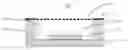
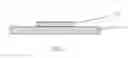
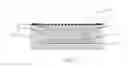
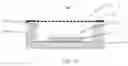
FIGS. 1-6 are highly schematic representations of steps in a method for manufacturing a field electron emission source, according to one embodiment.
DETAILED DESCRIPTION OF PREFERRED EMBODIMENTS
Referring to FIGS. 1-6, a method for manufacturing a field electron emission source includes the steps of:
- (a) providing an insulating substrate, depositing a cathode layer on the selective portion of the substrate;
- (b) patterning a number of emitters on the cathode layer;
- (c) coating a photoresist layer on the substrate, the cathode layer and the emitters;
- (d) exposing portions of the photoresist layer to radiation, the portions thereof corresponding to the emitters;
- (e) forming a mesh structure on the photoresist layer; and
- (f) removing the exposed portions of photoresist layer, thereby achieving a spacer spaced from the emitters.
In step (a), as shown in FIG. 1, an insulating substrate 110 is provided. The insulating substrate 110 can be made of any insulating suitable material, e.g., glass, plastic, and silicon with an insulating layer formed thereon. The insulating substrate 110 can also be a substrate covered with an insulating layer. In the embodiment, the insulating substrate 110 is a silicon wafer covered with a silicon dioxide layer. The cathode layer 112 is made of one or more conductive metals, for example, gold, silver, copper, chromium, molybdenum, alloys thereof, or heavily doped silicon. In the embodiment, a pattern of cathode layer 112 is formed on the insulating substrate 110 by the steps of: depositing a silicon layer on the insulating substrate 110; heavily doping the silicon layer; and etching the heavily doped silicon in predetermined positions to form the cathode layer 112.
In step (b), as shown in FIG. 2, the emitters 114 are made of any suitable low-work-function material. In the embodiment, the emitters 114 are made of silicon and formed by a conventional micro-processing technology. Another low-work-function material, for example, metal carbide, can also be deposited on the emitters 114 to facilitate electron emission.
In step (c), as shown in FIG. 3, the photoresist layer 120 is formed. The photoresist layer 120 has a thickness of about 50-1000 microns and can be made of any suitable insulating material, for example, poly-methylmethacrylate (PMMA). Any thick-film process can be used to form the photoresist layer 120.
In step (d), as shown in FIG. 4, a mask 124 is used to permit exposure of only selected portions 122 of the photoresist layer 120 to a radiation source 126. The photoresist layer 120 is exposed to radiation, such as high energy X-rays (synchrotron radiation). Therefore, the exposed portions of the photoresist layer 120 are chemically modified by exposure to radiation of a selected wavelength. In operation, the high energy X-rays penetrate the photoresist layer 120 through a selected portion 122, and then arrive at and are reflected by the insulating substrate 110 and the emitters 114. The reflected X-rays also irradiate the inner sidewall 128 of the photoresist layer 120, and a number of exposed portions are also formed thereon. This process is a deep-etch lithography process.
In step (e), as shown in FIG. 5, the mesh structure 130 is formed by the steps of: depositing a metal layer on a surface of the photoresist layer 120 opposite to and corresponding to the positions of the emitters 114; etching the metal layer in selected portions to define a number of through holes by a conventional photolithography method. In addition, the mesh structure 130 can be a metal gridding or a carbon nanotube film, and be directly arranged on the photoresist layer 120. A number of through holes 132 are defined in the mesh structure 130.
In step (f), as shown in FIG. 6, the exposed portions of photoresist layer 120 are removed by a developer. That is, the non-exposed portions of photoresist layer 120 remain insoluble, while the exposed portions thereof become soluble in the developer. After removing of the selected portion 122, the remaining portions of the photoresist layer 120 form spacers 140 on the insulating substrate 110. The spacers 140 are configured to support the mesh structure 130 and to separate the mesh structure 130 from the emitter 114. Further, the exposed portion on the inner sidewall of the photoresist layer 120 is removed, and a number of protrusions 142 are formed on the inner sidewalls of the spacers 140.
The field electron emission source 100 manufactured by the above method includes an insulating substrate 110, a cathode layer 112, emitters 114, spacers 140 and a grid 130. The cathode layer 112 is deposited on the insulating substrate 110. The emitters 114 are deposited on the cathode layer 112. The spacers 140 are formed on the insulating substrate 110 and distanced from the cathode layer 112. The grid 130 is spaced from the insulating substrate 110 by spacers 140. Two opposite edges of each spacer 120 are respectively in contact with the insulating substrate 110 and the grid 130. The grid 130 is also spaced from the emitters 114. A number of holes 132 are defined in the grid 130. In operation, electrons are emitted from the emitters 114, run toward the grid 130, and then through the holes 132.
The insulating substrate 110 is made of any suitable insulating material, such as glass and silicon dioxide. A thickness of the insulating substrate 110 is about 10-5000 microns.
The cathode layer 112 and the grid 130 can be made of any conductive material, exemplarily, metal and heavily doped silicon. The cathode layer 112 covers a portion of the insulating substrate 110, and a thickness of the cathode layer 112 is in an approximate range of 10-100 microns.
The emitters 114 form a micro-tip array. In the micro-tip array, the emitters 112 are uniformly arranged therein. A height of emitters 114 is about 1-20 microns and a separation between adjacent tips of the emitters 114 is about the same to the height of the emitters 114 to reduce shielding effect. The emitters can be made of a low-work-function material. Moreover, a low-work-function layer can be deposited on the tips of the emitters 112 to improve field emission efficiency thereof. The low-work-function material is selected from a group consisting Lanthanum Hexaboride (LaB6), Yttrium Oxide (Y2O3), Barium Oxide (BaO), Hafnium Carbide (HfC), Zirconium carbide (ZrC), Tungsten-Barium (W—Ba), W—La, and Sodium-Thorium (Na—Th). The emitters 112 can have any suitable shapes, such as conical and pyramid.
The grid 130 is made of a metal material, a metal gridding or a carbon nanotube film.
The spacers 140 are configured for supporting and insulating the grid 130 from the emitters 114. A height of a spacer 140 is about 50-1000 microns, a distance between the edges of cathode layer 112 and a spacer 140 is substantially more than 20 microns, and thus a higher voltage can be applied between the grid 130 and the cathode layer 112. The protrusions 142 is formed on the inner sidewall of the spacer 140, which increase the surface distance from the grid 130 to the cathode layer 112. A current leakage can flows along a surface of the spacer 140. Due to the protrusions, a risk for the current leakage from the grid 130 to the cathode layer 112 is reduced. Therefore, the voltage applied between the grid 130 and the cathode layer 112 can be further improved.
Finally, it is to be understood that the embodiments mentioned above are intended to illustrate rather than limit the invention. Variations may be made to the embodiments without departing from the spirit of the invention as claimed. The above-described embodiments illustrate the scope of the invention but do not restrict the scope of the invention.
Claims
What is claimed is:1. A method for manufacturing a field electron emission source comprising:
providing an insulating substrate;
forming a cathode layer on at least one portion of the insulating substrate;
forming a number of emitters on the cathode layer;
coating a photoresist layer on the insulating substrate, the cathode layer and the emitters;
exposing predetermined portions of the photoresist layer to radiation, wherein the exposed portions correspond to the positions of the emitters;
forming a mesh structure on the photoresist layer; and
removing the exposed portions of photoresist layer, thereby forming spacers on each side of and spaced from the emitters.
2. The method as claimed in claim 1, wherein the cathode layer is patterned on the substrate by the steps of: depositing a silicon layer in predetermined portions on the insulating substrate; heavily doping the silicon layer; and etching the heavily doped silicon in predetermined portions to form the cathode layer.
3. The method as claimed in claim 1, wherein the photoresist layer has a thickness of about 50-1000 microns.
4. The method as claimed in claim 1, wherein the radiation is high energy X-rays.
5. The method as claimed in claim 1, wherein the mesh structure is formed by the steps of: depositing a metal layer on a surface of the photoresist layer; etching the metal layer by photolithography, thereby forming a mesh structure.
6. A field electron emission source comprising:
an insulating substrate;
a cathode layer deposited on the insulating substrate;
a plurality of emitters formed on the cathode layer;
at least one spacer arranged on the insulating substrate; and
a grid spaced apart from the insulating substrate by the spacer, a plurality of through holes defined in the grid corresponding to the positions of the emitters.
7. The field electron emission source as claimed in claim 6, wherein substrate is made of a material selected from a group comprising of glass, plastic material, and silicon with an insulating layer formed thereon.
8. The field electron emission source as claimed in claim 6, wherein the cathode layer is made of a material selected from a group comprising of gold, silver, copper, chromium, molybdenum, alloys thereof, and heavily doped silicon.
9. The field electron emission source as claimed in claim 6, wherein the emitters are made of a low-work-function material, or a conductor with a low-work function layer deposited thereon.
10. The field electron emission source as claimed in claim 9, wherein the low-work-function material is selected from a group consisting LaB6, Y2O3, BaO, HfC, ZrC, W—Ba, W—La, and Na—Th.
11. The field electron emission source as claimed in claim 6, wherein the emitters form a micro-tip array.
12. The field electron emission source as claimed in claim 6, wherein a height of emitters is about 1-20 microns, and a separation between adjacent emitter tips is about the same to the height of the emitters.
13. The field electron emission source as claimed in claim 6, wherein the spacers have height of about 50-1000 microns.
14. The field electron emission source as claimed in claim 6, wherein the spacers are made of an insulating material.
15. The field electron emission source as claimed in claim 14, wherein the spacers are made of poly-methylmethacrylate.
16. The field electron emission source as claimed in claim 6, wherein a plurality of protrusions are formed on inner sidewalls of the spacer.
17. The field electron emission source as claimed in claim 6, wherein a distance between the cathode layer and the spacer is more than about 20 microns.
18. The field electron emission source as claimed in claim 6, wherein the grid is a metal gridding or a carbon nanotube film.
19. The field electron emission source as claimed in claim 6, wherein a penetration ratio of the grid is about 85% to 95%.
20. The field electron emission source as claimed in claim 6, wherein opposite edges of each spacer respectively contact the insulating substrate and the grid.
Images & Drawings included:


Sources:
- United States Patent and Trademark Office - verify current appl. status at the USPTO↗
Similar patent applications:
- » 20130221836
Field emission electron source and field emission device using the same - » 20140097741
Field emission electron source and field emission device - » 20050116214
Back-gated field emission electron source - » 20070184747
Field-emission electron source, method of manufacturing the same, and image display apparatus - » 10258601
Field emission electron source and production method thereof - » 10806803
Field-emission electron source, method of manufacturing the same, and image display apparatus - » 15359436
Thermionic-enhanced field emission electron source composed of transition metal carbide material with sharp emitter end-form - » 13032488
Stable cold field emission electron source - » 9871976
Carbon body, process for producing the carbon body, and electric field emission electron source using the carbon body - » 10110394
Electron-emitting element and electron source, field emission image display device, and fluorescent lamp utilizing the same and methods of fabricating the same
Recent applications in this class:
- » 20130002119 2013-01-03
Field emission panel with a charging prevention resistance unit - » 20120320328 2012-12-20
FIELD EMISSION PANEL HAVING POSTS PROVIDED IN GETTER ROOM - » 20120249494 2012-10-04
Multiple anode matrix vacuum fluorescent display, and driving circuit and driving method thereof - » 20120169221 2012-07-05
Field emission display - » 20120169212 2012-07-05
Field emission device with electron emission unit at intersection and field emission display using the same - » 20120153809 2012-06-21
Field emission display - » 20120153802 2012-06-21
Field emission cathode device and field emission display using the same - » 20120133270 2012-05-31
Field emission unit and pixel tube for field emission display - » 20120133269 2012-05-31
Pixel tube for field emission display - » 20120080997 2012-04-05
IMAGE DISPLAY APPARATUS
Recent applications for this Assignee:
- » 20250263696 2025-08-21
PROTEIN TRANSLATION SYSTEM - » 20250255183 2025-08-07
ORGANIC LIGHT-EMITTING DIODE AND DISPLAY APPARATUS - » 20250255091 2025-08-07
ORGANIC LIGHT-EMITTING DIODE AND DISPLAY APPARATUS - » 20250239854 2025-07-24
Grid-Forming Control Method with Full-State Virtual Oscillator for Photovoltaic and Energy Storage SYSTEM, and Device - » 20250233215 2025-07-17
WATER AND ACID ADSORBING BATTERY SEPARATOR AND PREPARATION METHOD THEREFOR, WATER AND ACID ADSORBING ELECTRODE PLATE, AND BATTERY - » 20250232886 2025-07-17
POWER SUPPLY MODULE AND POWER SUPPLY SYSTEM - » 20250218287 2025-07-03
METHOD OF GENERATING AND PROMPTING TRAFFIC INFORMATION, AND ROADSIDE DEVICE THEREOF - » 20250202515 2025-06-19
SINGLE-SIDEBAND PHASE-SENSITIVE DETECTION METHOD AND SYSTEM - » 20250178535 2025-06-05
METHOD FOR CONSTRUCTING 3D PANORAMIC VIEW MODEL, VEHICLE-MOUNTED DEVICE, AND STORAGE MEDIUM - » 20250150619 2025-05-08
DATA STORAGE METHOD, READING METHOD, APPARATUS, STORAGE MEDIUM, AND PROGRAM PRODUCT