Catalytic reduction of NO
US20090169451A1
2009-07-02
12/380,414
2009-02-27
✅ Patent granted
US 8,043,590 B2
2011-10-25
-
-
Edward Johnson
2029-02-27
Abstract:
A system for NOx reduction in combustion gases, especially from diesel engines, incorporates an oxidation catalyst to convert at least a portion of NO to NO2, a particulate filter, a source of reductant such as NH3 and an SCR catalyst. Considerable improvements in NOx conversion are observed.
Inventors:
- Guy Richard Chandler 44 🇬🇧 Cambridge, United Kingdom
- James Patrick WARREN 10 🇬🇧 Cambridge, United Kingdom
- Anders ANDREASSON 6 🇸🇪 Vastra Frolunda, Sweden
- Claus Friedrich Goersmann 4 🇬🇧 Royston, United Kingdom
- Georg Huethwohl 7 🇩🇪 Soest, Germany
Assignee:
- Johnson Matthey PLC 185 🇬🇧 London, United Kingdom
- DAIMLER AG 1,546 🇩🇪 Stuttgart, Germany
- HJS Emission Technology GmbH & Co. 1 🇩🇪 Menden, Germany
Interested in similar patents?
Get notified when new applications in this technology area are published.
Classification:
F01N9/00 » CPC main
Electrical control of exhaust gas treating apparatus
B01D53/9431 » CPC further
Separation of gases or vapours; Recovering vapours of volatile solvents from gases; Chemical or biological purification of waste gases, e.g. engine exhaust gases, smoke, fumes, flue gases, aerosols,; Chemical or biological purification of waste gases of engine exhaust gases by catalytic processes; Removing only nitrogen compounds; Nitrogen oxides Processes characterised by a specific device
B01D53/9445 » CPC further
Separation of gases or vapours; Recovering vapours of volatile solvents from gases; Chemical or biological purification of waste gases, e.g. engine exhaust gases, smoke, fumes, flue gases, aerosols,; Chemical or biological purification of waste gases of engine exhaust gases by catalytic processes Simultaneously removing carbon monoxide, hydrocarbons or nitrogen oxides making use of three-way catalysts [TWC] or four-way-catalysts [FWC]
B01J23/30 » CPC further
Catalysts comprising metals or metal oxides or hydroxides, not provided for in group of arsenic, antimony, bismuth, vanadium, niobium, tantalum, polonium, chromium, molybdenum, tungsten, manganese, technetium or rhenium; Chromium, molybdenum or tungsten Tungsten
B01J23/42 » CPC further
Catalysts comprising metals or metal oxides or hydroxides, not provided for in group of noble metals of the platinum group metals Platinum
B01J35/0006 » CPC further
Catalysts, in general, characterised by their form or physical properties Catalysts containing parts with different compositions
F01N3/0231 » CPC further
Exhaust or silencing apparatus having means for purifying, rendering innocuous, or otherwise treating exhaust for cooling, or for removing solid constituents of, exhaust by means of filters using means for regenerating the filters, e.g. by burning trapped particles using special exhaust apparatus upstream of the filter for producing nitrogen dioxide, e.g. for continuous filter regeneration systems [CRT]
F01N3/0253 » CPC further
Exhaust or silencing apparatus having means for purifying, rendering innocuous, or otherwise treating exhaust for cooling, or for removing solid constituents of, exhaust by means of filters using means for regenerating the filters, e.g. by burning trapped particles using fuel burner or by adding fuel to exhaust adding fuel to exhaust gases
F01N3/106 » CPC further
Exhaust or silencing apparatus having means for purifying, rendering innocuous, or otherwise treating exhaust for rendering innocuous by thermal or catalytic conversion of noxious components of exhaust; General auxiliary catalysts, e.g. upstream or downstream of the main catalyst Auxiliary oxidation catalysts
F01N3/2046 » CPC further
Exhaust or silencing apparatus having means for purifying, rendering innocuous, or otherwise treating exhaust for rendering innocuous by thermal or catalytic conversion of noxious components of exhaust characterised by methods of operation; Control specially adapted for catalytic conversion ; Methods of operation or control of catalytic converters; Periodically heating or cooling catalytic reactors, e.g. at cold starting or overheating Periodically cooling catalytic reactors
F01N3/2066 » CPC further
Exhaust or silencing apparatus having means for purifying, rendering innocuous, or otherwise treating exhaust for rendering innocuous by thermal or catalytic conversion of noxious components of exhaust characterised by methods of operation; Control specially adapted for catalytic conversion ; Methods of operation or control of catalytic converters Selective catalytic reduction [SCR]
F01N3/2882 » CPC further
Exhaust or silencing apparatus having means for purifying, rendering innocuous, or otherwise treating exhaust for rendering innocuous by thermal or catalytic conversion of noxious components of exhaust characterised by constructional aspects of converting apparatus; Construction of catalytic reactors Catalytic reactors combined or associated with other devices, e.g. exhaust silencers or other exhaust purification devices
F01N13/009 » CPC further
Exhaust or silencing apparatus characterised by constructional features ; Exhaust or silencing apparatus, or parts thereof, having pertinent characteristics not provided for in, or of interest apart from, groups - , , having two or more separate purifying devices arranged in series
B01D2255/1021 » CPC further
Catalysts; Noble metals or compounds thereof; Platinum group metals Platinum
B01D2258/012 » CPC further
Sources of waste gases; Engine exhaust gases Diesel engines and lean burn gasoline engines
F01N3/32 » CPC further
Exhaust or silencing apparatus having means for purifying, rendering innocuous, or otherwise treating exhaust for rendering innocuous by thermal or catalytic conversion of noxious components of exhaust characterised by constructional aspects of converting apparatus; Arrangements for supply of additional air using air pump
F01N2250/02 » CPC further
Combinations of different methods of purification filtering and catalytic conversion
F01N2260/022 » CPC further
Exhaust treating devices having provisions not otherwise provided for for cooling the device using air
F01N2260/024 » CPC further
Exhaust treating devices having provisions not otherwise provided for for cooling the device using a liquid
F01N2270/02 » CPC further
Mixing air with exhaust gases for cooling exhaust gases or the apparatus
F01N2330/02 » CPC further
Structure of catalyst support or particle filter Metallic plates or honeycombs, e.g. superposed or rolled-up corrugated or otherwise deformed sheet metal
F01N2330/06 » CPC further
Structure of catalyst support or particle filter Ceramic, e.g. monoliths
F01N2370/00 » CPC further
Selection of materials for exhaust purification
F01N2370/04 » CPC further
Selection of materials for exhaust purification used in catalytic reactors Zeolitic material
F01N2510/06 » CPC further
Surface coverings for exhaust purification, e.g. catalytic reaction
F01N2570/14 » CPC further
Exhaust treating apparatus eliminating, absorbing or adsorbing specific elements or compounds Nitrogen oxides
F01N2610/00 » CPC further
Adding substances to exhaust gases
F01N2610/02 » CPC further
Adding substances to exhaust gases the substance being ammonia or urea
F01N2610/03 » CPC further
Adding substances to exhaust gases the substance being hydrocarbons, e.g. engine fuel
Y02A50/20 » CPC further
in human health protection, e.g. against extreme weather Air quality improvement or preservation, e.g. vehicle emission control or emission reduction by using catalytic converters
Y02T10/12 » CPC further
Road transport of goods or passengers; Internal combustion engine [ICE] based vehicles Improving ICE efficiencies
Y02T10/12 » CPC further
Road transport of goods or passengers; Internal combustion engine [ICE] based vehicles Improving ICE efficiencies
Y02T10/40 » CPC further
Road transport of goods or passengers; Internal combustion engine [ICE] based vehicles Engine management systems
Y02T10/40 » CPC further
Road transport of goods or passengers; Internal combustion engine [ICE] based vehicles Engine management systems
B01D53/92 IPC
Separation of gases or vapours; Recovering vapours of volatile solvents from gases; Chemical or biological purification of waste gases, e.g. engine exhaust gases, smoke, fumes, flue gases, aerosols,; Chemical or biological purification of waste gases of engine exhaust gases
B01D53/56 IPC
Separation of gases or vapours; Recovering vapours of volatile solvents from gases; Chemical or biological purification of waste gases, e.g. engine exhaust gases, smoke, fumes, flue gases, aerosols,; Chemical or biological purification of waste gases; Removing components of defined structure; Nitrogen compounds Nitrogen oxides
Description
CROSS REFERENCE TO RELATED APPLICATIONS
This application is continuation of U.S. application Ser. No. 10/886,778, filed Jul. 8, 2004, which is a divisional application of U.S. application Ser. No. 09/601,964, filed Jan. 9, 2001, now U.S. Pat. No. 6,805,849, which is the U.S. National Phase of International Application No. PCT/GB1999/000292, filed Jan. 28, 1999, and which claims the benefit of priority from British Application No. 9802504.2, filed Feb. 6, 1998. These applications, in their entirety, are incorporated herein by reference.
SUMMARY OF THE INVENTION
The present invention concerns improvements in selective catalytic reduction of NOx in waste gas streams such as diesel engine exhausts or other lean exhaust gases such as from gasoline direct injection (GDI).
BACKGROUND OF THE INVENTION
The technique named SCR (Selective Catalytic Reduction) is well established for industrial plant combustion gases, and may be broadly described as passing a hot exhaust gas over a catalyst in the presence of a nitrogenous reductant, especially ammonia or urea. This is effective to reduce the NOx content of the exhaust gases by about 20-25% at about 250.degree. C., or possibly rather higher using a platinum catalyst, although platinum catalysts tend to oxidise NH3 to NOx during higher temperature operation. We believe that SCR systems have been proposed for NOx reduction for vehicle engine exhausts, especially large or heavy duty diesel engines, but this does require on-board storage of such reductants, and is not believed to have met with commercial acceptability at this time.
We believe that if there could be a significant improvement in performance of SCR systems, they would find wider usage and may be introduced into vehicular applications. It is an aim of the present invention to improve significantly the conversion of NOx in a SCR system, and to improve the control of other pollutants using a SCR system.
BRIEF DESCRIPTION OF THE DRAWINGS
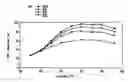
FIG. 1 is a graph plotting percentage NOx conversion against temperature resulting from Test 1.
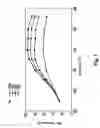
FIG. 2 is a graph plotting percentage NOx conversion against temperature resulting from Test 2.
FIG. 3 is a graph plotting percentage NOx conversion against temperature resulting from Test 3.
FIG. 4 is a bar graph showing percentage conversion of pollutants [NOx, particulates, hydrocarbons (HC) and carbon monoxide (CO)] resulting from Test 4.
DETAILED DESCRIPTION OF THE INVENTION
Accordingly, the present invention provides an improved SCR catalyst system, comprising in combination and in order, an oxidation catalyst effective to convert NO to NO2, a particulate filter, a source of reductant fluid and downstream of said source, an SCR catalyst.
The invention further provides an improved method of reducing NOx in gas streams containing NO and particulates comprising passing such gas stream over an oxidation catalyst under conditions effective to convert at least a portion of NO in the gas stream to NO2, removing at least a portion of said particulates, adding reductant fluid to the gas stream containing enhanced NO2 to form a gas mixture, and passing the gas mixture over an SCR catalyst.
Although the present invention provides, at least in its preferred embodiments, the opportunity to reduce very significantly the NOx emissions from the lean (high in oxygen) exhaust gases from diesel and similar engines, it is to be noted that the invention also permits very good reductions in the levels of other regulated pollutants, especially hydrocarbons and particulates.
The invention is believed to have particular application to the exhausts from heavy duty diesel engines, especially vehicle engines, e.g. truck or bus engines, but is not to be regarded as being limited thereto. Other applications might be LDD (light duty diesel), GDI, CNG (compressed natural gas) engines, ships or stationary sources. For simplicity, however, the majority of this description concerns such vehicle engines.
We have surprisingly found that a “pre-oxidising” step, which is not generally considered necessary because of the low content of CO and unburnt fuel in diesel exhausts, is particularly effective in increasing the conversion of NOx to N2 by the SCR system. We also believe that minimising the levels of hydrocarbons in the gases may assist in the conversion of NO to NO2. This may be achieved catalytically and/or by engine design or management. Desirably, the NO2/NO ratio is adjusted according to the present invention to the most beneficial such ratio for the particular SCR catalyst and CO and hydrocarbons are oxidized prior to the SCR catalyst. Thus, our preliminary results indicate that for a transition metal/zeolite SCR catalyst it is desirable to convert all NO to NO2, whereas for a rare earth-based SCR catalyst, a high ratio is desirable providing there is some NO, and for other transition metal-based catalysts gas mixtures are notably better than either substantially only NO or NO2. Even more surprisingly, the incorporation of a particulate filter permits still higher conversions of NOx.
The oxidation catalyst may be any suitable catalyst, and is generally available to those skilled in art. For example, a Pt catalyst deposited upon a ceramic or metal through-flow honeycomb support is particularly suitable. Suitable catalysts are e.g. Pt/A12O3 catalysts, containing 1-150 g Pt/ft.sup.3 (0.035-5.3 g Pt/litre) catalyst volume depending on the NO2/NO ratio required. Such catalysts may contain other components providing there is a beneficial effect or at least no significant adverse effect.
The source of reductant fluid conveniently uses existing technology to inject fluid into the gas stream. For example, in the tests for the present invention, a mass controller was used to control supply of compressed NH3, which was injected through an annular injector ring mounted in the exhaust pipe. The injector ring had a plurality of injection ports arranged around its periphery. A conventional diesel fuel injection system including pump and injector nozzle has been used to inject urea by the present applicants. A stream of compressed air was also injected around the nozzle; this provided good mixing and cooling.
The reductant fluid is suitably NH3, but other reductant fluids including urea, ammonium carbamate and hydrocarbons including diesel fuel may also be considered. Diesel fuel is, of course, carried on board a diesel-powered vehicle, but diesel fuel itself is a less selective reductant than NH3 and is presently not preferred.
Suitable SCR catalysts are available in the art and include Cu-based and vanadia-based catalysts. A preferred catalyst at present is a V2O5/WO3/TiO2 catalyst, supported on a honeycomb through-flow support. Although such a catalyst has shown good performance in the tests described hereafter and is commercially available, we have found that sustained high temperature operation can cause catalyst deactivation. Heavy duty diesel engines, which are almost exclusively turbocharged, can produce exhaust gases at greater than 500° C. under conditions of high load and/or high speed, and such temperatures are sufficient to cause catalyst deactivation. In one embodiment of the invention, therefore, cooling means is provided upstream of the SCR catalyst. Cooling means may suitably be activated by sensing high catalyst temperatures or by other, less direct, means, such as determining conditions likely to lead to high catalyst temperatures. Suitable cooling means include water injection upstream of the SCR catalyst, or air injection, for example utilising the engine turbocharger to provide a stream of fresh intake air by-passing the engine. We have observed a loss of activity of the catalyst, however, using water injection, and air injection by modifying the turbocharger leads to higher space velocity over the catalyst which tends to reduce NOx conversion. Preferably, the preferred SCR catalyst is maintained at a temperature from 160° C. to 450° C.
We believe that in its presently preferred embodiments, the present invention may depend upon an incomplete conversion of NO to NO2. Desirably, therefore, the oxidation catalyst, or the oxidation catalyst together with the particulate trap if used, yields a gas stream entering the SCR catalyst having a ratio of NO to NO2 of from about 4:1 to about 1:3 by volume, for the commercial vanadia-type catalyst. As mentioned above, other SCR catalysts perform better with different NO/NO2 ratios. We do not believe that it has previously been suggested to adjust the NO/NO2 ratio in order to improve NOx reduction.
The present invention incorporates a particulate trap downstream of the oxidation catalyst. We discovered that soot-type particulates may be removed from a particulate trap by “combustion” at relatively low temperatures in the presence of NO2. In effect, the incorporation of such a particulate trap serves to clean the exhaust gas of particulates without causing accumulation, with resultant blockage or back-pressure problems, whilst simultaneously reducing a proportion of the NOx. Suitable particulate traps are generally available, and are desirably of the type known as wall-flow filters, generally manufactured from a ceramic, but other designs of particulate trap, including woven knitted or non-woven heat-resistant fabrics, may be used.
It may be desirable to incorporate a clean-up catalyst downstream of the SCR catalyst, to remove any NH3 or derivatives thereof which could pass through unreacted or as by-products. Suitable clean-up catalysts are available to the skilled person.
A particularly interesting possibility arising from the present invention has especial application to light duty diesel engines (car and utility vehicles) and permits a significant reduction in volume and weight of the exhaust gas after-treatment system, in a suitable engineered system.
EXAMPLES
Several tests have been carried out in making the present invention. These are described below, and are supported by results shown in graphical form in the attached drawings.
A commercial 10 litre turbocharged heavy duty diesel engine on a test-bed was used for all the tests described herein.
Test 1—(Comparative)
A conventional SCR system using a commercial V2O5/WO3/TiO2 catalyst, was adapted and fitted to the exhaust system of the engine. NH3 was injected upstream of the SCR catalyst at varying ratios. The NH3 was supplied from a cylinder of compressed gas and a conventional mass flow controller used to control the flow of NH3 gas to an experimental injection ring. The injection ring was a 10 cm diameter annular ring provided with 20 small injection ports arranged to inject gas in the direction of the exhaust gas flow. NOx conversions were determined by fitting a NOx analyser before and after the SCR catalyst and are plotted against exhaust gas temperature in FIG. 1. Temperatures were altered by maintaining the engine speed constant and altering the torque applied.
A number of tests were run at different quantities of NH3 injection, from 60% to 100% of theoretical, calculated at 1:1 NH3/NO and 4:3 NH3/NO2. It can readily be seen that at low temperatures, corresponding to light load, conversions are about 25%, and the highest conversions require stoichiometric (100%) addition of NH3 at catalyst temperatures of from 325 to 400° C., and reach about 90%. However, we have determined that at greater than about 70% of stoichiometric NH3 injection, NH3 slips through the SCR catalyst unreacted, and can cause further pollution problems.
Test 2 (Comparative)
The test rig was modified by inserting into the exhaust pipe upstream of the NH3 injection, a commercial platinum oxidation catalyst of 10.5 inch diameter and 6 inch length (26.67 cm diameter and 15.24 cm length) containing log Pt/ft3 (=0.35 g/litre) of catalyst volume. Identical tests were run, and it was observed from the results plotted in FIG. 2, that even at 225° C., the conversion of NOx has increased from 25% to >60%. The greatest conversions were in excess of 95%. No slippage of NH3 was observed in this test nor in the following test.
Test 3
The test rig was modified further, by inserting a particulate trap before the NH3 injection point, and the tests run again under the same conditions at 100% NH3 injection and a space velocity in the range 40,000 to 70,000 hr -1 over the SCR catalyst. The results are plotted and shown in FIG. 3. Surprisingly, there is a dramatic improvement in NOx conversion, to above 90% at 225° C., and reaching 100% at 350° C. Additionally, of course, the particulates which are the most visible pollutant from diesel engines, are also controlled.
Test 4
An R49 test with 80% NH3 injection was carried out over a V2O5/WO3/TiO2 SCR catalyst. This gave 67% particulate, 89% HC and 87% NOx conversion; the results are plotted in FIG. 4.
Additionally tests have been carried out with a different diesel engine, and the excellent results illustrated in Tests 3 and 4 above have been confirmed.
The results have been confirmed also for a non-vanadium SCR catalyst.
Claims
1-14. (canceled)
15. A method of reducing NOx in a gas stream containing NO and particulates, comprising:
passing the gas stream over an oxidation catalyst thereby converting at least a portion of the NO in the gas stream to NO2 to form a converted gas stream;
removing at least a portion of the particulates from the converted gas stream;
adding a reductant fluid to the converted gas stream to form a gas mixture; and
passing the gas mixture over an SCR catalyst.
16. The method of claim 15, wherein the particulates are removed from the converted gas stream using a particulate filter or particulate trap.
17. The method of claim 16, wherein the particulates are removed without causing accumulation and resulting blockage and back pressure problems.
18. The method of claim 16, wherein the particles are removed from the particulate trap by combustion in the presence of NO2.
19. The method of claim 16, wherein the particulate trap comprises a wall-flow filter.
20. The method of claim 16, wherein the particulate trap is manufactured from ceramic.
21. The method of claim 16, wherein the particulate trap is manufactured from woven knitted heat resistant fabrics.
22. The method of claim 16, wherein the particulate trap is manufactured from non-woven heat resistant fabrics.
23. The method of claim 16, wherein the ratio of NO to NO2 in the gas mixture is from about 4:1 to 1:3 by volume.
24. The method of claim 16, wherein the gas stream comprises exhaust from sources selected from the group consisting of: heavy duty diesel engines, light duty diesel engines, gasoline direct injection engines, compressed natural gas engines, ships, and stationary sources.
25. The method of claim 24, wherein the gas stream comprises exhaust from a heavy duty diesel engine.
26. The method of claim 24, wherein the gas stream comprises exhaust from a light duty diesel engine.
27. The method of claim 24, wherein the gas stream comprises exhaust from a gasoline direct injection engine.
28. The method of claim 16, wherein the SCR catalyst is selected from the group consisting of transition metal/zeolite catalysts, rare earth-based catalysts and transition metal catalysts.
29. The method of claim 16, wherein the SCR catalyst comprises a transition metal/zeolite catalyst.
30. A method of improving NOx conversion in an SCR system, comprising:
passing the gas stream over an oxidation catalyst thereby converting at least a portion of the NO in the gas stream to NO2 to form a converted gas stream;
removing at least a portion of the particulates from the converted gas stream;
minimizing the level of hydrocarbons in the gas stream;
adding a reductant fluid to the converted gas stream to form a gas mixture; and
passing the gas mixture over an SCR catalyst.
31. The method of claim 30, wherein the ratio of NO to NO2 in the gas mixture is from about 4:1 to 1:3 by volume.
32. A method of reducing pollutants, including particulates and NOx, in a gas stream, comprising passing said gas stream over an oxidation catalyst under conditions effective to convert at least a portion of NO in the gas stream to NO2 thereby enhancing the NO2 content of the gas stream, removing at least a portion of said particulates in a particulate trap, reacting trapped particulate with NO2, adding reductant fluid to the gas stream to form a gas mixture downstream of said trap, and passing the gas mixture over an SCR catalyst under NOx reduction conditions.
33. A method according to claim 32, wherein the NO to NO2 ratio of the gas mixture is adjusted to a level pre-determined to be optimum for the SCR catalyst, by oxidation of NO over said oxidation catalyst.
34. A method according to claim 32, wherein the SCR catalyst is maintained at a temperature from 160° C. to 450° C.
Images & Drawings included:


Sources:
- United States Patent and Trademark Office - verify current appl. status at the USPTO↗
Similar patent applications:
- » 20160273429
Selective catalytic reduction system, selective catalytic reduction sensor, and level sensor - » 20180252138
Carrier Assembly for a Selective Catalytic Reduction System and a Selective Catalytic Reduction System - » 20230129815
A SELECTIVE CATALYTIC REDUCTION CATALYST AND A PROCESS FOR PREPARING A SELECTIVE CATALYTIC REDUCTION CATALYST - » 20150176456
Method of determining correcting logic for reacting model of selective catalytic reduction catalyst, method of correcting parameters of reacting model of selective catalytic reduction catalyst and exhaust system using the same - » 20160131000
Selective catalytic reduction and catalytic regeneration system - » 10236854
Passive system for optimal NOx reduction via selective catalytic reduction with variable boiler load - » 20090277159
Selective catalytic reduction using controlled catalytic deactivation - » 20220088581
Superhydrophobic coatings for deposit reduction in selective catalytic reductant systems - » 20080066453
Management of a plurality of reductants for selective catalytic reduction - » 20220331782
SELECTIVE CATALYTIC REDUCTION CATALYST COMPOSITION, CATALYTIC ARTICLE COMPRISING THE SAME AND METHOD FOR PREPARING THE CATAYTIC ARTICLE
Recent applications in this class:
- » 20250250921 2025-08-07
SYSTEMS AND METHODS TO MINIMIZE EXHAUST SYSTEM CONDENSATION - » 20250215817 2025-07-03
AFTERTREATMENT SYSTEM HEATER CONTROLS - » 20240369007 2024-11-07
HEATER CONTROL UNIT FOR EXHAUST AFTER TREATMENT SYSTEM - » 20240117761 2024-04-11
SYSTEMS AND METHODS FOR MODELLING AFTERTREATMENT TEMPERATURE OF A VEHICLE - » 20240044274 2024-02-08
Engine assembly for a vehicle having a hydrocarbon trap - » 20230407776 2023-12-21
Exhaust gas control apparatus for internal combustion engine and exhaust gas control method for the same - » 20230383685 2023-11-30
TRANSMISSION CATALYST HEATING ASSIST SYSTEM - » 20230250747 2023-08-10
Accelerated catalyst reactivation control strategy for gasoline vehicle emissions system in conjunction with N2 selective catalyst to minimize NOX remake - » 20230228209 2023-07-20
Systems and methods for modelling aftertreatment temperature of a vehicle - » 20230203977 2023-06-29
SYSTEMS AND METHODS FOR PROVIDING HEAT TO A CATALYST OF AN AFTER-TREATMENT SYSTEM
Recent applications for this Assignee:
- » 20230036505 2023-02-02
Storage compartment, in particular lockable storage compartment, for a vehicle and vehicle - » 20220348143 2022-11-03
Loading space device for a front end of a motor vehicle - » 20220340135 2022-10-27
Platooning Control Apparatus - » 20220332256 2022-10-20
Motor vehicle having a boot lid - » 20220305879 2022-09-29
Ventilation system for a motor car, in particular for a passenger car, and motor car with said ventilation system - » 20220298449 2022-09-22
Lubricating and cooling fluid for an electric motor system - » 20220281276 2022-09-08
Wheel suspension for a motor vehicle, in particular a passenger vehicle, and a motor vehicle having at least one such wheel suspension - » 20220274471 2022-09-01
Device and method for controlling a shading system for a vehicle - » 20220238952 2022-07-28
BATTERY DEVICE FOR A VEHICLE - » 20220234507 2022-07-28
Cargo space device for a front part of a motor vehicle