Refractory mortar cured material
US20090169848A1
2009-07-02
12/034,970
2008-02-21
✅ Patent granted
US 7,820,278 B2
2010-10-26
-
-
David R Sample | Tahseen Khan
2028-09-07
Abstract:
The refractory mortar cured material of the invention formed in the surface or joint portions of a ceramic refractory material such as fire bricks used in the lining of melting furnace or firing furnace used at high temperature is composed by kneading ceramic particles with an inorganic binder having silanol group together with water, and forming the kneaded mortar on the surface of a ceramic base material. The average particle size of ceramic particles in the refractory mortar is 10 to 50 μm, the difference of 90% particle size and 10% particle size is 10 μm or more to 60 μm or less, the average pore size of the refractory mortar cured material is 5 to 25 μm, and the width of pore size distribution is 20 to 80 μm, so that the cracks may be suppressed. More preferably, the bulk density is 0.9 to 1.5 g/cm3.
Inventors:
- Tsuneo Komiyama 5 🇯🇵 Toki-shi, Japan
- Akito Higuchi 4 🇯🇵 Kani-shi, Japan
- Osamu Yamakawa 3 🇯🇵 Kani-Shi, Japan
- Tetsuhiro Honjo 3 🇯🇵 Mizunami-Shi, Japan
- Tsuneo Komiyama 8 🇯🇵 Toki, Japan
- Osamu Yamakawa 4 🇯🇵 Kani, Japan
- Tetsuhiro Honjo 3 🇯🇵 Mizunami, Japan
- Akito Higuchi 3 🇯🇵 Kani, Japan
Assignee:
- NGK Insulators, Ltd. 573 🇯🇵 Nagoya-Shi, Japan
- NGK INSULATORS, LTD. 2,607 🇯🇵 Nagoya, Japan
- NGK Adrec Co., Ltd. 10 🇯🇵 Kani-Gun, Japan
Interested in similar patents?
Get notified when new applications in this technology area are published.
Classification:
C04B35/66 » CPC further
Shaped ceramic products characterised by their composition ; Ceramics compositions ; Processing powders of inorganic compounds preparatory to the manufacturing of ceramic products Monolithic refractories or refractory mortars, including those whether or not containing clay
C04B2111/00431 » CPC further
Mortars, concrete or artificial stone or mixtures to prepare them, characterised by specific function, property or use Refractory materials
C04B2235/3418 » CPC further
Aspects relating to ceramic starting mixtures or sintered ceramic products; Composition of constituents of the starting material or of secondary phases of the final product; Constituents and secondary phases not being of a fibrous nature; Non-metal oxides, non-metal mixed oxides, or salts thereof that form the non-metal oxides upon heating, e.g. carbonates, nitrates, (oxy)hydroxides, chlorides Silicon oxide, silicic acids, or oxide forming salts thereof, e.g. silica sol, fused silica, silica fume, cristobalite, quartz or flint
C04B2235/3481 » CPC further
Aspects relating to ceramic starting mixtures or sintered ceramic products; Composition of constituents of the starting material or of secondary phases of the final product; Constituents and secondary phases not being of a fibrous nature; Non-metal oxides, non-metal mixed oxides, or salts thereof that form the non-metal oxides upon heating, e.g. carbonates, nitrates, (oxy)hydroxides, chlorides; Silicates other than clay, e.g. water glass; Alumino-silicates other than clay, e.g. mullite Alkaline earth metal alumino-silicates other than clay, e.g. cordierite, beryl, micas such as margarite, plagioclase feldspars such as anorthite, zeolites such as chabazite
C04B2235/349 » CPC further
Aspects relating to ceramic starting mixtures or sintered ceramic products; Composition of constituents of the starting material or of secondary phases of the final product; Constituents and secondary phases not being of a fibrous nature; Non-metal oxides, non-metal mixed oxides, or salts thereof that form the non-metal oxides upon heating, e.g. carbonates, nitrates, (oxy)hydroxides, chlorides Clays, e.g. bentonites, smectites such as montmorillonite, vermiculites or kaolines, e.g. illite, talc or sepiolite
C04B2235/5208 » CPC further
Aspects relating to ceramic starting mixtures or sintered ceramic products; Composition of constituents of the starting material or of secondary phases of the final product; Constituents or additives of the starting mixture chosen for their shape or used because of their shape or their physical appearance; Constituents or additives characterised by their shapes Fibers
Y10T428/249979 » CPC further
Stock material or miscellaneous articles; Web or sheet containing structurally defined element or component; Composite having voids in a component [e.g., porous, cellular, etc.]; Voids specified as micro Specified thickness of void-containing component [absolute or relative] or numerical cell dimension
C04B38/0022 » CPC main
Porous mortars, concrete, artificial stone or ceramic ware; Preparation thereof obtained by a chemical conversion or reaction other than those relating to the setting or hardening of cement-like material or to the formation of a sol or a gel, e.g. by carbonising or pyrolysing preformed cellular materials based on polymers, organo-metallic or organo-silicon precursors
C04B35/195 » CPC further
Shaped ceramic products characterised by their composition ; Ceramics compositions ; Processing powders of inorganic compounds preparatory to the manufacturing of ceramic products based on oxide ceramics based on silicates other than clay rich in aluminium oxide Alkaline earth aluminosilicates, e.g. cordierite or anorthite
C04B38/0054 » CPC further
Porous mortars, concrete, artificial stone or ceramic ware; Preparation thereof characterised by the pore size, pore shape or kind of porosity the pores being microsized or nanosized
C04B38/0067 » CPC further
Porous mortars, concrete, artificial stone or ceramic ware; Preparation thereof characterised by the density of the end product
C04B14/041 » CPC further
Use of inorganic materials as fillers, e.g. pigments, for mortars, concrete or artificial stone; Treatment of inorganic materials specially adapted to enhance their filling properties in mortars, concrete or artificial stone; Granular materials, e.g. microballoons; Silica-rich materials; Silicates Aluminium silicates other than clay
C04B28/24 » CPC further
Compositions of mortars, concrete or artificial stone, containing inorganic binders or the reaction product of an inorganic and an organic binder, e.g. polycarboxylate cements containing alkyl, ammonium or metal silicates; containing silica sols
C04B14/042 » CPC further
Use of inorganic materials as fillers, e.g. pigments, for mortars, concrete or artificial stone; Treatment of inorganic materials specially adapted to enhance their filling properties in mortars, concrete or artificial stone; Granular materials, e.g. microballoons; Silica-rich materials; Silicates Magnesium silicates, e.g. talc, sepiolite
C04B14/10 » CPC further
Use of inorganic materials as fillers, e.g. pigments, for mortars, concrete or artificial stone; Treatment of inorganic materials specially adapted to enhance their filling properties in mortars, concrete or artificial stone; Granular materials, e.g. microballoons; Silica-rich materials; Silicates Clay
C04B14/46 » CPC further
Use of inorganic materials as fillers, e.g. pigments, for mortars, concrete or artificial stone; Treatment of inorganic materials specially adapted to enhance their filling properties in mortars, concrete or artificial stone; Fibrous materials; Whiskers Rock wool ; Ceramic or silicate fibres
B32B3/26 IPC
Layered products comprising a layer with external or internal discontinuities or unevennesses, or a layer of non-planar form ; Layered products having particular features of form characterised by a particular shape of the outline of the cross-section of a continuous layer; characterised by a layer with cavities or internal voids ; characterised by an apertured layer
Description
BACKGROUND OF THE INVENTION
1. Field of the Invention
The present invention relates to a refractory mortar cured material applied on surface or joint portions of ceramic refractory materials such as fire bricks used in linings of melting furnace or firing furnace used at high temperature.
2. Description of the Related Art
On surface or joint portions of porous ceramic refractory material, refractory mortar cured materials are often formed for the purposes of enhancing the corrosion resistance or mechanical strength by isolating from the ambient atmosphere, adhering, and mending and the like. In such a case, since moisture is absorbed in the base material when the refractory mortar is applied on the base material surface or joint portions, a local shrinkage difference occurs in the refractory mortar cured material, and fine cracks may be generated. Besides, when the moisture is absorbed in the base material, the viscosity of the refractory mortar is raised, and the coating performance may be lowered.
To solve these problems, patent document 1 discloses a material containing powder and water having tap bulk density of 1.3 g/cm3 or more and average particle size of 20 to 55 μm. The technology in patent document 1 is intended to suppress moisture absorption, and prevent crack or peeling of ceramic material by suppressing shrinkage difference.
Even by this technology in patent document 1, it is insufficient in depression of cracks occurring in initial period of forming the ceramic material or cracks occurring by heating after coating process, and it is not satisfactory from the viewpoint of thermal impact resistance. Generally, cracks are caused when the ceramic material is exposed to thermal stress during drying or heating process, but propagation of cracks may be blocked by pores existing in the texture. However, in the ceramic material in patent document 1, since cracks are not uniform in size and are localized, it is estimated that cracks may not be suppressed sufficiently.
[Patent document 1] Japanese Patent Application Laid-Open (JP-A) No. 2004-231506
SUMMARY OF THE INVENTION
[Problems to be Solved by the Invention]
It is hence a primary object of the invention to solve the problems of the prior art, and present a refractory mortar cured material enhanced in thermal impact resistance, by suppressing occurring in initial period of forming the refractory mortar cured material applied in the surface or joint portions of ceramic refractory material or cracks occurring by heating after coating process. It is other object of the invention to present a refractory mortar cured material advanced in corrosion preventive performance or protecting performance of ceramic refractory material.
[Means for Solving the Problems]
The invention devised for solving the problems is a material formed by curing the refractory mortar applied on the surface or joint portions of a ceramic refractory material, in which the average particle size of ceramic particles for composing the refractory mortar is 10 to 50 μm, the difference of 90% particle size and 10% particle size is 10 to 60 μm, the average pore size of the refractory mortar cured material is 5 to 25 μm, and the width of pore size distribution is 20 to 80 μm. Or as set forth in claim 2, the bulk density of the refractory mortar cured material is preferably 0.9 to 1.5 g/cm3.
As set forth in claim 3, the refractory mortar cured material is preferably composed by forming a kneaded mortar of ceramic particles and inorganic binder having silanol group together with water on the surface of a ceramic base material. Further, as set forth in claim 4, the ceramic base material is a porous ceramic, or as set forth in claim 5, the ceramic base material and ceramic particles are both cordierite.
[Effects of the Invention]
According to the invention, the average particle size of ceramic particles for composing the refractory mortar cured material is 10 to 50 μm, the difference of 90% particle size and 10% particle size is 10 μm or more to 60 μm or less, and the particle size distribution of ceramic particles is controlled. Moreover, the average pore size of the formed refractory mortar cured material is 5 to 25 μm, and the width of pore size distribution is controlled at 20 μm or more to 80 μm or less. As a result, fluctuations of pore size of refractory mortar cured material are suppressed, and propagation of cracks can be effectively suppressed, and the refractory mortar cured material excellent in durability and reliability is obtained. The particle size and its distribution of refractory mortar cured material may be obtained by image analysis using commercial analysis software.
BRIEF DESCRIPTION OF THE DRAWING
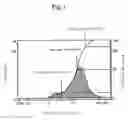
FIG. 1 is a graph of particle size distribution of ceramic particles.
DETAILED DESCRIPTION OF THE INVENTION
A preferred embodiment of the invention is specifically described below.
The refractory mortar cured material of the invention is formed by applying a mortar material on the surface or joint portions of a ceramic refractory material. The ceramic refractory material is not particularly specified, but the ceramic refractory material is generally porous, and in the embodiment, it is used as part of refractory furnace material using fire bricks, or it maybe used for the purpose of protecting the surface of furnace wall bricks or enhancing the strength. Herein, being porous refers to a porosity of 20 to 70%.
The refractory mortar cured material of the invention is mainly composed of ceramic particles, and is formed by kneading water, and silica sol as inorganic binder having silanol group, and adjusting to a proper viscosity suited to coating. As mentioned in the embodiment later, a small amount of ceramic fiber not exceeding 10%, about 0.1 to 0.2% of organic binder, and about 0.5 to 1.5% of claymineral maybe also added. Examples of organic binder include carboxyl methyl cellulose, methyl cellulose, polyethylene oxide, polyvinyl alcohol, urethane, and starch. The ceramic fiber contributes to enhancement of elasticity of refractory mortar cured material, or suppression of cracks or improvement of strength by fiber extracting effect. The organic binder or clay provides a proper viscosity, and improves the uniform mixing property and coating performance, and also enhances the binding force in a proper range, and is hence added for the purpose of enhancing the strength of refractory mortar cured material and improving the coating performance.
Ceramic particles include mullite, cordierite, alumina, silicon carbide, and others. The principal component of the refractory mortar cured material is preferably similar to ceramic refractory and is advantageous for suppressing the difference in thermal expansion, and in the case of refractory mortar cured material formed on the surface or joint portion of ceramic refractory material of mullite material, it is preferred to use mullite particles as ceramic particles, and it is preferred to use cordierite particles in the case of cordierite refractory material.
The particle size distribution of ceramic particles is generally a normal distribution or close to it, but when manufactured by ordinary grinding method, the particle size distributes in a wide range from 0.1 μm to hundreds of μm. However, when the mortar is mainly composed of such ceramic particles having such ordinary particle size distribution, large pores may be formed near coarse particles of large particle size in the refractory mortar cured material, while small pores may be formed at the gathered portion of fine particles, and the fluctuations of pore size increases. As a result, a portion where crack propagation is not suppressed sufficiently occurs locally, and the thermal impact resistance of the refractory mortar cured material may be lowered.
In the invention, the average particle size of ceramic particles composing the refractory mortar cured material is 10 to 50 μm, and the difference of 90% particle size and 10% particle size is 10 μm or more to 60 μm or less. The average particle size is the median diameter, and it is the particle size at which the cumulative value is 50% when the particle size distribution of ceramic particles is graphically expressed as shown in FIG. 1. If the average particle size is less than 10 μm, the shrinkage of the refractory mortar cured material is too much, and cracks may be formed, or if exceeding 50 μm, the pore size of refractory mortar cured material is increased, and propagation of cracks may be suppressed.
When the 50% particle size is in a range of 10 to 50 μm, and the particle size distribution is wide, the pore size of refractory mortar cured material fluctuates widely as mentioned above. In the invention, the difference of 90% particle size and 10% particle size is defined to be 10 μm or more to 60 μm or less. The 90% particle size refers to the particle size of which cumulative value is 90%, and the 10% particle size refers to the particle size of which cumulative value is 10%, which are shown in FIG. 1. This definition means that the particle size distribution is sharp, and when the difference of 90% particle size and 10% particle size exceeds 60 μm, the fluctuation of pore size becomes large. To the contrary, to control under 10 μm, special granulating process is needed, and it is not economical, and the particle filling rate is poor and the bulk specific gravity is lowered.
As mentioned above, in the invention, the average particle size of ceramic particles is 10 to 50 μm, and the difference of 90% particle size and 10% particle size is 10 μm or more to 60 μm or less, and by using such mortar, a refractory mortar cured material is formed, in which the average pore size of the refractory mortar cured material is 5 to 25 μm, and the width of pore size distribution is 20 μm or more to 80 μm or less. Preferably, the maximum pore size is not greater than 110 μm and the minimum pore size is not smaller than 0.5 μm. The pore size of the refractory mortar cured material may be measured at high precision by image processing using a commercial product of analysis software (for example, Image Pro-Plus manufactured by Media Cybernetics). In this image analysis, in one pore, the major diameter and minor diameter are measured, the mean value is calculated, and the diameter of the pore is obtained. All pores in the entire image are measured, and the mean pore size, minimum pore size, and maximum pore size are determined, and the balance of maximum pore size - minimum pore size is determined as the width of pore size distribution.
The refractory mortar cured material of the invention is, as described herein, effectively suppressed in propagation of cracks by reducing the fluctuation of pore size, and strictly suppressing the distribution of pore size and particle size so as to suppress the crack propagation to the fullest, and further as set forth in claim 2, the bulk density of the refractory mortar cured material is defined at 0.9 to 1.5 g/cm3, and this effect is further enhanced. The bulk density is measured according to JIS R 2655. If the bulk density is lower than this range, the strength is low and cracks are likely to be formed, or if larger than this range, the coefficient of thermal expansion increases, and cracks are also likely to be formed.
Thus, according to the invention, when the refractory mortar cured material is composed by using cordierite particles, the coefficient of thermal expansion is 1.5×10⁻⁶ l/K or less (up to 800° C., conforming to JIS R 2207), the four-point bending strength is 1 MPa to 7 MPa (conforming to JIS R 1601), and the thermal conductivity is 0.5 W/m.k or more (conforming to JIS R 1611), and local thermal stress is suppressed, and propagation of cracks may be effectively suppressed, and durability and reliability of the refractory mortar cured material is enhanced substantially as compared with the prior art.
EXAMPLES
Examples of the invention are described below.
Examples of refractory mortar shown in Table 1 were prepared, and the mortar was applied on the surface of ceramic refractory material of cordierite, and the refractory mortar cured material was formed, and the pore size was measured by image analysis. The characteristics were measured in these refractory mortar cured materials, and the results are shown in Table 1. The crack initiation temperature was evaluated by drying refractory mortar cured material pieces measuring 60×50×1 mm, at temperature of 40 to 110° C. for 8 hours or more, and each sample was taken out to room temperature from the environments which are heated to various temperatures, and the presence or absence of crack was visually checked, and the temperature at which a crack was observed first was determined as crack initiation temperature. Favorable results were obtained in the examples, and the crack initiation temperature was over 500° C.
By contrast, in comparative examples 1 and 2, the difference of 90% particle size and 10% particle size is over 60 μm, and the width of pore size distribution exceeds 80 μm, and the crack initiation temperature was under 450° C. In comparative example 3, the average particle size of ceramic particles is less than 10 μm, and the coating performance was poor, and the crack initiation temperature was very low at 350° C. In comparative example 4, the average particle size of ceramic particles is more than 50 μm, and the difference of 90% particle size and 10% particle size is over 60 μm. The average pore size was large. Hence, the coating performance was poor, and the crack initiation temperature was low at 400° C. In comparative example 5, the difference of 90% particle size and 10% particle size is less than 10 μm, and the difference of maximum pore size and minimum pore size is less than 20 μm. The bulk specific gravity is much lower. Hence the crack initiation temperature was low at 400° C.
Table 1
| TABLE 1 | ||||||||
| Comparative | Comparative | Comparative | ||||||
| Example 1 | Example 2 | Example 3 | Example 4 | example 1 | example 2 | example 3 | Example 5 | |
| Cordierite powder (mass %) | 100 | 100 | 100 | 100 | 100 | 100 | 100 | 100 |
| Silica sol (mass %) | 30 | 30 | 30 | 30 | 30 | 28 | 32 | 32 |
| Ceramic fiber (mass %) | 5 | 5 | 5 | 5 | 5 | 7 | 5 | 5 |
| Clay mineral (mass %) | 1.0 | 1.0 | 1.0 | 1.0 | 0.5 | 1.5 | 1.0 | 1.0 |
| Organic binder (mass %) | 0.2 | 0.2 | 0.2 | 0.2 | 0.2 | 0.2 | 0.2 | 0.2 |
| Water (mass %) | 30 | 30 | 30 | 30 | 30 | 30 | 30 | 30 |
| Median diameter of cordierite powder (μm) | 20 | 20 | 20 | 20 | 20 | 20 | 8 | 10 |
| 90% particle size of cordierite powder (μm) | 50 | 45 | 57 | 65 | 69 | 80 | 39 | 40 |
| 10% particle size of cordierite powder (μm) | 4 | 5 | 5 | 5 | 5 | 3 | 1 | 1 |
| 90% particle size − 10% particle size (μm) | 46 | 40 | 52 | 60 | 64 | 77 | 38 | 39 |
| Average pore size (μm) | 11 | 10 | 11 | 12 | 13 | 15 | 4 | 5 |
| Maximum pore size (μm) | 46 | 40 | 63 | 80 | 87 | 101 | 23 | 24 |
| Minimum pore size (μm) | 3 | 3 | 3 | 3 | 3 | 3 | 0.5 | 0.5 |
| Maximum pore size − minimum pore size (μm) | 43 | 37 | 60 | 77 | 84 | 98 | 22.5 | 23.5 |
| Bulk specific gravity of mortar cured | 1.22 | 1.25 | 1.18 | 1.14 | 1.12 | 1.11 | 1.42 | 1.41 |
| composition | ||||||||
| Coefficient of thermal expansion (×10−6 1/K) | 1.5 | 1.5 | 1.5 | 1.5 | 1.5 | 1.5 | 2.0 | 2.0 |
| Four-point bending strength (MPa) | 1.3 | 1.5 | 1.2 | 1.1 | 1.0 | 0.9 | 6.0 | 4.5 |
| Thermal conductivity (W/m-k) | 0.5 | 0.5 | 0.5 | 0.5 | 0.6 | 0.6 | 0.8 | 0.8 |
| Viscosity (dPa · s) | 170 | 170 | 180 | 190 | 190 | 220 | 320 | 280 |
| Coating performance | ◯ | ◯ | ◯ | ◯ | ◯ | ◯ | Δ | ◯ |
| Crack initiation temperature of mortar cured | 800 | 800 | 750 | 700 | 450 | 400 | 350 | 550 |
| composition | ||||||||
| Comparative | Comparative | |||||||
| Example 6 | Example 7 | example 4 | Example 8 | Example 9 | Example 10 | example 5 | ||
| Cordierite powder (mass %) | 100 | 100 | 100 | 100 | 100 | 100 | 100 | |
| Silica sol (mass %) | 30 | 30 | 30 | 30 | 30 | 30 | 30 | |
| Ceramic fiber (mass %) | 0 | 5 | 5 | 0 | 0 | 0 | 0 | |
| Clay mineral (mass %) | 1.0 | 1.0 | 1.0 | 1.0 | 1.0 | 1.0 | 1.0 | |
| Organic binder (mass %) | 0.2 | 0.1 | 0.1 | 0.2 | 0.2 | 0.2 | 0.2 | |
| Water (mass %) | 28 | 26 | 26 | 36 | 24 | 30 | 29 | |
| Median diameter of cordierite powder (μm) | 30 | 50 | 55 | 30 | 30 | 30 | 29 | |
| 90% particle size of cordierite powder (μm) | 67 | 88 | 110 | 67 | 67 | 36 | 31 | |
| 10% particle size of cordierite powder (μm) | 11 | 33 | 34 | 11 | 11 | 23 | 23 | |
| 90% particle size − 10% particle size (μm) | 56 | 55 | 76 | 56 | 56 | 13 | 8 | |
| Average pore size (μm) | 17 | 24 | 28 | 17 | 17 | 20 | 19 | |
| Maximum pore size (μm) | 85 | 110 | 118 | 85 | 85 | 45 | 37 | |
| Minimum pore size (μm) | 12 | 30 | 36 | 12 | 12 | 18 | 20 | |
| Maximum pore size − minimum pore size (μm) | 73 | 80 | 82 | 73 | 73 | 27 | 17 | |
| Bulk specific gravity of mortar cured | 1.38 | 1.24 | 1.21 | 0.88 | 1.53 | 0.90 | 0.80 | |
| composition | ||||||||
| Coefficient of thermal expansion (×10−6 1/K) | 1.3 | 1.2 | 1.2 | 1.2 | 1.7 | 1.2 | 1.2 | |
| Four-point bending strength (MPa) | 5.7 | 1.3 | 1.3 | 0.8 | 7.0 | 0.8 | 0.8 | |
| Thermal conductivity (W/m-k) | 0.7 | 0.7 | 0.7 | 0.4 | 1.2 | 0.4 | 0.4 | |
| Viscosity (dPa · s) | 170 | 100 | 60 | 60 | 320 | 150 | 170 | |
| Coating performance | ◯ | ◯ | Δ | Δ | Δ | ◯ | ◯ | |
| Crack initiation temperature of mortar cured | 700 | 650 | 400 | 550 | 500 | 500 | 400 | |
| composition | ||||||||
| The number of cracks of coated wall was evaluated by |
| drying coated wall pieces measuring 60 × 50 × 1 mm, at |
| temperature of 40 to 110° C. for 8 hours or more, and each |
| sample was taken out to room temperature from the |
| environments which are heated to various temperatures, |
| and the presence or absence of crack was visually |
| checked, and the temperature at which a crack was |
| observed was determined as crack initiation temperature. |
| 700° C. or higher | ◯ (Satisfactory) |
| 500 to 700° C. | Δ (Acceptable) |
| Less than 500° C. | X (Unacceptable) |
Claims
1. A refractory mortar cured material formed by curing refractory mortar applied on the surface or joint portions of a ceramic refractory material, wherein the average particle size of ceramic particles composing the refractory mortar is 10 to 50 μm, the difference of 90% particle size and 10% particle size is 10 to 60 μm, the average pore size of the refractory mortar cured material is 5 to 25 μm, and the width of pore size distribution is 20 to 80 μm.
2. The refractory mortar cured material of claim 1, wherein the bulk density is 0.9 to 1.5 g/cm3.
3. The refractory mortar cured material of claim 1, wherein ceramic particles are kneaded with an inorganic binder having silanol group together with water, and the kneaded mortar is formed on the surface of a ceramic base material.
4. The refractory mortar cured material of claim 1, wherein the ceramic refractory material is a porous ceramic.
5. The refractory mortar cured material of claim 1, wherein the ceramic refractory material and ceramic particles are both cordierite.
Images & Drawings included:
Sources:
- United States Patent and Trademark Office - verify current appl. status at the USPTO↗
Recent applications in this class:
- » 20240217886 2024-07-04
NANOPOROUS STRUCTURES AND ASSEMBLIES INCORPORATING THE SAME - » 20240140882 2024-05-02
AMORPHOUS AND GRAPHITIC CARBON AEROGELS FROM COMPRESSED XEROGEL POWDERS - » 20200407283 2020-12-31
Method to produce graphene foam reinforced low temperature co-fired ceramic (LTCC) composites - » 20200377420 2020-12-03
Nanoporous structures and assemblies incorporating the same - » 20190016643 2019-01-17
Acoustically active articles - » 20170334792 2017-11-23
Porous nanostructures and methods of fabrication - » 20140170330 2014-06-19
Apparatus and method for sintering proppants - » 20120121498 2012-05-17
Mesoporous carbon materials - » 20110020631 2011-01-27
Coated Carbon Foam Article - » 20100297389 2010-11-25
Mesoporous carbon materials
Recent applications for this Assignee:
- » 20250279308 2025-09-04
MEMBER FOR SEMICONDUCTOR MANUFACTURING EQUIPMENT - » 20250273507 2025-08-28
MEMBER FOR SEMICONDUCTOR MANUFACTURING EQUIPMENT - » 20250189228 2025-06-12
FIRING SYSTEM - » 20250172339 2025-05-29
HEAT TREATMENT SYSTEM - » 20250171250 2025-05-29
SUCTION COLLECTION SYSTEM - » 20250162960 2025-05-22
SEPARATION MEMBRANE MODULE - » 20250161884 2025-05-22
SEPARATION MEMBRANE MODULE - » 20250155197 2025-05-15
HEAT TREATMENT SYSTEM - » 20250155196 2025-05-15
HEAT TREATMENT SYSTEM - » 20250109909 2025-04-03
SAGGAR