Method for reducing coke and oligomer formation in a furnace
US20090178956A1
2009-07-16
12/009,251
2008-01-16
Abstract:
A method for reducing the formation of coke and oligomers in the convection section of a hydrocarbon pyrolysis furnace, the method comprising reducing the partial pressure of the hydrocarbon feed to the furnace before that feed is mixed with dilution steam.
Interested in similar patents?
Get notified when new applications in this technology area are published.
Classification:
C10G9/36 » CPC main
Thermal non-catalytic cracking, in the absence of hydrogen, of hydrocarbon oils by direct contact with inert preheated fluids, e.g. with molten metals or salts with heated gases or vapours
Description
BACKGROUND OF THE INVENTION
1. Field of the Invention
This invention relates to the reduction of the formation of coke and oligomers in a pyrolysis furnace. More particularly, this invention relates to the reduction of coke and oligomer formation in the convection section of a pyrolysis furnace.
2. Description of the Prior Art
Thermal cracking of hydrocarbons is a petrochemical process that is widely used to produce olefins such as ethylene, propylene, butenes, butadiene, and aromatics such as benzene, toluene, and xylenes. In an olefin production plant, a hydrocarbonaceous feedstock such as ethane, naphtha, gas oil, condensate, residuum (resid) and other fractions of whole crude oil, or even whole crude oil itself is mixed with what is termed “dilution steam” which serves as a diluent to keep the hydrocarbon molecules separated to facilitate the cracking function.
This mixture of hydrocarbons and dilution steam, after preheating of same, is subjected to hydrocarbon thermal cracking using elevated temperatures (1,450 to 1,550 degrees Fahrenheit or F.) in a pyrolysis furnace (steam cracker or cracker). This thermal cracking process is carried out without the aid of any catalyst.
The cracked product effluent of the pyrolysis furnace (furnace) contains hot, gaseous hydrocarbons of great variety (from 1 to 35 carbon atoms per molecule, or C1 to C35 inclusive, both saturated and unsaturated). This product contains aliphatics (alkanes and alkenes), alicyclics (cyclanes, cyclenes, and cyclodienes), aromatics, and molecular hydrogen (hydrogen).
This furnace product is then subjected to further processing to produce, as products of the cracking unit of the olefin plant, various separate and individual product streams such as hydrogen, ethylene, propylene, fuel oil, and pyrolysis gasoline. After the separation of these individual streams, the remaining cracked product contains essentially C4 hydrocarbons and heavier. This remainder is fed to a debutanizer wherein a crude C4 stream is separated as overhead while a C5 and heavier stream is removed as a bottoms product. These C4 and C5 streams are further processed in the hydrocarbons unit of the olefin plant.
Normally, before any dilution steam is added, the hydrocarbonaceous feed is pre-heated by itself in an upper (cooler) portion of the convection section of the furnace. At the same time, saturated (about 350 F) pre-heated dilution steam can be separately further heated in a portion lower (warmer) than the portion of the convection section in which the feed is pre-heated (about 1,000 F). Thereafter, the individual streams of pre-heated feed and either pre-heated or saturated dilution steam are mixed with one another, and the resulting mixture further heated in a yet lower (hotter) portion of the convection section of the furnace. After this further heating of the mixture of feed and dilution steam in the convection section, this mixture is then introduced into the radiant (lowest and hottest) section of the furnace in order to initiate and carry out the desired hydrocarbon cracking process.
When thermal cracking of hydrocarbons began in the early part of the twentieth century, the feed to the furnace was normally gaseous ethane. From then to the present the physical and chemical character of the feed to the furnace has progressively moved from gaseous feeds to liquid feeds. Initially, light boiling liquid feeds such as naphtha were employed, but the progression in liquid furnace feeds has been to heavier (higher boiling range) feeds that contain a very wide variety of hydrocarbons and which yield the cracked product effluent described hereinabove. The cracking industry has now evolved to the extent that whole crude oil condensates and resids, and even the whole crude oil itself, is employed as feed to the furnace.
With the progression to heavier feeds for the furnace, it has been found that the deposition of undesirable solid coke (coke) has progressed from the radiant section coils of the furnace upwardly into the convection section coils of the furnace. This is most undesirable because coke can plug a furnace coil thus hindering the operation of the furnace even to the extent of shutting the furnace down altogether. Coke cannot readily be burned out of convection tubes. Further, coke can cause premature failure of furnace tubes, tube bends, down stream piping bends. Coke can also plug venturis at the inlet of the radiant tubes.
Although the radiant section coils of current furnaces are built to resist coke deposition and to have coke deposits physically removed from the interior thereof, the convection section coils of many current furnaces were not designed either to resist coke deposition or to have coke readily cleaned there from once it has deposited therein.
It would be prohibitively expensive to physically retro fit many current furnaces so that their convection section coils can more readily resist the formation of coke deposits therein, and can have coke cleaned therefrom in the manner of their radiant section coils.
Accordingly, it is highly desirable to reduce, if not eliminate, the formation of coke deposition in the convection section of a pyrolysis furnace, and to do so in as cost effective a manner as possible. It is also desirable to reduce, if not eliminate, the formation of oligomers in the feed as it is heated in that convection section.
This invention does just that.
SUMMARY OF THE INVENTION
Pursuant to this invention, coke and oligomer formation in the convection section coils of a pyrolysis furnace can be reduced, if not eliminated, by reducing the partial pressure of the feed to the pyrolysis furnace before and/or while it is preheated, and before it is mixed with the total operating amount of dilution steam.
BRIEF DESCRIPTION OF THE DRAWINGS
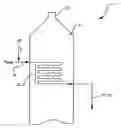
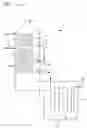
FIG. 1 shows the internal configuration of convection and radiation coils in a typical pyrolysis furnace.
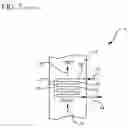
FIG. 2 shows an exemplary portion of the convection section coils which often suffers coke deposition when liquid feeds are processed in the furnace.
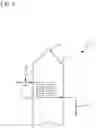
FIG. 3 shows one method for practicing this invention.
DETAILED DESCRIPTION OF THE INVENTION
FIG. 1 shows a conventional pyrolysis furnace 1 which has an upper, upstanding convection section 2 and a lower, upstanding radiant section 4 that are in fluid communication with one another by way of cross-over conduit 3. Sections 2 and 4 are laterally offset from one another so that hot gas from radiant section 4 does not flow directly into section 2 thereby raising the temperature in section 2 to an extent that causes the cracking function prematurely to start in convection section 2.
Feed 6 can be 1) primarily gaseous with some liquid content, 2) primarily liquid, or 3) a mixture of gas and liquid in any proportions. Feed 6 is introduced into an upper most section of the interior of section 2 for the purpose of pre-heating that feed. Feed 6, at this point has no dilution steam mixed therewith, and is pre-heated by itself in upper most, essentially horizontal convection section coils 7. Feed 6 can, for example, enter furnace 1 at a temperature of from about 200 to about 250 F, and leave coils 7 by way of conduit 10 at a temperature of from about 350 to about 400 F.
While feed 6 is being pre-heated by itself in coils 7, saturated dilution steam 8 is separately further heated by itself in a more central portion of section 2 by the passage of same through essentially horizontal convection section coils 9. Dilution steam 8 can, for example, enter furnace 1 at a temperature of about 350 F and leave coils 9 by way of conduit 11 at about 1,000 F.
Individually pre-heated feed 6 and dilution steam 8 is mixed by combining streams 10 and 11 into a single stream 12. The resulting mixture of feed and dilution steam in conduit 12 is passed into essentially horizontal convection coils 13 in a lower most section of section 2 for further heating before the cracking function is initiated and carried out to completion in radiant section 4. Coils 13, while carrying the mixture of feed and dilution steam, can, for example, be exposed to gas temperatures of from about 1,500 to about 1,700 F so that the thus heated mixture in conduit 14 can leave the convection section 2 for introduction into radiant section 4 at a temperature of from about 800 to about 1,200 F.
The heated mixture of feed 6 and dilution steam 8 enters essentially vertical radiant coils 15 by way of conduit 14, and the cracking function initiated by raising the temperature of this mixture to an effective cracking level.
Furnace 1 is heated by a plurality of burners 17 located, for example, on the floor 18 of the furnace below coils 15. The temperature in section 4 can, for example, be from about 1,800 to about 2,200 F, while the gas temperature in cross-over 3 can be from about 1,700 to about 2,100 F. Coils 15 are thus exposed to the radiant heat of burners 17.
Due to cross-over 3, coils 7, 9, and 13 are exposed to ever decreasing (with height) convectional heating temperatures that are provided by heated gas passing upwardly from section 4 through cross-over 3 and into section 2 until the gas reaches stack 5. Stack 5 surmounts furnace 1 for removal of heat from that furnace by way of the natural draw created by the height of stack 5
The cracked gaseous product 16 of furnace 1 is removed from that furnace by way of conduit 16, and promptly cooled to terminate the cracking function. Product 16 can, for example, be at a temperature of from about 1,300 to about 1,600 F before cooling.
Cooled product 16 is further processed in the remainder of the cracking unit (not shown) down stream of furnace 1, and in an associated downstream hydrocarbons unit (not shown).
This downstream processing in the cracking and hydrocarbons units collectively produces the individual product streams of the overall olefin plant (cracking unit plus hydrocarbons unit), e.g., the separate streams of hydrogen, ethylene, propylene, and the like mentioned hereinabove and various C4, C5, and aromatic products.
FIG. 2 shows an enlargement of the portion of convection section 2 that contains coils 13. These coils contain a mixture of feed 6 and dilution steam 8 that is passed into their interior by way of conduit 12. Heated, rising gas 23 from section 4 can, for example, reach the bottom of coils 13 at a temperature of about 2,000 F, and, after passing by the full height of coils 13, be at a temperature of about 1,700 F at the top of coils 13.
Ideally, feed 6 is essentially completely vaporized in conduit 12 after it is mixed with any dilution steam 11 (FIG. 1) before entering coil 13, but with higher boiling range liquid feeds, it is often found that, by the time feed 6 reaches conduit 12, that feed is only partially vaporized, the remainder being liquid feed. Thus, the feed present in conduit 12 can still be, for example, about 50 weight percent (wt %) liquid based on the total weight of feed 6 as it first entered furnace 1. In such a situation it was found that, for example, in the internal volume of area 20 of coils 13 there can still be about 25 wt % liquid. It was further found that feed 6 was not fully vaporized until it reached area 22 of coils 13. In this exemplary situation it was found that in area 21 coke deposition in the interior of the coil occurred to an extent that the operating life of coils 13 was drastically reduced. Coke deposition can plug a coil or even fracture a convection coil thereby causing a shutdown of the furnace. It has been found that it is not unusual for the normal 20 year operating life of coils 13 to be reduced to two to five years because of coke deposition, which is economically unacceptable.
Mechanically cleaning hard coke deposits from inside coils 13, and other convection section coils, is extremely expensive, in the multiple millions of dollars. Thus, if a furnace is to be operated on a regular basis on higher boiling range feeds, a method for reducing, if not eliminating, the formation of coke deposits inside the convection section coils is of the utmost importance.
Pursuant to this invention, coke deposition in the convection section coils of furnace 1 is reduced, and, depending on the nature of the liquid feed in stream 6, eliminated by reducing the partial pressure of feed 6 before and/or as it is pre-heated in coils 7, and before it is mixed with the operating amount (total weight) of dilution steam used for the cracking process as provided by way of conduit 11.
By the practice of this invention, the amount of liquid feed 6 found in conduit 12 as it first enters coil 13, can be reduced by at least half. For example, if, in the prior art practice, the amount of liquid feed 6 found in conduit 12 was about 50 wt %, by the practice of this invention that amount of liquid feed can be reduced by at least half so that the amount of liquid feed found in conduit 12 will be, pursuant to this invention, no more than about 25 wt % of the total weight of original feed 6 at the most. This will facilitate complete vaporization of the feed. This significant reduction in the amount of liquid feed entering coil 13 is effective to at least reduce the formation of coke in those coils in general, particularly in area 21 and upstream cooler areas such as areas 19 and 20. An added advantage of this invention is that not only is coke deposition severely reduced by the practice of this invention, but the formation of oligomers within feed 6 is also reduced, if not essentially eliminated.
The reduction of the partial pressure of feed 6 in coils 7 of FIG. 1 can be accomplished in a number of ways that will be readily recognized by one skilled in the art once appraised of this invention.
One way this invention can be practiced is shown by way of FIG. 3. FIG. 3 shows the introduction of a vaporous material by way of conduit 30.
The most cost effective vaporous material that can be used in this manner is steam. The amount of vaporous material 30 mixed with feed 6 before it is mixed with an operating amount of dilution steam 11 can vary widely depending on the chemical characteristics of feed 6 and the degree of pre-heating of same. However, generally the amount of vaporous material 30 mixed with feed 6 will be an amount effective to vaporize at least about 75 wt % of feed 6, based on the total weight of feed 6, by the time the feed reaches conduits 11 and 12.
If steam is employed in conduit 30, that steam can be steam in addition to the full operating amount of dilution steam found in line 11, or a portion of the total amount of operating dilution steam found in conduit 11. By apportioning the total operating amount of dilution steam between conduits 11 and 30, the operating capacity of furnace 1 is not reduced as it would be if the total operating amount of dilution steam was employed in conduit 11 and additional vaporous material introduced by way of conduit 30.
The apportionment of dilution steam between conduits 11 and 30 can vary widely, again depending on the characteristics of the particular feed 6 being employed and the operating characteristics of the particular furnace 1 that is being used. However, in general, pursuant to this invention, from about 10 to about 30 wt %, based on the total operating weight of dilution steam used in the process, can be introduced by way of conduit 30 for purposes of effectively reducing the partial pressure of feed 6 before it is mixed by way of conduit 11 with the preponderance of the operating dilution steam used in the process.
Steam has been employed by the prior art in various locations in the convection section of a furnace, but not in the location of and for the purpose of this invention. For example, U.S. Pat. No. 7,138,047 injects a small amount of steam after pre-heating the feed 6, and does not teach nor suggest the addition of steam before and/or during the step of pre-heating feed 6, nor the advantages gained in the practice of this invention in respect of reducing coke and oligomer formation in the convection section coils.
EXAMPLE
A liquid hydrocarbonaceous feed 6 comprising Algerian condensate is fed into furnace 1 at a temperature of about 250 F and pre-heated to a temperature of about 400 F in coils 7. The total operating amount of dilution steam employed in the cracking process is about 35 pounds per hour (pph).
Pursuant to the prior art, the full amount of this total operating amount of dilution steam would be supplied by way of conduit 11.
Pursuant to this invention, about 10 pph of the total operating amount of dilution steam is mixed with feed 6 by way of line 30 as feed 6 enters the interior of furnace 1 for pre-heating of that feed in coils 7, and only about 25 pph of the total operating dilution steam is added by way of line 11.
The 10 pph of dilution steam, added by way of conduit 30 before the addition of the preponderance (25 pph) of the total operating dilution steam by way of line 11, is an amount effective to reduce the formation of coke in coils 13 by at least half as compared to adding all 35 pph of the total operating dilution steam by way of line 11 and none by way of line 30.
Accordingly, the process of this invention significantly reduces the formation of coke in coils 13 in a cost effective manner, and without reducing the operating capacity of furnace 1.
Claims
I claim:1. In a method for thermally cracking an essentially liquid hydrocarbonaceous feed in a pyrolysis furnace having a convection section, said feed initially having a first partial pressure as it is fed into said furnace, said feed being pre-heated in said convection section to vaporize at least a portion thereof, after pre-heating of said feed said pre-heated feed being mixed in said convection section with a total operating weight of dilution steam for said cracking process, the resulting mixture of feed and dilution steam being further heated in said convection section, the improvement comprising, before said feed is mixed with said dilution steam reducing said first partial pressure of said feed to a lower second partial pressure, said second partial pressure being effective to cause increased vaporization of said feed before it is mixed with said dilution steam.
2. The method of claim 1 wherein said first partial pressure is reduced in an amount effective to vaporize at least about 75 wt % of said feed based on the total weight of said feed at least by the time said feed is mixed with said dilution steam.
3. The method of claim 1 wherein said first partial pressure is reduced to said second partial pressure by adding steam to said feed before said feed is mixed with said total operating weight of dilution steam, said additional steam being in addition to said total operating weight of dilution steam that is later mixed with said pre-heated feed.
4. The method of claim 3 wherein said additional steam is added as said feed enters said furnace.
5. The method of claim 3 wherein said first partial pressure is reduced to said second partial pressure by adding a portion of said total operating weight of said dilution steam to said feed before the remainder of said total operating weight of said dilution stream is added to said feed.
6. The method of claim 5 wherein no steam in addition to said apportioned total weight of dilution steam is employed.
7. The method of claim 5 wherein said apportioned total weight of dilution steam is added as said feed enters said furnace.
8. The method of claim 5 wherein said portion of dilution steam is from about 10 to about 30 wt % of said total weight of said total operating dilution steam employed in said cracking process.
9. The method of claim 1 wherein said feed is first pre-heated by itself in said convection section and then mixed with said total operating weight of dilution steam, said resulting mixture of feed and dilution steam being further heated in said convection section in a series of coils that are in fluid communication, and said second partial pressure of said feed is sufficiently lowered to essentially vaporize at least about 75 wt % of said feed based on the total weight of said feed before said dilution steam is mixed with said feed.
10. The method of claim 9 wherein said lowering of said first partial pressure of said feed is accomplished by adding additional steam to said feed before the addition of said total operating weight of dilution steam to said feed.
11. The method of claim 9 wherein said first partial pressure is reduced to said second partial pressure by adding a portion of said total operating weight of said dilution steam employed in said cracking process before said feed is mixed with the remainder of said total operating weight of dilution steam.
12. The method of claim 11 wherein said portion of dilution steam is from about 10 to about 30 wt % of said total operating weight of dilution steam employed in said cracking process.
Images & Drawings included:
Sources:
- United States Patent and Trademark Office - verify current appl. status at the USPTO↗
Recent applications in this class:
- » 20250084319 2025-03-13
EFFICIENT CRACKING FURNACE SYSTEM WITH REDUCED EMISSION OF CO2 - » 20250084318 2025-03-13
DIRECT HEATING ELECTRIC FURNACE - » 20250034458 2025-01-30
INTEGRATION OF STEAM CRACKER AND BLUE AMMONIA UNITS TO REDUCE CO2 EMISSION - » 20250034457 2025-01-30
WASTE PLASTIC-BASED THERMAL CRACKING FEED AND METHOD FOR UPGRADING THE SAME - » 20250026987 2025-01-23
ELECTRIC ADIABATIC HEATER FOR OLEFIN PRODUCTION - » 20250026986 2025-01-23
Method and Plant for Steam Cracking - » 20250011659 2025-01-09
Steam Cracking Furnace and Process - » 20250002792 2025-01-02
Duty Recovery System and Process for Steam Cracking Furnace - » 20250002791 2025-01-02
CRACKING REACTION DEVICE AND METHOD AND USE FOR PREPARING OLEFINS BY CRACKING - » 20240425765 2024-12-26
CRACKING C8+ FRACTION OF PYOIL