Electrically conductive non-woven fabric
US20090197495A1
2009-08-06
12/298,022
2006-03-22
✅ Patent granted
US 7,994,080 B2
2011-08-09
WO; PCT/CA2006/000433; 20060322
WO; WO2006/099736; 20060928
Norca L Torres-Velazquez
2026-03-22
Abstract:
An electrically conductive non-woven fabric (10) for heating applications is described and comprises a three-dimensional network (11) of non-woven synthetic fibers (12) which are non-electrically conductive and electrically conductive strands (13) of synthetic fibers or fine metal wires consolidated therewith. The fabric has an intrinsic resistivity in the range of from about 0.05 to 5 m2/kg.
Assignee:
- SOLENO TEXTILES TECHNIQUES INC. 1 🇨🇦 Laval, QC, Canada
- Soleno Textiles Techniques Inc. 1 🇨🇦 Laval, Québec, Canada
Interested in similar patents?
Get notified when new applications in this technology area are published.
Classification:
H05B3/342 » CPC main
Ohmic-resistance heating; Heating elements having extended surface area substantially in a two-dimensional plane, e.g. plate-heater flexible, e.g. heating nets or webs heaters used in textiles
D04H1/4291 » CPC further
Non-woven fabrics formed wholly or mainly of staple fibres or like relatively short fibres from fleeces or layers composed of fibres without existing or potential cohesive properties characterised by the use of certain kinds of fibres insofar as this use has no preponderant influence on the consolidation of the fleece; Addition polymers Olefin series
D04H1/4334 » CPC further
Non-woven fabrics formed wholly or mainly of staple fibres or like relatively short fibres from fleeces or layers composed of fibres without existing or potential cohesive properties characterised by the use of certain kinds of fibres insofar as this use has no preponderant influence on the consolidation of the fleece; Condensation or reaction polymers Polyamides
D04H1/435 » CPC further
Non-woven fabrics formed wholly or mainly of staple fibres or like relatively short fibres from fleeces or layers composed of fibres without existing or potential cohesive properties characterised by the use of certain kinds of fibres insofar as this use has no preponderant influence on the consolidation of the fleece; Condensation or reaction polymers Polyesters
D04H1/43918 » CPC further
Non-woven fabrics formed wholly or mainly of staple fibres or like relatively short fibres from fleeces or layers composed of fibres without existing or potential cohesive properties characterised by the use of certain kinds of fibres insofar as this use has no preponderant influence on the consolidation of the fleece characterised by the shape of the fibres nonlinear fibres, e.g. crimped or coiled fibres
D04H1/46 » CPC further
Non-woven fabrics formed wholly or mainly of staple fibres or like relatively short fibres from fleeces or layers composed of fibres without existing or potential cohesive properties the fleeces or layers being consolidated by mechanical means, e.g. by rolling by needling or like operations to cause entanglement of fibres
H05B2203/011 » CPC further
Aspects relating to Ohmic resistive heating covered by group Heaters using laterally extending conductive material as connecting means
H05B2203/013 » CPC further
Aspects relating to Ohmic resistive heating covered by group Heaters using resistive films or coatings
H05B2203/014 » CPC further
Aspects relating to Ohmic resistive heating covered by group Heaters using resistive wires or cables not provided for in
H05B2203/017 » CPC further
Aspects relating to Ohmic resistive heating covered by group Manufacturing methods or apparatus for heaters
H05B2203/026 » CPC further
Aspects relating to Ohmic resistive heating covered by group Heaters specially adapted for floor heating
H05B2203/029 » CPC further
Aspects relating to Ohmic resistive heating covered by group Heaters specially adapted for seat warmers
H05B2203/034 » CPC further
Aspects relating to Ohmic resistive heating covered by group Heater using resistive elements made of short fibbers of conductive material
Y10T428/2922 » CPC further
Stock material or miscellaneous articles; Coated or structually defined flake, particle, cell, strand, strand portion, rod, filament, macroscopic fiber or mass thereof; Rod, strand, filament or fiber Nonlinear [e.g., crimped, coiled, etc.]
Y10T442/655 » CPC further
Fabric [woven, knitted, or nonwoven textile or cloth, etc.]; Nonwoven fabric [i.e., nonwoven strand or fiber material]; Including a free metal or alloy constituent Metal or metal-coated strand or fiber material
Y10T442/682 » CPC further
Fabric [woven, knitted, or nonwoven textile or cloth, etc.]; Nonwoven fabric [i.e., nonwoven strand or fiber material] Needled nonwoven fabric
Y10T442/684 » CPC further
Fabric [woven, knitted, or nonwoven textile or cloth, etc.]; Nonwoven fabric [i.e., nonwoven strand or fiber material]; Needled nonwoven fabric Containing at least two chemically different strand or fiber materials
Y10T442/696 » CPC further
Fabric [woven, knitted, or nonwoven textile or cloth, etc.]; Nonwoven fabric [i.e., nonwoven strand or fiber material] Including strand or fiber material which is stated to have specific attributes [e.g., heat or fire resistance, chemical or solvent resistance, high absorption for aqueous compositions, water solubility, heat shrinkability, etc.]
Y10T442/697 » CPC further
Fabric [woven, knitted, or nonwoven textile or cloth, etc.]; Nonwoven fabric [i.e., nonwoven strand or fiber material] Containing at least two chemically different strand or fiber materials
D04H1/14 IPC
Non-woven fabrics formed wholly or mainly of staple fibres or like relatively short fibres from fleeces or layers composed of fibres having existing or potential cohesive properties, e.g. natural fibres, prestretched or fibrillated artificial fibres and hardened by felting; Felts or felted products; Felts made from mixtures of fibres and incorporating inorganic fibres
D04H1/00 IPC
Non-woven fabrics formed wholly or mainly of staple fibres or like relatively short fibres
D04H13/00 IPC
Other non-woven fabrics
D02G3/00 IPC
Yarns or threads, e.g. fancy yarns; Processes or apparatus for the production thereof, not otherwise provided for
Description
TECHNICAL FIELD
The present invention relates to an electrically conductive non-woven fabric comprising non-woven synthetic fibers and electrically conductive strands of synthetic fibers or fine metal wires consolidated therewith, for numerous heating applications.
BACKGROUND ART
Electrically conductive composite materials are known wherein conductive fibers and non-conductive fibers are secured to a support surface by needle-punching and these may have different applications such as providing shielding against electrical or magnetic fields. Such surface coatings are, for example, described in U.S. Pat. No. 4,433,840.
U.S. Pat. No. 5,648,137 describes a composite material which is impregnated with a heat curable resin comprising a layer of conductive fibers and one or more resin-carrying layers. Such fabrics are therein disclosed to reinforce utility poles. It is also described that this material can be impregnated into molds for curing.
DISCLOSURE OF INVENTION
It is a feature of the present invention to provide a non-woven electrically conductive fabric which is comprised of a three-dimensional network of non-woven synthetic fibers and electrically conductive fibers consolidated therewith to produce a lightweight electrically conductive non-woven fabric.
Another feature of the present invention is to provide an electrically conductive non-woven fabric capable of being incorporated in numerous heating applications and which is inexpensive to fabricate.
According to the above features, from a broad aspect, the present invention provides an electrically conductive non-woven fabric for heating applications which comprises a three-dimensional network of non-woven synthetic fibers which are non-electrically conductive and electrically conductive strands of synthetic fibers or fine metal wires consolidated therewith. The fabric has an intrinsic resistivity in the range of from about 0.05 to 5 Ωm2/kg.
BRIEF DESCRIPTION OF DRAWINGS
A preferred embodiment of the present invention will now be described with reference to the accompanying drawings in which:
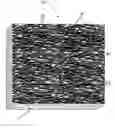
FIG. 1 is a perspective view showing an electrically conductive non-woven fabric constructed in accordance with the present invention;
FIG. 2 is a graph illustrating the mass per unit area and the proportion of conducting fibers in the composition constructed in accordance with the present invention; and
FIG. 3 is a schematic view showing the conductive non-woven fabric connected to a power supply.
MODES OF CARRYING OUT THE INVENTION
Referring now to the drawings and more particularly to FIG. 1, there is shown generally at 10 the electrically conductive non-woven fabric of the present invention. It comprises a three-dimensional network 11 of non-woven synthetic fibers 12 and electrically conductive. strands 13 consolidated therewith to form a homogenous mass.
The synthetic fibers 12 are polyester fibers but these may also be polypropylene or polyamide fibers. These synthetic fibers are also crimped fibers to provide better consolidation and conductivity due to the intermeshing of the crimped fibers. The consolidation can be effected by needle-punching or other adequate processes. The synthetic fibers also occupy a mass of from about 50 to 98% of the fabric. Preferably, in the present application they occupy a mass of about 90% of the fabric.
The conductive strands 13 occupy a mass of about 5 to 50% of the fabric and in the present application they occupy a mass of about 10%. These conductive strands may be synthetic fibers of PES or other polymer coated with a fine electrically conductive metal. They may also be fine metal wires. These conductive strands have a length of approximately 4 inches in the present application but this can vary between 1 to 6 inches.
The synthetic fibers present a linear density of between 0.5 to 110 denier and preferably about 5 denier. The conductive fibers present a linear density of 0.5 to 110 denier but preferably about 6 denier.
As shown in FIG. 3, the electrically conductive non-woven fabric 10 is provided with electrically conductive bands 14 and 15 which constitute electrical terminals. These terminals are connected to a power supply, herein a DC battery 16 whereby to apply a potential thereacross whereby current will flow across the fabric through the conductive fibers to thereby heat the fabric. A switch 17 is provided to switch the voltage on and off and a variable resistance 18 may also be provided to control the potential across the fabric and hence the heat generated thereby. Although FIG. 3 shows a DC supply connected across the fabric, an AC supply could also be provided with a converter (not shown) obvious to a person skilled in the art.
The non-woven electrically conductive fabric of the present invention is characterized by its intrinsic resistivity Γ (Ωm2/kg) and which varies between 0.1 to 5 and in the particular case resides at approximately 0.68.
The heating capacity P(W) of the electrically conductive non-woven fabric 10 depends on the intrinsic resistivity and also of the voltage applied thereacross as well as the mass per unit area MS(kg/m2) and the dimension of the non-woven fabric, namely its length L and width l according to the following formula:
P ( W ) = L ( m ) × U 2 ( V 2 ) × MS ( kg / m 2 ) Γ ( Ω m 2 / kg ) × 1 ( m )
On the other hand, if we know the required heating capacity or power P of the fabric sheet, the dimensions of the fabric sheet and the available rating of the power supply, we can determine the required mass per unit area MS to achieve the thermal requirement of the fabric in accordance with the following formula:
MS ( kg / m 2 ) = Γ ( Ω m 2 / kg ) × 1 ( m ) × P ( W ) L ( m ) × U 2 ( V 2 )
FIG. 2 illustrates the mass per unit area MS(kg/m2) and the proportions of conductive fibers in the consolidated mass for a non-woven heating fabric having an intrinsic resistivity as above-described and varying between 0.05 to 5 for a product generating 72 watts of power and having a length of 40 cm and a width of 40 cm connected to a 12 volt supply. This graph permits one to determine an optimal zone in terms of intrinsic resistivity Γ(Ωm2/kg) as it is difficult to obtain a surface mass which is less than 0.06 kg/m2 in the case of a non-woven fabric having short fibers consolidated by needle-punching. It is also not feasible to utilize a surface mass which is more than 0.8 kg/m2. The graph also illustrates that it is difficult to assure uniformity of the products when the percentage of the short fibers is inferior to 5%. The product of the present invention is at the center of this optimal zone.
It is pointed out that it is within the present invention to cover any obvious modifications of the preferred embodiment described herein. As pointed out above, the conductive strands may be synthetic fibers, such as PES or other polymers which are coated with a fine conductive coating such as silver, gold, copper, aluminum or steel. These fibers may also be constituted by fine metal wires of silver, gold, copper, aluminum, steel or stainless steel, etc.
There are several applications for the non-woven conductive fabric of the present invention and a few of these are readily conceivable. In industrial applications it is foreseen that such fabric can be utilized under pavement (e.g., asphalt, concrete, concrete pavers, etc. . . . ) or integrated with an underpad for heating floor surfaces (e.g., wooden floors, floating floors, ceramic tile floors, or any other type of floor), walls and ceilings. By such applications, the fabric could ultimately replace traditional interior heating systems by inducing heating by radiation. Moreover, applications requiring surface heating, such as roof heating for snow and ice melting, and greenhouse tables supporting sowing can also benefit from the heat transmission properties of the fabric.
They may also be used for curing concrete or other materials, particularly in cold, climatic conditions. They can also be wrapped around elements to be heated, such as plumbing conduits, inground pipes, etc. Because of the lightweight of the fabric, it is easily manipulated by construction workers to cover very large surfaces to be heated.
Another application of such fabric is in articles of clothing wherein it can be incorporated therein and does not add any substantial weight to the article. Because of its composition, the fabric may be stitched into the fabric as the stitches would not alter the conductive characteristics thereof. Contemplated articles of clothing include non-exclusively gloves, jackets, boots. It is also foreseeable that this material can be used as seat warmers in automobiles or other applications such as ski-lift seats. These are only a few examples of the use of the non-woven fabric constructed in accordance with the present invention but several other uses are foreseeable and intended to be covered by this application and the claims thereof.
Claims
1. An electrically conductive non-woven fabric for heating applications comprising a three-dimensional network of non-woven synthetic fibers which are non-electrically conductive and electrically conductive strands of synthetic fibers or fine metal wires consolidated therewith, said fabric having an intrinsic resistivity in the range of from about 0.05 to 5 Ωm2/kg.
2. An electrically conductive fabric as claimed in claim 1 wherein said synthetic fibers have a linear density of between 0.5 to 110 denier.
3. An electrically conductive fabric as claimed in claim 1 wherein said synthetic fibers have a linear density of about 5 denier.
4. An electrically conductive fabric as claimed in claim 1 wherein said conductive strands have a linear density of between 0.5 to 110 denier.
5. An electrically conductive fabric as claimed in claim 1 wherein said conductive strands have a linear density of about 6 denier.
6. An electrically conductive fabric as claimed in claim 5 wherein said conductive strands have a length of from between 1 to 6 inches.
7. An electrically conductive fabric as claimed in claim 5 wherein said conductive strands have a length of approximately 4 inches.
8. An electrically conductive fabric as claimed in claim 2 wherein said synthetic fibers are one of polypropylene, polyamide or polyester.
9. An electrically conductive fabric as claimed in claim 2 wherein said synthetic fibers are crimped fibers and occupy a mass of from about 50% to 98% of said fabric.
10. An electrically conductive fabric as claimed in claim 2 wherein said synthetic fibers occupy a mass of about 90% of said fabric.
11. An electrically conductive fabric as claimed in claim 4 wherein said conductive fibers are one of PES or other polymer coated with a fine electrically conductive metal, or fine metal wires.
12. An electrically conductive fabric as claimed in claim 4 wherein said conductive strands occupy a mass of from about 5% to 50% of said fabric.
13. An electrically conductive fabric as claimed in claim 4 wherein said conductive strands occupy a mass of about 10%.
14. An electrically conductive fabric as claimed in claim 1 wherein said fabric has an intrinsic resistivity of between 0.05 and 5.0 Ωm2/kg.
15. An electrically conductive material as claimed in claim 14 wherein said fabric has an intrinsic resistivity of 0.68 Ωm2/kg.
16. An electrically conductive fabric as claimed in claim 1 wherein said conductive fibers and non-woven synthetic fibers are consolidated together by needle punching.
17. An electrically conductive fabric as claimed in claim 1 wherein said fabric is provided with electrical terminals at opposed ends thereof to apply an electrical potential thereacross to heat said fabric.
Images & Drawings included:


Sources:
- United States Patent and Trademark Office - verify current appl. status at the USPTO↗
Similar patent applications:
- » 20190276961
Electrically Conductive Non-Woven Fabric
Recent applications in this class:
- » 20250247919 2025-07-31
DOWNHOLE NANO PARTICLE HEAT BLANKET FOR NEUTRON GENERATOR TUBES AND OTHER APPLICATIONS - » 20250234429 2025-07-17
Wire Fixing Structure for Electric Blanket - » 20250126683 2025-04-17
HEATABLE GARMENT, FABRICS FOR SUCH GARMENTS, AND METHODS OF MANUFACTURE - » 20250008614 2025-01-02
ELECTRIC TARP DEFROSTER - » 20240284563 2024-08-22
HEATING PRODUCT - » 20240276606 2024-08-15
HEATING PIECE UTILIZING CARBON FIBERS AS WEARABLE HEATING CONDUCTORS - » 20240251482 2024-07-25
ELECTRIC BLANKET - » 20240237154 2024-07-11
ELECTROTHERMAL MODULE - » 20240138030 2024-04-25
ELECTROTHERMAL MODULE - » 20240130009 2024-04-18
CONFORMING HEATING PAD