Methods and intermediates for the synthesis of porphyrins
US20090198049A1
2009-08-06
12/361,715
2009-01-29
✅ Patent granted
US 7,951,939 B2
2011-05-31
-
-
Paul V. Ward
2029-01-29
Abstract:
A method of making a porphyrin is carried out by: (a) condensing (i) a 1,9-bis(N,N-)dialkylaminomethyl)dipyrromethane of Formula II:
with (ii) a dipyrromethane to produce a reaction product; then (b) oxidizing the reaction product; and then (c) optionally demetallating said reaction product to produce the porphyrin. The reaction is particularly useful for making substituted porphyrins with a wide range of substituents at the A and/or B (the 5 and/or 15) positions.
Inventors:
- Jonathan S. Lindsey 103 🇺🇸 Raleigh, NC, United States
- Masahiko Taniguchi 14 🇺🇸 Raleigh, NC, United States
- Dazhong Fan 7 🇺🇸 Raleigh, NC, United States
Assignee:
- North Carolina State University 930 🇺🇸 Raleigh, NC, United States
Interested in similar patents?
Get notified when new applications in this technology area are published.
Classification:
C07D403/04 » CPC main
Heterocyclic compounds containing two or more hetero rings, having nitrogen atoms as the only ring hetero atoms, not provided for by group containing two hetero rings directly linked by a ring-member-to-ring-member bond
C07D471/22 IPC
Heterocyclic compounds containing nitrogen atoms as the only ring hetero atoms in the condensed system, at least one ring being a six-membered ring with one nitrogen atom, not provided for by groups - in which the condensed systems contains four or more hetero rings
C07D403/06 IPC
Heterocyclic compounds containing two or more hetero rings, having nitrogen atoms as the only ring hetero atoms, not provided for by group containing two hetero rings linked by a carbon chain containing only aliphatic carbon atoms
C07D487/22 » CPC further
Heterocyclic compounds containing nitrogen atoms as the only ring hetero atoms in the condensed system, not provided for by groups - in which the condensed system contains four or more hetero rings
C07B47/00 IPC
Formation or introduction of functional groups not provided for in groups -
C07D207/00 IPC
Heterocyclic compounds containing five-membered rings not condensed with other rings, with one nitrogen atom as the only ring hetero atom
C07D295/00 IPC
Heterocyclic compounds containing polymethylene-imine rings with at least five ring members, 3-azabicyclo [3.2.2] nonane, piperazine, morpholine or thiomorpholine rings, having only hydrogen atoms directly attached to the ring carbon atoms
Description
RELATED APPLICATIONS
This application claims priority to and is a divisional of U.S. patent application Ser. No. 11/192,934, filed Jul. 25, 2005, now U.S. Pat. No. 7,501,508, the disclosure of which is incorporated by reference herein in its entirety.
This application is also related to Jonathan S. Lindsey, Masahiko Taniguchi, Arumugham Balakumar, and Dazhong Fan, U.S. patent application Ser. No. 11/193,562, Methods and Intermediates for the Synthesis of Porphyrins, filed Jul. 29, 2005, and published as US 2007/00027312, the disclosure of which is incorporated by reference herein in its entirety.
GOVERNMENT FUNDING
This invention was made with US Government support under Grant Number GM36238 from the National Institutes of Health. The Government has certain rights to this invention.
FIELD OF THE INVENTION
The present invention concerns methods for making porphyrins, including but not limited to trans-AB-porphyrins, with 1,9-bis(N,N-dialkylaminomethyl) dipyrromethane intermediates.
BACKGROUND OF THE INVENTION
Porphyrins bearing only one or two substituents present a compact architecture suitable for a wide variety of applications or further synthetic elaboration. For substituents at the meso-positions, the methodology established for preparing porphyrins bearing four distinct meso-substituents would appear applicable. The route to such ABCD-porphyrins entails condensation of a dipyrromethane+dipyrromethane-1,9-dicarbinol, where the four substituents are introduced via the meso-positions of both dipyrromethane species and the carbinol units at the 1- and 9-positions.1 The corresponding synthesis of A-porphyrins, trans-AB-porphyrins, (and also trans-A2-porphyrins)2 would employ meso-substituted dipyrromethanes with no substituents at the carbinol sites. To our surprise, condensations with dipyrromethanes bearing primary carbinol groups proceeded poorly, giving a mixture of porphyrins and overall low yields.3. No better alternatives (other than statistical condensations) to A-porphyrins or trans-AB-porphyrins have been developed. This limitation prompted us to investigate Cl synthons having greater reactivity than primary carbinol groups for the rational synthesis of porphyrins bearing one or two meso-substituents.
A wide variety of Cl synthons have been employed in porphyrin chemistry, either as functional groups (aldehyde,4 hydroxymethyl3) attached to a pyrrolic species or as added reagents (formic acid,5 trimethyl orthoformate,5,6 formaldehyde,7 and imines8). A key consideration in the use of dipyrromethanes is the possibility of acidolysis followed by undesired recombination of dipyrromethane-derived fragments, affording undesired porphyrin species (i.e., scrambling). The possibility of scrambling constrains the nature of the reactive groups employed as Cl synthons (e.g., aldehyde or hydroxymethyl) and reaction conditions that can be employed.
The aminomethyl group is an attractive candidate for the Cl synthon leading to porphyrinic macrocycles because of ease of introduction, the possibility that reaction can be carried out without added acid catalysts, and biomimetic analogy. Indeed, an aminomethylpyrrole (porphobilinogen, A)9 is the biosynthetic precursor of all naturally occurring porphyrinic macrocycles (Chart 1). Aminomethylpyrroles have been prepared by the condensation of pyrrole derivatives with aldehydes and amines.10 The advent of N,N-dimethylmethyleneammonium iodide (Eschenmoser's reagent),11 designed for reactions with corrins, also facilitated the synthesis of aminomethylpyrrolic compounds. To construct porphyrinic macrocycles from aminomethylpyrroles, three different approaches have been investigated: (1) self-condensation of an aminomethylpyrrole (e.g., B or C),12 (2) condensation of a bis(aminomethyl)pyrrole (e.g., D or E) with a pyrrole derivative,12-14 and (3)3+1 condensation of a bis(aminomethyl)pyrrole D with a tripyrrane.14,15 These approaches are attractive in their simplicity but have the potential limitation of forming a mixture of porphyrin regioisomers depending on the β-substitution pattern of the pyrrolic substrates.
Although aminomethyl-dipyrromethanes can be attractive precursors for porphyrinic macrocycles, aminomethyl-dipyrromethane derivatives (F) have been mainly used for the synthesis of expanded porphyrins, such as porphocyanine.16 To our knowledge, the only previous example of aminomethyl-dipyrromethane derivatives in porphyrin chemistry is Hombrecher's synthesis of meso-substituted etioporphyrins:17 treatment of a dipyrromethane with a Mannich reagent (CH2═NEt2Cl) gave the 1,9-bis(N,N-diethylaminomethyl)dipyrromethane (not isolated), which upon condensation with a dipyrromethane in situ afforded a mixture including a trans-AB-porphyrin, A-porphyrins, and etioporphyrin (Scheme 1).
SUMMARY OF THE INVENTION
A first aspect of the invention is a method of making a porphyrin of Formula I:
wherein:
A and B are each independently H or any suitable organic substituent;
R1 is selected from the group consisting of H, alkyl and aryl;
R2, R3, R4, R5, R7, R8, R9, and R10 are each independently selected from the group consisting of H, halo, loweralkoxy, and loweralkylthio; and
M is a metal or a pair of hydrogen atoms. The method comprises:
(a) condensing: (i) a 1,9-bis(N,N-dialkylaminomethyl)dipyrromethane of Formula II:
wherein Ra and Rb are each independently selected loweralkyl, and A, R1, R2, R3, R4, and R5 are as given above, with (ii) a dipyrromethane of Formula III:
wherein B, R7, R8, R9 and R10 are as given above; in an alcohol solvent containing a metal salt to produce a reaction product; then
(b) oxidizing said reaction product with an oxidizing agent and then
(c) optionally demetallating said reaction product to produce the porphyrin of Formula I.
A second aspect of the invention is a compound of Formula II:
wherein:
Ra and Rb are each independently loweralkyl; and
A, R1, R2, R3, R4, and R5 are as described above.
The foregoing and other objects and aspects of the invention are explained in greater detail in the drawings herein and the specification set forth below.
BRIEF DESCRIPTION OF THE DRAWINGS
FIG. 1. (A) Effect of concentration of dipyrromethane species in porphyrin formation (3a+1b). Reaction conditions were as follows: [Zn(OAc)2 (10 equiv) in EtOH at reflux in air for 5 h, data points are 1, 3.16, 10, 31.6, 100, and 316 mM], then treated with 3/4 equiv of DDQ per pyrrole unit. The yields of porphyrin were determined using absorption spectroscopy by removing small aliquots from the reaction mixture. (B) The yield of porphyrin as a function of time upon reaction of bis(N,N-dimethylaminomethyl)dipyrromethane 3a+dipyrromethane 1b with Zn(OAc)2 under reflux in EtOH (the concentration of each reactant is 10 mM) exposed to air.
The present invention is explained in greater detail in the specification set forth below.
DETAILED DESCRIPTION OF THE PREFERRED EMBODIMENTS
“Halo” as used herein refers to any suitable halogen, including —F, —Cl, —Br, and —I.
“Mercapto” as used herein refers to an —SH group.
“Azido” as used herein refers to an —N3 group.
“Cyano” as used herein refers to a —CN group.
“Hydroxyl” as used herein refers to an —OH group.
“Nitro” as used herein refers to an —NO2 group.
“Alkyl” as used herein alone or as part of another group, refers to a straight or branched chain hydrocarbon containing from 1 to 10, 20, 40 or 50 carbon atoms. Representative examples of alkyl include, but are not limited to, methyl, ethyl, n-propyl, iso-propyl, n-butyl, sec-butyl, iso-butyl, tert-butyl, n-pentyl, isopentyl, neopentyl, n-hexyl, 3-methylhexyl, 2,2-dimethylpentyl, 2,3-dimethylpentyl, n-heptyl, n-octyl, n-nonyl, n-decyl, and the like. “Lower alkyl” as used herein, is a subset of alkyl, in some embodiments preferred, and refers to a straight or branched chain hydrocarbon group containing from 1 to 4 carbon atoms. Representative examples of lower alkyl include, but are not limited to, methyl, ethyl, n-propyl, iso-propyl, n-butyl, iso-butyl, tert-butyl, and the like. The term “alkyl” or “loweralkyl” is intended to include both substituted and unsubstituted alkyl or loweralkyl unless otherwise indicated and these groups may be substituted with groups selected from halo, alkyl, haloalkyl, alkenyl, alkynyl, cycloalkyl, cycloalkylalkyl, aryl, arylalkyl, heterocyclo, heterocycloalkyl, hydroxyl, alkoxy, alkenyloxy, alkynyloxy, haloalkoxy, cycloalkoxy, cycloalkylalkyloxy, aryloxy, arylalkyloxy, heterocyclooxy, heterocycloalkyloxy, mercapto, alkyl-S(O)m, haloalkyl-S(O)m, alkenyl-S(O)m, alkynyl-S(O)m, cycloalkyl-S(O)m, cycloalkylalkyl-S(O)m, aryl-S(O)m, arylalkyl-S(O)m, heterocyclo-S(O)m, heterocycloalkyl-S(O)m, amino, alkylamino, alkenylamino, alkynylamino, haloalkylamino, cycloalkylamino, cycloalkylalkylamino, arylamino, arylalkylamino, heterocycloamino, heterocycloalkylamino, disubstituted-amino, acylamino, acyloxy, ester, amide, sulfonamide, urea, alkoxyacylamino, aminoacyloxy, nitro or cyano where m=0, 1 or 2.
“Alkenyl” as used herein alone or as part of another group, refers to a straight or branched chain hydrocarbon containing from 1 to 10 carbon atoms (or in loweralkenyl 1 to 4 carbon atoms) which include 1 to 4 double bonds in the normal chain. Representative examples of alkenyl include, but are not limited to, vinyl, 2-propenyl, 3-butenyl, 2-butenyl, 4-pentenyl, 3-pentenyl, 2-hexenyl, 3-hexenyl, 2,4-heptadiene, and the like. The term “alkenyl” or “loweralkenyl” is intended to include both substituted and unsubstituted alkenyl or loweralkenyl unless otherwise indicated and these groups may be substituted with groups as described in connection with alkyl and loweralkyl above.
“Alkynyl” as used herein alone or as part of another group, refers to a straight or branched chain hydrocarbon containing from 1 to 10 carbon atoms (or in loweralkynyl 1 to 4 carbon atoms) which include 1 triple bond in the normal chain. Representative examples of alkynyl include, but are not limited to, 2-propynyl, 3-butynyl, 2-butynyl, 4-pentynyl, 3-pentynyl, and the like. The term “alkynyl” or “loweralkynyl” is intended to include both substituted and unsubstituted alkynyl or loweralknynyl unless otherwise indicated and these groups may be substituted with the same groups as set forth in connection with alkyl and loweralkyl above.
“Alkoxy” as used herein alone or as part of another group, refers to an alkyl or loweralkyl group, as defined herein, appended to the parent molecular moiety through an oxy group, —O—. Representative examples of alkoxy include, but are not limited to, methoxy, ethoxy, propoxy, 2-propoxy, butoxy, tert-butoxy, pentyloxy, hexyloxy and the like.
“Acyl” as used herein alone or as part of another group refers to a —C(O)R radical, where R is any suitable substituent such as aryl, alkyl, alkenyl, alkynyl, cycloalkyl or other suitable substituent as described herein.
“Haloalkyl” as used herein alone or as part of another group, refers to at least one halogen, as defined herein, appended to the parent molecular moiety through an alkyl group, as defined herein. Representative examples of haloalkyl include, but are not limited to, chloromethyl, 2-fluoroethyl, trifluoromethyl, pentafluoroethyl, 2-chloro-3-fluoropentyl, and the like.
“Alkylthio” as used herein alone or as part of another group, refers to an alkyl group, as defined herein, appended to the parent molecular moiety through a thio moiety, as defined herein. Representative examples of alkylthio include, but are not limited, methylthio, ethylthio, tert-butylthio, hexylthio, and the like.
“Aryl” as used herein alone or as part of another group, refers to a monocyclic carbocyclic ring system or a bicyclic carbocyclic fused ring system having one or more aromatic rings. “Aryl” includes aromatic heterocyclic groups or heterocyclo groups as discussed below. Representative examples of aryl include, azulenyl, indanyl, indenyl, naphthyl, phenyl, tetrahydronaphthyl, and the like. The term “aryl” is intended to include both substituted and unsubstituted aryl unless otherwise indicated and these groups may be substituted with the same groups as set forth in connection with alkyl and loweralkyl above.
“Arylalkyl” as used herein alone or as part of another group, refers to an aryl group, as defined herein, appended to the parent molecular moiety through an alkyl group, as defined herein. Representative examples of arylalkyl include, but are not limited to, benzyl, 2-phenylethyl, 3-phenylpropyl, 2-naphth-2-ylethyl, and the like.
“Amino” as used herein means the radical —NH2.
“Alkylamino” as used herein alone or as part of another group means the radical —NHR, where R is an alkyl group.
“Arylalkylamino” as used herein alone or as part of another group means the radical —NHR, where R is an arylalkyl group.
“Disubstituted-amino” as used herein alone or as part of another group means the radical —NRaRb, where Ra and Rb are independently selected from the groups alkyl, haloalkyl, alkenyl, alkynyl, cycloalkyl, cycloalkylalkyl, aryl, arylalkyl, heterocyclo, heterocycloalkyl.
“Monosubstituted-amino” as used herein alone or as part of another group means the radical —NHR, where R is selected from the groups alkyl, haloalkyl, alkenyl, alkynyl, cycloalkyl, cycloalkylalkyl, aryl, arylalkyl, heterocyclo, heterocycloalkyl.
“Amine” as used herein refers to amino, monosubstituted-amino, disubstituted-amino.
“Acylamino” as used herein alone or as part of another group means the radical —NRaRb, where Ra is an acyl group as defined herein and Rb is selected from the groups hydrogen, alkyl, haloalkyl, alkenyl, alkynyl, cycloalkyl, cycloalkylalkyl, aryl, arylalkyl, heterocyclo, heterocycloalkyl.
“Acyloxy” as used herein alone or as part of another group means the radical —OR, where R is an acyl group as defined herein.
“Ester” as used herein alone or as part of another group refers to a —C(O)OR radical, where R is any suitable substituent such as alkyl, cycloalkyl, alkenyl, alkynyl or aryl.
“Amide” as used herein alone or as part of another group refers to a —C(O)NRaRb radical, where Ra and Rb are any suitable substituent such as alkyl, cycloalkyl, alkenyl, alkynyl or aryl.
“Sulfonamide” as used herein alone or as part of another group refers to a —S(O)2NRaRb radical, where Ra and Rb are any suitable substituent such as H, alkyl, cycloalkyl, alkenyl, alkynyl or aryl.
“Urea” as used herein alone or as part of another group refers to an —N(Rc)C(O)NRaRb radical, where Ra, Rb and Rc are any suitable substituent such as H, alkyl, cycloalkyl, alkenyl, alkynyl or aryl.
“Alkoxyacylamino” as used herein alone or as part of another group refers to an —N(Ra)C(O)ORb radical, where Ra, Rb are any suitable substituent such as H, alkyl, cycloalkyl, alkenyl, alkynyl or aryl.
“Aminoacyloxy” as used herein alone or as part of another group refers to an —OC(O)NRaRb radical, where Ra and Rb are any suitable substituent such as H, alkyl, cycloalkyl, alkenyl, alkynyl or aryl.
“Cycloalkyl” as used herein alone or as part of another group, refers to a saturated or partially unsaturated cyclic hydrocarbon group containing from 3, 4 or 5 to 6, 7 or 8 carbons (which carbons may be replaced in a heterocyclic group as discussed below). Representative examples of cycloalkyl include, cyclopropyl, cyclobutyl, cyclopentyl, cyclohexyl, cycloheptyl, and cyclooctyl. These rings may be optionally substituted with additional substituents as described herein such as halo or loweralkyl. The term “cycloalkyl” is generic and intended to include heterocyclic groups as discussed below unless specified otherwise.
“Heterocyclic group” or “heterocyclo” as used herein alone or as part of another group, refers to an aromatic and nonaromatic (e.g., saturated or partially unsaturated aliphatic) monocyclic- or a bicyclic-ring system. Monocyclic ring systems are exemplified by any 5 or 6 membered ring containing 1, 2, 3, or 4 heteroatoms independently selected from oxygen, nitrogen and sulfur. The 5 membered ring has from 0-2 double bonds and the 6 membered ring has from 0-3 double bonds. Representative examples of monocyclic ring systems include, but are not limited to, azetidine, azepine, aziridine, diazepine, 1,3-dioxolane, dioxane, dithiane, furan, imidazole, imidazoline, imidazolidine, isothiazole, isothiazoline, isothiazolidine, isoxazole, isoxazoline, isoxazolidine, morpholine, oxadiazole, oxadiazoline, oxadiazolidine, oxazole, oxazoline, oxazolidine, piperazine, piperidine, pyran, pyrazine, pyrazole, pyrazoline, pyrazolidine, pyridine, pyrimidine, pyridazine, pyrrole, pyrroline, pyrrolidine, tetrahydrofuran, tetrahydrothiophene, tetrazine, tetrazole, thiadiazole, thiadiazoline, thiadiazolidine, thiazole, thiazoline, thiazolidine, thiophene, thiomorpholine, thiomorpholine sulfone, thiopyran, triazine, triazole, trithiane, and the like. Bicyclic ring systems are exemplified by any of the above monocyclic ring systems fused to an aryl group as defined herein, a cycloalkyl group as defined herein, or another monocyclic ring system as defined herein. Representative examples of bicyclic ring systems include but are not limited to, for example, benzimidazole, benzothiazole, benzothiadiazole, benzothiophene, benzoxadiazole, benzoxazole, benzofuran, benzopyran, benzothiopyran, benzodioxine, 1,3-benzodioxole, cinnoline, indazole, indole, indoline, indolizine, naphthyridine, isobenzofuran, isobenzothiophene, isoindole, isoindoline, isoquinoline, phthalazine, purine, pyranopyridine, quinoline, quinolizine, quinoxaline, quinazoline, tetrahydroisoquinoline, tetrahydroquinoline, thiopyranopyridine, and the like. These rings may be optionally substituted with groups selected from halo, alkyl, haloalkyl, alkenyl, alkynyl, cycloalkyl, cycloalkylalkyl, aryl, arylalkyl, heterocyclo, heterocycloalkyl, hydroxyl, alkoxy, alkenyloxy, alkynyloxy, haloalkoxy, cycloalkoxy, cycloalkylalkyloxy, aryloxy, arylalkyloxy, heterocyclooxy, heterocycloalkyloxy, mercapto, alkyl-S(O)m, haloalkyl-S(O)m, alkenyl-S(O)m, alkynyl-S(O)m, cycloalkyl-S(O)m, cycloalkylalkyl-S(O)m, aryl-S(O)m, arylalkyl-S(O)m, heterocyclo-S(O)m, heterocycloalkyl-S(O)m, amino, alkylamino, alkenylamino, alkynylamino, haloalkylamino, cycloalkylamino, cycloalkylalkylamino, arylamino, arylalkylamino, heterocycloamino, heterocycloalkylamino, disubstituted-amino, acylamino, acyloxy, ester, amide, sulfonamide, urea, alkoxyacylamino, aminoacyloxy, nitro or cyano where m=0, 1 or 2.
“Dipyrromethane” as used herein includes both unsubstituted and substituted dipyrromethanes, which may be unsubstituted or substituted one or more times at the 1, 2, 3, 5, 7, 8 or 9 positions with any suitable substituent such as halo, carbonyl, alkyl, fluoroalkyl including perfluoroalkyl, aryl (e.g., A or B at the 5 position; dialkylaminomethyl alkyl at the 1 and 9 positions), Dipyrromethanes may be coupled to porphyrinic macrocycles at any suitable position on the dipyrromethanes, including the 1, 2, 3, 5, 7, 8, or 9 position, and particularly the 5 position.
“Metal” as used herein is any suitable metal, including but not limited to Cu, Zn, Mg, Pt, Pd, Sn, Ni, and Al.
“Metal salt” as used herein includes but is not limited to zinc, palladium, copper, nickel, or cobalt salts. Zinc salts are currently preferred. The salts may be formed with any suitable counterion(s), including but not limited to acetate, chloride, acac (acetylacetate), etc.
“Surface attachment group” may be any reactive substituent useful for attaching a compound to a substrate such as a metal, insulator, semiconductor substrate or polymer, which reactive substituent may be coupled directly to the parent molecule or coupled to the parent molecule by a linker included as a portion of the surface attachment group. When the linker is aromatic the surface attachment group is said to be aromatic.
“Cross-coupling group” may be any reactive substituent useful for coupling a compound to another compound such as another porphyrin, as a semiconductor substrate or polymer, which reactive substituent may be coupled directly to the parent molecule or coupled to the parent molecule by a linker included as a portion of the cross-coupling group. When the linker is aromatic the cross-coupling group is said to be aromatic.
“Bioconjugatable group” may be any reactive substituent or member of a specific binding pair useful for attaching a compound to another organic compound such as a protein, peptide, nucleic acid (e.g., DNA, RNA), which reactive substituent or member of a specific binding pair may be coupled directly to the parent molecule or coupled to the parent molecule by an linker included as a portion of the bioconjugatable group. When the linker is aromatic the bioconjugatable group is said to be aromatic.
“Hydrophilic group” refers to any aromatic or aliphatic group that is water soluble or enhances the water solubility of the corresponding compound to which it is coupled. Hydrophilic groups may be coupled directly to the parent molecule or coupled to the parent molecule by a linker included as a portion of the hydrophilic group. When the linker is aromatic the bioconjugatable group is said to be aromatic.
“Linkers” are aromatic or aliphatic groups (which may be substituted or unsubstitued and may optionally contain heteroatoms such as N, O, or S) that are utilized to couple a bioconjugatable group, cross-coupling group, surface attachment group, hydrophilic group or the like to the parent molecule. Examples include but are not limited to aryl, alkyl, heteroaryl, heteroalkyl (e.g., oligoethylene glycol), peptide, and polysaccharide linkers, etc.
The disclosures of all United States Patent references cited herein are to be incorporated by reference herein as if fully set forth.
A. Surface Attachment Groups.
As noted above, compounds of the invention can be substituted with a surface attachment group, which may be in protected or unprotected form. A surface attachment group may be a reactive group coupled directly to the azolo group, or coupled to the azolo group by means of an intervening linker. Linkers L can be aryl, alkyl, heteroaryl, heteroalkyl (e.g., oligoethylene glycol), peptide, polysaccharide, etc. Examples of surface attachment groups (with the reactive site or group in unprotected form) include but are not limited to:
- 4-carboxyphenyl,
- carboxymethyl,
- 2-carboxyethyl,
- 3-carboxypropyl,
- 2-(4-carboxyphenyl)ethynyl,
- 4-(2-(4-carboxyphenyl)ethynyl)phenyl,
- 4-carboxymethylphenyl,
- 4-(3-carboxypropyl)phenyl,
- 4-(2-(4-carboxymethylphenyl)ethynyl)phenyl;
- 4-hydroxyphenyl,
- hydroxymethyl,
- 2-hydroxyethyl,
- 3-hydroxypropyl,
- 2-(4-hydroxyphenyl)ethynyl,
- 4-(2-(4-hydroxyphenyl)ethynyl)phenyl,
- 4-hydroxymethylphenyl,
- 4-(2-hydroxyethyl)phenyl,
- 4-(3-hydroxypropyl)phenyl,
- 4-(2-(4-hydroxymethylphenyl)ethynyl)phenyl;
- 4-mercaptophenyl,
- mercaptomethyl,
- 2-mercaptoethyl,
- 3-mercaptopropyl,
- 2-(4-mercaptophenyl)ethynyl,
- 4-(2-(4-mercaptophenyl)ethynyl)phenyl;
- 4-mercaptomethylphenyl,
- 4-(2-mercaptoethyl)phenyl,
- 4-(3-mercaptopropyl)phenyl,
- 4-(2-(4-mercaptomethylphenyl)ethynyl)phenyl;
- 4-selenylphenyl,
- selenylmethyl,
- 2-selenylethyl,
- 3-selenylpropyl,
- 2-(4-selenylphenyl)ethynyl,
- 4-selenylmethylphenyl,
- 4-(2-selenylethyl)phenyl,
- 4-(3-selenylpropyl)phenyl,
- 4-selenylmethylphenyl,
- 4-(2-(4-selenylphenyl)ethynyl)phenyl;
- 4-tellurylphenyl,
- tellurylmethyl,
- 2-tellurylethyl,
- 3-tellurylpropyl,
- 2-(4-tellurylphenyl)ethynyl,
- 4-(2-(4-tellurylphenyl)ethynyl)phenyl,
- 4-tellurylmethylphenyl,
- 4-(2-tellurylethyl)phenyl,
- 4-(3-tellurylpropyl)phenyl,
- 4-(2-(4-tellurylmethylphenyl)ethynyl)phenyl;
- 4-(dihydroxyphosphoryl)phenyl,
- (dihydroxyphosphoryl)methyl,
- 2-(dihydroxyphosphoryl)ethyl,
- 3-(dihydroxyphosphoryl)propyl,
- 2-[4-(dihydroxyphosphoryl)phenyl]ethynyl,
- 4-[2-[4-(dihydroxyphosphoryl)phenyl]ethynyl]phenyl,
- 4-[(dihydroxyphosphoryl)methyl]phenyl,
- 4-[2-(dihydroxyphosphoryl)ethyl]phenyl,
- 4-[2-[4-(dihydroxyphosphoryl)methylphenyl]ethynyl]phenyl;
- 4-(hydroxy(mercapto)phosphoryl)phenyl,
- (hydroxy(mercapto)phosphoryl)methyl,
- 2-(hydroxy(mercapto)phosphoryl)ethyl,
- 3-(hydroxy(mercapto)phosphoryl)propyl,
- 2-[4-(hydroxy(mercapto)phosphoryl)phenyl]ethynyl,
- 4-[2-[4-(hydroxy(mercapto)phosphoryl)phenyl]ethynyl]phenyl,
- 4-[(hydroxy(mercapto)phosphoryl)methyl]phenyl,
- 4-[2-(hydroxy(mercapto)phosphoryl)ethyl]phenyl,
- 4-[2-[4-(hydroxy(mercapto)phosphoryl)methylphenyl]ethynyl]phenyl;
- 4-cyanophenyl,
- cyanomethyl,
- 2-cyanoethyl,
- 3-cyanopropyl,
- 2-(4-cyanophenyl)ethynyl,
- 4-[2-(4-cyanophenyl)ethynyl]phenyl,
- 4-(cyanomethyl)phenyl,
- 4-(2-cyanoethyl)phenyl,
- 4-[2-[4-(cyanomethyl)phenyl]ethynyl]phenyl;
- 4-cyanobiphenyl;
- 4-aminophenyl,
- aminomethyl,
- 2-aminoethyl,
- 3-aminopropyl,
- 2-(4-aminophenyl)ethynyl,
- 4-[2-(4-aminophenyl)ethynyl]phenyl,
- 4-aminobiphenyl;
- 4-formylphenyl,
- 4-bromophenyl,
- 4-iodophenyl,
- 4-vinylphenyl,
- 4-ethynylphenyl,
- 4-allylphenyl,
- 4-[2-(trimethylsilyl)ethynyl]phenyl,
- 4-[2-(triisopropylsilyl)ethynyl]phenyl,
- 4-(4,4,5,5-tetramethyl-1,3,2-dioxaborolan-2-yl)phenyl;
- formyl,
- bromo,
- iodo,
- bromomethyl,
- chloromethyl,
- ethynyl,
- vinyl,
- allyl;
- 4-(ethynyl)biphen-4′-yl,
- 4-[2-(triisopropylsilyl)ethynyl]biphen-4′-yl,
- 3,5-diethynylphenyl;
- 4-(bromomethyl)phenyl, and
- 2-bromoethyl.
In addition to the monodentate linker-surface attachment groups described above, multidentate linkers can be employed [Nikitin, K. Chem. Commun. 2003, 282-283; Hu, J.; Mattern, D. L. J. Org. Chem. 2000, 65, 2277-2281; Yao, Y.; Tour, J. M. J. Org. Chem. 1999, 64, 1968-1971; Fox, M. A. et al. Langmuir, 1998, 14, 816-820; Galoppini, E.; Guo, W. J. Am. Chem. Soc. 2001, 123, 4342-4343; Deng, X. et al. J. Org. Chem. 2002, 67, 5279-5283; Hector Jr., L. G. et al. Surface Science, 2001, 494, 1-20; Whitesell, J. K.; Chang, H. K. Science, 1993, 261, 73-76; Galoppini, E. et al. J. Am. Chem. Soc. 2002, 67, 7801-7811; Siiman, O. et al. Bioconjugate Chem. 2000, 11, 549-556]. Tripodal linkers bearing thiol, carboxylic acid, alcohol, or phosphonic acid units are particularly attractive for firmly anchoring a molecular device on a planar surface. Specific examples of such linkers are built around the triphenylmethane or tetraphenylmethane unit, including the following:
- 1,1,1-tris[4-(S-acetylthiomethyl)phenyl]methyl,
- 4-{1,1,1-tris[4-(S-acetylthiomethyl)phenyl]methyl}phenyl,
- 1,1,1-tris[4-(dihydroxyphosphoryl)phenyl]methyl,
- 4-{1,1,1-tris[4-(dihydroxyphosphoryl)phenyl]methyl}phenyl,
- 1,1,1-tris[4-dihydroxyphosphorylmethyl)phenyl]methyl, and
- 4-{1,1,1-tris[4-(dihydroxyphosphorylmethyl)phenyl]methyl}phenyl;
All as described in Balakumar, Muthukumaran and Lindsey, U.S. patent application Ser. No. 10/867,512 (filed Jun. 14, 2004). See also Lindsey, Loewe, Muthukumaran, and Ambroise, US Patent Application Publication No. 20050096465 (Published May 5, 2005), particularly paragraph 51 thereof. Additional examples of multidentate linkers include but are not limited to:
Alkene surface attachment groups (2, 3, 4 carbons) such as: - 3-vinylpenta-1,4-dien-3-yl,
- 4-(3-vinylpenta-1,4-dien-3-yl)phenyl,
- 4-(3-vinylpenta-1,4-dien-3-yl)biphen-4′-yl,
- 4-allylhepta-1,6-dien-4-yl,
- 4-(4-allylhepta-1,6-dien-4-yl)phenyl,
- 4-(4-allylhepta-1,6-dien-4-yl)biphen-4′-yl,
- 5-(1-buten-4-yl)nona-1,8-dien-5-yl,
- 4-[5-(1-buten-4-yl)nona-1,8-dien-5-yl]phenyl,
- 4-[5-(1-buten-4-yl)nona-1,8-dien-5-yl]biphen-4′-yl, etc.
Alkyne surface attachment groups (2, 3, 4 carbons) such as: - 3-ethynylpenta-1,4-diyn-3-yl,
- 4-(3-ethynylpenta-1,4-diyn-3-yl)phenyl,
- 4-(3-ethynylpenta-1,4-diyn-3-yl)biphen-4′-yl,
- 4-propargylhepta-1,6-diyn-4-yl,
- 4-(4-propargylhepta-1,6-diyn-4-yl)phenyl,
- 4-(4-propargylhepta-1,6-diyn-4-yl)biphen-4′-yl,
- 5-(1-butyn-4-yl)nona-1,8-diyn-5-yl,
- 4-[5-(1-butyn-4-yl)nona-1,8-diyn-5-yl]phenyl,
- 4-[5-(1-butyn-4-yl)nona-1,8-diyn-5-yl]biphen-4′-yl,
Alcohol surface attachment groups (1, 2, 3 carbons), such as: - 2-(hydroxymethyl)-1,3-dihydroxyprop-2-yl,
- 4-[2-(hydroxymethyl)-1,3-dihydroxyprop-2-yl]phenyl,
- 4-[2-(hydroxymethyl)-1,3-dihydroxyprop-2-yl]biphen-4′-yl,
- 3-(2-hydroxyethyl)-1,5-dihydroxypent-3-y I,
- 4-[3-(2-hydroxyethyl)-1,5-dihydroxypent-3-yl]phenyl,
- 4-[3-(2-hydroxyethyl)-1,5-dihydroxypent-3-yl]biphen-4′-yl,
- 4-(3-hydroxypropyl)-1,7-dihydroxyhept-4-yl,
- 4-[4-(3-hydroxypropyl)-1,7-dihydroxyhept-4-yl]phenyl,
- 4-[4-(3-hydroxypropyl)-1,7-dihydroxyhept-4-yl]biphen-4′-yl, etc.,
Thiol surface attachment groups (1, 2, 3 carbons) such as: - 2-(mercaptomethyl)-1,3-dimercaptoprop-2-yl,
- 4-[2-(mercaptomethyl)-1,3-dimercaptoprop-2-yl]phenyl,
- 4-[2-(mercaptomethyl)-1,3-dimercaptoprop-2-yl]biphen-4′-yl,
- 3-(2-mercaptoethyl)-1,5-dimercaptopent-3-yl
- 4-[3-(2-mercaptoethyl)-1,5-dimercaptopent-3-yl]phenyl,
- 4-[3-(2-mercaptoethyl)-1,5-dimercaptopent-3-yl]biphen-4′-yl,
- 4-(3-mercaptopropyl)-1,7-dimercaptohept-4-yl,
- 4-[4-(3-mercaptopropyl)-1,7-dimercaptohept-4-yl]phenyl,
- 4-[4-(3-mercaptopropyl)-1,7-dimercaptohept-4-yl]biphen-4′-yl etc.,
Selenyl surface attachment groups (1, 2, 3 carbons), such as: - 2-(selenylmethyl)-1,3-diselenylprop-2-yl,
- 4-[2-(selenylmethyl)-1,3-diselenylprop-2-yl]phenyl,
- 4-[2-(mercaptomethyl)-1,3-dimercaptoprop-2-yl]biphen-4′-yl,
- 3-(2-selenylethyl)-1,5-diselenylpent-3-yl,
- 4-[3-(2-selenylethyl)-1,5-diselenylpent-3-yl]phenyl,
- 4-[3-(2-selenylethyl)-1,5-diselenylpent-3-yl]biphen-4′-yl,
- 4-(3-selenylpropyl)-1,7-diselenylhept-4-yl,
- 4-[4-(3-selenylpropyl)-1,7-diselenylhept-4-yl]phenyl,
- 4-[4-(3-selenylpropyl)-1,7-diselenylhept-4-yl]biphen-4′-yl, etc.
Phosphono surface attachment groups (1, 2, 3 carbons), such as: - 2-(phosphonomethyl)-1,3-diphosphonoprop-2-yl,
- 4-[2-(phosphonomethyl)-1,3-diphosphonoprop-2-yl]phenyl,
- 4-[2-(phosphonomethyl)-1,3-diphosphonoprop-2-yl]biphen-4′-yl,
- 3-(2-phosphonoethyl)-1,5-diphosphonopent-3-yl,
- 4-[3-(2-phosphonoethyl)-1,5-diphosphonopent-3-yl]phenyl,
- 4-[3-(2-phosphonoethyl)-1,5-diphosphonopent-3-yl]biphen-4′-yl,
- 4-(3-phosphonopropyl)-1,7-diphosphonohept-4-yl,
- 4-[4-(3-phosphonopropyl)-1,7-diphosphonohept-4-yl]phenyl,
- 4-[4-(3-phosphonopropyl)-1,7-diphosphonohept-4-yl]biphen-4′-yl, etc., and
Carboxylic acid surface attachment groups (1, 2, 3 carbons), such as: - 2-(carboxymethyl)-1,3-dicarboxyprop-2-yl,
- 4-[2-(carboxymethyl)-1,3-dicarboxyprop-2-yl]phenyl,
- 4-[2-(carboxymethyl)-1,3-dicarboxyprop-2-yl]biphen-4′-yl,
- 3-(2-carboxyethyl)-1,5-dicarboxypent-3-yl,
- 4-[3-(2-carboxyethyl)-1,5-dicarboxypent-3-yl]phenyl,
- 4-[3-(2-carboxyethyl)-1,5-dicarboxypent-3-yl]biphen-4′-yl,
- 4-(3-carboxypropyl)-1,7-dicarboxyhept-4-yl,
- 4-[4-(3-carboxypropyl)-1,7-dicarboxyhept-4-yl]phenyl,
- 4-[4-(3-carboxypropyl)-1,7-dicarboxyhept-4-yl]biphen-4′-yl, etc.
B. Cross-Coupling Groups.
Compounds produced of the present invention, as individual ring systems or as constituents of sandwich coordination compounds, can be coupled together as linear polymers in like manner as described in U.S. Pat. No. 6,777,516 to Li, Gryko and Lindsey. Examples of suitable linking or cross-coupling groups include but are not limited to groups J2 and J3 below, which may be linked directly to the compound of the invention or by an intervening linker L. Linkers L can be aryl, alkyl, heteroaryl, heteroalkyl (e.g., oligoethylene glycol), peptide, polysaccharide, etc. The cross-coupling group may be simply a reactive attachment group or moiety (e.g., —R′ where R′ is a reactive group such as bromo), or may comprise a combination of an intervening linker group coupled to a reactive group (e.g., —R″R′, where R′ is a reactive group and R″ is an intervening group such as a hydrophilic group).
Particular examples of linkers include, but are not limited to, 4,4′-diphenylethyne, 4,4′-diphenylbutadiyne, 4,4′-biphenyl, 1,4-phenylene, 4,4′-stilbene, 1,4-bicyclooctane, 4,4′-azobenzene, 4,4′-benzylideneaniline, and 4,4″-terphenyl.
Dyads. The synthesis of dyads of compounds of the invention can proceed via several different types of reactions. The reactions of interest include Glaser (or Eglinton) coupling of two identical porphyrins (generating a butadiyne linker), Cadiot-Chodkiewicz coupling of two porphyrins (generating a butadiyne linker), Sonogashira coupling of two different porphyrins (generating an ethyne linker), Heck or Wittig reactions of two different porphyrins (generating an alkene linker), Suzuki coupling of two different porphyrins (generating a phenylene or biphenyl linker), etc. Other reactions can also be employed.
| J1-L-TD-L-J2 + J3-L-TD-L-J4 |
| J2 | J3 | Reaction Type | |
| —B(OH)2 | —Cl, —Br, —I | Suzuki | |
| —Cl, —Br, —I | Sonogashira | ||
| Glaser | |||
| Cadiot-Chodkiewicz | |||
| —CHO | —Br, —I | Wittig | |
| —HC═CH2 | —Br, —I | Heck | |
Polymers. The methods for synthesis of polymeric arrays of compounds include but are not restricted to use of the following types of reactions:
-
- Glaser (or Eglinton) coupling of a monomeric porphyrins (generating a butadiyne linker)
- Cadiot-Chodkiewicz coupling of two different compounds (generating a butadiyne linker joining a block copolymer)
- Sonogashira coupling of two different compounds (generating an ethyne linker joining a block copolymer)
- Heck or Witting reactions of two different compounds (generating an alkene linker joining a block copolymer)
- Suzuki coupling of two different compounds (generating a phenylene or biphenyl linker joining a block copolymer)
- We also can polymerize compounds bearing substituents such as two or more thiophene groups (generating an oligothiophene linker) or two or more pyrrole groups (generating a polypyrrole linker).
The synthesis of the polymers can be performed using stepwise methods or using polymerization methods. Both methods generally require two reactive groups attached to the porphyrin in order to prepare a polymer where the porphyrins are integral components of the polymer backbone. (An alternative design yields pendant polymers where the porphyrins are attached via one linkage to the polymer backbone.) The stepwise synthetic method generally requires the use of protecting groups to mask one reactive site, and one cycle of reactions then involves coupling followed by deprotection. In the polymerization method no protecting groups are employed and the polymer is prepared in a one-flask process.
The polymerizations can take place in solution or can be performed with the polymer growing from a surface. The polymerization can be performed beginning with a solid support as in solid-phase peptide or DNA synthesis, then removed, purified, and elaborated further for specific applications. The polymerization can also be performed with the nascent polymer attached to an electroactive surface, generating the desired electronic material in situ.
C. Bioconjugatable Groups.
Biconjugatable groups may be included in compounds of the invention to provide a reactive site for conjugation so that the compounds may be coupled to or conjugated to other groups, such as proteins, peptides, targeting agents such as antibodies, polymers, particles such as nanoparticles, organic, polymeric or inorganic beads, other solid support surfaces, etc, to form additional active compounds of the invention. In general each group is attached to a linking group including a linker which can be aryl, alkyl, heteroaryl, heteroalkyl (e.g., oligoethylene glycol), peptide, polysaccharide, etc. The linking group may be simply a reactive attachment group or moiety (e.g., —R′ where R′ is a reactive group such as bromo), or may comprise a combination of an intervening group coupled to a reactive group (e.g., —R″R′, where R′ is a reactive group and R′ is an intervening group such as a hydrophilic group).
For bioconjugation purposes, the choice of water-solubilizing group(s) and conjugation groups is made so as to achieve orthogonal coupling. For example, if a carboxylic acid is used for water solubility, an aldehyde might be used for bioconjugation (via reductive amination with an amino-substituted biomolecule). If a carboxylic acid is used for bioconjugation (via carbodiimide-activation and coupling with an amino-substituted biomolecule), then a complementary group can be used for water solubility (e.g., sulfonic acid, guanidium, pyridinium). Bioconjugatable groups include amines (including amine derivatives) such as isocyanates, isothiocyanates, iodoacetamides, azides, diazonium salts, etc. acids or Acid derivatives such as N-hydroxysuccinimide esters (more generally, active esters derived from carboxylic acids; e.g., p-nitrophenyl ester), acid hydrazides, etc., and other linking groups such as aldehydes, sulfonyl chlorides, sulfonyl hydrazides, epoxides, hydroxyl groups, thiol groups, maleimides, aziridines, acryloyls, halo groups, biotin, 2-Iminobiotin, etc. Linking groups such as the foregoing are known and described in U.S. Pat. Nos. 6,728,129; 6,657,884; 6,212,093; and 6,208,553.
Conjugates. Other groups can be attached to the compounds of the invention to form a conjugate by means of a cross-coupling group or bioconjugatable group to tune or adjust the solubility properties of the compound, including hydrophobic groups, hydrophilic groups, polar groups, or amphipathic groups. The polar groups include carboxylic acid, sulfonic acid, guanidinium, carbohydrate, hydroxy, amino acid, pyridinium, imidazolium, etc. Such groups can be attached to substituents that are linear or branched alkyl (e.g., swallowtail), aryl, heteroaryl, heteroalkyl (e.g., oligoethylene glycol), peptide, polysaccharide, etc. Targeting groups such as antibodies, proteins, peptides, and nucleic acid may be attached by means of the linking group. Particles such as nanoparticles, glass beads, etc. may be attached by means of the linking group. Where such additional compounds are attached to form a conjugate they may be attached directly to the compound or attached by means of an intervening group such as a hydrophilic group, depending upon the particular linking group employed (as noted above).
Hydrophilic groups. Compounds of the present invention may include hydrophilic groups coupled thereto as groups A and/or B, e.g., covalently coupled thereto directly or by an intervening linker, to facilitate delivery thereof, or improve stability, in accordance with known techniques. Suitable hydrophilic groups are typically polyols or polyalkylene oxide groups, including straight and branched-chain polyols, with particular examples including but not limited to poly(propylene glycol), polyethylene-polypropylene glycol or poly(ethylene glycol). The hydrophilic groups may have a number average molecular weight of 20,000 to 40,000 or 60,000. Suitable hydrophilic groups and the manner of coupling thereof are known and described in, for example, U.S. Pat. Nos. 4,179,337; 5,681,811; 6,524,570; 6,656,906; 6,716,811; and 6,720,306. For example, compounds can be pegylated using a single 40,000 molecular weight polyethylene glycol moiety that is attached to the compound by means of a linking group.
D. Reactions.
As noted above, the present invention provides a method of making a porphyrin of Formula I:
wherein:
A and B are each independently H or a suitable organic substituent (e.g., alkyl, alkenyl, alkynyl, cycloalkyl, cycloalkylalkyl, cycloalkylalkenyl, cycloalkylalkynyl, aryl, arylalkyl, arylalkenyl, arylalkynyl, alkoxy, halo, mercapto, azido, cyano, hydroxyl, nitro, acyl, alkoxy, alkylthio, amino, alkylamino, arylalkylamino, disubstituted amino, acylamino, acyloxy, amide, sulfonamide, urea, alkoxylacylamino, aminoacyloxy, hydrophilic groups, surface attachment groups, cross-coupling groups or bioconjugatable groups);
R1 is selected from the group consisting of H, alkyl and aryl;
R2, R3, R4, R5, R7, R8, R9, and R10 are each independently selected from the group consisting of H, halo, loweralkoxy, and loweralkylthio, are more preferably H or halo, and are most preferably H; and
M is a metal or a pair of hydrogen atoms.
The method comprises: (a) condensing (i) a 1,9-bis(N,N-)dialkylaminomethyl) dipyrromethane of Formula II:
wherein Ra and Rb are each independently selected loweralkyl, and A, R1, R2, R3, R4, and R5 are as given above, with (ii) a dipyrromethane of Formula III:
wherein B, R7, R8, R9 and R10 are as given above; in an alcohol solvent containing a metal salt to produce a reaction product; and then (b) oxidizing the reaction product with an oxidizing agent and then (c) optionally demetallating the reaction product to produce the porphyrin of Formula I. The reaction conditions are not critical. Any suitable alcohol can be used as the solvent, including methanol, ethanol, propanol, isopropanol, and mixtures thereof. Examples of suitable metal salts include but are not limited to zinc, palladium, copper, nickel and cobalt salts. Suitable oxidizing agents include quinone oxidizing agents such as dichlorodicyanobenzoquinone (DDQ), p-chloranil, and o-chloranil. The demetallating step can be carried out in accordance with known techniques by treating or mixing the metallated compound with any suitable acid (e.g., acetic acid, trifluoroacetic acid, hydrochloric acid, sulfuric acid, etc.).
In some embodiments suitable groups “A” and “B” include but are not limited to alkene, alkyne, alcohol, thiol, selenyl, phosphono, carboxylic acid, formyl, halo or amine group, which may be linked directly to the parent molecule or indirectly by means of an intervening linker group as noted above.
In some embodiments A is a bioconjugatable group and B is a hydrophilic group, or A is a hydrophilic group and B is a biconjugatable group. In such embodiments either, or both, of A and B are aliphatic (including any linker that is incorporated into the hydrophilic group or bioconjugatable group to couple it to the core molecule, and hence excluding aromatic linkers).
A compound of Formula II as given above can be made by reacting a dipyrromethane of Formula IV:
(wherein A, R2, R3, R4 and R5 are as given above) with an N,N-dialkylmethylammonium halide of Formula V:
wherein Ra, Rb and R1 are as given above, and X is halo, in a suitable solvent to produce said compound of Formula II. The reaction conditions are not critical. Temperatures can be, for example, room temperature to 100° C. Suitable solvents are, in general, polar or nonpolar aprotic solvents such as methylene chloride, chloroform, tetrahydrofuran, nitromethane, toluene, acetonitrile, or mixtures thereof.
Compounds of Formulas III and IV can be made in accordance with known techniques for the synthesis of dipyrromethanes, or variations thereof that will be apparent to persons skilled in the art. Compounds of Formula V can be made in accordance with known techniques for the production of Eschenmoser's reagent, or variations thereof that will be apparent to persons skilled in the art.
E. Utility.
Porphyrins produced by the methods and intermediates described herein are useful, among other things, for the production of polymers thereof which may be immobilized or coupled to a substrate and used as light harvesting rods, light harvesting arrays, and solar cells, as described for example in U.S. Pat. No. 6,407,330 to Lindsey et al. or U.S. Pat. No. 6,420,648 to Lindsey. Compounds produced by the methods and intermediates of the invention are also useful immobilized to a substrate for making charge storage molecules and information storage devices containing the same. Such charge storage molecules and information storage devices are known and described in, for example, U.S. Pat. No. 6,208,553 to Gryko et al.; U.S. Pat. No. 6,381,169 to Bocian et al.; and U.S. Pat. No. 6,324,091 to Gryko et al. The compounds can be coupled to substrates to form molecular batteries, molecular capacitors and electrochromic displays as described in U.S. Pat. No. 6,777,516 to Li et al. The porphyrin may comprise a member of a sandwich coordination compound in the information storage molecule, such as described in U.S. Pat. No. 6,212,093 to Li et al., U.S. Pat. No. 6,451,942 to Li et al., or U.S. Pat. No. 6,777,516 to Li et al.
Porphyrins produced by the methods of the invention are useful per se or in further modified form (e.g., as a salt, metallated compound, conjugate or prodrug) for diagnostic and therapeutic purposes in like manner as other compounds described for photodynamic therapy, such as described in US Patent Application Publication No. 2004/0044197 to Pandey et al.
The present invention is explained in greater detail in the following non-limiting Examples.
EXAMPLES
We here report the synthesis of trans-AB-, trans-A2-, and A-porphyrins via a [2+2] condensation of a bis(aminomethyl)dipyrromethane+a dipyrromethane. The dipyrromethanes lack β-substituents. N,N-Dimethylaminomethylation of a dipyrromethane is achieved with Eschenmoser's reagent. The survey of the scope of reaction encompassed 14 dipyrromethanes and led to a survey of the synthesis of >40 zinc porphyrins.
Synthesis of aminomethyl derivatives of 5-phenyldipyrromethane. A series of aminomethyl derivatives of 5-phenyldipyrromethane was prepared as shown in Scheme 2. Treatment of 5-phenyldipyrromethane (1a)18 with Eschenmoser's reagent11 at room temperature smoothly gave the dipyrromethane-bis(ammonium iodide) 2a, which was easily isolated by precipitation upon addition of ethyl ether. Alternatively, treatment of the reaction mixture containing 2a with aqueous NaHCO3 quantitatively gave the corresponding free amine, 1,9-bis(N,N-dimethylaminomethyl)dipyrromethane (3a). The reaction of 3a with methyl iodide gave the quaternized ammonium salt 4a.
Optimization of the reaction conditions for porphyrin formation. Porphyrin formation via a [2+2] condensation was first examined by the reaction of free base bis(aminomethyl)dipyrromethane 3a+dipyrromethane 1b19 under various conditions. In each case, the yield of porphyrin was determined by absorption spectroscopy and the occurrence of scrambling was assessed by laser-desorption mass spectrometry (LD-MS).20,21 Initially, several reagents (oxidant, acid, and metal template) were examined for the reaction in CH2Cl2/EtOH (3:1). The major findings are as follows:
(1) Oxidant: The condensation of 3a+1b in CH2Cl2/EtOH (3:1) under reflux for 16 h (without any oxidant other than air) gave no porphyrin (Table 1, Entry 1). However, further treatment of the reaction mixture with DDQ afforded free base porphyrin 5ab in 7% yield (Entry 2). Smith employed K3Fe(CN)6 as an oxidant for porphyrin formation from a bis(aminomethyl)pyrrole.14 Inclusion of K3Fe(CN)6 in the condensation of 3a+1b afforded porphyrin 5ab in 5% yield (Entry 3). The yield increased to 7% upon further oxidation with DDQ (Entry 4). No added catalyst is required for formation of the putative porphyrinogen; however, oxidation cannot be achieved with air or K3Fe(CN)6 but requires use of DDQ.
(2) Acid: Trifluoroacetic acid, trichloroacetic acid, acetic acid, or propionic acid was examined as an acid catalyst (Entry 5). At room temperature, no porphyrin formation was observed.
(3) Metal template: The condensation of 3a+1b in the presence of Zn(OAc)2 in CH2Cl2/EtOH (3:1) under reflux gave zinc porphyrin Zn5ab in 2% yield (Entry 6). Oxidation of the reaction mixture with DDQ afforded Zn5ab in up to 13% yield without scrambling (Entry 7). No free base porphyrin was detected. This method provides a simple procedure for the formation of a trans-AB-porphyrin.
The required reagents for the porphyrin-forming reaction from a bis(aminomethyl)dipyrromethane are Zn(OAc)2 and DDQ. Further modification of the reaction conditions was investigated by changing the following factors:
(4) Solvent: EtOH gave the best result out of six solvents that were examined (THF, MeOH, toluene, CH2Cl2, CHCl3, EtOH). In alcohol solvents, the reaction proceeded rapidly and was complete in 1 h. A longer reaction time was required with halogenated solvents.
(5) Amount of Zn(OAc)2: The highest yield of porphyrin was obtained when 10 molar equivalents of Zn(OAc)2 was used. The yield decreased to one third with a stoichiometric amount of Zn(OAc)2.
(6) Concentration: The effects of reactant concentration were examined over the range from 1 mM to 316 mM. The highest yield (˜12% spectroscopic yield) was obtained at 10 mM (FIG. 1A).
(7) Reaction time: The yield of porphyrin as a function of time upon condensation of 3a and 1b (to form porphyrin Zn5ab) is shown in FIG. 1B. The condensation was essentially complete within ˜2 h.
From these studies, the best conditions for porphyrin formation are as follows: 3a (10 mM), 1b (10 mM), and Zn(OAc)2 (10 equiv) in EtOH under reflux for 2 h, followed by treatment with DDQ (3/4 equiv per pyrrolic unit) at room temp for 15 min. Application of this method afforded trans-AB-porphyrin Zn5ab in 16% yield without detectable scrambling.
| TABLE 1 |
| Effect of reagents in porphyrin formation via 3a + 1ba |
| Entry | Reagent 1 | Reagent 2 | Product | Yield (%)b |
| 1 | — | — | — | 0 |
| 2 | — | DDQc | 5ab | 7 |
| 3 | K3Fe(CN)6 | — | 5ab | 5 |
| 4 | K3Fe(CN)6 | DDQc | 5ab | 7 |
| 5 | acidd | DDQc | — | 0 |
| 6 | Zn(OAc)2 | — | Zn5ab | 2 |
| 7 | Zn(OAc)2 | DDQc | Zn5ab | 13 |
| aReaction conditions: 10 mM reactants in CH2Cl2/EtOH (3:1) under reflux exposed to air for 18 h in the presence or absence of reagents [K3Fe(CN)6 (0.1, 1, or 10 equiv) or Zn(OAc)2 (10 equiv)]. | ||||
| bThe yields of porphyrin were calculated upon absorption spectroscopy of small aliquots from the reaction mixture. | ||||
| cFollowing the general reaction condition, the reaction mixture was treated with ¾ equiv of DDQ per pyrrole unit (30 mM). | ||||
| dTrifluoroacetic acid (TFA), trichloroacetic acid (TCA), acetic acid, or propionic acid. |
Reactivity of free base amine (3a) versus ammonium salts (2a and 4a) of dipyrromethanes. The reactivity of free base amine (3a) versus amine salt (2a or 4a) was examined under the optimized conditions described above and also in the absence of Zn(OAc)2 and/or DDQ (Table 2). The highest yields were obtained for all three substrates (2a, 3a, 4a) upon use of both Zn(OAc)2 and DDQ. This result was somewhat surprising, because we anticipated that the quaternized ammonium salt might react in the absence of Zn(OAc)2. With either Zn(OAc)2 or DDQ present, the bis(ammonium) salts of the dipyrromethane (2a, 4a) exhibited reactivity comparable to each other and greater than that of the free base amine 3a. However, the highest yield overall was observed with the free base amine derivative 3a. All subsequent porphyrin-forming reactions were performed with free base 1,9-bis(N,N-dimethylaminomethyl)dipyrromethane analogues of 3a.
| TABLE 2 |
| Effect of reagents and amine [free amine (3a) versus amine salt |
| (2a or 4a)] in porphyrin formationa |
| Yield (%)b |
| Step (1): | — | — | Zn(OAc)2 | Zn(OAc)2 | |
| Substrate | Step (2): | — | DDQ | — | DDQ |
| 2a | 1 (5ab) | 6 (5ab) | 4 Zn5ab)c | 10 (Zn5ab) | |
| 3a | 0 | 0 | 0 | 13 (Zn5ab) | |
| 4a | <1 (5ab) | 6 (5ab) | 2 (Zn5ab) | 8 (Zn5ab) | |
| aReaction conditions: 10 mM reactants and 10 equiv of Zn(OAc)2 in EtOH under reflux exposed to air for 18 h, then treated with ¾ equiv of DDQ per pyrrole unit (30 mM). | |||||
| bThe yields of porphyrin were calculated using absorption spectroscopy by removing small aliquots from the reaction mixture. | |||||
| cLD-MS showed the presence of free base porphyrin 5ab. |
Synthesis of trans-AB-, trans-A2-, and A-porphyrins. Probing aryl/alkyl/H substituents. A series of known dipyrromethanes (1a-n)1,18,19,22-31 was prepared by application of a new solventless synthesis that entails treatment of an aldehyde dissolved in 100 equiv of pyrrole with a mild Lewis acid (InCl3) at room temperature.32 Each dipyrromethane (1a-n) was reacted with Eschenmoser's reagent at room temperature followed by workup with aqueous NaHCO3 (aqueous K2CO3 was used for the synthesis of 3i), affording the corresponding free base 1,9-bis(N,N-dimethylaminomethyl)-dipyrromethane (3a-n) in 43% to 91% yield (Table 3).
| TABLE 3 |
| Synthesis of 5-substituted-1,9-bis(N,N-dimethylaminomethyl) |
| dipyrromethanes 3a-na |
| R | Yield %)b | R | Yield (%)b |
| a | 68 | h | 83 | ||
| b | 91 | i | 63 | ||
| c | 64 | j | 75 | ||
| d | 85 | k | 43 | ||
| e | 87 | l | 81 | ||
| f | 68 | m | 66 | ||
| g | 87 | n | 86 | ||
| aReaction conditions: 100 mM dipyrromethane 1a-n and 2 equiv of Eschenmoser's reagent in CH2Cl2 at room temperature for 1 h, then washed with saturated aqueous NaHCO3 (K2CO2 1i). | |||||
| bIsolated yield. |
The scope of porphyrin formation was examined using the 1,9-bis(N,N-dimethylaminomethyl)dipyrromethanes (Scheme 3, Table 4). Emphasis was placed on (1) variation of the substituents, (2) assessment of any scrambling processes, and (3) yields of porphyrin. Altogether, the preparation of 28 trans-AB-porphyrins was examined. The yields of porphyrin were determined spectroscopically and ranged from <1% to 19% depending on the substituents and combination of the dipyrromethane precursors. Note that a given porphyrin can be made in two ways by switching the combination of the 1,9-bis(N,N-dimethylaminomethyl)-dipyrromethane (3) and dipyrromethane (1). For example, 1e+3d afforded the zinc porphyrin Zn5de in <1% yield while 1d+3e gave Zn5de in 15% yield. In all cases where the better of the two possible combinations was employed, the yields ranged from 12% to 19%. In those cases where the porphyrin was isolated (Zn5ab and Zn5ac), the isolated yields compared well with the spectroscopic yield. Scrambling was observed only in the reaction of 5-(pentafluorophenyl)dipyrromethane (1e)+1,9-bis(N,N-dimethylaminomethyl)-5-pentyldipyrromethane (3g) (8% yield, level 2 scrambling). The scrambling problem could be overcome by reversal of the substituents; thus, reaction of 1g+3e afforded the same target porphyrin in 15% yield with no detectable scrambling.
In general, the reaction of 5-(pentafluorophenyl)dipyrromethane (1e) proceeded in low yield and/or scrambling whereas the same meso-substituent could be well accommodated upon use of 1,9-bis(N,N-dimethylaminomethyl)-5-(pentafluorophenyl)-dipyrromethane (3e). Taken together, the results upon condensation of a dipyrromethane+1,9-bis(N,N-dimethylaminomethyl)dipyrromethane are superior to those of the reaction of a 1,9-bis(hydroxymethyl)-5-substituted-dipyrromethane+a 5-substituted-dipyrromethane, which resulted in extensive scrambling.3
| TABLE 4 |
| Formation of trans-AB- and A-Porphyrins Zn5 via 3a-g,i + 1a-g,ia |
| 3a | 3b | 3c | 3d | 3e | 3f | 3g | 3i | |
| methyl | n-pentyl | H | ||||||
| 1a | — | 13 | 11 | 11 | 18 | 7 | 15 | 5 | |
| 1b | 14 (16b) | — | 11 | 9 | 13 | 6 | 16 | 5 | |
| 1c | 18 (15b) | 18 | — | 10 | 18 | 12 | 16 | 6 | |
| 1d | 12 | 13 | 12 | — | 15 | 6 | 14 | 5 | |
| 1e | <1 | 6c | <1 | <1 | — | 4 | 8c | 2 | |
| 1f | methyl | 13 | 13 | 16 | 12 | 12 | — | 16 | 4 |
| 1g | n-pentyl | 18 | 16 | 16 | 15 | 15 | 11 | — | 8 |
| 1i | H | 13 | 19 | 14 | 11 | 8 | 9 | 16 | — |
| aThe yields of porphyrin were determined by absorption spectroscopy of small aliquots from the reaction mixture. All reactions gave level 0 scrambling (detected by LD-MS analysis) unless noted otherwise. Reaction conditions: 10 mM reactants and 10 equiv of Zn(OAc)2 in EtOH under reflux exposed to air for 3 h, then treated with ¾ equiv of DDQ per pyrrole unit (30 mM). The combination that gives the better yield of porphyrin is underlined. | |||||||||
| bIsolated yield. | |||||||||
| cLevel 2 scrambling. |
The results illustrate the effects of substituents (alkyl or aryl) on the yields of the trans-AB-porphyrins and the relative reactivity of those groups when present on the dipyrromethane (1) versus 1,9-bis(dimethylaminomethyl)-dipyrromethane (3). The yields of porphyrin are insensitive to the presence of an alkyl versus aryl group on either dipyrromethane or 1,9-bis(dimethylaminomethyl)-dipyrromethane reactants. However, in the synthesis of porphyrins bearing only one meso-substituent (A-porphyrin), the combination of unsubstituted dipyrromethane and 5-substituted 1,9-bis(dimethylaminomethyl)dipyrromethane affords higher yields than the reverse combination.
Synthesis of trans-AB-, trans-A2-, and A-porphyrins. Scope with diverse substituents. We examined the synthesis of a series of trans-AB-, trans-A2-, and A-porphyrins bearing diverse substituents (Table 5). Each porphyrin was purified by short passage over a pad of silica. 5-(p-Tolyl)dipyrromethane (1b) was reacted with a series of 1,9-bis(dimethylaminomethyl)-dipyrromethanes bearing diverse substituents 3j-m, including acetal,27 allyl,27 swallowtail,28 and carboethoxy30 groups. In each case, no scrambling was observed and the isolated yields of the trans-AB-porphyrins ranged from 5-15%. In the same manner, a trans-AB-porphyrin (Zn5gh) bearing two alkyl groups was prepared in 17% yield. When a 5-TMS-ethynyldipyrromethane (1n) was employed, the yield of porphyrin was low (Zn5an and Zn5jn). Very little change was obtained upon use of the TMS-ethynyl unit in the bis(N,N-dimethylaminomethyl)dipyrromethane species.
| TABLE 5 |
| Synthesis of trans-AB-, A2—, and A-Porphyrins Zn5 with diverse |
| substituentsa |
| Yield | |||
| Bis(aminomethyl) dipyrromethane | Dipyrromethane | Porphyrin | (%)b |
| trans-AB-Porphyrin |
| 3j | 1b | Zn5bj | 10 | ||
| 3k | 1b | Zn5bk | 14 | ||
| 31 | 1b | Zn5bl | 15 | ||
| 3m | 1b | Zn5bm | 5 | ||
| 3g | 1h | Zn5gh | 17 | ||
| 3a | 1n | Zn5an | 6 | ||
| 3j | 1n | Zn5jn | 1 | ||
| A-Porphyrin |
| 3j | 1i | Zn5ij | 12 | ||
| 3k | 1i | Zn5ik | 17 | ||
| 3l | 1i | Zn5il | 20 | ||
| 3m | 1i | Zn5im | 5 | ||
| trans-A2-Porphyrin |
| 3l | 1l | Zn5ll | 15 | ||
| aAll reactions give level 0 scrambling (assessed by LD-MS analysis). Reaction conditions: 10 mM reactants and 10 equiv of Zn(OAc)2 in refluxing EtOH exposed to air for 2 h, then treated with ¾ equiv of DDQ per pyrrole unit (30 mM). | |||||
| bIsolated yields. |
A similar series of reactions was performed with unsubstituted dipyrromethane (1i) and 5-substituted 1,9-bis(N,N-dimethylaminomethyl)dipyrromethanes 3j-m. The corresponding A-porphyrins (Zn5ij, Zn5ik, Zn5il, and Zn5im) were obtained in yields of 5-20%. Trans-AB-porphyrins bearing a single swallowtail substituent (Zn5bl and Zn5il) were obtained smoothly. A trans-A2-porphyrin (Zn5 ll) was obtained by using a dipyrromethane and a bis(N,N-dimethylaminomethyl)-dipyrromethane each bearing swallowtail substituents at the 5-position. The success of these approaches is in contrast to the failure encountered upon attempted reaction of a dipyrromethane-1-carbinol bearing a swallowtail substituent at the 1-position.29
In general, the substituents that can be introduced with this method are quite diverse and open up a number of applications. The acetal group (Zn5bj, Zn5ij) can be converted to an aldehyde,27 the allyl group (Zn5bk, Zn5ik) can be used for surface attachment,28 the swallowtail group (Zn5bl, Zn5il Zn5ll) can suppress aggregation and thereby increase the solubility of the porphyrin,29 and the ester (Zn5bm, Zn5im) provides a motif for apical coordination in self-assembly processes.
Examples 1-30
Experimental
General. All 1H NMR (400 MHz) and 13C NMR (100 MHz) spectra were obtained in CDCl3 unless noted otherwise. Porphyrins were analyzed by laser desorption mass spectrometry without a matrix (LD-MS).21 Fast atom bombardment mass spectrometry (FAB-MS) data are reported for the molecule ion or protonated molecule ion. Column chromatography was performed with flash silica. Each new compound (except salt 4a) was >95% pure as determined by 1H NMR spectroscopy. For each zinc porphyrin, only the principal absorption maxima are reported.
Nonocommercial compounds. The dipyrromethanes 1a,18 1b,18 1c,22 1d,23 1e,24 1f,25 1g,19 1h,11i,26 1j,27 1k,28 1l,29 1m,30 1n31 were prepared using a new method that entails reaction of an aldehyde in 100 equivalents of pyrrole containing a Lewis acid (e.g., InCl3).32
Spectroscopic yield determinations. Yields of porphyrin-forming reactions were determined by removal of aliquots from the reaction mixture, treatment with DDQ, followed by absorption spectroscopy of the oxidized product. For example, an ethanol solution of 3a (1.00 mL, 20.0 mM stock solution, 20.0 μmol of 3a) and an ethanol solution of 1b (1.00 mL, 20.0 mM stock solution, 20.0 μmol of 1b) were combined and treated with Zn(OAc)2 (36.6 mg, 200 μmol), affording [3a]=[1a]=10 mM. The reaction mixture was refluxed for a designated period. A sample of DDQ (13.6 mg, 60.0 μmol) was added and the mixture was stirred for 10 min at room temperature, then triethylamine (13 μL, 100 μmol) was added. An aliquot (25 μL) of the reaction mixture was removed and diluted with THF (500 μL, 21 times dilution), then 50 μL of this diluted reaction mixture was added to a cuvette containing 3.00 mL of THF (61 times dilution) and the absorption spectrum was recorded (total dilution 1281 times). The yield of the porphyrin was determined by the intensity of the Soret band (412 nm, ε=500,000 M−1cm−1) measured from the apex to the base of the red edge of the band. In this manner, a Soret band absorption of 1.00 corresponded to a porphyrin yield of 26%.
Examples 1-2
Standard Procedures
Example 1
Aminomethylation of a dipyrromethane, exemplified for 1,9-bis(N,N-dimethylaminomethyl)-5-phenyldipyrromethane (3a). A solution of 1a (667 mg, 3.00 mmol) in CH2Cl2 (30 mL) at room temperature was treated with N,N-dimethylmethyleneammonium iodide (Eschenmoser's reagent; employed as a fine powder; 1.17 g, 6.30 mmol). After 1 h, CH2Cl2 (100 mL) and aqueous NaHCO3 (100 mL) were added to the reaction mixture. The organic phase was dried (Na2SO4) and then concentrated to dryness. Addition of hexanes/CH2Cl2 afforded a precipitate, which upon filtration was obtained as a pale yellow solid (600 mg, 59%): mp 76-78° C.; 1H NMR δ 2.17 (s, 12H), 3.33 (s, 4H), 5.37 (s, 1H), 5.72-5.74 (m, 2H), 5.89-5.91 (m, 2H), 7.19-7.31 (m, 5H), 8.07-8.18 (br, 2H); 13C NMR δ 44.3, 45.0, 56.7, 106.8, 107.3, 126.7, 128.36, 128.48, 128.9, 132.5, 142.4; Anal. Calcd for C21H28N4: C, 74.96; H, 8.39; N, 16.65. Found: C, 74.76; H, 8.63; N, 16.27.
Example 2
Porphyrin formation from 1,9-bis(N,N-dimethylaminomethyl) dipyrromethanes, exemplified for Zn(II)-5-mesityl-15-phenylporphyrin (Zn5ac) via 3a+1c. A solution of 3a (168 mg, 0.500 mmol) and 5-mesityldipyrromethane (1c, 132 mg, 0.500 mmol) in ethanol (50 mL) at room temperature was treated with Zn(OAc)2 (917 mg, 5.00 mmol). The mixture was heated to reflux. After 2 h, the reaction mixture was allowed to cool to room temperature. A sample of DDQ (340 mg, 1.50 mmol) was added and the mixture was stirred for 15 min. Triethylamine (355 μL, 2.50 mmol) was added and the reaction mixture was concentrated to dryness. Column chromatography [silica, hexane/CH2Cl2 (1:1)] afforded a purple solid (42.4 mg, 15%): 1H NMR δ 1.85 (s, 6H), 2.68 (s, 3H), 7.34 (s, 2H), 7.80-7.82 (m, 3H), 8.25-8.28 (m, 2H), 9.00 (d, J=4.4 Hz, 2H), 9.14 (d, J=4.4 Hz, 2H), 9.41 (d, J=4.4 Hz, 2H), 9.45 (d, J=4.4 Hz, 2H), 10.30 (s, 2H); 13C NMR δ 21.7, 22.0, 106.1, 118.7, 120.2, 126.9, 127.7, 128.0, 131.6, 131.9, 132.5, 132.7, 134.8, 137.8, 139.0, 139.6, 142.9, 149.65, 149.74, 150.17, 150.31; Anal Calcd for C35H26N4Zn: C, 74.01; H, 4.61; N, 9.86. Found: C, 74.27; H, 4.72; N, 9.53; LD-MS obsd 565.9, Calcd 566.14 (C35H26N4Zn); λabs 412, 544 nm.
Examples 3-17
Synthesis of 1,9-Dialkylated Dipyrromethanes
Example 3
Hydroiodide salt of 1,9-bis(N,N-dimethylaminomethyl)-5-phenyldipyrromethane (2a). A solution of 1a (222 mg, 1.00 mmol) in CH2Cl2 (10 Ml) at room temperature was treated with N,N-dimethylmethyleneammonium iodide (fine powder form; 389 mg, 2.10 mmol). After 1 h, the mixture was diluted with ethyl ether (30 Ml), causing formation of a precipitate. A pale yellow solid (542 mg, 91%) was collected by filtration: mp 138-140° C.; 1H NMR δ 2.97 (d, J=5.2 Hz, 12H), 4.54 (d, J=5.2 Hz, 4H), 5.45 (s, 1H), 5.79-5.81 (m, 2H), 6.19-6.21 (m, 2H), 7.20-7.29 (m, 5H), 8.90-9.10 (br, 2H), 10.40 (s, 2H); 13C NMR δ 43.03, 43.08, 44.6, 55.2, 108.9, 113.6, 118.2, 126.7, 128.43, 128.54, 135.0, 143.0; FAB-MS obsd 465.18, calcd 465.16 [(M−I)+] (M=C21H30IN4).
Example 4
Hydroiodide salt of 1,9-bis(N,N-trimethylaminomethyl)-5-phenyldipyrromethane (4a). A solution of 3a (336 mg, 1.00 mmol) in dry CH2Cl2 (10 Ml) was treated with CH3I (3.00 mmol) at room temperature in 1 h. The reaction mixture was filtered, washed with a small amount of cold THF, and concentrated to dryness, affording a pale yellow solid (400 mg, 65%, >80% pure): mp 186-188° C.; 1H NMR (DMSO-d6) δ 3.37 (s, 18H), 4.80 (s, 4H), 5.90 (s, 1H), 6.18 (s, 2H), 6.69 (s, 2H), 7.60-7.76 (m, 5H), 11.50-11.68 (br, 2H); 13C NMR (DMSO-d6) δ 43.2, 51.4, 54.37, 54.41, 61.8, 107.9, 113.6, 118.1, 126.7, 128.1, 128.4, 135.8, 1425.4; FAB-MS obsd 493.21; calcd 493.18 [(M−I)+] (M=C23H34IN4).
Example 5
1,9-Bis(N,N-dimethylaminomethyl)-5-(p-tolyl)dipyrromethane (3b). Following the standard procedure, reaction of 1.00 mmol of 1b afforded a pale yellow solid (320 mg, 91%): mp 62-64° C.; 1H NMR δ 2.17 (s, 12H), 2.32 (s, 3H), 3.29-3.38 (m, 4H), 5.34 (s, 1H), 5.74-5.75 (m, 2H), 5.90-5.91 (m, 2H), 7.09 (s, 4H), 8.27-8.35 (br, 2H); 13C NMR δ 21.3, 44.1, 45.2, 56.9, 106.8, 107.6, 128.4, 128.9, 129.4, 133.1, 136.5, 139.6; FAB-MS obsd 350.2483, calcd 350.2470 (C22H30N4).
Example 6
1,9-Bis(N,N-dimethylaminomethyl)-5-mesityldipyrromethane (3c). Following the standard procedure, reaction of 1.00 mmol of 1c afforded a pale yellow solid (240 mg, 64%): mp 43-45° C.; 1H NMR δ 2.09 (s, 6H), 2.18 (s, 12H), 2.27 (s, 3H), 3.34 (s, 4H), 5.77-5.79 (m, 2H), 5.82 (s, 1H), 5.92-5.93 (m, 2H), 6.83 (s, 2H), 8.18-8.34 (br, 2H); 13C NMR δ 20.91, 21.03, 38.9, 45.1, 56.8, 106.4, 108.0, 127.9, 130.4, 131.7, 135.1, 136.4, 137.7; FAB-MS obsd 378.2785, calcd 378.2783 (C24H34N4).
Example 7
1,9-Bis(N,N-dimethylaminomethyl)-5-(4-methoxyphenyl)dipyrromethane (3d). Following the standard procedure, reaction of 1.00 mmol of 1d afforded a pale yellow solid (310 mg, 85%): mp 65-66° C.; 1H NMR δ 2.15 (s, 12H), 3.28-3.36 (m, 4H), 3.77 (s, 3H), 5.30 (s, 1H), 5.71-5.73 (m, 2H), 5.90-5.91 (m, 2H), 6.80-6.82 (m, 2H), 7.09-7.11 (m, 2H), 8.30-8.45 (br, 2H); 13C NMR δ 43.6, 45.2, 55.5, 56.9, 106.9, 107.6, 114.0, 128.9, 129.6, 133.3, 134.8, 158.5; FAB-MS obsd 366.2411, calcd 366.2420 (C22H30N4O).
Example 8
1,9-Bis(N,N-dimethylaminomethyl)-5-(pentafluorophenyl)dipyrromethane (3e). Following the standard procedure, reaction of 1.00 mmol of 1e afforded a yellow solid (370 mg, 87%): mp 38-40° C.; 1H NMR δ 2.19 (s, 12H), 3.30-3.41 (m, 4H), 5.82 (s, 1H), 5.87-5.88 (m, 2H), 5.94-5.95 (m, 2H), 8.50-8.60 (br, 2H); 13C NMR δ 33.5, 45.2, 56.8, 107.3, 107.9, 116.2-116.5 (m), 128.3, 129.8, 136.5-136.8 (m), 139.0-139.3 (m, two peaks were overlapped), 141.5-141.8 (m), 143.8-144.0 (m), 146.3-146.4 (m); FAB-MS obsd 426.1825, calcd 426.1843 (C21H23F5N4).
Example 9
1,9-Bis(N,N-dimethylaminomethyl)-5-methyldipyrromethane (3f). Following the standard procedure, reaction of 1.00 mmol of 1f afforded a pale yellow solid (140 mg, 51%): mp 113-115° C.; 1H NMR δ 1.57 (d, J=8.0 Hz, 3H), 2.16 (s, 12H), 3.32 (s, 4H), 4.07-4.12 (m, 1H), 5.87-5.91 (m, 4H), 8.12-8.24 (br, 2H); 13C NMR δ 20.6, 32.1, 45.1, 56.8, 104.2, 107.4, 128.4, 135.2; FAB-MS obsd 274.31, calcd 274.22 (C16H26N4).
Example 10
1,9-Bis(N,N-dimethylaminomethyl)-5-n-pentyldipyrromethane (3g). Following the standard procedure, reaction of 1.00 mmol of 1g afforded a brown oil (290 mg, 87%): 1H NMR δ 0.85 (t, J=6.4 Hz, 3H), 1.27 (s, 6H), 1.92-1.94 (m, 2H), 2.37 (s, 12H), 3.59-3.67 (m, 4H), 3.92-3.95 (m, 1H), 5.89-5.90 (m, 2H), 5.97-5.98 (m, 2H), 9.10-9.24 (br, 2H); 13C NMR δ 14.3, 22.8, 27.5, 31.9, 34.8, 38.2, 45.2, 56.9, 105.0, 107.4, 128.5, 134.1; FAB-MS obsd 330.2774, calcd 330.2783 (C20H34N4).
Example 11
1,9-Bis(N,N-dimethylaminomethyl)-5-n-hexyldipyrromethane (3h). Following the standard procedure, reaction of 1.00 mmol of 1 h afforded a yellow solid (278 mg, 80%): mp 88-90° C.; 1H NMR δ 0.85 (t, J=6.4 Hz, 3H), 1.24-1.29 (m, 8H), 1.89-1.91 (m, 2H), 2.16 (s, 12H), 3.29-3.37 (m, 4H), 3.88 (t, J=7.6 Hz, 1H), 5.87-5.90 (m, 4H), 8.10-8.20 (br, 2H); 13C NMR δ 14.3, 22.8, 27.8, 29.4, 31.9, 34.7, 38.1, 45.2, 56.9, 105.0, 107.4, 128.4, 134.1; FAB-MS obsd 344.2859, calcd 344.2940 (C21H36N4).
Example 12
1,9-Bis(N,N-dimethylaminomethyl)dipyrromethane (31). Following the standard procedure with slight modification (K2CO3 was used instead of NaHCO3), reaction of 1.00 mmol of 1i afforded a pale yellow solid (152 mg, 63%): mp 74-76° C.; 1H NMR δ 2.17 (s, 12H), 3.33 (s, 4H), 3.84 (s, 2H), 5.82-5.83 (m, 2H), 5.88-5.90 (m, 2H), 8.55-8.70 (br, 2H); 13C NMR δ 27.0, 45.2, 56.9, 105.9, 107.8, 128.6, 129.7; FAB-MS obsd 261.2091, calcd 261.2079 (C15H24N4).
Example 13
1,9-Bis(N,N-dimethylaminomethyl)-5-(5,5-dimethyl-1,3-dioxan-2-yl)dipyrromethane (3j). A solution of Fb8a (353 mg, 0.500 mmol) in THF (60 m Following the standard procedure, reaction of 1.00 mmol of 1j afforded a colorless solid (280 mg, 75%): mp 92-94° C.; 1H NMR δ 0.72 (s, 3H), 1.12 (s, 3H), 2.18 (s, 12H), 3.32 (d, J=13.2 Hz, 2H), 3.41 (d, J=13.2 Hz, 2H), 3.48 (d, J=13.2 Hz, 2H), 3.72 (d, J=13.2 Hz, 2H), 4.30 (d, J=4.0 Hz, 1H), 4.80 (d, J=4.0 Hz, 1H); 5.79-5.81 (m, 2H), 5.88-5.89 (m, 2H), 8.80-8.90 (br, 2H); 13C NMR δ 22.0, 23.2, 30.5, 42.6, 45.2, 57.0, 103.7, 107.0, 107.2, 128.8, 129.5; FAB-MS obsd 374.2680, calcd 374.2682 (C21H34N4O2).
Example 14
5-Allyl-1,9-bis(N,N-dimethylaminomethyl)dipyrromethane (3k). Following the standard procedure, reaction of 1.00 mmol of 1k afforded a brown oil (130 mg, 43%): 1H NMR δ 2.14 (s, 12H), 2.68-2.72 (m, 2H), 3.32-3.33 (m, 4H), 4.00-4.03 (m, 1H), 4.98-5.08 (m, 2H), 5.76-5.83 (m, 1H), 5.89-5.90 (m, 4H), 8.20-8.40 (br, 2H); 13C NMR δ 38.2, 39.3, 45.2, 56.9, 105.2, 107.5, 116.7, 128.6, 133.4, 136.8; FAB-MS obsd 300.2308, calcd 300.2314 (C18H28N4).
Example 15
1,9-Bis(N,N-dimethylaminomethyl)-5-(tridec-7-yl)dipyrromethane (31). Following the standard procedure, reaction of 1.00 mmol of 1l afforded a brown oil (180 mg, 81%): 1H NMR δ 0.86 (t, J=7.2 Hz, 6H), 1.13-1.35 (m, 20H), 1.81-1.91 (m, 1H), 2.16 (s, 12H), 3.30 (d, J=13.2 Hz, 2H), 3.39 (d, J=13.2 Hz, 2H), 3.97 (d, J=6.4 Hz, 2H), 5.85-5.86 (m, 2H), 5.89-5.90 (m, 2H), 8.15-8.33 (br, 2H); 13C NMR δ 14.3, 22.9, 27.2, 29.9, 31.6, 32.1, 41.8, 42.1, 45.1, 56.9, 105.9, 107.5, 127.9, 132.9; FAB-MS obsd 442.4033, calcd 442.4035 (C28H50N4).
Example 16
1,9-Bis(N,N-dimethylaminomethyl)-5-(ethoxycarbonyl)dipyrromethane (3m). Following the standard procedure, reaction of 1.00 mmol of 1m afforded a brown oil (230 mg, 69%): 1H NMR δ 1.27 (t, J=7.2 Hz, 3H), 2.17 (s, 12H), 3.28 (d, J=12.0 Hz, 2H), 3.45 (d, J=12.0 Hz, 2H), 4.20 (q, J=7.2 Hz, 2H), 4.99 (s, 1H), 5.89-5.93 (m, 4H), 8.80-9.00 (br, 2H); 13C NMR δ 14.3, 44.6, 45.1, 56.7, 61.8, 106.9, 107.8, 127.2, 129.4, 171.6; FAB-MS obsd 333.2291, calcd 332.2212 (C18H28N4O2).
Example 17
1,9-Bis(N,N-dimethylaminomethyl)-5-[2-(trimethylsilyl)ethynyl]dipyrromethane (3n). Following the standard procedure, reaction of 1.00 mmol of 1n afforded a brown solid (290 mg, 81%): mp 73-76° C.; 1H NMR δ 0.19 (s, 9H), 2.18 (s, 12H), 3.35 (d, J=3.2 Hz, 4H), 5.15 (s, 1H), 5.90-5.91 (m, 2H), 5.96-5.97 (m, 2H), 8.30-8.40 (br, 2H); 13C NMR δ 0.2, 31.6, 45.2, 56.8, 87.7, 104.1, 106.0, 107.6, 129.1, 129.4.
Examples 18-30
Synthesis of Zn(II)Porphyrins
Example 18
Zn(II)-5-(4-Methylphenyl)-15-phenylporphyrin (Zn5ab) via 3a+1b. Following the standard procedure, reaction of 0.500 mmol of 3a and 1b afforded a purple solid (43 mg, 16%): 1H NMR δ 2.75 (s, 2H), 7.58-7.62 (m, 2H), 7.77-7.83 (m, 2H), 8.13-8.18 (m, 2H), 8.26-8.29 (m, 2H), 9.11-9.15 (m, 2H), 9.15-9.19 (m, 2H), 9.41-9.47 (m, 2H), 10.31 (s, 2H); 13C NMR δ 21.7, 106.6, 120.3, 120.6, 127.4, 128.1, 128.2, 132.2, 132.3, 132.7, 132.9, 135.7, 135.8, 137.8, 141.6, 144.6, 150.61, 150.64, 151.0, 151.2; LD-MS obsd 538.5; FAB-MS obsd 538.1150, calcd 538.1136 (C33H22N4Zn); λabs 413, 539 nm.
Example 19
Zn(II)-5-(5,5-Dimethyl-1,3-dioxan-2-yl)-15-(4-methylphenyl)porphyrin (Zn5bj) via 3j+1b. Following the standard procedure, reaction of 1.00 mmol of 3j and 1b afforded a purple solid (58.0 mg, 10%): 1H NMR δ 1.17 (s, 3H), 2.00 (s, 3H), 2.74 (s, 3H), 4.30-4.39 (m, 4H), 7.60 (d, J=8.0 Hz, 2H), 8.07 (s, 1H), 8.14 (d, J=8.0 Hz, 2H), 9.18 (d, J=4.0 Hz, 2H), 9.43 (d, J=4.0 Hz, 2H), 9.56 (d, J=4.0 Hz, 2H), 10.18 (d, J=4.0 Hz, 2H), 10.34 (s, 2H); 13C NMR (THF-d8) δ 21.7, 23.0, 31.7, 80.8, 106.4, 108.0, 113.2, 121.5, 128.1, 131.8, 132.0, 132.5, 132.9, 135.6, 137.8, 141.6, 150.36, 150.48, 150.51, 151.3; LD-MS obsd 575.9; FAB-MS obsd 576.1519, calcd 576.1504 (C33H28N4O2Zn); λabs 409, 541 nm.
Example 20
Zn(II)-5-Allyl-15-(4-methylphenyl)porphyrin (Zn5bk) via 3k+1b. Following the standard procedure, reaction of 1.00 mmol of 3k and 1b afforded a purple solid (70.0 mg, 14%): 1H NMR δ 2.75 (s, 3H), 5.15-5.20 (m, 2H), 5.73-5.75 (m, 2H), 6.81-6.88 (m, 1H), 7.61 (d, J=8.0 Hz, 2H), 8.15 (d, J=8.0 Hz, 2H), 9.13 (d, J=4.0 Hz, 2H), 9.36-9.37 (m, 4H), 9.59 (d, J=4.0 Hz, 2H), 10.13 (s, 2H); 13C NMR (THF-d8) δ 21.8, 40.0, 106.12, 106.18, 115.5, 116.6, 120.1, 128.1, 130.4, 132.2, 132.72, 132.81, 135.7, 137.7, 141.7, 143.7, 150.26, 150.44, 151.26, 151.42; LD-MS obsd 501.9; FAB-MS obsd 502.1118, calcd 502.1136 (C30H22N4Zn); λabs 412, 545 nm.
Example 21
Zn(II)-5-(4-Methylphenyl)-15-(tridec-7-yl)porphyrin (Zn5bl) via 3l+1b. Following the standard procedure, reaction of 1.00 mmol of 3l and 1b afforded a purple solid (100 mg, 15%): 1H NMR δ 0.69-0.72 (m, 6H), 1.06-1.11 (m, 12H), 1.33-1.42 (m, 2H), 1.58-1.66 (m, 2H), 2.75 (s, 3H), 2.80-2.89 (m, 2H), 3.00-3.10 (m, 2H), 5.38-5.42 (m, 1H), 7.60 (d, J=7.6 Hz, 2H), 8.13 (d, J=7.6 Hz, 2H), 9.12 9.14 (m, 2H), 9.39-9.40 (m, 2H), 9.50-9.53 (m, 2H), 9.90 (d, J=4.8 Hz, 1H), 9.99 (d, J=4.8 Hz, 1H), 10.26 (s, 2H); 13C NMR δ 14.2, 21.8, 22.7, 29.9, 31.9, 43.0, 47.4, 105.7, 106.0, 119.7, 125.0, 127.6, 130.3, 131.3, 131.69, 131.72, 132.1, 132.5, 132.74, 134.77, 137.3, 139.9, 147.7, 149.1, 149.4, 149.72, 149.74, 150.53, 150.58, 152.0; LD-MS obsd 644.7; FAB-MS obsd 644.2899, calcd 644.2857 (C40H44N4Zn); λabs 412, 545 nm.
Example 22
Zn(II)-5-Ethoxycarbonyl-15-(4-methylphenyl)porphyrin (Zn5bm) via 3 m+1b. Following the standard procedure, reaction of 1.00 mmol of 3m and 1b afforded a purple solid (25.0 mg, 5%): 1H NMR (THF-d8) δ 1.82 (t, J=7.2 Hz, 3H), 2.73 (s, 3H), 5.08 (q, J=7.2 Hz, 2H), 7.61 (d, J=8.0 Hz, 2H), 8.11 (d, J=7.6 Hz, 2H), 9.04 (d, J=4.4 Hz, 2H), 9.38 (d, J=4.4 Hz, 2H), 9.49 (d, J=4.4 Hz, 2H), 9.66 (d, J=4.8 Hz, 2H), 10.30 (s, 2H); 13C NMR (THF-d8) δ 14.4, 20.8, 62.2, 106.71, 106.83, 107.3, 127.2, 131.11, 131.15, 132.40, 132.53, 134.7, 137.1, 140.4, 149.2, 149.70, 149.77, 150.1, 172.2; LD-MS obsd 535.6; FAB-MS obsd 534.1059, calcd 534.1034 (C30H22N4O2Zn); λabs 410, 541 nm.
Example 23
Zn(II)-5-Hexyl-15-n-pentylporphyrin (Zn5gh) from 3g+1 h. Following the standard procedure, reaction of 0.600 mmol of 3g and 1 h afforded a purple solid (80.0 mg, 17%): 1H NMR δ 0.94-1.03 (m, 6H), 1.40-1.46 (m, 2H), 1.51-1.61 (m, 4H), 1.83-1.88 (m, 4H), 2.54-2.59 (m, 4H), 4.94-4.98 (m, 4H), 9.34 (d, J=4.4 Hz, 4H), 9.58 (d, J=4.4 Hz, 4H), 10.00 (s, 2H); 13C NMR (THF-d8) δ 13.7, 13.8, 22.9, 23.0, 30.4, 32.3, 32.9, 35.28, 35.34, 39.1, 39.4, 104.5, 118.81, 118.82, 128.8, 131.6, 148.9, 150.3; LD-MS obsd 526.6; FAB-MS obsd 526.2088, calcd 526.2075 (C31H34N4Zn); λabs 411, 546 nm.
Example 24
Zn(II)-5-Phenyl-15-[2-(trimethylsilyl)ethynyl]porphyrin (Zn5an) from 3a+1n. Following the standard procedure, reaction of 1.00 mmol of 3a and 1n afforded a purple solid (30.1 mg, 6%): 1H NMR (THF-d8) δ 0.69 (s, 9H), 7.79-7.81 (m, 3H), 8.22-8.24 (m, 2H), 8.79 (d, J=4.4 Hz, 2H), 9.34 (d, J=4.4 Hz, 2H), 9.45 (d, J=4.4 Hz, 2H), 9.85 (d, J=4.4 Hz, 2H), 10.22 (s, 2H); 13C NMR (THF-d8) δ 0.8, 98.5, 100.2, 106.0, 107.7, 122.5, 127.5, 128.4, 131.9, 132.3, 133.13, 133.24, 135.6, 135.8, 144.3, 150.5, 150.8, 151.0, 153.6; LD-MS obsd 545.5; FAB-MS obsd 544.1061, calcd 544.1062 (C31H24N4SiZn); λabs 424, 556, 595 nm.
Example 25
Zn(II)-5-(5,5-Dimethyl-1,3-dioxan-2-yl)-15-[2-(trimethylsilyl)ethynyl]porphyrin (Zn5jn) from 3j+1n. Following the standard procedure, reaction of 1.00 mmol of 3j and 1n afforded a purple solid (5.70 mg, 1%): 1H NMR δ 7.98 (s, 2H), 9.30.(d, J=4.8 Hz, 2H), 9.40 (d, J=4.8 Hz, 2H), 9.75 (d, J=4.0 Hz, 2H), 10.08 (d, J=4.0 Hz, 2H), 10.11 (s, 2H); LD-MS obsd 583.406; FAB-MS obsd 582.1473, calcd 582.1429 (C31H30N4O2SiZn); λabs 417, 551, 587 nm.
Example 26
Zn(II)-5-(5,5-Dimethyl-1,3-dioxan-2-yl)porphyrin (Zn51j) from 3j+1i. Following the standard procedure, reaction of 1.00 mmol of 3j and 1i afforded a purple solid (56.0 mg, 12%): 1H NMR δ 1.17 (s, 3H), 2.01 (s, 3H), 4.30-4.40 (m, 4H), 8.09 (s, 1H), 9.41 (s, 4H), 9.53 (d, J=4.0 Hz, 2H), 10.15 (s, 1H), 10.19 (d, J=4.0 Hz, 2H), 10.25 (s, 2H); 13C NMR (THF-d8) δ 21.6, 30.3, 79.4, 104.4, 104.6, 106.6, 108.8, 112.1, 129.6, 130.5, 130.9, 131.1, 131.4, 132.3, 133.7, 148.52, 148.59, 148.87, 148.90, 149.1, 149.5, 150.3, 152.6; LD-MS obsd 485.6; FAB-MS obsd 486.1057, calcd 486.1034 (C26H22N4O2Zn); λabs 403, 535 nm.
Example 27
Zn(II)-5-Allylporphyrin (Zn51k) from 3k+1i. Following the standard procedure, reaction of 1.00 mmol of 3k and 1i afforded a purple solid (71.2 mg, 17%): 1H NMR δ 5.17-5.22 (m, 2H), 5.94-5.96 (m, 2H), 6.89-6.96 (m, 1H), 9.46-9.47 (m, 6H), 9.72-9.73 (m, 2H), 10.17 (s, 1H), 10.19 (s, 2H); 13C NMR (THF-d8) δ 41.0, 105.51, 105.54, 106.42, 106.46, 116.4, 117.9, 131.2, 133.56, 133.63, 133.65, 144.6, 151.1, 151.4, 151.91, 152.03; LD-MS obsd 412.1; FAB-MS obsd 412.0632, calcd 412.0666 (C23H16N4Zn); λabs 406, 538 nm.
Example 28
Zn(II)-5-(Tridec-7-yl)porphyrin (Zn5il) from 3l+1i. Following the standard procedure, reaction of 1.00 mmol of 3l and 1i afforded a purple solid (123 mg, 22%): 1H NMR δ 0.67-0.70 (m, 6H), 1.02-1.17 (m, 12H), 1.33-1.43 (m, 2H), 1.60-1.64 (m, 2H), 2.81-2.89 (m, 2H), 3.01-3.07 (m, 2H), 5.40-5.44 (m, 1H), 9.42-9.46 (m, 4H), 9.51 (d, J=4.0 Hz, 1H), 9.54 (d, J=4.0 Hz, 1H), 9.92 (d, J=5.2 Hz, 1H), 10.01 (d, J=5.2 Hz, 1H), 10.13 (s, 1H), 10.25 (s, 2H); 13C NMR δ 14.2, 22.8, 29.9, 31.9, 43.1, 47.5, 103.8, 105.0, 105.2, 125.5, 130.2, 131.2, 131.63, 131.77, 131.83, 131.98, 132.01, 147.4, 148.7, 148.9, 149.2, 149.55, 149.60, 151.5; LD-MS obsd 555.8; FAB-MS obsd 554.2439, calcd 554.2388 (C33H38N4Zn); λabs 406, 538 nm.
Example 29
Zn(II)-5-Ethoxycarbonylporphyrin (Zn51m) from 3m+1i. Following the standard procedure, reaction of 1.00 mmol of 3m and 1i afforded a purple solid (22.0 mg, 5%): 1H NMR (THF-d8) δ 1.82 (t, J=7.2 Hz, 3H), 5.09 (q, J=7.2 Hz, 2H), 9.51-9.55 (m, 6H), 9.68 (d, J=4.4 Hz, 2H), 10.35 (s, 2H), 10.37 (s, 1H); 13C NMR (THF-d8) δ 14.4, 62.2, 105.7, 106.4, 108.8, 131.1, 131.7, 132.33, 132.46, 148.7, 149.50, 149.75, 150.12, 171.8; LD-MS obsd 443.9; FAB-MS obsd 444.0566, calcd 444.0565 (C23H16N4O2Zn); λabs 403, 535 nm.
Example 30
Zn(II)-5,15-Bis(tridec-7-yl)porphyrin (Zn5ll) from 3l+1l. Following the standard procedure, reaction of 0.800 mmol of 3l and 1l afforded a purple solid (81.0 mg, 14%): 1H NMR δ 0.68-0.71 (m, 12H), 1.01-1.14 (m, 24H), 1.31-1.39 (m, 4H), 1.54-1.62 (m, 4H), 2.76-2.85 (m, 4H), 2.97-3.07 (m, 4H), 5.32-5.37 (m, 2H), 9.46-9.50 (m, 4H), 9.84-9.86 (m, 2H), 9.92-9.94 (m, 2H), 10.21 (s, 2H); 13C NMR δ 14.2, 22.7, 29.8, 31.9, 42.8, 47.2, 104.93, 105.21, 105.49, 124.0, 130.02, 130.25, 130.95, 131.17, 131.50, 131.82, 147.12, 147.37, 149.18, 149.45, 149.72, 149.76, 152.04, 152.10; LD-MS obsd 736.0; FAB-MS obsd 736.4412, calcd 736.4422 (C46H64N4Zn); λabs 412, 548 nm.
REFERENCES
- 1. Rao, P. D.; Dhanalekshmi, S.; Littler, B. J.; Lindsey, J. S. J. Org. Chem. 2000, 65, 7323-7344.
- 2. Brückner, C.; Posakony, J. J.; Johnson, C. K.; Boyle, R. W.; James, B. R.; Dolphin, D. J. Porphyrins Phthalocyanines 1998, 2, 455-465.
- 3. Geier, G. R., III; Callinan, J. B.; Rao, P. D.; Lindsey, J. S. J. Porphyrins Phthalocyanines 2001, 5, 810-823.
- 4. (a) Markovac, A.; MacDonald, S. F. Can. J. Chem. 1965, 43, 3364-3371. (b) Clarke, O. J.; Boyle, R. W. Tetrahedron Lett. 1998, 39, 7167-7168.
- 5. Arsenault, G. P.; Bullock, E.; MacDonald, S. F. J. Am. Chem. Soc. 1960, 82, 4384-4389.
- 6. Baldwin, J. E; Crossley, M. J.; Klose, T.; O'Rear, E. A. III; Peters, M. K. Tetrahedron 1982, 38, 27-39.
- 7. Brückner, C.; Posakony, J. J.; Johnson, C. K.; Boyle, R. W.; James, B. R.; Dolphin, D. J. Porphyrins Phthalocyanines 1998, 2, 455-465.
- 8. Tabushi. I; Sakai, K.-i.; Yamamura, K. Tetrahedron Lett. 1978, 19, 1821-1824.
- 9. (a) Westall, R. G. Nature 1952,170, 614-616. (b) Cookson, G. H.; Rimington, C. Nature 1953, 171, 875-876. (c) Shemin, D.; Russell, C. S. J. Am. Chem. Soc. 1953, 75, 4873-4874. (d) Cookson, G. H.; Rimington, C. Biochem. J. 1954, 57, 476-484.
- 10. (a) Bachman, G. B.; Heisey, L. V. J. Am. Chem. Soc. 1946, 68, 2496-2499. (b) Herz, W.; Dittmer, K; Cristol, S. J. J. Am. Chem. Soc. 1947, 69, 1698-1700.
- 11. Schreiber, J.; Maag, H.; Hashimoto, N.; Eschenmoser, A. Angew. Chem. Int. Ed. 1971, 10, 330-331.
- 12. (a) Eisner, U.; Linstead, R. P. J. Chem. Soc. 1955, 3742-3749. (b) Eisner, U.; Linstead, R. P.; Parkes, E. A.; Stephen, E. J. Chem. Soc. 1956, 1655-1661. (c) Eisner, U. J. Chem. Soc. 1957, 854-858. (d) Eisner, U.; Lichtarowicz, A.; Linstead, R. P. J. Chem. Soc. 1957, 733-739. (e) Bullock, E.; Johnson, A. W.; Markham, E.; Shaw, K. B. J. Chem. Soc. 1958, 1430-1440. (f) Friedman, M. J. Org. Chem. 1965, 30, 859-863. (g) Egorova, G. D.; Solev'ev, K. N.; Shul'ga, A. M. J. Gen. Chem. USSR 1967, 3 7, 333-336. (h) Whitlock, H. W.; Hanauer, R. J. Org. Chem. 1968, 33, 2169-2171. (i) Kinoshita, H.; Tanaka, S.; Nishimori, N.; Dejima, H.; Inomata, K. Bull. Chem. Soc. Jpn. 1992, 65, 2660-2667. (j) Tabushi, I.; Sakai, K.-i.; Yamamura, K. Tetrahedron Lett. 1978, 19, 1821-1824.
- 13. Nguyen, L. T.; Senge, M. O.; Smith, K. M. Tetrahedron Lett. 1994, 35, 7581-7584.
- 14. Nguyen, L. T.; Senge, M. O.; Smith, K. M. J. Org. Chem. 1996, 61, 998-1003.
- 15. Siri, O.; Smith, K. M. Tetrahedron Lett. 2003, 44, 6103-6105.
- 16. (a) Dolphin, D.; Rettig, S. J.; Tang, H.; Wijesekera, T.; Xie, L. Y. J. Am. Chem. Soc. 1993, 115, 9301-9302. (b) Boyle, R. W.; Xie, L. Y.; Dolphin, D. Tetrahedron Lett. 1994, 35, 5377-5380. (c) Xie, L. Y.; Boyle, R. W.; Dolphin, D. J. Am. Chem. Soc. 1996, 118, 4853-4859.
- 17. (a) Hombrecher, H. K.; Horter, G. Liebigs Ann. Chem. 1991, 219-227. (b) Hombrecher, H. K.; Horter, G.; Arp, C. Tetrahedron 1992, 48, 9451-9460. (c) Schell, C.; Hombrecher, H. K. Bioorg. Med. Chem. 1999, 7, 1857-1865. (d) Schell, C.; Hombrecher, H. K. Chem. Eur. J. 1999, 5, 587-598.
- 18. Mizutani, T.; Ema, T.; Tomita, T.; Kuroda, Y.; Ogoshi, H. J. Am. Chem. Soc. 1994, 116, 4240-4250.
- 19. Hammel, D.; Erk, P.; Schuler, B.; Heinze, J.; Müllen, K. Adv. Mater. 1992, 4, 737-739.
- 20. Littler, B. J.; Ciringh, Y.; Lindsey, J. S. J. Org. Chem. 1999, 64, 2864-2872.
- 21. Srinivasan, N.; Haney, C. A.; Lindsey, J. S.; Zhang, W.; Chait, B. T. J. Porphyrins Phthalocyanines 1999, 3, 283-291.
- 22. Lee, C.-H.; Lindsey, J. S. Tetrahedron 1994, 50, 11427-11440.
- 23. Lee, C.-H.; Kim, J.-Y. Bull. Korean Chem. Soc. 1996, 17, 215-217.
- 24. Boyle, R. W.; Karunaratne, V.; Jasat, A.; Mar, E. K.; Dolphin, D. Synlett 1994, 939-940.
- 25. Oddo, B.; Cambieri, F. Gazz. Chim. Ital. 1940, 70, 559-564.
- 26. Wang, Q. M.; Bruce, D. W. Synlett 1995, 1267-1268.
- 27. Balakumar, A.; Muthukumaran, K.; Lindsey, J. S. J. Org. Chem. 2004, 69, 5112-5115.
- 28. Liu, Z.; Yasseri, A. A.; Loewe, R. S.; Lysenko, A. B.; Malinovskii, V. L.; Zhao, Q.; Surthi, S.; Li, Q.; Misra, V.; Lindsey, J. S.; Bocian, D. F. J. Org. Chem. 2004, 69, 5568-5577.
- 29. Thamyongkit, P.; Speckbacher, M.; Diers, J. R.; Kee, H. L.; Kirmaier, C.; Holten, D.; Bocian, D. F.; Lindsey, J. S. J. Org. Chem. 2004, 69, 3700-3710.
- 30. Trova, M. P.; Gauuan, P. J. F.; Pechulis, A. D.; Bubb, S. M.; Bocckino, S. B.; Crapo, J. D.; Day, B. J. Bioorg Med. Chem. 2003, 11, 2695-2707.
- 31. Wilson, G. S.; Anderson, H. L. Synlett 1996, 1039-1040.
- 32. Laha, J. K.; Dhanalekshmi, S.; Taniguchi, M.; Ambroise, A.; Lindsey, J. S. Org. Process Res. Dev. 2003, 7, 799-812.
The foregoing is illustrative of the present invention, and is not to be construed as limiting thereof. The invention is defined by the following claims, with equivalents of the claims to be included therein.
Claims
1-11. (canceled)
12. A compound of Formula II:
wherein:
Ra and Rb are each independently loweralkyl;
R1 is H, alkyl or aryl;
R2, R3, R4, and R5 are each independently selected from the group consisting of H, halo, loweralkoxy, and loweralkylthio; and
A is selected from the group consisting of H, alkyl, alkenyl, alkynyl, cycloalkyl, cycloalkylalkyl, cycloalkylalkenyl, cycloalkylalkynyl, aryl, arylalkyl, arylalkenyl, arylalkynyl, alkoxy, halo, mercapto, azido, cyano, hydroxyl, nitro, acyl, alkoxy, alkylthio, amino, alkylamino, arylalkylamino, disubstituted amino, acylamino, acyloxy, amide, sulfonamide, urea, alkoxylacylamino, aminoacyloxy, hydrophilic groups, surface attachment groups, cross-coupling groups and bioconjugatable groups.
13. The compound of claim 12, wherein A is a hydrophilic group, surface attachment group, cross-coupling group or bioconjugatable group.
14. The compound of claim 13, wherein A is an alkene, alkyne, alcohol, thiol, selenyl, phosphono, carboxylic acid, formyl, halo or amine group
15. The compound of claim 12, wherein R2, R3, R4, and R5 are each independently selected from the group consisting of H and halo.
16. The compound of claim 12, wherein R2, R3, R4, and R5 are each H.
17. A method of making a compound of Formula II:
wherein:
Ra and Rb are each independently loweralkyl;
R1 is H, alkyl or aryl;
R2, R3, R4, and R5 are each independently selected from the group consisting of H, halo, loweralkoxy, and loweralkylthio; and
A is selected from the group consisting of H, alkyl, alkenyl, alkynyl, cycloalkyl, cycloalkylalkyl, cycloalkylalkenyl, cycloalkylalkynyl, aryl, arylalkyl, arylalkenyl, arylalkynyl, alkoxy, halo, mercapto, azido, cyano, hydroxyl, nitro, acyl, alkoxy, alkylthio, amino, alkylamino, arylalkylamino, disubstituted amino, acylamino, acyloxy, amide, sulfonamide, urea, alkoxylacylamino, aminoacyloxy, hydrophilic groups, surface attachment groups, cross-coupling groups and bioconjugatable groups; said method comprising:
reacting a dipyrromethane of Formula IV:
wherein A, R2, R3, R4 and R5 are as given above with an N,N-dialkylmethylammonium halide of Formula V:
wherein Ra, Rb and R1 are as given above, and X is halo;
in a polar or nonpolar aprotic solvent to produce said compound of Formula II.
18. The method of claim 17, wherein A is a surface attachment group, cross-coupling group or bioconjugatable group
19. The method of claim 18, wherein A is an alkene, alkyne, alcohol, thiol, selenyl, phosphono, carboxylic acid, formyl, halo or amine group.
20. The method of claim 17, wherein R2, R3, R4, and R5 are each independently selected from the group consisting of H and halo.
21. The method of claim 17, wherein R2, R3, R4, and R5 are each H.
22. The method of claim 17, wherein said solvent is selected from the group consisting of methylene chloride, chloroform, tetrahydrofuran, nitromethane, toluene, acetonitrile, and mixtures thereof.
23. A compound of Formula I:
wherein:
A is a hydrophilic group or a bioconjugatable group;
B is a hydrophilic group when A is a bioconjugatable group, or B is a bioconjugatable group when A is a hydrophilic group;
subject to the proviso that at least one of A and B is nonaromatic;
R1 is selected from the group consisting of H, alkyl and aryl;
R2, R3, R4, R5, R7, R8, R9, and R10 are each independently selected from the group consisting of H, halo, loweralkoxy, and loweralkylthio; and
M is a metal or a pair of hydrogen atoms.
24. A compound of claim 23, subject to the proviso that both A and B are nonaromatic.
Images & Drawings included:





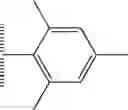


Sources:
- United States Patent and Trademark Office - verify current appl. status at the USPTO↗
Similar patent applications:
- » 20070027312
Methods and intermediates for the synthesis of porphyrins - » 20110144325
Methods and intermediates for the synthesis of porphyrins - » 20070027311
Methods and intermediates for the synthesis of porphyrins - » 20090270638
Methods and intermediates for the synthesis of porphyrins - » 20120253052
Methods and intermediates for the synthesis of porphyrins - » 20100200066
Methods and intermediates for the synthesis of dipyrrin-substituted porphyrinic macrocycles - » 20070191600
Methods and intermediates for the synthesis of dipyrrin-substituted porphyrinic macrocycles - » 10456321
Methods and intermediates for the synthesis of dipyrrin-substituted porphyrinic macrocycles - » 20110197969
Methods and intermediates for the synthesis of dipyrrin-substituted porphyrinic macrocycles - » 20120126214
METHODS AND INTERMEDIATES FOR THE SYNTHESIS OF DIPYRRIN-SUBSTITUTED PORPHYRINIC MACROCYCLES
Recent applications in this class:
- » 20250289805 2025-09-18
N-HETEROCYCLE SUBSTITUTED TRYPTAMINE DERIVATIVES AND METHODS OF USING - » 20250282759 2025-09-11
POLYMORPHIC AND SALT FORMS OF THE AUTOTAXIN INHIBITOR CUDETAXESTAT - » 20250276961 2025-09-04
COMPOUNDS FOR TREATING CERTAIN LEUKEMIAS - » 20250263397 2025-08-21
CRYSTALLINE PHARMACEUTICALLY ACCEPTABLE SALT AND POLYMORPHIC FORM OF THE GLUTAMINYL CYCLASE INHIBITOR VAROGLUTAMSTAT - » 20250263396 2025-08-21
CRYSTALLINE FORMS OF 3-(5-(2-HYDROXY-2- METHYLPROPOXY)-6-METHYPYRAZIN-2-YL)-1H-INDOLE-7-CARBONITRILE - » 20250250255 2025-08-07
IMPROVED PROCESS FOR THE MANUFACTURE OF OSIMERTINIB - » 20250250254 2025-08-07
DEUTERATED HETEROCYCLIC KETONE COMPOUND AND USE THEREOF - » 20250243184 2025-07-31
COMPOUNDS FOR TREATING CERTAIN LEUKEMIAS - » 20250230145 2025-07-17
CRYSTALLINE FORMS OF CARBAZOLE INHIBITORS OF RhoGTPase FOR THE TREATMENT OF DISEASE - » 20250214974 2025-07-03
INHIBITING MONOACYLGLYCEROL LIPASE (MAGL)
Recent applications for this Assignee:
- » 20250270091 2025-08-28
Textile Fibres - » 20250243607 2025-07-31
MELT SPINNING OF BLENDED CELLULOSE ACETATE BUTYRATE FIBERS - » 20250223731 2025-07-10
MELT SPINNING OF BLENDED POLYLACTIC ACID FIBERS - » 20240417271 2024-12-19
CALCIUM CARBONATE MINERALIZATION OF HEMP FIBER - » 20240382412 2024-11-21
BIOORTHOGONAL CATALYTIC PATCH AND METHODS OF USING THE SAME - » 20240374240 2024-11-14
METHODS AND SYSTEMS FOR TRANSIENT TISSUE TEMPERATURE MODULATION - » 20240325820 2024-10-03
VOICE THERAPY DEVICE AND SYSTEM - » 20240271156 2024-08-15
Compositions and methods for conferring resistance to geminivirus - » 20240246075 2024-07-25
DUAL UV-VIS REFLECTANCE ABSORBANCE AND PHOTOLUMINESCENCE MODULES - » 20240226950 2024-07-11
Smart Automated Spin Coater