Arylglycerine Ether
US20090216043A1
2009-08-27
11/922,855
2006-06-22
Abstract:
The invention relates to aromatically substituted glycerine ethers of formula (I),
wherein at least one of the radicals R1, R2, or R3 is or contains an aromatic group. Said compounds can be used, preferably, as surface-active agents.
Inventors:
- Franz-Xaver SCHERL 48 🇩🇪 Burgkirchen, Germany
- Joachim Hess 8 🇩🇪 Hofheim, Germany
- Ralf Zerrer 13 🇩🇪 Karlstein, Germany
- Christian Sowa 1 🇩🇪 Neustadt/ Weinstrasse, Germany
Assignee:
- CLARIANT PRODUKTE (DEUTSCHLAND) GMBH 47 🇩🇪 Frankfurt am Main, Germany
Interested in similar patents?
Get notified when new applications in this technology area are published.
Classification:
C07C43/1785 » CPC further
Ethers; Compounds having groups, groups or groups; Ethers having all ether-oxygen atoms bound to acyclic carbon atoms; Unsaturated ethers containing hydroxy or O-metal groups having more than one ether bound
C07C43/23 » CPC further
Ethers; Compounds having groups, groups or groups; Ethers having an ether-oxygen atom bound to a carbon atom of a six-membered aromatic ring containing hydroxy or O-metal groups
C07C43/115 IPC
Ethers; Compounds having groups, groups or groups; Ethers having all ether-oxygen atoms bound to acyclic carbon atoms; Saturated ethers containing carbocyclic rings
C07C309/12 IPC
Sulfonic acids; Halides, esters, or anhydrides thereof; Sulfonic acids having sulfo groups bound to acyclic carbon atoms of an acyclic saturated carbon skeleton containing oxygen atoms bound to the carbon skeleton containing esterified hydroxy groups bound to the carbon skeleton
Description
The object of the invention is aromatically substituted glycerine ethers and the use thereof in dispersions.
Dispersions are substance systems, consisting of two or several phases, wherein one substance (the dispersed or disperse phase) is distributed, i.e. dispersed, in very fine form in another (the dispersing agent or dispersant). Both dispersing agent and the substances of the disperse phase can be solid, liquid or gaseous. Depending on the degree of distribution, they are differentiated into molecular disperse systems, colloid disperse systems, fine disperse systems and coarse disperse systems. Examples of dispersions are suspensions, emulsions, foams, aerosols and smoke. Many industrial products are used in the form of dispersions.
In order to obtain stable dispersions, surface-active substances (dispersants) must often be added, which render possible at all, or facilitate, the distribution of the phases and counteract gel formation, phase separation, crystallization or sedimentation of the individual components.
Thus there is great interest in efficient dispersants which are readily available industrially and usable for different substance systems, but are also toxicologically safe, and harmless to the environment.
Surprisingly it has been found that aromatically substituted glycerine ethers display outstanding surfactant properties, are readily usable in aqueous dispersions, and also in emulsions, suspension concentrates and suspoemulsions, and result in high mutual compatibility of the components, for example adjuvants, dispersants, electrolytes, etc., and high suspendibility (ease of suspension) of the components, and stabilization of the phases.
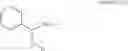
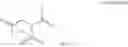
The object of the invention is aromatically substituted glycerine ethers of the formula (I)
wherein
R1, R2 and R3 mutually independently can be the same or different and stand for hydrogen —H,
and/or for
—(CR4R5)x phenyl, wherein R4 and R5, which can be the same or different, stand for —H, for an OH group, for linear or branched (C1—Cl0) alkyl or for linear or branched (C2-C30) alkenyl and x stands for a number from 1 to 10,
and/or for
—(CR4R5)x naphthyl, wherein R4 and R5, which can be the same or different, stand for —H, for an OH group, for linear or branched (C1-C10) alkyl or for linear or branched (C2-C30) alkenyl and x stands for a number from 1 to 10,
and/or for
a group of the formula (II)
and/or for
R6R7N—(CH2)y—, wherein R6 and R7, which can be the same or different, stand for —H, linear or branched (C1-C10) alkyl or linear or branched (C2-C30) alkenyl and y stands for a number from 1 to 22,
and/or for
HO—(CH2)y—, wherein y stands for a number from 1 to 22,
and/or for
SO3−X+, —PO32−X+X′+ or —CH2COO−X+, wherein X+ and X′+ stand for H+, Li+, Na+, K+, Ca2+/2, Mg2+/2 or N(R8)4+ and the R8 can be the same or different and stand for —H or (C1-C10) alkyl, preferably (C1-C4) alkyl,
and/or for
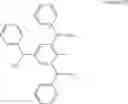
a group of the formula (III)
wherein X+ and X′+ stand for H+, Li+, Na+, K+, Ca2+/2, Mg2+/2 or N(R8)4+ and the R8 can be the same or different and stand for —H or (C1-C10) alkyl, preferably (C1-C4) alkyl,
and/or for
—C(R9)2—COO−X+, —CO—R10—COO−X+ or —C(R9)2C(R9)2C(R9)2—N(R11)2, wherein the R9 can be the same or different and stand for —H and/or —CH3, R10 stands for (C1-C10) alkylene or (C2-C30) alkenylene, the R11 can be the same or different and stand for (C1-C10) alkyl or (C2-C30) alkenyl, X+ stands for H+, Li+, Na+, K+, Ca2+/2, Mg2+/2 or N(R8)4+ and the R8 can be the same or different and stand for —H or (C1-C10) alkyl, preferably for (C1-C4) alkyl,
and/or for
—C(R12)2C(R12)2C(R12)2—N((GO)zH)2, wherein the R12 can be the same or different and stand for —H and/or —CH3, G stands for —C2H4—, —C3H6— or —C4H8— and z for a number from 1 to 22,
and/or stand for
a group of the formula (IV)
A, B and D, which can be the same or different, stand for —C2H4—, —C3H6—, —C4H8— or —CH(phenyl)CH2—,
the indices p1, q1, r1, p2, q2, r2, p3, q3 and r3 stand for numbers from 0 to 500, and n stands for a number from 1 to 100,
with the proviso that at least one of the residues R1, R2 and R3 is or contains an aromatic group.
In a preferred embodiment of the invention, the compounds of the formula (I) contain one or more of the residues R1, R2 and R3 selected from benzyl, the group of the formula (II), the group of the formula (III), —PO32−X+X′+, —SO3−X+ and the group of the formula (IV). In a particularly preferred embodiment of the invention, the compounds of the formula (I) contain one or several of the residues R1, R2 and R3 selected from benzyl, the group of the formula (II) and the group of the formula (IV).
Preferably n stands for a number from 1 to 35 and particularly preferably for a number from 2 to 35. In a particularly preferred embodiment of the invention n stands for a number from 2 to 5. In a further particularly preferred embodiment of the invention, n stands for a number from 4 to 6. In a further particularly preferred embodiment of the invention, n stands for a number from 5 to 25. Within the last-named range, the range from 5 to 10 is exceptionally preferred.
In a further preferred embodiment of the invention, A, B and D, which can be the same or different, each mutually independently stands for —C2H4— or —C3H6— and preferably for —C2H4—.
In a further preferred embodiment of the invention, the indices p1, q1, r1, p2, q2, r2, p3, q3 and r3 stand for numbers from 0 to 100, preferably from 0 to 50, particularly preferably from 0 to 25 and especially preferably from 0 to 20.
In a further preferred embodiment of the invention the sum of the indices p1, q1, r1, p2, q2, r2, p3, q3 and r3 is a number from 0 to 100, preferably from 0 to 60 and particularly preferably from 0 to 40.
In a particularly preferred embodiment of the invention, the aromatically substituted glycerine ethers of the formula (I) are compounds wherein the residues R1, R2 and R3 are selected from —H and benzyl —CH2-phenyl and one or more, preferably two, of the residues R1, R2 and R3 stand for benzyl,
A, B and D stand for —CH2CH2—,
the indices p1, q1, r1, p2, q2, r2, p3, q3 and r3 stand for numbers from 0 to 25, preferably 0 to 20, and the sum of the indices p1, q1, r1, p2, q2, r2, p3, q3 and r3 is a number from 0 to 30, preferably from 5 to 30 and particularly preferably 15 to 20,
n stands for a number from 2 to 5,
and wherein the benzyl groups are directly bound to the glycerine unit and in the case where the residue R2 stands for benzyl, one or more, of the residues R2 stands for benzyl.
Especially preferred are aromatically substituted glycerine ethers of the formula (I), wherein R1 and R2 stand for benzyl, R3 stands for —H, n stands for a number from 2 to 5, p1, q1, r1, p2, q2, r2 stand for the number 0, A, B and D stand for —CH2CH2—, p3, q3 and r3 stand for numbers from 0 to 25, preferably 0 to 20, and the sum of the indices p3, q3 and r3 is a number from 0 to 30, preferably 5 to 30 and particularly preferably 15 to 20.
In a further particularly preferred embodiment of the invention, the aromatically substituted glycerine ethers of the formula (I) are compounds wherein the residues R1, R2 and R3 are selected from —H and the group of the formula (II) and one or more, preferably one, of the residues R1, R2 and R3 stands for the group of the formula (II),
A, B and D, which can be the same or different, stand for —C2H4—, —C3H6—, —C4H8— or —CH(phenyl)CH2—, preferably for —C2H4—,
the indices p1, q1, r1, p2, q2, r2, p3, q3 and r3 stand for numbers from 0 to 100, preferably from 0 to 50 and particularly preferably from 0 to 25, and the sum of the indices p1, q1, r1, p2, q2, r2, p3, q3 and r3 is a number from 0 to 100, preferably from 10 to 60, particularly preferably from 15 to 40,
n stands for a number from 1 to 8, preferably for 2 to 5,
and wherein in the case where the residue R stands for the group of the formula (II), one or more of the residues R2 stand for the group of the formula (II).
Further especially preferred are aromatically substituted glycerine ethers of the formula (I), wherein R1 stands for a group of the formula (II), R2 and R3 stand for —H, A, B and D, which can be the same or different, stand for —C2H4—, —C3H6—, —C4H8— or —CH(phenyl)CH2—, preferably for —C2H4—, the indices p1, q1, r1, p2, q2, r2, p3, q3 and r3 stand for numbers from 0 to 100, preferably from 0 to 50 and particularly preferably from 0 to 25, the sum of the indices p1, q1, r1, p2, q2, r2, p3, q3 and r3 is a number from 0 to 100, preferably from 10 to 60, particularly preferably from 15 to 40, and n stands for a number from 1 to 8, preferably for 2 to 5.
In a further particularly preferred embodiment of the invention, the aromatically substituted glycerine ethers of the formula (I) are compounds wherein one or more, preferably one, of the residues R1, R2 or R3 stands for a group of the formula (III),
A, B and D, which can be the same or different, stand for —C2H4—, —C3H6—, —C4H8— or —CH(phenyl)CH2—, preferably for —C2H4—,
the indices p1, q1, r1, p2, q2, r2, p3, q3 and r3 stand for numbers from 0 to 100, preferably from 0 to 50 and particularly preferably from 0 to 25, and the sum of the indices p1, q1, r1, p2, q2, r2, p3, q3 and r3 is a number from 0 to 100, preferably from 10 to 60, particularly preferably from 15 to 40,
n stands for a number from 2 to 10, preferably for a number from 4 to 9 and particularly preferably for a number from 4 to 6,
and wherein in the case where the residue R2 has a meaning other than —H, just one or else also more of the residues R2 can have a meaning other than —H.
Further especially preferred are aromatically substituted glycerine ethers of the formula (I), wherein R1 stands for a group of the formula (II), one of the residues R2 or R3 stands for a group of the formula (III) and all remaining residues R2 or R3 stand for —H, A, B and D, which can be the same or different, stand for —C2H4—, —C3H6—, —C4H8— or —CH(phenyl)CH2—, preferably for —C2H4—, the indices p1, q1, r1, p2, q2, r2, p3, q3 and r3 stand for numbers from 0 to 100, preferably from 0 to 50 and particularly preferably from 0 to 25, and the sum of the indices p1, q1, r1, p2, q2, r2, p3, q3 and r3 is a number from 0 to 100, preferably from 10 to 60, particularly preferably from 15 to 40, and n stands for a number from 2 to 10, preferably for a number from 4 to 9 and particularly preferably for a number from 4 to 6.
In a further particularly preferred embodiment of the invention, the aromatically substituted glycerine ethers of the formula (I) are compounds wherein one or more, preferably one, of the residues R1, R2 and R3 stands for —PO32−X+X′+, wherein X+ and X′+ stand for H+, Li+, Na+, K+, Ca2+/2, Mg2+/2 or N(R8)4+ and the R8 can be the same or different and stand for —H or (C1-C10) alkyl, preferably (C1-C4) alkyl,
A, B and D, which can be the same or different, stand for —C2H4—, —C3H6—, —C4H8— or —CH(phenyl)CH2—, preferably for —C2H4—,
the indices p1, q1, r1, p2, q2, r2, p3, q3 and r3 stand for numbers from 0 to 100, preferably from 0 to 50 and particularly preferably from 0 to 25, and the sum of the indices p1, q1, r1, p2, q2, r2, p3, q3 and r3 is a number from 0 to 100, preferably from 10 to 60, particularly preferably from 15 to 40,
n stands for a number from 2 to 10, preferably for a number from 4 to 9 and particularly preferably for a number from 4 to 6,
and wherein in the case where the residue R2 has a meaning other than —H, just one or else also more of the residues R2 can have a meaning other than —H.
Further especially preferred are aromatically substituted glycerine ethers of the formula (I), wherein R1 stands for a group of the formula (II), one of the residues R2 or R3 stands for —PO32−X+X′+, wherein X+ and X′+ stand for H+, Li+, Na+, K+, Ca2+/2, Mg2+/2 or N(R8)4+ and the R8 can be the same or different and stand for —H or (C1-C10) alkyl, preferably (C1-C4) alkyl, and all remaining residues R2 or R3 stand for —H, A, B and D, which can be the same or different, stand for —C2H4—, —C3H6—, —C4H8— or
—CH(phenyl)CH2—, preferably for —C2H4—, the indices p1, q1, r1, p2, q2, r2, p3, q3 and r3 stand for numbers from 0 to 100, preferably from 0 to 50 and particularly preferably from 0 to 25, and the sum of the indices p1, q1, r1, p2, q2, r2, p3, q3 and r3 is a number from 0 to 100, preferably from 10 to 60, particularly preferably from 15 to 40, and n stands for a number from 2 to 10, preferably for a number from 4 to 9 and particularly preferably for a number from 4 to 6.
In a further particularly preferred embodiment of the invention, the aromatically substituted glycerine ethers of the formula (I) are compounds wherein one or more, preferably one, of the residues R1, R2 and R3 is —SO3−X+, wherein X+ stands for H+, Li+, Na+, K+, Ca2+/2, Mg2+/2 or N(R8)4+ and the R8 can be the same or different and stand for —H or (C1-C10) alkyl, preferably (C1-C4) alkyl, A, B and D, which can be the same or different, stand for —C2H4—, —C3H6—, —C4H8— or —CH(phenyl)CH2—, preferably for —C2H4—,
the indices p1, q1, r1, p2, q2, r2, p3, q3 and r3 stand for numbers from 0 to 100, preferably from 0 to 50 and particularly preferably from 0 to 25, and the sum of the indices p1, q1, r1, p2, q2, r2, p3, q3 and r3 is a number from 0 to 100, preferably from 10 to 60, particularly preferably from 15 to 40,
n stands for a number from 2 to 10, preferably for a number from 4 to 9 and particularly preferably for a number from 4 to 6,
and wherein in the case where the residue R2 has a meaning other than —H, just one or else also more of the residues R2 can have a meaning other than —H.
Further especially preferred are aromatically substituted glycerine ethers of the formula (I), wherein one or more, preferably one, of the residues R1, R2 and R3 stands for a group of the formula (II) and one or more, preferably one, of the residues R1, R2 and R3 for —SO3−X+, wherein X+ stands for H+, Li+, Na+, K+, Ca2+/2, Mg2+/2 or N(R8)4+ and the R8 can be the same or different and stand for —H or (C1-C10) alkyl, preferably (C1-C4) alkyl, and all remaining residues R1, R2 or R3 stand for —H, A, B and D, which can be the same or different, stand for —C2H4—, —C3H6—, —C4H8— or —CH(phenyl)CH2—, preferably for —C2H4—, the indices p1, q1, r1, p2, q2, r2, p3, q3 and r3 stand for numbers from 0 to 100, preferably from 0 to 50 and particularly preferably from 0 to 25, and the sum of the indices p1, q1, r1, p2, q2, r2, p3, q3 and r3 is a number from 0 to 100, preferably from 10 to 60, particularly preferably from 15 to 40, and n stands for a number from 2 to 10, preferably for a number from 4 to 9 and particularly preferably for a number from 4 to 6.
In a further particularly preferred embodiment of the invention, the aromatically substituted glycerine ethers of the formula (I) are compounds wherein the residues R1, R2 and R3 are selected from —H and the group of the formula (IV) and one or more, preferably two, of the residues R1, R2 and R3 stand for a group of the formula (IV),
A, B and D stand for —CH2CH2—,
the indices p1, q1, r1, p2, q2, r2, p3, q3 and r3 stand for numbers from 0 to 25, preferably 0 to 20, and the sum of the indices p1, q1, r1, p2, q2, r2, p3, q3 and r3 is a number from 0 to 30, preferably 5 to 30 and particularly preferably 15 to 20,
n stands for a number from 1 to 5,
and wherein the groups of the formula (IV) are bound directly to the glycerine unit and in the case where the residue R2 stands for the group of the formula (IV), one or more of the residues R2 stand for the group of the formula (IV).
Further particularly preferred are aromatically substituted glycerine ethers of the formula (I), wherein R1 and R2 stand for a group of the formula (IV), R3 stands for —H, n stands for a number from 1 to 5, p1, q1, r1, p2, q2, r2 stand for the number 0, A, B and D stand for —CH2CH2—, p3, q3 and r3 stand for numbers from 0 to 25, preferably 0 to 20, and the sum of the indices p3, q3 and r3 is a number from 0 to 30, preferably 5 to 30 and particularly preferably 15 to 20.
In a further particularly preferred embodiment of the invention, the aromatically substituted glycerine ethers of the formula (I) are compounds wherein the residues R1, R2 and R3 are selected from —H and the group of the formula (IV) and one or more, preferably two, of the residues R1, R2 and R3 stand for a group of the formula (IV),
A, B and D are selected from —CH2CH2— and —CH(phenyl)CH2— and wherein in the case where the glycerine ethers contain both —CH2CH2— and also —CH(phenyl)CH2 groups, —CH2CH2— is bound directly to the glycerine unit and —CH(phenyl)CH2— to ethyleneoxy,
the indices p1, q1, r1, p2, q2, r2, p3, q3 and r3 stand for numbers from 0 to 25, preferably 0 to 20, and the sum of the indices p1, q1, r1, p2, q2, r2, p3, q3 and r3 is a number from 0 to 35, preferably 5 to 35 and particularly preferably 15 to 25, and n stands for a number from 1 to 5,
and wherein the groups of the formula (IV) are bound directly to the glycerine unit and in the case where the residue R2 stands for the group of the formula (IV), one or more of the residues R2 stand for the group of the formula (IV).
Further especially preferred are aromatically substituted glycerine ethers of the formula (I), wherein R1 and R2 stand for a group of the formula (IV), R3 stands for —H, n stands for a number from 1 to 5, p1, q1 and r1 stand for the number 0, A stands for —CH2CH2—, B and D stand for —CH(phenyl)CH2—, p2, q2, r2, p3, q3 and r3 stand for numbers from 0 to 25, preferably 0 to 20, and the sum of the indices p2, q2, r2, p3, q3 and r3 is a number from 0 to 35, preferably 5 to 35 and particularly preferably 15 to 25.
A further object of the present invention is dispersions containing one or more of the aromatically substituted glycerine ethers according to the invention.
The aromatically substituted glycerine ethers according to the invention are advantageously suitable as surfactant substances. A further object of the present invention is thus also the use of one or more of the aromatically substituted glycerine ethers according to the invention as surfactant substances.
In a further preferred embodiment of the invention the aromatically substituted glycerine ethers according to the invention are used as surfactant substances in dispersions.
General Production Method
A) Polymerization of Glycerine to Oligoglycerines or Polyglycerines
The polymerization of glycerine to oligoglycerines or polyglycerines is effected in a known manner.
For this, glycerine is heated in the presence of acidic catalysts, for example HCl, H2SO4, sulfonic acids or H3PO4 or in the presence of alkaline catalysts such as sodium hydroxide, potassium hydroxide, alkali metal alcoholates, alkali metal carbonates or alkali metal bicarbonates in a concentration range from 0.1 to 0.4 wt. % catalyst in a stirred apparatus with water separator and nitrogen flow at 200 to 280° C., preferably 240 to 270° C. With the removal of water condensation, the formation of the oligoglycerine or polyglycerine with a mean condensation level of 2 to 100, preferably 3 to 35 glycerine units, takes place within 3 to 14 hours. The mean molecular weight of the oligo- or polyglycerines can be calculated from the OH number.
The ratio of the condensation level n to the condensation time in the polymerization of glycerine to oligoglycerines or polyglycerines is shown in Table 1.
| TABLE 1 |
| Ratio of condensation level n to condensation time |
| Condensation | OH number | Molar mass | Condensation time |
| level n | [mg KOH/g] | [g/mol] | [hours] |
| 2.0 | 1352 | 166 | 3-4 |
| 3.0 | 1169 | 240 | 3-4 |
| 4.0 | 1072 | 314 | 4-5 |
| 5.0 | 1012 | 388 | 5-7 |
| 6.0 | 971 | 462 | 6-7 |
| 7.0 | 942 | 536 | 7-9 |
| 8.0 | 920 | 610 | 8-9 |
| 9.0 | 902 | 684 | 9-11 |
| 10 | 888 | 758 | 10-11 |
| 11 | 877 | 832 | 11-12 |
| 12 | 867 | 906 | 11-12 |
| 13 | 859 | 980 | 12-13 |
| 14 | 850 | 1056 | 12-13 |
| 15 | 844 | 1130 | 13-14 |
B) Production of Glycerine Ethers
For the production of the mono-, oligo- or polyglycerine ethers according to the invention, the aforesaid mono-, oligo- or polyglycerines or the corresponding alkoxylated glycerines can be etherified by an etherification method known to the skilled person, such as for example the Williamson ether synthesis. In the Williamson ether synthesis, the glycerines can for example be reacted with arylalkyl chlorides such as for example benzyl chloride under alkaline catalysis preferably at 80 to 110° C. The mono-, oligo- or polyglycerines can however for example also be reacted with appropriate oxides or epoxides under acidic or alkaline catalysis. In each case, the reaction is monitored by determination of the OH number.
The production of the mono-, oligo- or polyglycerine ethers according to the invention can also be effected by reacting the aforesaid mono-, oligo- or poly-glycerines or the corresponding alkoxylated glycerines by the Williamson ether synthesis for example with arylalkyl chlorides under alkaline catalysis preferably at 80 to 110° C. and then reacting the glycerine ethers thus obtained for example with oxides or epoxides under acidic or alkaline catalysis.
The mono-, oligo- or polyglycerine ethers according to the invention can be modified by standard methods known to the skilled person by alkoxylation, i.e. by introduction of alkyleneoxy groups, such as for example ethyleneoxy groups, by sulfation, phosphation, amination, etc.
The compounds according to the invention are characterized by excellent dispersant power and high electrolyte stability. In addition, the glycerine ethers according to the invention result in an improvement in the compatibility of hydrophilic and hydrophobic components and an increase in the wetting and absorption power of formulations which contain these glycerine ethers.
EXAMPLES
Examples of the production of glycerine ethers according to the invention are described below, without restricting the invention thereto.
Production of Oligo- or Polyglycerine Benzyl Ethers
Production Procedure
The oligoglycerine to be reacted (oligoglycerine mixture with a mean condensation level n of 2 or 5) is treated with NaOH and stirred at 80° C. for 2 hours under water-pump vacuum. Next, benzyl chloride is added dropwise over 5 hours at normal pressure at a temperature of 80 to 100° C. During this, the temperature of 100° C. should not be exceeded. Next the mixture is stirred for a further 3 hours at 100° C. For the workup, the reaction mixture is shaken with water. The organic phase was isolated and dried.
The quantities of oligo- or polyglycerine PG, wherein n means the condensation level, of benzyl chloride and of sodium hydroxide NaOH used and the OH number of the glycerine ethers are shown in Table 2.
| TABLE 2 |
| Quantities of oligo- or polyglycerine, benzyl chloride and sodium |
| hydroxide used, and OH number of the glycerine ethers |
| PG | benzyl chloride | NaOH | OH number |
| n | [mol] | [g] | [mol] | [g] | [mol] | [g] | [mg KOH/g] |
| 2 | 1.0 | 166.2 | 2.0 | 253.2 | 2.0 | 80.0 | 360.9 |
| 5 | 1.0 | 388.4 | 3.0 | 379.8 | 3.0 | 120.0 | 431.6 |
Production of Oligo- or Polyglycerine Tristyrylphenyl Ethers
General Production Procedure
The oligoglycerine to be reacted (oligoglycerine mixture with a mean condensation level n of 2 or 5) and tristyrylphenol or tristyrylphenol ethoxylate is treated with catalytic quantities of NaOH and heated with stirring at 170° C. Water of reaction formed is removed from the reaction mixture in the water separator. The reaction mixture is maintained at this temperature for a period of 6 hours. After this, it is cooled to room temperature.
The quantities of oligo- or polyglycerine PG, wherein n means the condensation level, of tristyrylphenol or tristyrylphenol ethoxylate TSP-(EO)m—H, wherein EO means —CH2CH2O— used, and the OH number of the glycerine ethers are shown in Table 3.
| TABLE 3 |
| Quantities of oligo- or polyglycerine and tristyrylphenol or tristyrylphenol |
| ethoxylate used and OH number of the glycerine ethers |
| PG | TSP-(EO)m-H | OH number |
| n | [mol] | [g] | m | [mol] | [g] | [mg KOH/g] |
| 2 | 1.0 | 166.2 | 0 | 1.0 | 406.6 | 349.4 |
| 5 | 1.0 | 388.4 | 10 | 2.0 | 1694.2 | 312.1 |
Production of Mono-, Oligo- or Polyglycerine Styrene Oxide Ethers
General Production Procedure
Mono- or oligoglycerine (oligoglycerine mixture with a mean condensation level n of 5) is treated with potassium methoxide and heated at 70° C. Methanol which forms is drawn off under water-pump vacuum. After this, styrene oxide is added dropwise at 70 to 75° C. within a period of 3 to 5 hours. Next the mixture is stirred at 70 to 75° C. for a further 3 to 6 hours. Next the OH number is determined.
The quantities of mono-, oligo- or polyglycerine PG, wherein n means the condensation level, and of styrene oxide used, and the OH number of the glycerine ethers are shown in Table 4.
| TABLE 4 |
| Quantities of mono-, oligo- or polyglycerine and styrene |
| oxide used and OH number of the glycerine ethers |
| PG | Styrene oxide | OH number |
| n | [mol] | [g] | [mol] | [g] | [mg KOH/g] | |
| 1 | 1.0 | 92.0 | 2.17 | 261 | 493.8 | |
| 5 | 1.0 | 388.42 | 3.0 | 360.5 | 603.1 | |
Claims
1. An aromatically substituted glycerine ether of the formula (I)
wherein
R1, R2 and R3 are the same or different and are
hydrogen —H,
—(CR4R5)x phenyl, wherein R4 and R5 are the same or different, and are —H, an OH group, linear or branched (C1-C10) alkyl, or linear or branched (C2-C30) alkenyl and x is a number from 1 to 10,
—(CR4R5), naphthyl, wherein R4 and R5 are the same or different, and are —H, an OH group, linear or branched (C1-C10) alkyl or linear or branched (C2-C30) alkenyl and x is a number from 1 to 10,
a radical group of the formula (II)
R6R7N—(CH2)y—, wherein R6 and R7 are the same or different, and are —H, linear or branched (C1-C10) alkyl, or linear or branched (C2-C30) alkenyl and y is a number from 1 to 22,
HO—(CH2)y—, wherein y is a number from 1 to 22,
—SO3−X+, —PO32−X+X′+ or —CH2COO−X+, wherein X+ and X′+ are H+, Li+, Na+, K+, Ca2+/2, Mg2+/2 or N(R8)4+, and the R8 is the same or different and is —H or (C1-C10) alkyl,
a radical group of the formula (III)
wherein X+ and X′+ are H+, Li+, Na+, K+, Ca2+/2, Mg2+/2 or N(R8)4+, and the R8 is the same or different and is —H or (C1-C10) alkyl,
—C(R9)2—COO−X+, —CO—R10—COO−X+ or —C(R9)2C(R9)2C(R9)2—N(R11)2, wherein the R9 is the same or different and is —H and/or —CH3, R10 is (C1-C10) alkylene or (C2-C30) alkenylene, the R11 is the same or different and is (C1-C10) alkyl or (C2-C30) alkenyl, X+ is H+, Li+, Na+, K+, Ca2+/2, Mg2+/2 or N(R8)4+, and the R8 is the same or different and is —H or (C1-C10) alkyl,
—C(R12)2C(R12)2C(R12)2—N((GO)zH)2, wherein the R12 is the same or different and is —H and/or —CH3, G is —C2H4—, —C3H6— or —C4H8— and z is a number from 1 to 22, and/or
a radical group of the formula (IV)
A, B and D, are the same or different, and are —C2H4—, —C3H6—, —C4H8— or —CH(phenyl)CH2—,
the indices p1, q1, r1, p2, q2, r2, p3, q3 and r3 are numbers from 0 to 500,
and n is a number from 1 to 100,
with the proviso that at least one of the residues R1, R2 and R3 is a radical of the formula (II) or a radical of the formula (IV).
2. The aromatically substituted glycerine ether as claimed in claim 1, wherein at least one of the residues R1, R2 and R3 is a radical group of the formula (IV).
3. The aromatically substituted glycerine ether as claimed in claim 1, wherein n is a number from 1 to 35.
4. The aromatically substituted glycerine ether as claimed in claim 1, wherein A, B and D, are same or different, and are —C2H4— or —C3H6—.
5. The aromatically substituted glycerine ether as claimed in claim 1, wherein the indices p1, q1, r1, p2, q2, r2, p3, q3 and r3 are numbers from 0 to 100.
6. The aromatically substituted glycerine ether as claimed in claim 1, wherein the sum of the indices p1, q1, r1, p2, q2, r2, p3, q3 and r3 is a number from 0 to 100.
7. The aromatically substituted glycerine ether as claimed in claim 1, wherein the residues R1, R2 and R3 are —H or a radical of the formula (II) and at least one of the residues R1, R2 and R3 is a radical of the formula (II),
A, B and D, are the same or different, and are —C2H4—, —C3H6—, d—C4H8— or —CH(phenyl)CH2—,
the indices p1, q1, r1, p2, q2, r2, p3, q3 and r3 are numbers from 0 to 100, and the sum of the indices p1, q1, r1, p2, q2, r2, p3, q3 and r3 is a number from 0 to 100,
n is a number from 1 to 8,
and when the residue R2 is a radical of the formula (II), one or more of the residues R2is a radical of the formula (II).
8. The aromatically substituted glycerine ether as claimed in claim 1, wherein R1 is a radical of the formula (II), R2 and R3 are —H;
A, B and D, are same or different, and are —C2H4—, —C3H6—, —C4H8— or —CH(phenyl)CH2—,
the indices p1, q1, r1, p2, q2, r2, p3, q3 and r3 are numbers from 0 to 100, the sum of the indices p1, q1, r1, p2, q2, r2, p3, q3 and r3 is a number from 0 to 100 and n is a number from 1 to 8.
9. The aromatically substituted glycerine ether as claimed in claim 1, wherein
at least one of the residues R1, R2 or R3 is a radical of the formula (III) and the other residues R1, R2 and R3 have the meaning stated in claim 1,
A, B and D, are the same or different, and are —C2H4—, —C3H6—, —C4H8— or —CH(phenyl)CH2—,
the indices p1, q1, r1, p2, q2, r2, p3, q3 and r3 are numbers from 0 to 100, and the sum of the indices p1, q1, r1, p2, q2, r2, p3, q3 and r3 is a number from 0 to 100,
n is a number from 2 to 10,
and when the residue R2 is not —H, just one or else also more of the residues R2 may not be —H.
10. The aromatically substituted glycerine ether as claimed in claim 1, wherein R1 is a radical of the formula (II), one of the residues R2 or R3is a radical of the formula (III) and all remaining residues R2 or R3 are —H,
A, B and D, are the same or different, and are —C2H4—, —C3H6—, —C4H8— or —CH(phenyl)CH2—,
the indices p1, q1, r1, p2, q2, r2, p3, q3 and r3 are numbers from 0 to 100, and the sum of the indices p1, q1, r1, p2, q2, r2, p3, q3 and r3 is a number from 0 to 100, and n is for a number from 2 to 10
11. The aromatically substituted glycerine ether as claimed in claim 1, wherein
at least one of the residues R1, R2 and R3 is —PO32−X30 X′+, wherein X+ and X′+ are H+, Li+, Na+, K+, Ca2+/2, Mg2+/2 or N(R8)4+ and the R8 is the same or different and is —H or (C1-C10) alkyl, and the other residues R1, R2 and R3 have the meaning stated in claim 1,
A, B and D, are the same or different, and are —C2H4—, —C3H6—, —C4H8— or—CH(phenyl)CH2—,
the indices p1, q1, r1, p2, q2, r2, p3, q3 and r3 are numbers from 0 to 100, and the sum of the indices p1, q1, r1, p2, q2, r2, p3, q3 and r3 is a number from 0 to 100;
n is a number from 2 to 10,
and when the residue R2 is not —H, just one or else also more of the residues R2 may not be —H.
12. The aromatically substituted glycerine ether as claimed in claim 1, wherein R1 is a radical of the formula (II), one of the residues R2 or R3 is —PO32−X+X′+, wherein X+ and X′+ are H+, Li+, Na+, K+, Ca2+/2, Mg2+/2 or N(R8)4+ and the R8 is the same or different and is —H or (C1-C10) alkyl, and all remaining residues R2 or R3 H,
A, B and D, are the same or different, and are —C2H4—, —C3H6—, —C4H8— or —CH(phenyl)CH2—,
the indices p1, q1, r1, p2, q2, r2, p3, q3 and r3 are numbers from 0 to 100, and the sum of the indices p1, q1, r1, p2, q2, r2, p3, q3 and r3 is a number from 0 to 100, and n is a number from 2 to 10
13. The aromatically substituted glycerine ether as claimed in claim 1, wherein
at least one of the residues R1, R2 and R3 is —SO3−X+, wherein X+ is H+, Li+, Na+, K+, Ca2+/2, Mg2+/2 or N(R8)4+ and the R8 is the same or different and is —H or (C1-C10) alkyl, and the other residues R1, R2 and R3 have the meaning stated in claim 1,
A, B and D, are the same or different, and are —C2H4—, —C3H6—, —C4H8— or —CH(phenyl)CH2—,
the indices p1, q1, r1, p2, q2, r2, p3, q3 and r3 are numbers from 0 to 100, and the sum of the indices p1, q1, r1, p2, q2, r2, p3, q3 and r3 is a number from 0 to 100,
n is a number from 2 to 10,
and when the residue R2 is not —H, just one or else also more of the residues R2 may not be —H.
14. The aromatically substituted glycerine ether as claimed in claim 1, wherein at least one of the residues R1, R2 and R3 is a radical of the formula (II) and at least one of the residues R1, R2 and R3 is —SO3−X+, wherein X+ is H+, Li+, Na+, K+, Ca2+/2, Mg2+/2 or N(R8)4+ and the R8 is the same or different and is —H or (C1-C10) alkyl, and all remaining residues R1, R2 or R3 are —H, A, B and D, are the same or different, and are —C2H4—, —C3H6—, —C4H8— or —CH(phenyl)CH2—,
the indices p1, q1, r1, p2, q2, r2, p3, q3 and r3 are numbers from 0 to 100, and the sum of the indices p1, q1, r1, p2, q2, r2, p3, q3 and r3 is a number from 0 to 100, and n is a number from 2 to 10.
15. The aromatically substituted glycerine ether as claimed in o claim 1, wherein
the residues R1, R2 and R3 are —H and/or a radical of the formula (IV) and at least one of the residues R1, R2 and R3 is a radical of the formula (IV),
A, B and D is —CH2CH2—,
the indices p1, q1, r1, p2, q2, r2, p3, q3 and r3 are numbers from 0 to 25, and the sum of the indices p1, q1, r1, p2, q2, r2, p3, q3 and r3 is a number from 0 to 30,
n is a number from 1 to 5,
and wherein the radicals of the formula (IV) are bound directly to the glycerine unit and when the residue R2 is a radical of the formula (IV), one or more of the residues R2 is a radical of the formula (IV).
16. The aromatically substituted glycerine ether as claimed in claim 1, wherein R1 and R2 are a radical of the formula (IV), R3 is —H,
n is a number from 1 to 5,
p1, q1, r1, p2, q2, r2 are 0,
A, B and D are —CH2CH2—,
p3, q3 and r3 are numbers from 0 to 25, and the sum of the indices p3, q3 and r3 is a number from 0 to 30.
17. The aromatically substituted glycerine ether as claimed in claim 1, wherein
the residues R1, R2 and R3 are —H and/or a radical of the formula (IV) and at least one of the residues R1, R2 and R3 is a radical of the formula (IV),
A, B and D are —CH2CH2— and/or —CH(phenyl)CH2—
and when the glycerine ethers contain both —CH2CH2— and —CH(phenyl)CH2 radicals, —CH2CH2— is bound directly to the glycerine unit and —CH(phenyl)CH2— to ethyleneoxy,
the indices p1, q1, r1, p2, q2, r2, p3, q3 and r3 are numbers from 0 to 25, and the sum of the indices p1, q1, r1, p2, q2, r2, p3, q3 and r3 is a number from 0 to 35, and
n stands for is a number from 1 to 5,
and wherein the radicals of the formula (IV) are bound directly to the glycerine unit and in the case where the residue R2 is a radical of the formula (IV), one or more of the residues R2 is a radical of the formula (IV).
18. The aromatically substituted glycerine ether as claimed in claim 1, wherein R1 and R2 are a radical of the formula (IV), R3 is —H,
n is a number from 1 to 5,
p1, q1 and r1 are 0,
A is —CH2CH2—,
B and D are —CH(phenyl)CH2—,
p2, q2, r2, p3, q3 and r3 are numbers from 0 to 25, and the sum of the indices p2, q2, r2, p3, q3 and r3 is a number from 0 to 35.
19. A dispersion containing at least one aromatically substituted glycerine ether according to claim 1.
20. A surfactant comprising at least one aromatically substituted glycerine ether as claimed in claim 1.
21. (canceled)
Images & Drawings included:





Sources:
- United States Patent and Trademark Office - verify current appl. status at the USPTO↗
Recent applications in this class:
- » 20220054999 2022-02-24
High internal phase emulsion stabilized by low content of surfactant and preparation method thereof - » 20210370253 2021-12-02
NOVEL WETTING COMPOSITION - » 20210362109 2021-11-25
IMPROVED WETTING COMPOSITION - » 20210291132 2021-09-23
Wetting and anti-foaming agent - » 20200206706 2020-07-02
Core-shell structured non-ionic nanoemulsion system and preparation and use thereof - » 20190201858 2019-07-04
Surfactant compositions and use thereof as inverter of water-in-oil emulsion polymers - » 20180296997 2018-10-18
Wetting and anti-foaming agent - » 20170100703 2017-04-13
Wetting and anti-foaming agent - » 20170001161 2017-01-05
Dispersing agent, its preparation method and dispersed composition of carbon-based material comprising the same - » 20160367957 2016-12-22
Prevention of surge wave instabilities in three phase gas condensate flowlines
Recent applications for this Assignee:
- » 20230132025 2023-04-27
Method for purification of liquid compositions containing at least one sphingolipid - » 20200139349 2020-05-07
Synthesis of a MoVNbTe catalyst having an increased specific surface and higher activity for the oxidative dehydrogenation of ethane to ethylene - » 20200061583 2020-02-27
Synthesis of a MoVNbTe catalyst having a reduced niobium and tellurium content and higher activity for the oxidative dehydrogenation of ethane - » 20190381486 2019-12-19
Manganese-doped nickel-methanation catalysts - » 20170327809 2017-11-16
Polypeptides having xylanase activity with a high conversion rate of xylose—containing polysaccharides - » 20170267523 2017-09-21
Steam reforming catalyst for hydrocarbon-containing gas, apparatus for producing hydrogen, and method for producing hydrogen - » 20160318007 2016-11-03
Catalyst containing phosphorus for converting oxygenates into olefins - » 20160214096 2016-07-28
Age-resistant catalyst for oxidation of NO to NOin exhaust streams - » 20160059226 2016-03-03
Platinum/palladium zeolite catalyst - » 20150218594 2015-08-06
CELL-FREE AND MINIMIZED METABOLIC REACTION CASCADES FOR THE PRODUCTION OF CHEMICALS