Method and apparatus for measuring insertion loss in a fiber optic cable connection
US20090225302A1
2009-09-10
12/399,314
2009-03-06
✅ Patent granted
US 7,929,123 B2
2011-04-19
-
-
Michael P Stafira
2029-10-23
Abstract:
A method and apparatus for measuring the insertion loss of a fiber optic connection is provided. The invention generally comprises a light source providing light to a test connector which contains a juncture of two fiber optic cables. The test connector has one or more opaque portions surrounding the fiber optic juncture. A pyrometer or other heat detection means is then used to measure any temperature increase as a result of light scattered into the opaque portions of the test connector.
Inventors:
- Jack E. Caveney 122 🇺🇸 Hinsdale, IL, United States
- Brett Lane 3 🇺🇸 Westmont, IL, United States
Assignee:
- PANDUIT CORP. 1,097 🇺🇸 Tinley Park, IL, United States
Interested in similar patents?
Get notified when new applications in this technology area are published.
Classification:
G02B6/3809 » CPC main
Light guides; Coupling light guides; Mechanical coupling means having fibre to fibre mating means; Dismountable connectors, i.e. comprising plugs without a ferrule embedding the fibre end, i.e. with bare fibre end
G01M11/35 » CPC further
Testing of optical apparatus; Testing structures by optical methods not otherwise provided for; Testing of optical devices, constituted by fibre optics or optical waveguides in which light is transversely coupled into or out of the fibre or waveguide, e.g. using integrating spheres
G02B6/385 » CPC further
Light guides; Coupling light guides; Mechanical coupling means having fibre to fibre mating means; Dismountable connectors, i.e. comprising plugs; Details of mounting fibres in ferrules; Assembly methods; Manufacture Accessories for testing or observation of connectors
G01J5/00 IPC
Radiation pyrometry, e.g. infrared or optical thermometry
G02B6/38 IPC
Light guides; Coupling light guides; Mechanical coupling means having fibre to fibre mating means
G01J5/48 IPC
Radiation pyrometry, e.g. infrared or optical thermometry Thermography; Techniques using wholly visual means
C03B37/07 IPC
Manufacture or treatment of flakes, fibres, or filaments from softened glass, minerals, or slags Controlling or regulating
Description
CROSS-REFERENCE TO RELATED APPLICATION
This application claims priority to U.S. Provisional Patent Application No. 61/034,387, filed Mar. 6, 2008, the subject matter of which is hereby incorporated herein by reference in its entirety.
FIELD OF THE INVENTION
The present invention relates generally to fiber optic connections and more specifically to a novel apparatus and method to measure the performance of a fiber optic connection.
BACKGROUND OF THE INVENTION
In order to determine the adequacy of a fiber optic connection, such as the fiber optic connection disclosed in U.S. Pat. No. 7,011,454 which is herein incorporated by reference in its entirety, it is useful to measure the insertion loss of the fiber optic connection in order to verify that it is within acceptable limits. U.S. Pat. No. 4,360,268 (the '268 patent) discloses the use of an integrating sphere to directly measure the amount of scattered light at a single point radial to the fiber optic juncture. U.S. Pat. No. 7,192,195 (the '195 patent) discloses the use of one or more fiber optic strands to collect light and guide it to a measurement device. However, even measuring the scattered light at multiple locations still may not enable an accurate measurement of the total amount of scattered light because the light may not scatter evenly or in the direction of the finite number of light collecting points. Thus, it is unlikely that the total amount of scattered light will be measured by a limited number of light collecting points.
As a result, it is desirable to provide a method and apparatus that can measure the total amount of scattered light without extrapolating the total amount from a limited number of light collecting locations.
SUMMARY OF THE INVENTION
The present invention generally comprises a light source supplying light to a test connector which contains a juncture of two fiber optic cables. The test connector has one or more opaque portions surrounding the fiber optic juncture. A pyrometer or other heat detection means is then used to measure any temperature increase as a result of light scattered into and absorbed by the opaque portions of the test connector.
BRIEF DESCRIPTION OF FIGURES
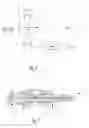
FIG. 1 is a system overview of a method and apparatus for measuring insertion loss in a fiber optic connection.
FIG. 2 is a cross sectional view of a test connector for use in the method and apparatus of claim 1.
DETAILED DESCRIPTION OF THE PREFERRED EMBODIMENTS
As shown by FIG. 1, one embodiment of an apparatus 10 to measure the performance of a pre-polished fiber optic connector comprises a light source 12 that can supply light with at least a portion of the light's emission spectrum in the infrared region of the electromagnetic spectrum. While one embodiment supplies light with a portion in the infrared region of the electromagnetic spectrum, any frequency in which light can be easily and efficiently transmitted by a fiber optic cable and be absorbed by opaque materials in a test connector (as described below) may be employed in embodiments of the present invention. The light source 12 may be comprised of a relatively narrowband emitter, such as a semiconductor LED or laser, or a relatively broadband emitter, such as a gas discharge arc lamp or filament lamp.
The light source 12 supplies light to a test connector 22. The light is transferred from the light source 12 to the test connector 22 via a coupling assembly 14. In one embodiment, the coupling assembly 14 comprises a fiber optic cable connected to the light source 12 at one end and a test connector interface 16, which can comprise a fiber optic adapter, at the other end. In another embodiment, the coupling assembly 14 is composed of free space optical components such as lenses and apertures.
As the light from the light source 12 reaches the test connector 22 it will either be coupled to the field fiber 24 or be scattered into opaque portions of the test connector 22 that are adjacent to the stub fiber and field fiber interface 20. The light that is scattered into the test connector 22 will be absorbed by the opaque portions of the test connector 22 and cause a temperature increase in those opaque portions. The amount of the temperature increase will be dependant upon the amount of light scattered into the test connector 22. Index matching gel may be used to enhance the coupling of the light at the stub fiber and field fiber interface 20. Additionally, the geometry and composition of the index matching gel and surrounding opaque portions may be optimized to facilitate efficient heat transfer and detection.
The temperature of the opaque portions of the test connector 22 can be measured by a pyrometer 18. The pyrometer 18 can be placed in close proximity to the opaque portion of the test connector 22 in order to increase the accuracy of the temperature measurement. The resulting temperature can be compared to temperature measurements before the light source was energized and the resulting temperature difference can be used to determine the amount of light that is scattered into the opaque portions of the test connector 22. An analysis circuit 28 can be used to determine the temperature difference and the insertion loss of the connection. The analysis circuit 28 can utilize the peak temperatures measured by the pyrometers 18 after the light source 12 has been turned on for a predetermined time and subsequently turned off to determine the insertion loss of the connection. The analysis circuit 28 can then use the insertion loss to see if it falls within acceptable pass/fail parameters and indicate the result with an auditory or visual pass/fail indicator 30.
FIG. 2 shows a cross sectional view of one embodiment of a test connector 22. A stub fiber 32 passes through a ferrule 34. The stub fiber 32 is then mated to the field fiber 24. The stub fiber 32 and field fiber 24 interface is secured between a top plank 42 and bottom plank 44. In this embodiment, the top plank 42 and bottom plank 44 are the opaque portions of the test connector 22 which absorb the scattered light. The ferrule 34, top plank 42, and bottom plank 44 are secured together by a ferrule holder 36 and cam 46. The ferrule holder 36 and cam 46, have a measurement window 40 which may allow a pyrometer or similar device to measure the temperature of the top plank 42 and bottom plank 44 and thus, measure the amount of scattered light as a result of the increase in temperature.
In this embodiment, the light that is not coupled from the stub fiber 32 to the field fiber 24 is scattered into and through the index matching gel 38 to the top plank 42 and bottom plank 44. As a result, the temperature of the top and bottom planks 42, 44 will increase. The resulting increase in temperature will be related to the amount of scattered light allowing the measurement of the temperature difference to measure the amount of scattered light.
In order to enhance the ability of the top plank 42 and bottom plank 44 or other opaque portions of the test connector 22 to absorb light and to emit radiation, the top plank 42 and bottom plank 44 can be fabricated from a substance having desirable absorption and emission properties. For example, the planks can incorporate nanomaterials exhibiting an efficacious ability to absorb light and emit infrared radiation. Alternatively, the planks can be coated with a substance having the desirable absorption and emission characteristics. Additionally, in a test apparatus where multiple fiber types are to be accommodated (i.e., multimode, singlemode, etc.), independent fiber-specific embodiments may be integrated into the same instrument.
Claims
1. An apparatus for measuring insertion loss in a fiber optic cable connection comprising:
a light source;
at least one pyrometer;
a coupling assembly adapted to couple light into a test connector having opaque portions surrounding a junction of two optical fibers, the opaque portions being exposed such that the temperature of the opaque portions may be measured by the at least one pyrometer; and
an analysis circuit.
2. The apparatus of claim 1 wherein the coupling assembly comprises a fiber optic cable connected to the light source at a first end and a test connector interface at a second end.
3. The apparatus of claim 2 wherein the test connector interface comprises a fiber optic adapter.
4. The apparatus of claim 1 wherein the coupling assembly comprises free space optical components.
5. The apparatus of claim 1 further comprising a pass/fail indicator.
6. The apparatus of claim 1 wherein the light source is a narrow band emitter.
7. The apparatus of claim 1 wherein the light source is a broadband emitter.
8. A test connector for use in an apparatus for measuring insertion loss in a fiber optic cable connection between a stub fiber and a field fiber comprising:
a junction between the stub fiber and the field fiber;
opaque portions surrounding the junction; and
at least one measurement window exposing the opaque portions.
9. The test connector of claim 8 wherein the opaque portions comprise a top plank and a bottom plank.
10. The test connector of claim 9 further comprising a cam, a ferrule, and a ferrule holder wherein the stub fiber is inserted through the ferrule.
11. The test connector of claim 10 wherein the at least one measurement window comprises first and second measurement windows, the first and second measurement windows formed in the cam and the ferrule holder such that the first measurement window exposes the top plank and the second measurement window exposes the bottom plank.
12. A method for measuring insertion loss in a fiber optic cable connection comprising:
providing a light source;
providing a test connector, wherein the test connector contains a junction of two optical fibers and has opaque portions surrounding the junction,
coupling the light source to the test connector; and
measuring a temperature increase of the opaque portions.
13. The method of claim 12 further comprising analyzing the temperature increase to determine whether it falls within acceptable pass/fail parameters.
14. The method of claim 13 wherein the temperature increase is determined by measuring a first temperature of the opaque portions with the light source deactivated for a specified time; measuring a second temperature of the opaque portions with the light source activated for a specified time; and taking the difference of the first temperature measurement and the second temperature measurement.
15. The method of claim 14 wherein the second temperature is a peak temperature of the opaque portions with the light source activated for a specified time.
Images & Drawings included:

Sources:
- United States Patent and Trademark Office - verify current appl. status at the USPTO↗
Similar patent applications:
Recent applications in this class:
- » 20240077682 2024-03-07
AUTOMATIC SHUTTER ASSEMBLY FOR MULTI-FIBER CONNECTION SYSTEMS - » 20240027690 2024-01-25
COUPLING FIBER OPTIC STRANDS BY ALIGNING THE ENDS OF THE FIBER OPTIC STRANDS - » 20230324625 2023-10-12
MULTI-FIBER REUSABLE SPLICING SYSTEMS - » 20230314722 2023-10-05
MULTI-FIBER SEMI-PERMANENT SPLICING SYSTEMS - » 20230296848 2023-09-21
Ferrule-less fiber optic connectors, systems, and methods - » 20230168435 2023-06-01
FERRULE-LESS FIBER OPTIC CONNECTOR HAVING MULTIPLE OPTICAL FIBERS - » 20230124309 2023-04-20
FIBER OPTIC CONNECTOR WITH FIBER END PROTECTION - » 20230105916 2023-04-06
Fiber optic connectors, fiber optic adapters and related fiber optic connection systems - » 20220381993 2022-12-01
OPTICAL FIBER CONNECTION SYSTEM - » 20220291456 2022-09-15
DEVICE FOR ALIGNING OPTICAL FIBERS
Recent applications for this Assignee:
- » 20250291145 2025-09-18
OPTICAL INTERCONNECTION MODULES FOR AI NETWORKS - » 20250291125 2025-09-18
COMPACT HYBRID FIBER AND COPPER CONNECTOR WITH LEAF SPRING ADAPTER - » 20250291124 2025-09-18
DETACHABLE HYBRID FIBER AND CONDUCTIVE CONNECTOR - » 20250286535 2025-09-11
Systems, Apparatuses, and Methods for Pulse Shaping in High Voltage Power Systems - » 20250264681 2025-08-21
OPTICAL DISTRIBUTION AND SPLICE FRAME INCLUDING CASSETTES - » 20250254448 2025-08-07
SHIELDED KEYSTONE PATCH PANEL WITH SNAP-IN FACE PLATE - » 20250251552 2025-08-07
CABLE ASSEMBLY - » 20250246892 2025-07-31
SEGMENTED BEND RESTRICTOR SYSTEM WITH FULL DISASSEMBLY CAPABILITY - » 20250240863 2025-07-24
Load Power Control System Using Fault Managed Power and Single Pair Ethernet - » 20250237291 2025-07-24
DOUBLE STACK LOCKING CLEAT