Edge Banding
US20090280321A1
2009-11-12
12/437,148
2009-05-07
Abstract:
Edge banding comprises an outer layer comprising a thermoplastic selected from the group consisting of polypropylene, acrylonitrile butadiene styrene and polyvinyl chloride and an under layer comprising ethylene vinyl acetate. The outer layer and the under layer are thermally bonded by co-extrusion. The prior need for a primer is eliminated. Delamination caused by improper application of primer is eliminated.
Interested in similar patents?
Get notified when new applications in this technology area are published.
Classification:
B05D1/265 » CPC main
Processes for applying liquids or other fluent materials performed by applying the liquid or other fluent material from an outlet device in contact with, or almost in contact with, the surface Extrusion coatings
C09J7/22 » CPC further
Adhesives in the form of films or foils characterised by their carriers Plastics; Metallised plastics
C09J7/24 » CPC further
Adhesives in the form of films or foils characterised by their carriers; Plastics; Metallised plastics based on macromolecular compounds obtained by reactions involving only carbon-to-carbon unsaturated bonds
C09J7/243 » CPC further
Adhesives in the form of films or foils characterised by their carriers; Plastics; Metallised plastics based on macromolecular compounds obtained by reactions involving only carbon-to-carbon unsaturated bonds; Polyolefin, e.g.rubber Ethylene or propylene polymers
C09J7/245 » CPC further
Adhesives in the form of films or foils characterised by their carriers; Plastics; Metallised plastics based on macromolecular compounds obtained by reactions involving only carbon-to-carbon unsaturated bonds Vinyl resins, e.g. polyvinyl chloride [PVC]
C09J7/38 » CPC further
Adhesives in the form of films or foils characterised by the adhesive composition Pressure-sensitive adhesives [PSA]
B05D1/34 » CPC further
Processes for applying liquids or other fluent materials Applying different liquids or other fluent materials simultaneously
B05D7/52 » CPC further
Processes, other than flocking, specially adapted for applying liquids or other fluent materials to particular surfaces or for applying particular liquids or other fluent materials; Multilayers Two layers
B05D2203/20 » CPC further
Other substrates Wood or similar material
C09J2423/00 » CPC further
Presence of polyolefin
C09J2423/006 » CPC further
Presence of polyolefin in the substrate
C09J2427/006 » CPC further
Presence of halogenated polymer in the substrate
C09J2431/00 » CPC further
Presence of polyvinyl acetate
C09J2455/006 » CPC further
Presence of ABS in the substrate
Y10T428/269 » CPC further
Stock material or miscellaneous articles; Web or sheet containing structurally defined element or component, the element or component having a specified physical dimension including synthetic resin or polymer layer or component
Y10T428/31913 » CPC further
Stock material or miscellaneous articles; Composite [nonstructural laminate]; Of addition polymer from unsaturated monomers; Next to second addition polymer from unsaturated monomers Monoolefin polymer
Y10T428/31917 » CPC further
Stock material or miscellaneous articles; Composite [nonstructural laminate]; Of addition polymer from unsaturated monomers; Next to second addition polymer from unsaturated monomers; Monoolefin polymer Next to polyene polymer
B32B27/08 IPC
Layered products comprising synthetic resin as the main or only constituent of a layer, next to another layer of a of synthetic resin
B32B27/30 IPC
Layered products comprising synthetic resin comprising vinyl (co)polymers; comprising acrylic (co)polymers
B32B27/32 IPC
Layered products comprising synthetic resin comprising polyolefins
Description
CROSS-REFERENCE TO RELATED APPLICATIONS
Applicant claims the benefit of Provisional application Ser. No. 61/051,449, filed May 8, 2008.
STATEMENT REGARDING FEDERALLY SPONSORED RESEARCH OR DEVELOPMENT
Not Applicable
BACKGROUND OF THE INVENTION
1. Field of Invention
This invention pertains to flexible edge banding
More particularly, this invention pertains to an improved edge banding comprising a co-extrusion of ethylene vinyl acetate with a thermoplastic selected from the group consisting of polyvinyl chloride (PVC), acrylonitrile butadiene styrene (ABS) and polypropylene (PP).
2. Description of the Related Art
Edge banding is used as a protective and decorative covering for the edge of composite board or plywood, which has a decorative top surface, such as Formica, for example. This type of construction is very often used in the production of office furniture. Both the edge banding and the laminate are generally secured to the board with an adhesive. Edge banding is often adhered to the board with an adhesive comprising EVA mixed with a filler.
In the past, edge banding has commonly been formed from PVC. PVC has good abrasion resistance and trims easily. However, PVC does not adhere well unless the edge banding is coated with a primer. Improper application of primer leads to delamination of the edge banding. More importantly, PVC is dangerous to the environment because, if burned, it decomposes to release chlorine gas, a dangerous chemical.
Polypropylene is a thermoplastic random copolymer which is generally environmentally “friendly.” However, polypropylene does not adhere well to EVA adhesives, even when a primer is applied to the edge band.
BRIEF SUMMARY OF THE INVENTION
According to one embodiment of the present invention, edge banding comprises a co-extrusion of an exposed layer of polypropylene and an under layer of EVA is provided.
In another embodiment edge banding comprises a co-extrusion of an exposed layer of ABS and an under layer of EVA is provided.
In a further embodiment, edge banding comprises a co-extrusion of an exposed layer of PVC and an under layer of EVA is provided.
BRIEF DESCRIPTION OF THE SEVERAL VIEWS OF THE DRAWINGS
The above-mentioned features of the invention will become more clearly understood from the following detailed description of the invention read together with the drawings in which:
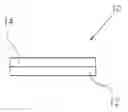
FIG. 1 is a cross-sectional elevation view of an edge banding in accordance with the present invention.
FIG. 2 is an exploded plan view of a die for co-extruding two thermoplastic materials.
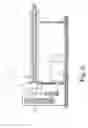
FIG. 3 is an elevation view of a co-extruder.
DETAILED DESCRIPTION OF THE INVENTION
An edge banding comprising an exposed outer layer of a thermoplastic selected from the group consisting of PP, ABS and PVC is coextruded with an under layer of EVA thermally bonded to the exposed outer layer is disclosed.
FIG. 1 illustrates a simplified schematic of one embodiment of edge banding 10 in accordance with the present invention. The edge banding 10 comprises an exposed outer layer 12, which is decorative and abrasion resistant, and an under layer 14 adapted for adhesive attachment to an edge of a board.
In one embodiment, the under layer 14 is about 8 mils in thickness and comprises 18% EVA, a blend of 18% vinyl acetate and 82% polyethylene. One source of suitable EVA is sold by Lyondell Chemical Company under the name ULTRATHENE® UE624000.
The outer layer 12 is about 0.02 to 1.2 mils in thickness and comprises polypropylene. A suitable source for polypropylene is sold by Formosa Plastic Company under the name FORMOLENE® 7320B. The two layers 12 and 14 are co-extruded through an extruder as illustrated in FIG. 3, at a temperature of about 340 to 420° F. and preferably at a temperature of about 400 to 420° F. to form a thermal bond between the two layers 12 and 14.
Polypropylene does not trim as easily as PVC. Accordingly, when trimming is an issue for the finished product, about 15% low density polyethylene may be added to the polypropylene in the outer layer 12.
As discussed hereinabove, the outer exposed layer 12 may comprise ABS or PVC in similar dimensions. A suitable ABS is sold by the Formosa Chemicals & Fibre Corp under the name TAIRILAC® AG10AP.
The under layer 14 comprising EVA provides a secure attachment of the edge banding to a board using an EVA based adhesive because there is a thermal bond between the two layers 12 and 14 and a molecular bond between the EVA of the under layer 14 and the EVA adhesive. The prior need for a primer is eliminated. Delamination caused by improper application of primer is eliminated.
FIG. 3 discloses an apparatus 16 for co-extruding two thermoplastics. Thermoplastic pellets are fed through a hopper 18 into a barrel containing a screw 19. The screw 19 is rotated by a motor 21 through a gearing system 22. The screw 19 is surrounded by a plurality of heaters 24 for melting the thermoplastic pellets. The screw 19 advances the heated thermoplastic pellets through a feed zone 26, then a compression zone 28 and then a metering zone 30 before entering the die 32.
While the present invention has been illustrated by description of several embodiments and while the illustrative embodiments have been described in considerable detail, it is not the intention of the applicant to restrict or in any way limit the scope of the appended claims to such detail. Additional advantages and modifications will readily appear to those skilled in the art. The invention in its broader aspects is therefore not limited to the specific details, representative apparatus and methods, and illustrative examples shown and described. Accordingly, departures may be made from such details without departing from the spirit or scope of applicant's general inventive concept.
Claims
What is claimed is:1. comprising:
an outer layer comprising a thermoplastic selected from the group consisting of polypropylene, acrylonitrile butadiene styrene and polyvinyl chloride;
an under layer comprising ethylene vinyl acetate;
said outer layer and said under layer being thermally bonded by co-extrusion.
2. The edge banding of claim 1 wherein said under layer has a thickness of about 8 mils.
3. The edge banding of claim 1 wherein outer layer comprises polypropylene.
4. The edge banding of claim 1 wherein said outer layer comprises a blend of polypropylene and low density polyethylene.
5. The edge banding of claim 1 wherein said outer layer and said under layer are thermally bonded at a temperature of between about 340 to 420° F.
6. The edge banding of claim 1 wherein said outer layer and said under layer are thermally bonded at a temperature of between about 400 to 420° F.
Images & Drawings included:

Sources:
- United States Patent and Trademark Office - verify current appl. status at the USPTO↗
Similar patent applications:
- » 20240116206
DEVICE FOR PROVIDING EDGE BANDS, EDGE BANDING SYSTEM HAVING SUCH A DEVICE, AND METHOD FOR CHANGING AN EDGE ROLLER OR EDGE CARTRIDGE - » 20070209746
Edge band and edge banding process - » 20210238452
Method of adhering extended melt-temp range and low energy absorptive edge banding adhesive system edge banding - » 20240139986
EDGE BAND CUTTING DEVICE OF EDGE BANDING MACHINE - » 20230302521
EDGE BAND FINE TRIMMING MECHANISM OF EDGE BANDING MACHINE - » 20220379336
Glue applying mechanism of edge banding machine for applying glue to workpiece having oblique surface and edge banding machine using the glue applying mechanism - » 20090050205
METHOD OF OPTIMIZING THE BAND EDGE POSITIONS OF THE CONDUCTION BAND AND THE VALENCE BAND OF A SEMICONDUCTOR MATERIAL FOR USE IN PHOTOACTIVE DEVICES - » 20120034732
Method of optimizing the band edge positions of the conduction band and the valence band of a semiconductor material for use in photoactive devices - » 20070053418
Method and apparatus for increasing spectral efficiency using mitigated transmit power near band-edge - » 20060150302
Garments having seamless edge bands and processes for making same
Recent applications in this class:
- » 20240408643 2024-12-12
PROCESS FOR PRODUCING A COATED MATERIAL, IN PARTICULAR A COATING LAYER OF A PROLAMIN-BASED MATERIAL - » 20220016670 2022-01-20
Method of slot die coating over deformable back-up roll - » 20190247882 2019-08-15
METHODS AND APPARATUS FOR APPLYING PROTECTIVE FILMS - » 20180257104 2018-09-13
METHOD OF PRODUCING TRANSPARENT RESIN BASE PRINTED MATERIAL - » 20180126412 2018-05-10
THREE-DIMENSIONAL LABEL, PRINTING APPARATUS AND METHOD FOR PRINTING A THREE-DIMENSIONAL LABEL - » 20180036764 2018-02-08
EASY TO DISPERSE CALCIUM CARBONATE TO IMPROVE HOT TACK STRENGTH - » 20170173628 2017-06-22
Ability to three-dimensionally print an aperture mask on a multi spectral filter array - » 20170165709 2017-06-15
Method of applying an abrasion resistant finish onto a pultrusion substrate - » 20160310987 2016-10-27
Extruding machine - » 20160296965 2016-10-13
Extrusion coating of low density polyethylene and heat-sealed article made therefrom