Crank power
US20090280937A1
2009-11-12
12/151,959
2008-05-10
Abstract:
An improved crank mechanism for anything with crank arms such as in a bicycle or a wench with a quick release latch between a multiple radius rotary transmission means (oval sprocket, gear, pulley . . . ) and crank arms allowing the timing to be changed on the fly. This will allow a person on a bicycle to sit or stand while keeping the proper timing between the crank and the multiple radius rotary transmission means (oval sprocket, gear, pulley . . . )
Interested in similar patents?
Get notified when new applications in this technology area are published.
Classification:
B62M3/00 » CPC main
Construction of cranks operated by hand or foot
B62M9/08 » CPC further
Transmissions characterised by use of an endless chain, belt, or the like of changeable ratio using a single chain, belt, or the like involving eccentrically- mounted or elliptically-shaped driving or driven wheel; with expansible driving or driven wheel
B62M2009/002 » CPC further
Transmissions characterised by use of an endless chain, belt, or the like Non-circular chain rings or sprockets
F16H61/00 IPC
Control functions within change-speed- or reversing-gearings for conveying rotary motion
Description
CROSS-REFERENCE TO RELATED APPLICATION
Not applicable
BACKGROUND
1. Field of Invention
This invention relates to a quick release latch between a multiple ratio rotary transmission means and crank arms.
2. Description of Prior Art
Originally most of the sprockets, pulleys, and gears were round that were attached to crank arms. In most applications the input leverage changed dramatically as the crank arm was spun. Using a bicycle for example a person riding would encounter a dead spot at the top and bottom of each revolution of the crank arm for each leg. Some people attempt to solve this large problem by using lower gears in order to eliminate the dead spot. They did solve the dead spot as they created a spot on the down stroke that was geared way too low to be efficient.
Then an oval sprocket was invented that solved both of these problems as it created a third problem as follows. When a person riding a bicycle stands up their angle of attack changes which interferes with the timing between the oval sprocket and the crank arm.
Then an oval sprocket was invented that could be bolted on in various angles to the crank arm to suit a riders individual style of riding. This change did very little good because when it was adjusted to help the standing angle it automatically hurt the sitting angle. Once it was adjusted in the middle it was little or no better than round sprockets for overall use.
SUMMARY
In accordance with the present invention an multiple radius rotary transmission means and crank arm with a quick release latch to enable an operator to adjust timing angle while in operation without the need of tools.
OBJECTS AND ADVANTAGES
Accordingly, besides the advantages of being able to adjust the timing angle while in operation
-
- (a) this invention will keep people from stalling then possibly falling off bicycles.
- (b) this invention will open bicycle riding to many more people
- (c) this invention makes it easier and faster to wench up sails and other things.
- (d) this invention makes it easier and faster to operate so many different machines in many cases people will choose their own power over motors helping the planet.
Further objectives and advantages of my invention will become apparent from a consideration of the drawings and ensuing description.
DRAWING FIGURES
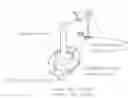
FIG. 1 is a view of crank arm 21, sproket 23, and latch assembly 24
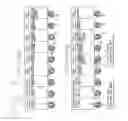
FIG. 2 is an elevation view showing the two different settings available on this embodiment of my invention.
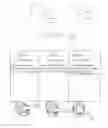
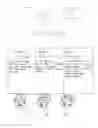
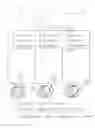
FIG. 3 is a series of drawings showing some major positions of a crank arm explaining variable input power of a human leg, and the variable output ratios of the sprocket.
DESCRIPTION AND OPERATION OF THE INVENTION
FIG. 1 shows a basic version of my invention. It shows a crank arm 21 attached to a multiple radius sprocket 23 in a manner allowing a quick release latch 24 to advance or retard the crank arm 21 in relationship to the multiple radius sprocket 23. This allows a person to change angles relative to the multiple radius sprocket 23 and get the desired timing between the crank arm 21 and the multiple radius sprocket 23. The advance is achieved pressing down the quick release latch 24 with a human foot and rotating the crank arm 21 foreword.
CONCLUSIONS RAMIFICATONS AND SCOPE
Accordingly, the reader will see that a person desiring to ride a bicycle can capitalize on my invention in a sitting or standing position. This invention allows more choices after the invention has been installed.
Claims
I claim:1. A multiple radius rotary transmission means and crank comprising:
(a) a quick release latch allowing said multiple radius rotary transmission means to be advanced or retarded in relationship to said crank.
Images & Drawings included:





Sources:
- United States Patent and Trademark Office - verify current appl. status at the USPTO↗
Similar patent applications:
- » 20250162678
CRANK POWER MEASUREMENT SYSTEM - » 20070137427
Power cranks - » 20070040526
Power crank window switch - » 20050192145
Crank shaft power takeoff system and method - » 20140041480
Power smoothing crank arm - » 20250162684
BICYCLE POWER-SAVING CRANK - » 20140182393
Crank arm, crankset, and power measuring device for an at least partially human powered vehicle or training device with a crank drive - » 20180236652
MANUAL HAND CRANK WITH OPTIONAL POWER ENHANCEMENT - » 20200269969
Power-assisted aircraft crank device, and an aircraft - » 20120166105
Apparatus for measuring and determining the force, the torque and the power on a crank, in particular the pedal crank of a bicycle
Recent applications in this class:
- » 20240317356 2024-09-26
CRANK APPARATUS EQUIPPED WITH LABOR-SAVING MECHANISM AND BICYCLE CRANK ASSEMBLY - » 20240300614 2024-09-12
Bicycle Crank - » 20230111794 2023-04-13
Bicycle crank arm - » 20220315162 2022-10-06
Bicycle crank arm coupling assistance device - » 20220194514 2022-06-23
CHILD'S RIDING BIKE THAT CONVERTS BETWEEN A BALANCE BIKE AND A PEDAL-POWERED BICYCLE - » 20220111926 2022-04-14
Bicycle component provided with a temperature-compensated stress/strain sensor - » 20210387694 2021-12-16
Bicycle crank arm and insert therefore - » 20210347437 2021-11-11
Motor assisted pedal apparatus - » 20210094652 2021-04-01
Bicycle crank arm and insert therefore - » 20210070392 2021-03-11
Shaft minimizing ellipticalization strain error