Shoe Midsole
US20090282701A1
2009-11-19
12/308,762
2007-06-21
Abstract:
A shoe midsole using a plastic material having flexibility, repulsion, and restoring characteristics and capable of instantaneously absorbing and damping an impact from every direction. The plastic material, which has flexibility and restoring characteristics, is used as the material of a body of the shoe midsole. The thickness of the body is set to a range from 1.5 mm to 3.0 mm. The body is formed in a shape that can control the arch of the foot. A heel section provided with a U-shaped edge and made of a plastic material is formed on the underside of a heel section of the body so as to be integral with the body. A continuous groove is provided in a region continuing from a side surface of the U-shaped edge of the heel section to the lower surface of the heel section of the body.
Assignee:
- Press Control Co., Ltd. 1 🇯🇵 Nara, Japan
Interested in similar patents?
Get notified when new applications in this technology area are published.
Classification:
A43B17/02 » CPC main
Insoles for insertion, e.g. footbeds or inlays, for attachment to the shoe after the upper has been joined wedge-like or resilient
A43B17/14 » CPC further
Insoles for insertion, e.g. footbeds or inlays, for attachment to the shoe after the upper has been joined made of sponge, rubber, or plastic materials
A43B7/22 IPC
Footwear with health or hygienic arrangements with foot-supporting parts with fixed flat-foot insertions, metatarsal supports, ankle flaps or the like
A43B13/18 IPC
Soles; Sole-and-heel integral units characterised by the constructive form Resilient soles
Description
This is a national stage of the International Application No. PCT/JP2007/062955 filed on Jun. 21, 2007 and published in Japanese language.
BACKGROUND OF THE INVENTION
1. Field of the Invention
The present invention relates to a shoe midsole which is made from a plastic material having flexibility, repulsion, and restoration characteristics and is capable of instantaneously damping an impact in every direction while stably supporting an arch of a foot when load is applied.
2. Description of the Conventional Art
Conventionally, a shoe midsole exercises functions such as ventilation, antibacterial properties, deodorization, impact absorption, comfortable fit feelings, arch support, flexibility, and repulsion. Among these functions, the functions such as ventilation, antibacterial properties, deodorization, impact absorption are considered to be important.
Further, for a shoe midsole having excellent cushioning property, fittability, and stability, the following prior techniques are proposed.
Japanese Utility Model Application Laid-Open No. 7-39511 discloses a cup insole to be put in a shoe having the structure that a bottom surface of a cup insole body made of an elastic material has a form fitting to an inner bottom surface of the shoe, an upper surface of a heel section has a concave curved surface continuously formed with a flat portion and a side wall portion continuing from an inner instep arch portion to an outer instep side portion via a heel rear portion, the side wall portion has an impact damping material (a sponge) made from bouncing putty on the upper surface thereof, and the impact damping material is covered and fixed with any one of a fabric, a nonwoven fabric, and a leather.
Japanese Utility Model Application Laid-Open No. 6-26511 discloses an insole of a footwear in which a sponge plate having a lot of through-holes is adhered on a substrate, an urethane form plate is adhered on the sponge plate, and a surface cover having a lot of small holes covers the upper surface of the urethane form plate.
Further, Japanese Patent Application Laid-Open No. 2005-205204 discloses a cup insole for perfectly fitting the foot bottom to an inner bottom of a shoe, damping an impact loaded on the foot bottom in walking, and preventing the heel bone from coming at a rotated out position and a rotated in position. The cup insole includes a body member, a body member supporting member, and a heel section applying member, the cup insole is formed with a high density low repulsion urethane resin, a high repulsion urethane resin made part is fit to a part corresponding to a heel of the heel section applying member. An inside arch protecting member, an outside arch protecting member, and a second heel section protecting member are connected together and integrally provided on the bottom portion of the body member, a second mid-foot portion applying portion is structured to be swollen up from both right and left sides of the body member supporting member toward the center in the lateral direction and from both of the heel direction and the step portion toward the center, and at least one projection is provided on the second mid-foot portion applying portion, the projection having a through hole in the vertical direction and being inserted into an insertion hole provided in the body member.
Further, Japanese Patent Application Laid-Open No. 2005-204902 discloses an insole having excellent mobility and an impact damping property. The insole includes a base, a digital pad portion, and a heel section, where materials of the digital pad portion and the heel section are different from that of the base and the material of the digital pad portion and that of the heel section are different form each other.
Further, Japanese Patent Application Laid-Open No. 10-295409 discloses a midsole of a shoe in which ventilation of a shoe midsole is improved to prevent a foot from getting stuffy. The midsole includes a cushion member laminated with one or more layers and a double Russel wedge-type meshed layer connected with the cushion member surface. Particularly, the cushion member includes an ethylene-vinyl acetate copolymer layer having a shape fitting to concaves and convexes of a sole, a foamed latex layer connected with the surface of the ethylene-vinyl acetate copolymer layer, and an opening bubble polyurethane foam layer connected with the surface of the foamed latex layer.
As for a material of a conventional shoe midsole, a sponge material having excellent cushioning property is widely used. However, since the sponge material has less flexibility, repulsion, and restoration characteristics than those of a plastic material, the sponge material does not match with a foot motion, and there is a problem that movement may be suppressed.
Here, a merit of using a plastic material as a material of a shoe midsole is that the plastic material tightly fits to a foot, moves cooperatively with ligaments and muscles, and works without suppressing the foot motion, so that more natural movement can be made. However, if the thickness of the plastic material is too thick, the plastic material fixes ligaments and muscles of a foot too much, and thus suppresses the movement. On the other hand, if the thickness of the plastic material is too thin, the plastic material cannot control a foot since it does not have enough strength.
Therefore, the present invention is made to solve the aforementioned problems, and an objective of the present invention is to provide a shoe midsole which is made from a plastic material having flexibility, repulsion, and restoration characteristics and is capable of instantaneously absorbing and damping an in every direction while stably supporting an arch of a foot when load is applied.
SUMMARY OF THE INVENTION
According to the present invention, a shoe midsole to be put on an inner bottom portion of a shoe and used, is structured such that a material of a body of the shoe midsole is a plastic material having flexibility, repulsion and restoration characteristics, the thickness of the body is set within a range from 1.5 mm to 3.0 mm, the body is formed in a shape capable of controlling an arch of a foot, a heel section provided with a U-shaped edge and made of the plastic material is formed integrally with the body in a lower region from a heel portion of the body to a near portion of an arch of a foot, the outer side of the U-shaped edge is projected horizontally and a lower surface of the heel section is formed in a plane shape, and a groove is provided in a region continuing from an upper surface of the horizontally projected outer side of the edge of the U-shaped edge to a lower surface inclining in an obliquely downward direction of the heel portion of the body, the groove continuing from one end to another end of the U-shaped edge.
Further, an impact absorbing material is embedded along the groove.
Further, a recessed portion continuing from one end to another end of the U-shaped edge is provided at a lower surface of a plane-shaped edge of the U-shaped edge of the heel section, the depth of the recessed portion is set within a range from 2.0 mm to 3.0 mm, and impact absorbing materials are mounted in the recessed portion.
Further, impact absorbing materials having different hardnesses are mounted at the inner side and outer side of the recessed portion.
According to the present invention as described above, since the plastic material having flexibility, repulsion and restoration characteristics is used for a material of a body of the shoe midsole, the thickness of the body is set within a range from 1.5 mm to 3.0 mm, and the body is formed in a shape capable of controlling an arch of a foot, the shoe midsole tightly fits to a foot, moves cooperatively with ligaments and muscles, and works without suppressing the foot motion so that more natural movement is possible. Further, since the outer side of the U-shaped edge is projected horizontally and the lower surface of the heel section is formed in a plane shape, stability is improved. Further, since the heel section is formed integrally with the body by using the same plastic material as that of the body so as to cover a lower region from the heel portion of the body to the near portion of the arch of the foot, and the groove is provided in a region extending from an upper surface of the horizontally projected outer side of the edge of the U-shaped edge to a lower surface inclining in an obliquely downward direction of the heel portion of the body, the groove continuing from one end to another end of the U-shaped edge, thus, when load is applied, the groove absorbs and damps an impact instantaneously in every direction (lengthwise, widthwise, and slant) while the body stably supports the arch of the foot.
Further, since the impact absorbing material is embedded along the groove, impact absorption and stability are improved.
Further, since the continuous recessed portion is formed at the lower surface of the plane-shaped edge of the U-shaped edge of the heel section, the depth of the recessed portion is set within a range from 2.0 mm to 3.0 mm, and the impact absorbing materials are mounted in the recessed portion, stability is increased so as to suppress tottering of a heel in walking, so that walking at a fixed pace is always enabled. Further, since the impact absorbing materials having different hardnesses are mounted at the inner side and the outer side of the recessed portion, this shoe midsole is effective for a flat foot, a bowleg, a knee pain, and the like.
Here, the control of walking balance can be roughly classified into the control at the first half of a step (landing) and the second half of a step (kicking). Present inventor already invented a shoe midsole contributing to the control at the second half of a step (kicking) and acquired the patent (Japanese Patent No. 3662014, registered on Apr. 1, 2005). On the other hand, the shoe midsole according to the present invention is for contributing to the control at the first half of a step (landing), and gives an effect at the time of landing at which a load is applied most readily to a large bone of a foot, so that the control effect of walking balance is greater than that of the control at the second half of a step (kicking).
BRIEF EXPLANATION OF DRAWINGS
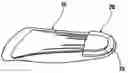
FIG. 1 is a perspective view to illustrate one example of a shoe midsole (for a left foot) according to the present invention.
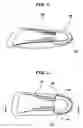
FIG. 2 is a bottom view of the shoe midsole illustrated in FIG. 1.
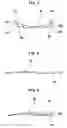
FIG. 3 is an enlarged sectional view taken along the line A-A of the shoe midsole illustrated in FIG. 2.
FIG. 4 is a sectional view taken along the line B-B of the shoe midsole illustrated in FIG. 2.
FIG. 5 is a side view at the outer side of the shoe midsole illustrated in FIG. 1.
FIG. 6 is a side view at the inner side of the shoe midsole illustrated in FIG. 1.
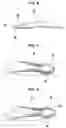
FIG. 7 is a perspective view to illustrate a state in which a hard material is mounted in a recessed portion at the inner side of the shoe midsole illustrated in FIG. 1 and a soft material is mounted in a recessed portion at the outer side.
FIG. 8 is a perspective view to illustrate a state in which a soft material is mounted in a recessed portion at the inner side of the shoe midsole illustrated in FIG. 1 and a hard material is mounted in a recessed portion at the outer side.
DETAILED DESCRIPTION OF PREFERRED EMBODIMENT
One example of the preferred embodiments of the present invention will be described below.
FIG. 1 is a perspective view to illustrate one example of a shoe midsole (for a left foot) according to the present invention. As illustrated in FIG. 1, a shoe midsole according to the present invention is structured such that a heel section 20 provided with a U-shaped edge is formed integrally with a body 10 in a lower region from a heel portion of the body 10 to a near portion of an arch of a foot. Materials of the body 10 and the heel section 20 are a plastic material having flexibility, repulsion, and restoration characteristics.
As illustrated in FIGS. 3 to 6, the thickness of the body 10 of the shoe midsole according to the present invention is set within a range from 1.5 mm to 3.0 mm. The surface of the body 10 at the sole side has a shape capable of controlling an arch of a foot (a shape for supporting the foot wholly from an edge 11a at the inner side to an edge 11b at the outer side so as to tightly fit to the foot).
In the heel section 20, an outer side (a side surface 21) of the U-shaped edge projects horizontally and the lower surface of the heel section is formed in a plane shape. Further, a groove 22 is provided in a region continuing from an upper surface of the horizontally projected outer side (the side surface 21) of the edge of the U-shaped edge of the heel section 20 to a lower surface inclining in an obliquely downward direction of the heel portion of the body 10. The groove 22 continues from one end to another end of the U-shaped edge. The groove 22 can absorb and damp an impact instantaneously in every direction (lengthwise, widthwise, and slant).
Further, an impact absorbing material (not illustrated) can be embedded in the groove 22 for improving impact absorption and stability.
A recessed portion 23 continuing from one end to another end of the U-shaped edge is provided at a bottom surface of the U-shaped edge of the heel section 20. The depth of the recessed portion 23 is set within a range from 2.0 mm to 3.0 mm.
Impact absorbing materials (30 and 31 in FIG. 7, 32 and 33 in FIG. 8) are mounted in the recessed portion 23. Such the structure increases stability and suppresses tottering of a heel in walking. When considering a center of gravity position of a sole in walking, it is most effective to mount the impact absorbing materials at the positions as illustrated in the figures.
As for the impact absorbing materials, any materials, such as polyurethane, rubber, rubber, EVA sponge, and the like, can be used if these have impact absorbing effect.
Further, as illustrated in FIGS. 7 and 8, the impact absorbing materials having different hardnesses (the hard material 30 and the soft material 31, the soft material 32 and the hard material 33) can be mounted at the inner side and outer side of the recessed portion 23 in order to vary the balance.
First Exemplary Embodiment
The heel section 20 provided with the U-shaped edge at the heel portion of the body 10 is formed integrally with the body 10. As for the materials of the body 10 and the heel section 20, a plastic material having flexibility, repulsion, and restoration characteristics is used. The thickness of the body 10 is set within a range from 1.5 mm to 3.0 mm. The surface of the body 10 at the sole side is formed to have a shape capable of controlling an arch of a foot.
The groove 22 is provided in a region continuing from side surface 21 of the U-shaped edge of the heel section 20 to a lower surface of the heel portion of the body 10, and the groove 22 continues from one end to another end of the U-shaped edge. The groove 22 can absorb and damp an impact instantaneously in every direction (lengthwise, widthwise, and slant).
Second Exemplary Embodiment
The continuous groove 22 is provided like as the first exemplary embodiment, and the impact absorbing material (not illustrated) is embedded in the groove 22. The groove 22 and the impact absorbing material improve impact absorption and stability.
Third Exemplary Embodiment
At the bottom surface of the U-shaped edge of the heel section 20 of the shoe midsole described in the first and second exemplary embodiments, a recessed portion 23 continuing from one end to another end of the U-shaped edge is provided. The depth of the recessed portion 23 is set within a range from 2.0 mm to 3.0 mm. The impact absorbing materials (30 and 31 in FIG. 7) are mounted in the recessed portion 23.
The impact absorbing material (30 in FIG. 7) made of a hard material is mounted in the inner-side recessed portion 23 (23a in FIG. 3). On the other hand, the impact absorbing material (31 in FIG. 7) made of a soft material is mounted in the outer-side recessed portion 23 (23b in FIG. 3). In this case, since the supporting of an arch at the inner-side strengthens so as to suppress the rotating of a knee toward the inner side, the shoe midsole is effective for a flat foot, a knee pain, and the like.
Here, the soft material means a material having remarkably excellent impact absorption and giving a feeling that the foot sinks therein. Further, the hard material means a material having repulsion in a degree of not applying a burden to the foot, and giving a feeling that the foot is supported from the lower side. Further, as for the hardnesses of the soft material and hard material, the hardness of the soft material is properly 55 to 75 degrees on a scale of ASTMD2240 based on ASTM (American Society For Testing and Materials) standard. On the other hand, the hardness of the hard material is properly 60 to 80 degrees on the same scale. Therefore, it is preferable that the difference between the hardnesses of the soft material and the hard material is at least 5 degrees or more. In addition, the particular measuring instrument used for the scale is Durometers/PTC (registered trademark) 400SERIES/Model411/Type00 produced by Pacific Transducer Corp. in U.S.A.
Fourth Exemplary Embodiment
The recessed portion 23 is provided at the bottom surface of the U-shaped edge of the heel section 20 of the shoe midsole described in the first and second exemplary embodiments, and the recessed portion 23 continues from one end to another end of the U-shaped edge. The depth of the recessed portion 23 is set within a range from 2.0 mm to 3.0 mm. The impact absorbing materials (32 and 33 in FIG. 8) are mounted in the recessed portion 23.
The impact absorbing material (33 in FIG. 8) made of a hard material is mounted in the outer-side recessed portion 23 (23b in FIG. 3). On the other hand, the impact absorbing material (32 in FIG. 8) made of a soft material is mounted in the inner-side recessed portion 23 (23a in FIG. 3). In this case, since the supporting of an arch at the outer-side strengthens so as to suppress the rotating of a knee toward the outer side, the shoe midsole is effective for a bowleg, a knee pain, and the like.
Further, as for the hardnesses of the soft material and hard material, hardnesses within the respective ranges of hardnesses mentioned above can be properly selected like as the third exemplary embodiment. However, it is preferable the difference between the hardnesses of the soft material and the hard material is at least 5 degrees or more on the same scale.
Claims
1. A shoe midsole to be put on an inner bottom part of a shoe and used,
wherein a material of a body of the shoe midsole is a plastic material having flexibility, repulsion and restoration characteristics,
the thickness of the body is set within a range from 1.5 mm to 3.0 mm,
the body is formed in a shape capable of controlling an arch of a foot,
a heel section provided with a U-shaped edge and made of the plastic material is formed integrally with the body in a lower region from a heel portion of the body to a near portion of an arch of a foot,
the outer side of the U-shaped edge is projected horizontally and lower surface of the heel section is formed in a plane shape, and
a groove is provided in a region continuing from an upper surface of the horizontally projected outer side of the edge of the U-shaped edge to a lower surface inclining in an obliquely downward direction of the heel portion of the body, the groove continuing from one end to another end of the U-shaped edge.
2. The shoe midsole as claimed in claim 1, wherein an impact absorbing material is embedded along the groove.
3. The shoe midsole as claimed in claim 1,
wherein a recessed portion continuing from one end to another end of the U-shaped edge is provided at a lower surface of a plane shaped edge of the U-shaped edge of the heel section,
the depth of the recessed portion is set within a range from 2.0 mm to 3.0 mm, and impact absorbing materials are mounted in the recessed portion.
4. (canceled)
5. The shoe midsole as claimed in claim 1, wherein an impact absorbing material is embedded along the groove, a recessed portion continuing from one end to another end of the U-shaped edge is provided at a lower surface of a plane shaped edge of the U-shaped edge of the heel section, the depth of the recessed portion is set within a range from 2.0 mm to 3.0 mm, and impact absorbing materials are mounted in the recessed portion.
6. The shoe midsole as claimed in claim 1, wherein a recessed portion continuing from one end to another end of the U-shaped edge is provided at a lower surface of a plane shaped edge of the U-shaped edge of the heel section, the depth of the recessed portion is set within a range from 2.0 mm to 3.0 mm, impact absorbing materials are mounted in the recessed portion and the impact absorbing materials having different hardnesses are mounted at the inner side and outer side of the recessed portion.
7. The shoe midsole as claimed in claim 1, wherein an impact absorbing material is embedded along the groove, a recessed portion continuing from one end to another end of the U-shaped edge is provided at a lower surface of a plane shaped edge of the U-shaped edge of the heel section, the depth of the recessed portion is set within a range from 2.0 mm to 3.0 mm, impact absorbing materials are mounted in the recessed portion and wherein the recessed portion continuing from one end to another end of the U-shaped edge is provided at the lower surface of the plane shaped edge of the U-shaped edge of the heel section, the depth of the recessed portion is set within a range from 2.0 mm to 3.0 mm, the impact absorbing materials are mounted in the recessed portion and the impact absorbing materials having different hardnesses are mounted at the inner side and outer side of the recessed portion.
Images & Drawings included:
Sources:
- United States Patent and Trademark Office - verify current appl. status at the USPTO↗
Similar patent applications:
- » 20180009187
Shoes midsole forming apparatus and shoes midsole manufactured using the same - » 20240315391
SHOE MIDSOLE AND SHOE - » 20250163202
POLYURETHANE-BASED MIDSOLE COMPOSITION AND SHOE MIDSOLE MADE THEREFROM - » 20110179679
SHOE MIDSOLE - » 20150351494
SHOE MIDSOLE ASSEMBLY EQUIPPED AIRBAG SYSTEM - » 20160309839
SHOE MIDSOLE COATED WITH ADHESIVE FABRIC - » 20100287789
Cushioning mechanism for shoe midsole - » 20050217144
Performance shoe midsole - » 20110131834
Shoe midsole and footwear - » 20110275731
Crosslinkable and foamable composition, crosslinked foam, and shoe midsole comprising the same
Recent applications in this class:
- » 20250160483 2025-05-22
BIOMECHANICS INSOLE AND ADAPTATION METHOD THEREOF - » 20240324715 2024-10-03
Cuboid Inserts for Improving Balance and Preventing Falls - » 20240315394 2024-09-26
Sole Comfort Device - » 20240065379 2024-02-29
Sole board - » 20230144081 2023-05-11
PAD FOR STRENGTHENING MUSCLE OF SOLE OF FOOT, AND INSOLE INCLUDING SAME - » 20220354217 2022-11-10
SHOE - » 20220287411 2022-09-15
Sports shoe, in particular cycling shoe - » 20220167710 2022-06-02
Footbed for footwear - » 20220095741 2022-03-31
Sole board - » 20200178649 2020-06-11
Insole pivot system for footwear