Method for synthesis of butyl rubber
US20090286948A1
2009-11-19
12/307,121
2007-07-20
✅ Patent granted
US 7,776,976 B2
2010-08-17
WO; PCT/CN2007/002221; 20070720
WO; WO2008/025212; 20080306
Milton I Cano | Brieann Fink
2027-09-18
Abstract:
This invention puts forward a process of preparing butyl rubber. High gravity devices are used as polymerization reactor. The mixture of isomonoolefin and conjugated diolefin monomers and the diluent, and the mixture of the initiator and diluent are pumped at a certain ratio into a high-gravity reactor to conduct cationic polymerization in the high-gravity environment. After polymerization, the monomers and the diluent are removed from the product to obtain butyl rubber polymers with number-average molecular weight of 80000˜300000 and molecular weight distribution index of 1.9˜3.6. The high gravity polymerization method of this invention can tremendously intensify micro-mixing, mass transfer and heat transfer in the reaction. Compared to the conventional stirred polymerization method, this invention features small reactor volume, at least 30-fold shorter residence time of substances in the high gravity reactor, low cost, low energy consumption and high production efficiency.
Inventors:
- Lei Zhang 561 🇨🇳 Beijing, China
- Jian Feng Chen 20 🇨🇳 Beijing, China
- HUA GAO 3 🇨🇳 BEIJING, China
- Guang-Wen Chu 2 🇨🇳 Beijing, China
- Hai-Kui Zou 2 🇨🇳 Beijing, China
- Yi-Xian Wu 1 🇨🇳 Beijing, China
Assignee:
- Beijing University of Chemical Technology 105 🇨🇳 Beijing, China
Interested in similar patents?
Get notified when new applications in this technology area are published.
Classification:
B01J19/1806 » CPC further
Chemical, physical or physico-chemical processes in general; Their relevant apparatus; Stationary reactors having moving elements inside resulting in a turbulent flow of the reactants, such as in centrifugal-type reactors, or having a high Reynolds-number
C08F210/12 » CPC main
Copolymers of unsaturated aliphatic hydrocarbons having only one carbon-to-carbon double bond; Monomers containing three or four carbon atoms; Butenes; Isobutene with conjugated diolefins, e.g. butyl rubber
C08F2500/21 » CPC further
Characteristics or properties of obtained polyolefins; Use thereof Rubbery or elastomeric properties
C08F2500/01 » CPC further
Characteristics or properties of obtained polyolefins; Use thereof High molecular weight, e.g. >800,000 Da.
C08F2/01 IPC
Processes of polymerisation characterised by special features of the polymerisation apparatus used
C08F236/08 » CPC further
Copolymers of compounds having one or more unsaturated aliphatic radicals, at least one having two or more carbon-to-carbon double bonds the radical having only two carbon-to-carbon double bonds conjugated Isoprene
B01J8/10 IPC
Chemical or physical processes in general, conducted in the presence of fluids and solid particles; Apparatus for such processes with moving particles moved by stirrers or by rotary drums or rotary receptacles or endless belts
B01J8/12 IPC
Chemical or physical processes in general, conducted in the presence of fluids and solid particles; Apparatus for such processes with moving particles moved by gravity in a downward flow
B01J8/38 IPC
Chemical or physical processes in general, conducted in the presence of fluids and solid particles; Apparatus for such processes with fluidised particles according to "fluidised-bed" technique with fluidised bed containing a rotatable device or being subject to rotation or to a circulatory movement, i.e. leaving a vessel and subsequently re-entering it
Description
FIELD OF THE INVENTION
The present invention relates to a method of preparing butyl rubber, which is synthesized by slurry polymerization, and also to the application of high gravity technology in the polymerization engineering.
BACKGROUND OF THE INVENTION
Butyl rubber is commonly synthesized by slurry copolymerization of isobutylene and a minor amount of isoprene (1˜3%) in chloromethane medium, initiated by Friedel—Crafts acid (such as AlCl3). Butyl rubber polymers are insoluble in chloromethane and precipitate as particles from the solution to form the slurry system. The polymerization is carried out at the temperature about −100° C. The reaction rate is extremely rapid, resulting in an instantaneous completion of the reaction. High molecular weight butyl rubber products for applications as rubber can only be obtained at low polymerization temperature (see US Pat. No. 2,356,128 and Ullmanns Encyclopedia of Industrial Chemistry, Vol. A23, 1993, Page 288-295). It is very important to intensify heat transfer, mass transfer and micro-mixing in butyl rubber polymerization since they play an important role in the process. However, butyl rubber is commonly synthesized by a conventional stirred polymerization reaction, which features poor micro-mixing and long residence time of the substances (30-60 min), unmatched to the polymerization rate of butyl rubber. In addition, the conventional process also features large equipment volume, large floor area and high cost.
The recently-developed high gravity technology has changed conventional mass transfer means. The core of the technology is that mass transfer of liquid-liquid, liquid-solid, gas-liquid is carried out in a high gravity reactor, where mass transfer and micro-mixing can be intensified tremendously. The rate of mass transfer, the mass transfer coefficient of micro-mixing and the mixing rate in high gravity environment are therefore 1˜3 orders of magnitude larger than those in a conventional static state (gravity environment). High gravity devices are disclosed in China Patents, Appl. Nos. 91109255.2, 91111028.3, 200520100685.3, 01268009.5, 02114174.6, 200510032296.6, which comprise high gravity rotating equipment such as rotating packed bed, zigzag channels, helix channels, rotating disks. A rotor/stator high gravity rotating device is also disclosed in China Pat. No. ZL 200410042631. 6. The inventors of this invention have made significant contributions to high gravity technology and extended its applications from separation and desorption to chemical reaction processes. For instance, a series of patents describe the preparation of nanoparrticles by a precipitation reaction in a high gravity rotating packed bed reactor, such as “Synthesis method of ultrafine particles” (CN. Pat. No. ZL 95105344.2) and “Synthesis method of ultrafine calcium carbonate” (CN. Pat. No. ZL 95105343.4). The patent of “Preparation method of overbased calcium sulphonate lubricant detergent additives” (CN. Pat. No. ZL 200410037885.9) discloses the applications of high gravity technology to neutralization reaction, carbonation and phase inversion processes, and calcium sulfonate detergent additives with high quality are obtained. The above said applications of high gravity technology are all for inorganic reactions, and there are no reports on the applications of high gravity technology to complex macromolecule polymerization, which comprises the chain initiation, chain propagation and chain termination.
DETAILED DESCRIPTION OF THE INVENTION
The invention applies high gravity technology to butyl rubber polymerization, in which the mass transfer, heat transfer and micro-mixing are intensified significantly to match the polymerization rate of butyl rubber. This invention thus discloses the synthesis method of butyl rubber under high gravity conditions, which exhibits features of high efficiency, low energy consumption, low cost and controlled molecular weight distributions.
The major procedure of the invention comprises: prechilling the monomers and diluent mixture and the initiator and diluent mixture to a set temperature desirable for the polymerization; feeding the mixtures into a high gravity reactor with the volumetric ratio of the monomers and diluent mixture to the initiator and diluent mixture as 10-20 to 1 to conduct the cationic polymerization in high gravity environment; controlling the reaction temperatures lower than −80° C. and the high gravity level between 15-670 g's (g represents the gravitational force, 9.8 m/sec2) ; the average residence time of substances in the high gravity reactor is less than 1 min; post-treating the resultant by removing the diluent, washing and drying to obtain butyl rubber polymers. The said monomers mixture comprises isomonoolefin and conjugated diolefin.
It is preferable that the above said isomonoolefin is isomonoolefin with 4 to 16 carbon atoms, more preferably with 4 to 7 carbon atoms, such as isobutylene, 2-methyl-1-butene, 3-methyl-1-butene, 2-methyl-2-butene or 4-methyl-1-pentene, and mixtures thereof. Isobutylene is the most preferable.
The above said conjugated diolefin may adopt the conjugated diolefin which is widely-known by technicians of this domain and can copolymerize with isomonoolefin. It is preferable that the conjugated diolefin comprises 4 to 14 carbon atoms, such as isoprene, butadiene, 2-methyl-butadiene, 2,4-dimethyl-butadiene, 1,3-pentadiene, 3-methyl-1,3-pentadiene, 2,4-hexadiene, 2-neopentyl-butadiene, 2, 5-dimethyl-2,4-hexadiene, cyclopentadiene, methyl-cyclopentadiene, cyclohexadiene, 1-ethenyl-cyclohexadiene, and combinations thereof. Isoprene is more preferable.
It is preferred that the said monomers mixture comprises 95-99.5 wt. percent of isomonoolefin and 0.5-5 wt. percent of conjugated diolefin, wherein isobutylene is most preferred as isomonoolefin monomer and isoprene is most preferred as conjugated diolefin monomer.
The above said initiator is the Friedel—Crafts acid widely-known for the synthesis of butyl rubber by slurry polymerization, which comprises AlCl3, TiCl4, SnCl4, BF3, or BCl3 etc.
The above said diluent is the inert solvent or diluent for butyl rubber polymerization and widely-known by technicians of this domain. Chlorinated hydrocarbon, such as chloromethane and dichloromethane, is preferred.
The above said polymerization temperature is the usual cationic polymerization temperature. The preferable temperature range is from −120to −70° C., more preferably from −120to −80° C. The pressure is the atmospheric pressure.
High gravity reactors of this invention are the ones adopted in the existing technologies, including rotating packed bed, zigzag channels, helix channels, rotating disks and rotor/stator etc. rotating devices.
High gravity level means the centrifugal acceleration resulting from the rotation of the rotor in the high gravity reactor and is usually denoted by the multiple of gravitational acceleration (g). It mainly relates to the rotating speed and the inner and outer diameters of the rotor. High gravity level (gr) can be expressed by the following equation:
g r = ω 2 r = ( 2 π n 60 ) 2 ( r 1 2 + r 2 2 ) 2
where: n is the rotating speed of the rotor, revolutions per minute.
-
- r1 is the inner diameter of the rotor, and r2 is the outer diameter of the rotor
The effect of the invention: due to the high-speed rotation of the rotor in the high gravity reactor, a stable high gravity environment is formed, which can reach several hundred times larger than gravitational acceleration on the earth. Under the high gravity environment created by the rotating packing, zigzag channels or helix channels, the reactants for butyl polymerization feature excellent dispersion, strong turbulence, strong mixing and rapidly renewed interface and contact at very high relative velocity in the tortuous channels. Mass transfer and heat transfer can be intensified tremendously, and complete micro-mixing state of the reactants can be achieved quickly in this process. Compared to the conventional stirred polymerization, the residence time of substances in the high gravity reactor can be shorten at least 30 times. This process also exhibits low energy consumption, high production efficiency and small floor area.
In addition, butyl rubber polymer with number-average molecular weight of 80000˜300000 and molecular weight distribution index of 1.9˜3.6 can be obtained by changing reactive monomer concentration, monomer/initiator ratio, polymerization temperature and high gravity level.
BRIEF DESCRIPTION OF THE DRAWINGS
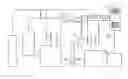
FIG. 1 is the process flow diagram of the invention.
DESCRIPTION OF THE EMBODIMENTS
The present invention will be explained in more details with reference to the following figure and examples, but the invention is not limited by the listed examples. It comprises any widely-known changes to butyl rubber polymerization under high gravity conditions described in this invention.
FIG. 1 is one embodiment of the invention. All the pipelines and equipment are swept by pure nitrogen from cylinder 1 before use in order to remove air and the vapor. The isomonoolefin and conjugated diolefin monomers mixture and the diluent (such as dichloromethane) are mixed at the ratio required by the reaction and prechilled in storage container 3. The initiator mixture comprising the diluent (such as dichloromethane) and the initiator (such as AlCl3) at a certain ratio are mixed and prechilled in storage container 4. The preparation method of the mixed solutions and the ratio of the components are commonly employed. When the temperatures of the solutions in storage containers 3 and 4 reach the polymerization temperature, the pipeline and the high gravity reactor are prechilled by the coolant from container 2. The solutions in storage containers 3 and 4 are then pumped at a certain ratio into high gravity reactor 7 via metering pump 5 and liquid distributors (High gravity reactor is the above said high gravity rotating devices disclosed in Pat. Appl. Nos. 91109255.2, 91111028.3, 200520100685.3, 01268009.5, 02114174.6, 200510032296.6, CN 200410042631.6). The slurry copolymerization of the reactants is carried out in the rotating packing, zigzag channels, helix channels or rotating disks in the high gravity reactors. The as-synthesized product is collected by container 8 with the presence of the terminator and post-treated by removing the diluent, washing and drying, as commonly employed in the field, to obtain butyl rubber polymers.
The above said process may adopt continuous feeding or batch feeding according to the methods widely-known by professionals in this field.
Example 1
Rotating packed bed was employed as the high gravity reactor in the following examples.
All the pipelines and equipment were swept by pure nitrogen from cylinder 1 before use in order to remove air and the vapor. Monomers mixture of 98 wt. percent of isobutylene and 2 wt. percent of isoprene and 7000 ml of dichloromethane were added into storage container 3. 685 ml of the mixture of dichloromethane and AlCl3 was added into storage container 4. The two solutions in storage containers 3 and 4 were prechilled to about −100° C. and then pumped respectively into rotating packed bed 7 by double plunger metering pump 5. High gravity level was set at 90 g's through controlling the rotator speed of the rotating packed bed reactor. The feeding ratio of the solution in storage container 3 to that in storage container 4 was 13:1 (volumetric ratio). The reaction temperature in the rotating packed bed reactor was about −100° C. and the average residence time of substances in the reactor was less than 1 min. The product was collected by container 8 with the presence of the terminator and post-treated by removing the diluent from the product prior to analyses. Butyl rubber polymer with number-average molecular weight of 1.9×10⁵ and molecular weight distribution index of 2.45 was obtained.
Example 2
The process and procedure were the same as Example 1 except that the monomers mixture comprised 98.5 wt. percent of isobutylene and 1.5 wt. percent of isoprene, and the polymerization temperature was about −83° C. Butyl rubber polymer with number-average molecular weight of 1.5×10⁵ and molecular weight distribution index of 2.70 was obtained.
Example 3
the process and procedure were the same as Example 1 except that the monomers mixture comprised 99 wt. percent of isobutylene and 1 wt. percent of isoprene. Butyl rubber polymer with number-average molecular weight of 3.0×10⁵ and molecular weight distribution index of 2.65 was obtained.
Example 4
the process and procedure were the same as Example 1 except that the monomers mixture comprised 97 wt. percent of isobutylene and 3 wt. percent of isoprene, and the polymerization temperature was about −120° C. Butyl rubber polymer with number-average molecular weight of 2.6×10⁵ and molecular weight distribution index of 2.28 was obtained.
Example 5
the process and procedure were the same as Example 1 except that the high-gravity level was 15 g's. Butyl rubber polymer with number-average molecular weight of 0.8×10⁵ and molecular weight distribution index of 3.60 was obtained.
Example 6
the process and procedure were the same as Example 1 except that the high-gravity level was 670 g's. Butyl rubber polymer with number-average molecular weight of 2.65×10⁵ and molecular weight distribution index of 2.54 was obtained.
Example 7
the process and procedure were the same as Example 1 except that the feeding ratio of the solution in container 3 to that in container 4 was 10:1 (volumetric ratio). Butyl rubber polymer with number-average molecular weight of 1.5×10⁵ and molecular weight distribution index of 2.80 was obtained.
Example 8
the process and procedure were the same as Example 1 except that the feeding ratio of the solution in container 3 to that in container 4 was 20:1 (volumetric ratio). Butyl rubber polymer with number-average molecular weight of 2.85×10⁵ and molecular weight distribution index of 1.98 was obtained.
Claims
1. A method for synthesizing butyl rubber by a slurry polymerization process, wherein the method comprises: prechilling the monomers and diluent mixture and the initiator and diluent mixture to a set temperature desirable for the polymerization; feeding the mixtures into a high gravity reactor with the volumetric ratio of the monomers and diluent mixture to the initiator and diluent mixture as 10-20 to 1 to conduct the cationic polymerization in high gravity environment; controlling the reaction temperatures lower than −80° C. and the high gravity level between 15-670 g's (g represents the gravitational force, 9.8 m/sec2); post-treating the resultant by removing the diluent, washing and drying to obtain butyl rubber polymers. The said monomers mixture comprises isomonoolefin and conjugated diolefin.
2. The method of claim 1 wherein the high gravity reactor comprises rotating packed bed, zigzag channels, helix channels, rotating disks and rotor-stator high gravity rotating devices.
3. The method of claim 1 wherein the isomonoolefin is that with 4 to 16 carbon atoms.
4. The method of claim 1 wherein the conjugated diolefin is that with 4 to 14 carbon atoms.
5. The method of claim 1 wherein the monomers mixture comprises 95-99.5 wt. percent of isomonoolefin and 0.5-5 wt. percent of conjugated diolefin.
6. The method of claim 1 wherein the isomonoolefin monomer is isobutylene and the conjugated diolefin monomer is isoprene.
7. The method of claim 1 wherein the diluent is chloromethane and dichloromethane.
8. The method of claim 1 wherein the polymerization is carried out at −120 to −80° C.
Images & Drawings included:

Sources:
- United States Patent and Trademark Office - verify current appl. status at the USPTO↗
Recent applications in this class:
- » 20240101736 2024-03-28
SONICATION OF CATALYST IN THE PRODUCTION OF AN UNSATURATED ISOOLEFIN COPOLYMER - » 20230303736 2023-09-28
HOMOGENEOUS RARE EARTH CATALYST AND PREPARATION METHOD AND USE THEREOF - » 20210301048 2021-09-30
Non-random isobutylene copolymers - » 20210147590 2021-05-20
PROCESS FOR THE PRODUCTION OF ISOBUTENE POLYMERS WITH IMPROVED TEMPERATURE CONTROL - » 20210122857 2021-04-29
Sealant comprising a polymeric composition including a lower critical solution temperature compound - » 20200199275 2020-06-25
Ultra pure rubber and method thereof - » 20180362683 2018-12-20
Butyl rubber containing allylic alcohol - » 20170121435 2017-05-04
Copolymer having high multiolefin content - » 20170051090 2017-02-23
Copolymer having low isoprenoid content - » 20170051089 2017-02-23
Butyl rubber with new sequence distribution
Recent applications for this Assignee:
- » 20250272572 2025-08-28
INCREMENTAL LEARNING METHOD AND APPARATUS FOR LARGE VISION-LANGUAGE MODEL FOR AUTONOMOUS DRIVING - » 20250145463 2025-05-08
HOMOLOGOUS HETEROSTRUCTURE FeSe ELECTRODE MATERIAL WITH HIGH TAP DENSITY AND PREPARATION METHOD THEREOF - » 20250092535 2025-03-20
LOW ENERGY CONSUMPTION ELECTROCATALYTIC METHOD FOR ELECTROSYNTHESIS OF HYDROGEN PEROXIDE COUPLED WITH OXIDATION UPCYCLING OF PET PLASTICS - » 20250091974 2025-03-20
Device and method for refining ethanol - » 20250091040 2025-03-20
PREPARATION METHOD FOR NI AND MN BIMETALLIC ELECTROCATALYST AND ITS APPLICATION IN SMALL MOLECULE ELECTROOXIDATION - » 20250067564 2025-02-27
DEEP LEARNING BASED METHOD FOR INTEGRATING DEMAND FORECASTING AND SCHEDULING OF ONLINE RIDE-HAILING AT HUB - » 20250037155 2025-01-30
DEEP LEARNING MODEL BASED METHOD FOR FORECASTING ONLINE RIDE-HAILING SHORT-TERM DEMAND - » 20240425889 2024-12-26
GENETIC ENGINEERING BACTERIUM FOR DE NOVO SYNTHESIS OF CIS,CIS-MUCONIC ACID BY TAKING GLUCOSE AS SUBSTRATE AND APPLICATIONS THEREOF - » 20240421347 2024-12-19
Lithium-aluminum hydrotalcite-based solid electrolyte film working at room temperature, preparation method thereof, and lithium battery including same - » 20240410443 2024-12-12
PNEUMATIC-LIQUID AUTO-BALANCE ACTUATOR WITH LARGE DIAMETER