Class of pure piezoelectric materials
US20090291324A1
2009-11-26
12/401,935
2009-03-11
✅ Patent granted
US 8,039,131 B2
2011-10-18
-
-
Timothy Speer | Vera Katz
2029-06-30
Abstract:
A modification of PbTiO3 perovskite wherein at least part of Pb is replaced by a smaller atom with a similar ionic charge.
Inventors:
- Ronald Cohen 2 🇺🇸 Washington, DC, United States
- Panchapakesan Ganesh 2 🇺🇸 Washington, DC, United States
Assignee:
- CARNEGIE, INSTITUTION OF WASHINGTON 69 🇺🇸 Washington, DC, United States
Interested in similar patents?
Get notified when new applications in this technology area are published.
Classification:
B32B9/00 IPC
Layered products characterised by particular substances used
B32B9/00 IPC
Layered products comprising a layer of a particular substance not covered by groups -
C01G23/003 » CPC main
Compounds of titanium Titanates
C04B35/462 » CPC further
Shaped ceramic products characterised by their composition ; Ceramics compositions ; Processing powders of inorganic compounds preparatory to the manufacturing of ceramic products based on oxide ceramics based on titanium oxides or titanates based on titanates
C04B35/472 » CPC further
Shaped ceramic products characterised by their composition ; Ceramics compositions ; Processing powders of inorganic compounds preparatory to the manufacturing of ceramic products based on oxide ceramics based on titanium oxides or titanates based on titanates based on lead titanates
H01L41/1875 » CPC further
Piezo-electric devices in general; Electrostrictive devices in general; Magnetostrictive devices in general; Processes or apparatus specially adapted for the manufacture or treatment thereof or of parts thereof; Details thereof; Selection of materials for piezo-electric or electrostrictive devices, e.g. bulk piezo-electric crystals; Ceramic compositions, i.e. synthetic inorganic polycrystalline compounds incl. epitaxial, quasi-crystalline materials Lead based oxides
C01P2002/52 » CPC further
Crystal-structural characteristics; Solid solutions containing elements as dopants
C01P2002/77 » CPC further
Crystal-structural characteristics defined by measured X-ray, neutron or electron diffraction data by unit-cell parameters, atom positions or structure diagrams
C01P2006/40 » CPC further
Physical properties of inorganic compounds Electric properties
C04B2235/3287 » CPC further
Aspects relating to ceramic starting mixtures or sintered ceramic products; Composition of constituents of the starting material or of secondary phases of the final product; Constituents and secondary phases not being of a fibrous nature; Metal oxides, mixed metal oxides, or oxide-forming salts thereof, e.g. carbonates, nitrates, (oxy)hydroxides, chlorides Germanium oxides, germanates or oxide forming salts thereof, e.g. copper germanate
C04B2235/3293 » CPC further
Aspects relating to ceramic starting mixtures or sintered ceramic products; Composition of constituents of the starting material or of secondary phases of the final product; Constituents and secondary phases not being of a fibrous nature; Metal oxides, mixed metal oxides, or oxide-forming salts thereof, e.g. carbonates, nitrates, (oxy)hydroxides, chlorides Tin oxides, stannates or oxide forming salts thereof, e.g. indium tin oxide [ITO]
C04B2235/768 » CPC further
Aspects relating to ceramic starting mixtures or sintered ceramic products; Aspects relating to sintered or melt-casted ceramic products; Physical characteristics; Crystal structural characteristics, e.g. symmetry Perovskite structure ABO
C01G23/00 IPC
Compounds of titanium
Description
CROSS REFERENCE TO RELATED APPLICATIONS
This application claims the benefit of U.S. Provisional Application No. 61/064,550, filed Mar. 11, 2008, which is incorporated herein by reference in its entirety.
STATEMENT REGARDING FEDERALLY SPONSORED RESEARCH
This invention was made with U.S. Government support under grant N0001-4-01-1-0365 from the Office of Naval Research. The U.S. Government has certain rights in the invention.
FIELD OF THE INVENTION
The present invention relates to a novel class of piezoelectric and ferroelectric materials.
BACKGROUND OF THE INVENTION
Lead-zirconate-titanate (PZT)-based ceramics have been the primary material used in piezoelectric devices over the past several decades, especially in piezoelectric devices such as ultrasound medical probes, hydrophones and sonar for underwater imaging and communications, multi-layer actuators for fuel injection, piezoelectric printers etc. To enhance the piezoelectric properties of PZT ceramics, compositions near a phase transition are chosen.
In this regard, single crystals of solid solutions of lead-zinc-niobate and lead-titanate (PZN-PT) and of lead magnesium-niobate and lead-titanate (PMN-PT) are promising new materials. Compared to the conventional state-of-the-art PZT ceramics, PZN-PT and PMN-PT single crystals have significantly large electromechanical coupling (conversion of energy from electrical to mechanical and vice-versa) due to the much higher values of piezoelectric coefficients (about 4-5 times that of PZT), to offer advantages over the older standards.
Notwithstanding the advantages offered by newer piezoelectric materials such as PZN-PT and PMN-PT, there remains a desire to have further new piezoelectric materials with unique and advantageous characteristics, e.g. materials with piezoelectric coefficients which are significantly higher than those obtained with currently available materials.
SUMMARY OF THE INVENTION
The invention contemplates a novel class of piezoelectrics and ferroelectrics based on the use of chemical pressure to shift the high-pressure extremely high coupling transition recently found in PbTiO3, to lower pressures. A particularly preferred compound within this group is Pb1/2Sn1/2TiO3 (referred to elsewhere herein for convenience as PSnT). This new compound is considered to have giant piezoelectric coefficients, significantly higher than any currently known materials.
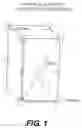
The class of ferroelectric and piezoelectric materials constituting the present invention is based on the concept of applying “chemical pressure” to tune (shift) the morphotropic phase boundary of pure PbTiO3 [1,2] to lower pressures. Application of “chemical pressure” was performed by substituting the ‘A’ site of PbTiO3 perovskite by smaller atoms with similar ionic charge, e.g. Sn, Ge or the like. Examples of the compounds thus obtainable are Pb1/2Sn1/2TiO3, Pb1/2Ge1/2TiO3 and Sn1/2Ge1/2TiO3. These compounds represent a class of materials having superior electromechanical properties compared to previously available piezoelectric materials (FIG. 1 and FIG. 2).
BRIEF DESCRIPTION OF THE FIGURES
FIG. 1 illustrates the structure of Pb1/2Sn1/2TiO3 (also referred to herein as PbSnT);
FIG. 2 illustrates the pattern of two other compounds according to the invention.
FIG. 3 illustrates the Electric Enthalpy difference (meV) versus Ez (mV/Angstrom) between the phases of PSnT. The intersection with the zero axis shows the required field to rotate the polarization between the phases, The Cm to P4mm transition rotates the polarization and has a large strain, giving a giant electromechanical coupling d33˜2100 pC/N. The results show that this transition is highly non-linear.
DETAILED DESCRIPTION OF THE INVENTION
Ab-initio simulations were performed using the LDA exchange-correlation functional with the ABINIT [3] package. The pseudopotential method was used to treat the core and the valence electrons. Full substitution of Pb by the smaller Sn atom to get SnTiO3 gives a tetragonal ground state, with the rhombohedral phase at ˜12.6 meV/at higher energy. Substitution of the ‘A’ site with only 50% of Sn to form layered compounds of Pb1/2Sn1/2TiO3, resulted in a more promising material that has been previously reported in the recent Nature paper [2]. Local density approximation computations using ABINIT show that it has an orthorhombic ground state of symmetry Pmm2, (polarization along [x00], c/a=0.91) with an energy difference of 12 meV/at between Pmm2 and the next state Cm (polarization along [xxz], c/a=0.98) followed by tetragonal P4mm (polarization along [00z], c/a=1.12) with a ΔE of 3 meV/at. Strain differences ε33−ε11 are predictably equal to −0.10, −0.02 and 0.11 in the three phases respectively. The Polarization (P), as computed by the Berry's phase method, in the P4mm phase is (0, 0, 1.2) C/m2 and in its ground State Pmm2 phase is (1.1, 0, 0) C/m2. For comparison, PZT P4mm phase has P=(0, 0, 0.81) C/m2. The large predicted polarization implies a large Curie temperature Tc.
The orthorhombic and the monoclinic phases are found to be dynamically stable. One can define an electric enthalpy H=U−P.E, where ‘U’ is the total energy and ‘P’ and ‘E’ are the polarization and electric field. FIG. 3 shows the enthalpy versus electric field along ‘z’ direction for the Cm phase with respect to the ground state and the P4mm phase with respect to the Cm phase. The zero crossing of the curves show that the critical field is very high to go from the Pmm2 phase to the Cm phase, but to rotate the polarization from the Cm to the P4mm phase one needs an electric field of only about ˜500 kV/cm. Using the strain of P4mm and Cm phase one obtains a d33˜2100 pC/N. This is three times that of PZT-5H (largest component d15˜741 pC/N) and comparable to that of PZN-PT (largest component d33˜2000-3000 pC/N). It also shows a huge dielectric response (Table 2), with values close to that of PZT near its MPS composition. The large values of the polarization, dielectric constant and piezoelectric constants suggest that it may also have large non-linear optic coefficients.
The ground state of PSnT ordered along (001) is considered to be orthorhombic, and does not have giant piezoelectric coefficients. Rather the monoclinic Cm phase is believed to have giant coupling. The Cm phase is stabilized by growing PSnT epitaxially on SrTiO3. In the monoclinic phase Pb1/2Sn1/2TiO3 has a lattice parameter a˜7.44 a.u., very close to the lattice parameter of SrTiO3 (a˜7.40 a.u ), so that it can be grown epitaxially using conventional MBE methods over SrTiO3 and make it the ground state.
Disorder in Pb and Sn may also stabilize a monoclinic or rhombohedral ground state. Accordingly, it is considered that conventional crystal growth would also yield extraordinary electromechanical materials.
In addition to Pb1/2Sn1/2TiO3, Pb1/2Ge1/2TiO3 and Sn1/2Ge1/2TiO3 have been found to be promising new materials. Pb1/2Ge1/2TiO3 and Sn1/2Ge1/2TiO3 both have a rhombohedral ground state in the rock salt pattern (space group R3m) with the tetragonal phase (space group I4mm) higher up in energy by 10.1 meV/at and 17.7 meV/at respectively. Their polarizations in the P4mm phase are (0, 0, 1.3) C/m2 and (0, 0, 1.5) C/m2 respectively.
The exact values of the lattice constants, strain, polarization and piezoelectric coefficients are sensitive to the choice of exchange-correlation functional, plane wave cutoff and k-point grids used to integrate over the Brillouin zone. However, these changes will not negatively affect the superior electromechanical properties of the present materials, these properties being greater than those of presently used transducer materials. It is believed that the simplicity of the new compounds of the invention will lower costs, which in turn should expand the applicability of piezoelectric materials. The large values of the polarization, dielectric constant and piezoelectric constants seem to suggest its use in making non-linear optic devices as well.
The design of a pure compound with giant electromechanical coupling will have significant advantages over relaxor ferroelectric solid solutions which require close control of composition and are heterogeneous. It should be much easier, for example, to grow ordered homohogeneous films of PSnT than PZN-PT or PMN-PT. If instead even higher coupling is desired, that may be achieved by alloying PSnT with another component and engineering the composition, as is done with PZT.
It will be appreciated that there are many uses for the materials of the invention. For example, one application of thin films of PSnT grown on SrTiO3 is the wings of artificial insects, which can be used for surveillance, monitoring of hazardous environments such as in reactors or other high radiation areas, or in toxic locations. Another use of the present materials is as micropumps in medical applications. Numerous other applications in MEMS exist. Bulk samples can be used as high performance piezoelectrics wherever PZT or relaxor ferroelectrics are currently used.
| TABLE 1 |
| The coordinates in the monoclinic phase for |
| Pb1/2Sn1/2TiO3 are as below: |
| R1 (a.u) | 7.447 | 0.066 | 0.014 | |
| R2 (a.u) | 0.066 | 7.447 | 0.014 | |
| R3 (a.u) | 0.028 | 0.028 | 14.538 | |
| Reduced | ||||
| coordinates for: | ||||
| Pb | 0.031 | 0.031 | 0.014 | |
| Sn | 0.080 | 0.080 | 0.516 | |
| Ti1 | 0.526 | 0.526 | 0.255 | |
| Ti2 | 0.523 | 0.523 | 0.755 | |
| O1 | 0.477 | −0.013 | 0.248 | |
| O2 | 0.465 | −0.015 | 0.742 | |
| O3 | 0.480 | 0.480 | −0.001 | |
| O4 | 0.465 | 0.465 | 0.500 | |
| O5 | −0.013 | 0.477 | 0.248 | |
| O6 | −0.015 | 0.465 | 0.742 | |
| TABLE 2 |
| Dielectric constants for PSnT in the Cm phase: |
| Direction | Dielectric constant | |
| X | 651 | |
| Y | 651 | |
| Z | 238 | |
The references cited above are more fully identified as follows:
1. Z. Wu and R. E. Cohen, Phys. Rev. Lett., 95, 37601 (2005)
2. Muhetaer Ahart and Maddury Somayazulu and R. E. Cohen and P. Ganesh and Przmeyslaw Dera and Ho-Kwang Mao and Russell J. Hemley and Yang Ren and Peter Liermann and Zhigang Wu, Nature 451, 06459 (2008)
3. X. Gonze et. al. Comput. Mater. Sci. 25, 478 (2002)
The contents of each of the above-listed references are incorporated herein in their entirety.
It will be appreciated that various modifications may be made in the invention as described above. Accordingly, the scope of the invention is set out in the following claims wherein:
Claims
1. A modification of PbTiO3 perovskite wherein at least part of Pb is replaced by a smaller atom with a similar ionic charge.
2. The modification of claim 1 wherein the smaller atom is Sn and/or Ge.
3. A compound selected from the group consisting of Pb1/2Sn1/2TiO3, Pb1/2Ge1/2TiO3 and Sn1/2Ge1/2TiO3.
4. A thin film of the compound of claim 3, wherein the thin film is grown on a substrate.
5. The thin film of claim 4, wherein the substrate is SrTiO3.
6. A thin film of the modification of claim 1, wherein the thin film is grown on a substrate.
7. The thin film of claim 6, wherein the substrate is SrTiO3.
8. Disorder, doping, or alloying of the materials of claims 1, 2 or 3 to enhance the electromechanical response.
Images & Drawings included:


Sources:
- United States Patent and Trademark Office - verify current appl. status at the USPTO↗
Similar patent applications:
- » 20120009361
Class of pure piezoelectric materials
Recent applications in this class:
- » 20240327235 2024-10-03
PREPARATION METHOD FOR NANO TITANATE, NANO TITANIC ACID, AND NANO TIO2, AND A USE THEREOF - » 20240228314 2024-07-11
NANO-TITANATE, NANO-TITANIC ACID, AND NANO-TIO2 CONTAINING DOPING AG, PREPARATION METHOD THEREFOR AND USE THEREOF - » 20240132366 2024-04-25
NANO-TITANATE, NANO-TITANIC ACID, AND NANO-TIO2 CONTAINING DOPING AG, PREPARATION METHOD THEREFOR AND USE THEREOF - » 20210230012 2021-07-29
SnTiO3 material, method of preparation thereof, use thereof as ferroelectric material and device comprising a ferroelectric material - » 20210188656 2021-06-24
Method for preparation of oxide support-nanoparticle composites - » 20170225964 2017-08-10
Method of arranging nanocrystals, method of producing nanocrystal structure, nanocrystal structure formation substrate, and method of manufacturing nanocrystal structure formation substrate - » 20150239748 2015-08-27
Titanate and titania nanostructures and nanostructure assemblies, and methods of making same - » 20140128243 2014-05-08
Method for making porous mullite-tialite composites - » 20130008346 2013-01-10
Low-loading titanate inorganic pigments for use in infrared reflective colors - » 20120329634 2012-12-27
Columnar aluminum titanate and method for producing same
Recent applications for this Assignee:
- » 20250066216 2025-02-27
CARBON-BASED CLATHRATE COMPOUNDS - » 20250026647 2025-01-23
BORON-STABILIZED TYPE-I AND TYPE-II CARBON CLATHRATES - » 20230416772 2023-12-28
FLOE1-MEDIATED MODULATION OF SEED LONGEVITY AND GERMINATION RATES - » 20230373794 2023-11-23
BULK CRYSTALLINE 4H-SILICON THROUGH A METASTABLE ALLOTROPIC TRANSITION - » 20230147042 2023-05-11
Carbon-based clathrate compounds - » 20210204501 2021-07-08
COMPOSITIONS AND METHODS FOR INCREASING PLANT YIELD - » 20200354226 2020-11-12
Carbon-based clathrate compounds - » 20170355605 2017-12-14
Form of silicon and method of making the same - » 20170292069 2017-10-12
Engineered fluorescent nanodiamond - » 20170211089 2017-07-27
Sugar transporters