METHOD AND ARRANGEMENT FOR CONNECTING PIPE TO CONNECTING PIECE, AND PIPE CONNECTION
US20090302602A1
2009-12-10
12/438,462
2007-08-24
Abstract:
An end (1a) of a pipe (1) made of a plastic material that has memory properties is connected onto an end (2a) of a connecting piece (2). The wall thickness of the pipe end (1a) is temporarily decreased. Thereafter the end (1a) of the pipe (1) is positioned on the nipple end (2a) of the connecting piece (2). The wall thickness of the end (1a) of the pipe (1) is returned towards its original size such that the pipe (1) firmly and sealingly presses against the connecting piece (2).
Assignee:
- Uponor Innovation AB 36 🇸🇪 Fristad, Sweden
Interested in similar patents?
Get notified when new applications in this technology area are published.
Classification:
B29C57/04 » CPC main
Shaping of tube ends, e.g. flanging, belling or closing; Apparatus therefor, e.g. collapsible mandrels; Belling or enlarging, e.g. combined with forming a groove using mechanical means
B29B13/025 » CPC further
Conditioning or physical treatment of the material to be shaped by heating; Half-products, e.g. films, plates; Hollow bodies, e.g. tubes or profiles Tube ends
B29C65/562 » CPC further
Joining of preformed parts ; Apparatus therefor using mechanical means or mechanical connections, e.g. form-fits using extra joining elements, i.e. which are not integral with the parts to be joined
B29C65/64 » CPC further
Joining of preformed parts ; Apparatus therefor using mechanical means or mechanical connections, e.g. form-fits Joining a non-plastics element to a plastics element, e.g. by force
B29C65/66 » CPC further
Joining of preformed parts ; Apparatus therefor by liberation of internal stresses, e.g. shrinking of one of the parts to be joined
B29C66/0222 » CPC further
General aspects of processes or apparatus for joining preformed parts; General aspects dealing with the joint area or with the area to be joined; Preparation of the material, in the area to be joined, prior to joining or welding; Mechanical pre-treatments, e.g. reshaping without removal of material, e.g. cleaning by air blowing or using brushes
B29C66/1122 » CPC further
General aspects of processes or apparatus for joining preformed parts; General aspects dealing with the joint area or with the area to be joined; Particular design of joint configurations particular design of the joint cross-sections; Joint cross-sections comprising a single joint-segment, i.e. one of the parts to be joined comprising a single joint-segment in the joint cross-section; Single lapped joints Single lap to lap joints, i.e. overlap joints
B29C66/116 » CPC further
General aspects of processes or apparatus for joining preformed parts; General aspects dealing with the joint area or with the area to be joined; Particular design of joint configurations particular design of the joint cross-sections; Joint cross-sections comprising a single joint-segment, i.e. one of the parts to be joined comprising a single joint-segment in the joint cross-section Single bevelled joints, i.e. one of the parts to be joined being bevelled in the joint area
B29C66/118 » CPC further
General aspects of processes or apparatus for joining preformed parts; General aspects dealing with the joint area or with the area to be joined; Particular design of joint configurations particular design of the joint cross-sections; Joint cross-sections comprising a single joint-segment, i.e. one of the parts to be joined comprising a single joint-segment in the joint cross-section Single monotone curved joints
B29C66/1222 » CPC further
General aspects of processes or apparatus for joining preformed parts; General aspects dealing with the joint area or with the area to be joined; Particular design of joint configurations particular design of the joint cross-sections; Joint cross-sections combining only two joint-segments; Tongue and groove joints; Tenon and mortise joints; Stepped joint cross-sections; Joint cross-sections combining only two joint-segments, i.e. one of the parts to be joined comprising only two joint-segments in the joint cross-section comprising at least a lapped joint-segment
B29C66/1224 » CPC further
General aspects of processes or apparatus for joining preformed parts; General aspects dealing with the joint area or with the area to be joined; Particular design of joint configurations particular design of the joint cross-sections; Joint cross-sections combining only two joint-segments; Tongue and groove joints; Tenon and mortise joints; Stepped joint cross-sections; Joint cross-sections combining only two joint-segments, i.e. one of the parts to be joined comprising only two joint-segments in the joint cross-section comprising at least a butt joint-segment
B29C66/5221 » CPC further
General aspects of processes or apparatus for joining preformed parts; General aspects of joining tubular articles; General aspects of joining long products, i.e. bars or profiled elements; General aspects of joining single elements to tubular articles, hollow articles or bars; General aspects of joining several hollow-preforms to form hollow or tubular articles; Joining tubular articles, profiled elements or bars; Joining single elements to tubular articles, hollow articles or bars; Joining several hollow-preforms to form hollow or tubular articles; Joining tubular articles, bars or profiled elements; Joining tubular articles for forming coaxial connections, i.e. the tubular articles to be joined forming a zero angle relative to each other
B29C66/52297 » CPC further
General aspects of processes or apparatus for joining preformed parts; General aspects of joining tubular articles; General aspects of joining long products, i.e. bars or profiled elements; General aspects of joining single elements to tubular articles, hollow articles or bars; General aspects of joining several hollow-preforms to form hollow or tubular articles; Joining tubular articles, profiled elements or bars; Joining single elements to tubular articles, hollow articles or bars; Joining several hollow-preforms to form hollow or tubular articles; Joining tubular articles, bars or profiled elements; Joining tubular articles involving the use of a socket said socket comprising slip-off prevention means
B29C66/5344 » CPC further
General aspects of processes or apparatus for joining preformed parts; General aspects of joining tubular articles; General aspects of joining long products, i.e. bars or profiled elements; General aspects of joining single elements to tubular articles, hollow articles or bars; General aspects of joining several hollow-preforms to form hollow or tubular articles; Joining tubular articles, profiled elements or bars; Joining single elements to tubular articles, hollow articles or bars; Joining several hollow-preforms to form hollow or tubular articles; Joining single elements to tubular articles, hollow articles or bars; Joining single elements to open ends of tubular or hollow articles or to the ends of bars said single elements being substantially annular, i.e. of finite length, e.g. joining flanges to tube ends
B29C66/612 » CPC further
General aspects of processes or apparatus for joining preformed parts; General aspects of joining tubular articles; General aspects of joining long products, i.e. bars or profiled elements; General aspects of joining single elements to tubular articles, hollow articles or bars; General aspects of joining several hollow-preforms to form hollow or tubular articles; Joining from or joining on the inside Making circumferential joints
B29C66/73755 » CPC further
General aspects of processes or apparatus for joining preformed parts characterised by the composition, physical properties or the structure of the material of the parts to be joined; Joining with non-plastics material characterised by the intensive physical properties of the material of the parts to be joined, by the optical properties of the material of the parts to be joined, by the extensive physical properties of the parts to be joined, by the state of the material of the parts to be joined or by the material of the parts to be joined being a thermoplastic or a thermoset characterised by the state of the material of the parts to be joined uncured, partially cured or fully cured the to-be-joined area of at least one of the parts to be joined being fully cured, i.e. fully cross-linked, fully vulcanized
B29C66/7394 » CPC further
General aspects of processes or apparatus for joining preformed parts characterised by the composition, physical properties or the structure of the material of the parts to be joined; Joining with non-plastics material characterised by the intensive physical properties of the material of the parts to be joined, by the optical properties of the material of the parts to be joined, by the extensive physical properties of the parts to be joined, by the state of the material of the parts to be joined or by the material of the parts to be joined being a thermoplastic or a thermoset characterised by the material of the parts to be joined being a thermoplastic or a thermoset characterised by the material of at least one of the parts being a thermoset
F16L13/147 » CPC further
Non-disconnectible pipe-joints, e.g. soldered, adhesive or caulked joints made by plastically deforming the material of the pipe, e.g. by flanging, rolling by radially expanding the inner part
F16L33/2076 » CPC further
Arrangements for connecting hoses to rigid members; Rigid hose connectors, i.e. single members engaging both hoses; Undivided rings, sleeves or like members contracted on the hose or expanded in the hose by means of tools; Arrangements using such members only a sleeve being contracted on the hose the sleeve being a separate connecting member directly connected to the rigid member by plastic deformation
F16L47/22 » CPC further
Connecting arrangements or other fittings specially adapted to be made of plastics or to be used with pipes made of plastics based principally on specific properties of plastics using shrink-down material
B29C61/00 » CPC further
Shaping by liberation of internal stresses; Making preforms having internal stresses; Apparatus therefor
B29C66/0242 » CPC further
General aspects of processes or apparatus for joining preformed parts; General aspects dealing with the joint area or with the area to be joined; Preparation of the material, in the area to be joined, prior to joining or welding; Thermal pre-treatments Heating, or preheating, e.g. drying
B29C66/7392 » CPC further
General aspects of processes or apparatus for joining preformed parts characterised by the composition, physical properties or the structure of the material of the parts to be joined; Joining with non-plastics material characterised by the intensive physical properties of the material of the parts to be joined, by the optical properties of the material of the parts to be joined, by the extensive physical properties of the parts to be joined, by the state of the material of the parts to be joined or by the material of the parts to be joined being a thermoplastic or a thermoset characterised by the material of the parts to be joined being a thermoplastic or a thermoset characterised by the material of at least one of the parts being a thermoplastic
B29C66/74283 » CPC further
General aspects of processes or apparatus for joining preformed parts characterised by the composition, physical properties or the structure of the material of the parts to be joined; Joining with non-plastics material; Joining plastics material to non-plastics material to metals or their alloys; Transition metals or their alloys Iron or alloys of iron, e.g. steel
B29C66/91421 » CPC further
General aspects of processes or apparatus for joining preformed parts; Measuring or controlling the joining process by measuring or controlling the temperature, the heat or the thermal flux by controlling or regulating the temperature, the heat or the thermal flux by controlling or regulating the temperature of the joining tools
B29K2023/06 » CPC further
Use of polyalkenes or derivatives thereof as moulding material; Polymers of ethylene PE, i.e. polyethylene
B29K2105/24 » CPC further
Condition, form or state of moulded material or of the material to be shaped crosslinked or vulcanised
B29K2305/00 » CPC further
Use of metals, their alloys or their compounds, as reinforcement
Y10T137/0447 » CPC further
Fluid handling; Processes; Cleaning, repairing, or assembling; Repairing, securing, replacing, or servicing pipe joint, valve, or tank Including joint or coupling
B29C66/71 » CPC further
General aspects of processes or apparatus for joining preformed parts characterised by the composition, physical properties or the structure of the material of the parts to be joined; Joining with non-plastics material characterised by the composition of the plastics material of the parts to be joined
B29K2023/0691 » CPC further
Use of polyalkenes or derivatives thereof as moulding material; Polymers of ethylene; PE, i.e. polyethylene PEX, i.e. crosslinked polyethylene
F16L13/14 IPC
Non-disconnectible pipe-joints, e.g. soldered, adhesive or caulked joints made by plastically deforming the material of the pipe, e.g. by flanging, rolling
B23P11/00 IPC
Connecting or disconnecting metal parts or objects by metal-working techniques not otherwise provided for
Description
BACKGROUND OF THE INVENTION
The invention relates to a method for connecting a pipe to a connecting piece, the pipe being made of a material having memory properties, the method comprising positioning an end of the pipe onto a nipple end of the connecting piece.
The invention further relates to an arrangement for connecting a pipe to a connecting piece, the pipe being made of material having memory properties, whereby an end of the pipe is positioned onto a nipple end of the connecting piece.
The invention yet further relates to a pipe connection, comprising a pipe being made of a material having memory properties and a connecting piece, whereby an end of the pipe is positioned onto a nipple end of the connecting piece.
It is known to provide a pipe connection between one end of a pipe made of a plastic material that has memory properties and a connecting piece. The memory properties mean that plastic pipes with a memory capacity automatically strive to substantially return to their original shape and form after having been expanded. For example, plastic pipes that are manufactured from cross-linked polyethylene, possess an active memory capacity at temperatures as low as room temperature. Such pipes are joined together by widening one end of the pipe and inserting into the widened pipe-end a flanged connector which forms a part of the pipe connecting piece, normally made of metal, and which is retained in said pipe-end until the pipe has shrunk to an extent at which it is able to firmly hold the connecting piece. A clamping ring made of an elastic material, which may be the same plastic material as that from which the pipe is made, is expanded and shrunk over the pipe end in order to further enhance the holding and sealing pressure at the pipe connection region. The clamping ring is expanded at the same time as the pipe-end is expanded, with the clamping ring in position around said pipe-end. Such a solution has been disclosed for example in EP 0 530 387. The clamping ring has been made from an extruded pipe by cutting the pipe into a short enough part to form a clamping ring.
BRIEF DESCRIPTION OF THE INVENTION
An object of the present invention is to provide an enhanced solution for making a pipe connection.
The method of the invention is characterized by temporarily decreasing wall thickness of the end of the pipe, positioning the temporarily decreased end of the pipe on the nipple end of the connecting piece and letting the end of the pipe return towards its original size such that the end of the pipe firmly and sealingly presses against the nipple end the connecting piece.
Further, the arrangement of the invention is characterized in that the arrangement comprises means for temporarily decreasing wall thickness of the end of the pipe.
Yet further, the connection of the invention is characterized in that wall thickness of the end of the pipe has been temporarily decreased and allowed to return towards its original size such that the end of the pipe firmly and sealingly presses against the nipple end of the connecting piece.
According to one aspect of the invention, an end of a pipe made of a plastic material that has memory properties is connected onto an end of a connecting piece. The wall thickness of the pipe end is temporarily decreased such that the length of the pipe also increases, the end of the pipe is positioned on the end of the connecting piece and the wall thickness of the end of the pipe is returned towards its original size such that the pipe firmly and sealingly presses against the connecting piece. Thereby the pipe connection is achieved in a relatively simple manner. The wall of the pipe is at least not substantially expanded, whereby the material of the pipe is subjected to only minimal stress.
In one embodiment, the wall of the pipe is made thinner by pressing the wall with a roll. In another embodiment, the wall thickness of the pipe is temporarily decreased with a widening tool positioned inside the pipe for increasing the inner diameter of the pipe and simultaneously positioning a compression ring outside the pipe. The compression ring is used for preventing the outer diameter of the pipe from increasing or for decreasing the outer diameter of the pipe by compressing with the compression ring simultaneously with expanding with the widening tool.
BRIEF DESCRIPTION OF THE DRAWINGS
In the following, the invention will be described in greater detail by means of preferred embodiments and with reference to the accompanying drawings, in which
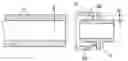
FIGS. 1a, 1b and 1c schematically show cross-sectional side views of a pipe, a connecting piece and a clamping ring in different phases of making a pipe connection,
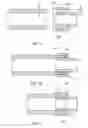
FIGS. 2a and 2b schematically show one embodiment of decreasing wall thickness of the pipe, and
FIG. 3 schematically shows another embodiment of decreasing the wall thickness of a pipe.
DETAILED DESCRIPTION OF SOME EMBODIMENTS OF THE INVENTION
FIG. 1a shows a pipe 1 which is made of a plastic material having memory properties, for instance a cross-linked polyethylene PEX or any other cross-linked polyethylene, and a connecting piece 2 made of metal. The connecting piece 2 can also be made of plastic, such as polyamide PA or any other suitable material.
The connecting piece 2 comprises a nipple end 2a. The nipple end 2a comprises radially projecting flanges. The nipple end 2a is terminated with a radial abutment surface 2b.
A clamping ring 3 is positioned around the nipple end 2a. The material of the clamping ring is, for example, metal, such as stainless steel or brass. The clamping ring 3 can also be made of stiff plastic, such as polyamide PA or cross-linked polyethylene PEX or of any other suitable plastic.
The inner diameter of the pipe 1 is smaller than the outer diameter of nipple end 2a. Further, the wall thickness w of the pipe 1 is larger than the distance d between the outer surface of the nipple end 2a and the inner surface of the clamping ring 3.
As shown in FIG. 1b, the wall thickness of the end 1a of the pipe 1 is temporarily decreased by an internal and external force. Simultaneously the length of the pipe is increased. This decreased wall thickness is thus smaller than the distance d between the outer surface of the nipple end 2a and the inner surface of the clamping ring 3.
Further, in the phase shown in FIG. 1b the inner diameter of the end 1a of the pipe 1 is larger than the outer diameter of the nipple end 2a. Thus, it is easy to position the end 1a of the pipe 1 between the nipple end 2a and the clamping ring 3.
The end 1a of the pipe 1 relaxes automatically and returns to its original thickness. Thus, the end 1a of the pipe 1 sticks very tightly because it compresses the nipple end 2a and the inner surface of the clamping ring 3. Thus, a tight connection between the pipe 1 and the connecting piece 2 is achieved.
The inner diameter of the pipe 1 and the inner diameter of the nipple end 2a can be equal, whereby the inner surface in the connection is even. An even inner surface enables the liquid to flow smoothly inside the pipe and the connecting piece.
The pipe connection can also be made without the clamping ring 3. However, by using the clamping ring 3, the end 1a of the pipe 1 can be connected extremely tightly with the connecting piece 2.
FIGS. 2a and 2b show the pipe 1 and a widening tool 4. The widening tool 4 is pushed inside the pipe 1 for decreasing the wall thickness of the end 1a of the pipe 1.
The widening tool 4 comprises a radial bulge 4a, which increases the inner diameter of the end 1a of the pipe 1 when the widening tool 4 is pushed inside the pipe 1.
A compression ring 5 is positioned outside the end 1a of the pipe 1. The compression ring 5 prevents at least a substantial expansion of the end 1a of the pipe whereby the wall thickness of the end 1a of the pipe 1 is decreased. A small clearance may be provided between the outer surface of the pipe 1 and the inner surface of the compression ring 5 whereby the pipe 1 can expand to some extent. However, the clearance is smaller than the height of the bulge 4a, whereby the wall thickness of the end 1a of the pipe 1 is decreased and the clearance is also so small that the length of the pipe increases.
It is also possible to form the compression ring 5 such that it compresses the outer surface of the end 1a of the pipe 1, whereby also the outer diameter of the pipe 1 is decreased.
The end 1a of the pipe 1 can be heated when the wall thickness of the end 1a of the pipe 1 is decreased. The end 1a of the pipe 1 can be heated by providing the widening tool 4 and/or the compression ring 5 with heating resistors. The pipe 1 can also be heated before the tool 4 is pushed inside the pipe 1. Any suitable means for heating cross-linked polyethylene PEX can be used.
FIG. 3 shows another embodiment of decreasing the wall thickness of the pipe 1. A shaft 6 is positioned inside the pipe 1. The outer surface of the pipe 1 is pressed by a pressing roll 7. The pressing is denoted by arrow A.
The pressing roll 7 comprises a shaft 7a and a sleeve 7c. A bearing 7b is provided between the shaft 7a and sleeve 7c such that the sleeve 7c can rotate with respect to the shaft 7a. The pressing roll 7a is rotated around the pipe 1 as denoted by arrow B.
The shaft 6 may also grow wider, whereby the inner diameter of the pipe 1 is increased and, simultaneously with the pressing roll 7, the outer diameter of the pipe 1 can be decreased.
It is also possible to rotate the shaft 6 and thereby the pipe 1 and keep the pressing roll 7 stationary.
The pipe 1 can also be heated such that the pressing roll 7 is heated and/or the shaft 6 is heated. By using external heating a need to use a mechanical force can be decreased. The temperature should be lower than the glass transition temperature of the material (e.g. about 120° C. with cross-linked polyethylene PEX).
In some cases, the features shown in this description can be used as such, irrespective of other features. Then again, the features shown in this description may, if necessary, be combined in order to form different combinations. For example, the widening tool 4 and the pressing roll 7 can be used together.
It is obvious to a man skilled in the art that as technology progresses, the basic idea of the invention can be carried out in numerous ways. Thus, the invention and its embodiments are not limited by the previous examples but they may vary within the scope of the appended claims.
Claims
1. A method for connecting a pipe to a connecting piece, the pipe being made of a material having memory properties, the method comprising temporarily decreasing wall thickness of the end of the pipe such that simultaneously the length of the pipe increases, positioning the temporarily decreased end of the pipe on the nipple end of the connecting piece and letting the end of the pipe return towards its original size such that the end of the pipe firmly and sealingly presses against the nipple end of the connecting piece.
2. A method as claimed in claim 1, comprising decreasing the wall thickness by pressing the wall with a roll.
3. A method as claimed in claim 1, comprising decreasing the wall thickness by a widening tool positioned inside the pipe for increasing the inner diameter of the pipe and simultaneously preventing the outer diameter of the pipe from substantially increasing.
4. A method as claimed in claim 3, comprising compressing, simultaneously with the expanding with the widening tool, the outer surface of the pipe with a compression ring.
5. A method of claim 1, wherein the end of the pipe is positioned between an outer surface of the nipple end and an inner surface of a clamping ring, whereby the wall thickness of the pipe is larger than a distance between the surface of the nipple end and the inner surface of the clamping ring.
6. An arrangement for connecting a pipe to a connecting piece, the pipe being made of a material having memory properties, whereby an end of the pipe is positioned onto a nipple end of the connecting piece, the arrangement comprising means for temporarily decreasing wall thickness of the end of the pipe and simultaneously increasing the length of the pipe.
7. An arrangement as claimed in claim 6, wherein the arrangement comprises a pressing roll for decreasing the wall thickness.
8. An arrangement as claimed in claim 6 wherein the arrangement comprises a widening tool for increasing the inner diameter of the pipe and means for preventing the outer diameter of the pipe from substantially increasing.
9. An arrangement as claimed in claim 8, wherein the arrangement comprises a compression ring for compressing the outer surface of the pipe simultaneously with expanding with the widening tool.
10. An arrangement as claimed in claim 6, wherein the arrangement comprises a clamping ring positioned outside the pipe, the wall thickness of the pipe being larger than a distance between the outer surface of the nipple end and the inner surface of the clamping ring.
11. A pipe connection, comprising a pipe being made of a material having memory properties and a connecting piece, whereby an end of the pipe is positioned onto a nipple end of the connecting piece, and wall thickness of the end of the pipe has been temporarily decreased and length of the pipe simultaneously increased and allowed to return towards its original size such that the end of the pipe firmly and sealingly presses against the nipple end of the connecting piece.
12. A pipe connection as claimed in claim 11, wherein the pipe connection comprises a clamping ring positioned outside the end of the pipe, whereby the wall thickness of the pipe is larger than a distance between the surface of the nipple end and the inner surface of the clamping ring.
13. A pipe connection as claimed in claim 11, wherein the inner diameter of the pipe is equal to the inner diameter of the nipple end.
14. A method as claimed in claim 2, comprising decreasing the wall thickness by a widening tool positioned inside the pipe for increasing the inner diameter of the pipe and simultaneously preventing the outer diameter of the pipe from substantially increasing.
15. An arrangement as claimed in claim 7, wherein the arrangement comprises a widening tool for increasing the inner diameter of the pipe and means for preventing the outer diameter of the pipe from substantially increasing.
16. A pipe connection as claimed in claim 12, wherein the inner diameter of the pipe is equal to the inner diameter of the nipple end.
Images & Drawings included:

Sources:
- United States Patent and Trademark Office - verify current appl. status at the USPTO↗
Similar patent applications:
Recent applications in this class:
- » 20240367367 2024-11-07
BELLING UNIT, AUTOMATIC BELLING MACHINE COMPRISING SAID UNIT AND METHOD FOR BELLING PIPES MADE OF PVC-O - » 20240123675 2024-04-18
METHOD AND MACHINE FOR BELLING PVC-O PIPES - » 20230339167 2023-10-26
Pipe expanding plier - » 20230234278 2023-07-27
CANNULA BUMP - » 20230219279 2023-07-13
Pipe bell end ring flare system and method of use thereof - » 20230069241 2023-03-02
Apparatus for Creating a Rolled Back End - » 20230012677 2023-01-19
HYDRAULIC FITTING, AND APPLICATIONS THEREOF IN ROBOT SYSTEMS - » 20220266503 2022-08-25
PEX TUBING EXPANDER HEAD - » 20220040906 2022-02-10
EXPANDER TOOL - » 20220016825 2022-01-20
Pipe bell end ring flare system and method of use thereof
Recent applications for this Assignee:
- » 20150219250 2015-08-06
Compositions for coating pipe - » 20120242079 2012-09-27
Coupling system, distributor, pipe system, and pipe offset system - » 20120184131 2012-07-19
Method and apparatus for connecting a network device to a daisy chain network - » 20120153614 2012-06-21
Clamping ring - » 20120125469 2012-05-24
METHODS AND COMPOSITIONS FOR PRODUCING PIPE HAVING IMPROVED OXIDATIVE RESISTANCE - » 20110219594 2011-09-15
TOOL DEVICE FOR CONNECTION OF A PLASTIC PIPE - » 20110181038 2011-07-28
Pipe connection with readable crimping marker - » 20110163531 2011-07-07
Fitting for a pipe - » 20110101673 2011-05-05
Press fitting for a pipe, particularly a plastic pipe or a plastic and metal composite pipe - » 20110100497 2011-05-05
PIPE ARRANGEMENT FOR TEMPERATURE CONTROL OF BUILDINGS