Two-player game of skill where each player tries to press while the other player is pressing
US20090318205A1
2009-12-24
12/484,239
2009-06-14
✅ Patent granted
US 8,460,077 B2
2013-06-11
-
-
Ronald Laneau | Ross Williams
2030-04-01
Abstract:
A two-Player game comprising the steps of first determining whether or not a Player is Pressing his or her Actuator, and if so, changing the state of the Indicator(s) to show the first Player is Pressing. Second determining whether or not the opposing Player presses while the first Player is pressing, and, if so, awarding a point to the opposing Player and adding it to Memory. Third, after a point is scored, comparing the scoring Player's cumulative score stored in Memory with a predetermined number of points necessary to win. If the scoring Player has not reached the predetermined number of points necessary to win, Indicating a point scored and resuming the game. If the scoring Player has reached the predetermined number of points necessary to win, Indicating that the scoring Player has won.
Applicant:
Interested in similar patents?
Get notified when new applications in this technology area are published.
Classification:
A63F2009/2408 » CPC further
Games not otherwise provided for; Games using electronic circuits not otherwise provided for; Detail of input, input devices; Input by manual operation Touch-sensitive buttons
A63F2009/2451 » CPC further
Games not otherwise provided for; Games using electronic circuits not otherwise provided for; Output devices visual using illumination, e.g. with lamps
A63F2009/2452 » CPC further
Games not otherwise provided for; Games using electronic circuits not otherwise provided for; Output devices visual using illumination, e.g. with lamps as a signal
A63F2009/2454 » CPC further
Games not otherwise provided for; Games using electronic circuits not otherwise provided for; Output devices visual using illumination, e.g. with lamps with LED
A63F2009/2489 » CPC further
Games not otherwise provided for; Games using electronic circuits not otherwise provided for; Other characteristics; Remotely playable by radio transmitters, e.g. using RFID
A63F9/24 » CPC main
Games not otherwise provided for Games using electronic circuits not otherwise provided for
A63F13/00 IPC
Video games, i.e. games using an electronically generated display having two or more dimensions
Description
CROSS-REFERENCE TO RELATED APPLICATIONS
This application is related to Provisional Patent Application No. 61/132,728, filed Jun. 23, 2008. The invention claimed herein is one part of said Provisional Patent Application. The inventor is separately filing and claiming other inventions included in said Provisional Patent Application.
BACKGROUND
Field
This application relates to two-player games of skill, specifically those using actuators and indicators.
This application uses the following defined terms:
Actuator—a physical means of sending a signal to the device embodying the invention.
Press—to activate an Actuator by physical means.
Indicator—a visually observable device capable of changing state
Indicate—to change the state of an Indicator
Player—one of the two participants in the game
Memory—a means of recording each player's cumulative score
DRAWINGS
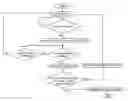
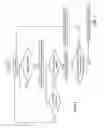
FIG. 1 is a flowchart showing the steps described in the First Embodiment.
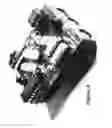
FIG. 2 is a photograph of the gaming device which plays a number of games, including the First Embodiment of the invention
DETAILED DESCRIPTION
The First Embodiment of the invention that is currently being sold by various retailers is a hand-held electronic game unit with two tactile switches (one for each Player), an LED for each player (one green, one red), a 2-color red/green center LED, a microcontroller, and power supply. See FIG. 2.
The microcontroller is pre-programmed to accept input from the tactile switches and display information using the LEDs. The steps involved in the program are shown in FIG. 1.
The object of the game is for each Player to try to press his or her button when the other Player is already pressing, thereby scoring a point. A Player's LED is on only while Pressing his or her tactile switch. A point is Indicated by flashing the LEDs that correspond to the color of the scoring Player.
The microcontroller determines whether a point has been scored and by whom, and keeps track of each Player's cumulative score. When one Player's score reaches a predetermined limit, the center LED turns solid and the winning Player's LED flashes.
Although the First Embodiment uses the aforementioned design, the invention is equally well-suited to countless other embodiments. One could easily utilize Actuators consisting of touch-sensitive switches, light sensors, wireless controls, or any other type of physical means of control. The invention is equally well-suited to countless other types of Indicators such as LCD screens, or any type of electrical or mechanical apparatus that is capable of being seen by the Players and changing state.
Similarly, there are countless different methods of visually indicating the various states of the game. Those in the First Embodiment were chosen for their cost.
The steps in Figure One are shown in their approximate order, but certain steps can precede different steps without altering the fundamental game. For example, the first diamond that says “Is a Player Pressing?” could just as well loop back to the “Turn off indicators” instruction following a “NO”, but Figure 1 attempts to minimize redundancies and streamline the flow.
Additional embodiments that are planned include, but are in no way limited to, the following:
-
- Mobile Phone application
- Internet application
- Video game
- Electro-Mechanical toy
Claims
1. Process
A two-Player game comprising the steps of:
a. determining whether or not a Player is Pressing his or her Actuator, and if so, changing the state of the Indicator(s) to show the first Player is Pressing.
b. determining whether or not the opposing Player presses while the first Player is pressing, and, if so, awarding a point to the opposing Player and adding it to Memory.
c. after a point is scored, comparing the scoring Player's cumulative score stored in Memory with a predetermined number of points necessary to win. If the scoring Player has not reached the predetermined number of points necessary to win, Indicating a point scored and resuming the game. If the scoring Player has reached the predetermined number of points necessary to win, Indicating that the scoring Player has won.
Machine:
A gaming device comprising two or more Actuators and a means of visually displaying at least seven different states using one or more Indicators. The necessary states are as follows:
1) Nobody Pressing
2) Player 1 Pressing
3) Player 2 Pressing
4) Player 1 scored a point
5) Player 2 scored a point
6) Player 1 wins
7) Player 2 wins
whereby said gaming device determines whether or not a Player is Pressing his or her Actuator. If a Player is Pressing, said gaming device changes the state of the Indicator(s) to show the first Player is currently Pressing. While the first Player is Pressing, said gaming device repeatedly checks whether or not the opposing Player Presses. If so, said gaming device awards a point to the opposing Player and records same in Memory. After a point is scored, said gaming device determines whether the scoring Player has reached the predetermined number of points necessary to win by comparing that Player's cumulative score stored in Memory with said predetermined number. If the scoring Player has not reached the predetermined number of points necessary to win, said gaming device Indicates a point scored and resumes the game. If the scoring Player has reached the predetermined number of points necessary to win, said gaming device Indicates that the scoring Player has won.
Images & Drawings included:
Sources:
- United States Patent and Trademark Office - verify current appl. status at the USPTO↗
Similar patent applications:
Recent applications in this class:
- » 20250161795 2025-05-22
DICE SCANNING DEVICE - » 20250121276 2025-04-17
Waterproof Squeezable Game Controller - » 20250083033 2025-03-13
SEQUENTIALLY OPERATED MODULES - » 20250025770 2025-01-23
STRUCTURE DECOMPRESSION GAME CONSOLE - » 20240408480 2024-12-12
Modular Flash Pad Gaming System - » 20240390780 2024-11-28
Interactive Robot Battle Game - » 20240382828 2024-11-21
Digital Game Piece Assembly - » 20240245985 2024-07-25
GAME DEVICE AND ASSOCIATED METHODS - » 20240157229 2024-05-16
CLAW POWER SUPPLY STRUCTURE - » 20240033612 2024-02-01
HANDHELD ELECTRONIC BUBBLE GAME