ELECTRONIC BASKETBALL GAME
US20090318208A1
2009-12-24
11/970,228
2008-01-07
Abstract:
An electronic basketball skill monitoring and developing system and method, particularly suited for children and young adults that would make solo and group participation more interesting and enjoyable and includes an electronic basketball game system using a basketball having a controller including a registration subsystem, an indicator subsystem, and a timing subsystem, the controller responsive to a physical impact on the registration subsystem to generate an activity signal, the timing system, responsive to the activity system and to the timing signal, that records a number of the physical impacts on the registration subsystem in one or more activity periods; and a plurality of markers, one for each of a plurality of basketball shot locations referenced by the indicator subsystem.
Inventors:
- Phillip H. Neal 16 🇺🇸 San Rafael, CA, United States
- Michael J. Liebowitz 5 🇺🇸 Concord, CA, United States
Interested in similar patents?
Get notified when new applications in this technology area are published.
Classification:
A63B24/0021 » CPC further
Electric or electronic controls for exercising apparatus of preceding groups; Controlling or monitoring of exercises, sportive games, training or athletic performances Tracking a path or terminating locations
A63B63/00 » CPC further
Targets or goals for ball games
A63B63/007 » CPC further
Targets or goals for ball games Target zones without opening defined on a substantially horizontal surface
A63B2024/0037 » CPC further
Electric or electronic controls for exercising apparatus of preceding groups; Controlling or monitoring of exercises, sportive games, training or athletic performances; Tracking a path or terminating locations on a target surface or at impact on the ground
A63B2071/0627 » CPC further
Games or sports accessories not covered in groups -; Indicating or scoring devices for games or players, or for other sports activities; Displays, user interfaces and indicating devices, specially adapted for sport equipment, e.g. display mounted on treadmills; Visual, audio or audio-visual systems for entertaining, instructing or motivating the user; Emitting sound, noise or music when used improperly, e.g. by giving a warning
A63B2071/063 » CPC further
Games or sports accessories not covered in groups -; Indicating or scoring devices for games or players, or for other sports activities; Displays, user interfaces and indicating devices, specially adapted for sport equipment, e.g. display mounted on treadmills; Visual, audio or audio-visual systems for entertaining, instructing or motivating the user; Emitting sound, noise or music Spoken or verbal instructions
A63B2208/12 » CPC further
Characteristics or parameters related to the user or player specially adapted for children
A63B2220/17 » CPC further
Measuring of physical parameters relating to sporting activity Counting, e.g. counting periodical movements, revolutions or cycles, or including further data processing to determine distances or speed
A63B2220/53 » CPC further
Measuring of physical parameters relating to sporting activity; Force related parameters; Force Force of an impact, e.g. blow or punch
A63B2220/62 » CPC further
Measuring of physical parameters relating to sporting activity Time or time measurement used for time reference, time stamp, master time or clock signal
A63B2220/801 » CPC further
Measuring of physical parameters relating to sporting activity; Special sensors, transducers or devices therefor Contact switches
A63B2225/50 » CPC further
Miscellaneous features of sport apparatus, devices or equipment Wireless data transmission, e.g. by radio transmitters or telemetry
A63F2300/8011 » CPC further
Features of games using an electronically generated display having two or more dimensions, e.g. on a television screen, showing representations related to the game specially adapted for executing a specific type of game Ball
A63F9/24 IPC
Games not otherwise provided for Games using electronic circuits not otherwise provided for
A63B69/0071 » CPC main
Training appliances or apparatus for special sports for basketball
A63F2300/1062 » CPC further
Features of games using an electronically generated display having two or more dimensions, e.g. on a television screen, showing representations related to the game characterized by input arrangements for converting player-generated signals into game device control signals being specially adapted to a type of game, e.g. steering wheel
Description
CROSS REFERENCE TO RELATED APPLICATIONS
This application claims the benefit of U.S. Provisional Application 60/879,264 filed on Jan. 6, 2007, the disclosure of which is incorporated by reference in entirety for all purposes.
BACKGROUND OF THE INVENTION
The present invention relates generally to a physical activity system, and more specifically to an electronic basketball skill monitoring and developing system and method, particularly suited for children and young adults.
Physical activity systems and methods are important, particularly for children and young adults. Participation helps develop and maintain physical and mental health and to develop and maintain hand-eye coordination and other athletic and cardiovascular benefits.
At times, an attention span and/or an interest level of a child or a young adult interferes with certain monotonous activities associated with some physical activities. Especially for certain skill development exercises, and even more so when the child or young adult does not have a partner.
This is true for many types of physical activities, including basketball. There are many drills and exercises that are known to promote and develop basketball proficiency.
It would be advantageous to provide an electronic basketball skill monitoring and developing system and method, particularly suited for children and young adults that would make solo and group participation more interesting and enjoyable.
BRIEF SUMMARY OF THE INVENTION
The present invention provides an electronic basketball skill monitoring and developing system and method, particularly suited for children and young adults that would make solo and group participation more interesting and enjoyable. The present invention includes an electronic basketball game system using a basketball having a controller including a registration subsystem, an indicator subsystem, and a timing subsystem, the controller responsive to a physical impact on the registration subsystem to generate an activity signal, the timing system, responsive to the activity system and to the timing signal, that records a number of the physical impacts on the registration subsystem in one or more activity periods; and a plurality of markers, one for each of a plurality of basketball shot locations referenced by the indicator subsystem.
Providing systems and methods to encourage, promote, and maintain extended (both in a particular session and duration over multiple sessions) participation in physical activities is an important aspect of the present invention.
BRIEF DESCRIPTION OF THE DRAWINGS
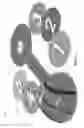
FIG. 1 is a perspective view of an electronic basketball game system;
FIG. 2 is a view of components of the electronic basketball game system shown in FIG. 1;
FIG. 3 is a first schematic page of the electronic basketball game system shown in FIG. 1; and
FIG. 4 is a second schematic page of the electronic basketball game system shown in FIG. 1.
DETAILED DESCRIPTION OF THE INVENTION
The following description is presented to enable one of ordinary skill in the art to make and use the invention and is provided in the context of a patent application and its requirements. Various modifications to the preferred embodiment and the generic principles and features described herein will be readily apparent to those skilled in the art. Thus, the present invention is not intended to be limited to the embodiment shown but is to be accorded the widest scope consistent with the principles and features described herein.
A preferred embodiment of the present invention is an electronic basketball game that is designed for use with any indoor or outdoor basketball hoop and basketball.
FIG. 1 is a perspective view of an electronic basketball game system 100. Game system 100 includes a controller 105 having a registration subsystem 110, an indicator subsystem, and a timing subsystem. Controller 105 is responsive to a physical impact on registration subsystem 110 to generate an activity signal. The timing subsystem, responsive to the activity subsystem and to the timing signal, records a number of the physical impacts on registration subsystem 110 in one or more activity periods (impacts coming from the user (e.g., stepping on it) or from strikes using the game piece (e.g., bouncing the basketball on it) or the like. Game system 100 includes a plurality of markers 115, one for each of a plurality of basketball shot locations referenced by the indicator subsystem. Markers are distributed on the court around the hoop as desired or indicated by the game system.
FIG. 2 is a view of components of the electronic basketball game system shown in FIG. 1. FIG. 3 is a first schematic page of the electronic basketball game system shown in FIG. 1. FIG. 4 is a second schematic page of the electronic basketball game system shown in FIG. 1.
The electronics provide logic for keeping track of how many times a user (or users) bounce or step on the provided pad and the electronic unit announces the number of “shots made” (times the pad has been hit in a given round) at the conclusion of the round.
The electronics provide a clock (either overt or covert) for keeping track of time transpired in a given round.
The game provides markers (e.g., number pads 1, 2, 3, 4, and 5) that may placed in a variety of configurations around the basketball court. Alternately, a marker (e.g. chalk marks, cones, color pads, or other references or systems appropriate to the game) may be used in lieu of the provided number markers to create the desired configurations. The term marker is used herein to include all such references and reference systems. Instead of markers, the controller may reference particular maneuvers associated with the game. For basketball embodiments, these maneuvers may include jump shots, hook shot shots, layups, corner shots, free throws, and the like.
The electronic unit provides audio commands, music and game ambience during play.
Described below are three modes included in a preferred embodiment of the present invention. Other implementations may employ a subset of these modes, supplement these modes, or use other modes consistent with the scope of the invention described herein. The following description is provided with specific details of an embodiment for basketball using 5 markers as an aid in understanding. Other time periods, orientations, and variations are possible within the context of the present invention, except where explicitly noted or the context provides otherwise.
GAME MODES: (ShotClock!, CountDown!, and CountUp!)
Mode 1: ShotClock!
OBJECT: Score as many points as you can in a particular time period (e.g., a 24-second frantic countdown).
SCORING: Self-monitored (and no check in with home base pad)
1) Bounce on Home pad to start countdown and quickly move from marker to marker sequentially (1-5) and see how far one progresses/improves.
2) Variations may include taking a single shot from each pad or staying on a particular pad until you make one. Either way it will have provided a challenge where a user, particularly a child or young adult, may map improvement and move quickly.
3) House rule likely has user take one shot from a particular marker and then follow with another shot (e.g., a layup) to proceed.
4) Clock continuously runs down to zero and buzzer sounds.
5) #1 Loop track sequence plays out 8 seconds per loop.
6) Audio is called out at 24, 10 and last 5 seconds out loud (in some cases using audio for the entire last 10 seconds adds additional excitement, particularly for the child or young adult user).
7) User keeps track of how many points scored when the game buzzer goes off.
8) Ball in the air at the buzzer counts!
9) Note when Home pad is hit during ShotClock! mode in the preferred embodiment: nothing registers and play continues.
Mode 2: CountDown!
OBJECT: Score as many points as you can in the final quarter countdown.
SCORING: Number of hits on pad is recorded and is announced at end of round (and is able to be played back by hitting “Score” button)
1) Set clock for 24 second, 1, 2, 3, 4 minutes and bounce on the Home pad to start countdown.
2) Unit will call out a random # from 1-5 (even distribution in software table) and user must go to requested pad and shoot until they make it, and come back to the Home pad and bounce or step on it to get their next shot (# called out).
3) Variations may include taking a single shot (vs shooting until they make it) from the requested location and counting the face value of the pad in their cumulative score. This puts more pressure on making the clutch higher value call out shots!
4) House rule may have user take one shot from a marker and then follow with a particular shot (e.g., a lay-up) to proceed.
5) Another scoring variation includes having a predetermined score to achieve before the final buzzer goes off.
6) Clock continuously runs down to zero and then a buzzer sounds. Audio is called out at every 30 second interval until 30 seconds remain, then every 10 seconds and then counts last 5 seconds out loud (may vary the final count-down period for different excitement levels).
7) Unit keeps track of # of hits on Home pad and announces score at end of round (indicating # of shots made). User can hit score button to repeat score for given round.
-
- NOTE: We may want to experiment with replacing #'s instructions with colors (although #'s may be the most orderly).
Mode 3: CountUp!
OBJECT: Score highest # of points in least amount of time!
SCORING: Number of hits on pad is recorded AND elapsed total time, and is announced at end of round (and can be played back by hitting “Score” button)
ALT OBJECT/SCORING: As stopwatch, how long does it take to make a shot (or shots)? Scoring: Unit plays back amount of time clock/time elapsed from Start to Stop.
-
- 1st dribble on Home pad starts timer and calls out shot location (1-5 randomly—even distribution in software table). Drum kick/snare loop plays.
- User runs to place makes the shot and returns to mat. Second dribble on Home pad stops time.
- Unit plays low level (not clock tick) drum beat awaiting next “start” event.
- Time out/sleep: Unit times out and goes to sleep if one minute of no activity registered.
- Unit calls out accumulated time ONLY after each shot/clock stop (Not # of made shots accumulated). Note that unit is keeping track of accumulated “made” shots but only announces this, along with accumulated time, when Score button is pushed.
- User rests as desired. Next dribble on Home pad starts clock and calls out next location (1-5).
- Repeat!
- Game may be stopped at any time by hitting “Score” button, which reads back # of made shots and (repeats) total elapsed time. User can hit score button to repeat score and elapsed time for given round.
- User can play up to a maximum of 4 minutes of accumulated time.
Housing:
1) Match housing color of our proto (more orange)
2) Add embossed Diggin logo per photo reference
3) Power switch: mold “off/low/high” icons
4) Time button: mold “clock” icon
5) Change pad shape per reference design provided
Electronics:
1) Utilize two channel microchip (imperative for music/audio mix)
2) Boost sound output to accommodate outdoor gameplay
Software:
Channel 1: Music
IMPORTANT: This is desirably on a separate channel from all other audio/DON'T RESTART
1) In all games in Final 24 seconds: Play “Groove A”, “Groove B” and “Groove C” in order;
2) In all 1-4 minute games play a random mix of the 5 dance samples; and
3) In all 1-4 minute games, at 26 seconds left, play the “24 seconds left” sfx followed by Groove A.
Channel 2: Voice & Sound Effects:
IMPORTANT: This is desirably on a separate channel from all other audio Set up/Start Mode
1) Switch Power on and just play cheer effect (eliminate “Speed Basketball”);
2) After 2 seconds, play: play “Pick a time” once (replace current “Cmon pick a game”);
3) Scroll through time choices on right button;
4) When a time is picked, after two seconds play once: “Bounce to go!” (don't repeat);
5) When no time is picked after 5 seconds, play once: “Cmon, pick a time!” (don't repeat);
6) When time is picked, after 2 sec play: “Bounce to Go!” (don't repeat);
7) When 5 more seconds, no time is picked, play “Cmon, Bounce to Go!” (don't repeat);
8) Important: when pad is bounced-on at any time (no gametime picked), start game and use 1 minute as default; and 9) 20 or more seconds with no activity?: Put processor to sleep. Switch off and on to start over.
GamePlay Mode
1) Bounce on pad to start: whistle; Go!; random 1-5 call out;
2) Bounce on pad during round: Yeah!; random 1-5 call out;
3) Important that the bounce on pad doesn't restart the music loops (reference video and notes above);
4) Time announcements during any round should ONLY play to announce 3, 2, 1 minutes and 24 seconds;
5) With 26 seconds left, play “24 seconds left” and switch music to Groove A, B, C music sequence;
6) Eliminate 5, 4, 3, 2, 1 countdown sequence, just play Groove C for the final 8 seconds;
7) At end of round play buzzer and announce: N number of shots made! and cheer (change from current callout);
8) When no shots are made, play buzzer announce NO shots made! And crowd groan;
9) After game, and no activity for 5 seconds, play “Cmon, try again!” (play once); and
10) After game, when no activity for 1 minute, Put processor to sleep. Switch off and on to start over.
Bounce whistle/24 seconds/1 minute, 2 minutes, 3 minutes/4 minutes
10 seconds Cmon bounce to go!
10 seconds No activity: power down
1-4 minutes: 4 second loops (play each 4 times and shuffle)
26 second: 24 seconds
24 seconds Switch to Queen loop (play twice)
16 seconds Switch to second Queen loop (play twice)
8 seconds Switch to third Queen loop (play twice)
0 seconds Buzzer N number shots made
5 seconds Cmon play again!
10 seconds No activity: power down
While the above description focuses on a preferred embodiment for the game system used in cooperation with a basketball game, the present invention may be extended to other games and activities.
In the description herein, numerous specific details are provided, such as examples of components and/or methods, to provide a thorough understanding of embodiments of the present invention. One skilled in the relevant art will recognize, however, that an embodiment of the invention can be practiced without one or more of the specific details, or with other apparatus, systems, assemblies, methods, components, materials, parts, and/or the like. In other instances, well-known structures, materials, or operations are not specifically shown or described in detail to avoid obscuring aspects of embodiments of the present invention.
Reference throughout this specification to “one embodiment”, “an embodiment”, or “a specific embodiment” means that a particular feature, structure, or characteristic described in connection with the embodiment is included in at least one embodiment of the present invention and not necessarily in all embodiments. Thus, respective appearances of the phrases “in one embodiment”, “in an embodiment”, or “in a specific embodiment” in various places throughout this specification are not necessarily referring to the same embodiment. Furthermore, the particular features, structures, or characteristics of any specific embodiment of the present invention may be combined in any suitable manner with one or more other embodiments. It is to be understood that other variations and modifications of the embodiments of the present invention described and illustrated herein are possible in light of the teachings herein and are to be considered as part of the spirit and scope of the present invention.
Additionally, any signal arrows in the drawings/Figures should be considered only as exemplary, and not limiting, unless otherwise specifically noted. Furthermore, the term “or” as used herein is generally intended to mean “and/or” unless otherwise indicated. Combinations of components or steps will also be considered as being noted, where terminology is foreseen as rendering the ability to separate or combine is unclear.
As used in the description herein and throughout the claims that follow, “a”, “an”, and “the” includes plural references unless the context clearly dictates otherwise. Also, as used in the description herein and throughout the claims that follow, the meaning of “in” includes “in” and “on” unless the context clearly dictates otherwise.
The foregoing description of illustrated embodiments of the present invention, including what is described in the Abstract, is not intended to be exhaustive or to limit the invention to the precise forms disclosed herein. While specific embodiments of, and examples for, the invention are described herein for illustrative purposes only, various equivalent modifications are possible within the spirit and scope of the present invention, as those skilled in the relevant art will recognize and appreciate. As indicated, these modifications may be made to the present invention in light of the foregoing description of illustrated embodiments of the present invention and are to be included within the spirit and scope of the present invention.
Thus, while the present invention has been described herein with reference to particular embodiments thereof, a latitude of modification, various changes and substitutions are intended in the foregoing disclosures, and it will be appreciated that in some instances some features of embodiments of the invention will be employed without a corresponding use of other features without departing from the scope and spirit of the invention as set forth. Therefore, many modifications may be made to adapt a particular situation or material to the essential scope and spirit of the present invention. It is intended that the invention not be limited to the particular terms used in following claims and/or to the particular embodiment disclosed as the best mode contemplated for carrying out this invention, but that the invention will include any and all embodiments and equivalents falling within the scope of the appended claims. Thus, the scope of the invention is to be determined solely by the appended claims.
Claims
What is claimed as new and desired to be protected by Letters Patent of the United States is:1. An electronic basketball game system using a basketball, comprising:
a controller including a registration subsystem, an indicator subsystem, and a timing subsystem, said controller responsive to a physical impact on the registration subsystem to generate an activity signal, said timing subsystem, responsive to said activity subsystem and to said timing signal, that records a number of said physical impacts on said registration subsystem in one or more activity periods; and
a plurality of markers, one for each of a plurality of basketball shot locations referenced by said indicator subsystem.
2. The electronic basketball game system of claim 1 wherein said registration system is responsive to being bounced on by said basketball.
3. The electronic basketball game system of claim 1 wherein said registration system is responsive to being stepped on by a user.
4. The electronic basketball game system of claim 1 wherein said indicator subsystem includes an audio system for generating an audio signal at a conclusion of each of said one or more activity periods, said audio signal including said number of said physical impacts for each of said one or more activity periods.
5. The electronic basketball game system of claim 4 wherein said indicator subsystem includes an audio system for generating an audio signal, said audio signal including a motivational message.
6. The electronic basketball game system of claim 1 wherein said indicator subsystem includes an audio system for generating an audio signal, said audio signal including basketball ambiance audio.
7. The electronic basketball game system of claim 1 wherein said timing subsystem generates an elapsed time signal and wherein said indicator subsystem indicates at least periodically a value of said elapsed time signal.
8. The electronic basketball game system of claim 7 wherein said value is a count-up signal to a predetermined value.
9. The electronic basketball game system of claim 7 wherein said value is a count-down signal to a predetermined value.
10. The electronic basketball game system of claim 1 wherein said indicator subsystem includes an audio system, said audio signal including an announcement of a first particular one of said plurality of markers.
11. The electronic basketball game system of claim 10 wherein said audio signal announces said first particular marker and thereafter, responsive to said physical impact, a second particular one of said plurality of markers.
12. The electronic basketball game system of claim 11 wherein said indicator subsystem includes an audio system for generating an audio signal at a conclusion of each of said one or more activity periods, said audio signal including said number of said physical impacts for each of said one or more activity periods.
13. The electronic basketball game system of claim 1 wherein said indicator subsystem includes a visual readout of said physical impacts.
14. The electronic basketball game system of claim 1 wherein said indicator subsystem includes a visual readout of a time period for at least one of said one or more activity periods.
15. An electronic basketball game system using a basketball, comprising:
a controller including a registration subsystem, an indicator subsystem, and a timing subsystem, said controller responsive to a physical impact on the registration subsystem to generate an activity signal, said timing subsystem, responsive to said activity subsystem and to said timing signal, that records a number of said physical impacts on said registration subsystem in one or more activity periods; and
a plurality of maneuvers prerecorded in said controller, one for each of a plurality of basketball shot types referenced by said indicator subsystem.
16. The electronic game system of claim 15 wherein said plurality of maneuvers includes maneuvers selected from one or more of the group consisting of jump shot, hook shot, layup, from the corner, free throw, and combinations thereof.
Images & Drawings included:


Sources:
- United States Patent and Trademark Office - verify current appl. status at the USPTO↗
Similar patent applications:
Recent applications in this class:
- » 20250144496 2025-05-08
BASKETBALL SHOOTING SYSTEM - » 20250128134 2025-04-24
SYSTEMS AND METHODS FOR EVALUATING PLAYER PERFORMANCE - » 20250114681 2025-04-10
BASKETBALL SCORING TRAINING APPARATUS - » 20250073553 2025-03-06
INTERACTIVE BASKETBALL SYSTEM - » 20250032878 2025-01-30
Ball Return System - » 20240367021 2024-11-07
Sports Training System and Method - » 20240359076 2024-10-31
Basketball Shooting Training Device And Method Of Use - » 20240293719 2024-09-05
BASKETBALL PERFORMANCE MONITORING SYSTEM - » 20240252899 2024-08-01
Training device - » 20240173603 2024-05-30
ADVANCED BASKETBALL TRAINING SYSTEM