Process for preparing pradofloxacin
US20090318700A1
2009-12-24
12/442,680
2007-10-07
✅ Patent granted
US 8,497,377 B2
2013-07-30
WO; PCT/EP2007/008687; 20071007
WO; WO2008/046532; 20080424
Nizal Chandrakumar
2028-10-01
Abstract:
The invention relates to an improved process for preparing pradofloxacin, in which the substituent in the 7 position is introduced by nucleophilic substitution in an N-methylpyrrolidone-ethanol solvent mixture.
Inventors:
- Ralf Wischnat 3 🇩🇪 Bergisch Gladbach, Germany
- Klaus Weidemann 2 🇩🇪 Wuppertal, Germany
- Thomas Adam 1 🇩🇪 Wuppertal, Germany
- Ralf Wischnat 1 🇩🇪 Gladbach, Germany
Assignee:
- Bayer Intellectual Property GmbH 49 🇩🇪 , Germany
Applicant:
Interested in similar patents?
Get notified when new applications in this technology area are published.
Classification:
A61P31/00 » CPC further
Antiinfectives, i.e. antibiotics, antiseptics, chemotherapeutics
A61P31/04 » CPC further
Antiinfectives, i.e. antibiotics, antiseptics, chemotherapeutics Antibacterial agents
C07D471/04 » CPC main
Heterocyclic compounds containing nitrogen atoms as the only ring hetero atoms in the condensed system, at least one ring being a six-membered ring with one nitrogen atom, not provided for by groups - in which the condensed system contains two hetero rings Ortho-condensed systems
C07D471/02 IPC
Heterocyclic compounds containing nitrogen atoms as the only ring hetero atoms in the condensed system, at least one ring being a six-membered ring with one nitrogen atom, not provided for by groups - in which the condensed system contains two hetero rings
Description
The invention relates to an improved process for preparing pradofloxacin, in which the substituent in the 7 position is introduced by nucleophilic substitution in an N-methylpyrrolidone-ethanol solvent mixture.
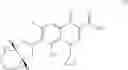
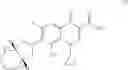
The quinolone antibiotic pradofloxacin of the formula (I)
and its preparation have already been described in WO 97/31001. Particular precursors, intermediates and early process steps are disclosed in WO98/47862 and WO99/06360.
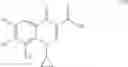
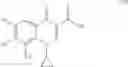
The key step in the preparation is the reaction of the corresponding 7-halocyanofluoroquinolonecarboxylic acid, especially of the 7-chloro-8-cyano-1-cyclopropyl-6-fluoro-1,4-dihydro-4-oxo-3-quinolinecarboxylic acid of the formula (II)
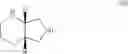
with (1S,6S)-2,8-diazabicyclo[4.3.0]nonane of the formula (III) (also known as S,S-pyrrolopiperidine)
in a nucleophilic substitution reaction. It is known that such nucleophilic substitutions are preferably performed in polar aprotic solvents. For instance, WO 97/31001 proposes, in general form, solvents including dimethyl sulphoxide, N,N-dimethylformamide, N-methylpyrrolidone, hexamethylphosphoramide, sulfolane and acetonitrile for corresponding reactions; alcohols, for example methanol, ethanol, n-propanol, isopropanol and others, are likewise proposed there as solvents for these purposes.
It has been found that, surprisingly, a particularly suitable solvent for this reaction is a mixture of N-methylpyrrolidone with ethanol.
The invention relates to a process for preparing pradofloxacin of the formula (I)
by reacting, optionally in the presence of a base, the 7-chloro-8-cyano-1-cyclopropyl-6-fluoro-1,4-dihydro-4-oxo-3-quinolinecarboxylic acid of the formula (II)
with (1S,6S)-2,8-diazabicyclo-[4.3.0]nonane of the formula (III)
in a solvent mixture of N-methylpyrrolidone and ethanol.
Typically, the solvent mixture contains at least 20% by weight of ethanol. Particular preference is given to a mixture with at least 50% by weight of ethanol. The mixture preferably contains not more than 95% by weight of ethanol. Particular preference is given to mixtures with 70 to 90% by weight of ethanol.
For the ratio of (1S,6S)-2,8-diazabicyclo[4.3.0]nonane to 7-chloro-8-cyano-1-cyclopropyl-6-fluoro-1,4-dihydro-4-oxo-3-quinolinecarboxylic acid, WO 97/31001 specifies a wide range which ranges from equimolar amounts up to a large excess of (1S,6S)-2,8-diazabicyclo[4.3.0]nonane. In the development of a synthesis performable on the industrial scale, the person skilled in the art will routinely select an excess of (1S,6S)-2,8-diazabicyclo[4.3.0]nonane: (1S,6S)-2,8-diazabicyclo[4.3.0]nonane has two basic ring nitrogen atoms which can both react nucleophilically with the 7-chloro-8-cyano-1-cyclopropyl-6-fluoro-1,4-dihydro-4-oxo-3-quinolinecarboxylic acid. In the case of too low an amount of (1S,6S)-2,8-diazabicyclo[4.3.0]nonane, the person skilled in the art would thus expect the formation of undesired by-products by linkage of the second ring nitrogen atom of the (1S,6S)-2,8-diazabicyclo[4.3.0]nonane with a further molecule of 7-chloro-8-cyano-1-cyclopropyl-6-fluoro-1,4-dihydro-4-oxo-3-quinolinecarboxylic acid.
Unexpectedly, it has been found to be particularly favourable to use the (1S,6S)-2,8-diazabicyclo[4.3.0]nonane, in relation to the 7-chloro-8-cyano-1-cyclopropyl-6-fluoro-1,4-dihydro-4-oxo-3-quinolinecarboxylic acid, only in a small molar excess, typically 1.01 to 1.30 times, preferably 1.05 to 1.25 times, the molar amount based on the amount of 7-chloro-8-cyano-1-cyclopropyl-6-fluoro-1,4-dihydro-4-oxo-3-quinolinecarboxylic acid.
The reaction of (1S,6S)-2,8-diazabicyclo[4.3.0]nonane with 7-chloro-8-cyano-1-cyclopropyl-6-fluoro-1,4-dihydro-4-oxo-3-quinolinecarboxylic acid is effected in the presence of a base which binds the acid formed. Such a base may, for example, be an excess of (1S,6S)-2,8-diazabicyclo[4.3.0]nonane, which is less preferred for the abovementioned reasons. It is possible in general to use inorganic and organic bases. These include, for example, the alkali metal hydroxides, alkali metal carbonates, organic amines and amidines. Preference is given to organic bases, especially tertiary amines. Specific particularly suitable examples include: 1,4-diazabicyclo[2.2.2]octane (DABCO), 1,8-diazabicyclo[5.4.0]undec-7-ene (DBU), triethylamine, tributylamine and especially diisopropylethylamine.
The reaction can be performed in a wide temperature range of 0 to 200° C., preferably 20 to 180° C. The reaction is effected typically at standard pressure, but performance at elevated pressure, for example at 1 to 100 bar, preferably 1 to 10 bar, is conceivable.
Under the inventive conditions, the reaction can be performed reproducibly with good yield, the pradofloxacin is obtained in very good purity, the complexity of the purification of the end product can be reduced significantly, further purification steps are generally not required. Especially in the preparation on the industrial scale, these advantages are of great significance.
Pradofloxacin is a highly effective novel quinolone antibiotic; its antibacterial action and indications, use forms and suitable formulations have already been disclosed in the prior art; see, for example, WO 97/31001, WO 03/007995, WO 03/101422, WO 04/082658, WO 05/018641, WO 05/044271 and WO 06/061156.
EXAMPLE
100 g of 7-chloro-8-cyano-1-cyclopropyl-6-fluoro-1,4-dihydro-4-oxo-3-quinolinecarboxylic acid are reacted with 48 g of (1S,6S)-2,8-diazabicyclo[4.3.0]nonane at elevated temperature (>70° C.) in a mixture of ethanol and N-methylpyrrolidone (80/20 w/w) with addition of an excess of diisopropylethylamine. After cooling, a yield of 90% of theory is obtained.
Claims
1. Process for preparing pradofloxacin of the formula (I)
by reacting, optionally in the presence of a base, the compound of the formula (II)
with (1S,6S)-2,8-diazabicyclo-[4.3.0]nonane of the formula (III)
in a solvent mixture of N-methylpyrrolidone and ethanol.
2. Process according to claim 1, wherein the solvent mixture contains at least 50% by weight of ethanol.
3. Process according to claim 1, wherein the (1S,6S)-2,8-diazabicyclo[4.3.0]nonane of the formula (III) is used in a molar ratio to the 7-chloro-8-cyano-1-cyclopropyl-6-fluoro-1,4-dihydro-4-oxo-3-quinolinecarboxylic acid of the formula (II) of 1:1.01 to 1:1.30.
Images & Drawings included:



Sources:
- United States Patent and Trademark Office - verify current appl. status at the USPTO↗
Recent applications in this class:
- » 20250289820 2025-09-18
NON-COVALENT MODIFIERS OF AKT1 AND USES THEREOF - » 20250289819 2025-09-18
CYSTEINE COVALENT MODIFIERS OF AKT1 AND USES THEREOF - » 20250289818 2025-09-18
HETEROCYCLIC DERIVATIVES, PHARMACEUTICAL COMPOSITIONS AND THEIR USE IN THE TREATMENT, AMELIORATION OR PREVENTION OF CANCER - » 20250289817 2025-09-18
SEROTONIN RECEPTOR MODULATORS AND METHODS OF MAKING AND USING THE SAME - » 20250289816 2025-09-18
SALTS AND PHARMACUTICAL COMPOSITIONS THEREOF FOR THE TREATMENT OF INFLAMMATORY DISORDERS - » 20250289815 2025-09-18
MODULATORS OF MAS-RELATED G-PROTEIN RECEPTOR X2 AND RELATED PRODUCTS AND METHODS - » 20250289814 2025-09-18
COMPOUNDS AS PARP1 INHIBITIORS - » 20250289813 2025-09-18
CDK INHIBITORS, PHARMACEUTICAL COMPOSITIONS, AND THERAPEUTIC APPLICATIONS - » 20250289812 2025-09-18
COMPOUND FOR TREATING THROMBOTIC DISEASES - » 20250282779 2025-09-11
SUBSTITUTED 5,6,7,8-TETRAHYDROPYRIDO[2,3-D]PYRIMIDINE-2,4-DIONES FOR TREATING CARDIAC DISEASES
Recent applications for this Assignee:
- » 20160366885 2016-12-22
Fungicide N-cycloalkyl-N-bicyclicmethylene-carboxamide derivatives - » 20160280633 2016-09-29
N-cycloalkyl-N-[(cycloalkenylphenyl)methylene]-(thio) carboxamide derivatives - » 20150328318 2015-11-19
Stabilization of vitamin B - » 20150327548 2015-11-19
Fungicide N-cycloalkyl-N-bicyclicmethylene-carboxamide derivatives - » 20150299145 2015-10-22
Process for the preparation of N-hydroxy-1-(1-alkyl-1H-tetrazol-5-yl)-1-phenylmethanimine derivatives - » 20150038590 2015-02-05
N-cycloalkyl-N-[(cycloalkenylphenyl)methylene]-(thio)carboxamide derivatives - » 20150031730 2015-01-29
Fungicidal 3-[(1,3-thiazol-4-ylmethoxyimino)(phenyl)methyl]-2-substituted-1,2,4-oxadiazol-5(2H)-one derivatives - » 20140350058 2014-11-27
Fungicidal 3-[(pyridin-2-ylmethoxyimino)(phenyl)methyl]-2-substituted-1,2,4-oxadiazol-5(2H)-one derivatives - » 20140349848 2014-11-27
Fungicidal 4-substituted-3-{phenyl[(heterocyclylmethoxy)imino]methyl}-1,2,4-oxadizol-5(4H)-one derivatives - » 20140315858 2014-10-23
Fungicide N-[(trisubstitutedsilyl)methyl]-carboxamide derivatives