Arrangement for Stabilization of a Floating Foundation
US20100008733A1
2010-01-14
12/498,710
2009-07-07
Abstract:
An arrangement for stabilization of a floating foundation, which is arranged to carry a wind-turbine mounted on a tower, is described. The foundation is fixed with a set of mooring cables. First endings of the mooring cables are attached to the foundation at a certain position while second endings of the mooring cables are attached to a floor. There is a second set of mooring-cables, while first endings of the second set of mooring-cables are attached to the foundation near or at its bottom end and while second endings of the second set of mooring-cables are attached to the floor, too.
Interested in similar patents?
Get notified when new applications in this technology area are published.
Classification:
B63B21/50 » CPC main
Tying-up; Shifting, towing, or pushing equipment; Anchoring Anchoring arrangements or methods for special vessels, e.g. for floating drilling platforms or dredgers
B63B35/44 » CPC further
Vessels or similar floating structures specially adapted for specific purposes and not otherwise provided for Floating buildings, stores, drilling platforms, or workshops, e.g. carrying water-oil separating devices
F03D13/25 » CPC further
Assembly, mounting or commissioning of wind motors; Arrangements specially adapted for transporting wind motor components; Arrangements for mounting or supporting wind motors; Masts or towers for wind motors specially adapted for offshore installation
B63B2035/442 » CPC further
Vessels or similar floating structures specially adapted for specific purposes and not otherwise provided for; Floating buildings, stores, drilling platforms, or workshops, e.g. carrying water-oil separating devices Spar-type semi-submersible structures, i.e. shaped as single slender, e.g. substantially cylindrical or trussed vertical bodies
B63B2035/446 » CPC further
Vessels or similar floating structures specially adapted for specific purposes and not otherwise provided for; Floating buildings, stores, drilling platforms, or workshops, e.g. carrying water-oil separating devices; Floating structures carrying electric power plants for converting wind energy into electric energy
F05B2240/93 » CPC further
Components; Mounting on supporting structures or systems on a structure floating on a liquid surface
Y02E10/72 » CPC further
Energy generation through renewable energy sources; Wind energy Wind turbines with rotation axis in wind direction
Y02E10/72 » CPC further
Energy generation through renewable energy sources; Wind energy Wind turbines with rotation axis in wind direction
Y02E10/727 » CPC further
Energy generation through renewable energy sources; Wind energy Offshore wind turbines
Y02E10/727 » CPC further
Energy generation through renewable energy sources; Wind energy Offshore wind turbines
E02D5/74 IPC
Bulkheads, piles, or other structural elements specially adapted to foundation engineering Means for anchoring structural elements or bulkheads
Description
CROSS REFERENCE TO RELATED APPLICATIONS
This application claims priority of European Patent Office Application No. 08012310.2 EP filed Jul. 8, 2008, which is incorporated by reference herein in its entirety.
FIELD OF INVENTION
The invention relates to an arrangement for the stabilization of a floating foundation, which is used offshore to carry a wind-turbine.
BACKGROUND OF INVENTION
Floating foundations for wind-turbines are known from WO 2006 132 539 A1 and from WO 2006 121 337 A1 showing so called “spar-buoy”. These spar-buoy-types are fixed at a predetermined position by the use of one set of mooring cable.
FIG. 3 shows a typical spar-buoy foundation according to the state of the art.
A wind-turbine 1 is mounted on a tower 2, which is supported by a spar-buoy foundation 3. There is a set of mooring cables 5. First endings of the mooring cables 5 are attached to the spar-buoy foundation 3 at a certain position 4, while second endings of the mooring cables are attached to anchors 6.
The level of the position 4 is below the waterline WL. There is a balancing weight 7 located on the lower ending of the spar-buoy foundation 3, which is relevant for the stability of the whole construction.
This kind of mooring-arrangement is simple and cheap. But the stability of the foundation relies only on gravity, so an equilibrium is established between overturning moments on the one hand and a restoring moment on the other hand.
The overturning moments are performed by waves and wind while the restoring moment is performed by the weight of the foundation, which acts on the lower end of the foundation.
FIG. 4 shows with reference to FIG. 3 typical operating loads of a normal spar-buoy foundation.
The whole structure is generally exposed to an arising overturning moment.
The overturning moment is defined as multiplication from a wind-load 8, acting on the wind-turbine 1, and a lever-arm 9, which length is defined by the distance between a force centre and the mooring cable attachment 4.
The overturning moment is additionally defined as multiplication from the wind load 10, acting on the tower 2, and a lever-arm 11, which length is defined by the distance between the wind-load-force-centre and the mooring cable attachment 4.
Last the overturning moment is additionally defined as multiplication from a wave and current load 12 multiplied with an arm-lever 13, which is defined by the distance between this force centre and the mooring cable attachment 4.
The restoring moment is the gravity load 14 of the balancing weight 7 multiplied with a lever-arm 15, which is defined by the distance from the gravity force centre to the mooring cable attachment 4.
When the overturning moment and the restoring moment are in equilibrium the structure shows an inclination angle 16.
If the restoring moment is “0” the foundation itself is not inclined. Any overturning moments lead to inclination of the foundation. So the operation of a wind-turbine is negatively affected by the inclination.
SUMMARY OF INVENTION
An object of the present invention is to provide an improved arrangement for the stabilization of a floating foundation to be used offshore.
This aim is solved by an arrangement as claimed in the independent claim. Advantageous embodiments of the invention are subject of the dependent claims.
According to the invention the arrangement for stabilization of a foundation is arranged to carry a wind-turbine mounted on a tower. The foundation is fixed with a set of mooring cables. First endings of the mooring cables are attached to the foundation at a certain position while second endings of the mooring cables are attached to the floor. There is a second set of mooring-cables, while first endings of the second set of mooring-cables are attached to the foundation near or at its bottom end. Second endings of the second set of mooring-cables are attached to the floor, too.
The inventive arrangement allows a higher stabilisation of the floating foundation, which is arranged to carry a wind-turbine.
The inventive arrangement is cheap and is easy to implement even at older locations, which are already at work.
BRIEF DESCRIPTION OF THE DRAWINGS
The invention will be described now in more detail by the help of some figures, where:
FIG. 1 shows a spar-buoy foundation according to the invention,
FIG. 2 shows with reference to FIG. 1 operating loads of the inventive spar-buoy foundation,
FIG. 3 shows a typical spar-buoy foundation according to the state of the art.
FIG. 4 shows with reference to FIG. 3 typical operating loads of a normal spar-buoy foundation.
DETAILED DESCRIPTION OF INVENTION
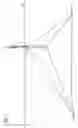
FIG. 1 shows a spar-buoy foundation according to the invention.
A wind-turbine 1 is mounted on a tower 2, which is supported by a spar-buoy foundation 3. There is a set of mooring cables 5. First endings of the mooring cables 5 are attached to the spar-buoy foundation 3 at a certain position 4, while second endings of the mooring cables are attached to anchors 6.
The level of the position 4 is below the waterline WL. There is a balancing weight 7 located on the lower ending of the spar-buoy foundation 3, which is relevant for the stability of the whole construction.
According to the invention there is at least another set of mooring cables 17. First endings of the mooring cables 17 are attached to the spar-buoy foundation 3 near or at the bottom end of the foundation 3. Second endings of the mooring cables 17 are attached to the anchors 6, preferably. It is also possible to use another set of anchors for this mooring-cables 17.
In this case the two sets of mooring cables 5 and 17 serve to stabilise the foundation. Therefore the restoring moment will be a combination of a first moment, arising from the weight of the lower end of the foundation, and a second moment, arising from differential forces in the mooring cables 5 and 17.
FIG. 2 shows with reference to FIG. 1 typical operating loads of the inventive spar-buoy foundation 3.
The whole structure is generally exposed to an arising overturning moment.
The overturning moment is defined as multiplication from a wind-load 8, acting on the wind-turbine 1, and a lever-arm 9, which length is defined by the distance between a wind-load-force-centre and the mooring cable attachment 4.
The overturning moment is additionally defined as multiplication from the wind load 10, acting on the tower 2, and a lever-arm 11, which length is defined by the distance between the wind-load-force-centre and the mooring cable attachment 4.
Last the overturning moment is additionally defined as multiplication from a wave and current load 12 multiplied with a arm-lever 13, which is defined by the distance between this force centre and the mooring cable attachment 4.
The restoring moment is the horizontal component 18 of a second mooring cable force 19, multiplied with an arm 20 from the attachment point AT of the second set mooring cables 17 to the attachment point 4 of the first set of mooring cable 5.
When the overturning moment and the restoring moment are in equilibrium the structure has a very small inclination angle.
In the normal mooring arrangement of the spar-buoy foundation as described in FIG. 3 and FIG. 4 a typical high loading situation would lead to about 13 m displacement of the tower top and about 5 degrees maximum inclination.
According to the invention the mooring arrangement of the spar-buoy foundation the same loading situation will lead to about 3 m displacement of the tower top and about 1.5 degrees maximum inclination. So the inventive arrangement leads to a higher stiffness.
In a preferred embodiment the first set of mooring-cable 5 and/or the second set of mooring cable 17 are fitted with tensioning devices, to allow an adjustment of the relative tautness of the particular set of mooring cable.
Claims
1.-5. (canceled)
6. Arrangement for stabilization of a floating foundation, comprising:
a floating foundation;
a first set of mooring cables, the floating foundation being fixed with the first set of mooring cables, wherein first endings of the mooring cables are attached to the floating foundation at a certain position and second endings of the mooring cables are attached to a ground; and
a second set of mooring cables, wherein first endings of the second set of mooring-cables are attached to the floating foundation near or at its bottom end and second endings of the second set of mooring-cables are attached to the ground.
7. The arrangement as claimed in claim 6, further comprising:
a wind turbine mounted on a tower, wherein the floating foundation is arranged to carry the wind turbine.
8. The arrangement as claimed in claim 6, wherein the certain position for the first endings of the first set of mooring cables is located below a waterline.
9. The arrangement as claimed in claim 6, further comprising:
a balancing weight located on a lower end of the floating foundation.
10. The arrangement as claimed in claim 7, further comprising:
a balancing weight located an a lower end of the floating foundation.
11. The arrangement as claimed in claim 8, further comprising:
a balancing weight located on a lower end of the floating foundation.
12. The arrangement as claimed in claim 6, further comprising:
anchors, wherein the second endings of the first set of mooring cables and the second endings of the second set of mooring cables are attached to the ground by the anchors.
13. The arrangement as claimed in claim 7, further comprising:
anchors, wherein the second endings of the first set of mooring cables and the second endings of the second set of mooring cables are attached to the ground by the anchors.
14. The arrangement as claimed in claim 8, further comprising:
anchors, wherein the second endings of the first set of mooring cables and the second endings of the second set of mooring cables are attached to the ground by the anchors.
15. The arrangement as claimed in claim 9, further comprising:
anchors, wherein the second endings of the first set of mooring cables and the second endings of the second set of mooring cables are attached to the ground by the anchors.
16. The arrangement as claimed in claim 6, further comprising:
tensioning devices, wherein the first or the second set of mooring cables is fitted with the tensioning devices to allow an adjustment of a relative tautness of the respective set of mooring cables.
17. The arrangement as claimed in claim 7, further comprising:
tensioning devices, wherein the first or the second set of mooring cables is fitted with the tensioning devices to allow an adjustment of a relative tautness of the respective set of mooring cables.
18. The arrangement as claimed in claim 6, further comprising:
tensioning devices, wherein the first and the second set of mooring cables are fitted with the tensioning devices to allow an adjustment of a relative tautness of the respective set of mooring cables.
19. The arrangement as claimed in claim 7, further comprising:
tensioning devices, wherein the first and the second set of mooring cables are fitted with the tensioning devices to allow an adjustment of a relative tautness of the respective set of mooring cables.
Images & Drawings included:



Sources:
- United States Patent and Trademark Office - verify current appl. status at the USPTO↗
Recent applications in this class:
- » 20250162691 2025-05-22
FLOATING-TYPE OFFSHORE WIND POWER MOORING SYSTEM CAPABLE OF REDUCING YAW MOTION - » 20250050979 2025-02-13
HELICAL ANCHOR GROUP INSTALLATION SYSTEM - » 20250050978 2025-02-13
MOORING SYSTEMS FOR FIXED MARINE STRUCTURES - » 20250042514 2025-02-06
MOORING DEVICE FOR AN OFFSHORE WIND TURBINE - » 20250019045 2025-01-16
METHOD FOR PLACING GRAVITU ANCHOR AND FLOATING BODY - » 20250002118 2025-01-02
UNDERWATER ANCHORING DEVICES, SYSTEMS, AND METHODS - » 20240425149 2024-12-26
Floatable Offshore Structure - » 20240425148 2024-12-26
ARTICULATED MECHANICAL CONNECTORS AND PROCESSES FOR USING SAME - » 20240409188 2024-12-12
MOORING SYSTEM - » 20240383576 2024-11-21
MOORING LINE FOR FLOATING PLATFORM