METHOD, SYSTEM, AND DEVICE FOR IMPROVING VOD SERVICE RELIABILITY
US20100017828A1
2010-01-21
12/488,490
2009-06-19
Abstract:
A method for improving video on demand (VOD) service reliability includes: selecting a first VOD server to provide VOD services for a user terminal; and reselecting a second VOD server according to the current running status of each VOD server and a policy to continue providing VOD services for the user terminal after receiving a VOD request re-initiated by the user terminal. The present invention avoids blind switchover of VOD services, greatly improves the switchover success ratio, and ensures the quality of the VOD services provided for users.
Assignee:
- HUAWEI TECHNOLOGIES CO., LTD. 25,993 🇨🇳 Shenzhen, China
Interested in similar patents?
Get notified when new applications in this technology area are published.
Classification:
H04N7/17318 » CPC main
Television systems; Analogue secrecy systems; Analogue subscription systems with two-way working, e.g. subscriber sending a programme selection signal; Transmission or handling of upstream communications Direct or substantially direct transmission and handling of requests
H04L67/1034 » CPC further
Network arrangements or protocols for supporting network services or applications; Protocols in which an application is distributed across nodes in the network for accessing one among a plurality of replicated servers Reaction to server failures by a load balancer
H04N7/17336 » CPC further
Television systems; Analogue secrecy systems; Analogue subscription systems with two-way working, e.g. subscriber sending a programme selection signal; Transmission or handling of upstream communications Handling of requests in head-ends
H04N21/2181 » CPC further
Selective content distribution, e.g. interactive television or video on demand [VOD]; Servers specifically adapted for the distribution of content, e.g. VOD servers; Operations thereof; Server components or server architectures; Source of audio or video content, e.g. local disk arrays comprising remotely distributed storage units, e.g. when movies are replicated over a plurality of video servers
H04N21/2225 » CPC further
Selective content distribution, e.g. interactive television or video on demand [VOD]; Servers specifically adapted for the distribution of content, e.g. VOD servers; Operations thereof; Server components or server architectures; Secondary servers, e.g. proxy server, cable television Head-end Local VOD servers
H04N21/23103 » CPC further
Selective content distribution, e.g. interactive television or video on demand [VOD]; Servers specifically adapted for the distribution of content, e.g. VOD servers; Operations thereof; Processing of content or additional data; Elementary server operations; Server middleware; Content storage operation, e.g. caching movies for short term storage, replicating data over plural servers, prioritizing data for deletion using load balancing strategies, e.g. by placing or distributing content on different disks, different memories or different servers
H04N21/23116 » CPC further
Selective content distribution, e.g. interactive television or video on demand [VOD]; Servers specifically adapted for the distribution of content, e.g. VOD servers; Operations thereof; Processing of content or additional data; Elementary server operations; Server middleware; Content storage operation, e.g. caching movies for short term storage, replicating data over plural servers, prioritizing data for deletion involving data replication, e.g. over plural servers
H04N21/2405 » CPC further
Selective content distribution, e.g. interactive television or video on demand [VOD]; Servers specifically adapted for the distribution of content, e.g. VOD servers; Operations thereof; Processing of content or additional data; Elementary server operations; Server middleware; Monitoring of processes or resources, e.g. monitoring of server load, available bandwidth, upstream requests Monitoring of the internal components or processes of the server, e.g. server load
H04N21/44209 » CPC further
Selective content distribution, e.g. interactive television or video on demand [VOD]; Client devices specifically adapted for the reception of or interaction with content, e.g. set-top-box [STB]; Operations thereof; Processing of content or additional data, e.g. demultiplexing additional data from a digital video stream; Elementary client operations, e.g. monitoring of home network or synchronising decoder's clock; Client middleware; Monitoring of processes or resources, e.g. detecting the failure of a recording device, monitoring the downstream bandwidth, the number of times a movie has been viewed, the storage space available from the internal hard disk Monitoring of downstream path of the transmission network originating from a server, e.g. bandwidth variations of a wireless network
H04N21/6587 » CPC further
Selective content distribution, e.g. interactive television or video on demand [VOD]; Network structure or processes for video distribution between server and client or between remote clients; Control signalling between clients, server and network components; Transmission of management data between server and client, e.g. sending from server to client commands for recording incoming content stream ; Communication details between server and client ; Transmission of management data between client and server; Transmission by the client directed to the server Control parameters, e.g. trick play commands, viewpoint selection
H04N21/8455 » CPC further
Selective content distribution, e.g. interactive television or video on demand [VOD]; Generation or processing of content or additional data by content creator independently of the distribution process; Content; Generation or processing of protective or descriptive data associated with content; Content structuring; Structuring of content, e.g. decomposing content into time segments involving pointers to the content, e.g. pointers to the I-frames of the video stream
H04L65/1083 » CPC further
Network arrangements, protocols or services for supporting real-time applications in data packet communication; Session management In-session procedures
H04L67/1012 » CPC further
Network arrangements or protocols for supporting network services or applications; Protocols in which an application is distributed across nodes in the network for accessing one among a plurality of replicated servers; Server selection for load balancing based on compliance of requirements or conditions with available server resources
H04L67/1029 » CPC further
Network arrangements or protocols for supporting network services or applications; Protocols in which an application is distributed across nodes in the network for accessing one among a plurality of replicated servers using data related to the state of servers by a load balancer
H04N7/173 IPC
Television systems; Analogue secrecy systems; Analogue subscription systems with two-way working, e.g. subscriber sending a programme selection signal
Description
CROSS-REFERENCE TO RELATED APPLICATION
This application is a continuation of International Application No. PCT/CN2007/071286, filed on Dec. 20, 2007, titled “Method, System, and Device for Improving VOD Service Reliability”, which claims the priority of CN application No. 200610157987.3, filed on Dec. 20, 2006, titled “Method, System, and Device for Improving VOD Service Reliability”, the entire contents of all of which are incorporated herein by reference.
FIELD OF THE INVENTION
The present invention relates to Internet Protocol Television (IPTV) technologies, and in particular, to a method, system, and device for improving the video on demand (VOD) service reliability.
BACKGROUND OF THE INVENTION
With the fast development of the broadband Internet and the rapid growth of the VOD, TV program, video phone, online game, and multimedia messaging service (MMS) provided for family users, the IPTV service gradually becomes one of the hotspots in the broadband multimedia field. The IPTV service is a carrier-class service and its advantages lie in interaction and timeliness. With the IPTV service, users can watch TV programs in real time according to requirements. This completely changes the original mode in which users passively watch TV programs and greatly enriches people's cultural life.
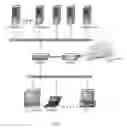
FIG. 1 shows the architecture of a conventional IPTV system. A VOD server provides video streaming services for user terminals. After receiving data, a user terminal can decompress the data and play videos instantly. Due to instable network transmission, however, when VOD server 1 provides video streaming services for the user terminal, the link between VOD server 1 and the user terminal may be broken due to the jitter or congestion of the transmission link. Thus, VOD server 1 cannot continue to serve the user terminal. In this case, the VOD service must be restarted manually, which is troublesome.
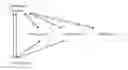
FIG. 2 shows a conventional solution. The solution includes the following steps:
Step 1: A user terminal initiates a VOD request to the global load balancer.
Step 2: The global load balancer selects more than two VOD servers such as VOD servers 1 and 2 according to the running status of each VOD server and a policy, and sends the IP addresses (IP1 and IP2) of the selected VOD servers to the user terminal.
Step 3: The user terminal accesses one of the VOD servers, such as VOD server 1.
Step 4: When detecting that the user terminal is disconnected from the VOD server providing VOD services, the user terminal initiates a VOD request carrying the position information of the previous VOD to VOD server 2 according to the list of VOD servers (IP1 and IP2). Then VOD server 2 continues providing VOD services.
The preceding technical solution solves the problem that the VOD service has to be restarted to a certain extent. According to the technical solution, however, the inventor discovers that VOD server switchover is of certain blindness and that the reliability is not high because the current status of standby VOD server 2 is not considered during VOD server switchover.
SUMMARY OF THE INVENTION
An objective of the present invention is to provide a method, system, and device for providing more reliable VOD services.
The objective of the present invention is achieved through the following technical solution:
A method for improving VOD service reliability includes:
selecting a first VOD server to provide VOD services for a user terminal; and
reselecting a second VOD server according to the current running status of each VOD server and a policy to continue providing VOD services for the user terminal after receiving a VOD request re-initiated by the user terminal.
A system for improving VOD service reliability includes a user terminal, at least two VOD servers, and a global balancer, where:
the user terminal is adapted to: initiate a VOD request to the global load balancer and receive VOD services provided by a first VOD server;
the VOD servers are adapted to provide VOD services for the user terminal;
the global load balancer is adapted to select the first VOD server to provide VOD services for the user terminal;
the user terminal is further adapted to re-initiate a VOD request to the global load balancer after detecting that the current first VOD server cannot continue providing VOD services; and
the global load balancer is further adapted to reselect a second VOD server according to the current running status of each VOD server and a policy to continue providing VOD services for the user terminal after receiving the VOD request re-initiated by the user terminal.
A global load balancer includes:
a selecting unit, adapted to: select a first VOD server to provide VOD services for a user terminal, receive a reselection message, and reselect a second VOD server according to the current running status of each VOD server and a policy to continue providing VOD services for the user terminal; and
a receiving unit, adapted to: receive a VOD request re-initiated by the user terminal and notify the selecting unit to reselect a VOD server.
As shown in the preceding technical solution, before switching the VOD server, the global load balancer provided in embodiments of the present invention makes a judgment according to the current running status of each VOD server and a policy and then reselects a VOD server to continue providing VOD services for user terminals. The technical solution avoids blind switchover, greatly improves the switchover success ratio, and ensures the quality of the VOD services provided for users.
BRIEF DESCRIPTION OF THE DRAWINGS
FIG. 1 shows the architecture of an IPTV system;
FIG. 2 shows a schematic diagram for implementing VOD services in the prior art;
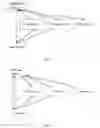
FIG. 3 shows a schematic diagram for implementing VOD services according to an embodiment of the present invention; and
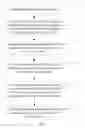
FIG. 4 shows a flowchart for implementing VOD services according to an embodiment of the present invention.
DETAILED DESCRIPTION OF THE EMBODIMENTS
The present invention is hereinafter described in detail with reference to preferred embodiments and accompanying drawings.
As shown in FIG. 3 and FIG. 4, a system provided in an embodiment of the present invention includes a user terminal such as a set top box (STB) or a personal computer (PC), at least two VOD servers that are adapted to provide VOD services for user terminals, and a global load balancer. The process of implementing VOD services is as follows:
Step 1: A user terminal sends a VOD request to the global load balancer.
Step 2: The global load balancer selects an optimal VOD server according to the running status of each VOD server and a policy, such as the first VOD server.
Step 3: The global load balancer forwards the VOD request sent from the user terminal to the first VOD server.
Step 4: After detecting that the first VOD server providing VOD services is down because the first VOD server is really down or the user terminal is disconnected from the first VOD server due to network faults or congestion, the user terminal re-initiates a VOD request to the global load balancer. The request may carry a midway calling flag and the IP address information of the first VOD server.
Step 5: According to the current running status of each VOD server and the policy, the global load balancer excludes the first VOD server that previously provides services and reselects another optimal VOD server, such as the second VOD server.
Step 6: The global load balancer forwards the VOD request sent from the user terminal to the second VOD server. According to the position information of the previous VOD in the VOD request, the second VOD server continues providing VOD services for the user terminal.
Detailed above are the principles and embodiments of the present invention. The embodiments are intended to help understand the methods and key ideas of the present invention only, and not intended to limit the present invention. It is apparent that those skilled in the art can make various modifications and variations to the present invention without departing from the spirit and scope of the present invention.
Claims
What is claimed is:1. A method for improving video on demand, VOD, service reliability, comprising:
selecting a first VOD server to provide VOD services for a user terminal; and
selecting a second VOD server according to the current running status of each VOD server and a policy to continue VOD services for the user terminal after receiving a VOD request re-initiated by the user terminal.
2. The method of claim 1, wherein the process of selecting the first VOD server to provide VOD services for the user terminal comprises:
sending, by the user terminal, the VOD request to a global load balancer; and
selecting, by the global load balancer, the first VOD server according to the running status of each VOD server and the policy to continue VOD services for the user terminal.
3. The method of claim 1, wherein the VOD request re-initiated by the user terminal carries a midway calling flag.
4. The method of claim 1, wherein the VOD request re-initiated by the user terminal carries IP address information of the first VOD server.
5. The method of claim 1, wherein the process of selecting the second VOD server to continue VOD services for the user terminal comprises: by a global load balancer, excluding the first VOD server and reselecting the second optimal VOD server according to the current running status of each VOD server and the policy to continue VOD services for the user terminal.
6. The method of claim 5, further comprising: sending, by the user terminal, current play position information to the second VOD server; and continuing, by the second VOD server, VOD services from the current position.
7. A system for improving video on demand, VOD, service reliability, comprising a user terminal, at least two VOD servers, and a global balancer, wherein:
the user terminal is adapted to: initiate a VOD request to the global load balancer and receive VOD services provided by a first VOD server;
the VOD servers are adapted to provide VOD services for the user terminal;
the global load balancer is adapted to select the first VOD server to provide VOD services for the user terminal;
the user terminal is further adapted to re-initiate the VOD request to the global load balancer after detecting that the current first VOD server cannot continue providing VOD services, and
the global load balancer is further adapted to select a second VOD server according to the current running status of each VOD server and a policy to continue providing VOD services for the user terminal after receiving the VOD request re-initiated by the user terminal.
8. The system of claim 7, wherein the VOD request re-initiated by the user terminal carries a midway calling flag and IP address information of the first VOD server.
9. The system of claim 8, wherein:
the user terminal is also adapted to send current play position information to the second VOD server and the second VOD server continues providing VOD services for the user terminal from the current position.
10. A global load balancer, comprising:
a selecting unit, adapted to: select a first video on demand, VOD, server to provide VOD services for a user terminal, receive a reselection message, and reselect a second VOD server according to the current running status of each VOD server and a policy to continue providing VOD services for the user terminal; and
a receiving unit, adapted to: receive a VOD request re-initiated by the user terminal and notify the selecting unit to reselect a VOD server.
Images & Drawings included:
Sources:
- United States Patent and Trademark Office - verify current appl. status at the USPTO↗
Recent applications in this class:
- » 20250063143 2025-02-20
Remote Access to Personal Video Profile - » 20250008058 2025-01-02
SYSTEM AND METHOD FOR IMPROVED CONTENT CREATION BY MEANS OF COMBINING CONTENT FROM MULTIPLE INDIVIDUAL CONTENT CAPTURE DEVICES - » 20240305748 2024-09-12
Verifying and encouraging asset consumption in a communications network - » 20240205373 2024-06-20
Program Segmentation of Linear Transmission - » 20240179273 2024-05-30
TELEVISION RECEIVER WITH A TV PHONE FUNCTION - » 20240137468 2024-04-25
SYSTEMS AND METHODS FOR GENERATING BOOKMARK VIDEO FINGERPRINTS - » 20240106985 2024-03-28
VIDEO DISTRIBUTION SERVER, VIDEO DISTRIBUTION METHOD AND RECORDING MEDIUM - » 20240098222 2024-03-21
Communication apparatus and method for receiving an inbound videophone call notice while displaying digital information on the display - » 20240098221 2024-03-21
METHOD AND APPARATUS FOR DELIVERING VIDEO AND VIDEO-RELATED CONTENT AT SUB-ASSET LEVEL - » 20230362334 2023-11-09
System and method for improved content creation by means of combining content from multiple individual content capture devices
Recent applications for this Assignee:
- » 20250176025 2025-05-29
DATA TRANSMISSION METHOD AND COMMUNICATION DEVICE - » 20250175959 2025-05-29
METHOD AND SYSTEM FOR PROVIDING MULTIPLE RESOURCE UNITS AND MULTIPLE DISTRIBUTIVE RESOURCE UNITS IN IEEE 802.11 - » 20250175857 2025-05-29
MESSAGE TRANSMISSION METHOD AND COMMUNICATION APPARATUS - » 20250175828 2025-05-29
COMMUNICATION SENSING METHOD AND APPARATUS - » 20250175530 2025-05-29
COMMUNICATION SENSING METHOD AND APPARATUS - » 20250175306 2025-05-29
METHOD FOR DETERMINING FEEDBACK INFORMATION, TERMINAL DEVICE, AND NETWORK DEVICE - » 20250175247 2025-05-29
COMMUNICATION METHOD, APPARATUS, AND SYSTEM - » 20250175233 2025-05-29
SYSTEMS AND METHODS FOR SENSING VIA INTERFEROMETER TECHNIQUES FOR SUBTERAHERTZ MIMO SYSTEMS - » 20250175148 2025-05-29
ACOUSTIC RESONATOR - » 20250174240 2025-05-29
QUANTIZATION METHOD, DEQUANTIZATION METHOD, AND APPARATUS THEREOF