INSULATED PRODUCT
US20100024701A1
2010-02-04
12/182,655
2008-07-30
Abstract:
An insulating product and method for its creation involving inner valves designed to impede the flow of insulating materials between compartments formed by the inner valves. This allows for creating vertical baffles in addition to the typical horizontal baffles.
Interested in similar patents?
Get notified when new applications in this technology area are published.
Classification:
A47G9/02 » CPC main
Bed-covers; Counterpanes; Travelling rugs; Sleeping rugs; Sleeping bags; Pillows Bed linen; Blankets; Counterpanes
A47G9/086 » CPC further
Bed-covers; Counterpanes; Travelling rugs; Sleeping rugs; Sleeping bags; Pillows; Sleeping bags for outdoor sleeping
A41D31/065 » CPC further
Materials specially adapted for outerwear characterised by special function or use; Thermally protective, e.g. insulating using layered materials
A41D2400/10 » CPC further
Functions or special features of garments Heat retention or warming
D05B11/00 IPC
Machines for sewing quilts or mattresses
A47G9/08 IPC
Bed-covers; Counterpanes; Travelling rugs; Sleeping rugs; Sleeping bags; Pillows Sleeping bags
A41D31/02 IPC
Materials specially adapted for outerwear Layered materials
Description
BACKGROUND OF INVENTION
Down Feather insulated sleeping bags are very commonly found in the marketplace today. Although different products from different brands may give different looks to the product, the basic construction technique remains for more than 20 years. The basic idea behind any down construction technique is to create a compartment of space, to fill it with down content and to close the fill hole.
Down, as an insulation material, behaves like a fluid in which it will shift to area with lower density. So the key in designing a down sleeping bag is to attain a fine balance between filling weight (amount of down) and the volume of space. Because of this limitation, most of the products we find in the marketplace, although with different colors and aesthetic, basically share the same common construction atomony. Below are the two commonly used down construction techniques:
-
- Sewn-Through Construction (FIG. 1)—This is a very simple form of construction which is very commonly found in lighter weight/lower end product. The basic construction is very simple: stitching together two pieces of fabrics together creates compartment “tunnel”, which one will fill the “tunnel” with down feather content. The drawback with this construction is that there is no down coverage along each stitch line (generally call “cold spots”), and thus giving an uneven thermal performance. As a result, this construction technique is only found in lighter weight/lower end product where thermal performance is not very critical.
- Baffle Construction (FIG. 2)—This construction is widely used in most down product today. The idea is very similar to Sewn-Through construction and the only difference is the addition of a partition material called “baffle mesh”. The baffle mesh sits between the two fabrics and provides a “height” factor to the down compartment. As a result, the cold spots are eliminated in the process and thus offering a more even thermal experience to the user.
The idea behind the above two constructions is to create a “hollow tube” for which the down will fill up the volume inside. The challenge is the bigger the volume, the more free space available and thus the higher chance of down shifting. Down shifting basically refers to the fact that the down over-shift from one side to the other, creating an imbalance coverage and thus affecting a consistent thermal performance.
In order to avoid down shifting, it is important to limit the size/volume of each baffle compartment which results in very common finding in almost all down sleeping bag in the market today: horizontal baffling. Regardless of sizes, weight, constructions, brands, essentially all down sleeping bags are with horizontal baffling (see below picture).
SUMMARY
This invention adds inner valves in the baffles to create compartments restricting the movement of insulating material such as down. This new construction offers more flexibility on the design, aesthetic appearance and thermal performance of the insulated product.
The introduction of inner valves construction offers a number of advantages over existing construction techniques:
-
- 1. It provides much better flexibility in down sleeping bag design (design freedom).
- 2. With the baffle going vertical versus horizontal, it reduces the use of baffle mesh and thus reduce the product total weight. (FIG. 7)
- 3. Provides more comfortable user experience. The vertical baffling goes along with the body contour whereas the traditional down sleeping bag with horizontal baffling goes against it. User will feel more natural and fit inside and thus a more comfortable experience.
DESCRIPTION OF DRAWINGS
FIG. 1 depicts a typical existing sewn-through construction.
FIG. 2 depicts a typical existing baffle construction.
FIG. 3 depicts a typical existing horizontal baffling.
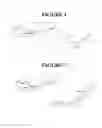
FIG. 4 depicts an existing baffle construction and said construction with inner valves added.
FIG. 5 depicts a partial cross section of partially down filled compartments separated by inner valves.
FIG. 6 depicts a partial cross section of down filled compartments separated by inner valves.
FIG. 7 illustrates a sleeping bag utilizing vertical baffles and a partial top view depicting down filled compartments separated by inner valves.
FIG. 8 depicts a perspective sectional view of compartments created by inner valves.
DETAILED DESCRIPTION
This invention builds upon the current Baffle Construction by adding inner valves acting as a trapdoor inside each of the baffle compartments. Although down behaves similarly to fluid, it moves at a much slower pace as down feathers tend to tangle up with each other. The installment of the inner valves is not to confine the down but rather to provide enough of an obstruction to limit the down's movement.
By taking advantage of the inner valve construction, one can design a down sleeping bag without the restriction of limiting baffle volume. One of the most obvious improvements is the possibility of creating a down sleeping bag with vertical baffling. Under the current constructions technique available, a typical vertical baffle compartment will be between 60″ to 70″ long, which will have serious down shifting problems. The possible problem with this setup is that, if the down shifts heavily towards one end over the other, there will be a serious imbalance of thermal performance. With the inner valve construction, the “trapdoors” prevent the down from moving freely within the baffle volume. The concept behind the inner valves is not to completely isolate the down from each other, but limit movement of the down by having the down behind each side of the valves pushing each other. By filling each compartment with down, the resulting pressure on each side of the inner valves essentially prevents movement of the inner valve and the down. (FIGS. 4, 5 and 6).
As seen on FIG. 8, the inner valves are affixed at one end only to baffle mesh on either horizontal or vertical baffles. By not attaching to the shell fabric, lining fabric, nor another baffle mesh, the inner valve is allowed to serve its trapdoor function. And since it is not attached to either the shell or lining fabric, the inner valve is not visible externally.
The above described invention can be used in the construction of sleeping bags, clothing, blankets and other applications requiring insulation such as piping, buildings, housing, structures, etc. Its use is not limited to down insulation but can be used with synthetic fibers or any other insulating material desired to be used in a particular application. The type of material used and the method of attachment for the inner valves can also be varied depending on the particular application intended for the insulated product. It is recognized that departures from the disclosed embodiments may be made within the scope of this invention and that obvious modification will occur to a person skilled in the art.
Claims
1. An insulated product comprising:
an outer shell;
an inner lining;
baffle mesh attached to the outer shell extending from one end of the shell to an opposite end creating baffles across the outer shell;
inner valves attached at one of its sides to the baffle mesh creating compartments within the baffles;
insulating material placed in each of the compartments; and
the inner lining attached to each of the baffle meshes and to the outer shell.
2. An insulating product according to claim 1 in which the insulating material is down.
3. An insulating product according to claim 2 in which the product is a sleeping bag.
4. An insulating product according to claim 2 in which the insulating product is a garment or other clothing.
5. An insulating product according to claim 2 in which the baffles are created horizontally across the product.
6. An insulating product according to claim 2 in which the baffles are created vertically across the product.
7. A method for creating an insulating product comprising:
creating an outer shell;
creating an inner lining;
attaching one side of the outer shell to one side of the inner lining;
attaching baffle mesh from one side of the outer shell to an opposite side;
creating inner valves;
attaching one side of each inner valve to the baffle mesh;
attaching the inner lining to the baffle mesh;
adding insulating material to spaces between adjoining baffle meshes; and
attaching the remaining side of the inner lining to the outer shell.
8. A method for creating an insulating product according to claim 7 in which the insulating material is down.
9. A method for creating an insulating product according to claim 8 in which the product is a sleeping bag.
10. A method for creating an insulating product according to claim 8 in which the insulating product is a garment or other clothing.
11. A method for creating an insulating product according to claim 8 in which the baffles are created horizontally across the product.
12. A method for creating an insulating product according to claim 8 in which the baffles are created vertically across the product.
Images & Drawings included:



Sources:
- United States Patent and Trademark Office - verify current appl. status at the USPTO↗
Similar patent applications:
- » 20190170369
DEVICE OPERATING AT HIGH TEMPERATURE COMPRISING AN INSULATING PRODUCT, INSULATING PRODUCT SUITABLE FOR SUCH A DEVICE, AND PROCESSES FOR USING AND OBTAINING SUCH AN INSULATING PRODUCT - » 20140360044
Thermal insulation products and production of thermal insulation products - » 20060005580
Insulation product, such as a thermal insulation product, and production method thereof - » 20230313427
INSULATION PRODUCT AND METHOD FOR MAKING INSULATION PRODUCT - » 20230349505
INSULATION PRODUCTS AND METHODS AND MACHINES FOR MAKING INSULATION PRODUCTS - » 20230167939
Insulation products and methods and machines for making insulation products - » 20230166490
Insulation products and methods and machines for making insulation products - » 20230349504
INSULATION PRODUCTS AND METHODS AND MACHINES FOR MAKING INSULATION PRODUCTS - » 20230167938
INSULATION PRODUCTS AND METHODS AND MACHINES FOR MAKING INSULATION PRODUCTS - » 20230408022
INSULATION PRODUCTS AND METHODS AND MACHINES FOR MAKING INSULATION PRODUCTS
Recent applications in this class:
- » 20240415302 2024-12-19
BREATHABLE BEDDING AND METHOD FOR PRODUCING SAME - » 20220061558 2022-03-03
Bed divider - » 20170231407 2017-08-17
Air multiplier pad - » 20170112298 2017-04-27
Pillow curler case - » 20160278550 2016-09-29
PERCALE BEDDING SYSTEM - » 20150133607 2015-05-14
Padding - » 20140201911 2014-07-24
Pillow Scarf and Method of Covering Pillows on a Bed - » 20140109315 2014-04-24
Fitted covering for a mattress - » 20140101850 2014-04-17
Bed clothing system - » 20140101849 2014-04-17
BEDDING SYSTEM