FLAT PANEL DISPLAY PACKAGE METHOD
US20100037564A1
2010-02-18
12/189,880
2008-08-12
Abstract:
The present invention discloses a flat panel display package method. Firstly, a flat panel display and an electronic baseplate are prepared; the electronic baseplate is assembled to the flat panel display to provide a driving signal for the flat panel display and form a display module, and the display module defines a module package plane. Next, a first package film and a second package film are respectively provided for the flat panel display and electronic baseplate; the first package film and the second package film both outside the module package plane are respectively defined to be a first join region and a second join region. Next, a hot-pressing machine is used to apply a hot-pressing temperature and a hot-pressing pressure to the first and second join regions and seal them airtightly. Thereby, the present invention can prevent external humidity entering and damaging the flat panel display and the electronic baseplate.
Interested in similar patents?
Get notified when new applications in this technology area are published.
Classification:
B65B11/50 » CPC main
Wrapping, e.g. partially or wholly enclosing, articles or quantities of material, in strips, sheets or blanks, of flexible material Enclosing articles, or quantities of material, by disposing contents between two sheets, e.g. pocketed sheets, and securing their opposed free margins
B29C65/02 » CPC further
Joining of preformed parts ; Apparatus therefor by heating, with or without pressure
B29C65/18 » CPC further
Joining of preformed parts ; Apparatus therefor by heating, with or without pressure using heated tools
B29C65/5057 » CPC further
Joining of preformed parts ; Apparatus therefor using adhesives, i.e. using supplementary joining material; solvent bonding using adhesive tape, e.g. thermoplastic tape; using threads or the like positioned between the surfaces to be joined
B29C66/1122 » CPC further
General aspects of processes or apparatus for joining preformed parts; General aspects dealing with the joint area or with the area to be joined; Particular design of joint configurations particular design of the joint cross-sections; Joint cross-sections comprising a single joint-segment, i.e. one of the parts to be joined comprising a single joint-segment in the joint cross-section; Single lapped joints Single lap to lap joints, i.e. overlap joints
B29C66/133 » CPC further
General aspects of processes or apparatus for joining preformed parts; General aspects dealing with the joint area or with the area to be joined; Particular design of joint configurations particular design of the joint cross-sections; Single flanged joints; Fin-type joints; Single hem joints; Edge joints; Interpenetrating fingered joints; Other specific particular designs of joint cross-sections not provided for in groups - Fin-type joints, the parts to be joined being flexible
B29C66/43 » CPC further
General aspects of processes or apparatus for joining preformed parts; General aspects of joining substantially flat articles, e.g. plates, sheets or web-like materials; Making flat seams in tubular or hollow articles; Joining single elements to substantially flat surfaces; Joining substantially flat articles ; Making flat seams in tubular or hollow articles Joining a relatively small portion of the surface of said articles
B29C66/723 » CPC further
General aspects of processes or apparatus for joining preformed parts characterised by the composition, physical properties or the structure of the material of the parts to be joined; Joining with non-plastics material characterised by the structure of the material of the parts to be joined being multi-layered
B29C66/8322 » CPC further
General aspects of processes or apparatus for joining preformed parts; General aspects of machine operations or constructions and parts thereof characterised by the movement of the joining or pressing tools; Reciprocating joining or pressing tools Joining or pressing tools reciprocating along one axis
B29C66/8362 » CPC further
General aspects of processes or apparatus for joining preformed parts; General aspects of machine operations or constructions and parts thereof characterised by the movement of the joining or pressing tools; Moving relative to and tangentially to the parts to be joined, e.g. transversely to the displacement of the parts to be joined, e.g. using a X-Y table Rollers, cylinders or drums moving relative to and tangentially to the parts to be joined
B29C66/91421 » CPC further
General aspects of processes or apparatus for joining preformed parts; Measuring or controlling the joining process by measuring or controlling the temperature, the heat or the thermal flux by controlling or regulating the temperature, the heat or the thermal flux by controlling or regulating the temperature of the joining tools
B29C66/919 » CPC further
General aspects of processes or apparatus for joining preformed parts; Measuring or controlling the joining process by measuring or controlling the temperature, the heat or the thermal flux characterised by specific temperature, heat or thermal flux values or ranges
B29C63/02 » CPC further
Lining or sheathing, i.e. applying preformed layers or sheathings of plastics; Apparatus therefor using sheet or web-like material
B29C65/5092 » CPC further
Joining of preformed parts ; Apparatus therefor using adhesives, i.e. using supplementary joining material; solvent bonding using adhesive tape, e.g. thermoplastic tape; using threads or the like characterised by the tape handling mechanisms, e.g. using vacuum
B29C66/433 » CPC further
General aspects of processes or apparatus for joining preformed parts; General aspects of joining substantially flat articles, e.g. plates, sheets or web-like materials; Making flat seams in tubular or hollow articles; Joining single elements to substantially flat surfaces; Joining substantially flat articles ; Making flat seams in tubular or hollow articles; Joining a relatively small portion of the surface of said articles Casing-in, i.e. enclosing an element between two sheets by an outlined seam
B29C66/72321 » CPC further
General aspects of processes or apparatus for joining preformed parts characterised by the composition, physical properties or the structure of the material of the parts to be joined; Joining with non-plastics material characterised by the structure of the material of the parts to be joined being multi-layered comprising a non-plastics layer consisting of metals or their alloys
B29C66/929 » CPC further
General aspects of processes or apparatus for joining preformed parts; Measuring or controlling the joining process by measuring or controlling the pressure, the force, the mechanical power or the displacement of the joining tools characterized by specific pressure, force, mechanical power or displacement values or ranges
B29C66/949 » CPC further
General aspects of processes or apparatus for joining preformed parts; Measuring or controlling the joining process by measuring or controlling the time characterised by specific time values or ranges
B29K2067/00 » CPC further
Use of polyesters or derivatives thereof , as moulding material
B29K2305/00 » CPC further
Use of metals, their alloys or their compounds, as reinforcement
B29K2305/02 » CPC further
Use of metals, their alloys or their compounds, as reinforcement Aluminium
B29K2305/10 » CPC further
Use of metals, their alloys or their compounds, as reinforcement; Transition metals Copper
B29K2305/12 » CPC further
Use of metals, their alloys or their compounds, as reinforcement; Transition metals Iron
B29L2009/00 » CPC further
Layered products
B29L2009/003 » CPC further
Layered products comprising a metal layer
B29L2031/3475 » CPC further
Other particular articles; Electrical apparatus, e.g. sparking plugs or parts thereof Displays, monitors, TV-sets, computer screens
B65D75/30 » CPC further
Packages comprising articles or materials partially or wholly enclosed in strips, sheets, blanks, tubes, or webs of flexible sheet material, e.g. in folded wrappers; Articles or materials wholly enclosed in composite wrappers, i.e. wrappers formed by associating or interconnecting two or more sheets or blanks Articles or materials enclosed between two opposed sheets or blanks having their margins united, e.g. by pressure-sensitive adhesive, crimping, heat-sealing, or welding
B65D2585/6837 » CPC further
Containers, packaging elements or packages specially adapted for particular articles or materials for machines, engines, or vehicles in assembled or dismantled form specific machines, engines or vehicles audio-visual devices tv or computers
B29C65/524 » CPC further
Joining of preformed parts ; Apparatus therefor using adhesives, i.e. using supplementary joining material; solvent bonding applying the adhesive by applying the adhesive from an outlet device in contact with, or almost in contact with, the surface of the part to be joined
B29C66/849 » CPC further
General aspects of processes or apparatus for joining preformed parts; General aspects of machine operations or constructions and parts thereof; Specific machine types or machines suitable for specific applications Packaging machines
B29C65/00 » CPC further
Joining of preformed parts ; Apparatus therefor
B29K2067/003 » CPC further
Use of polyesters or derivatives thereof , as moulding material PET, i.e. poylethylene terephthalate
B29K2029/04 » CPC further
Use of polyvinylalcohols, polyvinylethers, polyvinylaldehydes, polyvinylketones or polyvinylketals or derivatives thereof as moulding material PVOH, i.e. polyvinyl alcohol
B29K2025/06 » CPC further
Polymers of styrene PS, i.e. polystyrene
B29C66/71 » CPC further
General aspects of processes or apparatus for joining preformed parts characterised by the composition, physical properties or the structure of the material of the parts to be joined; Joining with non-plastics material characterised by the composition of the plastics material of the parts to be joined
B29K2023/06 » CPC further
Use of polyalkenes or derivatives thereof as moulding material; Polymers of ethylene PE, i.e. polyethylene
B65B51/10 IPC
Devices for, or methods of, sealing or securing package folds or closures; Devices for gathering or twisting wrappers, or necks of bags Applying or generating heat or pressure or combinations thereof
Description
FIELD OF THE INVENTION
The present invention relates to a flat panel display, particularly to a flat panel display package method.
BACKGROUND OF THE INVENTION
Compared with the traditional CRT (Cathode Ray Tube), FPD (Flat Panel Display), such as LCD (Liquid Crystal Display) and OLED (Organic Light Emitting Diode) displays, has the advantages of lightweight and high brightness and has been widely accepted by users. Among them, EPD (ElectroPhoretic Display) is an outstanding one and features flexibility, bistability, self-luminescence and power efficiency. At present, EPD has been applied to electronic tags, electronic signboards, smart cards, e-books, and time display devices. However, EPD is very sensitive to humidity. Once humidity permeates EPD, the electrodes cannot normally drive the ink particles thereinside, which will decrease the mobility and degrade the picture quality. In such a case, the stability and lifetime of EPD is unlikely to satisfy the requirements of the market, and the popularization of EPD should be handicapped. The traditional solution to the humidity damage on EPD is applying a water-proof film onto the surface of EPD. However, humidity permeation is omnidirectional. Thus, humidity can still permeate EPD from the lateral and back sides. Therefore, the traditional solution cannot effectively protect EPD from humidity damage.
SUMMARY OF THE INVENTION
The primary objective of the present invention is to completely prevent external humidity from permeating a flat panel display. To achieve the abovementioned objective, the present invention proposes a flat panel display package method comprising steps:
- (a) preparing a display module: fabricating a flat panel display and an electronic baseplate, wherein the electronic baseplate is assembled to the flat panel display and provides a driving signal for the flat panel display, and wherein the combination of the flat panel display and the electronic baseplate forms a display module and defines a module package plane;
- (b) covering the display module: respectively providing a first package film and a second package film for the flat panel display and the electronic baseplate, wherein the first package film outside the module package plane and the second package film outside the module package plane are respectively defined to be a first join region and a second join region; and
- (c) hot pressing and packaging: a hot-pressing machine applying a hot-pressing temperature and a hot-pressing pressure to bond the first and second join regions to prevent from external humidity.
The flat panel display may be an EPD (ElectroPhoretic Display). The first package film covering the flat panel display needs a light transmittance of over 70% to present the pictures of the flat panel display. Each of the first and second package films is a multi-layer film containing a metal layer. The metal layer of the second package film contains aluminum or copper, or the metal layer of the second package film is a stainless-steel layer. A first joiner adhesive is disposed between the first package film and the flat panel display, and a second joiner adhesive is disposed between the second package film and the electronic baseplate, whereby the first package film and the second package film are respectively firmly stuck onto the flat panel display and the electronic baseplate.
In step (b), the first and second join regions have a width of at least 1 mm to attain a better bonding. In step (c), the hot-pressing temperature is between 75 and 95° C., and the hot-pressing pressure is between 0.8 and 1.2 kg/cm2, and the time for hot-pressing is between 7 and 13 seconds. The hot-pressing machine can be a roller-type or bar-type hot-pressing machine.
Via the flat panel display package method of the present invention, the first and second package films are airtightly sealed by hot pressing the first and second join regions. Thus, external humidity is impossible to enter the space formed by the first and second package films. Thereby, the flat panel display and the electronic baseplate are protected.
BRIEF DESCRIPTION OF THE DRAWINGS
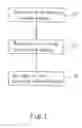
FIG. 1 is a flowchart showing a FPD package method according to a preferred embodiment of the present invention; and
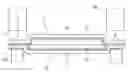
FIGS. 2A-2D are diagrams schematically showing the steps of a FPD package method according to a preferred embodiment of the present invention.
DETAILED DESCRIPTION OF THE PREFERRED EMBODIMENTS
Below are described in detailed the technical contents of the preset invention in cooperation with the drawings.
Refer to FIG. 1 a flowchart of a preferred embodiment of the present invention. The present invention proposes a flat panel display package method comprising steps:
- (a) preparing a display module (S1): fabricating a flat panel display and an electronic baseplate, wherein the electronic baseplate is assembled to the flat panel display and provides a driving signal for the flat panel display, and wherein the combination of the flat panel display and the electronic baseplate forms a display module and defines a module package plane;
- (b) covering the display module (S2): respectively providing a first package film and a second package film for the flat panel display and the electronic baseplate, wherein the first package film and the second package film outside the module package plane are respectively defined to be a first join region and a second join region; and
- (c) hot pressing and packaging (S3): a hot-pressing machine applying a hot-pressing temperature and a hot-pressing pressure to bond the first and second join regions to prevent from external humidity.
The flat panel display may be an EPD (ElectroPhoretic display). The first package film covering the flat panel display needs a light transmittance of over 70% to present the pictures of the flat panel display. A first joiner adhesive is disposed between the first package film and the flat panel display, and a second joiner adhesive is disposed between the second package film and the electronic baseplate, whereby the first package film and the second package film are respectively firmly stuck onto the flat panel display and the electronic baseplate.
In this preferred embodiment, each of the first and second package films is a multi-layer film containing a soft plastic layer, a metal layer, etc. The soft plastic layer is made of PE (polyethylene), PA (polyamide), PET (polyethylene terephthalate), PU (polyurethane), PVA (polyvinyl alcohol), or polyester. The metal layer contains aluminum or copper, or the metal layer is a stainless-steel layer.
Refer to FIGS. 2A-2D diagrams schematically showing the package steps according to a preferred embodiment of the present invention. Refer to FIG. 1 also. As shown in FIG. 2A, in the step S1 of preparing a display module, the finished flat panel display 10 and the finished electronic baseplate 20 are assembled together to form the display module and electrically coupled to each other, and the display module defines a module package plane. As shown in FIG. 2B and FIG. 2C, in the step S2 of covering the display module, a roller 30 is used to respectively apply a first package film 11 and a second package film 21 uniformly onto the flat panel display 10 and the electronic baseplate 20 of the display module. Before the step S2, a first joiner adhesive 12 is coated onto a portion of the first package film 11 corresponding to the flat panel display 10, and a second joiner adhesive 22 is coated onto a portion of the second package film 21 corresponding to the electronic baseplate 20, whereby the first package film 11 and the second package film 21 are respectively stuck onto the flat panel display 10 and the electronic baseplate 20 firmly. The first joiner adhesive 12 is selected from the adhesives appropriate for the first package film 11 and the flat panel display 10, and the second joiner adhesive 22 is selected from the adhesives appropriate for the second package film 21 and the electronic baseplate 20. The second joiner adhesive 22 may be identical to or different from the first joiner adhesive 12. The size of each of the first and second package films 11 and 21 is greater than the module package plane. The portion of the first package film 11 outside the module package plane is defined to be a first join region 111, and the portion of the second package film 21 outside the module package plane is defined to be a second join region 211. Each of the first and second join regions 111 and 211 has a width of at least 1 mm.
As shown in FIG. 2D, in the step S3 of hot pressing and packaging, the semi-product of the step S2 is placed in a hot-pressing machine, and the hot-pressing machine may be a roller-type hot-pressing machine or a bar-type hot-pressing machine. In this preferred embodiment, the bar-type hot-pressing machine is adopted. The hot-pressing machine has a hot-pressing unit 40 arranged corresponding to the first join region 111 of the first package film 11 and the second join region 211 of the second package film 21. The hot-pressing unit 40 applies a hot-pressing temperature and a hot-pressing pressure to the first and second join regions 111 and 211. The hot-pressing temperature is between 75 and 95° C., and the hot-pressing pressure is between 0.8 and 1.2 kg/cm2, and the time for hot-pressing is between 7 and 13 seconds. Thereby, the first and second join regions 111 and 211 are sealed airtightly, and the flat panel display 10 and the electronic baseplate 20 are packaged inside the first and second package films 11 and 21.
In conclusion, the first package film and the second package film respectively cover the flat panel display and the electronic baseplate, whereby external humidity cannot enter the display module from the front side and back side of the display module. Further, the first and second join regions along the circumference of the display module are sealed airtightly with a hot-pressing method, whereby external humidity cannot enter the display module from the lateral sides. Thus, the flat panel display and electronic baseplate packaged inside the first and second package films are fully protected from the damage of external humidity.
From the abovementioned description, it is known that the present invention indeed possesses novelty and non-obviousness and meets the conditions for a patent. Thus, the Inventor files the application for a patent. It will be appreciated if the patent is approved fast.
The embodiments described above are only to exemplify the present invention but not to limit the scope of the present invention. Therefore, any equivalent modification or variation according to the spirit of the present invention is to be also included within the scope of the present invention.
Claims
What is claimed is:1. A flat panel display package method comprising steps:
preparing a display module: fabricating a flat panel display and an electronic baseplate, wherein said electronic baseplate is assembled to said flat panel display and provides a driving signal for said flat panel display, and wherein the combination of said flat panel display and said electronic baseplate forms the display module and defines a module package plane;
covering said display module: respectively providing a first package film and a second package film for said flat panel display and said electronic baseplate, wherein said first package film outside said module package plane and said second package film outside said module package plane are respectively defined to be a first join region and a second join region; and
hot-pressing and packaging: using a hot-pressing machine to apply a hot-pressing temperature and a hot-pressing pressure to bond said first join region and said second join region to prevent from external humidity.
2. The flat panel display package method according to claim 1, wherein said flat panel display is an electrophoretic display.
3. The flat panel display package method according to claim 1, wherein said first package film has a metal layer.
4. The flat panel display package method according to claim 3, wherein said metal layer of said first package film contains aluminum.
5. The flat panel display package method according to claim 1, wherein said first package film has a light transmittance of over 70%.
6. The flat panel display package method according to claim 1, wherein said second package film has a metal layer.
7. The flat panel display package method according to claim 6, wherein said metal layer of said second package film contains aluminum.
8. The flat panel display package method according to claim 6, wherein said metal layer of said second package film contains copper.
9. The flat panel display package method according to claim 6, wherein said metal layer of said second package film is a stainless-steel layer.
10. The flat panel display package method according to claim 1, wherein a first joiner adhesive is disposed between said first package film and said flat panel display.
11. The flat panel display package method according to claim 1, wherein a second joiner adhesive is disposed between said second package film and said electronic baseplate.
12. The flat panel display package method according to claim 1, wherein each of said first join region and said second join region has a width of at least 1 mm.
13. The flat panel display package method according to claim 1, wherein said hot-pressing temperature is between 75 and 95° C.
14. The flat panel display package method according to claim 1, wherein said hot-pressing pressure is between 0.8 and 1.2 kg/cm2.
15. The flat panel display package method according to claim 1, wherein time for said hot-pressing is between 7 and 13 seconds.
16. The flat panel display package method according to claim 1, wherein said hot-pressing machine is a roller-type hot-pressing machine.
17. The flat panel display package method according to claim 1, wherein said hot-pressing machine is a bar-type hot-pressing machine.
Images & Drawings included:


Sources:
- United States Patent and Trademark Office - verify current appl. status at the USPTO↗
Similar patent applications:
Recent applications in this class:
- » 20250171175 2025-05-29
AUTOMATED SYSTEMS AND METHODS FOR FOIL PACKAGING COMPONENTS - » 20250058915 2025-02-20
SYSTEM AND METHOD FOR BLISTER PACKAGING - » 20250026514 2025-01-23
PACKAGING DEVICE FOR INDIVIDUAL POUCH-PACKAGED PAD-TYPE COSMETIC PRODUCT - » 20230286685 2023-09-14
System and method for blister packaging - » 20220185516 2022-06-16
Automated furniture bagger and material therefor - » 20210362888 2021-11-25
Packaging apparatus for small piece goods and method for producing a blister tube comprising a plurality of blister bags - » 20210171226 2021-06-10
PACKAGE FORMING SYSTEMS AND RELATED METHODS - » 20210009291 2021-01-14
Cross seal devices for package forming systems and related methods - » 20200385154 2020-12-10
Adjustable tables for use in package forming systems and related methods - » 20190276170 2019-09-12
Method of manufacturing package structure