ROTARY BASTING BRUSH
US20100050355A1
2010-03-04
12/485,449
2009-06-16
Abstract:
A baster has an elongated handle and a rotary brush applicator mounted at an end of the elongated handle. The rotary brush applicator has a pivotally mounted horizontal spindle, and a plurality of flexible bristles are affixed to the horizontal spindle.
Interested in similar patents?
Get notified when new applications in this technology area are published.
Classification:
A46B7/10 » CPC main
Bristle carriers arranged in the brush body movably during use, i.e. the normal brushing action causing movement as a rotating cylinder
A46B9/00 » CPC further
Arrangements of the bristles in the brush body
A46B9/028 » CPC further
Arrangements of the bristles in the brush body; Position or arrangement of bristles in relation to surface of the brush body, e.g. inclined, in rows, in groups Bristle profile, the end of the bristle defining a surface other than a single plane or deviating from a simple geometric form, e.g. cylinder, sphere or cone
A46B2200/207 » CPC further
Brushes characterized by their functions, uses or applications; Brushes for applying products to surfaces in general Food brush, i.e. used in cooking for applying substances on the surface of the food
A46B9/02 IPC
Arrangements of the bristles in the brush body Position or arrangement of bristles in relation to surface of the brush body, e.g. inclined, in rows, in groups
Description
CROSS REFERENCE TO RELATED APPLICATION
This is a non-provisional application based on provisional application Ser. No. 61/132,048 filed 16 Jun. 2008.
BACKGROUND OF THE INVENTION
The invention described herein is a novel improvement to a well known cooking accessory. More particularly, it is basting device that incorporates a rotary brush applicator with a spoon-like reservoir to quickly and efficiently apply marinades, sauces or the like (hereinafter, liquids) to food.
Basting brushes have long been used during the cooking process to apply liquids to the surface of foods enhancing their flavor. Prior art shows numerous examples of basting brush devices comprised of various materials. A traditional embodiment is a thin flat wooden handle approximately 6″-8″ long with natural or synthetic bristles affixed to one end. A similarly arranged modem embodiment utilizes a heat resistant handle of plastic or metal and a heat resistant silicone rubber brush. Regardless of material makeup, both examples rely on the capillary action within the brush bristles to retain liquid as it is transferred from a vessel and applied to the surface of the food. This often proves tedious for a cook especially when large amounts of food or food surface area requires basting. Recently some manufacturers have added flexible grid-like inserts within silicone brushes to help retain more liquid. Though this improves the function slightly, the capacity of liquid retained by the insert is still too limited to be substantially effective.
BRIEF DESCRIPTION OF THE DRAWINGS
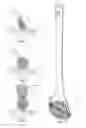
FIG. 1 is a side view of the preferred embodiment working end applying liquid to food
FIG. 2 is a side view of the working end of device without a spoon-like vessel
FIG. 3 is a side view section of the rotary brush applicator used with a pre-filled liquid dispenser
FIG. 4 is a ¾ view of the preferred embodiment
FIG. 5 is a top exploded view of the preferred embodiment showing inset pivot points
FIG. 6 is a ¾ exploded view showing a method of assembly
DETAILED DESCRIPTION
The preferred embodiment is comprised of a handled (1) spoon-like vessel (3) that communicates with a rotary brush applicator (2). Similar in size to traditional basting brush devices, this solution differs in that its spoon-like vessel (3) captures and retains more liquid than a typical basting brush. The rotary brush applicator (2) consists of a horizontal spindle (5) with a series of flexible bristles (4) extending outward in a perpendicular radial pattern. The rotary brush applicator (2) retains more liquid than a typical basting brush because it contains more bristles. Also, as it rotates, the rotary brush applicator (2) applies liquid captured within the spoon-like vessel (3) onto the food (6).
Materials and Fabrication: Injection and/or compression molded plastic, metal. The method of use is as follows: During the cooking process, the user intends to transfer a liquid from a container to the surface of the food (6). The working end of the device (7) is then submerged into said liquid. The user then removes the device in a way that captures a portion of the liquid within the spoon-like vessel (3). The device is brought to the food (6) and positioned (FIG. 1) such that the liquid pours from the spoon-like vessel (3) onto the food surface. As the liquid dispenses, the rotary brush applicator (2) is brought into contact with the food surface (6) and in a back and forth motion, facilitates even distribution of the liquid.
Though it is meant to fully describe the invention as described here, it can be reasonably assumed that those skilled in the art could modify or alter certain aspects without departing from its original spirit. For example, it is reasonable to assume the rotary brush applicator could in itself be considered a novel improvement to a basting device even without the said spoon-like vessel (FIG. 2). Another variation could be the addition of various less flexible projections (8) amongst the flexible bristles (4) to aid in the rotation of the rotary brush applicator (2). Still another novel variation could be to combine the rotary brush applicator (2) with a dispenser (FIG. 3) pre-filled with liquid (11). There may also be other ways to attach the rotary brush applicator (2) to the spoon-like vessel (3). For example, FIG. 2 shows a spindle (5) that communicates with two lateral pivot points (9) at either side of the rotary brush applicator (2), FIG. 5, FIG. 6 show a spindle that communicates with two pivot points (10) that are partially inset within a rotary brush applicator (2). Though not illustrated, single central pivot point might also be used.
Parts and Descriptions List
- 1-Handle
- 2-Rotary Brush Applicator
- 3-Spoon-like Vessel
- 4-Flexible Bristle
- 5-Horizontal Spindle
- 6-Food Surface
- 7-Working End of Device
- 8-Projections
- 9-Lateral Pivot Points
- 10-Inset Pivot Points
- 11-Liquid
Claims
What is claimed is:1. A baster comprising:
an elongated handle; and
a rotary brush applicator mounted at an end of the elongated handle, where the rotary brush applicator defines a pivotally mounted horizontal spindle, where a plurality of flexible bristles are affixed to said horizontal spindle.
2. The baster of claim 1, where a spoon-like vessel is mounted proximate to the rotary brush applicator, the spoon-like vessel defining an open end and a concave closed end.
3. The baster of claim 2, where the rotary brush is pivotally mounted within the spoon-like vessel.
4. The baster of claim 1, where the rotary brush is removably mounted at an end of the elongated handle.
5. The baster of claim 1, where less flexible projections are affixed amongst the flexible bristles.
6. A baster comprising:
an elongated handle;
a rotary brush applicator mounted at an end of the elongated handle, where the rotary brush applicator defines a pivotally mounted horizontal spindle, where a plurality of flexible bristles are affixed to said horizontal spindle; and
a spoon-like vessel mounted proximate to the rotary brush applicator, where the spoon-like vessel defines an open end and a concave closed end.
7. The baster of claim 6, where the rotary brush is pivotally mounted within the spoon-like vessel.
8. The baster of claim 6, where the rotary brush is removably mounted at an end of the elongated handle.
9. The baster of claim 6, where less flexible projections are affixed amongst the flexible bristles.
10. A baster comprising:
an elongated handle;
a rotary brush applicator removably mounted at an end of the elongated handle, where the rotary brush applicator defines a pivotally mounted horizontal spindle, where a plurality of flexible bristles are affixed to said horizontal spindle; and
a spoon-like vessel mounted proximate to the rotary brush applicator, where the spoon-like vessel defines an open end and a concave closed end, where the rotary brush is pivotally mounted within the spoon-like vessel.
11. The baster of claim 10, wherein less flexible projections are affixed amongst the flexible bristles.
12. A baster comprising:
an elongated handle;
a rotary brush applicator removably mounted at an end of the elongated handle, where the rotary brush applicator defines a pivotally mounted horizontal spindle, where a plurality of flexible bristles are affixed to said horizontal spindle, where less flexible projections are affixed amongst the flexible bristles; and
a spoon-like vessel mounted proximate to the rotary brush applicator, where the spoon-like vessel defines an open end and a concave closed end, where the rotary brush is pivotally mounted within the spoon-like vessel.
13. The baster of claim 12, wherein less flexible projections are affixed amongst the flexible bristles.
Images & Drawings included:



Sources:
- United States Patent and Trademark Office - verify current appl. status at the USPTO↗
Similar patent applications:
- » 20100154155
ROTARY BASTING BRUSH
Recent applications in this class:
- » 20160227914 2016-08-11
Mounting device for a drum in a shaft of a brush roller and a drum segment, a drum and a brush roller - » 20150342333 2015-12-03
Rotatable roll brush - » 20120167329 2012-07-05
DEVICE FOR CLEANING A FUNCTIONAL SURFACE FOR GUIDING OR TREATING A MATERIAL WEB - » 20100307519 2010-12-09
Hairbrush - » 20100236571 2010-09-23
Environmentally safe hairbrush with automatically disentangling removable handle, magnetic rollers and removable bristles - » 20100154155 2010-06-24
ROTARY BASTING BRUSH - » 20090255071 2009-10-15
Rotatable scrub brush - » 20070174979 2007-08-02
Bristle unit used for toothbrush and implanting method thereof - » 20060282964 2006-12-21
Motorized broom and collector - » 20050144745 2005-07-07
Toothbrush