Food utensil
US20100050441A1
2010-03-04
12/585,051
2009-09-01
✅ Patent granted
US 8,191,949 B2
2012-06-05
-
-
Saul Rodriguez | Gabriela Puig
2030-02-02
Abstract:
The food utensil is a scissor-like eating utensil that permits a user to retrieve snack foods from a container. The utensil comprises a pair of blades pivoted to each other. The blades have respective handles at one end and terminate with respective planar-configured forks at the other end. The dimensions of the blades, handles and forks are designed to enhance retrieval of snack foods from containers in a sanitary manner.
Inventors:
- Diana A. Spaulding 1 🇺🇸 Gumee, IL, United States
- Ronald E. Spaulding 1 🇺🇸 Gumee, IL, United States
Interested in similar patents?
Get notified when new applications in this technology area are published.
Classification:
B26B13/06 » CPC main
Hand shears; Scissors characterised by the shape of the blades
B26B13/22 » CPC further
Hand shears; Scissors combined with auxiliary implements, e.g. with cigar cutter, with manicure instrument
A47J43/283 » CPC further
Implements for preparing or holding food, not provided for in other groups of this subclass; Other culinary hand implements, e.g. spatulas, pincers, forks or like food holders, ladles, skimming ladles, cooking spoons; Spoon-holders attached to cooking pots Tongs; Devices for picking, holding or rotating food
B26B27/00 IPC
Hand cutting tools not provided for in the preceding groups, e.g. finger rings for cutting string, devices for cutting by means of wires
B66C1/00 IPC
Load-engaging elements or devices attached to lifting or lowering gear of cranes or adapted for connection therewith for transmitting lifting forces to articles or groups of articles
B66C1/00 IPC
Load-engaging elements or devices attached to lifting or lowering gear of cranes or adapted for connection therewith
Description
CROSS-REFERENCE TO RELATED APPLICATION
This application claims the benefit of U.S. Provisional Patent Application Ser. No. 61/136,416, filed Sep. 3, 2008.
BACKGROUND OF THE INVENTION
1. Field of the Invention
The present invention generally relates to eating utensils, and particularly to a food utensil that provides a scissor-like utensil having flat forks designed for retrieving snack foods.
2. Description of the Related Art
It is almost a given that snack foods will be made available whenever a gathering occurs and food and/or drinks are to be served. Parties, family dinners, business meetings and the like all often include snack foods, such as pretzels, peanuts, potato chips, popcorn, etc. In most instances, snack foods are served in containers (including original packaging) for retrieval by hand (thus the designation of finger-food). However, this method of retrieval creates the inconvenience of soiling the fingers of the retrievers. Furthermore, there is also the potential for contaminating the remaining food if harmful bacteria are transferred from the fingers to the food. A device that would prevent the occurrence of the above-described scenarios would be a welcome addition to the utensil art. Thus, a food utensil solving the aforementioned problems is desired.
SUMMARY OF THE INVENTION
The food utensil is configured as a scissor-like eating utensil that permits a user to retrieve snack foods from a container. The utensil comprises a pair of blades pivoted to each other. The blades each have handles at one end and terminate with respective planar-configured forks at the other end. The dimensions of the blades, handles and forks are designed to enhance retrieval of snack foods from containers in a sanitary manner. The utensil can be fabricated from any suitable (dishwasher-safe) non-toxic material.
Accordingly, the invention presents a utensil that allows a user to efficiently retrieve snack foods from a container without contacting the food with hands and/or fingers. The utensil is safe, easy to use and can be washed for reuse. The invention provides for improved elements thereof in an arrangement for the purposes described that are inexpensive, dependable and fully effective in accomplishing their intended purposes.
These and other features of the present invention will become readily apparent upon further review of the following specification and drawings.
BRIEF DESCRIPTION OF THE DRAWINGS
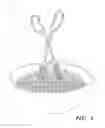
FIG. 1 is an environmental, perspective view of a food utensil according to the present invention.
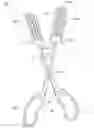
FIG. 2 is a perspective view of a food utensil according to the present invention.
FIG. 3 is a side view of a food utensil according to the present invention.
Similar reference characters denote corresponding features consistently throughout the attached drawings.
DETAILED DESCRIPTION OF THE PREFERRED EMBODIMENT
Referring to FIGS. 1-3, the food utensil 10 comprises blades 12 and 14 pivoted to each other at 16 approximately midway their length. The inner edges 12a, 14a are continuously planar or flat. The proximal ends of blades 12 and 14 terminate in respective handle members 18 and 20. Each handle member 18, 20 is provided with an ergonomically designed opening therethrough to enhance comfort. Each handle opening is dimensioned to permit manipulation of the utensil 10 with at least one finger per blade to pivot the blades 12, 14. The distal ends of blades 12 and 14 terminate in respective fork portions 22 and 24. Each fork includes respective tines 22a, 24a. Fork portions 22, 24 are configured to present planar or flat, parallel surfaces that are in abutment when the utensil is closed. The overall length of the utensil is approximately 7″. The lengths of the fork portions 22, 24 and the handle members 18, 20 are each approximately 2″ respectively. The width of each respective fork portion is 1″. It has been determined that these dimensions are optimal and permit the utensil to function as an extension of the users' fingers, although a food utensil 10 that varies from the above dimensions is within the scope of the invention as claimed. The planar or flat surfaces of the fork portions 22, 24 enhance the grasping of the snack food.
In use, the thumb and a finger (middle) are inserted in the openings in handle members 18 and 20. The utensil is opened in preparation to retrieve a snack morsel S from container C (FIG. 1). Closing the utensil will grasp a snack morsel between the planar or flat surfaces of fork portions 22, 24. The morsel can be retrieved without the users' hand ever contacting the snacks.
It is to be understood that the present invention is not limited to the embodiment described above, but encompasses any and all embodiments within the scope of the following claims.
Claims
We claim:1. A food utensil, comprising:
a pair of elongated blade members pivotally attached to each other, each of the blade members having a proximal end and a distal end;
a handle member disposed at the proximal end of each of the blade members, each handle member defining a finger hole therein;
a fork member disposed at the distal end of each of the blade members, the fork members having opposing planar surfaces.
2. The food utensil according to claim 1, wherein the blade members are pivotally attached to each other at substantially a midpoint of each of the blade members.
3. The food utensil according to claim 1, wherein each of the handle members is ergonomically designed.
4. The food utensil according to claim 1, wherein said pair of blade members is pivotally attached approximately midway between the distal end and the proximate end.
5. The food utensil according to claim 1, wherein said utensil has a length of approximately seven inches.
6. The food utensil according to claim 1, wherein each respective fork member has a length and a width, and wherein the length is about two inches and the width is about one inch.
7. The food utensil according to claim 1, wherein each of the respective handle members has a length of about two inches.
8. A food utensil, comprising:
a pair of elongated blade members pivotally attached to each other, each of the blade members having a proximal end, a distal end, and a flat inner edge;
a handle member disposed at the proximal end of each of the blade members, each handle member defining a finger hole therein; and
a fork member disposed at the distal end of each of the blade members, the fork members having opposing flat, planar surfaces.
9. The food utensil according to claim 8, wherein each handle member is ergonomically designed.
10. The food utensil according to claim 8, wherein said pair of blade members is pivotally attached approximately midway between said distal end and said proximate end.
11. The food utensil according to claim 8, wherein said utensil has a length of approximately seven inches.
12. The food utensil according to claim 8, wherein each said respective fork member has a length of about two inches and a width of about one inch.
13. The food utensil according to claim 8, wherein each said handle member has a length of about two inches.
14. A food utensil, comprising:
a pair of elongated blade members pivotally attached to each other, each of the blade members having a proximal end, a distal end and a flat inner edge, the pair of blade members being pivotally attached approximately midway between the distal end and the proximate end;
a handle member disposed at the proximal end of each of the blade members, each of the handle members having a length of approximately two inches and defining an ergonomically designed finger hole therein;
a fork member disposed at the distal end of each of the blade members, the fork members having opposing flat, planar surfaces.
15. The food utensil according to claim 14, wherein the utensil has a length of approximately seven inches.
16. The food utensil according to claim 14, wherein each said fork member has a length of about two inches and a width of about one inch.
Images & Drawings included:


Sources:
- United States Patent and Trademark Office - verify current appl. status at the USPTO↗
Similar patent applications:
- » 20140349257
Smart watch and food utensil for monitoring food consumption - » 20230031341
SNACK-LIKE FOOD UTENSIL - CHOOON - » 20090250956
Food utensil - » 20190142193
Food utensil having a releasable decorative attachment - » 20220218156
Articulating food utensil - » 20050173936
Food utensil - » 20120097571
Food Packaging System with Separable Food Utensils - » 20100133268
Fast Food Utensil - » 20120318795
Gasket for a utensil for cooking food and a utensil provided with such a gasket - » 12626428
Food clip utensil
Recent applications in this class:
- » 20250178222 2025-06-05
SCISSORS COMPRISING A SLIT - » 20250144828 2025-05-08
SCISSORS TOOL AND TOOL GROUP - » 20240335961 2024-10-10
Cable Tie-Cutting Device - » 20220126466 2022-04-28
HAIRDRESSING SCISSORS - » 20210114240 2021-04-22
Hair-cutting shears - » 20180354145 2018-12-13
Cutting tool with a flat force profile - » 20180319025 2018-11-08
SCISSORS - » 20170028573 2017-02-02
Systems and methods for zip-tie cutting - » 20150306776 2015-10-29
Scissors for accessing an acute angle between sewn layers of material - » 20150128423 2015-05-14
SCISSORS APPARATUS FOR SPECIAL SNIPPING