Synthesis of methyl nonactate derivatives
US20100056779A1
2010-03-04
12/441,140
2007-09-11
✅ Patent granted
US 8,153,817 B2
2012-04-10
WO; PCT/US2007/078095; 20070911
WO; WO2008/035793; 20080320
Susannah Chung
2028-01-25
Abstract:
Methyl nonactate is converted into a variety of different triazoloamide antibacterial agents by a reaction scheme involving (1) inversion of the secondary alcohol of the methyl nonactate to produce the corresponding azidoester, (2) converting the azido ester to the corresponding azidoamide, and (3) converting the azido group of the azidoamide to a triazole to produce the corresponding triazoloamide.
Inventors:
- Stephen C. Bergmeier 7 🇺🇸 Athens, OH, United States
- Nigel D. Priestley 1 🇺🇸 Alberton, MT, United States
Assignee:
- OHIO UNIVERSITY 222 🇺🇸 Athens, OH, United States
Interested in similar patents?
Get notified when new applications in this technology area are published.
Classification:
C07D405/14 » CPC further
Heterocyclic compounds containing both one or more hetero rings having oxygen atoms as the only ring hetero atoms, and one or more rings having nitrogen as the only ring hetero atom containing three or more hetero rings
C07D405/06 » CPC main
Heterocyclic compounds containing both one or more hetero rings having oxygen atoms as the only ring hetero atoms, and one or more rings having nitrogen as the only ring hetero atom containing two hetero rings linked by a carbon chain containing only aliphatic carbon atoms
C07D413/14 IPC
Heterocyclic compounds containing two or more hetero rings, at least one ring having nitrogen and oxygen atoms as the only ring hetero atoms containing three or more hetero rings
C07D249/00 IPC
Heterocyclic compounds containing five-membered rings having three nitrogen atoms as the only ring hetero atoms
Description
CROSS-REFERENCE TO RELATED APPLICATION
This application claims the benefit of U.S. provisional patent application Ser. No. 60/843,856, entitled SYNTHESIS OF METHYL, NONACTATE DERIVATIVES and filed Sep. 12, 2006, the entire disclosure of which is fully incorporated herein by reference.
BACKGROUND AND SUMMARY
Nonactin is a macrotetrolide natural product that Promiliad Biopharma isolates from Streptomyces fermentation. While nonactin itself has a number of uses, it can be readily converted to methyl nonactate by methanolysis (e.g., reaction with methanol and HCl). In accordance with this invention, methyl nonactate can be converted into distinct classes of antibacterial agents, namely triazoloamides and triazolocarboxylates, according to the following general reaction schemes
DETAILED DESCRIPTION
The Triazoloamides
In accordance with one aspect of this invention, methyl nonactate is converted into a variety of different triazoloamide antibacterial agents by a reaction scheme involving
- (1) inversion of the secondary alcohol of the methyl nonactate to produce the corresponding azidoester,
- (2) converting the azido ester to the corresponding azidoamide, and
- (3) converting the azido group of the azidoamide to a triazole to produce the corresponding triazoloamide.
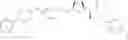
A particular example of this reaction scheme is given below:
An example of each synthesis that can be used in this reaction scheme is given below:
Synthesis of 2 (Tosylate). To a solution of methyl nonactate, 1, (100 mg, 0.46 mmol) in DCM (1 mL) pyridine (0.11 mL, 1.38 mmol) was added followed by tosyl chloride (0.13 g, 0.69 mmol) under inert atmosphere and stirred in room temperature for 24 h. The reaction mixture was concentrated in vacuum and chromatographed (22% Ethylacetate-Hexane) to afford pure tosylate (130 mg, 84%).
Synthesis of 3 (Amidoester). Sodium azide (0.23 g, 3.5 mmol) was added to a solution of tosylate 2 (0.12 g, 0.35 mmol) in DMF (2 mL) and heated to 50° C. for 6 h. Reaction mixture was diluted with water (2 mL) and extracted with ethyl acetate (2×8 mL). Combined organic extract was washed with water (3×1 mL), NaHCO3 (2×2 mL) and brine (2×1 mL). Solvent was removed under vacuum and chromatographed (20% Ethyl acetate-Hexane) to afford pure azido ester 3 (80 mg, 94%).
Synthesis of 4 (Azidoacid). To a solution of azidoester 3 (0.8 g, 3.31 mmol) in THF-H2O (1:1, 16 mL) LiOH. H2O (1.4 g, 33.1 mmol) was added into it and stirred for 24 h in room temperature. Diluted with ethyl acetate and washed with 1% NaOH solution (2×4 mL). The combined aqueous extract was cooled to 0° C. and acidified with 2M HCl until acidic and extracted with ethyl acetate (2×15 mL), washed with brine (2×2 mL), dried over magnesium sulfate and concentrated to afford pure azidoacid 4 (0.45 g, 60%).
Synthesis of 5 (Azidoamide). Oxalyl chloride (0.8 mL, 9.34 mL) was added to a solution of azidoacid 4 (0.45 g, 1.87 mmol) benzene (6 mL) and the solution was heated to 50° C. for 2 h. Reaction mixture was concentrated in vacuum and the crude material (0.45 g, 98%) was used for the next step without any further purification. IR (Neat): 2976, 2939, 2877, 1790, 1456 Cm−1.
Poly vinyl pyridine (2% cross linked, 0.063 g, 0.6 mmol) was added to a solution of azido acid chloride (0.03 g, 0.12 mmol) in DCM (0.5 mL) and amine (0.12 mmol) was added into it. Resulting solution was stirred in inert atmosphere for 24 h. Ethyl acetate was added and filtered through a small pad of silica gel to afford the amide 5 (55-70% yield).
Synthesis of 6 (Triazoloamide). A solution of alkyne (110 mg, 0.051 mmol) in t-BuOH—H2O (1:1, 0.5 mL) was added to an azido amide 5 (16 mg, 0.046 mmol) and was shaken for 2 minutes in a mechanical shaker. Sodium ascorbate (1M, 0.014 mL, 0.014 mmol) followed by copper sulfate (1M, 0.046 ml, 0.046 mL) was added and was shaken additional 16-24 hours. Reaction mixture was diluted with ethyl acetate (15 mL), washed with aqueous ammonium hydroxide (1:1) solution (2×1 mL), brine (2×1 mL) and dried over magnesium sulfate. Removal of solvent under reduced pressure afforded the triazole product 6 (24 mg) in 96% yield.
Other analogous syntheses can be used in place of these particular syntheses. In addition, other specific reaction schemes for converting methyl nonactate to the desired triazoloamide via the corresponding azido ester and azido amide can also be used.
The triazoloamides of this invention have the general formula:
where R1, R2 and R3 may be, H, C1-C12 aliphatic or aromatic groups such as alkyl, alkenyl and the like, 5 or 6 membered rings, condensed polynuclear aliphatic or aromatic 5 or 6 membered rings, these rings optionally containing one or more N or O heteroatoms or both, such rings also being optionally substituted with various pendant groups including C1-C12 aliphatic and aromatic hydrocarbon groups, C1-C12 ethers and the like. Specific R1, R2 and R3 moieties are:
These triazoloamides exhibit significant antibacterial properties against a wide range of gram positive and gram negative bacteria. For example, at least one of these compounds demonstrated an MIC of 250 μM against B. subtilis (a gram positive bacteria). In comparison ampicillin, which is an antibiotic in wide therapeutic use, has an MIC of 100 μM in this screen. Preliminary tests also show that these compounds kill gram negative (E. coli) as well as gram positive bacteria. From a safety perspective, these compounds do not harm MCF-10 cells (normal cells).
Specific triazoloamides of this invention and their associated MIC values are:
| TABLE 1 |
| MIC Values of Selected Triazoloamides |
| Compound | MIC/μM |
| 250 | |
| 500 | |
| 1000 | |
| 1000 | |
| 1000 | |
| 2000 | |
| 2000 | |
| 2000 | |
| 4000 | |
| 4000 | |
The Triazolocarboxylates
In accordance with another aspect of this invention, methyl nonactate is converted into a variety of different triazolocarboxylate antibacterial agents by a reaction scheme involving
- (1) reducing the ester moiety of the methyl nonactate to produce the corresponding diol,
- (2) converting the primary alcohol moiety of the corresponding diol to an azido group to produce the corresponding azidoalcohol,
- (3) converting the remaining alcohol of the corresponding azidoalcohol to a carboxylate to produce the corresponding azidocarboxylate, and
- (4) converting the azido group of the corresponding azidocarboxylate to a triazole group to produce the target triazolocarboxylate
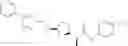
A particular example of this reaction scheme is given below:
Other analogous reaction schemes for converting methyl nonactate to the desired triazolocarboxylate via the corresponding diol, azidoalcohol and azidocarboxylate can also be used. In addition, the desired triazolocarboxylates can include other R1 and R2 groups including H, C1-C12 aliphatic or aromatic groups such as alkyl, alkenyl and the like, 5 or 6 membered rings, condensed polynuclear aliphatic or aromatic 5 or 6 membered rings, these rings optionally containing one or more N or O heteroatoms or both, such rings also being optionally substituted with various pendant groups including C1-C12 aliphatic and aromatic hydrocarbon groups, C1-C12 ethers and the like.
As in the case of the triazoloamides discussed above, these triazolocarboxylates are also believed to exhibit significant antibacterial properties against a wide range of gram positive and gram negative bacteria and also not to harm MCF-10 cells (normal cells).
Claims
1. A process for converting methyl nonactate into a triazoloamide antibacterial agent comprising
(1) inverting the secondary alcohol of the methyl nonactate to produce the corresponding azidoester,
(2) converting the azido ester to the corresponding azidoamide, and
(3) converting the azido group of the azidoamide to a triazole to produce the corresponding triazoloamide.
2. A triazoloamide of the formula
where R1, R2 and R3 are independently H, a C1-C12 aliphatic or aromatic group, a 5 or 6 membered ring, a condensed polynuclear aliphatic or a aromatic 5 or 6 membered ring, these rings optionally containing one or more N or O heteroatoms or both, such rings also being optionally substituted with various pendant groups including C1-C12 aliphatic and aromatic hydrocarbon groups, C1-C12 ethers and the like.
3. The triazole of claim 2, wherein
4. A process for converting methyl nonactate into a triazolocarboxylate antibacterial agent comprising
(1) reducing the ester moiety of the methyl nonactate to produce the corresponding diol,
(2) converting the primary alcohol moiety of the corresponding diol to an azido group to produce the corresponding azidoalcohol,
(3) converting the remaining alcohol of the corresponding azidoalcohol to a carboxylate to produce the corresponding azidocarboxylate, and
(4) converting the azido group of the corresponding azidocarboxylate to a triazole group to produce the target triazolocarboxylate
5. A triazolocarboxylate of the formula
wherein R1 and R2 are independently H, a C1-C12 aliphatic or aromatic group, a 5 or 6 membered ring, a condensed polynuclear aliphatic or a aromatic 5 or 6 membered ring, these rings optionally containing one or more N or O heteroatoms or both, such rings also being optionally substituted with various pendant groups including C1-C12 aliphatic and aromatic hydrocarbon groups, C1-C12 ethers and the like.
6. The triazolocarboxylate of claim 5, wherein R1 and R2 are independently selected from
Images & Drawings included:





Sources:
- United States Patent and Trademark Office - verify current appl. status at the USPTO↗
Recent applications in this class:
- » 20250282764 2025-09-11
IMIDAZOLE HETEROCYCLE BASED COMPOUNDS AND METHODS OF TREATING CANCER - » 20250179057 2025-06-05
MEK IMMUNE ONCOLOGY INHIBITORS AND THERAPEUTIC USES THEREOF - » 20250154135 2025-05-15
M-CHOLINE RECEPTOR AGONIST COMPOUND, PREPARATION METHOD THEREFOR AND USE THEREOF - » 20250115588 2025-04-10
RESOLVIN ANALOGS COMPOUNDS, METHODS AND USES THEREOF - » 20250084070 2025-03-13
PROCESS FOR THE SYNTHESIS OF 5-((2-METHYL-1H-IMIDAZOL-1-YL)METHYL)FURAN-2-CARBALDEHYDE AND OF NITRONES FROM 5-((2-METHYL-1H-IMIDAZOL-1-YL)METHYL)FURAN-2-CARBALDEHYDE - » 20250074900 2025-03-06
ISOINDOLINONE INHIBITORS OF THE MDM2-P53 INTERACTION AND PROCESS FOR MAKING THEM - » 20250051314 2025-02-13
SMALL MOLECULE INHIBITORS OF INTERFERON GAMMA SIGNALING - » 20250034121 2025-01-30
COMPOUNDS AND THEIR USES AS GPR183 INHIBITORS - » 20250011308 2025-01-09
CRYSTALLINE PHARMACEUTICAL AND METHODS OF PREPARATION AND USE THEREOF - » 20240383879 2024-11-21
Preparation method of lifitegrast and intermediate compounds thereof
Recent applications for this Assignee:
- » 20250195610 2025-06-19
METHODS FOR REGULATING FREE FATTY ACID FLUX USING FAT SPECIFIC PROTEIN 27 (FSP27) COMPOSITIONS - » 20250009842 2025-01-09
Methods for Regulating Muscle Performance using Fat Specific Protein 27 (FSP27) Compositions - » 20240269231 2024-08-15
Methods for treating cancers using fat specific protein 27 (FSP27) compositions - » 20240261369 2024-08-08
METHODS FOR REGULATING FREE FATTY ACID FLUX USING FAT SPECIFIC PROTEIN 27 (FSP27) COMPOSITIONS - » 20230338467 2023-10-26
METHODS AND COMPOSITIONS FOR TREATING CARDIOVASCULAR DISEASES USING FAT SPECIFIC PROTEIN 27 (FSP27) COMPOSITIONS - » 20230172189 2023-06-08
Methods for Extending the Shelf-life of Stored Donor Blood and/or Red Blood Cells and Treated Red Blood Cell Compositions Produced Thereby - » 20230129789 2023-04-27
Methods for regulating free fatty acid flux using fat specific protein 27 (FSP27) compositions - » 20230085176 2023-03-16
Peptide-based inhibitors of growth hormone action and methods of use thereof - » 20230059413 2023-02-23
Methods for treating cancers using fat specific protein 27 (FSP27) compositions - » 20220327737 2022-10-13
Determining position using computer vision, lidar, and trilateration