RECEIVER ACTIONS AND IMPLEMENTATIONS FOR EFFICIENT MEDIA HANDLING
US20100080328A1
2010-04-01
12/518,214
2007-11-28
Abstract:
A receiver includes a detector for detecting a change in source of incoming media during an on-going communication session, and means to provide a reset signal in order to reset decoder states of a decoder in response to such a detected change before decoding new incoming media. In this way, a state mismatch can be avoided without the need for several active decoder instances in the receiver, leading to substantial savings with respect to overall complexity, memory usage and power consumption. This also means that media distortions can be eliminated or at least reduced when the decoded media is finally rendered by a player.
Inventors:
- Ingemar Johansson 40 🇸🇪 Lulea, Sweden
- Daniel Enström 22 🇸🇪 Gammelstad, Sweden
- Tomas Frankkila 35 🇸🇪 Lulea, Sweden
Interested in similar patents?
Get notified when new applications in this technology area are published.
Classification:
G10L19/005 » CPC further
Speech or audio signals analysis-synthesis techniques for redundancy reduction, e.g. in vocoders; Coding or decoding of speech or audio signals, using source filter models or psychoacoustic analysis Correction of errors induced by the transmission channel, if related to the coding algorithm
H04L65/1089 » CPC further
Network arrangements, protocols or services for supporting real-time applications in data packet communication; Session management; In-session procedures by adding media; by removing media
H04L65/80 » CPC further
Network arrangements, protocols or services for supporting real-time applications in data packet communication Responding to QoS
G10L19/24 » CPC further
Speech or audio signals analysis-synthesis techniques for redundancy reduction, e.g. in vocoders; Coding or decoding of speech or audio signals, using source filter models or psychoacoustic analysis using predictive techniques; Vocoder architecture; Vocoders using multiple modes Variable rate codecs, e.g. for generating different qualities using a scalable representation such as hierarchical encoding or layered encoding
H04B1/10 IPC
Details of transmission systems, not covered by a single one of groups - ; Details of transmission systems not characterised by the medium used for transmission; Receivers Means associated with receiver for limiting or suppressing noise or interference
G06F15/16 IPC
Digital computers in general ; Data processing equipment in general Combinations of two or more digital computers each having at least an arithmetic unit, a program unit and a register, e.g. for a simultaneous processing of several programs
H04N5/00 IPC
Details of television systems
Description
TECHNICAL FIELD
The present invention generally relates to media technology in communication environments, and more particularly to actions and/or implementations on the receiver side for efficient media handling.
BACKGROUND
Modern communication systems support exchange of a wide variety of media between users, including voice, audio, video, text and images. Most so-called multimedia systems are based on the Internet Protocol (IP) technology. A particular example of such an IP-based system is the IP Multimedia Subsystem (IMS) [1], which allows advanced multimedia services and content to be delivered over broadband networks. For example, real-time user-to-user multimedia telephony (MMTel) services [2] will play a key role to satisfy the needs of different multimedia services.
By way of example, supplementary services will play an important role in modern communication systems such as IMS Multimedia Telephony (MMTel) systems, and it is important that such systems support the same or at least similar supplementary services that are found in traditional systems without causing performance degradations such as media distortions. Examples of supplementary services are calling line identification presentation, call on hold, conferencing and announcements. For example, announcements may be generated by the communication network or by the remote user's switchboard or computer.
Usage examples of announcements from the communication network include:
-
- Error messages when the command that the user has initiated cannot be completed. For example: when the caller has suppressed presentation of the phone number and the answerer has defined that he will not answer calls without seeing the phone number, then the system must present an error message to the caller.
- When user A puts the session on hold the system may play a message about this to user B.
- In a conference call, the conference server may present an announcement when a new user enters or when a user leaves the session, for example: “John Smith has entered the meeting” and “John Smith has left the meeting”.
- A user has a pre-paid subscription that is running empty. The operator can restrict the usage due to a low amount and wants to announce that at session start or during the session (it might be a very long session).
- A method that is used more and more on the Internet is to present an image with a pin code (or password) on a web page. The image of the pin code is distorted so much that automatic text recognition systems should not be able to detect the pin code while it should still be possible for a clever human to read the letters and numbers. This is used instead of sending the corresponding pin code with an (insecure) e-mail.
Usage examples of announcements from the answerer are:
-
- A user calls a travel agency to book a ticket. The following scenario is likely:
- 1. The user talks with a travel agent to find the best traveling option. In this step, the discussion is between two humans.
- 2. After deciding on the travel, the user is requested to key in his credit card number. This is a man-machine communication where the user hears pre-recorded or machine-generated messages and presses the telephone buttons (0-9) to insert his numbers. In this process the following sentence probable: “Key in your credit card number”, “You have entered: 1234 5678 9012 3456. If this is correct then press 1, if not then press 2.”, “Insert the expiration date of your credit card”, “You have entered: Jan. 1, 2007”. These sentences will be generated by the announcement server.
- 3. After keying in the credit card number and other required data, the session continues with the travel agent in order to decide on further travel options.
- 4. These steps may be repeated multiple times.
Compared to traditional communication systems, the conditions and requirements for handling media will change dramatically in modern multimedia communication systems, and there is thus a general need to provide solutions for efficiently handling media in such communication systems.
SUMMARY
The present invention overcomes these and other drawbacks of the prior art arrangements.
It is a general object of the present invention to improve the handling of media in a (multimedia) communication system.
In particular it is desirable to support supplementary services while eliminating or reducing media distortions on the receiver side in a highly cost-efficient manner.
It is a specific object to provide an improved method and system for reducing media distortions in a receiver equipped with a decoder for decoding incoming media streams.
It is another specific object to provide an improved receiver for use in a (multimedia) communication system.
These and other objects are met by the invention as defined by the accompanying patent claims.
It has been recognized by the inventors that the use of different encoder instances during a communication session may lead to a state mismatch in the decoder on the receiver side, resulting in distortions that may be annoying to the end-user. As an example, this may happen when media from a new media source is inserted in the communication session, e.g. when switching from one media source to another, or when media from a new source is added to an existing media stream.
A basic idea of the invention is therefore to detect a change in source of incoming media during an on-going communication session, and reset decoder states of the decoder in response to such a detected change before decoding new incoming media. In this way, the state mismatch can be avoided without the need for several active decoder instances in the receiver, leading to substantial savings with respect to overall complexity, memory usage and power consumption. This also means that media distortions can be eliminated or at least reduced when the decoded media is finally rendered.
Preferably, the detection mechanism is configured for detecting that media from a new media source is inserted in the communication session, e.g. when switching from one media source to another, or when media from a new source is added to the existing media stream. In general, however, a change in source can be a switch between sources, addition of a source and/or removal of a source.
In other words, the receiver is configured for detecting a potential state mismatch in the decoder during an on-going communication session, and for resetting the decoder in response to a detected potential state mismatch to thereby avoid the state mismatch.
In an intimately related aspect of the invention, the sending side enforces a decoder reset on the receiving side in preparation of media from a new source by sending a predefined signal pattern. On the receiving side this means that during an on-going communication session involving reception of media from a first media source the receiver will receive a predefined signal pattern in preparation of subsequent reception of media from a second different media source. The decoder will then be reset in response to the predefined signal pattern before initiating decoding of media from the second media source.
The invention is particularly applicable in modern communication systems for supplementary services such as announcements, call-on-hold and conference services.
Other advantages offered by the invention will be appreciated when reading the below description of embodiments of the invention.
BRIEF DESCRIPTION OF THE DRAWINGS
The invention, together with further objects and advantages thereof, will be best understood by reference to the following description taken together with the accompanying drawings, in which:
FIG. 1 is a schematic diagram illustrating a basic example of switch between different media sources.
FIG. 2 is a schematic diagram illustrating a basic example of addition/removal of a contributing source for a mixed media stream.
FIG. 3 is a schematic diagram illustrating distortions when the encoder states are reset while the decoder states are not reset.
FIG. 4 is a schematic diagram illustrating distortions when the decoder states are reset while the encoder states are not reset.
FIG. 5 is a schematic flow diagram of a basic method according to an exemplary embodiment of the invention.
FIG. 6 is a schematic block diagram primarily illustrating a receiver according to an exemplary embodiment of the invention.
FIG. 7 is a schematic flow diagram of a method according to another exemplary embodiment of the invention.
FIG. 8 is a schematic block diagram primarily illustrating a receiver according to a further exemplary embodiment of the invention.
FIG. 9 is a schematic flow diagram of a method according to yet another exemplary embodiment of the invention.
DETAILED DESCRIPTION OF EMBODIMENTS
Throughout the drawings, the same reference characters will be used for corresponding or similar elements.
A careful analysis by the inventors has revealed that existing solutions suffer from one or more problems. In particular, it has been recognized that encoding the media with different instances of the encoder while using the same decoder will normally lead to a state mismatch in the decoder, resulting in significant distortions when the decoded media is rendered.
A main problem is that the media is encoded with different instances of the encoder while the decoder is the same. The reason for using the same decoder is because of complexity limitations and/or memory limitations and/or power consumption. In the example illustrated in FIG. 1 it is considered that one type of media is produced with a sender/encoder 10, denoted A, and this media is transmitted to a receiver/decoder 20, denoted B, in e.g. a VoIP session. During the session the media from sender/encoder 10, A, is replaced by the media encoded by a sender/encoder 30, denoted X. In short, media produced at A is sent to B, and then replaced at least temporarily by media from X.
As illustrated in FIG. 2, there may be a similar problem in a communication session between a sender/encoder 10, denoted A, and a receiver/decoder 20, denoted B, when media from a sender/encoder 30, denoted X, is added as a new contributing source to a mixed media stream by an intermediate mixer 40. In the particular example of media communication based on the Real-time Transport Protocol (RTP) [3], there are two fields in the header of an RTP data packet that are of particular importance to media stream communication, namely the SSRC and CSRC fields. SSRC stands for Synchronization Source and identifies a unique RTP sender. CSRC stands for Contributing Source or Content Source and identifies the contributing source(s) of the mixed media payload. If there are multiple contributing sources, the payload is the mixed data from these sources. With reference to FIG. 2, it can be seen that each of the media sources A and X may send an individual media stream to the mixer 40 with an SSRC that corresponds to the payload source. The mixed media stream from the mixer 40 has an SSRC that corresponds to the mixer, and the CSRC values identify the contributing sources A and X of the mixed media stream to B. In analogy, a contributing source may of course also be removed from a mixed media stream.
There is also the possibility that the mixer (or application server) drops one of the sources and just forwards the other one to the receiver. Another possibility is that both streams go all the way to the receiver and the receiver has to choose which one to present to the listener.
Although switching of encoder instances works in existing circuit switched systems today, this works well because the used codecs are typically PCM [4] or ADPCM [5]. These codecs are sample-by-sample codecs which either do not use any prediction (PCM) or very limited amount of prediction (ADPCM). This means that the decoder will recover very rapidly from a state mismatch and the likelihood that this will cause an audible or otherwise perceivable distortion is low.
If one would use a codec that relies more on prediction and states, for example AMR [6] or AMR-WB [7], then switching between two encoders will cause a state mismatch in the decoder. For example, when switching from speech media from an encoder A to the media from an encoder X, the decoder states are the same as in the encoder A at the switching instant while the states in the encoder X will start from the initialization states. A similar state mismatch will occur if a switch is made back to the media from encoder A.
A further problem with a multi-rate codec such as AMR is that the speech from encoder A may very well be encoded with a lower rate codec mode, for example AMR 5.9 kbps, while the media from encoder X may very well be encoded with a higher rate codec mode, for example AMR 12.2 kbps. In this case, there is not only a state mismatch, but also a codec mode mismatch. Another example involves switching between codecs, for example between AMR and EVRC or between AMR and AMR-WB, representing a codec mismatch.
The states are very important for modern low-rate speech codecs since states are necessary in order to achieve good compression ratio while still providing good speech quality. A state mismatch can cause distortions that are more or less audible depending on the current content. In order to reduce the quality impact, it is therefore important to handle the media properly. In particular, the use of modern prediction-based codecs will normally lead to state mismatches, e.g. when an announcement interrupts the normal media, resulting in audible or otherwise perceivable distortions that may also be annoying to the user. Inter-frame prediction is used in many modern codecs, such as AMR or AMR-WB, in order to reduce the bit rate, i.e. to obtain a high compression ratio, while still providing good quality. The inter-frame prediction requires that states are passed from frame to frame. When an announcement interrupts the normal media, there will be a state mismatch since two different instances of the codec is used, one codec instance in UE A for the speech media from the user and one codec instance in the announcement server. The states in UE A have evolved according to the used prediction while the states in the announcement server start from the initialization states. A state mismatch can cause distortions that are more or less audible depending on the current content. Two examples of such distortions are shown in FIG. 3 and FIG. 4. The distortions are in both cases clearly audible and are easily noticeable by the listener but the spikes in FIG. 3 are much more annoying.
From FIGS. 3 and 4 it can also be seen that it takes about 100-200 ms for the synthesis to recover after an asynchronous reset. A state-less codec such as PCM would instead recover immediately since there is no need to “build up” the states to the proper content.
This problem is not limited to speech. Similar problems occur also for general audio and for video. For these cases, one can in some cases expect even larger problems since these codecs typically has a larger compression ratio than speech codecs and to achieve this compression ratio they rely even more on good quality states.
As mentioned, a switch of encoder instances will occur when media from a given encoder is interrupted and replaced by an announcement encoded by a different encoder, a switch will occur when the announcement starts, another switch will occur when the announcement ends and/or the switch is made back to the original encoder instant. The announcement may be encoded “on the fly” or it may exist as prerecorded material, from a receiver viewpoint this does not make any difference though.
A state mismatch may also occur in call-on-hold situations. The state mismatch problem in call on hold scenarios can be illustrated as
-
- 1. User A has a conversation with user B and both UEs are in send-receive state.
- 2. User A puts user B on hold. UE A will enter send-only state and UE B will enter receive-only state.
- 3. User A sets up a conversation with user C and both UEs are in send-receive state. User B might get an announcement or music on hold from X meanwhile, or might be muted.
- 4. User A resumes conversation with user B. Both UE A and UE B are in send-receive state.
In addition to the problem in B when media from A is interrupted by an announcement or music on hold, the above scenario also gives a few potential problems in the transition from step 3 to step 4.
-
- 1. The UE of User A has received packets from the UE of User C, and will all of a sudden get packets from the UE of User B. If the two streams C→A and B→A are decoded with two different decoder instances, this is normally a small problem. If on the other hand the two streams share a single decoder instance this gives a potential risk for severe state mismatch unless the decoder is reset.
- 2. The UE of User B may have received DTX SID update packets from the UE of User A, call announcement or music on hold, or nothing. This means that the decoder might be in a complete mute state or in another unknown state. If the music on hold or announcement is handled by a separate decoder instance the problem is normally limited, if on the other hand only one decoder instance is used then again severe state mismatch problems will often occur.
The issue of only one decoder instance is especially important in cellular applications where the complexity and physical size issue is a key factor.
A basic idea according to an exemplary technology is to detect a potential state mismatch in the decoder during an on-going communication session, and reset the decoder to avoid the state mismatch, or at least reduce the distortion.
FIG. 5 is a schematic flow diagram of a basic method according to an exemplary embodiment of the invention. The method is based on detecting a change in source of incoming media during an on-going communication session (S1). In response to such a detected change, decoder states of the decoder are reset before decoding new incoming media (S2). In this way, the state mismatch can be avoided, or the distortion may at least be reduced, without the need for several active decoder instances in the receiver. This leads to reduced media distortions when the decoded media is finally rendered, and also results in substantial savings with respect to overall complexity, memory usage and power consumption. In general, resetting the decoder means that the considered decoder states are set to some well-defined initialization states.
FIG. 6 is a schematic block diagram primarily illustrating a receiver according to an exemplary embodiment of the invention. Basically, the incoming media may originate from several media sources, and a change in source may for example be a switch of media source, or the addition or removal of a media source from an existing media stream. The receiver 100 includes one or several buffers 110, a decoder 120, and a player 130, as well as a detector 140. The buffer(s) 110 such as a jitter buffer temporarily stores incoming data packets before they are sent to the decoder 120 for further processing. Variations in packet arrival time, so-called jitter, may occur because of network congestion, timing drift or route changes. A jitter buffer may then be used to equalize the delay variations by intentionally delaying arriving packets and forwarding the packets to the decoder in regular intervals. In this way, the end user experiences a clear connection with very little distortion. The detector 140 preferably monitors the incoming media stream, or the buffered media data, to detect a change in source of incoming media. Existing media frames in the buffer 110 are preferably successively output from the buffer, decoded and rendered, and the new media frames are buffered. The detector 140 then generates a reset signal for the decoder 120. In response to the reset signal, the decoder 120 is reset to its initialization states before starting decoding and rendering the new media frames.
It is advantageous to monitor one or more packet header fields and detect a change in a packet field between packets in the incoming media data stream, to monitor the media payload using signal classification algorithms or water-marking techniques to detect a change in source, or to monitor explicit control signaling such as SIP signaling.
Examples of suitable detection mechanism include detecting a change in packet header fields such as the SSRC and/or CSRC fields in RTP streams, detecting a change in call-on-hold state, and detecting a change in media encoding between packets in the incoming media data. Other examples will be described below.
It should also be understood that re-initialization of the jitter buffer associated with the decoder (so-called re-buffering) may be considered as a particular form of resetting of the decoder.
A particular application of the invention is VoIP (Voice over IP) in MMTel systems, but the invention can also be used for video and general audio codecs. In particular it is desirable to ensure that supplementary services such as call announcements, call on hold, Explicit Call Transfer (ECT) or other supplementary services where the media source is changed are reconstructed without any distortions or at least with as small distortions as possible in the receiver. For example, the receiver may detect that an announcement comes from a different source than the normal media (from UE A) and take appropriate actions to minimize (or at least reduce) the distortions. The receiver may also detect a transfer to/from call on hold, Explicit Call Transfer or other similar services, indicating a change in source of incoming media.
As described above, it is important to handle the media properly in order to minimize any annoying distortions. The handling of the actions to reduce the distortions is primarily done in the receiving end.
Examples of Detection of State Reset Triggers.
There are several ways to detect that a reset of the decoder is necessary for instance due to the start and end of an announcement or other change in source. Some detection methods are reliable and rely on some kind of signaling. Other detection methods are less reliable because they require detecting some kind of characteristics.
Examples of reliable methods include:
-
- The RTP header contains an SSRC (synchronization source) field which includes a random number from the source. If the SSRC field is changed then the receiver knows that the source is different.
- When the announcement media has ended, the SSRC value will switch back to the original SSRC value.
- It is possible to have media from multiple sources in one RTP packet. In this case, there will be one SSRC field and one or several CSRC (contributing source) fields. The encoder X, which encodes the announcement media, may choose to add its media to the RTP packet from encoder A, which means that it will add a CSRC value. When SSRC and/or CSRC changes, the receiver knows that the added media comes from a different source.
- When the announcement media has ended, the CSRC value will be removed from the subsequent RTP packets.
- The media from encoder A and the announcement server may also be encoded differently. For example: The media from encoder A may use AMR-WB (wideband AMR) and the media from the encoder X may use AMR (narrowband AMR).
- Different encoding is indicated by allocating different RTP Payload Types (PT) for the different configurations. This is also one reliable method to detect that the media comes from a different source.
- When the media from encoder X has ended, the original codec format will be used for media from encoder A.
- SIP signaling. In call on hold scenarios some of the parties will enter a send-only or receive-only state to later go back to a send-receive state. These transitions will then serve as an indication of a change in source.
- The media originating from the announcement server may be detected using signal classification algorithms.
- Some sort of announcement identifier can be included in the actual media using so-called media water-marking.
- An announcement server may also send an explicit signal to inform the receiver that it has started and when it has ended sending announcement media. One possibility is to use the Talk Burst Control (TBC) signaling [8] defined for PoC (Push-to-talk over Cellular) [9].
Examples of alternative methods include:
-
- The jitter characteristics will normally change when switching from media from encoder A to media from the encoder X since the encoder X resides in an announcement server. This is because the total jitter, perceived by the receiver, is the sum of the jitter over the uplink, the core network and the downlink. And when the media is sent from the announcement server the jitter from the uplink is not applicable since the media is not sent over this air interface.
- For similar reasons, one can also expect that the packet loss characteristics change.
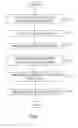
FIG. 7 is a schematic flow diagram of a method according to another exemplary embodiment of the invention. In this particular example, a change in media source during an on-going session is first detected (S11), and then existing media in the jitter buffer is decoded and played-out (S12). Optionally, the jitter buffer is re-initialized (S13). Media data from the new source is stored in the jitter buffer (S14). In response to the detection of a change in source, the decoder states are reset (S15) before decoding new media. Finally, the new media is decoded and played-out (S16).
FIG. 8 is a schematic block diagram primarily illustrating a receiver according to a further exemplary embodiment of the invention, similar to that of FIG. 6. In this particular example, however, the receiver 100 further comprises a unit 150 for re-initializing the jitter buffer(s). In addition, the player 130 is implemented as a more flexible and general rendering module, including optional functions such as fading, time-scaling and bandwidth extension and so forth for providing a smooth transition between media from different sources.
In the following, exemplary embodiments of the invention relating to actions when announcements or call on hold are detected will be described with exemplary reference to FIG. 9.
Upon detecting (S21) that the announcement media is received, or call on hold state is changed, examples of actions of the receiving entity (UE) include:
-
- Play-out or finalize (S22) the existing media frames from encoder A in the jitter buffer as soon as possible and buffer the announcement media (S24).
- The receiver may use time scaling in order to speed up the play-out of the media from encoder A.
- Before starting generating the announcement media, the decoder should be reset to the initialization states (S25). Once the decoder is reset, decoding of the new media can be initiated (S26).
- Re-initialize (S23) the jitter buffer (so called re-buffering).
- If the media encoded by encoder X is announcement media, it is not really real-time (real-time requirements don't apply to pre-recorded media) The receiver may buffer up more media in the jitter buffer before starting the play-out, thereby reducing the risk of late losses.
- The play-out of the media from encoder A should preferably use fade-out (reduce the volume gradually from the used (normal) volume to zero). The receiver should preferably use fade-in (increase the volume gradually from zero to the normal volume) for the announcement media (S28).
- The receiver can also monitor the regenerated signal before it is played out in order to detect any spikes so that they can be muted.
- Upon detecting that the speech media from encoder A and the announcement media use different acoustic bandwidths, for example encoded by AMR-WB (50-7000 Hz) and AMR (300-3400 Hz) respectively, the receiver should preferably use bandwidth extension (wideband extension) in order to produce a smooth transition (S27). Other similar procedures for providing a smooth transition between different media can also be envisaged for audio and video.
When there is no more announcement media being received, examples of actions of the receiving entity (UE) include:
-
- Play-out any announcement media still existing in the jitter buffer as soon as possible (S22).
- The receiver may use time scaling to speed up the play-out of the remaining announcement media.
- Reset the decoder before playing out media from encoder A (S25).
- Re-initialize the jitter buffer (re-buffering) (S23). This is especially important since there will normally be less jitter on the RTP packets from encoder X if it resides in a box in the network such as an announcement server than from encoder A, which means that the jitter buffer normally has adapted to a lower buffering level than it used for the RTP packets from encoder A. And then when switching back to the media from encoder A, the jitter buffer does not contain enough data to cope with the larger jitter that can be expected for the media from encoder A.
- A possible modification is to store the jitter buffer target level and adaptation states before switching to the announcement media and re-initialize the jitter buffer adaptation with the level and the states.
As previously described, the sending side may enforce a decoder reset on the receiving side in preparation of media from a new source by sending a predefined signal pattern. This means that during an on-going communication session involving reception of media from a first media source the receiver will receive a predefined signal pattern in preparation of subsequent reception of media from a second different media source. The decoder will then be reset in response to the predefined signal pattern before initiating decoding of media from the second media source. For example, upon switching back from a call on hold state the sending entity (UE) may transmit a codec homing frame or similar signal pattern (even a number of empty frames) and thereby enforce a decoder reset in the receiver.
Exemplary advantages of the invention:
-
- Distortions due to switching between media sources, addition and/or deletion of media sources are reduced and may even be completely removed. This gives a more pleasant transition between the media, e.g. when an announcement has to be generated for the receiving user.
- There is also a complexity advantage, both MIPS and memory, in the UE since the UE does not have to have several active codec instances executing in parallel.
The embodiments described above are merely given as examples, and it should be understood that the present invention is not limited thereto. Further modifications, changes and improvements which retain the basic underlying principles disclosed and claimed herein are within the scope of the invention.
ABBREVIATIONS
ADPCM Adaptive Differential PCM
AMR Adaptive Multi-Rate
AMR-WB AMR-WideBand
CSRC Contributing Source
DTX Discontinuous Transmission
ECT Explicit Call Transfer
EVRC Enhanced Variable Rate Codec
IMS IP Multimedia Subsystem
IP Internet Protocol
MIPS Million Instructions Per Second
MMTel Multi Media Telephony
PCM Pulse Code Modulation
PoC Push-to-talk over Cellular
RTP Real-Time Protocol
SID Silence Descriptor
SIP Session Initiation Protocol
SSRC Synchronization Source
TBC Talk-Burst Control
UE User Equipment
VoIP Voice over IP
REFERENCES
- [1] 3GPP TS 23.228, “IP Multimedia Subsystem (IMS), Stage 2”.
- [2] 3GPP TS 26.114. “IP Multimedia Subsystem (IMS); Multimedia Telephony; Media handling and interaction”.
- [3] RFC 3550, “RTP: A Transport Protocol for Real-Time Applications”, H. Schulzrinne, S. Casner, R. Frederick and V. Jacobson.
- [4] ITU-T Recommendation G.711, “Pulse Code Modulation (PCM) of Voice Frequencies”.
- [5] ITU-T Recommendation G.726, “40, 32, 24, 16 kbit/s Adaptive Differential Pulse Code Modulation (ADPCM)”.
- [6] 3GPP TS 26.071, “Mandatory Speech Codec speech processing functions; AMR Speech CODEC; General description”.
- [7] 3GPP TS 26.171, “Speech codec speech processing functions; Adaptive Multi-Rate—Wideband (AMR-WB) speech codec; General description”.
- [8] Open Mobile Alliance, “PoC User Plane”, Candidate Version 1.0—27 Jan. 2006, Chapter 6.5.
- [9] Open Mobile Alliance, “OMA PoC System Description”, Draft Version 2.0—21 Jun. 2006.
Claims
1. A method for reducing media distortions in a receiver having a decoder for decoding incoming media and a player for playing decoded media, said method comprising the steps of:
detecting, during an on-going communication session, a change in source of incoming media; and
resetting decoder states of said decoder in response to said detected change before decoding new incoming media.
2. The method of claim 1, wherein said step of detecting a change in source of incoming media includes the step of detecting that media from a new media source is inserted in the communication session.
3. The method of claim 1, wherein said step of detecting a change in source of incoming media includes the step of detecting a switch from a first media source to a second different media source, wherein said new incoming media includes media from said second media source.
4. The method of claim 3, wherein said switch from said first media source to said second media source involves a switch between user media from a remote user and announcement media from an announcement server.
5. The method of claim 1, wherein said step of detecting a change in source of incoming media includes the step of detecting a change in contributing source for a mixed media stream.
6. The method of claim 1, wherein said step of detecting a change in source of incoming media includes the step of detecting a change in a packet header field between packets in the incoming media data.
7. The method of claim 1, wherein said step of detecting a change in source of incoming media includes the step of detecting a change in call-on-hold state.
8. The method of claim 1, wherein said step of detecting a change in source of incoming media includes the step of detecting a change in media encoding between packets in the incoming media data.
9. The method of claim 1, further comprising the steps of: playing out existing media from a first source stored in a jitter buffer provided in connection with the decoder in the receiver; re-initializing said jitter buffer; buffering media from a second source in said jitter buffer, said buffered media ready for decoding once the decoder states have been reset.
10. The method of claim 9, wherein the existing media from said first source is played-out by using fade-out, and the media from said second source is played-out by using fade-in.
11. The method of claim 9, further comprising the step of applying a transition procedure to produce a smooth transition between media from said first source and media from said second source.
12. A system for reducing media distortions in a receiver having a decoder for decoding incoming media and a player for playing decoded media, said system comprising:
means for detecting, during an on-going communication session, a change in source of incoming media; and
means for resetting decoder states of said decoder in response to said detected change before decoding new incoming media.
13. The system of claim 12, wherein said means for detecting a change in source of incoming media includes means for detecting that media from a new media source is inserted in the communication session.
14. The system of claim 12, wherein said means for detecting a change in source of incoming media includes means for detecting a switch from a first media source to a second different media source, wherein said new incoming media includes media from said second media source.
15. The system of claim 14, wherein said switch from said first media source to said second media source involves a switch between user media from a remote user and announcement media from an announcement server.
16. The system of claim 12, wherein said means for detecting a change in source of incoming media includes means for detecting a change in contributing source for a mixed media stream.
17. The system of claim 12, wherein said means for detecting a change in source of incoming media includes means for detecting a change in a packet header field between packets in the incoming media data.
18. The system of claim 12, wherein said means for detecting a change in source of incoming media includes means for detecting a change in media encoding between packets in the incoming media data.
19. The system of claim 12, wherein said system further comprises: a jitter buffer provided in connection with said decoder for storing incoming media, said player being operable for playing out existing media from a first source already stored in said jitter buffer, means for re-initializing said jitter buffer; means for buffering media from a second source in said jitter buffer, said buffered media ready for decoding once the decoder states have been reset.
20. The system of claim 19, wherein said player is operable for playing out the existing media by using fade-out, and said player is operable for playing out the media from said second source by using fade-in.
21. The system of claim 12, wherein said system is implemented in said receiver.
22. A receiver having a decoder for decoding incoming media, said receiver being configured for detecting a potential state mismatch in said decoder during an on-going communication session, and for resetting decoder states of said decoder in response to a detected potential state mismatch to avoid the state mismatch or at least reduce distortion.
23. The receiver according to claim 22, wherein said receiver is configured for detecting a potential state mismatch in said decoder by detecting a change in source of incoming media during said on-going communication session.
24. The receiver according to claim 22, wherein said receiver is configured for detecting a potential state mismatch in said decoder by detecting a change in media encoding between packets in the incoming media data.
25. A method for reducing media distortions in a receiver having a decoder for decoding incoming media and a player for playing decoded media, said method comprising the steps of:
receiving, during an on-going communication session involving reception of media from a first media source, a predefined signal pattern in preparation of subsequent reception of media from a second different media source; and
resetting decoder states of said decoder in response to said predefined signal pattern before decoding media from said second media source.
Images & Drawings included:




Sources:
- United States Patent and Trademark Office - verify current appl. status at the USPTO↗
Recent applications in this class:
- » 20230128243 2023-04-27
AUGMENTING MULTIMEDIA STREAMING BY ANTICIPATING EVENTS USING ARTIFICIAL INTELLIGENCE - » 20230023431 2023-01-26
ADJUSTING RESOLUTION OF VIDEO STREAM BASED ON OPTICAL CHARACTER RECOGNITION - » 20220217192 2022-07-07
Synchronizing independent media and data streams using media stream synchronization points - » 20220109715 2022-04-07
Use of in-band metadata as basis to access reference fingerprints to facilitate content-related action - » 20220053044 2022-02-17
Retrieval and playout of media content - » 20220021721 2022-01-20
REMOTE MULTI-TARGET CLIENT MONITORING FOR STREAMING CONTENT - » 20210392180 2021-12-16
Device-side playback restrictions on high throughput networks - » 20210352126 2021-11-11
Visualization and interaction of 3D models via remotely rendered video stream system and method - » 20210329054 2021-10-21
Customizing media items for playback on alternative playback devices paired with a user device - » 20210329053 2021-10-21
Multimodal transfer between audio and video streams