STABLE ANHYDROUS CRYSTALLINE DOCETAXEL AND METHOD FOR THE PREPARATION THEREOF
US20100099897A1
2010-04-22
12/532,887
2008-04-10
Abstract:
The present invention provides a stable anhydrous crystalline docetaxel which has anti-tumor and anti-leukemia activity, and method for the preparation thereof.
Inventors:
- Young Kil Chang 22 🇰🇷 Seoul, South Korea
- Gwan Sun LEE 60 🇰🇷 Seoul, South Korea
- Gi-Jeong KIM 4 🇰🇷 Suwon-si, South Korea
- Eun Jung Lim 2 🇰🇷 Osan-si, South Korea
- Seung Hwan Cho 2 🇰🇷 Busan, South Korea
- Jaehyuk Jung 3 🇰🇷 Goyang-si, South Korea
- Namdu Kim 1 🇰🇷 Hwaseong-si, South Korea
- Woo Seob Shin 1 🇰🇷 Hwaseong-si, South Korea
- Youngho Moon 1 🇰🇷 Suwon-si, South Korea
Assignee:
- HANMI PHARM. CO., LTD 144 🇰🇷 Hwaseong-si, Gyeonggi-do, South Korea
Interested in similar patents?
Get notified when new applications in this technology area are published.
Classification:
A61P35/00 » CPC further
Antineoplastic agents
A61P35/02 » CPC further
Antineoplastic agents specific for leukemia
C07D305/14 » CPC main
Heterocyclic compounds containing four-membered rings having one oxygen atom as the only ring hetero atoms condensed with carbocyclic rings or ring systems
Description
FIELD OF THE INVENTION
The present invention relates to stable anhydrous crystalline forms of docetaxel and method for the preparation thereof.
BACKGROUND OF THE INVENTION
Docetaxel is a potent anti-tumor chemotherapeutic agent having a broad spectrum of anti-tumor and anti-leukemia activity, which has been approved as a commercially marketable therapeutic agent against ovarian cancer and breast cancer.
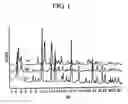
There have been recorded three major crystal forms of docetaxel: docetaxel trihydrate (a); docetaxel hemihydrate (b); and anhydrous docetaxel (c) whose powder X-ray diffraction spectra are shown in FIG. 1 (see, U.S. Pat. No. 5,723,635 and [Zaske L., Perrin M.-A., Leveiller F. J. Phys. IV France 11, Pr10-221 (2001)]). The docetaxel trihydrate form is currently marketed for commercial use.
U.S. Pat. No. 5,723,635 discloses a method for preparing docetaxel trihydrate using a mixture of methyl isobutyl ketone, acetone and water. However, this method requires the use of a special procedure, centrifugal partition chromatography.
In addition, U.S. Pat. No. 6,022,985 discloses a method for preparing docetaxel trihydrate by dissolving docetaxel in ethanol, dropwisely adding water to the resulting solution at 50° C. to induce crystallization and drying the crystallized docetaxel crystal for 48 hrs at 38° C. and 80% relative humidity under a pressure of 5.07 kPa. Also, U.S. Pat. No. 6,838,569 discloses a method for preparing docetaxel trihydrate by dissolving docetaxel in acetonitrile, dropwisely adding water to the resulting solution at 68° C. to induce crystallization and drying the crystallized docetaxel crystal for 36 hrs at 36° C. under a reduced pressure of 650 torr.
The above-mentioned methods have problems in that the residual solvent remaining in the final product is difficult to remove, and the content of the 7-epimer, i.e. 4-acetoxy-2α-benzoyloxy-5-β, 20-epoxy-1,7α,10β-trihydroxy-9-oxo-tac-11-en-13-α-yl(2R,3S)-3-t-butoxycarbonylamino-2-hydroxy-3-phenylpropionate is in the range of 0.4 to 0.8%, which must be further purified to meet the purity requirement that the 7-epimer content be 0.5% or less.
Therefore, the present inventors have endeavored to develop an anhydrous crystalline form of docetaxel having the 7-epimer content of 0.1% or less, which is non-hygroscopic and stable under a high temperature/humidity condition.
SUMMARY OF THE INVENTION
Accordingly, it is an object of the present invention to provide a stable anhydrous crystalline docetaxel and method for the preparation thereof.
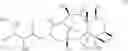
In accordance with one aspect of the present invention, there is provided an anhydrous crystalline form of docetaxel of formula (I):
wherein,
Ph is phenyl;
Ac is acetyl;
Bz is benzoyl; and
Boc is t-butoxycarbonyl.
In accordance with another aspect of the present invention, there is a method of preparing the compound of formula (I), which comprises the steps of:
(i) dissolving docetaxel in an organic solvent;
(ii) adding an anti-solvent to the resulting solution; and
(iii) recovering the resulting crystals.
BRIEF DESCRIPTION OF DRAWINGS
The above and other objects and features of the present invention will become apparent from the following description of the invention taken in conjunction with the following accompanying drawings, which respectively show:
FIG. 1: Powder X-ray diffraction spectra of docetaxel trihydrate (a), docetaxel hemihydrate (b), and anhydrous docetaxel (c); and
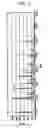
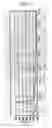
FIGS. 2 to 5: Powder X-ray diffraction spectra of the anhydrous crystalline docetaxel forms A, B, C and D, respectively.
DETAILED DESCRIPTION OF THE INVENTION
The anhydrous crystalline docetaxel of the present invention, which comprises 0.1% or less of 7-epimer and is non-hygroscopic, and stable under a high temperature/humidity condition, is suitable for use in treating tumor and leukemia.
The anhydrous crystalline docetaxel of the present invention can be prepared by dissolving docetaxel in an organic solvent; adding an anti-solvent to the resulting solution to induce crystallization; recovering the resulting crystals by filtration, and drying the docetaxel crystals under a reduced pressure.
The anhydrous crystalline form of docetaxel of the present invention may vary depending on the preparation procedure. According to the present invention, the anhydrous crystalline form of docetaxel of the present invention may be any one of anhydrous crystalline docetaxel forms A, B, C and D.
Specifically, in accordance with one aspect of the present invention, the X-ray diffraction spectrum of the anhydrous crystalline docetaxel form A shows major peaks having relative peak intensity (100×I/I0; I: the peak intensity; I0: the peak intensity of the maximum peak) of at least 56% at diffraction angles (2θ±0.1) of 4.64, 8.04, 9.24, 11.34, 12.54, 13.86, 15.52, 16.92, 18.48, 19.64, 20.40, 23.36, and 24.20 (see, Table 1 and FIG. 2).
In accordance with another aspect of the present invention, the X-ray diffraction spectrum of the anhydrous crystalline docetaxel form B shows major peaks having relative peak intensity (100×I/I0; I: the peak intensity; I0: the peak intensity of the maximum peak) of at least 100% at diffraction angles (2θ±0.1) of 4.88, 9.22, 9.72, 10.38, 11.30, 11.88, 13.34, 14.56, 15.14, 16.62, 17.28, 17.66, 19.02, 19.62, 19.86, 20.86, 21.86, 24.58, and 26.98 (see, Table 2 and FIG. 3).
In accordance with still another aspect of the present invention, the X-ray diffraction spectrum of the anhydrous crystalline docetaxel form C shows major peaks having relative peak intensity (100×I/I0; I: the peak intensity; I0: the peak intensity of the maximum peak) of at least 55% at diffraction angles (2θ±0.1) of 4.62, 8.22, 9.20, 10.64, 11.44, 12.42, 13.80, 14.20, 15.28, 17.28, 18.46, 20.62, and 21.86 (see, Table 3 and FIG. 4).
In accordance with a further aspect of the present invention, the X-ray diffraction spectrum of the anhydrous crystalline docetaxel form D shows major peaks having relative peak intensity (100×I/I0; I: the peak intensity; I0: the peak intensity of the maximum peak) of at least 50% at diffraction angles (2θ±0.1) of 4.06, 4.82, 7.58, 8.20, 9.84, 11.44, 12.76, 13.62, 14.16, 16.98, 19.18, 19.60, and 19.90 (see, Table 4 and FIG. 5).
The X-ray diffraction patterns of the anhydrous crystalline docetaxel forms A, B, C, and D, which are shown in FIGS. 2 to 5, respectively, are each distinctively different from that of the anhydrous docetaxel prepared by conventional method shown in FIG. 1-a. Also, the inventive anhydrous crystalline docetaxel exhibits markedly improved storage stability: for example, it does not undergo any significant degradation during a long term storage under a high temperature/humidity condition (temperature: 60±2° C. and relative humidity: 75±5%).
Docetaxel used as the starting material in the present invention may be prepared by the procedure shown in Reaction Scheme (I). The procedure comprises the steps of:
(i) allowing (2R,3S)—N-t-butoxycarbonyl-4-phenylisoserin methylester of formula (2) to react with 1-dimethoxymethyl naphthalene in an organic solvent in the presence of an acid catalyst to obtain the oxazolidine methyl ester derivative of formula (3), and hydrolyzing the compound of formula (3) in the presence of a base to obtain the oxazolidine acid derivative of formula (4);
(ii) subjecting the compound of formula (4) to a coupling reaction with the protected 10-deacetylbaccatin of formula (5) in a solvent in the presence of a condensation agent to obtain the oxazolidine side chain-bearing taxane of formula (6);
(iii) reacting the compound of formula (6) in an organic solvent in the presence of an acid to obtain the docetaxel of formula (7) having protected 7- and 10-hydroxy groups; and
(iv) removing the protected 7- and 10-hydroxy groups from the compound obtained in (iii).
The anhydrous crystalline form of docetaxel prepared by the method of the present invention may vary depending on the solvent used in the reaction. Also, the anhydrous crystalline docetaxel of the present invention has a high purity of 98% or higher, which comprises the 7-epimer impurity in an amount of less than 0.1%.
The organic solvent used in dissolving docetaxel may be an ether such as diethyl ether, diisopropyl ether or tetrahydrofuran; an ester such as ethyl acetate or methyl acetate; a ketone such as methyl ethyl ketone; a mixture of dichloromethane and methanol; a mixture of dichloromethane and acetonitrile. Preferably, the amount of the organic solvent used in the inventive reaction is in the range of 5 to 30 ml based on one gram of docetaxel.
According to the present invention, the crystal of the anhydrous crystalline docetaxel is prepared by adding an anti-solvent to a solution prepared by dissolving docetaxel in said organic solvent, in which the anti-solvent may be a C5-7 alkane, such as pentane, hexane or heptane. Preferably, the anti-solvent is used in this reaction in an amount ranging from 1 to 5-fold by volume based on the volume of the organic solvent.
The anhydrous crystalline docetaxel thus formed may be isolated by collecting the crystal by filtration, and drying the crystal at a temperature ranging from 20 to 80° C. under a reduced pressure ranging from 0.1 to 10 torr. The anhydrous crystalline form of docetaxel thus obtained meets the purity requirement set by International Conference on Harmonization (ICH) Guideline which strictly limits the amount of residual solvents.
The anhydrous crystalline docetaxel of the present invention is stable and does not undergo any significant degradation during a long term storage, e.g., 7 days, at 40° C. under a relative humidity of 25% to 50%, in contrast to the docetaxel trihydrate which undergoes at least 50% dehydration under a comparable condition.
The method for the present invention, this provides for the first time high-purity docetaxel having a low 7-epimer content and a high storage stability.
The following Examples are intended to further illustrate the present invention without limiting its scope.
Example 1
Preparation of Anhydrous Crystalline Docetaxel A (1)
1 g of docetaxel (HPLC Purity: 99.7%) was dissolved in 20 ml of ethyl acetate at room temperature, and 30 ml of n-hexane was dropwisely added thereto. The mixture was stirred for 12 hrs at room temperature, and the precipitate formed was filtered, and dried at 60° C. under a pressure of 0.1 torr for 24 hrs, to obtain 0.95 g of an anhydrous crystalline form of docetaxel (Yield: 95%).
HPLC Purity: 99.8%;
The 7-epimer content: 0.03%;
The content of the title compound: 99.8%;
Melting point: 196˜203° C.; and
Residual solvent: ethyl acetate (63 ppm), n-hexane (5 ppm or less).
The powder X-ray diffraction spectrum of the anhydrous crystalline docetaxel thus prepared showed major peaks having a relative peak intensity of at least 20% (100×I/I0: I; the intensity of the peak, and I0; the intensity of the maximum peak), as shown in FIG. 2 and Table 1. The present inventors named the anhydrous crystalline docetaxel thus obtained “anhydrous crystalline docetaxel A”.
| TABLE 1 | ||
| (2θ ± 0.1) | d | I/I0 (%) |
| 4.6400 | 19.0296 | 502 |
| 8.0400 | 10.9896 | 1000 |
| 9.2400 | 9.5630 | 386 |
| 11.3400 | 7.7967 | 347 |
| 12.5400 | 7.0532 | 213 |
| 13.1800 | 6.7119 | 45 |
| 13.8600 | 6.3841 | 221 |
| 15.5200 | 5.7049 | 149 |
| 16.9200 | 5.2359 | 194 |
| 18.4800 | 4.7971 | 120 |
| 19.6400 | 4.5164 | 135 |
| 20.4000 | 4.3498 | 85 |
| 22.8200 | 3.8937 | 26 |
| 23.3600 | 3.8049 | 69 |
| 23.8200 | 3.7325 | 30 |
| 24.2000 | 3.6748 | 56 |
| 26.8400 | 3.3190 | 30 |
| 28.4000 | 3.1401 | 43 |
| 30.8200 | 2.8988 | 34 |
| 32.1000 | 2.7861 | 26 |
| 2θ: the diffraction angle, | ||
| d: distance between crystal facets, and | ||
| I/I0: the relative peak intensity |
Example 2
Preparation of Anhydrous Crystalline Docetaxel A (2)
1 g of docetaxel (HPLC Purity: 99.7%) was dissolved in 20 ml of methyl acetate at room temperature, and 30 ml of n-hexane was dropwisely added thereto. The mixture was stirred for 12 hrs at room temperature, and the precipitate formed was filtered, and dried at 60° C. under a pressure of 0.1 torr for 24 hrs, to obtain 0.94 g of the title compound (Yield: 94%).
HPLC Purity: 99.8%;
The 7-epimer content: 0.04%;
The content of the title compound: 99.7%;
Melting point: 194˜200° C.; and
Residual solvent: ethyl acetate (20 ppm or less), n-hexane (5 ppm or less).
Example 3
Preparation of Anhydrous Crystalline Docetaxel A (3)
1 g of docetaxel (HPLC Purity: 99.7%) was dissolved in 20 ml of dimethyl carbonate at room temperature, and 30 ml of n-hexane was dropwisely added thereto. The mixture was stirred for 12 hrs at room temperature, and the precipitate formed was filtered, and dried at 60° C. under a pressure of 0.1 torr for 24 hrs, to obtain 0.90 g of the title compound (Yield: 90%).
HPLC Purity: 99.8%;
The 7-epimer content: 0.02%;
The content of the title compound: 99.9%;
Melting point: 195˜203° C.; and
Residual solvent: dimethylcarbonate (185 ppm), n-hexane (5 ppm or less).
Example 4
Preparation of Anhydrous Crystalline Docetaxel B
1 g of docetaxel (HPLC Purity: 99.7%) was dissolved in a mixture of 10 ml of dichloromethane and 1 ml of methanol at room temperature, and 30 ml of n-hexane was dropwisely added thereto. The mixture was stirred for 12 hrs at room temperature, the precipitate formed was filtered, and dried at 60° C. under a pressure of 0.1 torr for 24 hrs, to obtain 0.98 g of another anhydrous crystalline form of docetaxel (Yield: 98%).
HPLC Purity: 99.8%;
The 7-epimer content: 0.02%;
The content of the title compound: 99.9%;
Melting point: 202˜209° C.; and
Residual solvent: dimethylcarbonate (185 ppm), n-hexane (5 ppm or less).
The powder X-ray diffraction spectrum of the anhydrous crystalline docetaxel thus prepared showed major peaks having a relative peak intensity of at least 20% (100×I/I0), as shown in FIG. 3 and Table 2. The present inventors named the anhydrous crystalline docetaxel thus obtained “anhydrous crystalline docetaxel B”.
| TABLE 2 | ||
| (2θ ± 0.1) | d | I/I0 (%) |
| 4.8800 | 18.0931 | 819 |
| 7.6200 | 11.5929 | 24 |
| 8.3000 | 10.6440 | 24 |
| 9.2200 | 9.5841 | 121 |
| 9.7200 | 9.0918 | 1000 |
| 10.3800 | 8.5150 | 362 |
| 11.3000 | 7.8242 | 440 |
| 11.8800 | 7.4433 | 276 |
| 12.3400 | 7.1670 | 68 |
| 13.3400 | 6.6318 | 915 |
| 13.9600 | 6.3388 | 26 |
| 14.5600 | 6.0787 | 123 |
| 15.1400 | 5.8470 | 356 |
| 16.2200 | 5.4601 | 45 |
| 16.6200 | 5.3297 | 149 |
| 17.2800 | 5.1275 | 183 |
| 17.6600 | 5.0181 | 854 |
| 18.4000 | 4.8179 | 42 |
| 19.0200 | 4.6623 | 279 |
| 19.6200 | 4.5210 | 122 |
| 19.8600 | 4.4669 | 127 |
| 20.8600 | 4.2550 | 122 |
| 21.5000 | 4.1297 | 98 |
| 21.8600 | 4.0625 | 169 |
| 22.7400 | 3.9072 | 96 |
| 23.3200 | 3.8113 | 30 |
| 23.9800 | 3.7079 | 35 |
| 24.5800 | 3.6188 | 156 |
| 25.0000 | 3.5589 | 41 |
| 26.2000 | 3.3985 | 82 |
| 26.9800 | 3.3020 | 191 |
| 28.2200 | 3.1597 | 38 |
| 29.0600 | 3.0703 | 41 |
| 29.6000 | 3.0155 | 58 |
| 30.8200 | 2.8988 | 57 |
| 33.2400 | 2.6931 | 62 |
| 34.7200 | 2.5816 | 23 |
| 35.6200 | 2.5184 | 26 |
| 2θ: the diffraction angle, | ||
| d: distance between crystal facets, and | ||
| I/I0: the relative peak intensity |
Example 5
Preparation of Anhydrous Crystalline Docetaxel C
1 g of docetaxel (HPLC Purity: 99.7%) was dissolved in a mixture of 10 ml of dichloromethane and 1 ml of acetonitrile at room temperature, and 30 ml of n-hexane was dropwisely added thereto. The mixture was stirred for 12 hrs at room temperature, and the precipitate formed was filtered, and dried at 60° C. under a pressure of 0.1 torr for 24 hrs, to obtain 0.98 g of still another anhydrous crystalline form of docetaxel (Yield: 98%).
HPLC Purity: 99.8%;
The 7-epimer content: 0.03%;
The content of the title compound: 99.9%;
Melting point: 198˜206° C.; and
Residual solvent: acetonitrile (50 ppm), n-hexane (5 ppm or less).
The powder X-ray diffraction spectrum of the anhydrous crystalline docetaxel thus prepared showed major peaks having a relative peak intensity of at least 20% (100×I/I0), as shown in FIG. 4 and Table 3. The present inventors named the anhydrous crystalline docetaxel thus obtained “anhydrous crystalline docetaxel C”.
| TABLE 3 | ||
| (2θ ± 0.1) | d | I/I0 (%) |
| 4.6200 | 19.1095 | 360 |
| 7.1800 | 12.3017 | 25 |
| 8.2200 | 10.7470 | 190 |
| 9.2000 | 9.6044 | 1000 |
| 10.6400 | 8.3078 | 431 |
| 11.4400 | 7.7286 | 167 |
| 12.4200 | 7.1210 | 205 |
| 13.2600 | 6.6716 | 49 |
| 13.8000 | 6.4115 | 249 |
| 14.2000 | 6.2321 | 73 |
| 15.2800 | 5.7938 | 206 |
| 17.2800 | 5.1275 | 214 |
| 17.7600 | 4.9910 | 54 |
| 18.4600 | 4.8024 | 138 |
| 19.4400 | 4.5625 | 30 |
| 20.6200 | 4.3039 | 55 |
| 21.0800 | 4.2111 | 32 |
| 21.5600 | 4.1183 | 46 |
| 21.0800 | 4.0625 | 111 |
| 22.3000 | 3.9833 | 46 |
| 23.0400 | 3.8570 | 45 |
| 23.5200 | 3.7793 | 32 |
| 24.8800 | 3.5758 | 24 |
| 26.2600 | 3.3909 | 27 |
| 2θ: the diffraction angle, | ||
| d: distance between crystal facets, and | ||
| I/I0: the relative peak intensity |
Example 6
Preparation of Anhydrous Crystalline Docetaxel D
1 g of anhydrous crystalline docetaxel A (HPLC Purity: 99.7%) prepared in Example 1 was dissolved in 30 ml of diethyl ether, and stirred for 12 hrs, and then 20 ml of n-hexane was dropwisely added thereto. The mixture was stirred for 12 hrs at room temperature, and the precipitate formed was filtered, and dried at 60° C. under a pressure of 0.1 torr for 24 hrs, to obtain 0.88 g of a further anhydrous crystalline form of docetaxel (Yield: 88%).
HPLC Purity: 99.8%;
The 7-epimer content: 0.04%;
The content of the title compound: 99.7%;
Melting point: 192˜200° C.; and
Residual solvent: diethyl ether (180 ppm), n-hexane (5 ppm or less).
The powder X-ray diffraction spectrum of the anhydrous crystalline docetaxel thus prepared showed major peaks having a relative peak intensity of at least 20% (100×I/I0), as shown in FIG. 5 and Table 4. The present inventors named the anhydrous crystalline docetaxel thus obtained “anhydrous crystalline docetaxel D”.
| TABLE 4 | ||
| (2θ ± 0.1) | d | I/I0 (%) |
| 4.0600 | 21.7439 | 127 |
| 4.8200 | 18.3184 | 256 |
| 5.9800 | 14.7667 | 39 |
| 7.5800 | 11.6537 | 380 |
| 8.2000 | 10.7736 | 1000 |
| 9.8400 | 8.9816 | 163 |
| 11.4400 | 7.7286 | 105 |
| 12.7600 | 6.9320 | 91 |
| 13.6200 | 6.4961 | 93 |
| 14.1600 | 6.2497 | 65 |
| 15.7800 | 5.6114 | 44 |
| 16.9800 | 5.2173 | 90 |
| 18.4800 | 4.7971 | 49 |
| 19.1800 | 4.4637 | 50 |
| 19.6000 | 4.5255 | 84 |
| 19.9000 | 4.4580 | 59d |
| 2θ: the diffraction angle, | ||
| d: distance between crystal facets, and | ||
| I/I0: the relative peak intensity |
Test Example 1
Stability Under a High Temperature/Humidity Condition
The long-term storage stabilities of anhydrous crystalline forms of docetaxel prepared in Examples 1, 4, 5, and 6, respectively were compared with that of docetaxel trihydrate prepared according to the method of U.S. Pat. No. 6,022,985 by subjecting sample thereof to aging under a high temperature/humidity condition (60±2° C.; 75±5% relative humidity). The amounts of the original compound in each sample after 1, 2, 4 and 8 weeks were determined by high performance liquid chromatography (HPLC). The purities of each sample were shown in Table 5.
| TABLE 5 | |||||
| Purity | Purity | Purity | Purity | ||
| Initial | after | after | after | after | |
| Compound | purity | 1 week | 2 weeks | 4 weeks | 8 weeks |
| The | Example 1 | 99.8% | 99.8% | 99.8% | 99.7% | 99.6% |
| anhydrous | (Form A) | |||||
| crystaline | Example 4 | 99.8% | 99.8% | 99.7% | 99.6% | 99.5% |
| docetaxel | (Form B) | |||||
| Example 5 | 99.7% | 99.7% | 99.7% | 99.6% | 99.6% | |
| (Form C) | ||||||
| Example 6 | 99.7% | 99.7% | 99.7% | 99.6% | 99.5% | |
| (Form D) |
| Docetaxel trihydrate | 99.4% | 99.3% | 99.0% | 98.7% | — |
As shown in Table 5, the anhydrous crystalline forms of docetaxel of the present invention were stable for 8 weeks under a high temperature/humidity condition, in contrast to the docetaxel trihydrate which undergoes rapid degradation under the same condition. The above result shows that the anhydrous crystalline forms of docetaxel of the present invention are more stable than docetaxel trihydrate prepared by the conventional method.
While the invention has been described with respect to the above specific embodiments, it should be recognized that various modifications and changes of the invention also fall within the scope of the present invention defined by the claims that follow.
Claims
1.-11. (canceled)
12. An anhydrous crystalline form of docetaxel of formula (I), whose X-ray diffraction spectrum shows major peaks at 2θ values of 4.88, 9.22, 9.72, 10.38, 11.30, 11.88, 13.34, 14.56, 15.14, 16.62, 17.28, 17.66, 19.02, 19.62, 19.86, 20.86, 21.86, 24.58, and 26.98; and which contains 0.1% or less of the 7-epimer thereof:
wherein,
Ph is phenyl;
Ac is acetyl;
Bz is benzoyl; and
Boc is t-butoxycarbonyl.
13. An anhydrous crystalline form of docetaxel of formula (I), whose X-ray diffraction spectrum shows major peaks at 2θ values of 4.62, 8.22, 9.20, 10.64, 11.44, 12.42, 13.80, 14.20, 15.28, 17.28, 18.46, 20.62, and 21.86; and which contains 0.1% or less of the 7-epimer thereof:
wherein,
Ph is phenyl;
Ac is acetyl;
Bz is benzoyl; and
Boc is t-butoxycarbonyl.
14. An anhydrous crystalline form of docetaxel of formula (I), whose X-ray diffraction spectrum shows major peaks at 2θ values of 4.06, 4.82, 7.58, 8.20, 9.84, 11.44, 12.76, 13.62, 14.16, 16.98, 19.18, 19.60, and 19.90; and which contains 0.1% or less of the 7-epimer thereof:
wherein,
Ph is phenyl;
Ac is acetyl;
Bz is benzoyl; and
Boc is t-butoxycarbonyl.
15. A method of preparing the anhydrous crystalline form of docetaxel of claim 12 which comprises the steps of:
(i) dissolving docetaxel in a dichloromethane-methanol mixture as an organic solvent;
(ii) adding a hexane to the resulting solution; and
(iii) recovering the resulting crystals.
16. method of preparing the anhydrous crystalline form of docetaxel of claim 13 which comprises the steps of:
(i) dissolving docetaxel in a dichloromethane-acetonitrile mixture as an organic solvent;
(ii) adding a hexane to the resulting solution; and
(iii) recovering the resulting crystals.
17. A method of preparing the anhydrous crystalline form of docetaxel of claim 14 which comprises the steps of:
(i) dissolving an anhydrous crystalline form of docetaxel of formula (I), whose X-ray diffraction spectrum shows major peaks at 2θ values of 4.64, 8.04, 9.24, 11.34, 12.54, 13.86, 15.52, 16.92, 18.48, 19.64, 20.40, 23.36, and 24.20 in a dimethyl ether as an organic solvent;
(ii) adding a hexane to the resulting solution; and
(iii) recovering the resulting crystals:
wherein,
Ph is phenyl;
Ac is acetyl;
Bz is benzoyl; and
Boc is t-butoxycarbonyl.
18. The method according to claim 15, wherein step (iii) comprises collecting the crystals by filtration, and drying the crystals at a temperature ranging from 20 to 80° C. under a reduced pressure ranging from 0.1 to 10 torr.
19. The method according to claim 15, wherein the organic solvent is used in an amount ranging from 5 to 30 ml based on one gram of docetaxel.
20. The method according to claim 15, wherein the hexane is used in an amount ranging from 1 to 5-fold by volume based on the volume of the organic solvent.
21. The method according to claim 16, wherein step (iii) comprises collecting the crystals by filtration, and drying the crystals at a temperature ranging from 20 to 80° C. under a reduced pressure ranging from 0.1 to 10 torr.
22. The method according to claim 16, wherein the organic solvent is used in an amount ranging from 5 to 30 ml based on one gram of docetaxel.
23. The method according to claim 16, wherein the hexane is used in an amount ranging from 1 to 5-fold by volume based on the volume of the organic solvent.
24. The method according to claim 17, wherein step (iii) comprises collecting the crystals by filtration, and drying the crystals at a temperature ranging from 20 to 80° C. under a reduced pressure ranging from 0.1 to 10 torr.
25. The method according to claim 17, wherein the organic solvent is used in an amount ranging from 5 to 30 ml based on one gram of docetaxel.
26. The method according to claim 17, wherein the hexane is used in an amount ranging from 1 to 5-fold by volume based on the volume of the organic solvent.
Images & Drawings included:


Sources:
- United States Patent and Trademark Office - verify current appl. status at the USPTO↗
Recent applications in this class:
- » 20240092750 2024-03-21
AQUEOUS FORMULATIONS OF CYTOTOXIC TAXANES WITH CYCLODEXTRIN - » 20230120021 2023-04-20
NANOPARTICLES COMPRISING DRUG DIMERS, AND USE THEREOF - » 20200181104 2020-06-11
SSAO INHIBITORS AND USES THEREOF - » 20190144406 2019-05-16
CRYSTALLINE FORMS OF DIMETHOXY DOCETAXEL AND METHODS FOR PREPARING THE SAME - » 20180194744 2018-07-12
Third generation taxoids and methods of using same - » 20180002302 2018-01-04
Crystalline forms of dimethoxy docetaxel and methods for preparing the same - » 20170066734 2017-03-09
Purification of taxanes - » 20170057939 2017-03-02
Carboxylic acid derivatives and use thereof in the preparation of prodrugs - » 20170029392 2017-02-02
Process for cabazitaxel - » 20160340327 2016-11-24
PROCESS FOR PREPARING AMORPHOUS CABAZITAXEL
Recent applications for this Assignee:
- » 20250121086 2025-04-17
LIVER-TARGETED SUBSTANCE AND USE THEREOF - » 20250114463 2025-04-10
LIVER-TARGETED DRUG AND USE THEREOF - » 20250032420 2025-01-30
METHOD FOR PREPARING ORAL COMPOSITE TABLET CONTAINING PROTON PUMP INHIBITOR AND ANTACID AND ORAL COMPOSITE TABLET PREPARED THEREBY - » 20240350590 2024-10-24
COMPOSITION FOR ORALLY ADMINISTERED FORMULATION CONTAINING GLP-1 ANALOGUE - » 20240325311 2024-10-03
ORAL COMPLEX TABLET COMPRISING SITAGLIPTIN, DAPAGLIFLOZIN, AND METFORMIN - » 20240299500 2024-09-12
COMBINATION THERAPY OF INSULINOTROPIC PEPTIDE AND GLP-2, FOR PREVENTING OR TREATING SHORT BOWEL SYNDROME - » 20240293512 2024-09-05
THERAPEUTIC USE OF COMBINATION INCLUDING TRIPLE AGONIST HAVING ACTIVITIES TO ALL OF GLUCAGON, GLP-1, AND GIP RECEPTORS - » 20240197834 2024-06-20
PHARMACEUTICAL COMPOSITION FOR PREVENTING OR TREATING CHRONIC RENAL DISEASE INCLUDING GLUCAGON DERIVATIVE - » 20240100087 2024-03-28
PHARMACEUTICAL COMPOSITION COMPRISING PROTON PUMP INHIBITOR AND ANTACID - » 20240009317 2024-01-11
NOVEL CONJUGATE OF IMMUNE-STIMULATING IL-2 ANALOG AND PREPARATION METHOD THEREOF