Method and device of terrain avoidance for an aircraft
US20100100261A1
2010-04-22
12/582,240
2009-10-20
✅ Patent granted
US 8,200,421 B2
2012-06-12
-
-
Khoi Tran | Jamie Figueroa
2030-09-22
Abstract:
According to the invention, an altitude profile (PA) representative of the terrain overflown by the aircraft (AC) is established, and then an altitude limit curve (C) which comprises an intersection with said profile (PA) upon the engagement of a terrain avoidance maneuver is determined. As soon as there is no longer any intersection of the limit curve (C) with the altitude profile (PA), said terrain avoidance maneuver is interrupted.
Inventors:
- Nicolas CAULE 8 🇫🇷 Toulouse, France
- Paule Botargues 8 🇫🇷 Toulouse, France
- Isabelle Lacaze 10 🇫🇷 Colomiers, France
- Christelle Ledauphin 2 🇫🇷 Toulouse, France
- Jerome Bailly 3 🇫🇷 Toulouse, France
- Sylvain Thezelais 2 🇫🇷 Toulouse, France
- Jerome Goyet 3 🇫🇷 Blagnac, France
Assignee:
- AIRBUS OPERATIONS (S.A.S.) 2,221 🇫🇷 Toulouse, France
- Airbus Operations 109 🇫🇷 Toulouse, France
Interested in similar patents?
Get notified when new applications in this technology area are published.
Classification:
G08G5/04 » CPC main
Traffic control systems for aircraft, e.g. air-traffic control [ATC] Anti-collision systems
G01C5/005 » CPC further
Measuring height; Measuring distances transverse to line of sight; Levelling between separated points; Surveyors' levels altimeters for aircraft
G05D1/0646 » CPC further
Control of position, course or altitude of land, water, air, or space vehicles, e.g. automatic pilot; Control of altitude or depth; Rate of change of altitude or depth specially adapted for aircraft to follow the profile of undulating ground
G06F7/00 IPC
Methods or arrangements for processing data by operating upon the order or content of the data handled
G08B23/00 IPC
Alarms responsive to unspecified undesired or abnormal conditions
G06G7/78 IPC
Devices in which the computing operation is performed by varying electric or magnetic quantities; Analogue computers for specific processes, systems or devices, e.g. simulators for direction-finding, locating, distance or velocity measuring, or navigation systems
G06G1/16 IPC
Hand manipulated computing devices in which a straight or curved line has to be drawn through related points on one or more families of curves
G06F17/10 IPC
Digital computing or data processing equipment or methods, specially adapted for specific functions Complex mathematical operations
Description
The present invention relates to a terrain avoidance method and system for aircraft, as well as to an aircraft provided with such a system.
It is known that numerous aircraft are equipped with a collision alert device making it possible to emit at least one alert signal in the case of a risk of the aircraft colliding with the terrain. Concerning the alert device, it may in particular be a device of TAWS (“Terrain Awareness and Warning System”) type, of EGPWS (“Enhanced Ground Proximity Warning System”) type or of GCAS (“Ground Collision Avoidance System”) type.
Such a TAWS collision alert device is generally capable of emitting various types of alerts, the triggering of which is based on different algorithms and sources of information.
A terrain avoidance system for a civilian airplane equipped with a collision alert device of TAWS type is known through the document FR-2883403. This system automatically triggers a terrain avoidance maneuver when the collision alert device emits an alert to signal that the airplane is at risk of colliding with the terrain if it maintains its current flight characteristics. Thus, as soon as an alert is emitted, the system acts automatically (without pilot intervention) on the trajectory of the airplane throughout the duration of emission of the alert, so as to improve its situation with respect to the terrain. When the collision alert device ceases to emit said alert, the avoidance system automatically interrupts the collision avoidance maneuver.
However, it is possible that, at the end of a terrain avoidance maneuver, the airplane may still not be in a satisfactory situation from a safety point of view. Indeed, in certain situations (mountainous zones in particular), depending on the position and the trajectory of the airplane at the end of the avoidance maneuver, a new risk of collision may be detected by the collision alert device a very short time after the end of the avoidance maneuver, and this may lead to the engagement of a new terrain avoidance maneuver.
Now, this new avoidance maneuver is not desirable, on the one hand, in order to effect a resumption of control of the airplane by the pilots under good conditions and, on the other hand, to avoid discomfort to the passengers, if any.
The object of the present invention is to remedy these drawbacks by refining the aforesaid terrain avoidance system.
To this end, according to the invention, the terrain avoidance method for an aircraft equipped with a collision alert device which monitors the flight of said aircraft with respect to the surrounding terrain and which is able to emit at least one alert, when said aircraft is at risk of colliding with the terrain while maintaining its current flight characteristics,
according to which method a terrain avoidance maneuver is engaged when said collision alert device emits such an alert, is notable:
-
- in that the following steps are furthermore carried out:
- A/ an altitude profile representative of said terrain overflown by said aircraft is established on the basis of at least one database characteristic of said terrain;
- B/ a plurality of parameters of said aircraft such as its longitudinal speed, its vertical speed, its attitude, its angle of attack, its altitude, etc is measured;
- C/ on the basis of at least some of said measured parameters, at least one altitude limit curve which belongs to a vertical plane passing through the longitudinal axis of said aircraft and which lies, at least partially, in front of said aircraft is determined, said limit curve comprising at least one intersection with said terrain altitude profile at least upon the engagement of said terrain avoidance maneuver;
- D/ said intersection of the limit curve with the altitude profile is monitored; and
- E/ in the case where there is no longer any intersection of said limit curve with said altitude profile, said terrain avoidance maneuver is interrupted;
- and in that said steps B/, C/, D/ and E/ are carried out in a successive and repetitive manner until said avoidance maneuver is interrupted.
Thus, by virtue of the invention, the terrain avoidance maneuver is exited as soon as it is considered that the aircraft is far enough away from the terrain that a collision alert is not produced immediately after the end of said avoidance maneuver. A resumption of control of the aircraft by the pilots under good conditions is thus ensured.
In a preferred implementation of the invention, said altitude limit curve consists of a series of segments comprising at least one horizontal segment.
The length of said horizontal segment can advantageously be determined, during said step C/, as a function of a terrain detection criterion which makes it possible to ensure that, when said avoidance maneuver is interrupted, said aircraft is at a minimum altitude allowing it to cross over the terrain situated in front of it.
Furthermore, said series of segments forming said limit curve can comprise an upward inclined segment, whose bottom end is connected to one of the ends of said horizontal segment and whose top end is oriented toward the sky.
Preferably, the inclination of this upward inclined segment is determined, during step C/, as a function of the current climb capability of said aircraft.
Additionally, said series of segments constituting said limit curve can moreover comprise a downward inclined segment, whose top end is connected to said aircraft and whose bottom end is oriented toward the ground and connected to one of the ends of said horizontal segment. This downward inclined segment makes it possible to ensure that, even if the aircraft is put into descent by the crew on exiting the maneuver, there will be no reengagement of the automatic facility before a certain interlude.
Thus, depending on the form of the altitude limit curve (for example one, two or three segments) as well as the length of each of the segments, it is possible to exit more or less rapidly the terrain avoidance maneuver in progress.
During said step E/, it is optionally possible to emit an information cue regarding absence of terrain prior to the interruption of said avoidance maneuver.
The invention relates furthermore to a terrain avoidance system for an aircraft which comprises:
-
- a collision alert device which monitors the flight of said aircraft with respect to the surrounding terrain and which is able to emit at least one alert, when said aircraft is at risk of colliding with the terrain while maintaining its current flight characteristics; and
- an automatic piloting device able to apply a terrain avoidance maneuver to said aircraft automatically when such an alert is emitted by said alert device.
According to the invention, said terrain avoidance system furthermore comprises:
-
- means for establishing an altitude profile, representative of said terrain overflown by said aircraft, on the basis of at least one database characteristic of said terrain;
- means for measuring a plurality of parameters of said aircraft;
- means for determining, on the basis of at least some of said parameters measured by said measurement means, at least one altitude limit curve which belongs to a vertical plane passing through the longitudinal axis of said aircraft and which lies, at least partially, in front of said aircraft, said limit curve comprising at least one intersection with said altitude profile at least upon the engagement of said terrain avoidance maneuver;
- monitoring means able to monitor said intersection of the determined limit curve with the altitude profile; and
- means for interrupting said terrain avoidance maneuver, which are able to be activated when there is no longer any intersection of said limit curve with said altitude profile.
Moreover, the invention also relates to an aircraft provided with a terrain avoidance system such as mentioned above.
The figures of the appended drawing will elucidate the manner in which the invention may be carried out. In these figures, identical references designate similar elements.
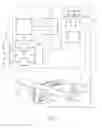
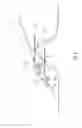
FIG. 1 represents, in the form of a schematic diagram, a terrain avoidance system in accordance with the present invention.
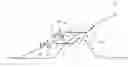
FIG. 2 is a schematic view illustrating an exemplary relief avoidance maneuver by an aircraft in flight, in the course of which a first type of altitude limit curve in accordance with the invention is implemented.
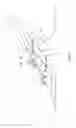
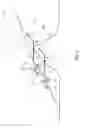
FIGS. 3 and 4 are analogous to FIG. 2, the altitude limit curves implemented in the course of the relief avoidance maneuver being respectively of a second and of a third type in accordance with the invention.
The terrain avoidance system for an aircraft AC has been schematically represented in FIG. 1. In this figure, the system 1, a set E of measurement means and storage means 9 of a database are represented outside the aircraft AC, although they are in reality mounted onboard the latter.
As shown by FIG. 1, the terrain avoidance system 1 comprises in a routine manner:
-
- a collision alert device 2, for example of TAWS type, which monitors the flight of the aircraft AC with respect to the surrounding terrain. This collision alert device 2 is apt to emit alerts when the aircraft AC is at risk of colliding with a relief of said terrain should it maintain its current flight characteristics (longitudinal speed, slope, etc.);
- an automatic piloting device 3 of the aircraft AC, connected by way of a link L1 to the collision alert device. This automatic piloting device 3 is able to determine and apply to said aircraft AC a terrain avoidance maneuver as soon as an alert is emitted by the collision alert device 2. In a routine manner, said automatic piloting device 3 can determine instructions for piloting the aircraft AC (for example a climb instruction to be applied to the aircraft AC so as to bring about a gain of height at the level of the relief of the terrain, or else a climb instruction to the aircraft AC as well as a heading instruction to be applied to said aircraft AC). The automatic piloting device 3 can form part of a routine automatic pilot (not represented) of the aircraft AC;
- control means 4 which are connected to the automatic piloting device 3, by way of the link L2. As a variant, they can be integrated, at least in part, into the automatic piloting device 3. The control means 4 are able to receive the piloting instructions originating from said automatic piloting device 3. They comprise for example calculation means 5 for determining control surface deflection instructions, based on the piloting instructions received, and actuation means 6 for actuating at least one control surface G of said aircraft AC which receive these control surface deflection instructions, by way of the link L3, and displace said control surface G accordingly by means of the link L4; and
- means of indication 7, connected to said automatic piloting device 3, by way of the link L5. These indication means 7 make it possible to forewarn the pilot or pilots of the aircraft AC when an avoidance maneuver is applied to the latter. Such an indication can consist of a visual information cue displayed on a viewing screen (for example mounted in the flight deck of the aircraft AC) and/or an audible alert.
According to the invention, the terrain avoidance system 1 furthermore comprises:
-
- means 8 for establishing an altitude profile (see FIGS. 2 to 4) associated with the terrain overflown by the aircraft AC. These means 8 are connected, by way of the link L6, to the routine means of storage 9 of a topographic database of said terrain, so as to establish said altitude profile;
- means 10 for determining at least one altitude limit curve (see FIGS. 2 to 4) which is associated with the aircraft AC. The determination means 10 are able to receive, by way of the link L7, data relating to the aircraft AC (for example its longitudinal speed, its vertical speed, its attitude, its inclination, its altitude, etc.) originating from the set of measurement means E. On the basis of the data obtained, these determination means 10 are able to determine an altitude limit curve (defined in greater detail hereinafter) such that, at least upon the engagement of said terrain avoidance maneuver, it cuts the terrain altitude profile established by said means 8;
- monitoring means 11, connected to said means 8 and to said determination means 10 by way respectively of the links L8 and L9, These monitoring means 11 are able to monitor whether the limit curve determined by the determination means 10 still comprises an intersection with the terrain altitude profile and, in the case where such an intersection no longer exists (the limit curve no longer cuts the altitude profile), they are able to deliver to the automatic piloting device 3, by way of the link L10, a signal representative of the absence of terrain ahead of the aircraft AC; and
- means 12 for interrupting a terrain avoidance maneuver, for example integrated into the automatic piloting device 3. These interruption means 12 are able to interrupt an avoidance maneuver in progress when said automatic piloting device 3 receives, by way of the link L10, a signal representative of the absence of terrain ahead of the aircraft AC by said verification means 11. A terrain absence message may optionally reach the pilots by way of the indication means 7 before the interruption of the terrain avoidance maneuver.
Represented in FIG. 2 is an example illustrating a terrain avoidance maneuver by the aircraft AC in the course of which a first type of altitude limit curve associated with the aircraft AC is implemented.
The altitude profile PA of the terrain overflown by the aircraft AC, which has been established by the means 8 (FIG. 1), is furthermore represented in FIG. 2.
The aircraft AC is represented at the moment of the emission of an alert by the collision alert device 2 (position P1). It is indeed at risk of hitting the terrain (mountain 13) if it continues its flight as is, as illustrated by the trajectory T1 (dashed), the continuation of the current trajectory T0. At this moment, the terrain avoidance system 1 subjects the aircraft AC automatically to an instruction for additional climb comprising a slope γ which is added to the slope corresponding to the current trajectory T0, so that the aircraft AC then no longer follows the trajectory T1, but an additional climb trajectory T1′.
Also illustrated in FIG. 2 is the altitude limit curve C determined by the determination means 10 (FIG. 1) after the emission of an alert by the collision alert device 2.
This altitude limit curve C, defined in a vertical plane passing through the longitudinal axis of the aircraft AC and situated at least in part ahead of the latter, consists of the following three segments:
-
- a segment X inclined downward (for example by a few degrees with respect to the horizontal), whose top end is connected to the aircraft AC and whose bottom end is oriented toward the ground;
- a horizontal segment Y, connected by an end to the bottom end of the segment X; and
- an upward inclined segment Z, whose bottom end is connected to the other end of the horizontal segment Y and whose top end is oriented toward the sky. The inclination of the segment Z with respect to the horizontal can be determined as a function of the current climb capability of said aircraft.
As shown by FIG. 2, the altitude limit curve C comprises an intersection with the terrain altitude profile PA during the engagement of the terrain avoidance maneuver (point U.
As soon as there is no longer any intersection of the limit curve C with the altitude profile PA (the aircraft AC is then in position P2), the terrain avoidance maneuver is interrupted and the aircraft AC continues for example a trajectory T′2, different from the trajectory T2 (represented dashed), the continuation of the trajectory T′1 that it would have followed if the terrain avoidance maneuver had not been interrupted. The trajectory T′2 is for example determined in a routine manner on the basis of instructions given by the pilots of the aircraft AC.
Moreover, represented in FIG. 3 is the exemplary avoidance maneuver of FIG. 2, in the course of which an altitude limit curve C of a second type is implemented. Indeed, the limit curve C comprises solely the horizontal segment Y and the upward inclined segment Z (such as described above), the segment X being of zero length.
Thus, as shown by FIG. 3, the limit curve C ceases to intercept the altitude profile PA earlier (the aircraft AC is in the position P3 between the position P1 and P2). The choice is therefore made to protect the aircraft AC in a zone that is more restricted in terms of avoidance maneuver exit, this making it possible on the other hand to exit the avoidance maneuver more rapidly.
Represented in FIG. 4 is a third simplified type of altitude limit curve C. Indeed, the limit curve C now comprises only a single horizontal segment Y. The length of the latter is for example determined in such a way that, when said avoidance maneuver is interrupted, the aircraft AC is at a minimum altitude (position P3) allowing it to cross over the terrain situated in front of it.
Claims
1. A terrain avoidance method for an aircraft equipped with a collision alert device which monitors the flight of said aircraft with respect to the surrounding terrain and which is able to emit at least one alert, when said aircraft is at risk of colliding with the terrain while maintaining its current flight characteristics, according to which method a terrain avoidance maneuver is engaged when said collision alert device emits such an alert, and wherein:
the following steps are furthermore carried out:
A/ an altitude profile representative of said terrain overflown by said aircraft is established on the basis of at least one database characteristic of said terrain;
B/ a plurality of parameters of said aircraft is measured;
C/ on the basis of at least some of said measured parameters, at least one altitude limit curve which belongs to a vertical plane passing through the longitudinal axis of said aircraft and which lies, at least partially, in front of said aircraft is determined, said limit curve comprising at least one intersection with said terrain altitude profile at least upon the engagement of said terrain avoidance maneuver;
D/ said intersection of the limit curve with the altitude profile is monitored; and
E/ in the case where there is no longer any intersection of said limit curve with said altitude profile, said terrain avoidance maneuver is interrupted;
and said steps B/, C/, D/ and E/ are carried out in a successive and repetitive manner until said avoidance maneuver is interrupted.
2. The method as claimed in claim 1,
wherein said altitude limit curve consists of a series of segments comprising at least one horizontal segment.
3. The method as claimed in claim 2,
wherein:
said series of segments forming said limit curve furthermore comprises an upward inclined segment, whose bottom end is connected to one of the ends of said horizontal segment and whose top end is oriented toward the sky; and
the inclination of said upward inclined segment is determined, during step C/, as a function of the current climb capability of said aircraft.
4. The method as claimed in claim 2,
wherein said series of segments constituting said limit curve furthermore comprises a downward inclined segment, whose top end is connected to said aircraft and whose bottom end is oriented toward the ground and connected to one of the ends of said horizontal segment, said downward inclined segment ensuring that, even if the aircraft is put into descent by the crew on exiting the maneuver, there will be no reengagement of the automatic facility before a certain interlude.
5. The method as claimed in claim 2,
wherein the length of said horizontal segment is determined, during said step C/, as a function of a terrain detection criterion which makes it possible to ensure that, when said avoidance maneuver is interrupted, said aircraft is at a minimum altitude allowing it to cross over the terrain situated in front of it.
6. The method as claimed in claim 1,
wherein said aircraft parameters measured during said step B/ belong to the group of the following parameters:
the longitudinal speed of said aircraft;
the vertical speed of said aircraft;
the attitude of said aircraft;
the angle of attack of said aircraft;
the altitude of said aircraft.
7. The method as claimed in claim 1, wherein, during said step E/, an information cue regarding absence of terrain is emitted prior to the interruption of said avoidance maneuver.
8. A terrain avoidance system for an aircraft, said system comprising:
a collision alert device which monitors the flight of said aircraft with respect to the surrounding terrain and which is able to emit at least one alert, when said aircraft is at risk of colliding with the terrain while maintaining its current flight characteristics; and
an automatic piloting device able to apply a terrain avoidance maneuver to said aircraft automatically when such an alert is emitted by said alert device,
wherein said terrain avoidance system furthermore comprises:
means for establishing an altitude profile, representative of said terrain overflown by said aircraft, on the basis of at least one database characteristic of said terrain;
means for measuring a plurality of parameters of said aircraft;
means for determining, on the basis of at least some of said parameters measured by said measurement means, at least one altitude limit curve which belongs to a vertical plane passing through the longitudinal axis of said aircraft and which lies, at least partially, in front of said aircraft, said limit curve comprising at least one intersection with said altitude profile at least upon the engagement of said terrain avoidance maneuver;
monitoring means able to monitor said intersection of the determined limit curve with the altitude profile; and
means for interrupting said terrain avoidance maneuver, which are able to be activated when there is no longer any intersection of said limit curve with said altitude profile.
9. An aircraft,
comprising a terrain avoidance system such as specified under claim 8.
Images & Drawings included:
Sources:
- United States Patent and Trademark Office - verify current appl. status at the USPTO↗
Similar patent applications:
- » 20050073440
Terrain avoidance method and device for an aircraft - » 20090076728
Aircraft terrain avoidance and alarm method and device - » 20180253984
Terrain avoidance device and method for an aircraft - » 20100125381
Method and device of terrain avoidance for an aircraft - » 20100042273
Method and device for aircraft, for avoiding collision with the terrain - » 20150266591
Method and a device for issuing terrain avoidance warnings for a rotary wing aircraft
Recent applications in this class:
- » 20250029505 2025-01-23
AIRCRAFT GROUND ANTI-COLLISION SYSTEM AND METHOD - » 20240331556 2024-10-03
CLOUD-BASED AREA OBSTACLE DETECTION - » 20240046806 2024-02-08
Sensor assembly for use in association with aircraft collision avoidance system and method of using the same - » 20240021094 2024-01-18
System and method for suggesting switching operational modes of a ground proximity warning system - » 20230419846 2023-12-28
METHOD AND SYSTEM FOR AVOIDING MID-AIR COLLISIONS AND TRAFFIC CONTROL - » 20230260411 2023-08-17
DETECTION METHOD OF DECOYING OF A TRAFFIC ALERT AND COLLISION AVOIDANCE SYSTEM, AND ASSOCIATED TRAFFIC ALERT AND COLLISION AVOIDANCE SYSTEM - » 20230154344 2023-05-18
METHOD AND SYSTEM FOR MONITORING AN OBJECT IN THE ENVIRONMENT OF AN AIRCRAFT - » 20230134955 2023-05-04
SYSTEM AND METHOD TO ANALYZE COMPLIANCE OF DETECT AND AVOID - » 20230086453 2023-03-23
Collision avoidance system - » 20220415194 2022-12-29
Anti-collision system and method for an aircraft and aircraft including the anti-collision system
Recent applications for this Assignee:
- » 20250201879 2025-06-19
Soft-Start Strategy Of A Fuel Cell - » 20250196988 2025-06-19
DEVICE FOR ABSORBING ENERGY BY COMPRESSION, AIRCRAFT COMPRISING AT LEAST ONE SUCH DEVICE - » 20250136265 2025-05-01
AIRCRAFT CARGO DOOR ACTUATION SYSTEM - » 20250136264 2025-05-01
AIRCRAFT CARGO DOOR ACTUATION SYSTEM - » 20250115365 2025-04-10
AIRCRAFT COMPRISING AT LEAST ONE ENGINE ATTACHMENT SYSTEM THAT HAS REDUCED VERTICAL BULK - » 20250078670 2025-03-06
METHOD FOR MANAGING TAXIING PATHS - » 20250076893 2025-03-06
METHOD AND DEVICE FOR OPTIMIZING A CLIMB PHASE OF AN AIRCRAFT, IN PARTICULAR IN TERMS OF FUEL CONSUMPTION - » 20250074608 2025-03-06
AIRCRAFT PYLON FAIRING, FAIRING ASSEMBLY, AIRCRAFT PYLON AND AIRCRAFT - » 20250074574 2025-03-06
AIRCRAFT FUSELAGE - » 20250042565 2025-02-06
AIRCRAFT AIR INTAKE COMPRISING AN OUTER WALL AND FRONT AND REAR FRAMES LINKED BY AT LEAST ONE JOINING ELEMENT DISTINCT FROM THE OUTER WALL