Mango tree FP2
US20100100993P1
2010-04-22
12/289,007
2008-10-17
Abstract:
The invention is directed to a new mango tree variety ‘FP2’ which is the mutation of the parent cultivar ‘FP1’. The mango tree produces medium a little red fruit on a yellow ground color, and matured in August. The fruit seems to be resistant to Anthracnose and good storage capacity. The flesh of the fruit is orange yellow, high juice content, low fiber content, low acidity, good taste with high sugar content. The core is small.
Interested in similar patents?
Get notified when new applications in this technology area are published.
Classification:
A01H5/00 IPC
Products
A01H5/00 IPC
Angiosperms, i.e. flowering plants, characterised by their plant parts; Angiosperms characterised otherwise than by their botanic taxonomy
Description
LATIN NAME OF THE GENUS AND SPECIES OF THE PLANT CLAIMED
The Latin name of the genus of mango is Mangifera. The Latin name of the species of mango is Mangifera Indica.
BACKGROUND OF THE INVENTION
1. Field of the Invention
This invention relates to a new variety of tropical mango.
2. Description of the Related Art
This inventor has a U.S. Plant Pat. No. 9,005 entitled Mango Tree FP1 (hereafter to be called ‘FP1’). He has repeatedly asexually reproduced by planting of the buds of ‘FP1 ’ in the ground at the Chia-Yi of Taiwan to form an orchard. Such asexual reproduction uniformly produces a fruit of the character described in the specification of the U.S. Plant Pat. No. 9,005. In 2000, he discovered in the orchard that the fruit of a mango tree only has ‘FP1’ mango's partial characteristic, which are not similar with the other ‘FP1’ fruit. The mango of the discovered variety is referred to as the ‘FP2’ mango. The new variety ‘FP2’ is a true mutation of the parent cultivar ‘FP1’. The claimed plant ‘FP2’ was found from a sport. The age of the observed plant is 8 years old.
SUMMARY OF THE INVENTION
The invention is directed to a new mango tree variety ‘FP2’ which is the mutation of the parent cultivar ‘FP1’. The mango tree produces medium a little red fruit on a yellow ground color, and matured in August. The fruit seems to be resistant to Anthracnose and good storage capacity. The flesh of the fruit is orange yellow, high juice content, low fiber content, low acidity, good taste with high sugar content. The core is small, and white color near 158C.
BRIEF DESCRIPTION OF THE DRAWINGS
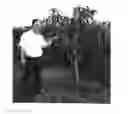
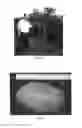
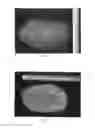
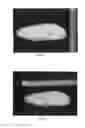
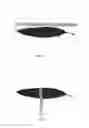
A new variety of tropical mango is shown in the drawings FIGS. 1 to 8.
FIG. 1 is a photograph of the original tree of ‘FP2’.
Each of FIGS. 2-3 is a photograph of the fruit of ‘FP2’.
FIG. 4 is a photograph of a cross-section of ‘FP2’ fruit.
Each of FIGS. 5-6 is a photograph of a core of ‘FP2’.
Each of FIGS. 7-8 is a photograph of a leaf of ‘FP2’.
DETAILED DESCRIPTION OF THE INVENTION
The following is a description of the characteristics of the mango tree variety of this invention.
- Tree:
-
- Tree vigor.—Medium. The terminal growth during the winter is 15 cm, and during the summer is 30 cm.
- Tree size.—Medium about 8 years old.
- Tree type.—Long oval.
- Height.—3 m.
- Girth.—40 cm. The measurement tree trunk was taken at the height of 60 cm from the earth ground.
- Maturity.—The fruit of the tree ripens in August.
- Pollination.—Open pollinated.
- Location.—Chia-Yi, Taiwan.
- Pruning.—Twice a year. The first time is in spring, any time at its bearing. The bent flower stalk without fruits and the slim twigs should be cut out for easy management. The second time is in summer, any time after the harvest. The upward branches should be cut out for high productivity in the next season.
- Bark.—Smooth.
- Petiolate.—Tough, resistant to wind damage.
- Bloom.—Early, on December, full blooming on February. The location at time of culture of the blooming season of the instant tree is in winter at the Chia-Yi Hsien located in the middle of Taiwan.
-
- Leaf:
-
- Length.—34.5 cm.
- Width.—7.0 cm.
- Thickness.—0.5 cm.
- Color.—Both the upper and the lower leaf surface is green color near 136A.
- Leaf type.—Large, oval-lanceolate, The tip of a branch is personate verticillate.
- Both upper and lower leaves' surface.—Glabrous and smooth.
- Petiolate.—5.5 cm in length. The petiole's color is green near 136A. The petiole's surface texture is glabrous and smooth.
-
- The leaf's margin is level, is not serrated. The apex of leaf is tip gradually. The base shape of the leaf is lanceolate.
- Panicle:
-
- Inflorescence.—Conic, axil and terminal. the inflorescence length being about 15-40 cm, normally having ramify 2 or 3 times and the last ramification has 3 flowers as an umbrella. Every inflorescence has 500-3,000 flowers. The inflorescence length is 15-40 cm. The diameter of the flower is 0.25-0.3 cm. The length of the flower is 0.2 cm.
- Calyx.—5 pieces. The calyx's average size is 0.2 cm, yellow color near 13A.
- Petal.—5 pieces. The petal's average size is 0.2 cm, yellow color near 13A.
- Stamen.—5 pieces, but normally only 2 or 3 stamen in full growth could disseminate pollen. And, the shape of a grain of the pollen is oval. The color of the pollen is yellow near 13A.
- Flower.—Has the staminate flower and the gynandrous flower. The average of the gynandrous flower is 3-60%. The number of pistil per flower is 5 pieces.
-
- Fruit:
-
- Weight.—995.6 g.
- Size.—Axial diameter 157 mm. Transverse diameter 87 mm.
- Skin color.—a little red (near 169B) on a yellow (near 163C) ground.
- Flesh.—orange yellow near 163B, juicy, low fiber content, good taste.
- Aroma.—Comparable to the local mango variety.
- Sweetness.—High sugar content (Brix 16).
- Acid.—Low acidity (0.12%).
- Thickness of skin.—0.9-1.1 mm.
- Fruit count per panicle.—2-3 pieces.
- Storage.—The fruit will drop in a protective bag about 3 days after maturity. The fruit can be held without any handling requirements for about 20 days.
- Susceptibility to bruising.—Not easy.
-
- Core:
-
- Weight.—43.55 g.
- Size.—Axial diameter 143 mm. Transverse diameter 42 mm.
- Fiber.—Only a latter around the core. The Core has along its latter peak a beard of short fibers.
-
The stone's average size is small, 143 mm in axial diameter and 42 mm in transverse diameter. The surface texture is striated. The shape is flat and elongated.
The mature fruit's shape is elliptic. Its ventral shoulder shape is round. Its dorsal shoulder shape is round. The surface texture is glabrous and smooth. The fruit lenticel's density is five holes per 1 cm2. Each hole's average size is 0.05 cm. The average depth of the fruit stalk cavity is 0.05 cm. The ripe fruit adherence of the skin to the flesh is easy to separate. The ripe fruit flesh's firmness is hard. The ripe fruit flesh's juiciness is high juice content. The ripe fruit flesh's texture is low fiber content. When fully ripe, some fruits have a “turpentine” fresh odor and flavor.
The average size of the seed is small. The length of the seed is 8 cm. The width of the seed is 2 cm. The thickness of the seed is 0.4 cm. The shape of the seed is flat and elongated. The color of the seed is white. The type of seed embryony is monoembryonic.
The tree and fruit seems to be resistant to Anthracnose, diseases and pest.
The plant perfect temperature ranged from 20° C. to 25° C. The hardiness zone is not observed.
Remarks: All color values expressed herein are those of the R.H.S. Colour Chart.
A list comparing FP2, FP1 and F1 is showed in the table below:
| LIST OF COMPARISON BETWEEM FP2, FP1, AND F1 |
| FP2 | FP1 | F1 | |
| Leaf | Length | 34.5 cm | 30.5 cm | 29 cm |
| Width | 7.0 cm | 6.5 cm | 8.5 cm | |
| Thickness | 0.5 cm | 0.5 cm | 0.5 cm | |
| Color | Green near 136A | Green near 143B | Dark green near | |
| G135B |
| Petiole | 5.5 cm in length | 6.5 cm | 5 cm |
| Fruit | Weight | 995.6 g | 553.8 g | 412 g |
| Shape | Long oval but its apex | Long oval but much | Long oval but much | |
| much more round | more round | more flat | ||
| Flesh | Very little fibers, easy | A little fibers | No fibers | |
| to separate from its skin | ||||
| Skin color | A little red (near | Red near 45B or | Green near 143B | |
| 169B) on a yellow | 70B on a green | but will change as | ||
| near 163C) ground | (149B) ground, but | yeallow near 9A | ||
| will change as red | when matured | |||
| (45A) on a yellow | ||||
| (14B) ground | ||||
| Thickness | 0.9-1.1 mm | 0.8-1.0 mm | 0.7-0.9 mm | |
| Core | Weight | 43.55 g | 43.7 g | 35.6 g |
| Size | Axial diameter | Axial diameter | Axial diameter | |
| 143 mm, transverse | 142.6 mm, | 151 mm, transverse | ||
| dismeter 42 mm | transverse diameter | diameter 37.6 mm. | ||
| 40.3 mm. | ||||
| Core is easy to | ||||
| separate from the | ||||
| flesh like Irwin. | ||||
| Seed | Weight | 15 g | 21.3 g | 17.3 g |
| Size | Axial diameter 80 mm, | Axial diameter 74.4 | Axial diameter | |
| transverse diameter | mm, transeverse | 76 mm, transverse | ||
| 20 mm | diameter 30.5 mm | diameter 28.2 mm |
| Tree Size | Medium about 8 | Medium about 21 | High |
| years old | years old | ||
| Branch | Rare | Rare | Dense |
| Bark | Smooth | Smooth | Rough |
| Vein | Same with FP1 | Same color with the | Same color with the |
| leaf but a little slice | leaf | ||
| red (45B) in the | |||
| early leafing about 7 | |||
| days of each time | |||
Claims
1. A new and distinct mango tree variety ‘FP2’ as shown and described, to be a true mutation of the parent cultivar ‘FP1’.
Images & Drawings included:
Sources:
- United States Patent and Trademark Office - verify current appl. status at the USPTO↗
Recent applications in this class:
- » 20240292771 2024-08-29
Campanula plant named 'Twilight' - » 20240251691 2024-07-25
HYDRANGEA PLANT NAMED 'HYLV17520' - » 20240251690 2024-07-25
Vaccinium Plant Named 'BWPBLUE02' - » 20240251689 2024-07-25
BLUEBERRY PLANT NAMED 'FC13-113' - » 20240251688 2024-07-25
BLUEBERRY PLANT NAMED 'FCM14-057' - » 20240237567 2024-07-11
PONGAMIA VARIETIES - » 20240224827 2024-07-04
PELARGONIUM PLANT NAMED 'PEQZ0103' - » 20240215470 2024-06-27
Agapanthus plant named 'Monsapho' - » 20240215469 2024-06-27
plant named ‘LOCORA3519’ - » 20240206359 2024-06-20
CORYLUS PLANT NAMED 'BWM01'