Location system for asset or personnel tracking using multi-frequency ultrasonic transducers and goertzel filters
US20100102965A1
2010-04-29
12/532,328
2008-05-06
✅ Patent granted
US 8,305,842 B2
2012-11-06
WO; PCT/GB2008/001577; 20080506
WO; WO2008/139147; 20081120
Jeffery Hofsass
2029-12-30
Abstract:
A location system, for the tracking of personnel or products for establishing the location of an identification tag attached to a person or product, has the tag comprising a power source; an ultrasonic transducer; a transmitter connected to an output signal from the transducer and capable of transmitting multiple frequencies to establish the unique ID of the tag in question, including a first frequency solely to identify when a tag is about to start transmitting data; the system comprising further a plurality of strategically located ultrasonic receiver; and processing means including a reader incorporating a number of Goertzel filters corresponding to the number of frequencies transmitted to process output signals from the ultrasonic receivers to establish the ID of the read tag and its location.
Assignee:
- MERLIN360.COM LIMITED 1 🇬🇧 Dinnington, United Kingdom
- Merlin360.Com Limited 1 🇬🇧 , United Kingdom
Interested in similar patents?
Get notified when new applications in this technology area are published.
Classification:
G01S5/22 » CPC main
Position-fixing by co-ordinating two or more direction or position line determinations; Position-fixing by co-ordinating two or more distance determinations using ultrasonic, sonic, or infrasonic waves Position of source determined by co-ordinating a plurality of position lines defined by path-difference measurements
G06K19/067 » CPC further
Record carriers for use with machines and with at least a part designed to carry digital markings characterised by the kind of the digital marking, e.g. shape, nature, code Record carriers with conductive marks, printed circuits or semiconductor circuit elements, e.g. credit or identity cards also with resonating or responding marks without active components
G08B13/14 IPC
Burglar, theft or intruder alarms; Mechanical actuation by lifting or attempted removal of hand-portable articles
G08B5/22 IPC
Visible signalling systems, e.g. personal calling systems, remote indication of seats occupied using electric transmission; using electromagnetic transmission
G08B21/00 IPC
Alarms responsive to a single specified undesired or abnormal condition and not otherwise provided for
Description
FIELD OF THE INVENTION
This invention relates to a location system for the tracking of personnel, or products located indoors, for establishing the location of an identification tag attached to a person or product, in contrast to widely used outdoor location systems using GPS and satellites.
BACKGROUND OF THE INVENTION
The requirement for real time information as to the indoor location of products of value, such as PC's, hospital equipment etc which are routinely subject to relocation has led to proposals such as described in
US 2005/0232081
US 2005/128099
US 2006/013070 etc.
Also in GB 2305074 is described a data signal processor that uses Goertzel's algorithm to identify carrier modulation and data transmission system used by a tag to communicate data to a reader.
OBJECT OF THE INVENTION
A basic object of the present invention is the provision of an improved indoor location system for tracking of tagged personnel or products.
SUMMARY OF THE INVENTION
According to the present invention, there is provided a location system, for the tracking of personnel or products for establishing the location of an identification tag attached to a person or product, wherein the tag comprises:
- (i) a power source;
- (ii) an ultrasonic transducer;
- (iii) a transmitter connected to an output signal from the transducer and capable of transmitting multiple frequencies to establish the unique ID of the tag in question, including a first frequency solely to identify when a tag is about to start transmitting data;
- (iv) a plurality of strategically located ultrasonic receivers; and
- (v) processing means including a reader incorporating a number of Goertzel filters corresponding to the number of frequencies transmitted to process output signals from the ultrasonic receivers to establish the ID of the read tag and its location.
ADVANTAGE OF THE INVENTION
The location system in accordance with the invention uses both the time and frequency domains to efficiently pack information into the ultrasonic band, distinguishing between a number of different transmissions. In addition the Goertzel algorithm overcomes interference from environmental noise by the use of the digital signal processing filters which train on the energy levels of the wanted signals only. The Goertzel algorithm is widely used in dtmf tone decoding in the telecoms industry and this design uses this algorithm in a novel manner to work in the ultrasonic band.
Collisions are handled by the algorithm to remove corrupted transmissions and time domain is used by randomising transmission gaps to allow the greatest possible probability of reception in a crowded spectrum.
PREFERRED OR OPTIONAL FEATURES
The highly efficient use of processing allows for a large number (up to 10) of ultrasonic receivers to be simultaneously handled by one reader in real time.
The reader collates the signals received from each receiver to provide quantifiable information on reception timings and signal strengths which give a picture of echoes and reflections. This is then used to determine the bearing of the original signal.
Readers can also be networked in arrays to allow greater differentiation of signal origin.
In detail, the identification tags use a combination of five frequencies to transmit the tag's unique ID and event status to the ultra sonic readers (f1-f5). A start frequency (f3) is used to solely identify when a tag is about to start transmitting, whilst frequencies f1,f2,f4,f5 are used to transmit the data.
The use of a start frequency is used for tag-reader synchronization and also allows the reader to detect collisions on the air-interface.
The ultrasonic reader uses a Goertzel algorithm as published by Dr Gerald Goertzel in 1958. The algorithm is a second-order filter that extracts the energy present at a specific frequency.
Although five frequencies/transmissions are referred to, it would of course be possible for a greater or lesser number to be used, depending upon particular requirements of the system.
The ultrasonic reader uses five Goertzel filters on the data sampled from each ultrasonic transducer to detect the discrete frequencies.
The five frequencies used within the 40 KHz ultrasonic band are:
| f1 | 39.216 KHz | |
| f2 | 39.604 KHz | |
| f3 | 40.000 KHz | |
| f4 | 40.404 KHz | |
| f5 | 40.816 KHz | |
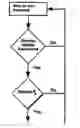
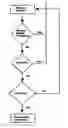
To effectively detect each frequency the system samples each ultrasonic transducer at 104.2 KHz with a sample window size of 2048. A preferred mode of operation is as follows:
Claims
1. A location system, for the tracking of personnel or products for establishing the location of an identification tag attached to a person or product, wherein the tag comprises
(i) a power source;
(ii) an ultrasonic transducer;
(iii) a transmitter connected to an output signal from said transducer and capable of transmitting multiple frequencies to establish the unique ID of said tag in question, including a first frequency solely to identify when said tag is about to start transmitting data;
(iv) a plurality of strategically located ultrasonic receivers; and
(v) processing means including a reader incorporating a number of Goertzel filters corresponding to the number of frequencies transmitted to process output signals from said ultrasonic receivers to establish the ID of said read tag and its location.
2. A location system as claimed in claim 1, wherein a large number (up to 10) of ultrasonic receivers are simultaneously handled by one said reader in real time.
3. A location system as claimed in claim 1, wherein said reader collates said signals received from each of said receivers to provide quantifiable information on reception timings and signal strengths which give a picture of echoes and reflections.
4. A location system as claimed in claim 3, wherein said picture of echoes and reflections is then used to determine the bearing of the original signal.
5. A location system as claimed in claim 1, comprising a plurality of said readers networked in arrays to allow greater differentiation of signal origin.
6. A location system as claimed in claim 1, wherein said identification tag uses a combination of five frequencies (f1-f5) to transmit said tag's unique ID and event status to said ultrasonic readers.
7. A location system as claimed in claim 6, wherein a start frequency (f3) is used to solely identify when said tag is about to start transmitting, whilst frequencies f1,,f2,f4,f5 are used to transmit the data.
8. A location system as claimed in claim 6, wherein said ultrasonic reader uses five Goertzel filters on the data sampled from each of said ultrasonic transducers to detect the discrete frequencies.
9. A location system as claimed in claim 8, wherein said five frequencies used within the 40 KHz ultrasonic band are:
| f1 | 39.216 KHz | |
| f2 | 39.604 KHz | |
| f3 | 40.000 KHz | |
| f4 | 40.404 KHz | |
| f5 | 40.816 KHz | |
10. A location system as claimed in claim 9, wherein to effectively detect each said frequency the system samples each said ultrasonic transducers at 104.2 KHz with a sample window size of 2048.
11. A location system as claimed in claim 1, operable as follows:
Images & Drawings included:

Sources:
- United States Patent and Trademark Office - verify current appl. status at the USPTO↗
Recent applications in this class:
- » 20250283973 2025-09-11
SOUND SOURCE POSITION DETERMINATION METHOD, HEAD-MOUNTED DEVICE, AND STORAGE MEDIUM - » 20250264571 2025-08-21
METHOD AND DEVICE FOR LOCATING A FIREARM - » 20250251486 2025-08-07
INTEGRATING AUDIO SIGNAL INFORMATION FOR POSITIONING AND SENSING - » 20250147144 2025-05-08
3D GUNSHOT LOCALIZATION, TRACKING, AND AI ENHANCED SYSTEM FOR SUBSTATION SECURITY - » 20250130307 2025-04-24
INDOOR MIMO ACOUSTIC DETECTION AND LOCALIZATION USING TONE SIGNALS - » 20240329186 2024-10-03
Methods and Apparatus to Improve Detection of Audio Signatures - » 20240329185 2024-10-03
SIGNAL SOURCE POSITION ESTIMATION APPARATUS, SYSTEM, AND METHOD - » 20240255607 2024-08-01
Sound source identification method and system based on array measurement and sparse prior information - » 20240175975 2024-05-30
OUTDOOR SOUND SOURCE IDENTIFICATION - » 20240168126 2024-05-23
Firearm Discharge Location Systems and Methods