Device for applying runners on closure profiles
US20100105535A1
2010-04-29
12/522,697
2008-01-09
✅ Patent granted
US 8,211,001 B2
2012-07-03
WO; PCT/EP2008/050159; 20080109
WO; WO2008/084052; 20080717
Sameh H. Tawfik
2028-09-30
Abstract:
The present invention relates to a device for applying runners (32) on closure profiles (22), comprising various actuator means (110, 120, 130, 140) driven by a common driving means (150), including a wheel (110) for driving a chain of runners (32) temporarily linked together by breakable bridges (34) in order to transfer successively each runner (32) towards an application station on the closure profiles (22); characterised in that the device includes means (170) for manually disengaging the driving wheel (110) relative to the other actuator members (120, 130, 140). The invention also relates to a method and a machine implementing the above-mentioned runner application device, and to the closure profiles and bags thus obtained.
Assignee:
- S2F FLEXICO 30 🇫🇷 Henonville, France
Interested in similar patents?
Get notified when new applications in this technology area are published.
Classification:
A44B19/62 » CPC main
Slide fasteners; Making by processes not fully provided for in one other class, e.g. Assembling sliders in position on stringer tapes
B65B9/20 » CPC further
Enclosing successive articles, or quantities of material, e.g. liquids or semiliquids, in flat, folded, or tubular webs of flexible sheet material; Subdividing filled flexible tubes to form packages; Enclosing successive articles, or quantities of material, in preformed tubular webs, or in webs formed into tubes around filling nozzles, e.g. extruded tubular webs the webs being formed into tubes around the filling nozzles
B65B9/213 » CPC further
Enclosing successive articles, or quantities of material, e.g. liquids or semiliquids, in flat, folded, or tubular webs of flexible sheet material; Subdividing filled flexible tubes to form packages; Enclosing successive articles, or quantities of material, in preformed tubular webs, or in webs formed into tubes around filling nozzles, e.g. extruded tubular webs the webs being formed into tubes around the filling nozzles the web having intermittent motion
B65B61/188 » CPC further
Auxiliary devices, not otherwise provided for, for operating on sheets, blanks, webs, binding material, containers or packages for making package-opening or unpacking elements by applying or incorporating profile-strips, e.g. for reclosable bags
B31B70/8133 » CPC further
Making flexible containers, e.g. envelopes or bags; Auxiliary operations; Forming or attaching accessories, e.g. opening devices, closures or tear strings; Applying closures; Making bags having interengaging closure elements Applying the closure elements in the cross direction
Y10T24/158 » CPC further
Buckles, buttons, clasps, etc.; Bag fasteners Slides to lock bag end within housing
B65D33/16 IPC
Details of, or accessories for, sacks or bags End- or aperture-closing arrangements or devices
Description
The present invention concerns the area of closure profiles for bags equipped with sliders.
Numerous closure profiles equipped with sliders have already been proposed.
One of the problems raised in this area relates to the engaging of the sliders on the profiles.
Document U.S. Pat. No. 6,490,769 gives an example of known sliders. The present invention applies in particular to use of the slider described in this document. However the invention is not limited to this particular slider.
Different devices have also been proposed intended to ensure the engaging of sliders on closure profiles.
Examples of known devices can be found in documents FR 2076345 and FR 2076728.
The purpose of the present invention is to propose novel means designed to ensure the application of sliders onto a closure profile, having superior properties to those of the prior art.
This purpose is achieved under the invention by means of a device to apply sliders onto closure profiles, comprising different actuator elements driven by a common motor means including a driving wheel driving a chain of sliders provisionally joined together by scored links so as successively to transfer each slider towards a station where it is applied to the closure profile, characterized by the fact that the device comprises manual disengaging means for the driving wheel with respect to the other actuator elements.
The invention also relates to a method and machine using the abovementioned slider application device and to the closure profiles and bags equipped therewith.
Other characteristics, purposes and advantages of the present invention will become apparent on reading the following detailed description with reference to the appended drawings given as non-limiting examples in which:
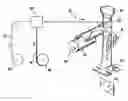
FIG. 1 is a schematic perspective view of a machine to manufacture bags able to be equipped with a slider application device conforming to the invention,
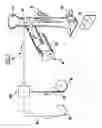
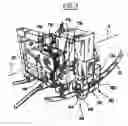
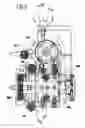
FIGS. 2 and 3 are perspective views of the slider application device conforming to the present invention,
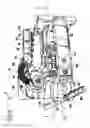
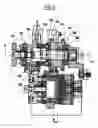
FIG. 4 is a partial cutaway side view of the slider application device conforming to the present invention,
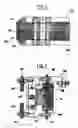
FIG. 5 is a cross-sectional view of the device along the section plane referenced V-V in FIG. 4, and
FIGS. 6 and 7 are cross-sectional views of the same device along the section planes referenced VI-VI in FIG. 5 and VII-VII in FIG. 4.
The invention applies in particular to the manufacturing of bags on an automatic machine of form-fill-seal type schematically illustrated in appended FIG. 1.
Said machine 10 comprises:
-
- means 20 supplying a strip 22 of closure profiles,
- means 30 supplying chains 32 of sliders,
- a station 100 described in more detail below in the present invention intended to carry out sequential, individual application of each slider 32 onto the strip 22,
- means 40 supplying a thermoplastic film 42,
- a forming neck 50 associated with a filling chute 60 which conforms the film 42 from an initial planar state to a tube,
- means 70 ensuring longitudinal welding of the adjacent longitudinal edges of the film 42 and fixing of the closure strip 22 equipped with sliders 32 onto the film 42, and
- transverse welding jaws 80 associated with cutting means 80 to separate the bags individually.
Said bag is schematically illustrated under reference 90 in FIG. 1.
The general structure of the machine illustrated FIG. 1 is known to persons skilled in the art and will therefore not be described in further detail.
Also, appended FIG. 1 shows a machine in which the closure strip 22 equipped with sliders 32 is applied longitudinally to the edges of the film 42 i.e. parallel to the direction of travel of the film 42. As a variant the closure strip 22 equipped with sliders 32 can be applied crosswise onto the film 42 i.e. at least substantially perpendicular to the direction of travel of the film 42.
According to other variants, the slider application device 100 conforming to the present invention can be used on any automatic packaging machine and on welding machines for the manufacturing of empty bags.
Additionally, according to the illustrated given FIG. 1, the slider application device 100 is designed to apply sliders 32 to the strip 22 of closure profiles before welding of the strip 22 onto the film. As a variant, however, the application device 100 according to the present invention can also be used to apply sliders 32 to the closure strip 22 after welding the closure strip 22 onto the film 42, irrespective of the type of film conformation machine 42 that is used.
The application device 100 conforming to the present invention can also be used to pre-position sliders 32 on closure profile strips 22 at a fixed point, and to fix the closure strips thus equipped with sliders 32 onto a film during a subsequent, separate step and optionally on a different site.
The present invention applies to any type of closure strip 22 in particular closure strips comprising mating male and female profiles, hook profiles, profiles joined together by a U-shaped connection strip or equivalent to form an opening indicator, etc. . . . .
The closure device 100, conforming to the present invention and shown in the appended figures, comprises four actuator elements: a driving wheel 110, a pusher 120, a spacer 130 and a clamp 140. These four actuator elements are driven by a common motor element 150 preferably consisting of a pneumatic jack 150 more precisely by a rod-and-valve assembly 152 joined to the jack piston 150 and driven on command in an alternate translation movement centered on axis A-A.
The general structure of these four actuator elements is known from the above-cited documents FR-A-2076728 and FR-A-2076345. It will therefore not be described in further detail in the remainder hereof.
It is recalled however:
-
- that the spacer 130 preferably comprises a fixed central insert 132 intended to be engaged between two profiles of the closure strip 22 for their separation, and two jaws 134, 136 surrounding the insert 132 and preferably driven alternately between a clamped position in which the jaws 134, 136 clamp support webs of the above-mentioned profiles against the outer surfaces of the insert 32 when the travel movement of the strips 22 is temporarily stopped for application of a slider 32, and a drawn-apart position allowing travel of the closure strip 22. The driving of the jaws 134, 136 between the two above-described positions by the motor 150 can have numerous configurations. Preferably, the jaws 134, 136 are drawn together by elastic means 131 and are drawn apart by a set of rollers 137 carried by the rod-and-valve assembly 152 and cooperating with cams 138 joined to the jaws 134, 136.
- that the clamp 140 positioned downstream of the spacer 130 relative to the direction of travel of the strip 22, preferably comprises two jaws 144, 146, driven alternately between a clamped position in which the jaws 144, 146 clamp the support webs of the above-mentioned profiles during temporary stoppage of the travel movement of the strips 22 for application of a slider 32, and a drawn-apart position allowing travel movement of the closure strip 22. The driving of the jaws 144, 146 between the two above-described positions by the motor 150 can also have numerous configurations. Preferably, the jaws 144, 146 are drawn together by elastic means 142 and are drawn apart by a set of rollers 147 carried by the rod-and-valve assembly 152 and cooperating with cams 148 joined to the jaws 144, 146,
- that the driving wheel 110 is driven in rotation by means which will be detailed below, about an axis O-O parallel to the direction of travel of the strip 22, to convey the sliders 32 joined together in a chain by scored links 34 successively towards an application station positioned between the spacer 130 and the clamp 140,
- that the pusher 120 joined to the rod-and-valve assembly 152 is moved alternately in translation along axis A-A to push a slider 32, placed opposite, onto the strip 22 (whose two profiles have been drawn apart upstream by the spacer 130) and to separate the slider 32 from the scored links 34 provisionally joining the sliders together (preferably by cutting these links 34 against an anvil provided at this station).
The chains of sliders 32 used preferably conform to those in document FR-A-2076728 with respect to their general structure. They will not therefore not be described in further detail in the remainder hereof.
However, preferably, each slider 32 in this chain conforms to document U.S. Pat. No. 6,490,769 in that at its top part it comprises two wings adapted to be acted upon by a tappet 122 (see FIG. 7) provided at the end of the pusher 120 so as to draw apart the side walls of the slider before it is applied to the strip 22 as described in document U.S. Pat. No. 6,490,769.
The driving wheel 110 can have numerous configurations. On its periphery it comprises a series of teeth or bearers adapted successively to take in charge the sliders and to transfer them to the application station positioned between the spacer 130 and the clamp 140.
The means to drive the wheel 110 in rotation by the rod-and-valve assembly 152 can be in the form of numerous embodiments.
In their general structure they preferably conform to the means defined in document FR-A-2076728.
More precisely, as can be seen in the appended figures, these means preferably comprise a lever 111 with two arms 112, 113 mounted in rotation about axis O-O. One of the arms 113 is connected to the rod-and-valve assembly 152 via a bar or connecting rod 114. The second arm 112 carries a pawl 115 having angular clearance relative to the arm 112 and cooperating with a cogwheel 116 joined to the driving wheel 110.
The pawl 115 can be associated with a return spring 117.
As described in FR-A-2076728 in one direction of travel of the rod-and-valve assembly 152, the pawl 115 drives wheel 116 and hence wheel 110 over an angular pitch. In the other direction of travel of the rod-and-valve assembly 152, the pawl 115 pivots relative to the arm 112 to move away and reach the adjacent tooth of the cogwheel 115 before repeating a new driving operation of wheel 116.
Wheel 110 and associated wheel 116 are braked by a friction brake 160 to prevent the wheel 110 from rotating in an opposite direction to that resulting from action of the lever 111 and pawl 115. The friction brake according to the invention is formed of two friction washers or linings 162, 164 respectively arranged either side of the wheel 110. More precisely, the two friction linings 162, 164 and the wheel 110 sandwiched therebetween are clamped between a frame of the device on one side and a disengageable actuator element 170 on the other side.
According to the embodiment shown in the appended figures, this element 170 is formed of a ring bearing upon the outer surface of the lining 164 and drawn into a clamping position by a set of tared springs 172.
The ring 170 can however be drawn away from the wheel 110 so as to disengage the lining 164 and the wheel 110 by means of a system of screw/nut type. Numerous variants of embodiment thereof are possible. It will therefore not be described in further detail in the remainder hereof.
However, preferably, this screw/nut system comprises a threaded screw wheel 174 cooperating with a plate 176 carrying a set of tie rods 178 connected to the ring 170 (and on which the springs 172 for example are positioned) so that rotation of the screw wheel 174 via the plate 176 and the ties 178 ensures a pulling force on the ring 170 ensuring disengagement of the wheel 110.
The general functioning of the device 100 conforming to the present invention remains identical to that known from and described in document FR-A-2076728 in particular.
However, the new possibility of disengaging the wheel 110 makes it possible, at the time of initial installation of a chain of sliders 32 or even during a maintenance operation, to disengage the wheel 110 with respect to the other actuator elements 120, 130, 140 and thereby ensure provisional free rotation of the wheel 110, for example to engage or disengage a chain of sliders 32.
Thereafter, the indispensable precise re-synchronization of the driving wheel 110 with the actuator elements 120, 130, 140 (this precise synchronization being mandatory since the sliders must be successively positioned with great precision relative to the pusher 120 during movement thereof) is ensured by simply placing the cogwheel 116 in abutment against the pawl 115 when tightening the screw wheel 174 to ensure engaging.
Evidently, the present invention is not limited to the particular embodiments just described but extends to any variant conforming to the spirit thereof.
Claims
1. Device to apply sliders (32) onto closure profiles (22) comprising different actuator elements (110, 120, 130, 140) driven by common motor means (150), including a driving wheel (110) driving a chain of sliders (32) provisionally joined together by scored links (34) so as successively to transfer each slider (32) towards a station for their application to the closure profiles (22), characterized by the fact that the device comprises manual disengaging means (170) for the driving wheel (110) with respect to the other actuator elements (120, 130, 140).
2. Device according to claim 1, characterized by the fact that the driving wheel (110) is associated with a friction brake (160), and the manual disengaging means (170) are adapted to act upon a lining of the friction brake (160).
3. Device according to claim 2, characterized by the fact that the manual disengaging means (170) comprise a screw/nut system (174, 176) adapted to act upon the lining of the friction brake (160).
4. Device according to claim 2, characterized by the fact that the friction lining (164) is elastically drawn towards a clamping position.
5. Device according to claim 1, characterized by the fact that the driving wheel (110) is joined to a cogwheel (116) and the device comprises a driving lever (112) equipped with a pawl (115) cooperating with the cogwheel (116).
6. Device according to claim 1, characterized by the fact that the actuator elements further comprise a pusher (120), a spacer (130) and a clamp (140).
7. Method to apply a slider (32) onto a closure strip (22) characterized by the fact that it uses a device conforming to any of claims 1 to 6.
8. Machine to apply a slider (32) to a closure strip (22) characterized by the fact that it comprises a device conforming to any of claims 1 to 6.
9. Machine according to claim 8, characterized by the fact that it further comprises means (40, 50, 60, 70, 80) to manufacture a bag equipped with the closure strip provided with sliders (32).
10. Closure profile characterized by the fact that it comprises a slider (32) engaged by means of a device conforming to any of claims 1 to 6.
11. Bag comprising a closure profile provided with a slider (32) engaged by means of a device conforming to any of claims 1 to 6.
Images & Drawings included:
Sources:
- United States Patent and Trademark Office - verify current appl. status at the USPTO↗
Recent applications in this class:
- » 20150157097 2015-06-11
Slide fastener attachment method - » 20070199280 2007-08-30
Methods for applying sliders to reclosable plastic bags - » 20060179648 2006-08-17
Continuous finishing apparatus for slide fastener - » 20050197240 2005-09-08
Apparatus for and method of positioning a slider on mating zipper elements - » 20050194417 2005-09-08
Apparatus for and method of moving a slider along mating zipper elements - » 20050066499 2005-03-31
Slide fastener manufacturing apparatus - » 20050026764 2005-02-03
Modular tube system for feeding sliders to slider insertion device - » 20050022352 2005-02-03
Methods for applying sliders to reclosable plastic bags - » 20050020424 2005-01-27
Methods for applying sliders to reclosable plastic bags - » 20050015957 2005-01-27
Method and apparatus for assembling slider members onto interlocking fastening strips
Recent applications for this Assignee:
- » 20180312301 2018-11-01
Sachet having a concealed opening - » 20180118414 2018-05-03
Bag having a concealed opening - » 20170275055 2017-09-28
Bag comprising a closure device fixed to extension webs - » 20170073098 2017-03-16
Form fill and seal machine for a bag including a drawstring tape or cord and method for manufacturing such a bag - » 20160176580 2016-06-23
Method for manufacturing a bag by means of blown film extrusion - » 20150067993 2015-03-12
Device for closing bags or the like, having improved tactile and sound effects, resultant bag, and production method - » 20150049962 2015-02-19
CLOSURE DEVICE FOR BAGS HAVING A TACTILE AND SOUND EFFECT, BAG COMPRISING SUCH A DEVICE AND METHOD FOR PRODUCING SUCH A DEVICE - » 20120030919 2012-02-09
DEVICE AND METHOD FOR PLACING A SLIDER ON A BAG WITH CLOSURE PROFILES - » 20110211777 2011-09-01
Closure strip for a bag and associated bag - » 20100310196 2010-12-09
SLIDER PROVIDED WITH URGING SPIGOTS