Hand sensory assessment device
US20100106050A1
2010-04-29
12/222,827
2008-08-18
✅ Patent granted
US 8,016,768 B2
2011-09-13
-
-
Jeffrey G Hoekstra
2028-09-05
Abstract:
The present invention relates to a hand sensory assessment device capable of point localization, two-point discrimination, vibration, and texture discrimination for assessing and training patients. The device possesses multiples of pins serving as contacting points that are capable of treating multiples points on a patients hand.
Inventors:
- Kin-tak Lau 2 🇭🇰 Kowloon, Hong Kong
- Mei-ling Lau 1 🇭🇰 Kowloon, Hong Kong
- Chetwyn Chan 1 🇭🇰 Kowloon, Hong Kong
Assignee:
- The Hong Kong Polytechnic University 126 🇭🇰 Kowloon, Hong Kong
- THE HONG KONG POLYTECHNIC UNIVERSITY 131 🇨🇳 Hong Kong, China
Interested in similar patents?
Get notified when new applications in this technology area are published.
Classification:
A61B5/103 IPC
Measuring for diagnostic purposes ; Identification of persons Detecting, measuring or recording devices for testing the shape, pattern, colour, size or movement of the body or parts thereof, for diagnostic purposes
A61B5/117 IPC
Measuring for diagnostic purposes ; Identification of persons Identification of persons
A61H39/007 » CPC main
Devices for locating or stimulating specific reflex points of the body for physical therapy, e.g. acupuncture Stimulation by mechanical vibrations, e.g. ultrasonic
A61H2205/065 » CPC further
Devices for specific parts of the body; Arms Hands
Description
BACKGROUND
A stroke is defined as the rapid developed of facial or global disturbance of cerebral function, lasting more than 24 hours or leading to death, with no apparent cause other than of vascular origin. Following stroke, 40% of patients remain permanently disabled and dependent on assistance. However, recovery is usually greater if it occurs earlier. The majority of strokes affect the upper limb more than the lower limb, and patients with a severely paralyzed hand at the outset have both a high risk for mortality and little hope regaining a useful hand.
Sensory re-education (SRE) is a process in which the patient learns with the therapists to discover and use whatever sensations are available to him and in whatever reduced or distorted from they may “filter through”. SRE is a collaborative activity, involving mutual sharing of knowledge and the sharing of control and responsibility. SRE begins with the patient and the therapist discussing treatment together, and the patient trying it out with his good hand.
A number of different methods are utilized to perform SRE for hands. A Pellenberg box provides a method of teaching shape discrimination; object recognition allows comparison of rough and smooth surfaces by touch. U.S. Pat. No. 6,387,055 teaches a hand-held discrimination designed to test nerve sensory functions. U.S. Pat. No. 6,702,756 teaches methods of diagnosing neurological impairments and apparatuses. One apparatus embodiment incorporates tactile stimulators for contacting the hands of patients. The apparatus has as a weakness its ability to engage the user's hand in two locations at one time. Other locations can be contacted, but this requires the patient to move their hand; this is particularly difficult for stroke sufferers with plegic arm.
It is an object of the present invention to overcome the disadvantages and problems in the prior art.
DESCRIPTION
The present invention relates to a hand sensory assessment device capable of point localization, two-point discrimination, vibration, and texture discrimination for assessing and training patients. The device, as a contacting agent, possesses multiples of pins serving as contacting points that are capable of treating multiples points on a patients hand.
These and other features, aspects, and advantages of the apparatus and methods of the present invention will become better understood from the following description, appended claims, and accompanying drawings where:
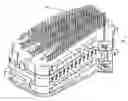
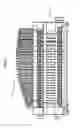
FIG. 1 shows the hand sensory device of the present invention;
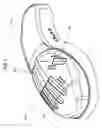
FIG. 2 shows the present device, minus the housing;
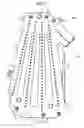
FIG. 3 is a top-side view of the present device, minus the housing;
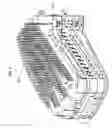
FIG. 4 is a side view of the present device, minus the housing.
The following description of certain exemplary embodiment(s) is merely exemplary in nature and is in no way intended to limit the invention, its application, or uses.
Now, to FIGS. 1-4,
FIG. 1 is an embodiment of a hand sensory assessment device 100. The device 100 includes a housing 101, pin contact holes 103, and straps 105.
The pin contact holes 103 allow pins positioned underneath the housing 101 to rise and fall in order to engage the hand positioned on the device 100. The number of pin contact holes 103 is equal to the number of pins.
Straps 105 are used to keep the hand securely attached to the device 100.
FIG. 2 shows the present device 200 minus the housing. As shown, the device 200 is comprised of multiples of pins 201. The pin 201 can number from between 100 to 150 units. In one embodiment, 130 pins 201 are positioned in the device 200. The device 200 further includes circuit boards for conducting electricity through the device 200, and a microcontroller (not shown). The microcontroller is suitable for controlling the solenoids 201, as well as controlling the overall choreography by which the solenoids fire during a treatment session. The microcontroller possess code stored thereon to allow manipulation of the solenoid, and correspondingly the pins, and to accept further choreographed pin movement.
In use, the patient's hand is positioned palm down on the device. Upon activation, the device will deliver a choreographed treatment pattern in which the pins engage various points on the palm on the patient. Each time, a designated pin which was preset by the program will generate push up and drop down motions based on the instructions given by the solenoid (which, in turn, is controlled by the microcontroller). The device thus involves the conversion of electrical signals to mechanical movements in the treatment of patients.
The device is also capable of testing by vibration motion, whereby the patient will be gauged as to whether they can feel vibration motion taken on their palm. The concept of movement stimulates the motion of therapists who manually pin the patients palm and fingers by blunt probe or with a tuning fork. The device provides a standard assessing pattern as well as identical assessments to be conducted repeatedly.
The device is further suitable for carrying out texture discrimination function. This is accomplished by utilizing a roller with an attached spatial pattern into a coated ABS housing, a curved shaped with silicon platform whereby the patient can rest her wrist so as to alleviate stress during assessment process. The patient is requested to define which two patterns are the same when they touch on it.
FIG. 3 shows an embodiment of the present device 300, specifically a right-handed embodiment. As shown, the pins are arranged to contract a user's hand in a variety of positions.
FIG. 4 shows a side view of the present device 400. In this embodiment, the housing has been removed to show the pins 401 that contact the hand.
Having described embodiments of the present system with reference to the accompanying drawings, it is to be understood that the present system is not limited to the precise embodiments, and that various changes and modifications may be effected therein by one having ordinary skill in the art without departing from the scope or spirit as defined in the appended claims.
In interpreting the appended claims, it should be understood that:
- a) the word “comprising” does not exclude the presence of other elements or acts than those listed in the given claim;
- b) the word “a” or “an” preceding an element does not exclude the presence of a plurality of such elements;
- c) any reference signs in the claims do not limit their scope;
- d) any of the disclosed devices or portions thereof may be combined together or separated into further portions unless specifically stated otherwise; and
- e) no specific sequence of acts or steps is intended to be required unless specifically indicated.
Claims
1. A hand sensory assessment device for assessing and training stroke sufferers, comprising
circuit boards;
pins positioned through said circuit boards;
a solenoid for operating said pins in an up and down manner through said circuit boards;
a microcontroller for controlling said solenoid;
a housing positioned over said circuit boards having pin contact holes therethrough; and
a hand strap and a thumb strap positioned on said housing;
wherein said pins number from 100 to 150 units.
2. The hand sensory assessment device for assessing and training stroke sufferers in claim 1, wherein said pins number 130.
3. The hand sensory assessment device for assessing and training stroke sufferers in claim 1, wherein said microcontroller possesses code stored thereon to allow manipulation of the solenoid.
Images & Drawings included:
Sources:
- United States Patent and Trademark Office - verify current appl. status at the USPTO↗
Recent applications in this class:
- » 20250161157 2025-05-22
Vibrator Structure of Shallow Acupuncture Instrument - » 20240261186 2024-08-08
ACOUSTIC SHOCK WAVE OR PRESSURE PULSE TREATMENT AND METHODS OF USE FOR TISSUE REGENERATION - » 20230404848 2023-12-21
CLINOCHLORE COMPOSITIONS AND METHODS OF USE - » 20230310268 2023-10-05
TREATMENT PEN, MAIN MACHINE, AND LIMB PAIN TREATMENT INSTRUMENT - » 20230301869 2023-09-28
DEVICE FOR ACUPUNCTURE AND MOXIBUSTION THERAPY AND USES THEREOF - » 20230201076 2023-06-29
ULTRASONIC WAVE ACUPUNCTURE DEVICE - » 20220304891 2022-09-29
DEVICE FOR ACUPUNCTURE AND MOXIBUSTION THERAPY AND USES THEREOF - » 20220175615 2022-06-09
Handheld system of automatic acupoint stimulation - » 20220168182 2022-06-02
ULTRASONIC DEVICE AND CONTROL METHOD THEREOF - » 20220096322 2022-03-31
Switchable vibration modal ultrasonic device and method based on same
Recent applications for this Assignee:
- » 20250261924 2025-08-21
ULTRASOUND DIAGNOSTIC TOOL FOR RENAL FIBROSIS ASSESSMENT - » 20250183698 2025-06-05
Energy Management Method For Solar Freezer Truck - » 20250162466 2025-05-22
Energy Management Method, System, Computer Device And Readable Storage Medium - » 20250089431 2025-03-13
PEROVSKITE WITH MODIFIED SURFACE AND METHOD FOR MAKING THE SAME - » 20240260848 2024-08-08
REAL-TIME ULTRA-QUALITY MULTI-PARAMETRIC FOUR-DIMENSIONAL MAGNETIC RESONANCE IMAGING SYSTEM AND THE METHOD THEREOF - » 20240167888 2024-05-23
Indoor fire monitoring based on look-up-from-floor sensing of ceiling - » 20240088412 2024-03-14
FUEL CELL POWER GENERATION DEVICE - » 20230399759 2023-12-14
Pure-HO-fed electrocatalytic COreduction to CHbeyond 1000-hour stability - » 20230357953 2023-11-09
Methods for preparing a monolayer or few-layer crystalline black phosphorous film on a two-dimensional surface by focusing a pulsed laser beam on a black phosphorous target - » 20230349095 2023-11-02
Method for sonochemical deposition of metals on textile substrates and products thereof