Device with a displaceable stacking device or charging device to produce print matter
US20100109225A1
2010-05-06
12/611,576
2009-11-03
✅ Patent granted
US 8,038,137 B2
2011-10-18
-
-
Patrick Mackey
2029-11-03
Abstract:
A device to supply flat products to produce print matter that includes a machine frame, a guide arrangement coupled to the machine frame, and a conveyor with a conveying direction arranged on the machine frame. The device additionally includes at least one sheet feeder arranged along the conveyor to supply a respective flat product to the conveyor in a clocked operation. The sheet feeder includes a stacking device to accommodate a plurality of flat products and a charging device coupled to the stacking device to remove a respective flat product from the stacking device. At least one of the stacking device or the charging device is operatively arranged with the guide arrangement to be displaceable to a non-operating position on a side of the conveyor.
Assignee:
- Mueller Martini Holding AG 159 🇨🇭 Hergiswil, Switzerland
Interested in similar patents?
Get notified when new applications in this technology area are published.
Classification:
B65H39/055 » CPC further
Associating, collating, or gathering articles or webs; Associating,collating or gathering articles from several sources from piles by collecting in juxtaposed carriers
B65H2402/30 » CPC further
Constructional details of the handling apparatus Supports; Subassemblies; Mountings thereof
B65H2402/40 » CPC further
Constructional details of the handling apparatus Details of frames, housings or mountings of the whole handling apparatus
B65H2601/321 » CPC further
Problem to be solved or advantage achieved; Facilitating or easing entities relating to handling machine Access
B65H2601/324 » CPC further
Problem to be solved or advantage achieved; Facilitating or easing entities relating to handling machine Removability or inter-changeability of machine parts, e.g. for maintenance
B65H37/04 IPC
Article or web delivery apparatus incorporating devices for performing specified auxiliary operations for securing together articles or webs, e.g. by adhesive, stitching or stapling
B65H33/16 IPC
Forming counted batches in delivery pile or stream of articles by depositing articles in batches on moving supports
B65H39/043 » CPC main
Associating, collating, or gathering articles or webs; Associating,collating or gathering articles from several sources from piles the piles being disposed in juxtaposed carriers
B65H39/02 IPC
Associating, collating, or gathering articles or webs Associating,collating or gathering articles from several sources
Description
CROSS-REFERENCE TO RELATED APPLICATION
This application claims the priority of European Patent Application No. 08405273.7, filed on Nov. 3, 2008, the subject matter of which is incorporated herein by reference.
FIELD
The subject matter of the application relates to a device for supplying flat products or printed sheets for producing book blocks, books or similar print matter. The device includes a plurality of sheet feeders, arranged successively and spaced-apart on a machine frame, above and along a conveyor. The sheet feeders function to supply the conveyor with individual printed sheets in a clocked operation. A stacking device for accommodating the stacked printed sheets is coupled to each sheet feeder. The stacking device further includes a loading or charging device for removing individual printed sheets from the stacking device.
Devices of the aforementioned type are used in different ways for collecting individual printed sheets for producing print matter. They are designed to separate flat products used in the print industry, such as, but not limited to, envelopes, folded sheets, cards, CDs/DVDs or similar flat items made available in a stacked formation. The devices collect these products in a conveyor for conveying them to a processing machine, e.g. an adhesive binder. The conveyor may include a horizontal or inclined channel, extending transverse to the conveying direction, through which the unfinished print products may be pushed with the aid of pushers attached to a traction device. The channel may be open at the top, with the unfinished print products positioned in a stable manner therein as a result of their inherent weight or with the use of guide arrangements. Alternately, the unfinished print products may also be deposited and collected inside of circulating compartments.
According to the European Patent Application EP 1 520 817, devices embodied in this way are used for collecting unfinished print products such as printed sheets, cards, CDs/DVDs or similar flat products to combine them into loose book blocks. For this, feeders are arranged along a conveyor together with a stack of unfinished print products, wherein these feeders are designed to separate and remove the unfinished products and supply the products in a clocked operation to the conveyor such that the stack is oriented perpendicular to the conveying direction. The conveyor is provided with receptacles, attached uniformly spaced apart to a circulating, driven traction device, to which the unfinished print products may be supplied in the predetermined sequence by the feeders. The feeders are arranged above the conveyor, spaced apart at short distances that may be short enough for successive feeders to overlap each other. This compact design allows only limited access to the conveyor for maintenance operations or for correcting malfunctions that require an intervention in the conveyor region.
European patent documents EP 536 863 A1 and EP 536 463 A1 relate to a device for collecting and feeding different types of covers or casings to an adhesive binder. The different covers must be supplied to the book blocks to be bound during the same production run, depending on the recipient, wherein feeders, as well as covers that are gathered into a stack, are arranged along the conveyor. The stacks consist of covers, which are arranged one above the other on a table and then separated by the feeder and supplied to the conveyor, wherein a machine control activates the respective feeder holding the type of cover needed for the print product to be produced. As with the previously described European Patent Application EP 1 520 817, the feeders are arranged above the conveyor, at a short distance relative to each other, which may also be short enough so that successive feeders overlap in the manner of a scale. As a result, similar disadvantages may be encountered with respect to maintenance operations or the correction of malfunctions requiring intervention in the region of the conveyor.
According to the subject matter of the application, the table may be pivoted upward around a horizontal axis that is arranged in one of its end regions, thus allowing easy access to the conveyor. The table may be emptied ahead of time and may then be filled again, which may require additional operating personnel. The feeders may be utilized when processing identical covers which may allow for a higher storage capacity of the feeders.
SUMMARY
Embodiments of the invention provide for a collecting device for unfinished print products, comprising sheet feeders that are arranged overlapping and directly above the conveyor which provide easy and unobstructed access.
According to one aspect of an embodiment of the invention, there is provided a device to supply flat products to produce print matter, comprising: a machine frame; a guide arrangement coupled to the machine frame; a conveyor with a conveying direction arranged on the machine frame; at least one sheet feeder arranged along the conveyor to supply a respective flat product to the conveyor in a clocked operation, the at least one sheet feeder including a stacking device to accommodate a plurality of flat products, and a charging device coupled to the stacking device to remove a respective flat product from the stacking device, wherein at least one of the stacking device or the charging device is operatively arranged with the guide arrangement to be displaceable to a non-operating position on a side of the conveyor.
According to another embodiment of the invention, there is provided a method for supplying flat products to produce print matter by a device, comprising accommodating flat products stacked one above the other in a stacking device of a sheet feeder; removing, by a charging device of a sheet feeder, a respective flat product from the stacking device; supplying the respective flat product to a conveyor with a same clocking rate and in approximately a same direction as a conveying direction of the conveyor; and displacing at least one of the stacking device or the charging device to a non-operating position on a side of the conveyor.
The objects are solved according to the subject matter of the application in that the stacking device or the charging device of a sheet feeder may be moved to a non-operating position on the side of the conveyor with the aid of a guide arrangement that is connected to the machine frame.
BRIEF DESCRIPTION OF THE DRAWINGS
The subject matter of the application will be more readily understood from the following detailed description when read in conjunction with the accompanying drawings, in which:
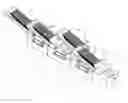
FIG. 1 is a three-dimensional view of a first embodiment of a collecting device for covers;
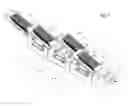
FIG. 2 is a three-dimensional view of a second embodiment of a collecting device for covers;
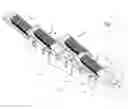
FIG. 3 is a three-dimensional view of a collecting device for printed sheets, for which the sheet feeders are in the operating position;
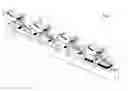
FIG. 4 depicts the collecting device according to FIG. 3, showing a sheet feeder in the non-operating position; and
FIG. 5 is a three-dimensional view of a collecting device for printed sheets with sheet feeders, showing a different embodiment.
DETAILED DESCRIPTION
FIGS. 1 and 2 show a collecting device 1 for supplying printed sheets or flat products 3 for producing book blocks, books or similar print matter. The device 1 includes a sheet feeder 4 that may be embodied as cover feeder 11 for supplying covers, or other flat objects, such as, but not limited to, CDs/DVDs, goods samples, or brochures, to an adhesive binder 21. The collecting device 1 may include a plurality of sheet feeders 4, arranged successively and uniformly spaced apart above and along a conveyor 2 on a machine frame 10.
The sheet feeders may each include an assigned stacking device 5 and a charging device 6 for supplying the conveyor 2 in a clocked operation with individual printed sheets 3 that may be removed from the stacking device 5. The conveyor 2 that may be coupled to the machine frame 10 and essentially forms a channel in which uniformly spaced apart pushers 13 may be driven to circulate by a traction device 14. The pushers 13 may convey the printed sheets 3 or the covers supplied by the sheet feeder 4 by pushing them along the channel extending over the length of the conveyor 2.
The sheet feeder 4 may be provided with a conveying table 9 for accommodating the printed sheets 3, supplied in an overlapping formation 8. The conveying table 9 may form the stacking device 5 and may be inclined in the direction of the charging device 6. At least the stacking device 5 or the conveying table 9 of the sheet feeder 4 may be displaced to the side of the conveyor 2 with the aid of a guide arrangement 7. The guide arrangement 7 may be coupled to the machine frame 10. The guide arrangement may include guides 12 and have a displacement direction V that extends transverse to the conveying direction F, as depicted in FIG. 4. The conveying table 9 or the stacking device 5 may be uncoupled from the charging device 6 and may be moved to the non-operating position on the side of the conveyor 2. According to another embodiment, the conveying table 9 may be uncoupled from the charging device 6, such that it may be displaced counter to the conveying direction F.
FIG. 1 shows that the conveying table 9 may be positioned to be displaced on rolls 19 along rails 18. The rolls 19 and rails 18 may be coupled to the machine frame 10, either horizontally or slightly ascending in the direction counter to the conveying direction F, wherein other kinds of linear guides are conceivable.
In the embodiment of FIG. 2, the conveying table 9 may be displaced by using an articulated arrangement 15, including levers 17 that may be pivoted around pivoting axes 16. The end positions of the levers 17 may be selected such that the axes 20 in the two end positions may rest on different sides, relative to the pivoting axes 16. Both end positions may be stable because of the gravitational force. The conveying table 9 may either be displaced manually in conveying direction F or in displacement direction V, or it may be displaced with the aid of an electric, pneumatic or hydraulic drive (not shown). The stacking device may also be displaced in a direction extending between the conveying direction F and the displacement direction V. These movements may also be super-imposed in two directions, a rotation around an essentially perpendicular axis or a lifting.
FIGS. 3 to 5 show another embodiment wherein a collecting device 1′ is provided for collecting printed sheets 3′ in a predetermined sequence into loose book blocks, which may be subsequently supplied to a perfect binder 21′ and are bound therein. The collecting device 1′ that may be operatively connected to the perfect binder 21′ is provided with at least one sheet feeder 4′. The sheet feeder 4′ includes a stacking device 5′ that accommodates the printed sheets 3, stacked one above the other on a conveying table 9′, and a charging device 6′ that removes the printed sheets 3′ from the stacking device 5′ and supplies the sheets to a conveyor 2′ in approximately the same direction as the conveying direction F and with the same speed. The printed sheets 3′ may be separated and removed by the sheet feeder 4′. The sheets may then be deposited on a conveyor 2′ which may be arranged below the sheet feeder 4′. The collecting device 1′ may also include a guide arrangement 7′ with guides 12′.
The conveyor 2′ that is coupled to the machine frame 10′ may essentially include a driven, circulating traction device 14′ with thereon arranged, uniformly spaced apart pushers 13′. The pushers 13′ may push the printed sheets 3′, supplied by the sheet feeder 4′, along a channel that extends over the length of the conveyor 2′. According to an alternate embodiment, the conveyor 2′ may be embodied with depositing tables, attached with regular spacing to the traction device 14′, on which the printed sheets 3′ are collected into loose book blocks. For space-saving design considerations, the sheet feeders 4′ may be successively arranged at distances that are short enough to allow the feeders to overlap partially in a vertical direction.
FIG. 5 shows an embodiment of the collecting device 1″ where the stacking device 5′ or the charging device 6′ of the sheet feeder 4′ is arranged on a guide arrangement 7″ that is connected to the machine frame 10″ which may allow easy access to the conveyor 2″. The guide arrangement 7″ may be formed with the aid of guides 12″, such that the stacking device 5′ may be displaced in the direction V and transverse to the conveying direction F to a non-operating position on the side of the conveyor 2″. With the collecting device 1′ shown in FIGS. 3 and 4, the stacking device 5′ and the charging device 6′ of the sheet feeder 4′ may be fixedly connected to each other and the sheet feeder 4′ consequently may be displaced as a single unit into a non-operating position on the side of the conveyor 2′. Even though the non-operating position is shown for all Figures to be on the left side of the conveyors 2, 2′, 2″ as seen in conveying direction F, the non-operating position may also be arranged on the right side of the conveyors 2, 2′, 2″.
It will be understood that the above description of the present invention is susceptible to various modifications, changes and adaptations, and the same are intended to be comprehended within the meaning and range of equivalents of the appended claims.
Claims
What is claimed is:1. A device to supply flat products to produce print matter, comprising:
a machine frame;
a guide arrangement coupled to the machine frame;
a conveyor with a conveying direction arranged on the machine frame;
at least one sheet feeder arranged along the conveyor to supply a respective flat product to the conveyor in a clocked operation, the at least one sheet feeder including
a stacking device to accommodate a plurality of flat products, and
a charging device coupled to the stacking device to remove a respective flat product from the stacking device, wherein at least one of the stacking device or the charging device is operatively arranged with the guide arrangement to be displaceable to a non-operating position on a side of the conveyor.
2. The device according to claim 1, wherein the at least one sheet feeder includes as the stacking device a slanted conveying table which slants toward the charging device so that the flat products supplied to the conveying table overlap, wherein the conveying table is selectively uncoupled from the charging device and displaceable to the non-operating position on the side of the conveyor.
3. The device according to claim 2, wherein the conveying table is detachable from the charging device and displaceable counter to the conveying direction.
4. The device according to claim 3, further comprising an articulated arrangement to permit pivoting the conveying table in a direction parallel to the conveying direction.
5. The device according to claim 1, wherein the conveying table is displaceable inside the guide arrangement.
6. A device according to claim 1, further comprising a plurality of sheet feeders successively arranged with uniform spacing above the conveyor.
7. A combination comprising an adhesive binder and the device according to claim 1, wherein the sheet feeder is operatively coupled to the adhesive binder.
8. A method for supplying flat products to produce print
matter by a device, comprising
accommodating flat products stacked one above the other in a stacking device of a sheet feeder;
removing, by a charging device of a sheet feeder, a respective flat product from the stacking device;
supplying the respective flat product to a conveyor with a same clocking rate and in approximately a same direction as a conveying direction of the conveyor; and
displacing at least one of the stacking device or the charging device to a non-operating position on a side of the conveyor.
Images & Drawings included:

Sources:
- United States Patent and Trademark Office - verify current appl. status at the USPTO↗
Recent applications in this class:
- » 20180229959 2018-08-16
Dynamic dual bin position collation system - » 20180155149 2018-06-07
DYNAMIC DUAL BIN POSITION COLLATION SYSTEM - » 20170129733 2017-05-11
Multi-position collation system with retracting guides including pre-compiler - » 20160332839 2016-11-17
Multi-position collation system with retracting guides - » 20160200544 2016-07-14
Collation system with retracting guides - » 20110098848 2011-04-28
Transport and alignment system for producing variable thickness collations - » 20090234492 2009-09-17
Arrangement for gathering or assembling printed sheets for producing bound printed products - » 20080308997 2008-12-18
METHODS AND SYSTEMS FOR TRANSFERRING STACKED SHEET MATERIAL - » 20080257799 2008-10-23
Apparatus & method for high speed document collation for insert into newspaper and other printed media - » 20080048378 2008-02-28
Gathering device with book comb
Recent applications for this Assignee:
- » 20220250868 2022-08-11
Apparatus and method for producing printed products - » 20220032676 2022-02-03
Clamp opening system for a machine for producing adhesively bonded printed products - » 20210061501 2021-03-04
Method and device for bringing together a wrapper and a plurality of inserts to form an advertising means compilation - » 20200031601 2020-01-30
System for delivering printed products of identical or different thickness and method for their transfer to a delivery system - » 20200031597 2020-01-30
Saddle stitcher for printed products - » 20200001643 2020-01-02
System and method for positioning printed products in operative connection with a delivery system - » 20190263618 2019-08-29
Printing sheet brake - » 20190161297 2019-05-30
Transport device for stacking partial book blocks - » 20190161288 2019-05-30
Separating element for the operation of a transport device - » 20190134840 2019-05-09
Device for carrying out cutting operations on open format edges of a printed product