Light-emitting compound and organic electroluminescence device
US20100123389A1
2010-05-20
12/616,223
2009-11-11
✅ Patent granted
US 8,808,876 B2
2014-08-19
-
-
Dawn Garrett
Oblon, Spivak, McClelland, Maier & Neustadt, L.L.P.
2031-03-04
Abstract:
A light-emitting compound includes two or more carbazole skeletons each having two or more fluorine atoms at 2-, 4-, 5- and 7-positions, the carbazole skeleton represented by the formula (1):
-
- where two or more of R2, R4, R5 and R7 are F and a remainder is H.
Inventors:
- Shintaro Enomoto 23 🇯🇵 Yokohama-Shi, Japan
- Yukitami MIZUNO 31 🇯🇵 Tokyo, Japan
- Shuichi UCHIKOGA 12 🇯🇵 Tokyo, Japan
- Shintaro ENOMOTO 24 🇯🇵 Yokohama, Japan
- Isao Takasu 4 🇯🇵 Komae-shi, Japan
- Ryoko Iida 1 🇯🇵 Sunto-gun, Japan
- Isao Takasu 7 🇯🇵 Komae, Japan
Assignee:
- Kabushiki Kaisha Toshiba 36,067 🇯🇵 Tokyo, Japan
Applicant:
Interested in similar patents?
Get notified when new applications in this technology area are published.
Classification:
C09K11/06 » CPC main
Luminescent, e.g. electroluminescent, chemiluminescent materials containing organic luminescent materials
C08F126/12 » CPC further
Homopolymers of compounds having one or more unsaturated aliphatic radicals, each having only one carbon-to-carbon double bond, and at least one being terminated by a single or double bond to nitrogen or by a heterocyclic ring containing nitrogen by a heterocyclic ring containing nitrogen N-Vinyl-carbazole
H01L51/0042 » CPC further
Solid state devices using organic materials as the active part, or using a combination of organic materials with other materials as the active part; Processes or apparatus specially adapted for the manufacture or treatment of such devices, or of parts thereof; Selection of organic semiconducting materials, e.g. organic light sensitive or organic light emitting materials; Organic polymers or oligomers comprising aliphatic or olefinic chains, e.g. poly N-vinylcarbazol, PVC, PTFE poly N-vinylcarbazol and derivatives
H05B33/14 » CPC further
Electroluminescent light sources; Light sources with substantially two-dimensional radiating surfaces characterised by the chemical or physical composition or the arrangement of the electroluminescent material, or by the simultaneous addition of the electroluminescent material in or onto the light source
H05B33/20 » CPC further
Electroluminescent light sources; Light sources with substantially two-dimensional radiating surfaces characterised by the chemical or physical composition or the arrangement of the material in which the electroluminescent material is embedded
C09K2211/1029 » CPC further
Chemical nature of organic luminescent or tenebrescent compounds; Non-macromolecular compounds; Heterocyclic compounds characterised by ligands containing one nitrogen atom as the heteroatom
C09K2211/1466 » CPC further
Chemical nature of organic luminescent or tenebrescent compounds; Macromolecular compounds; Heterocyclic containing nitrogen as the only heteroatom
H01L51/0085 » CPC further
Solid state devices using organic materials as the active part, or using a combination of organic materials with other materials as the active part; Processes or apparatus specially adapted for the manufacture or treatment of such devices, or of parts thereof; Selection of organic semiconducting materials, e.g. organic light sensitive or organic light emitting materials; Coordination compounds, e.g. porphyrin; Transition metal complexes, e.g. Ru(II)polypyridine complexes comprising Iridium
H01L51/0087 » CPC further
Solid state devices using organic materials as the active part, or using a combination of organic materials with other materials as the active part; Processes or apparatus specially adapted for the manufacture or treatment of such devices, or of parts thereof; Selection of organic semiconducting materials, e.g. organic light sensitive or organic light emitting materials; Coordination compounds, e.g. porphyrin; Transition metal complexes, e.g. Ru(II)polypyridine complexes comprising platinum
H01J1/63 IPC
Details of electrodes, of magnetic control means, of screens, or of the mounting or spacing thereof, common to two or more basic types of discharge tubes or lamps; Screens on or from which an image or pattern is formed, picked-up, converted, or stored; Luminescent coatings on vessels; Luminescent screens; Selection of materials for luminescent coatings on vessels characterised by the luminescent material
C07D209/82 » CPC further
Heterocyclic compounds containing five-membered rings, condensed with other rings, with one nitrogen atom as the only ring hetero atom; Ring systems containing three or more rings [b, c]- or [b, d]-condensed Carbazoles; Hydrogenated carbazoles
C08F26/06 » CPC further
Homopolymers and copolymers of compounds having one or more unsaturated aliphatic radicals, each having only one carbon-to-carbon double bond, and at least one being terminated by a single or double bond to nitrogen or by a heterocyclic ring containing nitrogen by a heterocyclic ring containing nitrogen
Description
CROSS-REFERENCE TO RELATED APPLICATIONS
This application is based upon and claims the benefit of priority from prior Japanese Patent Application No. 2008-296051, filed Nov. 19, 2008, the entire contents of which are incorporated herein by reference.
BACKGROUND OF THE INVENTION
1. Field of the Invention
The present invention relates to a light-emitting compound and an organic electroluminescence device.
2. Description of the Related Art
Recently, organic electroluminescence devices (OLEDs) are attracting an attention as a light-emitting technique for next-generation displays and lighting. At the initial stage of the investigation of OLEDs, fluorescence was mainly used as a light-emitting mechanism in an organic layer. However, it is considered that the upper limit of the internal quantum efficiency of fluorescence is 25% in theory. Actually, there was little report which shows a quantum efficiency of more than 25% in OLEDs using fluorescence. On the other hand, it was shown that an internal quantum efficiency of 100% can be obtained in principle in OLEDs using phosphorescence. This is because phosphorescence enables emission of light from excited triplets whereas fluorescence is emitted from only excited singlets and the excited triplets statically exist by thrice as much as the excited singlets. Actually, an experimental result which shows an internal quantum efficiency of approximately 100% was reported in OLEDs using phosphorescence.
A light-emitting layer using phosphorescence has a mainstream structure in which a host material comprising an organic material is doped with a light-emitting metal complex including iridium or platinum as a central metal. One of the mechanisms of generating an exciton for the light-emitting dopant in the phosphorescence light-emitting layer is as follows. Namely, the host material is excited by injection of electrons and holes from an anode and a cathode, the light-emitting dopant is excited by energy transfer from the host material to the light-emitting dopant, and light is emitted during the energy deactivation process from the excited state to the ground state thereof.
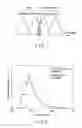
As shown in FIG. 1, the larger the overlap (shown by A in FIG. 1) of the emission spectrum of the host material and the absorption spectrum of the light-emitting dopant is, the better the energy transfer efficiency from the host to the light-emitting dopant is. This is called Foerster's energy transfer mechanism.
Host materials for light-emitting layers using phosphorescence are roughly classified into low molecular-type and high molecular-type. A light-emitting layer comprising a low-molecular host material is mainly formed by vacuum co-evaporation of the low-molecular host material and the light-emitting dopant. A light-emitting layer comprising a high-molecular host material is mainly formed by applying a solution mixed with the high-molecular host material and the light-emitting dopant.
Typical examples of the low-molecular host material include p-biscarbazolylphenylene (CBP). Typical examples of the high-molecular host material include polyvinylcarbazole, referred to as PVK (Jpn. J. Appl. Phys., Vol. 39 (2000) pp. L828-L829, and Adv. Mater., 2006, 18, 948-954). The structure and the numbers for the substitution positions of carbazole, and the structure of PVK are shown below.
Carbazole (the numerals are the numbers for the substitution positions)
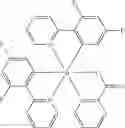
The light-emitting dopant materials include blue-emitting dopant materials, green-emitting dopant materials, and red-emitting dopant materials. Typical examples of the blue-emitting dopant materials include bis(2-(4,6-difluorophenyl)pyridinate iridium complex [hereinafter referred to as FIrpic]. Typical examples of the green-emitting dopant materials include tris(2-phenylpyridine)iridium complex [hereinafter referred to as Ir(ppy)3]. Typical examples of the red-emitting dopant materials include Bt2Ir(acac).
Here, formation of a light-emitting layer comprising these light-emitting dopant materials and PVK which is a high-molecular host material is envisaged. The emission wavelength of PVK is 420 nm, whereas the absorption band, which is responsible for emission of the light-emitting dopant material, is 380 nm for FIrpic, the blue-emitting dopant material, 410 nm for Ir(ppy)3, the green-emitting dopant material, and 480 nm for Bt2Ir(acac), the red-emitting dopant material. Therefore, for example, where efficient energy transfer from PVK to FIrpic is desired, it is desirable to shift the emission wavelength of PVK toward shorter wavelengths.
Furthermore, a desirable property of the host material for the light-emitting layer using phosphorescence is that the host material does not deactivate the excited triplet state of the light-emitting dopant. For this purpose, it is desirable that the excited triplet energy of the host material is higher than the excited triplet energy of the light-emitting dopant, and thus it is also desirable to shift the emission wavelength of the host material toward shorter wavelengths.
BRIEF SUMMARY OF THE INVENTION
According to an embodiment, there is provided a light-emitting compound comprising two or more carbazole skeletons each having two or more fluorine atoms at 2-, 4-, 5- and 7-positions, the carbazole skeleton represented by the formula (1):
where two or more of R2, R4, R5 and R7 are F and a remainder is H.
In the light-emitting compound of the embodiment, the compound may be a polymer comprising the carbazole skeletons represented by the formula (1) as repeating units.
According to another embodiment, there is provided an organic electroluminescence device comprising a light-emitting layer between a cathode and an anode, wherein the light-emitting layer comprises a host material of the above light-emitting compound and a blue-emitting dopant.
BRIEF DESCRIPTION OF THE SEVERAL VIEWS OF THE DRAWING
FIG. 1 is a schematic view showing the overlap of the emission spectrum of a host material and the absorption spectrum of a light-emitting dopant;
FIG. 2 shows emission spectra of difluorocarbazole and unsubstituted carbazole;
FIG. 3 is a cross-sectional view of the OLED according to an embodiment; and
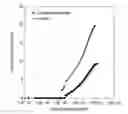
FIG. 4 is a graph showing light-emitting properties of the OLEDs in the Example and Comparative Example.
DETAILED DESCRIPTION OF THE INVENTION
Hereinafter embodiments of the invention will be described.
The light-emitting compound according to the embodiments comprises two or more carbazole skeletons each having two or more fluorine atoms at 2-, 4-, 5- and 7-positions. Two or more of the substitution positions for fluorine atoms may be arbitrarily selected from 2-, 4-, 5- and 7-positions. It was estimated from molecular orbital calculation that emission is shifted toward shorter wavelengths in such fluorine-substituted carbazole.
Next, a synthetic example of polyvinyl-difluorocarbazole in which 2- and 7-positions of the carbazole skeletons are substituted with fluorine atoms will be described. A reaction scheme is shown below.
Toluene (50 mL), 3-fluorophenol (1) (25.0 mmol) and a 30% aqueous solution of potassium phosphonate (50 mL) were mixed in a 100 mL three-necked flask. Anhydrous trifluoromethanesulfonic acid (30.0 mmol) was added dropwise under a condition of the reaction liquid of 10° C. or less, and the reaction liquid was stirred under room temperature for 1 hour. The reaction liquid was extracted twice with ethyl acetate (50 mL), washed with water (150 mL), and dried by removing water content with magnesium sulfate to give the liquid compound (2) (23.0 mmol, yield 92%).
(Reaction II)
The compound (2) (2.0 mmol) and 3-fluoroaniline (2.2 mmol) were dissolved in toluene (40 mL). Palladium acetate (0.2 mmol), cesium carbonate (2.4 mmol) and 2-dicyclohexylphosphino-2′,4′,6′-tri-isopropylbiphenyl (3.0 mmol) as a ligand were added to the reaction liquid, and the reaction liquid was stirred at 100° C. for 2 hours. The reaction liquid was dried in vacuum and the product was isolated by column chromatography (solvent of ethyl acetate:hexane=1:3) to give the compound (3) (1.5 mmol, yield 75%).
(Reaction III)
The compound (3) (4 mmol) and palladium acetate (8 mmol) were added to acetic acid (50 mL) in a 100 mL round-bottom flask, and the reaction liquid was stirred at 100° C. for 4 hours. The reaction liquid was diluted with ethyl acetate, neutralized with an aqueous solution of saturated sodium hydrogen carbonate, and dehydrated with magnesium sulfate. The organic layer was dried in vacuum, and the obtained solid was isolated by column chromatography (solvent of ethyl acetate:hexane=1:3) to give the compound (4) (0.6 mmol, yield 15%). The compound (4) was dissolved in deuterated chloroform to measure a proton NMR spectrum. Chemical shifts at peak positions (ppm): 6.98 (multiplet), 7.09 (quartet), 7.92 (quartet), 8.10.
(Reaction IV)
The compound (4) (3.0 mmol), dimethylsulfoxide (10 mL), potassium hydroxide (9.7 mmol) and chloroethyl tosylate (9.9 mmol) were mixed in a 50 mL round-bottom flask, and the reaction liquid was stirred at room temperature for 5 hours. Ethyl acetate was added to the reaction liquid, and the reaction liquid was washed with water. The solvent was then removed, and the product was dried to give the compound (5).
(Reaction V)
Potassium hydroxide (7.5 mmol), an ethanol solution of the compound (5) (90 mL) and isopropyl alcohol (6.5 mL) were mixed in a 100 mL three-necked flask, heated for 2 hours under reflux, and cooled in a ice bath. Pure water (200 mL) was added to the reaction liquid, and the reaction liquid was filtered. Ethyl acetate was added to the residue, and the residue was dried in vacuum. The product was isolated by column chromatography (silica gel column, solvent of ethyl acetate:hexane=1:5) to give the compound (6) (2.5 mmol, yield 85%).
(Reaction VI)
The compound (6) (2.76 mmol), azobisisobutyro-nitrile (0.38 mmol) and dehydrated tetrahydrofuran (3.3 mL) were stirred at a temperature of 50 to 60° C. for 5 hours in a 50 mL three-necked flask. The reaction liquid was cooled at room temperature, dissolved in tetrahydrofuran, purified by re-precipitation in methanol, and the precipitate was dried to give the compound (7) (517 mg, yield 82%).
The compound (7) was dissolved in deuterated tetrahydrofuran to measure a proton NMR spectrum. As a result, a broad spectrum specific to a polymer was obtained. Chemical shifts at the peak positions (ppm): 2.00, 3.13, 4.70, 6.09, 6.42, 6.65, 7.00, 7.20, 7.436. The number average molecular weight (Mn) was 17,975.
Here, the emission spectra of difluorocarbazole of the compound (4) and unsubstituted carbazole are shown in FIG. 2. As shown in FIG. 2, it is apparent that the emission wavelength is shifted toward shorter wavelengths in difluorocarbazole of the compound (4) as compared to unsubstituted carbazole.
Meanwhile, the following compounds are exemplified as blue phosphorescence light-emitting dopants.
1. Bis(3,5-difluoro-2-(2-pyridyl)phenyl-2-carboxypyridyl)iridium
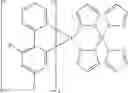
2. Bis(2,4-difluorophenylpyridinato)-tetrakis(1-pyrazolyl)borate iridium
3. Facial iridium(III) tris(1-phenyl-3-methylbenzimidazolin-2-ylidene-C,C2′)
4. Platinum(III) [2-(4,6-difluoro-phenyl)pyridinato-N,C2]-(acetylacetonate)
5. Tris(2-(2,4-difluorophenyl)pyridine)iridium(III)
Next, an OLED (Example) having a light-emitting layer comprising the polyvinyldifluorocarbazole (hereinafter referred to as F-PVK) synthesized as above was fabricated.
The cross-sectional view of the OLED is shown in FIG. 3. The cathode 2, hole-transport layer 3, light-emitting layer 4, electron-transport layer 5 and electron-injecting layer/anode 6 are formed in this order on the glass substrate 1.
The anode 2 is a transparent electrode of ITO (indium tin oxide) having a thickness of 50 nm. As a material for the hole-transport layer 3, an aqueous solution of poly(ethylenedioxythiophene):poly(styrenesulfonic acid) [hereinafter referred to as PEDOT:PSS] which is an electroconductive ink was used. The aqueous solution of PEDOT:PSS was applied by spin coating, heated and dried to form the hole-transport layer 3 having a thickness of 50 nm.
As materials for the light-emitting layer 4, F-PVK was used as a host material, 1,3-bis(2-(4-tert-butylphenyl)-1,3,4-oxydiazol-5-yl)benzene [hereinafter referred to as OXD-7] was used as a compound which is introduced for the purpose of carrier balancing, and FIrpic was used as a blue phosphorescence light-emitting dopant. These were weighed in a weight ratio of F-PVK:OXD-7:FIrpic=65:30:5 and dissolved in chlorobenzene to give a solution, and the solution was then applied by spin coating, heated and dried to give the light-emitting layer 4 having a thickness of 90 nm.
The electron-transport layer 5 was formed in a thickness of 10 nm by vacuum-evaporating tris(8-hydroxyquinolinato) aluminum [hereinafter referred to as Alq3]. The electron-injecting layer was formed of LiF having a thickness of 1 nm, and an anode was formed of Al having a thickness of 150 nm.
For comparison, an OLED (Comparative Example) was fabricated in a similar manner as described above using unsubstituted PVK as a host material.
FIG. 4 shows the emission properties of the OLEDs of the Example and Comparative Example. Both OLEDs exhibited a behavior that emission started in accordance with increase in the current density and the emission efficiency monotonously increased. The OLED of the Example comprising F-PVK in the light-emitting layer had higher emission efficiency than the OLED of the Comparative Example comprising unsubstituted PVK in the light-emitting layer. The highest emission efficiency in the current density range used for measurement was 19.9 cd/A for the Example and 9.3 cd/A for the Comparative Example. This result is attributed to that the emission wavelength was shifted toward shorter wavelengths in the fluorine-substituted F-PVK by which the energy transfer efficiency from F-PVK to FIrpic, the blue-emitting dopant, was improved.
Additional advantages and modifications will readily occur to those skilled in the art. Therefore, the invention in its broader aspects is not limited to the specific details and representative embodiments shown and described herein. Accordingly, various modifications may be made without departing from the spirit or scope of the general inventive concept as defined by the appended claims and their equivalents.
Claims
What is claimed is:1. A light-emitting compound comprising two or more carbazole skeletons each having two or more fluorine atoms at 2-, 4-, 5- and 7-positions, the carbazole skeleton represented by the formula (1):
where two or more of R2, R4, R5 and R7 are F and a remainder is H.
2. The light-emitting compound according to claim 1, wherein the compound is a polymer comprising the carbazole skeletons represented by the formula (1) as repeating units.
3. An organic electroluminescence device comprising a light-emitting layer between a cathode and an anode, wherein the light-emitting layer comprises a host material of the light-emitting compound according to claim 1 and a blue-emitting dopant.
Images & Drawings included:





Sources:
- United States Patent and Trademark Office - verify current appl. status at the USPTO↗
Similar patent applications:
- » 20240397822
ORGANIC LIGHT-EMITTING COMPOUND AND ORGANIC ELECTROLUMINESCENT DEVICE USING SAME - » 20200168805
ORGANIC LIGHT-EMITTING COMPOUND AND ORGANIC ELECTROLUMINESCENT DEVICE USING THE SAME - » 20070270595
Organic light-emitting compound and organic electroluminescent device using the same - » 20210143327
ORGANIC LIGHT-EMITTING COMPOUND AND ORGANIC ELECTROLUMINESCENT DEVICE USING THE SAME - » 10359003
Blue light-emitting compound for organic electroluminescent device and organic electroluminescent device using the same - » 20240397821
ORGANIC LIGHT-EMITTING COMPOUND AND ORGANIC ELECTROLUMINESCENT DEVICE USING SAME - » 20140374724
Organic light-emitting compound and organic electroluminescent device using same - » 20150214490
Organic light-emitting compound and organic electroluminescent device using same - » 20240349606
PLURALITY OF LIGHT-EMITTING MATERIALS, ORGANIC ELECTROLUMINESCENT COMPOUND, AND ORGANIC ELECTROLUMINESCENT DEVICE COMPRISING THE SAME - » 20220037596
Plurality of light-emitting materials, organic electroluminescent compound, and organic electroluminescent device comprising the same
Recent applications in this class:
- » 20250282992 2025-09-11
LIGHT-EMITTING DEVICE INCLUDING CONDENSED CYCLIC COMPOUND AND ELECTRONIC APPARATUS INCLUDING THE LIGHT-EMITTING DEVICE - » 20250282991 2025-09-11
Light conversion agent, a light conversion adhesive film composition, a light conversion adhesive film, and a photovoltaic module - » 20250277146 2025-09-04
ORGANOMETALLIC COMPOUND, ORGANIC LIGHT-EMITTING DEVICE INCLUDING THE SAME, AND ELECTRONIC APPARATUS INCLUDING THE ORGANIC LIGHT-EMITTING DEVICE - » 20250270445 2025-08-28
COMPOUNDS AND USES THEREOF IN FIELD OF OPTOELECTRONICS - » 20250270444 2025-08-28
Symmetric Charge Transfer Compounds for Organic Photovoltaics - » 20250270443 2025-08-28
ORGANIC METAL COMPLEX SCINTILLATORS AND METHODS OF MAKING THE SAME - » 20250263600 2025-08-21
LIGHT-EMITTING POLYMER FILM AND PROCESS OF ITS FORMATION - » 20250257261 2025-08-14
PLURALITY OF LIGHT-EMITTING MATERIAL AND ORGANIC ELECTROLUMINESCENT DEVICE COMPRISING THE SAME - » 20250257260 2025-08-14
HETEROCYCLIC COMPOUND, AND ORGANIC LIGHT-EMITTING DEVICE AND ELECTRONIC APPARATUS INCLUDING THE SAME - » 20250250484 2025-08-07
LIGHT-EMITTING DEVICE AND ELECTRONIC APPARATUS COMPRISING SAME
Recent applications for this Assignee:
- » 20250294845 2025-09-18
SEMICONDUCTOR DEVICE - » 20250294830 2025-09-18
SEMICONDUCTOR DEVICE - » 20250294829 2025-09-18
SEMICONDUCTOR DEVICE - » 20250294786 2025-09-18
SEMICONDUCTOR DEVICE - » 20250294110 2025-09-18
CODE RECOGNITION METHOD, INSPECTION DEVICE, AND STORAGE MEDIUM - » 20250293867 2025-09-18
CONTROL DEVICE, QUANTUM KEY DISTRIBUTION SYSTEM, CONTROL METHOD, AND COMPUTER PROGRAM PRODUCT - » 20250293865 2025-09-18
QUANTUM KEY DISTRIBUTION SYSTEM, QUANTUM KEY DISTRIBUTION DEVICE, AND QUANTUM KEY DISTRIBUTION METHOD - » 20250293784 2025-09-18
AN OPTICAL TRANSMITTER, A QUANTUM COMMUNICATION SYSTEM AND A METHOD OF OPERATING AN OPTICAL TRANSMITTER - » 20250293414 2025-09-18
BATTERY - » 20250293316 2025-09-18
NONAQUEOUS ELECTROLYTE BATTERY AND BATTERY PACK