Organic electroluminescent display device and method of driving the same
US20100123700A1
2010-05-20
12/453,617
2009-05-15
✅ Patent granted
US 8,547,305 B2
2013-10-01
-
-
Alexander S Beck | Nguyen H Truong
McKenna Long & Aldridge LLP
2030-11-14
Abstract:
An organic electroluminescent display device includes an organic electroluminescent diode receiving a driving voltage and a first ground voltage; first and second driving thin film transistors for providing a driving current to the organic electroluminescent diode, each of the first and second driving thin film transistors receiving one of the driving voltage and the first ground voltage; a first switching thin film transistor receiving a data voltage and switched by an nth scan signal to output the data voltage; a second switching thin film transistor switched by a current providing signal to provide the one of the driving voltage and the first ground voltage to the second driving thin film transistor; a third switching thin film transistor receiving a second ground voltage and switched by a selection signal to output the second ground voltage to an output terminal of the first switching thin film transistor; a fourth switching thin film transistor disposed among an output terminal of the second switching thin film transistor, a gate terminal of the first driving thin film transistor and a gate terminal of the second driving thin film transistor and switched by the selection signal; and a first capacitor disposed among the output terminal of the first switching thin film transistor, the gate terminal of the first driving thin film transistor and the gate terminal of the second driving thin film transistor, wherein “n” is a positive integer.
Inventors:
- Seung-Tae KIM 2 🇰🇷 Gyeyang-gu, South Korea
- Hae-Jin BAE 2 🇰🇷 Uiwang-si, South Korea
- Won-Kyu HA 5 🇰🇷 Gumi-si, South Korea
- Hak-Su KIM 50 🇰🇷 Seoul, South Korea
- Ho-Min Lim 1 🇰🇷 Yongin-si, South Korea
- Seung-Tae Kim 1 🇰🇷 Incheon, South Korea
Assignee:
- LG DISPLAY CO., LTD. 13,812 🇰🇷 Seoul, South Korea
Applicant:
Interested in similar patents?
Get notified when new applications in this technology area are published.
Classification:
G09G2300/0819 » CPC further
Aspects of the constitution of display devices; Active matrix structure, i.e. with use of active elements, inclusive of non-linear two terminal elements, in the pixels together with light emitting or modulating elements; Several active elements per pixel in active matrix panels used for counteracting undesired variations, e.g. feedback or autozeroing
G09G2300/0852 » CPC further
Aspects of the constitution of display devices; Active matrix structure, i.e. with use of active elements, inclusive of non-linear two terminal elements, in the pixels together with light emitting or modulating elements; Several active elements per pixel in active matrix panels forming a memory circuit, e.g. a dynamic memory with one capacitor being a dynamic memory with more than one capacitor
G09G2300/0866 » CPC further
Aspects of the constitution of display devices; Active matrix structure, i.e. with use of active elements, inclusive of non-linear two terminal elements, in the pixels together with light emitting or modulating elements; Several active elements per pixel in active matrix panels forming a memory circuit, e.g. a dynamic memory with one capacitor with additional control of the display period without amending the charge stored in a pixel memory, e.g. by means of additional select electrodes by means of changes in the pixel supply voltage
G09G2300/0876 » CPC further
Aspects of the constitution of display devices; Active matrix structure, i.e. with use of active elements, inclusive of non-linear two terminal elements, in the pixels together with light emitting or modulating elements Supplementary capacities in pixels having special driving circuits and electrodes instead of being connected to common electrode or ground; Use of additional capacitively coupled compensation electrodes
G09G2310/0251 » CPC further
Command of the display device; Addressing, scanning or driving the display screen or processing steps related thereto; Details of the generation of driving signals Precharge or discharge of pixel before applying new pixel voltage
G09G2310/0262 » CPC further
Command of the display device; Addressing, scanning or driving the display screen or processing steps related thereto The addressing of the pixel, in a display other than an active matrix LCD, involving the control of two or more scan electrodes or two or more data electrodes, e.g. pixel voltage dependent on signals of two data electrodes
G09G2320/043 » CPC further
Control of display operating conditions; Maintaining the quality of display appearance Preventing or counteracting the effects of ageing
G09G5/00 IPC
Control arrangements or circuits for visual indicators common to cathode-ray tube indicators and other visual indicators
G09G3/14 IPC
Control arrangements or circuits, of interest only in connection with visual indicators other than cathode-ray tubes for presentation of a single character by selection from a plurality of characters, or by composing the character by combination of individual elements, e.g. segments using a combination of such display devices for composing words, rows or the like, in a frame with fixed character positions using controlled light sources using electroluminescent elements Semiconductor devices, e.g. diodes
G09G3/32 IPC
Control arrangements or circuits, of interest only in connection with visual indicators other than cathode-ray tubes for presentation of an assembly of a number of characters, e.g. a page, by composing the assembly by combination of individual elements arranged in a matrix no fixed position being assigned to or needed to be assigned to the individual characters or partial characters using controlled light sources using electroluminescent panels semiconductive, e.g. using light-emitting diodes [LED]
G09G3/30 IPC
Control arrangements or circuits, of interest only in connection with visual indicators other than cathode-ray tubes for presentation of an assembly of a number of characters, e.g. a page, by composing the assembly by combination of individual elements arranged in a matrix no fixed position being assigned to or needed to be assigned to the individual characters or partial characters using controlled light sources using electroluminescent panels
Description
The present application claims the benefit of Korean Patent Application No. 10-2008-0113712 filed in Korea on Nov. 15, 2008, which is hereby incorporated by reference in their entirety.
BACKGROUND OF THE INVENTION
1. Field of the Invention
The present invention relates to an organic electroluminescent display (OELD) device, and more particularly, to an OELD device being capable of displaying an image of uniform brightness and a method of driving the OELD.
2. Background for the Related Art
The liquid crystal display (LCD) device requires a light source therein because it is non-emission type display device. The OELD device is introduced to overcome this disadvantage of an active matrix type liquid crystal display device. In the OELD device, an organic luminescent layer is exited to emit light. The OELD device is driven by a relatively low voltage and has a thin profile.
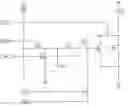
FIG. 1 is a circuit diagram showing a pixel of an active matrix type OELD device according to the related art. As shown in FIG. 1, two transistors and one capacitor are disposed in the pixel. The OELD device includes a scanning line “S”, a data line “D”, a switching thin film transistor (TFT) “SW”, a capacitor “C”, a driving TFT “DR” and an organic electroluminescent diode “E” on a substrate. For example, each of the switching and driving TFTs “SW” and “DR” may be an NMOS type TFT.
A gate of the switching TFT “SW” is connected to the scanning line, and a source of the switching TFT “SW” is connected to the data line “D”. One end of the capacitor “C” is connected to a drain of the switching TFT “SW”, and a ground voltage “VSS” is applied to the other end of the capacitor “C”.
A source of the driving TFT “DR” is connected to a power line. A driving voltage “VDD” is applied to the drain of the driving TFT “DR” through the power line. A drain of the driving TFT “DR” is connected to an electrode of the organic electroluminescent diode “E”. A gate of the driving TFT “DR” is connected to the drain of the switching TFT “SW”.
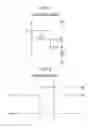
A driving principle of the device shown in FIG. 1 is explained with FIG. 2. FIG. 2 is a timing chart of signals in an OELD device according to the related art. When an nth scan signal “S(n)” of a high voltage “Vgh” is applied to the switching TFT “SW” through the scanning line S, the switching TFT “SW” is turned on. The scan signal “S(n)” is generated from a gate driving integrated circuit (IC) (not shown). The high scan signal “Vgh” is a positive voltage. The scan signal “S(n)” is pulsed from a low voltage “Vgl” to the high voltage “Vgh”.
When the switching TFT “SW” is turned on, a data voltage “Vdata” is applied to the capacitor “C” through the data line “D” and the switching TFT “SW” such that an electric charge is charged in the capacitor “C”. Since a channel of the driving TFT “DR” is an NMOS type, the data voltage is positive. Amount of an electric current passes through the channel of the driving TFT “DR” depends upon a potential difference between a charged voltage of the capacitor “C” and the driving voltage “VDD”. Brightness of light from the organic electroluminescent diode “E” is determined by the amount of an electric current passing through the channel of the driving TFT “DR”.
Unfortunately, the driving TFT “DR” in each pixel has a deviation in an electric property such that each pixel has different brightness in the same condition. In a panel using a low temperature poly-silicon type backplane, there is a deviation of an electric property in the driving TFTs “DR” because of an excimer laser annealing process for the low temperature poly-silicon. Accordingly, even if the same voltage is applied to the driving TFT “DR” in each pixel, there are differences in amounts of an electric current passing through the channel of the driving TFT “DR” such that brightness uniformity of images on the OELD device is deteriorated.
On the other hand, in a panel using an amorphous silicon type backplane, there is thermal degradation in the driving TFTs “DR” when the driving TFTs “DR” are driven. Each driving TFT “DR” in the pixels has a difference in the thermal degradation such that brightness uniformity of images on the OELD device is deteriorated.
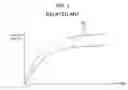
Referring to FIG. 3, which is a graph showing deviation of an electric current on an organic electroluminescent diode with respect to a voltage on a driving TFT in the related art OELD, an electric current on the organic electroluminescent diode “E” (of FIG. 1) in one pixel is different from that in another pixel because of deviation in an electric property of the driving TFT “DR” (in FIG. 1). As a result, even if each pixel is driven under the same condition, each pixel displays an image having a difference in brightness such that brightness uniformity is deteriorated. For example, afterimages or a stain is generated on the image panel.
SUMMARY OF THE INVENTION
Accordingly, the present invention is directed to an organic electroluminescent display (OELD) device and a method of driving the same that substantially obviate one or more of the problems due to limitations and disadvantages of the related art.
An object of the present invention is to provide an OELD device including driving TFTs having an uniform electric property and being capable of displaying an image having uniform brightness.
Another object of the present invention is to provide a method of driving an OELD device being capable of minimizing deviation in an electric property of driving TFTs.
Additional features and advantages of the invention will be set forth in the description which follows, and in part will be apparent from the description, or may be learned by practice of the invention. The objectives and other advantages of the invention will be realized and attained by the structure particularly pointed out in the written description and claims hereof as well as the appended drawings.
To achieve these and other advantages and in accordance with the purpose of the present invention, as embodied and broadly described, an organic electroluminescent display device includes an organic electroluminescent diode receiving a driving voltage and a first ground voltage; first and second driving thin film transistors for providing a driving current to the organic electroluminescent diode, each of the first and second driving thin film transistors receiving one of the driving voltage and the first ground voltage; a first switching thin film transistor receiving a data voltage and switched by an nth scan signal to output the data voltage; a second switching thin film transistor switched by a current providing signal to provide the one of the driving voltage and the first ground voltage to the second driving thin film transistor; a third switching thin film transistor receiving a second ground voltage and switched by a selection signal to output the second ground voltage to an output terminal of the first switching thin film transistor; a fourth switching thin film transistor disposed among an output terminal of the second switching thin film transistor, a gate terminal of the first driving thin film transistor and a gate terminal of the second driving thin film transistor and switched by the selection signal; and a first capacitor disposed among the output terminal of the first switching thin film transistor, the gate terminal of the first driving thin film transistor and the gate terminal of the second driving thin film transistor, wherein “n” is a positive integer.
In another aspect, a method of driving an organic electroluminescent display device including an organic electroluminescent diode receiving a driving voltage and a first ground voltage, first and second driving thin film transistors for providing a driving current to the organic electroluminescent diode, each of the first and second driving thin film transistors receiving one of the driving voltage and the first ground voltage, a first switching thin film transistor receiving a data voltage and switched by an nth scan signal to output the data voltage, a second switching thin film transistor switched by a current providing signal to provide the one of the driving voltage and the first ground voltage to the second driving thin film transistor, a third switching thin film transistor receiving a second ground voltage and switched by a selection signal to output the second ground voltage to an output terminal of the first switching thin film transistor, a fourth switching thin film transistor disposed among an output terminal of the second switching thin film transistor, a gate terminal of the first driving thin film transistor and a gate terminal of the second driving thin film transistor and switched by the selection signal, a first capacitor disposed among the output terminal of the first switching thin film transistor, the gate terminal of the first driving thin film transistor and the gate terminal of the second driving thin film transistor and a second capacitor disposed between a source terminal of the second driving thin film transistor and the gate terminal of the second driving thin film transistor, wherein “n” is a positive integer, includes switching the first switching thin film transistor to be turned off and the second to fourth switching thin film transistors to be turned on such that the one of the driving voltage and the first ground voltage is provided into the first and second capacitors; switching the third and fourth switching thin film transistors to be turned on and the second switching thin film transistor to be turned off such that wherein a threshold voltage of the second driving thin film transistor is charged in each of the first and second capacitors; switching the first switching thin film transistor to be turned on and providing the data voltage into the second capacitor through the first switching thin film transistor, wherein the third and fourth switching thin film transistors are switched to be turned off; and switching the second switching thin film transistor to be turned on and the first switching thin film transistor to be turned off such that the organic electroluminescent diode emits a light using the driving voltage and the first ground voltage.
In another aspect, a method of driving an organic electroluminescent display device including an organic electroluminescent diode receiving a driving voltage and a first ground voltage, first and second driving thin film transistors for providing a driving current to the organic electroluminescent diode, each of the first and second driving thin film transistors receiving one of the driving voltage and the first ground voltage, a first switching thin film transistor receiving a data voltage and switched by an nth scan signal to output the data voltage, a second switching thin film transistor switched by a current providing signal to provide the one of the driving voltage and the first ground voltage to the second driving thin film transistor, a third switching thin film transistor receiving a second ground voltage and switched by a selection signal to output the second ground voltage to an output terminal of the first switching thin film transistor, a fourth switching thin film transistor disposed among an output terminal of the second switching thin film transistor, a gate terminal of the first driving thin film transistor and a gate terminal of the second driving thin film transistor and switched by the selection signal, a first capacitor disposed among the output terminal of the first switching thin film transistor, the gate terminal of the first driving thin film transistor and the gate terminal of the second driving thin film transistor and a second capacitor disposed between a source terminal of the third switching thin film transistor and the gate terminal of the third switching thin film transistor, wherein “n” is a positive integer, includes switching the first switching thin film transistor to be turned off and the second to fourth switching thin film transistors to be turned on such that the one of the driving voltage and the first ground voltage is provided into the first and second capacitors; switching the third and fourth switching thin film transistors to be turned on and the second switching thin film transistor to be turned off such that wherein a threshold voltage of the second driving thin film transistor is charged in the first capacitor; switching the first switching thin film transistor to be turned on and providing the data voltage into the second capacitor through the first switching thin film transistor, wherein the third and fourth switching thin film transistors are switched to be turned off; and switching the second switching thin film transistor to be turned on and the first switching thin film transistor to be turned off such that the organic electroluminescent diode emits a light using the driving voltage and the first ground voltage.
In another aspect, a method of driving an organic electroluminescent display device including an organic electroluminescent diode receiving a driving voltage and a first ground voltage, first and second driving thin film transistors for providing a driving current to the organic electroluminescent diode, each of the first and second driving thin film transistors receiving one of the driving voltage and the first ground voltage, a first switching thin film transistor receiving a data voltage and switched by an nth scan signal to output the data voltage, a second switching thin film transistor switched by a current providing signal to provide the one of the driving voltage and the first ground voltage to the second driving thin film transistor, a third switching thin film transistor receiving a second ground voltage and switched by a selection signal to output the second ground voltage to an output terminal of the first switching thin film transistor, a fourth switching thin film transistor disposed among an output terminal of the second switching thin film transistor, a gate terminal of the first driving thin film transistor and a gate terminal of the second driving thin film transistor and switched by the selection signal, a fifth switching thin film transistor receiving an initial voltage and switched by an initializing signal to output the initial voltage into the gate terminal of the first driving thin film transistor and the gate terminal of the second driving thin film transistor, a first capacitor disposed among the output terminal of the first switching thin film transistor, the gate terminal of the first driving thin film transistor and the gate terminal of the second driving thin film transistor, and a second capacitor disposed between a source terminal of the third switching thin film transistor and the gate terminal of the third switching thin film transistor, wherein “n” is a positive integer, includes switching the fifth switching thin film transistor to be turned on such that the initial voltage of a low level is provided into the gate terminal of the first and second driving thin film transistors; providing the initial voltage of a high level into the gate terminal of the first and second driving thin film transistors with the fifth switching thin film transistor to be turned on; switching the third and fourth switching thin film transistor to be turned on and the first and second switching thin film transistors to be turned off such that a threshold voltage of the second driving thin film transistor is charged in each of the first and second capacitors; switching the first switching thin film transistor to be turned on and providing the data voltage into the second capacitor through the first switching thin film transistor, wherein the third and fourth switching thin film transistors are switched to be turned off; and switching the second switching thin film transistor to be turned on and the first switching thin film transistor to be turned off such that the organic electroluminescent diode emits a light using the driving voltage and the first ground voltage.
In another aspect, a method of driving an organic electroluminescent display device including an organic electroluminescent diode receiving a driving voltage and a first ground voltage, first and second driving thin film transistors for providing a driving current to the organic electroluminescent diode, each of the first and second driving thin film transistors receiving one of the driving voltage and the first ground voltage, a first switching thin film transistor receiving a data voltage and switched by an nth scan signal to output the data voltage, a second switching thin film transistor switched by a current providing signal to provide the one of the driving voltage and the first ground voltage to the second driving thin film transistor, a third switching thin film transistor receiving a second ground voltage and switched by a selection signal to output the second ground voltage to an output terminal of the first switching thin film transistor, a fourth switching thin film transistor disposed among an output terminal of the second switching thin film transistor, a gate terminal of the first driving thin film transistor and a gate terminal of the second driving thin film transistor and switched by the selection signal, a fifth switching thin film transistor receiving an initial voltage and switched by an initializing signal to output the initial voltage into the gate terminal of the first driving thin film transistor and the gate terminal of the second driving thin film transistor, a first capacitor disposed among the output terminal of the first switching thin film transistor, the gate terminal of the first driving thin film transistor and the gate terminal of the second driving thin film transistor, and a second capacitor disposed between a source terminal of the third switching thin film transistor and the gate terminal of the third switching thin film transistor, wherein “n” is a positive integer, includes switching the fifth switching thin film transistor to be turned on such that the initial voltage of a low level is provided into the gate terminal of the first and second driving thin film transistors; switching the second to fourth switching thin film transistors to be turned on and the first and fifth switching thin film transistors to be turned off such that the driving voltage is provided into the first and second capacitors; switching the third and fourth switching thin film transistors to be turned on and the first, second and fifth switching thin film transistors to be turned off such that a threshold voltage of the second driving thin film transistor is charged in each of the first and second capacitors; switching the first switching thin film transistor to be turned on and providing the data voltage into the second capacitor through the first switching thin film transistor, wherein the third and fourth switching thin film transistors are switched to be turned off; and switching the second switching thin film transistor to be turned on and the first switching thin film transistor to be turned off such that the organic electroluminescent diode emits a light using the driving voltage and the first ground voltage.
It is to be understood that both the foregoing general description and the following detailed description are exemplary and explanatory and are intended to provide further explanation of the invention as claimed.
BRIEF DESCRIPTION OF THE DRAWINGS
The accompanying drawings, which are included to provide a further understanding of the invention and are incorporated in and constitute a part of this specification, illustrate embodiments of the invention and together with the description serve to explain the principles of the invention.
FIG. 1 is a circuit diagram showing a pixel of an active matrix type OELD device according to the related art;
FIG. 2 is a timing chart of signals in an OELD device according to the related art;
FIG. 3 is a graph showing deviation of an electric current on an organic electroluminescent diode with respect to a voltage on a driving TFT in the related art OELD;
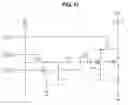
FIG. 4 is a circuit diagram showing a pixel of an OELD device according to a first embodiment of the present invention;
FIG. 5 is a timing chart for illustrating a driving principle of an OELD device according to the first embodiment of the present invention;
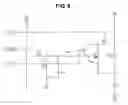
FIG. 6 is a circuit diagram showing a pixel of an OELD device according to a second embodiment of the present invention;
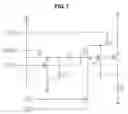
FIG. 7 is a circuit diagram showing a pixel of an OELD device according to a third embodiment of the present invention;
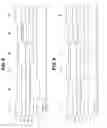
FIG. 8 is a timing chart for illustrating a first driving principle of an OELD device according to the third embodiment of the present invention;
FIG. 9 is a timing chart for illustrating a second driving principle of an OELD device according to the third embodiment of the present invention;
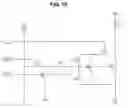
FIG. 10 is a circuit diagram showing a pixel of an OELD device according to a fourth embodiment of the present invention;
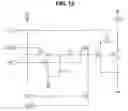
FIG. 11 is a circuit diagram showing a pixel of an OELD device according to a fifth embodiment of the present invention; and
FIG. 12 is a circuit diagram showing a pixel of an OELD device according to a sixth embodiment of the present invention.
DETAILED DESCRIPTION OF THE ILLUSTRATED EMBODIMENTS
Reference will now be made in detail to embodiments of the present invention, examples of which are illustrated in the accompanying drawings.
In the related art OELD device, a driving electric current (Ie) of the organic electroluminescent diode is evaluated by following equation 1.
Ie=(1/2)*μ*Cox*(W/L)*(Vgs−Vth)2, [1]
wherein μ is a mobility, Cox is capacitance, (W/L) is a ratio of a width of the channel of the driving TFT to a length of the channel of the driving TFT, Vgs is a voltage difference between the gate terminal and the source terminal of the driving TFT, and Vth is a threshold voltage of the driving TFT.
In the above equation, the threshold voltage (Vth) has a strongly effect on the driving electric current (Ie) because of a square dimension. Accordingly, the present invention intends to remove an effect of the threshold voltage (Vth) on the driving electric current (Ie) to minimize deviation in the electric property of the driving TFT.
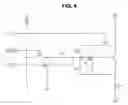
FIG. 4 is a circuit diagram showing a pixel of an OELD device according to a first embodiment of the present invention. In FIG. 4, an OELD includes an organic electroluminescent diode “E”, first to fourth switching TFTs “S1”, “S2”, “S3” and “S4”, first and second driving TFTs “D1” and “D2”, and first and second capacitors “Cst1” and “Cst2” in each pixel. A channel of each of the first to fourth switching TFTs “S1” to “S4” and the first and second driving TFTs “D1” and “D2” may be an NMOS type. Depending on requirements, a channel of each of the first to fourth switching TFTs “S1” to “S4” and the first and second driving TFTs “D1” and “D2” may be a PMOS type.
The organic electroluminescent diode “E” is connected to a source terminal of the first driving TFT “D1” and a source terminal of the second driving TFT “D2” such that a driving electric current Ie is applied to the organic electroluminescent diode “E”. The first and second driving TFTs “D1” and “D2” have the same properties and are electrically connected to each other in parallel. A driving voltage “VDD” is applied to a drain terminal of each of the first and second driving TFTs “D1” and “D2”.
The first switching TFT “S1” receives a data voltage “Vdata” through a data line and an nth scan signal “scan(n)” through a scanning line. “n” is a positive integer. The first switching TFT “S1” is switched by the nth scan signal “scan(n)” and output the data voltage “Vdata”.
The second switching TFT “S2” is disposed between a drain terminal of the first driving TFT “D1” and a drain terminal of the second driving TFT “D2”. The second switching TFT “S2” is switched by a current providing signal “cs” for providing the driving voltage “VDD” to the second driving TFT “D2”.
The third switching TFT “S3” receives a first ground voltage “GND” and is switched by a selection signal “sel” for providing the first ground voltage “GND” to an output terminal of the first driving TFT “S1”. To reduce a number of signals, an (n-1)th scan signal may be used for the selection signal “sel”. The first ground voltage “GND” may be used for a second ground voltage “VSS”.
The fourth switching TFT “S4” is disposed among (connected to) an output terminal of the second switching TFT “S2”, the gate terminal of the second driving TFT “D2” and the gate terminal of the first driving TFT “D1” and switched by the selection signal “sel”.
The first capacitor “Cst1” is disposed among the output terminal of the first switching TFT “S1”, the gate terminal of the first driving TFT “D1” and the gate terminal of the second driving TFT “D2”, and the second capacitor “Cst2” is disposed between the source terminal of the second driving TFT “D2” and the gate terminal of the second driving TFT “D2”. A parasitic capacitance generated between the gate terminal and the source terminal of the first driving TFT “D1” or between the gate terminal and the source terminal of the second driving TFT “D2” may be used as the second capacitor “Cst2”. In this case, the second capacitor “Cst2” does not require forming a capacitor element.
FIG. 5 is a timing chart for illustrating a driving principle of an OELD device according to the first embodiment of the present invention. FIG. 5 shows the selection signal “sel”, the nth scan signal “scan(n)”, the data voltage “Vdata”, the voltage difference between the gate terminal and the source terminal of the second driving TFT “D2”. There is an initializing interval “Tc” where the current providing signal “cs” and the selection signal “sel” are changed to be a high level in a first period “{circle around (1)}” which is an emission step in a previous frame. Accordingly, in the initializing interval “Tc”, each of the second to fourth switching TFTs “S2” to “S4” are turned on, and the driving voltage “VDD” is applied to the first capacitor “Cst1” and the second capacitor “Cst2”. The driving voltage “VDD” applied during the initializing interval “Tc” is used for measuring the threshold voltage (Vth) of the second driving TFT “D2”.
In a second period “{circle around (2)}” for measuring (or sensing) the threshold voltage (Vth) of the second driving TFT “D2”, the current providing signal “cs” is changed to be a low level, while the selection signal “sel” maintains as the high level. Accordingly, in the second period “{circle around (2)}”, the second switching TFT “S2” is turned off, while the third and fourth switching TFTs “S3” and “S4” maintain as the turned on state. In addition, the threshold voltage (Vth) of the second driving TFT “D2” is stored in each of the first and second capacitors “Cst1” and “Cst2”.
Next, in a third period “{circle around (3)}”, the selection signal “sel” is changed to be a low level, while the nth scan signal “scan(n)” is changed to be a high level. Accordingly, the first switching TFT “S1” is turned on, while the second to fourth switching TFTs “S2” to “S4” are switched to be turned off. In addition, the data voltage “Vdata” passes through the first switching TFT “S1” such that the data voltage “Vdata” is charged in the second capacitor “Cst2” through the first capacitor “Cst1”. As a result, the second capacitor “Cst2” has a state of (Vdata−GND+Vth). The voltage difference between the gate terminal and the source terminal of the second driving TFT “D2” (Vgs) is calculated by following equations.
Q=C*V,
Q1+Q2=Q(total),
C1*Vth+C2*(Vdata−GND+Vth)=(C1+C2)*Vgs.
Q1 is electric charge of the first capacitor “Cst1”, and Q2 is electric charge of the second capacitor “Cst2”. C1 is capacitance of the first capacitor “Cst1”, and C2 is capacitance of the second capacitor “Cst2”.
Accordingly, Vgs is represented by following equation 2.
Vgs={C2/(C1+C2)}*(Vdata−GND)+Vth [2]
By the above equations 1 and 2, the driving electric current (Ie) is evaluated by following equation 3.
Ie=(1/2)*μ*Cox*(W/L)*[{C2/(C1+C2)}*(Vdata−GND)}2 [3]
There is no threshold voltage (Vth) in the above equation 3. Namely, the threshold voltage (Vth) of the driving TFT has no effect to the driving electric current (Ie) for driving the organic electroluminescent diode. In the present invention, since deviation in an electric property of the first and second driving TFTs “D1” and “D2” during a fabricating process or a driving process, is minimized, a driving electric current (Ie) is uniformly applied to the organic electroluminescent diode.
In a third period “{circle around (3)}”, the first driving TFT “D1” is turned on by a voltage in the second capacitor “Cst2” such that an electric current is applied to the organic electroluminescent diode “E”. In a fourth period “{circle around (4)}”, which is an emission period of a present frame, after the third period “{circle around (3)}”, the current providing signal “cs” only has a high level such that the second switching TFT “S2” is only switched to be turned on. Accordingly, the organic electroluminescent diode “E” in the fourth period “{circle around (4)}” receives electric currents through the first and second driving TFTs “D1” and “D2”, which are respectively turned on because of voltages in the first and second capacitors “Cst1” and “Cst2” such that light is emitted from the organic electroluminescent diode “E”.
FIG. 6 is a circuit diagram showing a pixel of an OELD device according to a second embodiment of the present invention. With compared to the OELD device according to the first embodiment, the OELD device in FIG. 6 has the only difference in a position of a second capacitor “Cst2”. In the second embodiment, to minimize an effect of a leakage current from each of first and third switching TFTs “S1” and “S3”, the second capacitor “Cst2” is positioned between a source terminal of the third switching TFT “S3” and a drain terminal of the third switching TFT “S3”.
A driving principle of the OELD device according to the second embodiment can be explained with reference to FIG. 5. With compared to a driving principle of the OELD device according to the first embodiment, a threshold voltage (Vth) of a second driving TFT “D2” is charged in a first capacitor “Cst1”, not a second capacitor “Cst2” in a second period “{circle around (2)}”.
FIG. 7 is a circuit diagram showing a pixel of an OELD device according to a third embodiment of the present invention. With compared to the OELD device according to the second embodiment in FIG. 6, the OELD device according to the third embodiment in FIG. 7 further includes a fifth switching TFT “S5”.
An initial voltage “Vinit” is applied to a gate terminal of the fifth switching TFT “S5”, and the fifth switching TFT “S5” is switched by an initializing signal “Sinit” to output the initial voltage “Vinit” into each of the gate terminal of the first and second driving TFTs “D1” and “D2”.
The initial voltage “Vinit” is provided to compensate a fluctuating part of a threshold voltage which results from a change of an electric property of the first and second driving TFTs “D1” and “D2”. The initial voltage “Vinit” is applied before a measuring step of the threshold voltage (Vth) such that a voltage difference “Vgs” between the gate terminal and the source terminal of the first driving TFT “D1” and the gate terminal and the source terminal of the second driving TFT “D2” becomes below 0 voltage. In other word, a curve of the threshold voltage's property is initialized by applying the initial voltage “Vinit”.
FIG. 8 is a timing chart for illustrating a first driving principle of an OELD device according to the third embodiment of the present invention, and FIG. 9 is a timing chart for illustrating a second driving principle of an OELD device according to the third embodiment of the present invention. FIGS. 8 and 9 show a current providing signal “cs”, a selection signal “sel”, an nth scan signal “scan(n)”, a data voltage “Vdata”, an initializing signal “Sinit” and an initial voltage “Vinit”.
Referring to FIG. 8, a negative voltage is provided in a second frame “{circle around (2)}” after in a first period “{circle around (1)}” which is an emission step in a previous frame. The second frame “{circle around (2)}” may be referred to as a negative voltage applying step “NDI”. The initializing signal “Sinit” is applied to be a high level, while the current providing signal “cs”, the selection signal “sel” and the nth scan signal “scan(n)” are applied to be a low level. As a result, the fifth switching TFT “S5” will be switched to be turned on such that the initial voltage “Vinit” of the low level is applied to the gate terminal of the first and second driving TFTs “D1” and “D2” as described below. In this case, the initial voltage “Vinit” is negative such that the threshold voltage (Vth) of the first and second driving TFTs “D1” and “D2”, which is changed during the previous frame, is initialized. When the first and second driving TFTs “D1” and “D2” are MMOS type, the initial voltage “Vinit” is equal to or smaller than a voltage of the source terminal of the first and second driving TFTs “D1” and “D2”. Meanwhile, when the first and second driving TFTs “D1” and “D2” are PMOS type, the initial voltage “Vinit” is equal to or greater than a voltage of the source terminal of the first and second driving TFTs “D1” and “D2”.
Next, in a third period “{circle around (3)}” which is for initializing the threshold voltage (Vth) of the first and second driving TFTs “D1” and “D2”, the only initializing signal “Sinit” has the high level such that the only fifth switching TFT “S5” has a turned on state. The initial voltage is shift to be a high level and applied to the gate terminal of the first and second driving TFTs “D1” and “D2”. The initial voltage “Vinit” is applied for measuring the threshold voltage (Vth) of the second driving TFT “D2”.
Next, in a fourth period “{circle around (4)}” for measuring the threshold voltage (Vth) of the first and second driving TFTs “D1” and “D2”, the initializing signal “Sinit” is changed to be a low level such that the fifth switching TFT “S5” is switched to be turned off. A driving principle from the fourth period “{circle around (4)}” to a sixth period “{circle around (6)}”, which is an emission step, is same as a driving principle from the second period “{circle around (2)}” to the fourth period “{circle around (4)}” in FIG. 5. Accordingly, the explanation for these periods is omitted.
FIG. 9 is a timing chart for illustrating a second driving principle of an OELD device according to the third embodiment of the present invention. In FIG. 9, a negative voltage is provided in a second frame “{circle around (2)}” after in a first period “{circle around (1)}” which is an emission step in a previous frame. The second frame “{circle around (2)}” may be referred to as a negative voltage applying step “NDI”. The initializing signal “Sinit” is applied to be a high level, while the current providing signal “cs”, the selection signal “sel” and the nth scan signal “scan(n)” are applied to be a low level.
As a result, the fifth switching TFT “S5” will be switched to be turned on such that the initial voltage “Vinit” of the low level is applied to the gate terminal of the first and second driving TFTs “D1” and “D2” as described below. In this case, the initial voltage “Vinit” is negative such that the threshold voltage (Vth) of the first and second driving TFTs “D1” and “D2”, which is changed during the previous frame, is initialized.
Next, in a third period “{circle around (3)}” which is for initializing the threshold voltage (Vth) of the first and second driving TFTs “D1” and “D2”, the current providing signal “cs” and the selection signal “sel” are provided as a high level, while other signals, for example, the nth scan signal “scan(n)” and the initializing signal “Sinit”, are provided as a low level. Accordingly, the second to fourth switching TFTs “D2” to “D4” are switched to be turned on, while the first and fifth switching TFTs “S1” and “S5” are switched to be turned off. As a result, a driving voltage “VDD” is applied to the first and second capacitor “Cst1” and “Cst2” for measuring (or sensing) a threshold voltage of the second driving TFT “D2”.
A driving principle from the fourth period “{circle around (4)}” to a sixth period “{circle around (6)}”, which is an emission step, is same as a driving principle from the second period “{circle around (2)}” to the fourth period “{circle around (4)}” in FIG. 5. Accordingly, the explanation for these periods is omitted.
In the OELD device according to the third embodiment, an effect of the threshold voltage of the driving TFT on a driving electric current (Ie) is excluded such that deviation of an electric property of the first and second driving TFTs in the OELD device resulting from the threshold voltage is improved. In addition, since the voltage difference “Vgs” between the gate terminal and the source terminal of each of the first and second driving TFTs becomes a negative voltage (below 0 voltage) by applying the initial voltage “Vinit” to the first and second driving TFTs before a Vth sensing step, a fluctuating part in the threshold voltage of the first and second driving TFTs is compensated before the Vth sensing step. Accordingly, deviation of an electric property of the first and second driving TFTs in the OELD device during a driving process is minimized.
FIG. 10 is a circuit diagram showing a pixel of an OELD device according to a fourth embodiment of the present invention, FIG. 11 is a circuit diagram showing a pixel of an OELD device according to a fifth embodiment of the present invention, and FIG. 12 is a circuit diagram showing a pixel of an OELD device according to a sixth embodiment of the present invention. With respectively compared to the OELD device according to the first to third embodiments, there is a difference in a position of an organic electroluminescent diode “E” in the OELD device according to the fourth to sixth embodiments.
In more detail, the organic electroluminescent diode “E” is disposed between the driving voltage “VDD” and the drain terminal “D” of the first driving TFT “D1” such that the driving voltage “VDD” is applied to an anode of the organic electroluminescent diode “E”. Other driving principles are substantially same as the driving principles of the OELD device according to the first to third embodiments.
It will be apparent to those skilled in the art that various modifications and variations can be made in the present invention without departing from the spirit or scope of the invention. Thus, it is intended that the present invention cover the modifications and variations of this invention provided they come within the scope of the appended claims and their equivalents.
Claims
What is claimed is:1. An organic electroluminescent display device, comprising:
an organic electroluminescent diode receiving a driving voltage and a first ground voltage;
first and second driving thin film transistors for providing a driving current to the organic electroluminescent diode, each of the first and second driving thin film transistors receiving one of the driving voltage and the first ground voltage;
a first switching thin film transistor receiving a data voltage and switched by an nth scan signal to output the data voltage;
a second switching thin film transistor switched by a current providing signal to provide the one of the driving voltage and the first ground voltage to the second driving thin film transistor;
a third switching thin film transistor receiving a second ground voltage and switched by a selection signal to output the second ground voltage to an output terminal of the first switching thin film transistor;
a fourth switching thin film transistor disposed among an output terminal of the second switching thin film transistor, a gate terminal of the first driving thin film transistor and a gate terminal of the second driving thin film transistor and switched by the selection signal; and
a first capacitor disposed among the output terminal of the first switching thin film transistor, the gate terminal of the first driving thin film transistor and the gate terminal of the second driving thin film transistor,
wherein “n” is a positive integer.
2. The device according to claim 1, further comprising a second capacitor disposed between a source terminal of the second driving thin film transistor and the gate terminal of the second driving thin film transistor.
3. The device according to claim 1, wherein the first and second driving thin film transistors are electrically connected in parallel and switched by the same signal.
4. The device according to claim 1, wherein the selection signal is an (n-i)th scan signal.
5. The device according to claim 1, wherein the second switching thin film transistor is disposed between a drain terminal of the first driving thin film transistor and a drain terminal of the second driving thin film transistor.
6. The device according to claim 1, further comprising a second capacitor disposed between a source terminal of the third switching thin film transistor and a drain terminal of the third switching thin film transistor.
7. The device according to claim 6, further comprising a fifth switching thin film transistor receiving an initial voltage and switched by an initializing signal to output the initial voltage into the gate terminal of the first driving thin film transistor and the gate terminal of the second driving thin film transistor.
8. The device according to claim 7, wherein each of the first to fifth switching thin film transistors and the first and second driving thin film transistors is an NMOS type or a PMOS type.
9. The device according to claim 8, wherein the initial voltage is equal to or smaller than a voltage of a source terminal of the first and second driving thin film transistor when the each of the first to fifth switching thin film transistors and the first and second driving thin film transistors is an NMOS type, and wherein the initial voltage is equal to or greater than a voltage of a source terminal of the first and second driving thin film transistor when the each of the first to fifth switching thin film transistors and the first and second driving thin film transistors is an PMOS type.
10. A method of driving an organic electroluminescent display device including an organic electroluminescent diode receiving a driving voltage and a first ground voltage, first and second driving thin film transistors for providing a driving current to the organic electroluminescent diode, each of the first and second driving thin film transistors receiving one of the driving voltage and the first ground voltage, a first switching thin film transistor receiving a data voltage and switched by an nth scan signal to output the data voltage, a second switching thin film transistor switched by a current providing signal to provide the one of the driving voltage and the first ground voltage to the second driving thin film transistor, a third switching thin film transistor receiving a second ground voltage and switched by a selection signal to output the second ground voltage to an output terminal of the first switching thin film transistor, a fourth switching thin film transistor disposed among an output terminal of the second switching thin film transistor, a gate terminal of the first driving thin film transistor and a gate terminal of the second driving thin film transistor and switched by the selection signal, a first capacitor disposed among the output terminal of the first switching thin film transistor, the gate terminal of the first driving thin film transistor and the gate terminal of the second driving thin film transistor and a second capacitor disposed between a source terminal of the second driving thin film transistor and the gate terminal of the second driving thin film transistor, wherein “n” is a positive integer, comprising:
switching the first switching thin film transistor to be turned off and the second to fourth switching thin film transistors to be turned on such that the one of the driving voltage and the first ground voltage is provided into the first and second capacitors;
switching the third and fourth switching thin film transistors to be turned on and the second switching thin film transistor to be turned off such that wherein a threshold voltage of the second driving thin film transistor is charged in each of the first and second capacitors;
switching the first switching thin film transistor to be turned on and providing the data voltage into the second capacitor through the first switching thin film transistor, wherein the third and fourth switching thin film transistors are switched to be turned off; and
switching the second switching thin film transistor to be turned on and the first switching thin film transistor to be turned off such that the organic electroluminescent diode emits a light using the driving voltage and the first ground voltage.
11. A method of driving an organic electroluminescent display device including an organic electroluminescent diode receiving a driving voltage and a first ground voltage, first and second driving thin film transistors for providing a driving current to the organic electroluminescent diode, each of the first and second driving thin film transistors receiving one of the driving voltage and the first ground voltage, a first switching thin film transistor receiving a data voltage and switched by an nth scan signal to output the data voltage, a second switching thin film transistor switched by a current providing signal to provide the one of the driving voltage and the first ground voltage to the second driving thin film transistor, a third switching thin film transistor receiving a second ground voltage and switched by a selection signal to output the second ground voltage to an output terminal of the first switching thin film transistor, a fourth switching thin film transistor disposed among an output terminal of the second switching thin film transistor, a gate terminal of the first driving thin film transistor and a gate terminal of the second driving thin film transistor and switched by the selection signal, a first capacitor disposed among the output terminal of the first switching thin film transistor, the gate terminal of the first driving thin film transistor and the gate terminal of the second driving thin film transistor and a second capacitor disposed between a source terminal of the third switching thin film transistor and the gate terminal of the third switching thin film transistor, wherein “n” is a positive integer, comprising:
switching the first switching thin film transistor to be turned off and the second to fourth switching thin film transistors to be turned on such that the one of the driving voltage and the first ground voltage is provided into the first and second capacitors;
switching the third and fourth switching thin film transistors to be turned on and the second switching thin film transistor to be turned off such that wherein a threshold voltage of the second driving thin film transistor is charged in the first capacitor;
switching the first switching thin film transistor to be turned on and providing the data voltage into the second capacitor through the first switching thin film transistor, wherein the third and fourth switching thin film transistors are switched to be turned off; and
switching the second switching thin film transistor to be turned on and the first switching thin film transistor to be turned off such that the organic electroluminescent diode emits a light using the driving voltage and the first ground voltage.
12. A method of driving an organic electroluminescent display device including an organic electroluminescent diode receiving a driving voltage and a first ground voltage, first and second driving thin film transistors for providing a driving current to the organic electroluminescent diode, each of the first and second driving thin film transistors receiving one of the driving voltage and the first ground voltage, a first switching thin film transistor receiving a data voltage and switched by an nth scan signal to output the data voltage, a second switching thin film transistor switched by a current providing signal to provide the one of the driving voltage and the first ground voltage to the second driving thin film transistor, a third switching thin film transistor receiving a second ground voltage and switched by a selection signal to output the second ground voltage to an output terminal of the first switching thin film transistor, a fourth switching thin film transistor disposed among an output terminal of the second switching thin film transistor, a gate terminal of the first driving thin film transistor and a gate terminal of the second driving thin film transistor and switched by the selection signal, a fifth switching thin film transistor receiving an initial voltage and switched by an initializing signal to output the initial voltage into the gate terminal of the first driving thin film transistor and the gate terminal of the second driving thin film transistor, a first capacitor disposed among the output terminal of the first switching thin film transistor, the gate terminal of the first driving thin film transistor and the gate terminal of the second driving thin film transistor, and a second capacitor disposed between a source terminal of the third switching thin film transistor and the gate terminal of the third switching thin film transistor, wherein “n” is a positive integer, comprising:
switching the fifth switching thin film transistor to be turned on such that the initial voltage of a low level is provided into the gate terminal of the first and second driving thin film transistors;
providing the initial voltage of a high level into the gate terminal of the first and second driving thin film transistors with the fifth switching thin film transistor to be turned on;
switching the third and fourth switching thin film transistor to be turned on and the first and second switching thin film transistors to be turned off such that a threshold voltage of the second driving thin film transistor is charged in each of the first and second capacitors;
switching the first switching thin film transistor to be turned on and providing the data voltage into the second capacitor through the first switching thin film transistor, wherein the third and fourth switching thin film transistors are switched to be turned off; and
switching the second switching thin film transistor to be turned on and the first switching thin film transistor to be turned off such that the organic electroluminescent diode emits a light using the driving voltage and the first ground voltage.
13. A method of driving an organic electroluminescent display device including an organic electroluminescent diode receiving a driving voltage and a first ground voltage, first and second driving thin film transistors for providing a driving current to the organic electroluminescent diode, each of the first and second driving thin film transistors receiving one of the driving voltage and the first ground voltage, a first switching thin film transistor receiving a data voltage and switched by an nth scan signal to output the data voltage, a second switching thin film transistor switched by a current providing signal to provide the one of the driving voltage and the first ground voltage to the second driving thin film transistor, a third switching thin film transistor receiving a second ground voltage and switched by a selection signal to output the second ground voltage to an output terminal of the first switching thin film transistor, a fourth switching thin film transistor disposed among an output terminal of the second switching thin film transistor, a gate terminal of the first driving thin film transistor and a gate terminal of the second driving thin film transistor and switched by the selection signal, a fifth switching thin film transistor receiving an initial voltage and switched by an initializing signal to output the initial voltage into the gate terminal of the first driving thin film transistor and the gate terminal of the second driving thin film transistor, a first capacitor disposed among the output terminal of the first switching thin film transistor, the gate terminal of the first driving thin film transistor and the gate terminal of the second driving thin film transistor, and a second capacitor disposed between a source terminal of the third switching thin film transistor and the gate terminal of the third switching thin film transistor, wherein “n” is a positive integer, comprising:
switching the fifth switching thin film transistor to be turned on such that the initial voltage of a low level is provided into the gate terminal of the first and second driving thin film transistors;
switching the second to fourth switching thin film transistors to be turned on and the first and fifth switching thin film transistors to be turned off such that the driving voltage is provided into the first and second capacitors;
switching the third and fourth switching thin film transistors to be turned on and the first, second and fifth switching thin film transistors to be turned off such that a threshold voltage of the second driving thin film transistor is charged in each of the first and second capacitors;
switching the first switching thin film transistor to be turned on and providing the data voltage into the second capacitor through the first switching thin film transistor, wherein the third and fourth switching thin film transistors are switched to be turned off; and
switching the second switching thin film transistor to be turned on and the first switching thin film transistor to be turned off such that the organic electroluminescent diode emits a light using the driving voltage and the first ground voltage.
Images & Drawings included:

Sources:
- United States Patent and Trademark Office - verify current appl. status at the USPTO↗
Similar patent applications:
- » 20160253972
Organic electroluminescent display device, driving method thereof - » 20160012761
Organic electroluminescent display device, driving method thereof and display device - » 10277500
Organic electroluminescent display device driving method and apparatus - » 12897019
Organic electroluminescent display device driving method and apparatus - » 20110273111
DC-DC converter, organic electroluminescent display device including the same, and method of driving the organic electroluminescent display device - » 20110273422
DC-DC converter, organic electroluminescent display device including the same, and method of driving the organic electroluminescent display device - » 20100327779
Organic electroluminescent device, exposure device, process cartridge, image forming apparatus, display apparatus, and method for driving organic electroluminescent device - » 10477490
Method of driving an organic electroluminescent display device and display device suitable for said method - » 20070080909
Organic electroluminescent display device and driving method thereof - » 20070296651
Organic electroluminescent display device and driving method of the same
Recent applications in this class:
- » 20250292736 2025-09-18
DRIVING CIRCUIT, DRIVING METHOD, DRIVING MODULE AND DISPLAY DEVICE - » 20250292735 2025-09-18
DISPLAY DEVICE WHOSE DUTY RATIO IN SUB-FRAME PERIOD IS CONTROLLED - » 20250285596 2025-09-11
PIXEL AND DISPLAY DEVICE INCLUDING THE SAME - » 20250285595 2025-09-11
DISPLAY DEVICE - » 20250279060 2025-09-04
DISPLAY SUBSTRATE AND DISPLAY DEVICE - » 20250279059 2025-09-04
DISPLAY DRIVING CIRCUIT AND DISPLAY DEVICE INCLUDING THE SAME - » 20250273157 2025-08-28
DISPLAY DEVICE AND METHOD OF DRIVING THE SAME - » 20250266000 2025-08-21
VOLTAGE-INPUT PIXEL DRIVING CIRCUIT FOR MICRODISPLAY PANEL - » 20250259600 2025-08-14
DRIVING CIRCUIT, DRIVING METHOD, DRIVING MODULE AND DISPLAY DEVICE - » 20250246147 2025-07-31
METHODS OF COMPENSATING DISPLAY PANEL FOR REDUCING LUMINANCE DISCREPANCY
Recent applications for this Assignee:
- » 20250295016 2025-09-18
DISPLAY DEVICE - » 20250287807 2025-09-11
ORGANIC LIGHT EMITTING DISPLAY APPARATUS HAVING PIXELS OF DIFFERENT STRUCTURES - » 20250287806 2025-09-11
LIGHT EMITTING DISPLAY DEVICE - » 20250285577 2025-09-11
CLOCK GENERATOR AND DISPLAY DEVICE INCLUDING THE SAME - » 20250280721 2025-09-04
DISPLAY DEVICE - » 20250280717 2025-09-04
LIGHT EMITTING DISPLAY DEVICE - » 20250280716 2025-09-04
DISPLAY DEVICE - » 20250280709 2025-09-04
FOLDABLE DISPLAY DEVICE - » 20250280706 2025-09-04
DISPLAY DEVICE - » 20250280704 2025-09-04
DISPLAY DEVICE