Dyes for dye sensitized solar cell
US20100126563A1
2010-05-27
12/585,505
2009-09-16
✅ Patent granted
US 8,680,336 B2
2014-03-25
-
-
Johann R Richter | Kofi Adzamli
McKenna Long & Aldridge LLP
2032-01-19
Abstract:
Dyes for dye-sensitized solar cell are provided. Each of the dyes for a dye-sensitized solar cell according to an embodiment has a chemical structure:
-
- wherein each of X and Y may comprise a substituent, comprising aromatic hydrocarbon groups which are respectively independently substituted or unsubstituted, aromatic heterocyclic groups which are substituted or unsubstituted, and a combination thereof, Z may comprise aromatic hydrocarbon groups which are substituted or unsubstituted, heterocyclic groups which are substituted or unsubstituted, vinyl groups, and polyvinyl groups which are substituted or unsubstituted, and A may comprise acid functional groups.
Inventors:
- JongHyun Park 519 🇰🇷 Seoul, South Korea
- Seongkee Park 8 🇰🇷 Goyang-si, South Korea
- Sunghoon Joo 1 🇰🇷 Gunpo-si, South Korea
- Jinok Hwang 2 🇰🇷 Seoul, South Korea
- Taeyoun Kim 3 🇰🇷 Seoul, South Korea
Assignee:
- LG DISPLAY CO., LTD. 13,812 🇰🇷 Seoul, South Korea
Applicant:
Interested in similar patents?
Get notified when new applications in this technology area are published.
Classification:
H01L51/0061 » CPC main
Solid state devices using organic materials as the active part, or using a combination of organic materials with other materials as the active part; Processes or apparatus specially adapted for the manufacture or treatment of such devices, or of parts thereof; Selection of organic semiconducting materials, e.g. organic light sensitive or organic light emitting materials; Macromolecular systems with low molecular weight, e.g. cyanine dyes, coumarine dyes, tetrathiafulvalene; Amine compounds having at least two aryl rest on at least one amine-nitrogen atom, e.g. triphenylamine comprising heteroaromatic hydrocarbons as substituents on the nitrogen atom
C07F7/081 » CPC further
Compounds containing elements of Groups 4 or 14 of the Periodic System; Silicon compounds; Compounds having one or more C—Si linkages; Compounds with Si-C or Si-Si linkages comprising at least one atom selected from the elements N, O, halogen, S, Se or Te
C09B23/145 » CPC further
Methine or polymethine dyes, e.g. cyanine dyes; Styryl dyes the ethylene chain carrying an heterocyclic residue, e.g. heterocycle-CH=CH-CH
C09B23/148 » CPC further
Methine or polymethine dyes, e.g. cyanine dyes; Styryl dyes Stilbene dyes containing the moiety -CH-CH=CH-CH
C09B57/008 » CPC further
Other synthetic dyes of known constitution Triarylamine dyes containing no other chromophores
C09B57/10 » CPC further
Other synthetic dyes of known constitution Metal complexes of organic compounds not being dyes in uncomplexed form
H01G9/2059 » CPC further
Electrolytic capacitors, rectifiers, detectors, switching devices, light-sensitive or temperature-sensitive devices; Processes of their manufacture; Light-sensitive devices comprising an organic dye as the active light absorbing material, e.g. adsorbed on an electrode or dissolved in solution
H01L51/0059 » CPC further
Solid state devices using organic materials as the active part, or using a combination of organic materials with other materials as the active part; Processes or apparatus specially adapted for the manufacture or treatment of such devices, or of parts thereof; Selection of organic semiconducting materials, e.g. organic light sensitive or organic light emitting materials; Macromolecular systems with low molecular weight, e.g. cyanine dyes, coumarine dyes, tetrathiafulvalene Amine compounds having at least two aryl rest on at least one amine-nitrogen atom, e.g. triphenylamine
H01G9/2031 » CPC further
Electrolytic capacitors, rectifiers, detectors, switching devices, light-sensitive or temperature-sensitive devices; Processes of their manufacture; Light-sensitive devices comprising an oxide semiconductor electrode comprising titanium oxide, e.g. TiO
H01L51/0068 » CPC further
Solid state devices using organic materials as the active part, or using a combination of organic materials with other materials as the active part; Processes or apparatus specially adapted for the manufacture or treatment of such devices, or of parts thereof; Selection of organic semiconducting materials, e.g. organic light sensitive or organic light emitting materials; Macromolecular systems with low molecular weight, e.g. cyanine dyes, coumarine dyes, tetrathiafulvalene aromatic compounds comprising a hetero atom, e.g.: N,P,S comprising only sulfur as heteroatom
Y02E10/542 » CPC further
Energy generation through renewable energy sources; Photovoltaic [PV] energy Dye sensitized solar cells
Y02E10/542 » CPC further
Energy generation through renewable energy sources; Photovoltaic [PV] energy Dye sensitized solar cells
Y02E10/549 » CPC further
Energy generation through renewable energy sources; Photovoltaic [PV] energy Organic PV cells
Y02E10/549 » CPC further
Energy generation through renewable energy sources; Photovoltaic [PV] energy Organic PV cells
Y02P70/50 » CPC further
Climate change mitigation technologies in the production process for final industrial or consumer products Manufacturing or production processes characterised by the final manufactured product
Y02P70/50 » CPC further
Climate change mitigation technologies in the production process for final industrial or consumer products Manufacturing or production processes characterised by the final manufactured product
H01L31/00 IPC
Semiconductor devices sensitive to infra-red radiation, light, electromagnetic radiation of shorter wavelength or corpuscular radiation and specially adapted either for the conversion of the energy of such radiation into electrical energy or for the control of electrical energy by such radiation; Processes or apparatus specially adapted for the manufacture or treatment thereof or of parts thereof; Details thereof
C07D333/24 » CPC further
Heterocyclic compounds containing five-membered rings having one sulfur atom as the only ring hetero atom not condensed with other rings not substituted on the ring sulphur atom with only hydrogen atoms, hydrocarbon or substituted hydrocarbon radicals, directly attached to the ring carbon atoms Radicals substituted by carbon atoms having three bonds to hetero atoms with at the most one bond to halogen, e.g. ester or nitrile radicals
C07F7/10 IPC
Compounds containing elements of Groups 4 or 14 of the Periodic System; Silicon compounds; Compounds having one or more C—Si linkages containing nitrogen having a Si-N linkage
C07C211/00 IPC
Compounds containing amino groups bound to a carbon skeleton
C07D333/22 IPC
Heterocyclic compounds containing five-membered rings having one sulfur atom as the only ring hetero atom not condensed with other rings not substituted on the ring sulphur atom with only hydrogen atoms, hydrocarbon or substituted hydrocarbon radicals, directly attached to the ring carbon atoms Radicals substituted by doubly bound hetero atoms, or by two hetero atoms other than halogen singly bound to the same carbon atom
Description
This application claims the benefit of Korean Patent Application No. 10-2008-0117585 and No. 10-2008-0117601 each filed on Nov. 25, 2008 which are hereby incorporated by reference.
BACKGROUND OF THE INVENTION
1. Field of the Invention
This document relates to a solar cell, and more particularly, to dyes for a dye-sensitized solar cell.
2. Discussion of the Related Art
In order to solve the critical energy problem, a variety of researches for replacing the existing fossil fuels are recently being done. In particular, in order to replace petroleum resources that will become exhausted in several tens of years, a variety of researches for using natural energy, such as wind force, atomic energy, and solar power, are being done.
From among them, a solar cell is environmentally friendly because it is based on the unlimited resources, the sun, unlike other energy resources. The solar cell has recently been in the spotlight owing to the recent worldwide energy crisis since the development of a silicon (Si) solar cell in 1983.
In this silicon solar cell, however, there is a cutthroat competition among countries because of the supply and demand of Si raw materials, and the cost of production is high. In order to solve this problem, many local and overseas research institutions propose solutions. One of the solutions which can solve the critical energy crisis is a dye-sensitized solar cell. The dye-sensitized solar cell has been in the spotlight by the academic world since it was developed by a research team (lead by Dr. Micheal Graetzel) of the EPFL (Ecole Polytechnique Federale de Lausanne, in Switzerland) in 1991. Active researches have been done on the dye-sensitized solar cell in many research institutions.
The dye-sensitized solar cell is a photoelectrochemical solar cell, generally comprising photosensitive dye molecules capable of generating electron-hole pair by absorbing a visible ray and transition metal oxides capable of transferring the created electrons, unlike in the silicon solar cell. From among conventional dye-sensitized solar cells, a dye-sensitized solar cell using nano-particle titanium oxides has been chiefly researched and developed.
The dye-sensitized solar cell using nano-particle titanium oxides is advantageous in that it can be fabricated cheaply when compared with the existing silicon solar cell and can be applied to glass windows in the outer walls of a building or a glass greenhouse because of transparent electrodes, but is disadvantageous in that it has low photoelectric conversion efficiency. Accordingly, the dye-sensitized solar cell using nano-particle titanium oxides requires more researches.
The photoelectric conversion efficiency of a solar cell is proportional to the number of electrons generated by the absorption of sunlight. In order to increase the efficiency, the number of electrons generated and the amount of sunlight absorbed need to be increased by increasing the amount of dyes adsorbed by titanium oxide nano-particles, and generated excited electrons needs to be prevented from being extinguished through electron-hole recombination.
There are several methods, for example, a method of fabricating the particles of oxide semiconductors having a nano-meter size in order to increase the amount of dyes absorbed per unit area, a method of increasing the reflectance of a platinum electrode in order to increase the amount of sunlight absorbed, and a method of mixing semiconductor oxide light scattering agents of a several micrometer size.
However, the conventional methods have reached the limit on improving the photoelectric conversion efficiency of a solar cell. Accordingly, there is an urgent need for the development of a new technology for improving the efficiency.
SUMMARY OF THE INVENTION
An aspect of this document is to provide dyes for a dye-sensitized solar cell with excellent photoelectric conversion efficiency and an excellent lifespan characteristic and a solar cell including the same.
Each of dyes for a dye-sensitized solar cell according to an embodiment of this document may have the following chemical structure 1.
In the above structure, each of X and Y may comprise a substituent, comprising aromatic hydrocarbon groups which are respectively independently substituted or unsubstituted, aromatic heterocyclic groups which are substituted or unsubstituted, and a combination thereof, Z may comprise aromatic hydrocarbon groups which are substituted or unsubstituted, heterocyclic groups which are substituted or unsubstituted, vinyl groups, and polyvinyl groups which are substituted or unsubstituted, and A may comprise acid functional groups.
BRIEF DESCRIPTION OF THE DRAWINGS
The implementation of this document will be described in detail with reference to the following drawing in which like numerals refer to like elements.
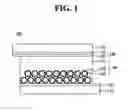
FIG. 1 is a diagram showing a dye-sensitized solar cell according to an embodiment of this document.
DETAILED DESCRIPTION OF THE EMBODIMENTS
Hereinafter, implementations of this document will be described in detail with reference to the attached drawing.
Each of dyes for a dye-sensitized solar cell according to an embodiment of this document may have the following chemical structure 1.
In the above structure, each of X and Y may comprise a substituent, comprising aromatic hydrocarbon groups which are respectively independently substituted or unsubstituted, aromatic heterocyclic groups which are substituted or unsubstituted, and a combination thereof, Z may comprise aromatic hydrocarbon groups which are substituted or unsubstituted, heterocyclic groups which are substituted or unsubstituted, vinyl groups, and polyvinyl groups which are substituted or unsubstituted, and A may comprise acid functional groups.
At least one of the X and Y may comprise fluoric groups.
Each of the X and Y may comprise a substituent, comprising aromatic hydrocarbon groups which are configured to have the number of carbons of 5 to 20 and are independently substituted or unsubstituted, aromatic heterocyclic groups which are substituted or unsubstituted, and a combination thereof. Here, at least one of the X and Y may comprise fluoric groups.
Each of the X and Y may comprise a substituent selected from the group consisting of alkyl, alkoxy, aryl groups, arylene groups, alkylene groups, and a combination thereof.
The Z may comprise a substituent selected from the group consisting of thiophene, vinyl groups, polyvinyl groups, benzene, naphthalene, antracence, fluorene, biphenyl, pyran, pyrrole, carbazole, and a combination thereof.
The Z may comprise a substituent selected from the group consisting of alkyl, alkoxy, aryl groups, alkenyl groups, arylene groups, alkylene groups, and a combination thereof.
The A may comprise a substituent selected from the group consisting of carboxy acid groups, phosphorous acid groups, sulfon acid groups, phosphinic acid groups, hydroxy acid groups, oxycarboxy acids, acid amide, and a combination thereof.
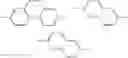
The X—N—Y may comprise any one of the following compounds.
where R may comprise alkyl groups or trimethylsilyl groups, that is, H or C1 to C8,
where R may comprise alkyl groups or trimethylsilyl groups, that is, H, F or C1 to C8, and
where R1 and R2 may comprise alkyl groups, alkoxy groups, and alkenyl groups, that is, H or C1 to C8.
A dye-sensitized solar cell according to an embodiment of the present invention may comprise the above-described dye.
At least one of the X and Y may comprise silane derivatives substituted with alkyl groups or aryl groups.
Each of the X and Y may comprise a substituent, comprising aromatic hydrocarbon groups which are configured to have the number of carbons of 5 to 20 and are independently substituted or unsubstituted, aromatic heterocyclic groups which are substituted or unsubstituted, and a combination thereof. In this case, at least one of the X and Y may comprise silane derivatives substituted with alkyl groups, alkoxy groups, aryl groups, alkenyl groups, arylene groups, and alkylene groups.
Each of the X and Y may comprise a substituent selected from the group consisting of alkyl, alkoxy, aryl groups, arylene groups, alkylene groups, and a combination thereof.
The Z may comprise a substituent selected from the group consisting of thiophene, vinyl groups, polyvinyl groups, benzene, naphthalene, antracence, fluorene, biphenyl, pyran, pyrrole, carbazole, and a combination thereof.
The Z may comprise a substituent selected from the group consisting of alkyl, alkoxy, aryl groups, alkenyl groups, arylene groups, alkylene groups, and a combination thereof.
The A may comprise a substituent selected from the group consisting of carboxy acid groups, phosphorous acid groups, sulfon acid groups, phosphinic acid groups, hydroxy acid groups, oxycarboxy acids, and a combination thereof.
The X—N—Y may comprise any one of the following compounds.
where R may comprise alkyl groups, alkoxy groups, aryl groups, alkenyl groups, arylene groups, or alkylene groups, which are respectively independently H or C1 to C8,
where R may comprise alkyl groups, alkoxy groups, aryl groups, alkenyl groups, arylene groups, or alkylene groups which are respectively independently H or C1 to C8,
where R may comprise alkyl groups, alkoxy groups, aryl groups, alkenyl groups, arylene groups, or alkylene groups which are respectively independently H or C1 to C8,
where R may comprise alkyl groups, alkoxy groups, aryl groups, alkenyl groups, arylene groups, or alkylene groups which are respectively independently H or C1 to C8, and
where each of R1 and R2 may comprise alkyl groups, alkoxy groups, aryl groups, alkenyl groups, arylene groups, or alkylene groups which are H or C1 to C8.
A dye-sensitized solar cell according to an embodiment of this document may comprise the above-described dye.
Hereinafter, embodiments of this document are described with reference to the accompanying drawing.
FIG. 1 is a diagram showing a dye-sensitized solar cell according to an embodiment of this document.
Referring to FIG. 1, the dye-sensitized solar cell 100 has a sandwitch structure in which a first electrode 120 and a second electrode 140 are coalesced with each other in a sheet form. More particularly, the dye-sensitized solar cell 100 may have a structure in which the first electrode 120 is placed over a first substrate 110, and the second electrode 140 is opposite to the first electrode 120 over a second substrate 150 opposite to the first electrode 120.
A light adsorption layer 130 may be placed between the first electrode 120 and the second electrode 140. The light adsorption layer 130 may comprise an electrolyte 131, semiconductor quantum dots 132, and dyes 133 adsorbed to the semiconductor quantum dots 132.
The first substrate 110 may be made of glass or plastic, but are not specifically limited to any materials as long as they have transparency in order for external light to be incident thereon. In this case, plastic may comprise, for example, polyethyleneterephthalate (PET), polyethylenenaphthalate (PEN), polycarbonate (PC), polypropylene (PP), polyimide (PI), triacetyl cellulose (TAC) or a copolymer of them.
The first substrate 110 may be doped with any material selected from the group consisting of titanium, indium, gallium, and aluminum.
The first electrode 120 may comprise a conductive metal oxide layer.
The conductive metal oxide layer may be selected from the group consisting of indium tin oxide (ITO), fluorine tin oxide (FTO), ZnO—(Ga2O3 or Al2O3), tin oxide, antimony tin oxide (ATO), zinc oxide (ZnO), and a mixture thereof. F:SnO2 may be chiefly used as the conductive metal oxide layer.
The light adsorption layer 130 may comprise the electrolyte 131, the semiconductor quantum dots 132, and the dyes 133.
A redox electrolyte may be used as the electrolyte 131. More particularly, the redox electrolyte may comprise halogen oxidation-reduction system electrolytes comprising halogen compounds and halogen molecules having halogen ions as large ions, metallic oxidation-reduction system electrolytes such as ferrocyanide-ferrocyanide or ferrocene-ferricenium ions and a metallic complex such as a cobalt complex, and organic oxidation-reduction system electrolytes such as alkylthiol-alkyldisulfide, viologen dyes, and hydroquinone-quinone. The halogen oxidation-reduction system electrolytes may be preferably used as the electrolyte 131.
Halogen molecules in the halogen oxidation-reduction system electrolytes comprising the halogen compounds-halogen molecules may chiefly include iodine molecules. Further, the halogen compounds having the halogen ions as large ions may comprise halide metallic salts such as LiI, NaI, CaI2, MgI2, and CuI, organic ammonium salts of halogen such as tetraalkylammonium iodine, imidazoliumiodine, and pyridiniumiodine, or I2.
In the case where the redox electrolyte is comprised in the form of a solution comprising the redox electrolyte, the redox electrolyte may have a solvent which is inert in terms of the cell chemistry property. The solvent of the redox electrolyte may comprise, for example, acetonitrile, propylenecarbonate, ethylenecarbonate, 3-methoxypropionitrile, methoxyacetonitrile, ethylene glycol, propyleneglycol, diethylene glycol, triethylene glycol, butyrolactone, dimethoxyethane, dimethylcarbonate, 1,3-dioxolane, methylformate, 2-methyltetrahydrofuran, 3-methoxy-oxazolidine-2-on, sulfolane, tetrahydrofuran, and water. In particular, acetonitrile, propylenecarbonate, ethylenecarbonate, 3-methoxypropionitrile, ethylene glycol, 3-methoxy-oxazolidine-2-on, and butyrolactone may be chiefly used as the solvent. The above solvents may be used either alone or in combination thereof.
Not only a simple semiconductor represented by silicon, but also a compound semiconductor or a compound having a perovskite structure may be used as the semiconductor quantum dots 132.
The semiconductor may comprise an n type semiconductor in which electrons in the conduction band become carriers in an excitation state and thus provide anode current. Metallic oxide selected from the group consisting of titanium, tin, zinc, tungsten, zirconium, gallium, indium, yttrium, niobium, tantalum, and vanadium may be used as the compound semiconductor. Titanium oxide, tin oxide, zinc oxide, niobium oxide, titanium oxide, strontium, or a mixture thereof may be chiefly used as the compound semiconductor. The titanium oxide of an anatase type may be chiefly used as the compound semiconductor. The types of the semiconductor are not limited, but may be used either alone or a combination thereof.
Each of the semiconductor quantum dots 132 may have a mean diameter of 1 to 500 nm, more particularly, 1 to 100 nm. In addition, some of the semiconductor quantum dots 132 may have a large diameter and the remaining thereof may have a small diameter. Alternatively, the semiconductor quantum dots 132 may be configured to have a multi-layer.
The semiconductor quantum dots 132 may be formed using a method of directly forming semiconductor quantum dots on a substrate through spray in the form of a thin film, a method of electrically depositing a thin film of semiconductor quantum dots using a substrate as an electrode, or a method of coating a paste, including quantum dots that can be obtained by hydrolyzing a slurry of semiconductor quantum dots or a precursor of semiconductor quantum dots, on a substrate, and then performing dry, curing or sintering on the paste.
The dyes 133 for generating excited electrons by absorbing external light may be adsorbed on the surface of each of the semiconductor quantum dots 132.
The light adsorption layer 130 may have a thickness of 15 μm or less, more particularly, 1 to 15 μm.
The second electrode 140 may be placed over the light adsorption layer 130. The second electrode 140 may comprise a transparent electrode 141 and a catalyst electrode 142.
The transparent electrode 141 may be comprised of transparent material such as indium tin oxide, fluoro tin oxide, antimony tin oxide, zinc oxide, tin oxide, or ZnO—(Ga2O3 or Al2O3).
The catalyst electrode 142 functions to activate the redox couple. Platinum, gold, ruthenium, palladium, rhodium, iridium, osmium, carbon, titanium oxide, or conductive material such as conductive polymer may be used as the catalyst electrode 142.
Further, in order to improve the catalyst effect of oxidation-reduction, the catalyst electrode 142 being opposite to the first electrode 120 may have a micro structure, thereby increasing the surface area. For example, lead or gold may have a black state, and carbon may have a porous state. In particular, a black state of platinum may be formed using an anodic oxidation method of platinum or a chloroplatinic acid processing, and a porous state of carbon may be formed using a method such as sintering of carbon quantum dots or curing of oraganic polymer.
The second substrate 150 may be made of glass or plastic as in the first substrate 110. The plastic may comprise, for example, polyethylene terephthalate, polyethylenethalate, polycarbonate, polypropylene, polyimide, and triacetylcellulose.
If sunlight is incident on the dye-sensitized solar cell 100 having the above construction, light quanta are first absorbed by the dyes 133 within the light adsorption layer 130. Accordingly, the electrons of the dyes 133 shift from the ground state to the excited state, thus creating electron-hole pairs. The electrons of the excited state are injected into the conduction band on the interface of each of the semiconductor quantum dots 132. The injected electrons are transferred to the first electrode 120 via the interface and are then moved to the second electrode 140 (that is, a counter electrode) via an external circuit.
Meanwhile, the dyes 133 oxidized as a result of the shift of the electrons are reduced by the ions of an oxidation-reduction couple within the electrolyte 131. A reduction reaction is generated between the oxidized ions and the electrons that have reached the interface of the second electrode 140 in order to form charge neutrality. Consequently, the dye-sensitized solar cell 100 is operated.
The dyes 133 used in the dye-sensitized solar cell 100 according to an embodiment of this document are described below in detail.
Each of the dyes for the dye-sensitized solar cell according to an embodiment of this document may have the following chemical structure 1.
In the above structure, each of X and Y may comprise a substituent, comprised of aromatic hydrocarbon groups which are respectively independently substituted or unsubstituted, aromatic heterocyclic groups which are substituted or unsubstituted, and a combination thereof, Z may comprise aromatic hydrocarbon groups which are substituted or unsubstituted, heterocyclic groups which are substituted or unsubstituted, vinyl groups, and polyvinyl groups which are substituted or unsubstituted, and A may comprise acid functional groups.
Furthermore, each of the X and Y may comprise a substituent, comprised of aromatic hydrocarbon groups which are configured to have the number of carbons of 5 to 20 and are independently substituted or unsubstituted, aromatic heterocyclic groups which are substituted or unsubstituted, and a combination thereof. In this case, at least one of the X and Y may comprise fluoric groups.
The heterocyclic groups may be selected from among substituents comprising pyran, pyrrole, thiophene, carbazole, and a combination thereof.
Each of the X and Y may comprise a substituent selected from the group consisting of thiophene, vinyl groups, polyvinyl groups, benzene, naphthalene, antracence, fluorene, biphenyl, pyran, pyrrole, carbazole, and a combination thereof.
The Z may comprise a substituent selected from the group consisting of thiophene, vinyl groups, polyvinyl groups, benzene, naphthalene, antracence, fluorene, biphenyl, pyran, pyrrole, carbazole, and a combination thereof.
The Z may comprise a substituent selected from the group consisting of alkyl, alkoxy, aryl groups, alkenyl groups, arylene groups, alkylene groups, and a combination thereof.
In this case, each of the alkyl groups may comprise an alkyl group which is configured to have the number of carbons of 1 to 20 and has been substituted or unsubstituted. Each of the alkoxy groups may be configured to have the number of carbons of 1 to 20 and may have experienced oxygen-containing substitution or non-substitution. The aryl groups may be used either alone or in combination thereof. Each of the aryl group may be a carbocycle aromatic compound such as phenyl, naphthyl, tetrahydronaphthyl, or biphenyl. The carbocycle aromatic compound may be configured to have the number of carbons of 6 to 30 and have one or more rings. Each of the alkylene groups may have a radical shape in which both ends of an alkyl group can be combined with each other. Here, the alkyl group is the same as that described above.
The A may comprise a substituent selected from the group consisting of carboxy acid groups, phosphorous acid groups, sulfon acid groups, phosphinic acid groups, hydroxy acid groups, oxycarboxy acids, acid amide, and a combination thereof.
The X—N—Y may comprise any one of the following compounds.
where R may comprise alkyl groups or trimethylsilyl groups, that is, H or C1 to C8,
where R may comprise alkyl groups or trimethylsilyl groups, that is, H, F or C1 to C8, and
where R1 and R2 may comprise alkyl groups, alkoxy groups, and alkenyl groups, that is, H or C1 to C8. Meanwhile, the dyes 133 used in the dye-sensitized solar cell 100 according to another embodiment of this document are described below in detail.
Each of the dyes for dye-sensitized solar cell according to another embodiment of this document may have the following chemical structure 1.
In the above structure, each of the X and Y may be a substituent, comprising aromatic hydrocarbon groups which are respectively independently substituted or unsubstituted, aromatic heterocyclic groups which are substituted or unsubstituted, and a combination thereof.
In this case, each of the aromatic hydrocarbon groups may comprise a substituent, comprising benzene, naphthalene, antracence, fluorene, biphenyl, and a combination thereof. The heterocyclic groups may be selected from among substituents, comprising pyran, pyrrole, thiophene, carbazole, and a combination thereof.
Further, at least one of the X and Y may comprise silane derivatives substituted with alkyl groups or aryl groups. Each of the X and Y may be a substituent, comprising aromatic hydrocarbon groups which are configured to have the number of carbons 5 to 20 and are respectively independently substituted or unsubstituted, aromatic heterocyclic groups which are substituted or unsubstituted, and a combination thereof. In this case, at least one of the X and Y may comprise silane derivatives substituted with alkyl groups, alkoxy groups, aryl groups, alkenyl groups, arylene groups, or alkylene groups.
Further, each of the X and Y may comprise a substituent selected from the group consisting of alkyl groups, alkoxy groups, aryl groups, arylene groups, alkylene groups, and a combination thereof. Each of the alkyl groups may be selected from among substituents, comprising alkyl groups which are respectively configured to have the number of carbons 1 to 20 and have been substituted or unsubstituted. Each of the alkoxy groups may be selected from among substituents, comprising alkoxy groups containing oxygen and having alkyl groups which are respectively configured to have the number of carbons of 1 to 20 and have been substitution or unsubstituted. The aryl groups may be used either alone or in combination thereof. The aryl groups may be carbocycle aromatic compounds such as phenyl, naphthyl, tetrahydronaphthyl, indane, or biphenyl. Each of the aryl groups may have the number of carbons of 6 to 30 and comprise one or more rings. Each of the alkylene groups may have a radical shape in which both ends of an alkyl group can be combined with each other. Here, the alkyl group is the same as that described above.
The Z may comprise aromatic hydrocarbon groups which are substituted or unsubstituted, heterocyclic groups which are substituted or unsubstituted, vinyl groups, or polyvinyl groups which are substituted or unsubstituted. More particularly, the Z may comprise a substituent selected from the group consisting of thiophene, vinyl groups, polyvinyl groups, benzene, naphthalene, antracence, fluorene, biphenyl, pyran, pyrrole, carbazole, and a combination thereof. Further, the Z may comprise a substituent selected from the group consisting of alkoxy, aryl groups, alkenyl groups, arylene groups, alkylene groups, and a combination thereof.
The A may comprise acid functional groups or comprise a substituent selected from the group consisting of carboxy acid groups, phosphorous acid groups, sulfon acid groups, phosphinic acid groups, hydroxy acid groups, oxycarboxy acids, and a combination thereof.
Furthermore, the X—N—Y may comprise any one of the following compounds.
where R may comprise alkyl groups, alkoxy groups, aryl groups, alkenyl groups, arylene groups, or alkylene groups which are respectively independently H or C1 to C8,
where R may comprise alkyl groups, alkoxy groups, aryl groups, alkenyl groups, arylene groups, or alkylene groups which are respectively independently H or C1 to C8,
where R may comprise alkyl groups, alkoxy groups, aryl groups, alkenyl groups, arylene groups, or alkylene groups which are respectively independently H or C1 to C8,
Here, R may comprise alkyl groups, alkoxy groups, aryl groups, alkenyl groups, arylene group, or alkylene groups which are respectively independently H or C1 to C8,
Here, R1 and R2 may comprise alkyl groups, alkoxy groups, aryl groups, alkenyl groups, arylene groups, or alkylene groups which are H or C1 to C8.
Hereinafter, some embodiments are described in order to help understanding of this document. However, the following embodiments only illustrate this document, and this document is not limited to the following embodiments.
Embodiment 1
Synthesis 1 of Dyes
Dyes for the dye-sensitized solar cell according to an embodiment of this document were synthesized through the following reactions.
1) Fabrication of 4-butyl-N-(2,4-difluorophenyl)benzeneamine
2,4-difluoroaniline (44 m mol)), 1-bromo-4-butylbenzene (30 m mol)), palladium(II)acetate (0.4 m mol)), 2,2′-bis(diphenylphosphino)-1,1′-binaphthyl (0.9 m mol)), and potassium-tert-butoxide (44 m mol)) were dissolved in toluene (100 ml) in a 250 ml tri-neck-round bottom flask and then stirred in a bath of 100° C. for 24 hours. After the reaction was terminated, the toluene was removed from the solution. After extraction was performed on the solution using dichloromethane and water, the resulting solution was reduced in pressure and distilled. After a silica gel column chromatography, the solvent was reduced in pressure and distilled, thereby obtaining 4-butyl-N-(2,4-difluorophenyl)benzeneamine liquid having 0.3 g.
2) Fabrication of 4-(N-(4-butylphenyl)-N-(2,4-difluorophenyl)amino)benzaldehyde
4-butyl-N-(2,4-difluorophenyl)benzeneamine (30 m mol)), 4-bromobenzaldehyde (34 m mol)), tris(dibenzylideneaceton)dipalladium(O) (0.5 m mol)), tris-tert-butylphosphine (0.9 m mol)), and sodium-tert-butoxide (40 m mol)) were dissolved in toluene (100 ml) in a 250 ml tri-neck-round bottom flask and then stirred in a bath of 100° C. for 24 hours. After the reaction was terminated, the toluene was removed from the solution. After extraction was performed on the solution using dichloromethane and water, reduced pressure and distillation were performed on the resulting solution. After a silica gel column chromatography, the solvent was reduced in pressure and distilled, thereby obtaining 4-(N-(4-butylphenyl)-N-(2,4-difluorophenyl)amino)benzaldehyde liquid having 7.1 g.
3) Fabrication of N-(4-butylphenyl)-N-(2,4-difluorophenyl)-4-(-2-(thiophene-2-1)vinyl)benzeneamine
Sodium-tert-butoxide (30 m mol)) was dissolved in anhydrous tetrahydrofuran (anhydrous THF) (100 ml) in a 250 ml tri-neck-round bottom flask on which a 100 ml-dropping funnel was mounted. 100 methyl triphenyl phosphonium salt (27 m mol)) was slowly added to the solution. When there was no more color change after the color of the solution was changed to a dark red color, 4-(N-(4-butylphenyl)-N-(2,4-difluorophenyl)amino)benzaldehyde was dissolved in anhydrous tetrahydrofuran (30 ml) and was then slowly dropped. After the resulting solution was stirred at room temperature for approximately 12 hours, the anhydrous tetrahydrofuran was removed from the solution. After a silica gel column was performed using dichloromethane and n-hexene, a solvent was reduced in pressure and was distilled. The resulting solution was recrystallized using dichloromethane and n-hexene and was then filtered, thereby obtaining N-(4-butylphenyl)-N-(2,4-difluorophenyl)-4-(-2-(thiophene-2-1)vinyl)benzeneamine solid having 8.4 g.
4) Fabrication of 5-(4-(N-(4-butylphenyl)-N-(2,4-difluorophenyl)amino)styryl)thiophene-2-carbaldehyde
After DMF (5 ml) was dissolved in anhydrous methylene chloride (30 ml) in a 100 ml tri-neck-round bottom flask on which a 100 ml-dropping funnel was mounted, the flask was cooled to 0° C. using an ice bat and the solution was then stirred. Phosphorousoxychloride (26 m mol)) was slowly dropped to the cooled solution using an injector, stirred for 30 minutes, and then raised to room temperature. N-(4-butylphenyl)-N-(2,4-difluorophenyl)-4-(-2-(thiophene-2-1) vinyl)benzeneamine (17 m mol)) was dissolved in anhydrous methylenechloride (20 m ml) in a dropping funnel. The dissolved solution was injected and then slowly dropped to the solution using an injector. The resulting solution was heated up to a reflux temperature. The temperature of the solution was cooled in approximately 12 hours. A 2N sodium hydrooxide aqueous solution was dropped until it became neutral using pH paper. The solution was extracted using dichloromethane and water, and then reduced in pressure and distilled. After a silica gel column, the solvent was reduced in pressure and distilled, thereby obtaining 5-(4-(N-(4-butylphenyl)-N-(2,4-difluorophenyl)amino)styryl)thiophene-2-carbaldehyde solid having 3.5 g.
5) Fabrication of 3-(5-(4-(N-(4-butylphenyl)-N-(2,4-difluorophenyl)amino)styryl)thiophene-2-1)-2-cyanoacrylic acid
5-(4-(N-(4-butylphenyl)-N-(2,4-difluorophenyl)amino)styryl)thiophene-2-carbaldehyde (2.9 m mol)), 2-cyanoacetic acid (4.3 m mol)), and piperidine (7 m mol)) were dissolved in acetonitrile (50 ml) in a 100 ml tri-neck-round bottom flask and were then refluxed for 12 hours. After the reaction was terminated, the acetonitrile was removed from the solution. The solution was dissolved in a small amount of dichloromethane. After a silica gel column, a solvent was reduced in pressure and distilled. The solvent was precipitated in methanol and was then filtered, thereby obtaining 3-(5-(4-(N-(4-butylphenyl)-N-(2,4-difluorophenyl)amino)styryl)thiophene-2-1)-2-cyanoacrylic acid solid having 2.1 g.
Embodiment 2
Synthesis 2 of Dyes
Dyes for the dye-sensitized solar cell according to another embodiment of this document were synthesized through the following reactions.
(1) Fabrication of 4-(trimethylsilyl)-N-phenylbenzeneamine
Aniline (127.5 m mol)), (4-bromophenyl)trimethylsilane (102 m mol)), tris(dibenzylideneaceton)dipalladium(O) (1.53 m mol)), BINAP(2,2′-bis(diphenylphosphino)-1,1′-binaphthyl (3.06 m mol)), and sodium-tert-butoxide (132.6 m mol)) were dissolved in toluene (100 ml) in a 250 ml tri-neck-round bottom flask and then stirred in a bath of 100° C. for 24 hours. After the reaction was terminated, the toluene was removed from the solution. After extraction was performed on the solution using dichloromethane and water, the resulting solution was reduced in pressure and distilled. After a silica gel column chromatography, the solvent was reduced in pressure and distilled, thereby obtaining 4-(trimethylsilyl)-N-phenylbenzeneamine liquid having 0.3 g.
(2) Fabrication of 4-(N-(4-(trimethylsilyl)phenyl)-N-phenylamino)benzaldehyde
4-(trimethylsilyl)-N-phenylbenzeneamine (22.8 m mol)), 4-bromobenzaldehyde (29.64 m mol)), tris(dibenzylideneaceton)dipalladium(O) (0.342 m mol)), tris-tert-butyl phosphine (0.684 m mol)), and sodium-tert-butoxide (29.64 m mol)) were dissolved in toluene (100 ml) in a 250 ml tri-neck-round bottom flask and were then stirred in a bath of 100° C. for 24 hours. After the reaction was terminated, the toluene was removed from the solution. After extraction was performed on the solution using dichloromethane and water, the resulting solution was reduced in pressure and distilled. After a silica gel column chromatography, the solvent was reduced in pressure and distilled, thereby obtaining 4-(N-(4-(trimethylsilyl)phenyl)-N-phenylamino)benzaldehyde liquid having 4.1 g.
(3) Fabrication of N-(4-(trimethylsilyl)phenyl)-N-phenyl-4-vinylbenzeneamine
Sodium-tert-butoxide (19 m mol)) was dissolved in anhydrous tetrahydrofuran (anhydrous THF) (100 ml) in a 250 ml tri-neck-round bottom flask on which a 100 ml-dropping funnel was mounted. Methyltriphenylphosphoniumbromide (17.8 m mol)) was then slowly added to the solution. When there was no more color change after the color of the solution was changed to a dark yellow color, N-(4-(trimethylsilyl)phenyl)-N-phenyl-4-vinylbenzeneamine was dissolved in anhydrous tetrahydrofuran (30 ml) and was then slowly dropped. After stirring at room temperature for approximately 12 hours, the anhydrous tetrahydrofuran was removed from the solution. After a silica gel column was performed using dichloromethane and n-hexene, a solvent was reduced in pressure and was distilled, thereby obtaining N-(4-trimethylsilyl)phenyl)-N-phenyl-4-vinylbenzeneamine solid having 3.0 g.
(4) Fabrication of N-((4-(trimethylsilyl)phenyl)-N-phenyl-4-(4-aminostyryl)benzaldehyde
N-(4-trimethylsilyl)phenyl)-N-phenyl-4-vinylbenzeneamine (8.7 m mol), 4-bromobenzaldehyde (17.4 m mol), 2,6-ditert-butylcresol (0.87 m mol), sodium-tert-butoxide (9.57 m mol), and trans-di(μ-acetato)bis[(di-o-tolyphosphoino)benzyl]-dipalladium(II) (0.087 m mol) were dissolved in N,N-dimethylaceteamide (50 ml) in a 100 ml two-neck-round bottom flask and then stirred in a bath of 80 ° for 24 hours. After the reaction was terminated, the solution was glass-filtered using a silica gel and sellaite. The N,N-dimethylaceteamide was removed using reduction pressure and distillation. Next, after a silica gel column was performed using dichloromethane and n-hexene, a solvent was reduced in pressure and distilled, thereby obtaining N-((4-trimethylsilyl)phenyl)-N-phenyl-4-(4-aminostyryl)benzaldehyde solid having 1.9 g.
(5) Fabrication of N-((4-trimethylsilyl)phenyl)-N-phenyl-4-((4-aminostyryl)-2-cyano)-3-phenylacrylic acid
N-((4-trimethylsilyl)phenyl)-N-phenyl-4-(4-aminostyryl)benzaldehyde (4.2 m mol), 2-cyanoacetic acid (6.3 m mol), and piperidine (10.5 m mol) were dissolved in acetonitrile (50 ml) in a 100 ml two-neck-round bottom flask and then refluxed for 12 hours. After the reaction was terminated, the acetonitrile was removed. After a silica gel column is performed using dichloromethane and methanol, a solvent was reduced in pressure and distilled. The result was then precipitated in methanol and distilled, thereby obtaining N-((4-trimethylsilyl)phenyl)-N-phenyl-4-((4-aminostyryl)-2-cyano)-3-phenylacrylic acid solid having 2.1 g.
Embodiment 3
Fabrication of Dye-Sensitized Solar Cell
(1) Fabrication of Task Electrode
FTO glass (fluorine-doped tin oxide coated conduction glass, Pilkington, TEC7) was cut to have a size of 1.5 cm×1.5 cm. The cut glass was washed using a glass cleaning detergent through ultrasonic decomposition washing for 10 minutes. Soap water was completely removed from the FTO glass using distilled water. The FTO glass was then washed twice using ethanol through ultrasonic decomposition washing for 15 minutes. The resulting FTO glass was sufficiently rinsed using anhydrous ethanol and then dried in an oven of 100° C. In order to improve contact force with TiO2, the FTO glass was dipped in a titanium(IV) chloride solution (40 mM) in a temperature of 70° C. for 40 minutes and was then washed using distilled water. The FTO glass was sufficiently dried in an oven of 100° C. Next, titanium dioxide (TiO2) paste (18-NR, available from CCIC Corporation) was coated on the FTO glass using a screen printer in the form of a 9 mm×9 mm mask (200 meshes). The coated film was dried in an oven of 100° C. for 20 minutes. The above process was repeatedly performed three times. The coated film was then cured in a temperature of 450° C. for 60 minutes, thereby obtaining a TiO2 film of approximately 10 μm in thickness. The TiO2 film on which an annealing process was performed was dipped in an anhydrous ethanol solution of synthesized dyes having a concentration of 0.5 mM for 24 hours so that the dyes could be adsorbed to the TiO2 film. (In the case where the dyes are not dissolved in the anhydrous ethanol solution, a solvent capable of dissolving the dyes may be used) After the adsorption was finished, the dyes that were not adsorbed by the anhydrous ethanol solution were completely washed and then dried using a heat gun.
(2) Fabrication of Counter Electrode
Two holes into which an electrolyte would enter were perforated into the FTO glass of 1.5 cm×1.5 cm in size using a φ0.7 mm—diamond drill (Dremel multipro395). The FTO glass was washed using the same washing method as that presented in the task electrode and was then dried. Next, a hydrogenhexachloroplatinum(H2PtCl6)2-propanol solution was coated on the FTO glass and then cured in a temperature of 450 ° for 60 minutes.
(3) Fabrication of Sandwitch Cell
A surlyn (SX1170-25 Hot Melt), cut to have a square belt shape, was placed between the task electrode and the counter electrode. The two electrodes were coalesced each other using a clip and an oven. An electrolyte was injected into the coalesced electrodes through the two small holes of the counter electrode. The resulting electrodes were sealed using a surlyn strip and cover glass, thereby fabricating a sandwitch cell. In this case, the electrolyte solution was fabricated using 0.1M Lil, 0.05M 12, 0.6M 1-hexyl-2,3-dimethylimideazoliumiodide, and 0.5M 4-tert-butylpyridine as a 3-methoxypropionitrile solvent.
(4) Measurement of Photocurrent-Voltage
A current-voltage curve was obtained using an M236 source measure unit (SMU, available from Keithley Instruments Inc.) by irradiating light to the above-fabricated sandwitch cell using a Xe lamp (Oriel 300 W Xe arc lamp, available from Newport Corporation) on which an AM 1.5 solar simulating filter was mounted. The range of potential was from −0.8 V to 0.2 V, and the intensity of light was 100 mW/cuff.
Experimental examples in which the respective solar cells fabricated according to the above-described embodiments were fabricated are described below.
Experimental Example 1
A solar cell was fabricated using dyes having the following chemical structure 2.
Experimental Example 2
A solar cell was fabricated using dyes having the following chemical structure 3.
Experimental Example 3
A solar cell was fabricated using dyes having the following chemical structure 4.
Experimental Example 4
A solar cell was fabricated using dyes having the following chemical structure 5.
Experimental Example 5
A solar cell was fabricated using dyes having the following chemical structure 6.
Experimental Example 6
A solar cell was fabricated using dyes having the following chemical structure 7.
Comparison Example
A solar cell was fabricated using dyes having the following chemical structure 8.
Jsc (a short-circuit photocurrent density), Voc (an open circuit voltage), FF(a fill factor), and a photoelectric conversion efficiency (PCE) of each of the dye-sensitized solar cells fabricated according to the experimental examples 1 to 6 and the comparison example were measured and listed in the following table 1. Here, the above measurements for each of the experimental examples and the comparison example were performed twice under the same condition.
| TABLE 1 | ||||||
| # | Area (cm2) | Jsc (mA) | Voc (V) | FF (%) | PCB (%) | |
| Experimental | 1 | 0.266 | 12.73 | 0.634 | 72.32 | 5.85 |
| example 1 | 2 | 0.272 | 12.97 | 0.644 | 70.34 | 5.87 |
| Experimental | 1 | 0.275 | 12.14 | 0.650 | 71.88 | 5.67 |
| example 2 | 2 | 0.270 | 12.31 | 0.655 | 71.16 | 5.74 |
| Experimental | 1 | 0.271 | 11.29 | 0.630 | 70.62 | 5.03 |
| example 3 | 2 | 0.272 | 11.96 | 0.658 | 72.45 | 5.70 |
| Experimental | 1 | 0.271 | 12.10 | 0.625 | 70.02 | 5.30 |
| example 4 | 2 | 0.270 | 12.32 | 0.653 | 71.23 | 5.73 |
| Experimental | 1 | 0.274 | 12.42 | 0.648 | 71.56 | 5.76 |
| example 5 | 2 | 0.273 | 12.57 | 0.646 | 71.41 | 5.80 |
| Experimental | 1 | 0.272 | 11.78 | 0.652 | 71.29 | 5.47 |
| example 6 | 2 | 0.275 | 11.81 | 0.671 | 72.71 | 5.76 |
| Comparison | 1 | 0.270 | 16.21 | 0.755 | 71.40 | 8.73 |
| Example | 2 | 0.270 | 15.90 | 0.779 | 71.90 | 8.90 |
From the above table 1, it can be seen that each of the solar cells fabricated according to the experimental examples 1 to 6 of this document has the open circuit voltage (Voc) comparable to that of the comparison example and also has the photoelectric conversion efficiency (PCE), which is 80% of that of the comparison example using dyes (N719) having the highest efficiency today.
Accordingly, the dyes for a dye-sensitized solar cell and the solar cell including the same according to the embodiments of this document are advantageous in that they can be fabricated much cheaply when compared with conventional organic metallic solar cells, but can be fabricated to have a photoelectric conversion efficiency comparable to that of the conventional organic metallic solar cells, and can also be fabricated to have a longer lifespan than that of organic metallic dyes.
While this document has been described in connection with what is presently considered to be practical exemplary embodiments, it is to be understood that this document is not limited to the disclosed embodiments, but, on the contrary, is intended to cover various modifications and equivalent arrangements included within the spirit and scope of the appended claims.
Claims
What is claimed is:1. Dyes for a dye-sensitized solar cell, each of the dyes having the following chemical structure 1.
wherein each of X and Y comprises a substituent, comprising aromatic hydrocarbon groups which are respectively independently substituted or unsubstituted, aromatic heterocyclic groups which are substituted or unsubstituted, and a combination thereof, Z comprises aromatic hydrocarbon groups which are substituted or unsubstituted, heterocyclic groups which are substituted or unsubstituted, vinyl groups, and polyvinyl groups which are substituted or unsubstituted, and A comprises acid functional groups.
2. The dyes for a dye-sensitized solar cell of claim 1, wherein at least one of the X and Y comprises fluoric groups.
3. The dyes for a dye-sensitized solar cell of claim 2, wherein:
each of the X and Y comprises a substituent, comprising aromatic hydrocarbon groups which are configured to have the number of carbons of 5 to 20 and are independently substituted or unsubstituted, aromatic heterocyclic groups which are substituted or unsubstituted, and a combination thereof, and
at least one of the X and Y comprises fluoric groups.
4. The dyes for a dye-sensitized solar cell of claim 2, wherein each of the X and Y comprises a substituent selected from the group consisting of alkyl, alkoxy, aryl groups, arylene groups, alkylene groups, and a combination thereof.
5. The dyes for a dye-sensitized solar cell of claim 2, wherein the Z comprises a substituent selected from the group consisting of thiophene, vinyl groups, polyvinyl groups, benzene, naphthalene, antracence, fluorene, biphenyl, pyran, pyrrole, carbazole, and a combination thereof.
6. The dyes for a dye-sensitized solar cell of claim 2, wherein the Z comprises a substituent selected from the group consisting of alkyl, alkoxy, aryl groups, alkenyl groups, arylene groups, alkylene groups, and a combination thereof.
7. The dyes for a dye-sensitized solar cell of claim 2, wherein the A comprises a substituent selected from the group consisting of carboxy acid groups, phosphorous acid groups, sulfon acid groups, phosphinic acid groups, hydroxy acid groups, oxycarboxy acids, acid amide, and a combination thereof.
8. The dyes for a dye-sensitized solar cell of claim 2, wherein the X—N—Y comprises any one of the following compounds.
where R comprises alkyl groups or trimethylsilyl groups, that is, H or C1 to C8,
where R comprise alkyl groups or trimethylsilyl groups, that is, H, F or C1 to C8, and
where R1 and R2 comprise alkyl groups, alkoxy groups, or alkenyl groups, that is, H or C1 to C8.
9. A dye-sensitized solar cell comprising the dyes according to claim 2.
10. The dyes for a dye-sensitized solar cell of claim 1, wherein at least one of the X and Y comprises silane derivatives substituted with alkyl groups or aryl groups.
11. The dyes for a dye-sensitized solar cell of claim 10, wherein:
each of the X and Y comprises a substituent, comprising aromatic hydrocarbon groups which are configured to have the number of carbons of 5 to 20 and are independently substituted or unsubstituted, aromatic heterocyclic groups which are substituted or unsubstituted, and a combination thereof, and
at least one of the X and Y comprises silane derivatives substituted with alkyl groups, alkoxy groups, aryl groups, alkenyl groups, arylene groups, and alkylene groups.
12. The dyes for a dye-sensitized solar cell of claim 10, wherein each of the X and Y comprises a substituent selected from the group consisting of alkyl, alkoxy, aryl groups, arylene groups, alkylene groups, and a combination thereof.
13. The dyes for a dye-sensitized solar cell of claim 10, wherein the Z comprises a substituent selected from the group consisting of thiophene, vinyl groups, polyvinyl groups, benzene, naphthalene, antracence, fluorene, biphenyl, pyran, pyrrole, carbazole, and a combination thereof.
14. The dyes for a dye-sensitized solar cell of claim 10, wherein the Z comprises a substituent selected from the group consisting of alkyl, alkoxy, aryl groups, alkenyl groups, arylene groups, alkylene groups, and a combination thereof.
15. The dyes for a dye-sensitized solar cell of claim 10, wherein the A comprises a substituent selected from the group consisting of carboxy acid groups, phosphorous acid groups, sulfon acid groups, phosphinic acid groups, hydroxy acid groups, oxycarboxy acids, and a combination thereof.
16. The dyes for a dye-sensitized solar cell of claim 10, wherein the X—N—Y comprises any one of the following compounds.
where R comprises alkyl groups, alkoxy groups, aryl groups, alkenyl groups, arylene groups, or alkylene groups which are respectively independently H or C1 to C8,
where R comprises alkyl groups, alkoxy groups, aryl groups, alkenyl groups, arylene groups, or alkylene groups which are respectively independently H or C1 to C8,
where R comprises alkyl groups, alkoxy groups, aryl groups, alkenyl groups, arylene groups, or alkylene groups which are respectively independently H or C1 to C8,
where R comprise alkyl groups, alkoxy groups, aryl groups, alkenyl groups, arylene groups, or alkylene groups which are respectively independently H or C1 to C8, and
where R1 and R2 comprise alkyl groups, alkoxy groups, aryl groups, alkenyl groups, arylene groups, or alkylene groups which are H or C1 to C8.
17. A dye-sensitized solar cell comprising the dyes according to claim 10.
Images & Drawings included:






























Sources:
- United States Patent and Trademark Office - verify current appl. status at the USPTO↗
Similar patent applications:
- » 20110030781
Paste for dye-sensitized solar cell, transparent insulation film for dye-sensitized solar cell, dye-sensitized solar cell, and dye-sensitized solar cell fabrication method - » 20190295780
DYE-SENSITIZED SOLAR CELL, DYE-SENSITIZED SOLAR CELL MODULE, AND METHOD FOR MANUFACTURING DYE-SENSITIZED SOLAR CELL - » 20090114277
Production Process of Photoelectrode for Dye-Sensitized Solar Cell, Photoelectrode for Dye-Sensitized Solar Cell and Dye-Sensitized Solar Cell. - » 20090203164
ELECTROLYTE COMPOSITION FOR DYE-SENSITIZED SOLAR CELL, DYE-SENSITIZED SOLAR CELL INCLUDING SAME, AND METHOD OF PREPARING SAME - » 20120125422
GEL ELECTROLYTE FOR DYE SENSITIZED SOLAR CELL AND DYE SENSITIZED SOLAR CELL INCLUDING THE GEL ELECTROLYTE - » 20060102229
Counter electrode for dye sensitizing solar cell, and dye sensitizing solar cell having same - » 20110011459
HYBRID AND/OR COMPLEX MATERIAL, PHOTOELECTRIC CONVERSION MATERIAL, DYE-SENSITIZED SOLAR CELL, DYE-SENSITIZED SOLAR CELL DEVICE, MANUFACTURING METHOD OF PHOTOELECTRIC CONVERSION DEVICE, AND METHOD OF ANALYZING TITANIUM OXIDE CRYSTAL STRUCTURE - » 20080115831
Electrolyte composition for dye-sensitized solar cell, dye-sensitized solar cell including same, and method of preparing same - » 20100300515
Metal oxide electrode for dye-sensitized solar cell, dye-sensitized solar cell, and manufacturing method of metal oxide electrode - » 20120132276
DYE SENSITIZED SOLAR CELL AND DYE SENSITIZED SOLAR CELL MODULE USING THE SAME
Recent applications in this class:
- » 20240155939 2024-05-09
HETEROCYCLIC AROMATIC AMINE COMPOUND AND ELECTROLUMINESCENCE USING THE SAME - » 20230422605 2023-12-28
COMPOUND, DISPLAY PANEL AND DISPLAY DEVICE - » 20230301179 2023-09-21
HETEROCYCLIC COMPOUND, ORGANIC LIGHT-EMITTING DEVICE INCLUDING THE SAME, AND ELECTRONIC APPARATUS INCLUDING THE ORGANIC LIGHT-EMITTING DEVICE - » 20230232708 2023-07-20
LIGHT EMITTING ELEMENT AND AMINE COMPOUND FOR THE SAME - » 20230225198 2023-07-13
LIGHT-EMITTING DEVICE AND ELECTRONIC APPARATUS INCLUDING THE SAME - » 20230200223 2023-06-22
LIGHT EMITTING DEVICE AND AMINE COMPOUND FOR LIGHT EMITTING DEVICE - » 20230189639 2023-06-15
Compound for organic electronic element, organic electronic element using the same, and an electronic device thereof - » 20230172060 2023-06-01
Organic light emitting device - » 20230172059 2023-06-01
LIGHT EMITTING ELEMENT AND AMINE COMPOUND FOR THE SAME - » 20230172057 2023-06-01
HETEROCYCLIC COMPOUND CONTAINING HETEROATOM SUBSTITUTED FLUORENE AND OPTOELECTRONIC DEVICE
Recent applications for this Assignee:
- » 20250295016 2025-09-18
DISPLAY DEVICE - » 20250287807 2025-09-11
ORGANIC LIGHT EMITTING DISPLAY APPARATUS HAVING PIXELS OF DIFFERENT STRUCTURES - » 20250287806 2025-09-11
LIGHT EMITTING DISPLAY DEVICE - » 20250285577 2025-09-11
CLOCK GENERATOR AND DISPLAY DEVICE INCLUDING THE SAME - » 20250280721 2025-09-04
DISPLAY DEVICE - » 20250280717 2025-09-04
LIGHT EMITTING DISPLAY DEVICE - » 20250280716 2025-09-04
DISPLAY DEVICE - » 20250280709 2025-09-04
FOLDABLE DISPLAY DEVICE - » 20250280706 2025-09-04
DISPLAY DEVICE - » 20250280704 2025-09-04
DISPLAY DEVICE