Carbon nanotube yarn and method for making the same
US20100129654A1
2010-05-27
12/657,507
2010-01-21
Abstract:
A carbon nanotube yarn includes a number of carbon nanotube yarn strings bound together, and each of the carbon nanotube yarn strings includes a number of carbon nanotube bundles that are joined end to end by van der Waals attractive force, and each of the carbon nanotube bundles includes a number of carbon nanotubes substantially parallel to each other. A method for making the carbon nanotube yarn includes soaking the at least one carbon nanotube yarn string drawn out from a carbon nanotube array in an organic solvent to shrink it and then collecting it.
Assignee:
- HON HAI Precision Industry CO., LTD. 1,310 🇹🇼 Tu-Cheng City, Taiwan
- Tsinghua University 342 🇨🇳 Beijing City, China
Interested in similar patents?
Get notified when new applications in this technology area are published.
Classification:
D01F9/127 » CPC main
Artificial filaments or the like of other substances; Manufacture thereof; Apparatus specially adapted for the manufacture of carbon filaments of inorganic material; Carbon filaments; Apparatus specially adapted for the manufacture thereof by thermal decomposition of hydrocarbon gases or vapours or other carbon-containing compounds in the form of gas or vapour, e.g. carbon monoxide, alcohols
B82Y30/00 » CPC further
Nanotechnology for materials or surface science, e.g. nanocomposites
D02G3/16 » CPC further
Yarns or threads, e.g. fancy yarns; Processes or apparatus for the production thereof, not otherwise provided for; Yarns or threads characterised by the material or by the materials from which they are made Yarns or threads made from mineral substances
D10B2101/122 » CPC further
Inorganic fibres based on non-oxides other than metals; Carbon; Pitch Nanocarbons
Y10T428/2918 » CPC further
Stock material or miscellaneous articles; Coated or structually defined flake, particle, cell, strand, strand portion, rod, filament, macroscopic fiber or mass thereof; Rod, strand, filament or fiber including free carbon or carbide or therewith [not as steel]
B32B5/00 IPC
Layered products characterised by the non- homogeneity or physical structure, i.e. comprising a fibrous, filamentary, particulate or foam layer; Layered products characterised by having a layer differing constitutionally or physically in different parts
B32B9/00 IPC
Layered products characterised by particular substances used
B32B9/00 IPC
Layered products comprising a layer of a particular substance not covered by groups -
D01F9/12 IPC
Artificial filaments or the like of other substances; Manufacture thereof; Apparatus specially adapted for the manufacture of carbon filaments of inorganic material Carbon filaments; Apparatus specially adapted for the manufacture thereof
Description
CROSS-REFERENCE TO RELATED APPLICATIONS
This application is a continuation of U.S. patent application Ser. No. 11/586976, filed on Oct. 26, 2006, entitled, “CARBON NANOTUBE YARN AND METHOD FOR MAKING THE SAME”.
BACKGROUND
1. Technical Field
The present invention relates to nanotubes, and more particularly to a carbon nanotube yarn and method for making the same.
2. Description of Related Art
Carbon nanotubes are tubules of carbon generally having a length of 5 to 100 micrometers and a diameter of 5 to 100 nanometers. Carbon nanotubes can be composed of a number of co-axial cylinders of graphite sheets and have recently attracted a great deal of attention for use in different fields such as field emitters, gas storage and separation, chemical sensors and high strength composites. However, carbon nanotubes are almost never used in microscopic applications at present as it is very difficult to manipulate the carbon nanotubes as a microscopic level. So, assembling carbon nanotubes into macroscopic structures is of great importance to their applications at the macroscopic level.
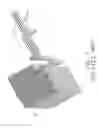
That a long macroscopic carbon nanotube yarn can be drawn out from a super-aligned carbon nanotube array has been disclosed in U.S. Pat. No. 7,045,108. The carbon nanotube yarn includes a plurality of carbon nanotube bundles that are joined end to end by van der Waals attractive force, and each of the carbon nanotube bundles includes a plurality of carbon nanotubes substantially parallel to each other. Referring to FIG. 7, a simple model of a continued carbon nanotube yarn 14 being drawn out from a super-aligned carbon nanotube array 10 is shown. A number of carbon nanotube bundles 12 are joined end to end by van der Waals attractive force to form the continued carbon nanotube yarn 14. However, in general, the carbon nanotube yarn 14 is several centimeters in length and several microns in thickness. A ratio of surface area to volume of the carbon nanotube yarn 14 is very great, and the surface of it is very clean, so it is very sticky and as such macroscopic level application of the carbon nanotube yarn 14 is restricted to a great extent.
SUMMARY
A carbon nanotube yarn and method for making the same according to a preferred embodiment is provided.
The method includes the steps of:
- (1) providing a carbon nanotube array;
- (2) drawing out at least one carbon nanotube yarn string from the carbon nanotube array;
- (3) treating the at least one carbon nanotube yarn string using an organic solvent in a manner such that the at least one carbon nanotube yarn string is formed into a single strand of carbon nanotube yarn.
The carbon nanotube yarn includes at least one carbon nanotube yarn string juxtaposedly attached to each other, the at least one carbon nanotube yarn string includes a number of carbon nanotube bundles which are joined end to end by van der Waals attractive force, and each of the carbon nanotube bundles includes a number of carbon nanotubes substantially parallel to each other.
BRIEF DESCRIPTION OF THE DRAWINGS
Many aspects of the present carbon nanotube yarn and method for making the same can be better understood by reference to the following description of embodiments thereof taken in conjunction with the accompanying drawings.
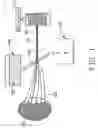
FIG. 1 is a schematic view of a device for making a carbon nanotube yarn in accordance with a preferred embodiment of the present invention;
FIG. 2 is a scan electronic microscopy (SEM) photograph of a carbon nanotube yarn string;
FIG. 3 is an enlarged sectional view of a tube with a through hole of the device of FIG. 1;
FIG. 4 is an enlarged sectional view of a tube connecting and coupling to a rod;
FIG. 5 is an enlarged sectional view of a tube connecting and coupling to two rods;
FIG. 6 is a SEM photograph of a carbon nanotube yarn of a preferred embodiment of the present invention; and
FIG. 7 is schematic view of a conventional carbon nanotube yarn being drawn out from a carbon nanotube array.
The exemplifications set out herein illustrate at least one preferred embodiment of the present carbon nanotube yarn and method for making the same, in one form, and such exemplifications are not to be construed as limiting the scope of the invention in any manner.
DETAILED DESCRIPTION
Reference will now be made to the drawings to describe in detail the preferred embodiments of the present carbon nanotube yarn and method for making the same, in detail.
Referring to FIG. 1, a method for making carbon nanotube yarn includes the steps of:
- (1) providing a carbon nanotube array 20;
- (2) drawing out a number of carbon nanotube yarn strings 22 from the carbon nanotube array 20;
- (3) treating the number of carbon nanotube yarn strings 22 using an organic solvent 50 in a manner such that the number of carbon nanotube yarn strings 22 are formed into a single strand of carbon nanotube yarn 30.
In the step (1), the carbon nanotube array 20 is generally a super-aligned carbon nanotube array. The carbon nanotube array 20 can be manufactured using a chemical vapor deposition method. The method is disclosed in U.S. Pat No. 7,045,108, which is incorporated herein by reference. For illustrative purposes, the method for manufacturing the carbon nanotube array 20 is described below, and includes the steps of:
- (a) providing a substantially flat and smooth substrate, the substrate can be a p-type or n-type silicon wafer;
- (b) depositing a catalyst on the substrate, the catalyst being selected from the group consisting of iron, cobalt, nickel or alloys of the same;
- (c) annealing the substrate with the catalyst in protective gas at 300˜400° C. for about 10 hours;
- (d) heating the annealed substrate with the catalyst to 500˜700° C., supplying a mixture of carbon containing gas and protective gas, controlling a difference between the local temperature of the catalyst and the environmental temperature to be at least 50° C., controlling a partial pressure of the carbon containing gas to be less than 0.2, and growing a number of carbon nanotubes on the substrate after 5˜30 minutes such that the carbon nanotube array 20 is formed on the substrate. The carbon containing gas can be a hydrocarbon such as acetylene, ethane etc. The protective gas can be an inert gas or nitrogen gas.
The superficial density of the carbon nanotube array 20 manufactured by above-described process with carbon nanotube bundles being compactly bundled up together is higher. The van der Waals attractive force between adjacent carbon nanotube bundles is strong, and diameters of the carbon nanotubes are correspondingly substantial.
In the step (2), the carbon nanotube yarn strings 22 may be drawn out from the carbon nanotube array 20 with a tool with a sharp tip, such as a tweezers. Specifically, an initial carbon nanotube bundle with a number of carbon nanotubes of the carbon nanotube array 20 can be drawn out with tweezers. As a carbon nanotube bundle is drawn out, other carbon nanotube bundles are also drawn out due to the van der Waals attractive force between ends of adjacent bundles and a successive carbon nanotube yarn string 22 is formed. The carbon nanotube yarn string 22 may have a length of several centimeters and a thickness of several microns. Referring to FIG. 2, a SEM photograph of the carbon nanotube yarn string 22 of the present embodiment is shown. In the present embodiment, a number of carbon nanotube yarn string 22 are drawn out from the carbon nanotube array 20.
In the step (3), referring to FIGS. 1 and 3, a device for continuously soaking the carbon nanotube yarn strings 22 is shown. The device includes a container 40 for containing the organic solvent 50 therein, a tube 42 and a vessel 60 configured for collecting the organic solvent. The tube 42 is coupled to a bottom of the container 40 and is in communication with the container 40. The tube has a through hole 44 defined therein for allowing the carbon nanotube yarn strings 22 to pass therethrough. The container 40 is configured for supplying the organic solvent 50 to the tube 42. A method for soaking the carbon nanotube yarn strings 22 in the organic solvent 50 thereby shrinking the carbon nanotube yarn strings 22 into a single strand of carbon nanotube yarn 30 using above-described device is described below, which includes the steps in no particular order of:
- (a) placing the container 40 above the carbon nanotube yarn strings 22, the container 40 containing the organic solvent 50 for treating the carbon nanotube yarn strings 22;
- (b) supplying the organic solvent 50 to the tube 42, wherein the organic solvent 50 may be a volatilizable organic solvent such as ethanol, methanol, acetone, dichloroethane or chloroform;
- (c) placing the vessel 60 below the through hole 44 of the tube 42 for collecting leaking organic solvent;
- (d) passing the carbon nanotube yarn strings 22 through the through hole 44 of the tube 42 continuously to soak the carbon nanotube yarn strings 22 in the organic solvent 50, thereby shrinking the carbon nanotube yarn strings 22 into the carbon nanotube yarn 30 with a diameter of 20˜30 microns under the action of surface tension of the organic solvent 50. FIG. 6 shows a SEM photograph of the carbon nanotube yarn 30 of the present embodiment.
Alternatively, the tube 42 can have no through hole 44 defined therein, and it can be connected and coupled to a rod. FIG. 4 shows that the tube 42 is connected and coupled to a rod 92. The organic solvent 50 can flow along surface of the rod 92 and the carbon nanotube yarn strings 22 can be attached over or below the rod 92, thereby the carbon nanotube yarn strings 22 shrink into the carbon nanotube yarn 30 due to the surface tension of the organic solvent 50.
Of course, the tube 42 can also be connected and coupled to more than one rod, and the more than one rod align together in a parallel form. Referring to FIG. 5, that the tube 42 being connected and coupled to two rods 94 is shown. The organic solvent 50 can flow along surface of the rods 94 and the carbon nanotube yarn strings 22 can be attached over or below the rods 94, thereby the carbon nanotube yarn strings 22 shrink into the carbon nanotube yarn 30 due to the surface tension of the organic solvent 50.
The carbon nanotube yarn 30 includes a number of carbon nanotube yarn strings packed closely together, and each of the carbon nanotube yarn strings includes a number of carbon nanotube bundles which are joined end to end by van der Waals attractive force, and each of the carbon nanotube bundles includes a number of carbon nanotubes substantially parallel to each other. The ratio of surface area to volume of the carbon nanotube yarn 30 is low and the carbon nanotube yarn 30 therefore has non-stick properties.
The carbon nanotube yarn 30 can be coiled onto a bobbin 80 with a electromotor 70 or by hand.
Alternatively, the carbon nanotube yarn strings 22 can be soaked by directly soaking the entire carbon nanotube yarn strings 22 in an organic solvent 50, a shrunk carbon nanotube yarn 30 can be obtained after the soaked carbon nanotube yarn strings 22 are pulled out from the solvent under the action of surface tension of the organic solvent 50. Of course, just one carbon nanotube yarn string drawn out from the carbon nanotube array 20 can be shrunk into a carbon nanotube yarn 30 with above-described steps.
While the present invention has been described as having preferred or exemplary embodiments, the embodiments can be further modified within the spirit and scope of this disclosure. This application is therefore intended to cover any variations, uses, or adaptations of the embodiments using the general principles of the invention as claimed. Furthermore, this application is intended to cover such departures from the present disclosure as come within known or customary practice in the art to which the invention pertains and which fall within the limits of the appended claims or equivalents thereof.
Claims
What is claimed is:1. A method for making a carbon nanotube yarn, the method comprising the steps of:
(1) providing a carbon nanotube array;
(2) drawing out at least one carbon nanotube yarn string from the carbon nanotube array;
(3) treating the at least one carbon nanotube yarn string using an organic solvent in a manner such that the at least one carbon nanotube yarn string is formed into a single strand of carbon nanotube yarn.
2. The method as claimed in claim 1, wherein the carbon nanotube array is manufactured using a chemical vapor deposition method.
3. The method as claimed in claim 1, wherein the carbon nanotube array is a super-aligned carbon nanotube array.
4. The method as claimed in claim 1, wherein the at least one carbon nanotube yarn string is drawn out from the carbon nanotube array using tweezers.
5. The method as claimed in claim 1, wherein the at least one carbon nanotube yarn string comprises a plurality of carbon nanotube bundles which are joined end to end by van der Waals attractive force, and each of the carbon nanotube bundles comprises a plurality of carbon nanotubes substantially parallel to each other.
6. The method as claimed in claim 1, wherein in step (3), the at least one carbon nanotube yarn string is soaked in the organic solvent thereby forming the at least one carbon nanotube yarn string into a single strand of carbon nanotube yarn.
7. The method as claimed in claim 1, wherein the organic solvent is a volatilizable organic solvent.
8. The method as claimed in claim 7, wherein the volatilizable organic solvent is selected from the group consisting of ethanol, methanol, acetone, dichloroethane, chloroform, and any combination thereof.
9. A carbon nanotube yarn comprising:
a plurality of carbon nanotube yarn strings juxtaposedly attached to each other, the carbon nanotube yarn strings each comprising a plurality of carbon nanotube bundles which are joined end to end by van der Waals attractive force, and each of the carbon nanotube bundles comprising a plurality of carbon nanotubes substantially parallel to each other.
10. The carbon nanotube yarn as claimed in claim 9, wherein a diameter of the carbon nanotube yarn is in a range from 20 to 30 microns.
Images & Drawings included:




Sources:
- United States Patent and Trademark Office - verify current appl. status at the USPTO↗
Similar patent applications:
- » 20070166223
Method for making carbon nanotube yarn - » 20200399129
Composite yarn and method of making a carbon nanotube composite yarn - » 20210316991
Composite yarn and method of making a carbon nanotube composite yarn - » 20100173037
Carbon nanotube yarn, method and apparatus for making the same - » 20090311940
Method for making field emission device incorporating a carbon nanotube yarn - » 20090282802
CARBON NANOTUBE YARN, THREAD, ROPE, FABRIC AND COMPOSITE AND METHODS OF MAKING THE SAME
Recent applications in this class:
- » 20210002794 2021-01-07
Method for producing carbon nanotube yarn - » 20200270774 2020-08-27
Carbon nanotube hybrid material fabric, composite fabric, and personal protective apparel and equipment - » 20200109492 2020-04-09
Process for preparing a yarn comprising carbon nanotubes and yarn prepared thereby - » 20190368076 2019-12-05
Method for controlling strength of carbon nanotube fiber aggregate - » 20190271100 2019-09-05
Method for preparing carbon nanotube fiber and carbon nanotube fiber prepared thereby - » 20180347072 2018-12-06
Fibers fabricated to incorporate metals for high temperature applications - » 20180216255 2018-08-02
Method for producing carbon nanofibers - » 20130343982 2013-12-26
Process for making multi-walled carbon nanotubes and multi-walled carbon nanotubes formed therefrom - » 20130230736 2013-09-05
Nanostructure device and method for manufacturing nanostructures - » 20130104665 2013-05-02
Strain sensors, methods of making same, and applications of same
Recent applications for this Assignee:
- » 20140363586 2014-12-11
Laser-based method for growing an array of carbon nanotubes - » 20140363586 2014-12-11
Laser-based method for growing an array of carbon nanotubes - » 20140299819 2014-10-09
Method for making a carbon nanotube film - » 20140299819 2014-10-09
Method for making a carbon nanotube film - » 20140199855 2014-07-17
Method for making a carbon nanotube film - » 20140199855 2014-07-17
Method for making a carbon nanotube film - » 20110171419 2011-07-14
Electronic element having carbon nanotubes - » 20110171419 2011-07-14
Electronic element having carbon nanotubes - » 20110110535 2011-05-12
Carbon nanotube speaker - » 20110110535 2011-05-12
Carbon nanotube speaker