Plant for producing an oxygen-containing additive as an ecologically beneficial component for liquid motor fuels
US20100136674A1
2010-06-03
12/606,151
2009-10-26
✅ Patent granted
US 8,431,391 B2
2013-04-30
-
-
Nathan Bowers
Michelle P. Nguyen | Michael J. Badagliacca | John T. Lucas
2030-08-30
Abstract:
A plant for producing an oxygen-containing additive for liquid motor fuels comprises an anaerobic fermentation vessel, a gasholder, a system for removal of sulphuretted hydrogen, and a hotwell. The plant further comprises an aerobic fermentation vessel, a device for liquid substance pumping, a device for liquid aeration with an oxygen-containing gas, a removal system of solid mass residue after fermentation, a gas distribution device; a device for heavy gases utilization; a device for ammonia adsorption by water; a liquid-gas mixer; a cavity mixer, a system that serves superficial active and dispersant matters and a cooler; all of these being connected to each other by pipelines. The technical result being the implementation of a process for producing an oxygen containing additive, which after being added to liquid motor fuels, provides an ecologically beneficial component for motor fuels by ensuring the stability of composition fuel properties during long-term storage.
Inventors:
- Yury Paul Siryk 1 🇺🇦 Pavlograd, Ukraine
- Ivan Peter Balytski 1 🇺🇦 Pavlograd, Ukraine
- Volodymyr George Korolyov 1 🇺🇦 Pavlograd, Ukraine
- Olexiy Nick Klishyn 1 🇺🇦 Pavlograd, Ukraine
- Vitaly Nick Lnianiy 1 🇺🇦 Pavlograd, Ukraine
- Yury Alex Lyakh 1 🇺🇦 Pavlograd, Ukraine
- Victor Valery Rogulin 1 🇺🇦 Pavlograd, Ukraine
Assignee:
- U.S. Department of Energy 260 🇺🇸 Washington, DC, United States
Applicant:
Interested in similar patents?
Get notified when new applications in this technology area are published.
Classification:
C02F3/30 » CPC main
Biological treatment of water, waste water, or sewage Aerobic and anaerobic processes
C02F11/02 » CPC further
Treatment of sludge; Devices therefor Biological treatment
C02F11/04 » CPC further
Treatment of sludge; Devices therefor; Biological treatment Anaerobic treatment; Production of methane by such processes
C05F17/50 » CPC further
Preparation of fertilisers characterised by biological or biochemical treatment steps, e.g. composting or fermentation Treatments combining two or more different biological or biochemical treatments, e.g. anaerobic and aerobic treatment or vermicomposting and aerobic treatment
C10L1/18 » CPC further
Liquid carbonaceous fuels containing additives; Organic compounds containing oxygen
C10L1/1817 » CPC further
Liquid carbonaceous fuels containing additives; Organic compounds containing oxygen Compounds of uncertain formula; reaction products where mixtures of compounds are obtained
C10L10/02 » CPC further
Use of additives to fuels or fires for particular purposes for reducing smoke development
C12M21/04 » CPC further
Bioreactors or fermenters specially adapted for specific uses for producing gas, e.g. biogas
C12M23/36 » CPC further
Constructional details, e.g. recesses, hinges Means for collection or storage of gas; Gas holders
C12M23/58 » CPC further
Constructional details, e.g. recesses, hinges Reaction vessels connected in series or in parallel
C12M43/02 » CPC further
Combinations of bioreactors or fermenters with other apparatus Bioreactors or fermenters combined with devices for liquid fuel extraction; Biorefineries
C12M47/18 » CPC further
Means for after-treatment of the produced biomass or of the fermentation or metabolic products, e.g. storage of biomass Gas cleaning, e.g. scrubbers; Separation of different gases
C12M47/20 » CPC further
Means for after-treatment of the produced biomass or of the fermentation or metabolic products, e.g. storage of biomass Heating or cooling
C02F1/36 » CPC further
Treatment of water, waste water, or sewage with mechanical oscillations ultrasonic vibrations
C02F2101/16 » CPC further
Nature of the contaminant; Inorganic compounds Nitrogen compounds, e.g. ammonia
C02F2103/005 » CPC further
Nature of the water, waste water, sewage or sludge to be treated Black water originating from toilets
C02F2103/20 » CPC further
Nature of the water, waste water, sewage or sludge to be treated from animal husbandry
C02F2103/26 » CPC further
Nature of the water, waste water, sewage or sludge to be treated from the processing of plants or parts thereof
C02F2303/02 » CPC further
Specific treatment goals Odour removal or prevention of malodour
Y02E50/30 » CPC further
Technologies for the production of fuel of non-fossil origin Fuel from waste, e.g. synthetic alcohol or diesel
Y02E50/30 » CPC further
Technologies for the production of fuel of non-fossil origin Fuel from waste, e.g. synthetic alcohol or diesel
Y02P20/145 » CPC further
Technologies relating to chemical industry; Feedstock the feedstock being materials of biological origin
Y02P20/145 » CPC further
Technologies relating to chemical industry; Feedstock the feedstock being materials of biological origin
Y02W10/20 » CPC further
Technologies for wastewater treatment Sludge processing
Y02W10/20 » CPC further
Technologies for wastewater treatment Sludge processing
Y02W30/40 » CPC further
Technologies for solid waste management Bio-organic fraction processing; Production of fertilisers from the organic fraction of waste or refuse
Y02W30/40 » CPC further
Technologies for solid waste management Bio-organic fraction processing; Production of fertilisers from the organic fraction of waste or refuse
C12M1/107 IPC
Apparatus for enzymology or microbiology with means for collecting fermentation gases, e.g. methane
C12M1/00 IPC
Apparatus for enzymology or microbiology
C12M3/00 IPC
Tissue, human, animal or plant cell, or virus culture apparatus
C02F3/34 IPC
Biological treatment of water, waste water, or sewage characterised by the microorganisms used
Description
PRIORITY CLAIM
This application claims benefit from and priority to Russian Serial No. 200804667 filed Apr. 26, 2007 and PCT/IB2007/004121 filed Dec. 27, 2007.
BACKGROUND OF THE INVENTION
The present invention generally relates to devices for producing oxygen-containing substances from hydrocarbon, and, more particularly, the present invention relates to devices for implementing a process for producing oxygen-containing additives (OCA) for all of the liquid motor fuels and may be practiced in various industries of economy where, for example, internal combustion engines are used.
Widely known in science and technology are processes for producing a wide range of organic oxygen-containing substances from hydrocarbon, which contains oxygen bound to the carbon skeleton of a compound, the atoms whereof are included in hydroxyl (carbonyl, carboxyl) groups and determine the chemical properties of compounds. Adding oxygen-containing substances from hydrocarbon, in appropriate proportions, to all liquid motor fuels, improves liquid motor fuels combustion efficiency, and thereby reduces emission of harmful substances to the atmosphere.
Therefore, what is needed is the development of devices for implementing a process for producing an oxygen-containing additive for all of the liquid motor fuels, which have high chemical and physical stability, and the components of which are not deficient and are readily available.
Known in the science is a plant for producing the oxygen-containing additive for gasoline, which comprises a fermentation cylinder, a dehydration cylinder, a recovery cylinder, and heat exchange and auxiliary equipment. The oxygen-containing additive produced at this plant comprises dehydrated ethanol and, after mixing with gasoline, is hygroscopic and, is not stable for storage upon moisture, as well as at low temperatures. Therefore, blends of OCA's with gasoline do not ensure stability for motor fuel properties during long-term storage, particularly at higher humidity and low temperatures.
The physical stability of motor fuel compositions is ensured by adding, in appropriate proportions, stabilizers and additives, which improve motor fuels functional properties, such as wash and antiknock agents. Such additives, as well as compositions containing them, are prepared by means of ordinary mixing, using standard equipment. It should be pointed out that the presence of a great amount of stabilizers in such additives and the addition of such additives to a fuel composition, result in increased costs, while the presence of gasoline-based components produced by the oil-refining industry in fuel compositions, results in rising prices and scarcities, for example, because of the Ukraine's energy dependence on imported energy.
The most similar in the technological spirit to the plant in accordance with this invention is, chosen as a prototype, a biogas plant for processing and recycling agriculture organic waste, which comprises a mixing tank, an anaerobic fermentation vessel of liquid biomass, a gasholder, a system for removal of sulphuretted hydrogen and a hotwell. This known plant implements a method for producing oxygen-containing substances from hydrocarbon by means of the anaerobic decomposition of a liquid biomass based on the bio-chemical degradation (fermentation hydrolysis) of organic substances and receiving the production of a colloidal solution of organic oxygen-bearing compounds, such as volatile fatty acids, alcohols, aldehydes, and ketones; and concomitant gases, such as carbon-dioxide gas, hydrogen, sulphuretted hydrogen, methane, ammonia; and inorganic substances, such as Ca, Co, Cu, K, Mg, Mn, Mo, N, P, S, Zn.
The principal disadvantage of the prototype is that this known biogas plant is incapable of producing the oxygen-containing additive for liquid motor fuels in the form of an environment-friendly, phase-stable colloidal composition of organic and inorganic substances because of the instability of its oxygen-bearing components.
Accordingly, an object of the present invention is to provide a plant for producing an OCA as an ecologically beneficial component for liquid motor fuels by equipping the known biogas plant with additional devices and by introducing a new interrelationship between the structural components of the plant.
The technical result achieved by implementing of this invention is the improvement of both chemical and physical stability of the performance indices of the oxygen-bearing components of a colloidal substance.
As a result, consumer properties of the subject-matter of the invention are connected with the technical result, i.e., the implementation of a technology of producing an OCA as an ecologically beneficial component for liquid motor fuels to ensure the stability of composition fuel properties during long-term storage.
The technical result is achieved by the known biogas plant comprising the mixing tank, the anaerobic fermentation vessel of liquid biomass, the gasholder, the system for removal of sulphuretted hydrogen, and the hotwell, and further comprising an aerobic fermentation vessel provided with stop and control valves, a device for pumping of liquid substance after fermentation, a device for liquid aeration with an oxygen-containing gas, and a removal system of solid mass residue after fermentation; a gas distribution device; a device for utilization of heavy gases; a device for ammonia adsorption by water; a liquid-gas mixer; a cavity mixer; a system that serves superficial active and dispersant matters and a cooler; all of these being connected to each other by pipelines. A bottom of the gas distribution device is connected by pipelines to the aerobic fermentation vessel and to the device for utilization of heavy gases, and a top of the gas distribution device is connected to the cavity mixer through the device for ammonia adsorption by water and through the liquid-gas mixer.
The above listed features, which are distinctive from those of the prototype, constitute the spirit of the invention and are novel, since they are necessary and sufficient for attaining the set object, i.e., to provide a plant for producing an OCA as an ecologically beneficial component for liquid motor fuels.
The comparison of the solution in accordance with the present invention with other prior technical solutions shows that the features of the solution in accordance with the present invention, namely: the devices connected to each other by pipelines from the list of which is given above and which complement the known biogas plant have not been detected in the known plants for producing an OCA for liquid motor fuels.
In order to demonstrate the cause-and-effect relationship between the aggregate of the dominant features of the device in accordance with the present invention and the technical results, the applicant submits as follows:
As a result of complementing the biogas plant with the aerobic fermentation vessel, aerobical satiation of fermented liquid substance by an oxygen-bearing gas is discovered:
-
- The cessation of any further anaerobic decomposition of the liquid biomass;
- Increase in the number of free radicals and hydroxyl groups;
- Further oxidation accompanied by the production of complex blends with an oxygen-containing compounds; and
- The improvement of ergonomic characteristics due to the elimination of an unpleasant odor.
The gases produced during the aerobic fermentation of the liquid substance are accumulated in the gas distribution device and are distributed within it vertically depending on their molecular weights. This allows utilization of sulphuretted hydrogen by passing it through the device for utilization of heavy gases, as well as ammonia with water as a fertilizer to be produced by passing the mixture of light gases (H2, CH4, NH3) through the device for ammonia adsorption by water.
The employment, in the biogas plant in accordance with the present invention, of the cavity mixer and of the system that serves superficial active and dispersant matters to the liquid substance after saturation aerobically by oxygen-containing gases, enables this substance to be stabilized, due to the cessation of chain reactions. In addition, the performance indices of its oxygen-bearing components are improved. The use of a vibrating device in the cavity mixer allows the colloidal substance to be activated by an ultrasonic frequency of vibrations with predetermined parameters; this results in:
-
- The final destruction of anaerobic and aerobic bacteria cells;
- An additional to formation of emulsion;
- Solid particle dispersion to a size of near 10−7 m;
- Change in the confirmational structure of molecules, in spatial orientation and properties, and in chain deformation and fragmentation;
- The production of free, highly active radicals (CH), ions (OH− and H+), lower molecular weight hydrocarbons, molecular hydrogen, and atomic oxygen.
Therefore, the employment, in the biogas plant in accordance with the present invention, of the cavity mixer and of the system that serves superficial active and dispersant matters provides that the aggregate transformations and physical stability of the performance indices of the oxygen-containing components of the colloidal substance are ensured. This in turn allows long-term storage of a mixture of liquid motor fuels with an OCA to be achieved.
Equipping the biogas plant, in accordance with the present invention, with the cooler (heat exchanger—distiller) makes it possible to condense the gases produced during the process of activating the colloidal mass by ultrasonic cavitation and to provide a plant for producing the oxygen-containing additive as an ecologically beneficial component for liquid motor fuels in the form of a high dispersion, physically stable colloidal substance.
BRIEF DESCRIPTION OF THE DRAWING
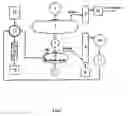
FIG. 1 is a schematic diagram of the plant for producing an OCA as an ecologically beneficial component for liquid motor fuels, in accordance with the present invention.
DETAILED DESCRIPTION OF THE INVENTION
The plant in accordance with the present invention comprises a mixing tank 1, an anaerobic fermentation vessel of liquid biomass 2, a gasholder 3, an aerobic fermentation vessel 4, a device for pumping of liquid substance after fermentation 5, a device for liquid aeration 6, a removal system of solid mass residue after fermentation 7, a gas distribution device 8, a device for utilization of heavy gases 9, a device for ammonia adsorption by water 10, a liquid-gas mixer 11, a system that serves superficial active and dispersant matters 12, a cavity mixer 13, a cooler (heat exchanger—distiller) 14, a hotwell 15, and a system for removal of sulphuretted hydrogen 16; all of these being connected to each other by pipelines.
A bottom of the gas distribution device 8 is connected by pipelines to the aerobic fermentation vessel 4 and to the device for utilization of heavy gases 9, and a top of the gas distribution device 8 is connected to the cavity mixer 13 through the device for ammonia adsorption by water 10 and through the liquid-gas mixer 11.
The operation of the plant in accordance with the present invention will now be described in detail:
A liquid substance containing an agricultural organic waste is fed from the mixing tank 1 to the anaerobic fermentation vessel 2 where the process of anaerobic decomposition of the liquid biomass and of the production of a colloidal solution of organic and inorganic substances takes place. The gases produced during the anaerobic decomposition of the liquid matter are accumulated in the gasholder 3 and pass to a consumer through the system for removal of sulphuretted hydrogen 16.
The colloidal substance is pumped from the anaerobic fermentation vessel 2 by a pump of the device for pumping of liquid substance after fermentation 5 to the aerobic fermentation vessel 4 and is saturated with an oxygen-bearing gas by means of nozzles of the liquid aeration device 6.
Under blend pressure, gases are produced during the liquid substance fermentation process within the aerobic fermentation vessel 4, the liquid substance saturated with the oxygen-containing gas enters the cavity mixer 13 within which it is mixed with superficial-active and dispersive action salts of alkali metals, added thereto, in a predetermined proportion by the system that serves superficial active and dispersant matters 12. The gases from the aerobic fermentation vessel 4 accumulated in the gas distribution device 8 are distributed within it vertically depending on their molecular weight. Heavy gases go to the device for utilization of heavy gases 9, while light gases enter the cavity mixer 13 through the device for ammonia adsorption by water 10 and through the liquid-gas mixer 11.
The liquid substance formed after mixing within the cavity mixer 13 is fed to a mechanical activator of the cavity mixer 13 and then the liquid is activated by ultrasonic cavitation with predetermined parameters on ultrasonic frequency of vibrations. Gases are produced upon liquid activation by ultrasonic cavitation, the temperature whereof achieves between near 55° C. to 105° C. The contents having passed through the cooler 14 and the produced liquid substance in the form of an environment-friendly oxygen-containing additive enter the hotwell 15. The solid phase of the liquid substance from the anaerobic fermentation vessel 2 and from the aerobic fermentation vessel 4 is directed as a fertilizer to a consumer through the removal system of solid mass residue after fermentation 7.
The plant in accordance with the present invention implements the process for producing oxygen-containing additive from hydrocarbon, which makes it possible to:
-
- Produce an inexpensive oxygen-containing additive as an ecologically beneficial component for all of the liquid motor fuels from a liquid colloidal phase of the decomposition of the biological waste of farm animals;
- Produce an inexpensive oxygen-containing additive as an ecologically beneficial component for all of the liquid motor fuels from the biological waste of vegetable biomass;
- Produce an inexpensive oxygen-containing additive as an ecologically beneficial component for all of the liquid motor fuels from the biological waste of farm animals and of vegetable biomass;
- Produce an inexpensive oxygen-containing additive as an ecologically beneficial component for all of the liquid motor fuels from a liquid colloidal phase of the decomposition of the biological waste of people biomass;
- Produce an inexpensive oxygen-containing additive as an ecologically beneficial component for all of the liquid motor fuels from a liquid colloidal phase of the decomposition of the biological waste of farm animals and of people biomass;
- Produce an inexpensive oxygen-containing additive as an ecologically beneficial component for all of the liquid motor fuels from a liquid colloidal phase of the decomposition of the biological waste of vegetable biomass and of people biomass;
- Produce an inexpensive oxygen-containing additive as an ecologically beneficial component for all of the liquid motor fuels from a liquid colloidal phase of the decomposition of the biological waste of farm animals, of vegetable biomass, and of people biomass;
- Use the solid phase of the decomposition of the biological waste of farm animals, of vegetable biomass and of people biomass as fertilizers; and
- Improve the environmental situation in Ukraine and other countries.
The plant in accordance with the present invention has passed tests successfully at one of the leading companies of the agro-industrial complex of Ukraine Agro-Soyuz. The tests performed involving a mixture of an oxygen-containing additive with diesel fuel has revealed substantial advantages of this fuel mixture over pure fuel, namely:
-
- The consumption of diesel fuel in its mixture with an OCA decreases by nearly 22%;
- Complete absence of the coking of the fuel equipment elements, of carbon deposit and luster on the piston group elements in an internal combustion engine;
- Emissions of harmful substances are reduced substantially;
- The fuel mixture has stable physical properties; and
- The assessed value of cost of the fuel blend with an OCA added is lower by nearly 15% than that of pure fuel.
The production of an OCA for liquid motor fuels at the plant in accordance with the present invention, the use of the solid phase of the decomposition of the biological waste of farm animals and of vegetable biomass as fertilizers, and environmental improvements due to recycling agricultural organic waste and of people biomass ensure wide opportunities of using the plant in accordance with the present invention in various industries of economy.
Claims
1. A plant for producing oxygen-containing additives as ecologically beneficial components for liquid motor fuels, the plant comprising: a mixing tank, an anaerobic fermentation vessel of liquid biomass, a gasholder, a system for removal of sulphuretted hydrogen, a device for liquid substance pumping after fermentation, an aerobic fermentation vessel provided with stop and control valves, a device for liquid aeration with an oxygen-containing gas, a removal system of solid mass residue after fermentation, a gas distribution device, a device for heavy gases utilization, a system that serves superficial active and dispersant matters, and a hotwell, all these being connected to each other by pipelines, characterized in that the plant further comprises:
(a) a cavity mixer;
(b) a liquid-gas mixer, wherein pipelines connect the cavity mixer and the liquid-gas mixer, wherein a produced liquid substance and light gases intermix in the liquid-gas mixer;
(c) a device for ammonia adsorption by water, wherein a gas pipeline connects the liquid-gas mixer and a top of the gas distribution device through the device for ammonia adsorption by water, with the possibility of the outlet of light gases from the gas distribution device to the liquid-gas mixer through the device for ammonia adsorption by water;
(d) a cooler, wherein a gas pipeline connects the cavity mixer and the cooler, with the possibility of the outlet of produced gases from the cavity mixer to the cooler.
2. The plant as claimed in claim 1, characterized in that the gas pipeline connecting the top of the gas distribution device to the liquid-gas mixer has the capability of evacuating ammonia from light gases in the device for ammonia absorption by water and not enabling ammonia outlet to the liquid-gas mixer.
Images & Drawings included:

Sources:
- United States Patent and Trademark Office - verify current appl. status at the USPTO↗
Recent applications in this class:
- » 20250145508 2025-05-08
METHOD AND SYSTEM FOR TREATING MATURE LANDFILL LEACHATE - » 20250091922 2025-03-20
PRODUCTION OF SYNTHETIC HYDROCARBONS - » 20250034015 2025-01-30
CONTINUOUS FLOW CYCLIC-OPERATING WASTEWATER TREATMENT PLANT AND PROCESS FOR GROWING, SELECTING AND MAINTAINING AEROBIC GRANULAR SLUDGE WHILE TREATING WASTEWATER - » 20240109797 2024-04-04
Systems and Methods for Systems and Methods Using Thermophilic Microbes for the Treatment of Wastewater - » 20230234867 2023-07-27
BIOREMEDIATION SYSTEMS FOR WASTEWATER TREATMENT AND METHODS FOR THE USE THEREOF - » 20230227341 2023-07-20
Total nitrogen removal device for sewage and method for operating the same - » 20230202892 2023-06-29
METHODS FOR INCREASING BIOSOLIDS CAKE DRYNESS THROUGH A FORCED VENTILATION AERATED STATIC PILE BIOLOGICAL DRYING PROCESS - » 20220402791 2022-12-22
Bioaugmentation treatment process for lithium battery producing wastewater - » 20220055929 2022-02-24
Sewage treatment apparatus suitable for multi-household domestic sewage treatment - » 20200156974 2020-05-21
Device and method for installing aerobic three-phase separator without interruption of production
Recent applications for this Assignee:
- » 20250273706 2025-08-28
Systems and Methods for Generating Power - » 20250108939 2025-04-03
Air-Breathing Plasma Thruster - » 20240014419 2024-01-11
Systems and methods for generating power - » 20230251220 2023-08-10
Apparatus and method for crack measurement - » 20230037396 2023-02-09
Storage ring quantum computer - » 20220135507 2022-05-05
Separation, recovery and upgrading of biomass derived 2,3-butanediol - » 20220094396 2022-03-24
System and method for selective transmission and reception for stationary wireless networks - » 20210396680 2021-12-23
Colorimetric detection of actinides - » 20210343939 2021-11-04
Storage ring quantum computer - » 20210317548 2021-10-14
System for salt removal from uranium metal