METHOD AND DEVICE FOR GAS ANALYSIS
US20100140477A1
2010-06-10
12/451,035
2008-05-09
Abstract:
A method for determining at least one gas variable by way of a gas sensor system, and at least one system variable of that gas sensor system, in which:—the gas variable is measured at least twice, the at least two measurements differing because two different values are set for a parameter of the gas sensor system, and—based on the at least two measurements, the at least one system variable and the at least one gas variable are determined.
Interested in similar patents?
Get notified when new applications in this technology area are published.
Classification:
G01N21/3504 » CPC main
Investigating or analysing materials by the use of optical means, i.e. using sub-millimetre waves, infrared, visible or ultraviolet light; Systems in which incident light is modified in accordance with the properties of the material investigated; Colour; Spectral properties, i.e. comparison of effect of material on the light at two or more different wavelengths or wavelength bands; Investigating relative effect of material at wavelengths characteristic of specific elements or molecules, e.g. atomic absorption spectrometry using infra-red light for analysing gases, e.g. multi-gas analysis
G01N2201/127 » CPC further
Features of devices classified in; Circuits of general importance; Signal processing Calibration; base line adjustment; drift compensation
G01N21/35 IPC
Investigating or analysing materials by the use of optical means, i.e. using sub-millimetre waves, infrared, visible or ultraviolet light; Systems in which incident light is modified in accordance with the properties of the material investigated; Colour; Spectral properties, i.e. comparison of effect of material on the light at two or more different wavelengths or wavelength bands; Investigating relative effect of material at wavelengths characteristic of specific elements or molecules, e.g. atomic absorption spectrometry using infra-red light
G01J5/02 IPC
Radiation pyrometry, e.g. infrared or optical thermometry Constructional details
Description
BACKGROUND OF THE INVENTION
1. Field of the Invention
The invention relates generally to a method and apparatus for gas analysis.
2. Description of Related Art
Gas measurement technology is a common application for spectroscopic sensors. The functional principle is based on the Beer-Lambert absorption law, according to which gases absorb infrared (IR) radiation in specific wavelength regions as a result of the excitation of molecular vibrations. The number of interactions between photons and molecules governs the degree of radiation absorption. The measured intensity therefore allows a direct inference as to the number of molecules in the absorption path. A variety of elements can be used as IR sources and IR detectors. In the medium IR region, for example, in which the absorption bands of gases are particularly pronounced, thermal radiators such as incandescent lamps or microelectromechanical systems (MEMS) can be used. Bolometers, pyroelectric detectors, and thermopiles are known as corresponding detector elements. During operation, the radiation source in particular is subject to a variety of drift effects. In gas detectors, for example, if the radiation intensity is measured using only one detector, drift effects are directly incorporated as an error into the calculation of the number of molecules. Two different methods are presently known for reducing such a deviation:
1) Reference using an additional detector element:
-
- Using a second infrared detector arranged in one reference channel, the radiation intensity of the IR emitter is measured in an atmospheric window. In this wavelength region it is possible to sense the instantaneously emitted intensity of the radiation source uninfluenced by absorption effects. Because the Beer-Lambert absorption law has a multiplicative correlation between gas concentration and IR intensity, drift effects of the IR radiator can be minimized by taking the quotient of the absorption measurement and reference measurement.
2) Reference using an additional IR radiator:
-
- In contrast to the concept just described, a second IR radiator is used as a reference. This is intended to compensate for intensity fluctuations that are brought about, especially with thermal emitters, by mechanical damage caused by shocks while in the hot state. The systematic approach with this concept is to use one radiator continuously to measure the gas concentration. The second radiator, used as a reference radiator, is switched on briefly at widely spaced intervals in order to normalize the measured concentration value to its target value. It is assumed in this context that the reference radiator always generates the correct output signal.
SUMMARY OF THE INVENTION
The invention is a method for determining at least one gas variable by way of a gas sensor system, and at least one system variable of that gas sensor system, in which:
- the gas variable is measured at least twice, these at least two measurements differing because two different values are set for a parameter of the gas sensor system, and
- based on the at least two measurements, the at least one system variable and the at least one gas variable can be determined.
The invention makes it possible to sense, simultaneously with the measurement of gas variables, additional system variables that can be used, for example, for a calibration of the system.
An advantageous embodiment of the invention is characterized in that the parameter is the temperature of a radiation source associated with the gas sensor. This parameter is particularly easy to set.
An advantageous embodiment of the invention is characterized in that the gas variable is a gas concentration.
An advantageous embodiment of the invention is characterized in that the system variable is a variable describing the aging or the remaining service life of the radiation source.
An advantageous embodiment of the invention is characterized in that the system variable is a variable characterizing contamination of the gas sensor system.
An advantageous embodiment of the invention is characterized in that the gas sensor system is a spectroscopic gas sensor system.
An advantageous embodiment of the invention is characterized in that what is generated by the at least two measurements is a linear equation system
- the number of whose equations corresponds to the number of measurements, and
- the unknowns of which are the gas variables and the system variables,
- the determining of the gas variables and the system variables being accomplished by solving the linear equation system.
Linear equation systems can easily be solved using known standard mathematical methods. A pattern recognition algorithm can also be used for that purpose.
The invention further encompasses an apparatus for determining at least one gas variable by way of a gas sensor system, and at least one system variable of that gas sensor system, containing
- means for measuring the gas variable at least twice, the at least two measurements differing by the fact that two different values are set for a parameter of the gas sensor system, and
- means for determining the at least one system variable and the at least one gas variable from the at least two measurements.
An advantageous embodiment of the invention is characterized in that the gas sensor system is a spectroscopic gas sensor system made up of
- a radiation source,
- an optical absorption section, and
- a radiation detector.
BRIEF DESCRIPTION OF THE DRAWINGS
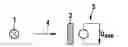
FIG. 1 shows a conventional gas analysis system.
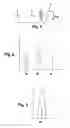
FIG. 2 shows a nonspecific or nonselective IR filter transmissivity characteristic.
FIG. 3 shows a specific or selective IR filter transmissivity characteristic.
FIG. 4 shows a characteristic intensity profile of a beam in constant-current operating mode as an incandescent filament becomes thinner.
FIG. 5 shows a characteristic intensity profile in the context of a contaminated beam path.
FIG. 6 shows execution of the method according to the present invention.
DETAILED DESCRIPTION OF THE INVENTION
The object of the invention is to correct the deviations of a sensor system, but without needing to integrate additional hardware components such as a detector or IR source. The invention relates in particular to spectroscopic sensors. In the case of thermal radiation sources, additional linearly independent information regarding the state of the sensor system is to be obtained by measuring at two different IR radiator temperatures. On the basis of these data it is possible to correct deviations. Advantageously, additional hardware such as, for example, a reference channel can be omitted, since it is sufficient to adapt the control software in such a way that measurements can be made, with a small offset in time, at two different radiator temperatures. The invention further allows the state of the sensor system to be observed continuously. This yields the possibility for autonomous calibration of the system, and for investigations of remaining service life or end-of-life calculations for critical components.
The basis of the system is a conventional optical sensor system as depicted in FIG. 1. This system has a radiator 1, an optical absorption path 4, and one or more wavelength-selective elements 2 with a detector 3 located behind them. Transmission filters, whose transmissivity characteristic can be both selective (as depicted in FIG. 3 by absorption line 5d) and nonspecific (as depicted in FIG. 2 by absorption lines 5a to 5c), can also be used in particular as wavelength-selective elements 2. With respect thereto, in FIGS. 2 and 3 a frequency is plotted on the abscissa and the transmissivity on the ordinate.
In order to allow calculation, in the case of a gas sensor, of the concentration of one or more gases of a mixture, a linearly independent measurement point must be present for each absorption line. In the simplest case, as depicted in FIG. 3, this can be achieved by way of a single measurement point.
In the case of the two-channel system depicted in FIG. 2, it is already necessary to arrive at two linearly independent working points. This can be achieved, for example, by modifying the filament temperature of a thermal radiator such as, for example, an incandescent bulb. A total of four linearly independent measurement points are generated in this fashion by measuring two detectors (one detector per channel) each at two different temperatures. For three unknowns (these being the three gases, relevant to the three absorption lines 5a, 5b, and 5c, whose concentration is to be measured), a corresponding linear equation system would be redundant. The additional linearly independent datum is available for the observation of system-relevant parameters.
In analytical terms, for a known concentration of the gases, an allocation of the detector voltage to the intensity of the radiation source can be created by way of the additional linearly independent measured value. With continuous observation of the system it is thus possible to detect characteristic deviation profiles and to institute countermeasures. Countermeasures are, for example, a correction of a measured value or a warning function in the case of an expected defect.
Even in the simpler case of FIG. 3, by measuring at a second working point it is possible to obtain additional linearly independent information about the system and use it for self-calibration, with the result that here as well, additional reference channels can be dispensed with.
Two characteristic defects, among others, can be detected as follows:
1) Defect in the radiation source:
-
- It may be expected according to Ohm's law that, for example, the intensity of the filament will rise during constant-current operation as the filament becomes thinner. The diagnosis function would produce a curve similar to FIG. 4, in which the operating time t is plotted on the abscissa and the emitted intensity I on the ordinate. The emitted intensity I rises with operating time t.
2) Contamination of the optical path:
-
- A reduction in the measured intensity may be expected when, for example, dust or other deposits have settled onto filters or reflective elements. FIG. 5 depicts a characteristic intensity curve for a beam path that becomes increasingly contaminated over time. Here the time t is depicted on the abscissa, and the ordinate represents an intensity I sensed with a detector element or arriving at the detector element.
The characteristic profiles allow different types of defect to be detected, and calculations of remaining service life to be made. The result is that, for example, the remaining service life of an incandescent bulb can be predefined more exactly. The data profiles can be evaluated, for example, analytically by adaptation of the measured data, or by the use of methods such as regression procedures or neural networks.
Execution of the method according to the present invention is depicted in FIG. 6. After the method starts in block 600, the gas variable is measured at least twice in block 601, the at least two measurements being different because two different values have been set for a parameter of the gas sensor system. Then in block 602, based on the at least two measurements, the at least one system variable and the at least one gas variable are determined. The method according to the present invention ends in block 603.
Claims
1-10. (canceled)
11. A method for determining at least one gas variable by way of a gas sensor system, and at least one system variable of that gas sensor system, comprising:
measuring a gas variable at least twice so as to obtain at least two different measurements because two different values are set for a parameter of the gas sensor system, and
determining at least one system variable and at least one gas variable based on the at least two measurements.
12. The method as recited in claim 11, wherein the parameter is the temperature of a radiation source associated with the gas sensor.
13. The method as recited in claim 11, wherein the gas variable is a gas concentration.
14. The method as recited in claim 12, wherein the system variable is a variable describing the aging or the remaining service life of the radiation source.
15. The method as recited in claim 11, wherein the system variable is a variable characterizing contamination of the gas sensor system.
16. The method as recited in claim 11, wherein the gas sensor system is a spectroscopic gas sensor system.
17. The method as recited in claim 11, wherein a linear equation system is generated by the at least two measurements, and wherein:
the number of equations of the linear equation system corresponds to the number of measurements,
the unknowns of the linear equation system are the gas variables and the system variables, and
the determining of the gas variables and the system variables is accomplished by solving the linear equation system.
18. The method as recited in claim 17, wherein the equation is solved using a pattern recognition algorithm.
19. An apparatus for determining at least one gas variable by way of a gas sensor system, and at least one system variable of that gas sensor system, comprising:
means for measuring the gas variable at least twice so as to obtain at least two measurements differing by the fact that two different values are set for a parameter of the gas sensor system, and
means for determining the at least one system variable and the at least one gas variable from the at least two measurements.
20. The apparatus as recited in claim 19, wherein the gas sensor system is a spectroscopic gas sensor which includes:
a radiation source,
an optical absorption section, and
a radiation detector.
Images & Drawings included:

Sources:
- United States Patent and Trademark Office - verify current appl. status at the USPTO↗
Similar patent applications:
- » 20250035544
GAS ANALYSIS DEVICE, GAS ANALYSIS METHOD, AND PROGRAM FOR GAS ANALYSIS DEVICE - » 20240418638
MACHINE LEARNING DEVICE, EXHAUST GAS ANALYSIS DEVICE, MACHINE LEARNING METHOD, EXHAUST GAS ANALYSIS METHOD, MACHINE LEARNING PROGRAM, AND EXHAUST GAS ANALYSIS PROGRAM - » 20240030683
SEMICONDUCTOR LASER ELEMENT, SEMICONDUCTOR LASER DEVICE, SEMICONDUCTOR LASER DEVICE MANUFACTURING METHOD, AND GAS ANALYSIS DEVICE - » 20210311000
Gas chromatograph device and analysis support method for gas chromatograph device - » 20220404312
Gas analysis device and method for detecting sample gas - » 20200209153
Measurement device, calibration curve generation system, spectrum measurement method, calibration curve generation method, analysis device, liquefied gas production plant, and property analysis method - » 20230366827
EXHAUST GAS ANALYSIS DEVICE, EXHAUST GAS ANALYSIS METHOD, AND PROGRAM STORAGE MEDIUM FOR EXHAUST GAS ANALYSIS DEVICE - » 20190064035
Exhaust gas analysis device, exhaust gas analysis method and storage medium recording programs for exhaust gas analysis device - » 20230333077
COMPOSITION ANALYSIS DEVICE AND COMPOSITION ANALYSIS METHOD FOR FUEL GAS, PRIME MOVER CONTROL DEVICE INCLUDING COMPOSITION ANALYSIS DEVICE, AND PRIME MOVER CONTROL METHOD INCLUDING COMPOSITION ANALYSIS METHOD - » 20170160191
Infrared gas analysis device, and method for using same
Recent applications in this class:
- » 20250155368 2025-05-15
IN-LINE GAS SENSOR AND SENSING METHODS - » 20250137922 2025-05-01
NON-DISPERSIVE INFRARED SENSOR - » 20250110047 2025-04-03
OPTICAL SPECTROSCOPY FOR CHARACTERIZING ATMOSPHERIC EMISSIONS - » 20250110046 2025-04-03
SYSTEMS AND METHODS FOR MEASURING GAS USING LASER SPECTROSCOPY - » 20250102427 2025-03-27
GAS SENSOR - » 20250085218 2025-03-13
METHODS, APPARATUSES, AND SYSTEMS FOR DIAGNOSING MISALIGNMENT IN GAS DETECTING DEVICES - » 20250076190 2025-03-06
DIFFERENTIAL MEASUREMENT OF IR ABSORPTION IN PLASMONIC MEMS SENSORS - » 20250067663 2025-02-27
SOLID-STATE SPECTROMETER - » 20250052671 2025-02-13
Method of Measuring a Methane Destruction and Removal Efficiency of an Elevated Flare - » 20250044223 2025-02-06
CAPPED SEMICONDUCTOR BASED SENSOR AND METHOD FOR ITS FABRICATION