Method of manufacturing magnetic material
US20100140535A1
2010-06-10
12/332,005
2008-12-10
✅ Patent granted
US 8,123,973 B2
2012-02-28
-
-
Carol M Koslow
2030-06-25
Abstract:
A method of manufacturing magnetic material is described hereinafter. Firstly, Fe(NO3)3.9H2O and other metal nitrate compounds are dissolved in an alcohol solvent to form a mixed solution. Secondly, the mixed solution is heated to 60˜100 degrees Centigrade. Next, citric acid is added into the mixed solution for being reacted with each other under the temperature of 60˜100 degrees Centigrade so that can make the alcohol solvent volatilized and further obtain brown solid powder. Lastly, the solid powder is further heated for a period of time so as to obtain the magnetic material having a fluffy powdery form.
Assignee:
- Cheng Uei Precision Industry Co. 2 🇹🇼 Taipei Hsien, Taiwan
Interested in similar patents?
Get notified when new applications in this technology area are published.
Classification:
C04B35/6264 » CPC main
Shaped ceramic products characterised by their composition ; Ceramics compositions ; Processing powders of inorganic compounds preparatory to the manufacturing of ceramic products; Forming processes; Processing powders of inorganic compounds preparatory to the manufacturing of ceramic products; Preparing or treating the powders individually or as batches ; preparing or treating macroscopic reinforcing agents for ceramic products, e.g. fibres; mechanical aspects section; Treating the starting powders individually or as mixtures; Wet mixtures Mixing media, e.g. organic solvents
B22F9/24 » CPC further
Making metallic powder or suspensions thereof using chemical processes with reduction of metal compounds starting from liquid metal compounds, e.g. solutions
B82Y25/00 » CPC further
Nanomagnetism, e.g. magnetoimpedance, anisotropic magnetoresistance, giant magnetoresistance or tunneling magnetoresistance
C04B35/265 » CPC further
Shaped ceramic products characterised by their composition ; Ceramics compositions ; Processing powders of inorganic compounds preparatory to the manufacturing of ceramic products based on oxide ceramics based on ferrites Compositions containing one or more ferrites of the group comprising manganese or zinc and one or more ferrites of the group comprising nickel, copper or cobalt
H01F1/0054 » CPC further
Magnets or magnetic bodies characterised by the magnetic materials therefor; Selection of materials for their magnetic properties showing low dimensional magnetism, i.e. spin rearrangements due to a restriction of dimensions, e.g. showing giant magnetoresistivity,; Zero dimensional, e.g. nanoparticles, soft nanoparticles for medical/biological use Coated nanoparticles, e.g. nanoparticles coated with organic surfactant
C04B2235/3206 » CPC further
Aspects relating to ceramic starting mixtures or sintered ceramic products; Composition of constituents of the starting material or of secondary phases of the final product; Constituents and secondary phases not being of a fibrous nature; Metal oxides, mixed metal oxides, or oxide-forming salts thereof, e.g. carbonates, nitrates, (oxy)hydroxides, chlorides; Alkaline earth oxides or oxide forming salts thereof, e.g. beryllium oxide Magnesium oxides or oxide-forming salts thereof
C04B2235/3215 » CPC further
Aspects relating to ceramic starting mixtures or sintered ceramic products; Composition of constituents of the starting material or of secondary phases of the final product; Constituents and secondary phases not being of a fibrous nature; Metal oxides, mixed metal oxides, or oxide-forming salts thereof, e.g. carbonates, nitrates, (oxy)hydroxides, chlorides; Alkaline earth oxides or oxide forming salts thereof, e.g. beryllium oxide Barium oxides or oxide-forming salts thereof
C04B2235/3262 » CPC further
Aspects relating to ceramic starting mixtures or sintered ceramic products; Composition of constituents of the starting material or of secondary phases of the final product; Constituents and secondary phases not being of a fibrous nature; Metal oxides, mixed metal oxides, or oxide-forming salts thereof, e.g. carbonates, nitrates, (oxy)hydroxides, chlorides Manganese oxides, manganates, rhenium oxides or oxide-forming salts thereof, e.g. MnO
C04B2235/327 » CPC further
Aspects relating to ceramic starting mixtures or sintered ceramic products; Composition of constituents of the starting material or of secondary phases of the final product; Constituents and secondary phases not being of a fibrous nature; Metal oxides, mixed metal oxides, or oxide-forming salts thereof, e.g. carbonates, nitrates, (oxy)hydroxides, chlorides Iron group oxides, their mixed metal oxides, or oxide-forming salts thereof
C04B2235/3275 » CPC further
Aspects relating to ceramic starting mixtures or sintered ceramic products; Composition of constituents of the starting material or of secondary phases of the final product; Constituents and secondary phases not being of a fibrous nature; Metal oxides, mixed metal oxides, or oxide-forming salts thereof, e.g. carbonates, nitrates, (oxy)hydroxides, chlorides; Iron group oxides, their mixed metal oxides, or oxide-forming salts thereof Cobalt oxides, cobaltates or cobaltites or oxide forming salts thereof, e.g. bismuth cobaltate, zinc cobaltite
C04B2235/3279 » CPC further
Aspects relating to ceramic starting mixtures or sintered ceramic products; Composition of constituents of the starting material or of secondary phases of the final product; Constituents and secondary phases not being of a fibrous nature; Metal oxides, mixed metal oxides, or oxide-forming salts thereof, e.g. carbonates, nitrates, (oxy)hydroxides, chlorides; Iron group oxides, their mixed metal oxides, or oxide-forming salts thereof Nickel oxides, nickalates, or oxide-forming salts thereof
C04B2235/3284 » CPC further
Aspects relating to ceramic starting mixtures or sintered ceramic products; Composition of constituents of the starting material or of secondary phases of the final product; Constituents and secondary phases not being of a fibrous nature; Metal oxides, mixed metal oxides, or oxide-forming salts thereof, e.g. carbonates, nitrates, (oxy)hydroxides, chlorides Zinc oxides, zincates, cadmium oxides, cadmiates, mercury oxides, mercurates or oxide forming salts thereof
C04B2235/3298 » CPC further
Aspects relating to ceramic starting mixtures or sintered ceramic products; Composition of constituents of the starting material or of secondary phases of the final product; Constituents and secondary phases not being of a fibrous nature; Metal oxides, mixed metal oxides, or oxide-forming salts thereof, e.g. carbonates, nitrates, (oxy)hydroxides, chlorides Bismuth oxides, bismuthates or oxide forming salts thereof, e.g. zinc bismuthate
C04B2235/443 » CPC further
Aspects relating to ceramic starting mixtures or sintered ceramic products; Composition of constituents of the starting material or of secondary phases of the final product; Constituents and secondary phases not being of a fibrous nature; Metal salt constituents or additives chosen for the nature of the anions, e.g. hydrides or acetylacetonate Nitrates or nitrites
C04B2235/449 » CPC further
Aspects relating to ceramic starting mixtures or sintered ceramic products; Composition of constituents of the starting material or of secondary phases of the final product; Constituents and secondary phases not being of a fibrous nature; Metal salt constituents or additives chosen for the nature of the anions, e.g. hydrides or acetylacetonate Organic acids, e.g. EDTA, citrate, acetate, oxalate
C04B2235/483 » CPC further
Aspects relating to ceramic starting mixtures or sintered ceramic products; Composition of constituents of the starting material or of secondary phases of the final product; Constituents and secondary phases not being of a fibrous nature; Organic compounds becoming part of a ceramic after heat treatment, e.g. carbonising phenol resins Si-containing organic compounds, e.g. silicone resins, (poly)silanes, (poly)siloxanes or (poly)silazanes
C22C2202/02 » CPC further
Physical properties Magnetic
H01F1/10 IPC
Magnets or magnetic bodies characterised by the magnetic materials therefor; Selection of materials for their magnetic properties of inorganic materials characterised by their coercivity of hard-magnetic materials non-metallic substances, e.g. ferrites, e.g. [(Ba,Sr)O(FeO)] ferrites with hexagonal structure
Description
BACKGROUND OF THE INVENTION
1. Field of the Invention
The present invention generally relates to a method of manufacturing magnetic material, and more particularly to a method of manufacturing magnetic material in a liquid phase system.
2. The Related Art
At present, magnetic material can be manufactured in a solid phase system, a gaseous phase system and a liquid phase system respectively. The solid phase system has a simple manufacture process, but the reaction in the solid phase system must be achieved under the temperature of more than 600 degrees Centigrade, and moreover the magnetic material manufactured in the solid phase system is apt to cake. The gaseous phase system needs the temperature of more than 200 degrees Centigrade to manufacture the magnetic material, and moreover has a severe reacting condition and a small processing window such that is not adapted to manufacture the magnetic material on large scale. The magnetic material manufactured in the conventional liquid phase system will not have a higher purity unless being sintered under a high temperature of more than 400 degrees Centigrade.
SUMMARY OF THE INVENTION
An object of the present invention is to provide a method of manufacturing magnetic material which is described hereinafter. Firstly, Fe(NO3)3.9H2O and other metal nitrate compounds are dissolved in an alcohol solvent to form a mixed solution. Secondly, the mixed solution is heated to 60˜100 degrees Centigrade. Next, citric acid is added into the mixed solution for being reacted with each other under the temperature of 60-100 degrees Centigrade so that can make the alcohol solvent volatilized and further obtain brown solid powder. Lastly, the solid powder is further heated for a period of time so as to obtain the magnetic material having a fluffy powdery form.
As described above, the foregoing method of the present invention can be achieved under a relatively lower temperature that effectively reduces the manufacture cost and facilitates the manufacture of the magnetic material. Moreover, the magnetic material manufactured by the above-mentioned method has a higher purity and is easy to be dispersed.
BRIEF DESCRIPTION OF THE DRAWINGS
The present invention will be apparent to those skilled in the art by reading the following description of a preferred embodiment thereof, with reference to the attached drawings, in which:
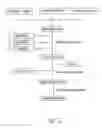
FIG. 1 is a block diagram of a method of manufacturing magnetic material according to an embodiment of the present invention.
DETAILED DESCRIPTION OF THE PREFERRED EMBODIMENT
A method of manufacturing magnetic material according to the present invention is described thereinafter. Firstly, Fe(NO3)3.9H2O and other metal nitrate compounds are dissolved in an alcohol solvent to form a mixed solution. Secondly, the mixed solution is slowly heated to 60˜100 degrees Centigrade. Next, citric acid is added into the mixed solution for being reacted with each other under the temperature of 60˜100 degrees Centigrade so that can make the alcohol solvent volatilized and further obtain brown solid powder. Lastly, the solid powder is further heated in an oven for a period of time under the temperature of 100˜110 degrees Centigrade so as to obtain the magnetic material having a fluffy powdery form and a higher purity.
Before the mixed solution is heated, an organosilane compound of the formula RnSiX4-n could be added into the mixed solution first, wherein R is an organic group, X is a hydrolyzable group, and n is an integer of from 0 to 2. In the embodiment, the organosilane compound can be any one of or a mixture of at least two selected from C8H20O4Si, C4H12O4Si, C8H20O3Si and C7H18O3Si. The organos compound is added into the mixed solution for being reacted with each other so as to form a layer of silica protective film on the surface of the magnetic material so that can improve the stability of the magnetic material. Before the citric acid is added into the mixed solution, a proper quantity of water could be added into the mixed solution.
In the above-mentioned method, the other metal nitrate compounds can be any one of or a mixture of at least two selected from Ni(NO3)2.6H2O, Zn(NO3)2.6H2O, Bi(NO3)3.5H2O, Co(NO3)3.6H2O, Mn(NO3)2.6H2O, Mg(NO3)2.6H2O and Ba(NO3)2. The alcohol solvent can be any one of or a mixture of an ethanol solvent and a propyl-alcohol solvent. The weight ratio of Fe(NO3)3.9H2O and the other metal nitrate compounds is 5:1˜2 preferably. The weight ratio of a total weight of Fe(NO3)3.9H2O and the other metal nitrate compounds and the alcohol solvent is 1:1˜1.5 preferably. The weight ratio of the total weight of Fe(NO3)3.9H2O and the other metal nitrate compounds and the citric acid is 10:0.5˜2 preferably. The weight ratio of the total weight of Fe(NO3)3.9H2O and the other metal nitrate compounds and the organosilane compound is 10:0.5˜2 preferably.
Referring to FIG. 1, an embodiment is introduced for describing the foregoing method in detail. Firstly, 250 g Ni(NO3)2.6H2O, 256 g Zn(NO3)2.6H2O and 1389 g Fe(NO3)3.9H2O are put into 2500 ml ethanol solvent to be completely dissolved and form the mixed solution. Secondly, 100 g C8H20O4Si, 50 g C4H12O4Si and 50 g C7H18O3Si are added into the mixed solution, and then the mixed solution is slowly heated to 80 degrees Centigrade. Next, 50 g water and 200 g citric acid are successively added into the heated mixed solution so as to be reacted with each other, such that can make the alcohol solvent volatilized due to a great quantity of heat energy generated from the reaction process and further obtain the brown solid powder. Lastly, the solid powder is further heated in the oven for 12 hours under the temperature of 105 degrees Centigrade so as to obtain the magnetic material having a fluffy powdery form, a higher purity and a layer of silica protective film thereon.
As described above, the method of manufacturing the magnetic material according to the present invention can be achieved under a relatively lower temperature that effectively reduces the manufacture cost and facilitates the manufacture of the magnetic material. Moreover, the magnetic material manufactured by the above-mentioned method has a higher purity and is easy to be dispersed.
Claims
What is claimed is:1. A method of manufacturing magnetic material, comprising the steps of:
dissolving Fe(NO3)3.9H2O and other metal nitrate compounds in an alcohol solvent to form a mixed solution;
heating the mixed solution to 60˜100 degrees Centigrade;
adding citric acid into the mixed solution for being reacted with each other under the temperature of 60-100 degrees Centigrade so that can make the alcohol solvent volatilized and further obtain brown solid powder; and
heating the solid powder further for a period of time so as to obtain the magnetic material having a fluffy powdery form.
2. The method as claimed in claim 1, wherein the other metal nitrate compounds can be any one of or a mixture of at least two selected from Ni(NO3)2.6H2O, Zn(NO3)2.6H2O, Bi(NO3)3.5H2O, Co(NO3)3.6H2O, Mn(NO3)2.6H2O, Mg(NO3)2.6H2O and Ba(NO3)2.
3. The method as claimed in claim 1, wherein the weight ratio of Fe(NO3)3.9H2O and the other metal nitrate compounds is 5:1˜2, the weight ratio of a total weight of Fe(NO3)3.9H2O and the other metal nitrate compounds and the alcohol solvent is 1:1˜1.5, the weight ratio of the total weight of Fe(NO3)3.9H2O and the other metal nitrate compounds and the citric acid is 10:0.5˜2.
4. The method as claimed in claim 1, wherein an organosilane compound of the formula RnSiX4-n could be added into the mixed solution first before the mixed solution is heated, wherein R is an organic group, X is a hydrolyzable group, and n is an integer of from 0 to 2.
5. The method as claimed in claim 4, wherein the organosilane compound can be any one of or a mixture of at least two selected from C8H20O4Si, C4H12O4Si, C8H2003Si and C7H18O3Si.
6. The method as claimed in claim 4, wherein the weight ratio of a total weight of Fe(NO3)3.9H2O and the other metal nitrate compounds and the organosilane compound is 10:0.5˜2.
7. The method as claimed in claim 1, wherein a proper quantity of water could be added into the mixed solution before the citric acid is added into the mixed solution.
8. The method as claimed in claim 1, wherein the solid powder is further heated to 100˜110 degrees Centigrade.
9. The method as claimed in claim 1, wherein the alcohol solvent can be any one of or a mixture of an ethanol solvent and a propyl-alcohol solvent.
Images & Drawings included:

Sources:
- United States Patent and Trademark Office - verify current appl. status at the USPTO↗
Similar patent applications:
- » 20090071572
ALLOY MATERIAL, A MAGNETIC MATERIAL, A MANUFACTURING METHOD OF A MAGNETIC MATERIAL, AND A MAGNETIC MATERIAL MANUFACTURED BY THE MANUFACTURING METHOD - » 20080248245
Soft Magnetic Material, Method of Manufacturing Soft Magnetic Material, Dust Core, and Method of Manufacturing Dust Core - » 10445509
Magnetic material manufacturing method, ribbon-shaped magnetic materials, powdered magnetic material and bonded magnets - » 20100028195
Soft magnetic material, powder magnetic core, method for manufacturing soft magnetic material, and method for manufacturing powder magnetic core - » 20130228717
Magnetic materials, methods of manufacturing magnetic material, and inductor element using magnetic material - » 20070264521
Soft magnetic material, powder magnetic core, method for manufacturing soft magnetic material, and method for manufacturing powder magnetic core - » 20080044679
Soft magnetic material, powder magnetic core, method for manufacturing soft magnetic material, and method for manufacturing powder magnetic core - » 20100044618
Soft magnetic material, dust core, method for manufacturing soft magnetic material, and method for manufacturing dust core - » 20140151595
Method of manufacturing hexagonal ferrite magnetic particles, method of manufacturing magnetic coating material, and method of manufacturing magnetic recording medium - » 20180044768
FeNi ALLOY COMPOSITION COMPRISING L10-TYPE FeNi ORDERED PHASE, METHOD OF MANUFACTURING FeNi ALLOY COMPOSITION COMPRISING L10-TYPE FeNi ORDERED PHASE, FeNi ALLOY COMPOSITION COMPRISING AMORPHOUS MAIN PHASE, MOTHER ALLOY OF AMORPHOUS MATERIAL, AMORPHOUS MATERIAL, MAGNETIC MATERIAL, AND METHOD OF MANUFACTURING MAGNETIC MATERIAL
Recent applications in this class:
- » 20240317648 2024-09-26
METHODS OF MANUFACTURING GREEN BODIES AND SUBSTRATES - » 20230142450 2023-05-11
THERMAL INSULATION MATERIALS SUITABLE FOR USE AT HIGH TEMPERATURES, AND PROCESS FOR MAKING SAID MATERIALS - » 20210380491 2021-12-09
Ceramic slurry composition and process for producing stacked ceramic component - » 20210009477 2021-01-14
Baking slurry composition, green sheet, method for manufacturing green sheet, method for manufacturing sintered product, and method for manufacturing monolithic ceramic capacitor - » 20210009476 2021-01-14
Baking slurry composition, green sheet, method for manufacturing green sheet, method for manufacturing sintered product, and method for manufacturing monolithic ceramic capacitor - » 20200317585 2020-10-08
Method for fabricating a ceramic heating body with porous heating film - » 20200172444 2020-06-04
Slip And Process For The Production Of Ceramic And Glass Ceramic 3D Structures - » 20160251268 2016-09-01
Method for coloring ceramics via collidal dispersion - » 20140084503 2014-03-27
Flame spray pyrolysis method for forming nanoscale lithium metal phosphate powders - » 20120107211 2012-05-03
PROCESS FOR MANUFACTURING HIGH DENSITY BORON CARBIDE
Recent applications for this Assignee:
- » 12346468 2009-08-18
Board-to-board connector assembly