Interactive game for intimate communications
US20100140871A1
2010-06-10
12/314,362
2008-12-09
Abstract:
Disclosed is a game adapted to be played by means of hard copy cards, or their electronic equivalent on computers or other electronic devices and designed to enhance communication between players, lovers, dating couples or people in intimate relationships in a manner that is open, fun, uninhibited, and for dating couples, romantic.
Interested in similar patents?
Get notified when new applications in this technology area are published.
Classification:
A63F1/04 » CPC main
Card games Card games combined with other games
A63F9/18 » CPC further
Games not otherwise provided for Question-and-answer games
A63F1/00 IPC
Card games
Description
FIELD OF THE INVENTION
The present invention is directed to a game adapted to be played by means of cards, or their electronic equivalent on computers or other electronic devices, and designed to enhance communication between players, lovers, dating couples, people in intimate relationships such as members of a family, or for use in an environment where frank and open communication is required such as a therapy session or corporate diversity training, in a manner that is open, fun, uninhibited, and in the case of lovers, romantic.
BACKGROUND OF THE INVENTION
Love is the bedrock of happiness and for many people, at the center of their major life concerns. But meeting one's soul mate can be a real challenge despite the use of Internet, singles' clubs and forums, and other social networking aids. In most cases, meeting someone is merely the beginning; the relationship has to be cultivated, nurtured, and developed till it ripens into the enduring and fulfilling encounter that lovers yearn for. However, the initial ecstasy of encountering an attractive mate is often clothed with superficial passion, and all too often vanishes before the couples have truly discovered one another. Consequently, many actively searching couples have heartaches and thwarted dreams to show for their efforts.
It is common knowledge that inability to communicate effectively in an open and uninhibited manner is the commonest cause of failed relationships. And yet there are not enough aids aimed at helping couples to communicate short of the bland and often tedious psychotherapy scenes if it ever gets to that.
The object of this invention is to bridge that communication gap between lovers, established or nascent, dating couples or people pursing intimate relationships or family members needing to communicate in a manner that is probing, interactive, and yet fun and for lovers, very romantic. The invention is also adaptable to any situation such as corporate diversity training and the like where frank and open heart communication is to be encouraged.
SUMMARY OF THE INVENTION
The present invention is directed to a game adapted to be played by means of cards, computers or electronic devices, and designed to enhance communication between the players, such as couples pursuing a close or intimate relationship. As used in this invention, couples refer to any two persons of whatever gender seeking to establish a romantic or intimate relationship or to enhance their relationship. However, this game may be played by any number of people in a close or intimate relationship using audience-appropriate versions of the game. As used in this specification, the term cards may refer to conventional hardcopy cards or electronic versions thereof.
The game of the present invention comprise a plurality of regular cards and a set of non-regular cards or wild cards or special cards. The terms non-regular cards or wild cards or special cards are used interchangeably, are distinct in content and optionally, in appearance from the regular cards, and are designed to introduce elements of surprise, provide romantic interludes and comfort as appropriate for the audience, signify end of game, confer an advantage accruing to the presenter or else empower the holder to ask an unscripted question, or extract a pledge, or promise or indulgence from the non-holding partner.
In one embodiment, the set of wild cards comprise at least one game-ending wild card which may bring the game to an automatic end. In another embodiment, the game-ending wild card may be defeated by an opponent having a privilege non-regular card conferring the power to defeat a game-ending card. In a preferred embodiment, a game-ending card is coupled to an indulgence accruing to the presenter of the game ending card. An indulgence may include a kiss on the cheek, a massage, etc.
In another embodiment, the set of wild cards comprise at least one game-ending wild card and at least one non-game ending wild card.
In one embodiment, the non-game ending wild card comprises a mandate scripted thereon which directs the holder to act in a certain manner. The mandate may or may not be favorable to the presenter. The mandate may also be defeated by an opposing player having a privilege card empowering the holder to defeat a mandate. One such mandate may be to direct the holder to decline answering any number of questions of his or her choosing.
In another embodiment, the non-game ending wild card comprises a game privilege scripted thereon which directs the exercise any privilege consistent with the purpose of providing fun, romance and opportunity for couples to interact. One such privilege may be to confer upon the holder the power to temporarily suspend the game while he or she gets a message from the other partner.
In another embodiment, the none-game ending wild card empowers the holder to attempt to obtain a declinable indulgence from the non-holding party. Such declinable indulgence may include a request for a peck on the cheek; a kiss; a week-end for two; a promise to see a certain movie; or else any which way the none-game ending wild card holder prays to be indulged.
In another embodiment, the game ending wild card empowers the holder to extract a non-declinable indulgence from the non-holder. Such non-declinable indulgence may include a request for a peck on the cheek; a kiss; a week-end for two; a promise to see a certain movie; or else any which way the game ending wild card holder wishes to be romantically indulged.
In one embodiment, the plurality of regular cards is one hundred and the set of game ending wild card is only one card.
In another embodiment, the plurality of regular cards is one hundred and the set of game ending wild card is only one card and the set of none-game ending wild card comprise at least two cards.
Each of the regular cards consist of two sides—a front or cover side and a back side comprising carefully scripted questions. Each of the non-regular cards also consists of two sides—a front or cover side and a back side comprising a mandate or an invitation to request an indulgence or in the case of the game-ending wild card, to end the game and call for the non-declinable indulgence.
In one embodiment, the back side of the regular cards comprises both carefully scripted questions and multiple choice answers inviting the responding party to choose the answer that most closely represents their thinking or feeling on the predicate question. In other embodiments, the back side may comprise questions only or it may comprise a set of answers inviting an appropriate question.
In one embodiment, the front sides of the regular and non-regular cards in a game pack are the same.
In another embodiment, the front sides of the regular and non-regular cards in a game pack are different.
In one typical format, the cards are shuffled, stacked back to back with the back side facing down and the players take turns to select a pre-agreed number of cards or have a pre-agreed number dealt to each of the players. To maintain the element of surprise and spontaneity, the players are forbidden to look at the back cover of their cards—be they regular or non-regular cards. The couples then take turns presenting their cards to their playing partner who reads the question scripted thereon and invites the presenting party to respond. Where the card happens to be a non-regular card, the mandate, game privilege or else, whatever game advantage or disadvantage inscribed therein is announced to the presenting party. When a party presents a game-ending wild card, the presenting party may call the game to an end and in turn extract an indulgence which the non-presenting party may not decline. When a party presents a non-game ending wild card, the presenting party may request an indulgence from the non-presenting party or else follow the mandates scripted on the non-game ending wild card.
In yet another embodiment, the interactive game of the instant invention may be packed into different versions. One version of the games may be for beginning couples or those actively dating. Another version may be for established or mature couples. And yet another version may be for intermediate couples or those needing to add spunk or spice to their relationship. One version may be for a family and yet another version may be for corporate diversity training. In all these versions, the regular cards will have questions more appropriately designed to address the communication needs of those players. In all these versions, the non-regular cards will also have mandates, privileges or indulgences more suited to the character of the relationship—be that beginning, intermediate and established, or mature relationships.
The electronic version of this game is played in an electronic device or computer in a manner that simulates the hard copy version of the game. The game may be packaged in a computer readable format such as an optical disk or it may be installed in a client-server environment such as the internet. The game may also be embedded in a dedicated form factor or its own separate electronic device.
In the electronic version, the cards may be electronically shuffled and dealt and the players take turns clicking through the stack and discussing and responding to the questions accordingly. The electronic version may be graphically enhanced, both as to the cards and to the background in order to give both visual flavor and romantic appeal to the game. Graphic enhancements also include the possibility of using graphical animation, romantic videos and voice enhancements. The electronic version may also be keyed to music wherein each game selection is accompanied by a different music or each card being discussed is scored to a separate music. Other enhancements are also envisaged in the electronic version of this invention. For instance the stack of electronic regular and non-regular cards may be interspersed with voice animated jokes, short stories, trivia, quotations, “did you knows” and sorts consistent with the theme of enhancing communication in a way that is both fun and romantic.
In one embodiment, the players upon initializing the electronic version are given the option to select an appropriate version be it beginners, intermediate or mature couples; to select the number of cards and wild card elements; to select graphic animation and desired genre of music—rock, classic, religious etc; to select whether to intersperse the game with animated jokes, short stories or trivia.
It is to be understood that both the foregoing general description and the following detailed description are exemplary and explanatory and are intended to provide further explanation of the invention as claimed. Other objects and features of the invention will become apparent from the following detailed description considered in conjunction with the accompanying drawings. The accompanying drawings are included solely for purposes of illustration and not as a definition of the limits of the invention. Also, the drawings are not drawn to scale, and are merely conceptual in disclosing the preferred embodiments of the invention.
BRIEF DESCRIPTION OF THE DRAWINGS
In the drawings, wherein like reference numerals identify similar elements:
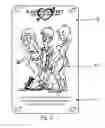
FIG. 1 illustrates an example of the front cover of a regular card according to one embodiment of this invention.
FIG. 2 illustrates an example of the back cover of a regular card according to one embodiment of this invention.
FIG. 3 illustrates an example of the back cover of a regular card according to one embodiment of this invention.
FIG. 4 illustrates an example of the back cover of a regular card according to one embodiment of this invention.
FIG. 5 illustrates an example of the back cover of a regular card according to one embodiment of this invention.
FIG. 6 illustrates an example of the back cover of a regular card according to one embodiment of this invention.
DETAILED DESCRIPTION OF THE PREFERRED EMBODIMENTS OF THE PRESENT INVENTION
Referring now to the drawings of the present disclosure in which like numbers represent the same structure in the various views, FIG. 1 illustrates the front side of a regular card 10. In a preferred embodiment, the front side comprises a graphics element preferably having a romantic appeal in the version of the game designed for lovers or else an audience-appropriate appeal for other versions. The front side of a non-regular card may or may not have the same graphics element as the front side of a regular card. In a preferred embodiment, the front side of a non-regular card comprises a different graphics element from the front side of a non-regular card.
FIGS. 2 to 6 illustrate the back side of a regular card 10. In a preferred embodiment, the back side comprises a graphics element 14 and a script element 12. The script element 12 comprises a question or a set of questions reasonably calculated to elicit responses from the presenting party. In another embodiment, the script element 12 comprises a question and multiple choice answers wherein the presenting party is invited by the reading party to choose the answer the most closely represents the thought or feeling of the presenting party.
In a preferred embodiment, the back side of a non-regular card comprises a graphics element and a script element. The script element in this case may be a mandate, a privilege, a declinable or a non-declinable indulgence, or else a game advantage accruing to the presenting party. A typical game pack comprises at least one non-regular game ending card wherein the script element calls the game to an end and invites the game ending card presenting party to extract an indulgence which the reading party cannot decline. The indulgence may be left to the discretion of the presenting party or it may be stated. Optionally, the indulgence may be stated in a multiple choice format inviting the reading party to choose one indulgence to confer to the presenting party.
In a preferred game format, the players take turns playing the role of presenting or reading party wherein the presenting party presents a card from his or her own stack of randomly dealt cards, and without seeing or reading the question on the back side, hands it over or presents it to the reading party who reads the question and invites the presenting party to respond.
Thus, one embodiment of the present invention is directed to a card game for enhancing communication between at least one presenting player and at least one reading player in a close or intimate relationship, said game comprising a plurality of regular cards and a set of non-regular cards, said regular cards comprising a front side and a back side, said back side having scripted thereon for enunciation by the reading player, questions or answers reasonably calculated to elicit revealing verbal response from the presenting player, and wherein the non-regular cards comprising a front side and a back side, also have scripted on their back side, a game privilege, or a game mandate, or an indulgence or an advantage accruing to the presenting player.
In one embodiment, the non-regular cards comprise at least one sudden death game-ending card, the presentation of which brings a game session to an automatic end. Optionally, the sudden death game ending card is coupled with a non-declinable indulgence accruing to the presenter.
In another embodiment, the non-regular cards comprise at least one defeasible game-ending card, the presentation of which invites the opposing player holding a non-regular card conferring the privilege to defeat a game-ending card to exercise that privilege.
In another embodiment, the non-regular cards comprise at least one privilege card, the presentation of which confers a game privilege accruing to the presenting player to be exercised at the presenting player's discretion. Also, non-regular cards may comprise at least one mandate card, the presentation of which confers a written mandate to the presenting player which may or may not be detrimental to the presenting party. Further, the non-regular cards comprise at least one indulgence card, the presentation of which invites a stated or unstated indulgence from the reading player to the presenting player.
In a preferred embodiment, the indulgence card served by the presenting player has scripted thereon, a privilege to request an indulgence that may be declined by the reading player holding a privilege card that confers the power to decline performing an indulgence. In another embodiment, the indulgence card served by the presenting party has scripted thereon, a privilege to request an indulgence that may not be declined by the reading player.
In a preferred embodiment, the back sides of the regular and non-regular cards also comprise a graphics element. In one embodiment, the front sides of the regular and non-regular cards look the same. In a preferred embodiment, the front side of the regular cards looks different from the front side of the non-regular cards. The front side of the non-regular cards may look different depending on whether it is a privilege, a mandate, an indulgence card or otherwise confers a game advantage to the presenting player.
Additionally, the card game may further comprising at least one set of non-regular cards selected from the group consisting of “Did You Know,” “Quotation,” “Short story,” and “Joke” cards designed to inject insight, humor, entertain, further liven or accentuate the game experience.
Different versions of the card game are envisaged. The game may be packaged into audience-appropriate versions wherein the scripts on the regular and non-regular cards are closely tailored to meet the communication needs of the target audience. Also, the script on the back side of the regular cards comprise at least one of the following formats: only questions inviting an open-ended response; questions and multiple choice answers; only answers inviting a question as response.
In addition to a table version of the game, an electronic version of the game constitutes another embodiment. The game may be played in any electronic or computer device comprising a processor for executing a set of programmable instructions capable of being executed by a processor for playing a card game, said card game including the steps of randomly selecting and dealing a pre-selected number of regular and non-regular cards, alternately disclosing the back side of the cards upon player initiated electronic event such as a mouse click or key-board event, electronic enunciation of the script of the back side inviting appropriate response from the non-presenting.
Thus, one object of the present invention is to provide an electronic card game for enhancing communication between players in a close or intimate relationships, said game comprising a plurality of regular electronic cards, and a set of non-regular electronic cards, said regular electronic cards comprising a front side and a back side, said back side revealable by an electronic event performed by a presenting player and said back side scripted thereon, questions or answers reasonably calculated to elicit revealing verbal response from the presenting player, and wherein the non-regular electronic cards comprising a front side and a back side, also have scripted on their back sides, a game privilege, or a game mandate, or an indulgence or an advantage accruing to the presenting player.
In one embodiment of the electronic card game, the non-regular electronic cards comprise at least one sudden death game-ending card, the presentation of which brings a game session to an automatic end. In another embodiment, the non-regular electronic cards comprise at least one defeasible game-ending card, the presentation of which invites the opposing player holding a non-regular electronic card conferring the privilege to defeat a game-ending electronic card to exercise that privilege. The non-regular electronic cards may also comprise at least one privilege card, the presentation of which confers a game privilege to the presenting player to be exercised at the presenting player's discretion. The non-regular electronic cards may also comprise at least one mandate card, the presentation of which confers a written mandate to the presenting player which may or may not be detrimental to the presenting party. The non-regular cards may also comprise at least one indulgence card, the presentation of which invites a stated or unstated indulgence accruing to the presenting player.
In one embodiment of the electronic card game, the indulgence card served by the presenting player has thereon, a privilege to request an indulgence that may be declined by the reading player holding a privilege card that confers the power to decline performing an indulgence. In another embodiment, the electronic indulgence card served by the presenting party has scripted thereon, a privilege to request an indulgence that may not be declined by the reading player.
The back side of the regular and non-regular cards may also comprise an animated or nonanimated graphics element. In another embodiment, the electronic card game may further comprises a set of non-regular cards selected from the group consisting of “Did You Know,” “Quotation,” “Short story,” and “Joke” cards designed to inject insight, humor, entertain, further liven or accentuate the game experience.
The electronic card game may be packaged into user-electable, audience-appropriate versions wherein the scripts on the regular and non-regular cards are closely tailored to meet the communication needs of the target audience.
Also, scripts on the back side of the regular cards comprise at least one of the following formats: only questions; questions and multiple choice answers; only answers inviting a question as response.
In a preferred embodiment, a game session is accompanied by player electable music score. Also in a preferred embodiment of the electronic version, the scripts on the back side of the regular or non-regular cards are enunciated by the electronic device.
The electronic card game of claim may be packaged in a computer readable device such as an optical disk or it may be executed in a client-server architecture such as the World Wide Web. The game may also be packed in its own dedicated electronic device.
It being understood that the questions below are for illustrative purposes only and are not intended to limit the scope of the invention, a typical game pack of the present invention may contain a plurality of regular game cards—either hard copy or electronic, having any one of the following questions or their equivalent scripted on the back cover.
- 1. An unfortunate accident has just confined the charming person you met a few months ago, and with whom you have started a wonderful love affair, to bed. What do you do?
- 2. He/she is tall, you are short; he/she is white, you are black; he/she is highly qualified, you left school with no qualifications; he/she is Muslim, you are Christian; he/she is poor, you are rich . . . You only have one thing in common: you are irresistibly attracted to one another and you adore making love. How do you see the future of your relationship?
- 3. You are 45, he/she is 20. He/she adores you. You are uncomfortable with this attachment and you feel guilty because of the age difference. He/she threatens to commit suicide if you leave him/her. What do you do?
- 4. He/she doesn't dislike alcohol, quite the reverse! And that doesn't exactly make you jump for joy . . . What do you do?
- 5. You are single, with no attachments and you like your freedom. How many lovers would you see at the same time?
- 6. After knowing each other for several years, your best friend admits that he/she has always been attracted to you but has never dared say anything. How would you react?
- 7. What does loving someone mean to you?
- 8. What place do money and social or material situations have in your relationship with your loved one?
- 9. Humility is not his/her strong suit, but he/she loves and respects you. Are you happy to forgive his/her arrogance or do you ask him/her to also improve how he/she behaves with other people?
- 10. How important are physical considerations in choosing your partner?
- 11. Are you for or against abortion?
- 12. How do you react when he/she tells you he/she has just lost his/her job?
- 13. What would you prefer: living together or marriage? Why?
- 14. How far can you trust your partner and how far would you go to save your relationship?
- 15. Do you believe in love at first sight?
- 16. Your partner is accused of a violent crime and may go to prison. What would your first reaction be?
- 17. You like cooking but using various excuses you prefer to leave him/her to do the job. What do you say to get him/her to accept your view of things?
- 18. “You cannot live on love alone” is his/her motto. And to earn money, he/she will use any means at his/her disposal. What do you think?
- 19. What do you say when he/she either suggests moving in with you or suggests you move in with him/her?
- 20. What do you do when you surprise him/her injecting heroin and you had no idea he/she was an addict?
- 21. How would you prefer him/her to be: elegant and sophisticated, in short conservative chic, or more natural and old fashioned?
- 22. You find out by accident that he/she already has several children that he/she hasn't mentioned to you. What do you do?
- 23. He/she is very pleasant, attentive and generous. There is one hitch: he/she is a fraudster! You find out, he/she tries to justify himself/herself. What do you do?
- 24. His/her nose, breasts or pectorals, buttocks are all false . . . but look natural. His/her forehead is smooth thanks to the magic of plastic surgery. What do you think?
- 25. Hair carefully removed from underarms, legs, body—even pubic hair—eyebrows plucked and sun bed tan or whitened skin . . . The person you have just met wants to be at the cutting edge of . . . beauty treatments. Do you accept or reject his/her advances?
- 26. He/she tells you one evening that he/she has decided to resign from a well paid job to go back to studying. He/she had to give up some years ago and he/she has a complex about his/her of low standard of education. How would you react?
- 27. He/she always leaves it up to his/her mother, father or brothers and sisters whenever there is an important decision to be made, including those concerning your relationship. He/she says it is part of being a close family. What do you think?
- 28. He/she is unfaithful to you with your sister/brother or your best friend. Caught in the act, he/she says that he/she has been manipulated and accuses you of organising it all. What do you do?
- 29. He/she refuses to ask you for help. Out of pride he/she says! How do you take it?
- 30. You don't smoke, he/she smokes cigarette after cigarette. What do you do?
- 31. He/she likes eating, eating well, but also eating a lot. A lot too much in your opinion as he/she is bulimic. What do you do?
- 32. She tells you she is pregnant. What is your first reaction?
- 33. He is old school and insists that in a couple there is a hierarchy: the man issue orders the woman carries them out. What do you think about it?
- 34. He/she hates cleaning his or her teeth after a meal and before going to bed and only showers occasionally . . . what do you do to educate him/her about personal hygiene?
- 35. He/she says he/she is discreet, shy, reserved . . . In fact he/she is being hypocritical as she/he always manages things so as to present himself/herself in the best possible light. You discover what he/she is up to. What do you do?
- 36. He/she is hooked on the Internet and spends hours in front of the computer screen, the excuse being that he/she is keeping informed and improving his/her mind. Your relationship is suffering . . . What do you do to save the situation?
- 37. He/she is madly in love with you, but you feel smothered by his/her pathological sensitiveness. You can't cope with it but you love him/her too. How do you get out of this mess?
- 38. You are hopelessly in love with him/her. He/she tells you he/she is suffering from an incurable disease. How do you react?
- 39. He/she refuses to make love before marriage. You love him/her a lot but you are uneasy about his/her position, which he/she presents as being proof of love. What do you do?
- 40. You are arranging to get married. He/she leaves you to choose the type of prenuptial agreement. What do you decide to do: division of property or joint property?
- 41. He/she loathes doing the housework and says it is because of his/her upbringing or is a long standing habit. You can't cope, but you say nothing fearing it will cause a break up. For how long?
- 42. “A liar is never believed, even when telling the truth,” goes the old saying. Your partner knows, but cannot help misrepresenting the truth. How do you handle it?
- 43. Not everyone is of the opinion that music soothes the soul. This is how your partner feels. He/she goes crazy whenever you turn on the hi-fi. How do you handle it?
- 44. He/she thinks the sin of pride is a pure invention. Proud of himself/herself, he/she bows only to a sole authority: that of his/her boundless love for you. You are puzzled—does he/she really love you?
- 45. He/she is impulsive and intolerant: “If you forgive easily, you invite insults,” he/she often repeats to justify not making allowances. What do you think?
- 46. Lazy and carefree, he/she gets up late and goes to bed early. What do you do?
- 47. He/she is tempted by the experience of orgies and talks to you about it. How do you respond?
- 48. He/she loves talking politics with his/her friends, but you do not share his/her enthusiasm. What do you do?
- 49. He/she thinks that using a condom is a sign of mistrust and that it isn't necessary between faithful lovers. What do you say?
- 50. How important is the profession of the other person in your decision to go out with him/her.
- 51. Since his/her last promotion, he/she has become arrogant, even with you. How do you react?
- 52. You think he/she is sound in mind and body and well-balanced. You realise after a few months that he/she has mental problems. How do you handle it?
- 53. How important is racial or ethnic affinity in the choice of your partner?
- 54. Is his/her religion a decisive factor in your decision to go out with him/her?
- 55. He/she snores as soon as he/she closes his/her eyes but refuses to recognise the fact, which of course he/she is unaware of. What do you do?
- 56. He/she is bisexual, although you didn't know when you started going out together. But he/she is honest and tells you about it straightaway when you ask. What do you do?
- 57. Are there any sexual practices you have reservations about? If so which ones?
- 58. Does love imply financial and material solidarity?
- 59. You enjoy going out, so does he/she. But where do you prefer going: restaurant, cinema, theatre, clubs . . . ?
- 60. Regularly practising a sport is good for your health. What do you do and how much time do you spend on it every week?
- 61. He/she spends a lot of time in front of the television to the detriment of your relationship. What do you do?
- 62. You find out that his/her body is covered with tattoos. What do you do?
- 63. How do you express your affection for your partner?
- 64. When do you feel you have been betrayed and how do you react?
- 65. Your partner prefers taking separate holidays. How do you respond?
- 66. Is total honesty a good thing in a relationship?
- 67. You feel he/she is upset. You insist on finding out what the matter is and he/she admits to having been raped. What is your first reaction?
- 68. Your partner is full of inconsistencies. Very gentle and generous, he/she can also be impulsive and violent. This situation worries you more and more and you would like to end it. What do you do?
- 69. After seeing one another for a few months, you realise that he/she is a kleptomaniac! What do you do?
- 70. You met him/her last week in a night club and when you are about to make love he/she admits it is the first time. How do you deal with it?
- 71. You adore children and would love to have some, but you end up with someone that has already had children and doesn't want any more at any price. What do you do?
- 72. He/she is very keen on a particular sexual practice that you find repellent. You love him/her and don't want to lose him/her. What do you do?
- 73. You have just met someone that tells you he/she loves dogs and cats and is planning to get one soon. You like him/her but you are uncomfortable because you can't stand animals and fear your future relationship would suffer because of it. What do you tell him/her?
- 74. You have recently met him/her. He/she introduces you to his/her parents who don't take to you. He/she lets you know he/she is keen on you but nevertheless cannot go against the opinion of his/her parents. What do you do?
- 75. The person you have just met is a sex maniac/nymphomaniac. You have trouble getting on to his/her wavelength and can't cope as it is part of his/her very nature. What do you do?
- 76. He/she has a conviction for armed robbery. He/she is honest and tells you right from the start. You don't immediately reject him/her because you like him/her . . .
- 77. You meet a very beautiful/handsome, elegant, courteous man/woman, but you find out that he/she is a prostitute. What do you do?
- 78. He/she is impotent/frigid but has nevertheless done everything possible to win your heart. What do you do when you find out the sad truth?
- 79. He loves you and showers you with presents. There is a problem though: he suffers from premature ejaculation. Sex is very important to you . . . What do you do?
- 80. The young woman you have been going out with for a few weeks admits she has never had an orgasm, either before she met you or since you've been together. What do you do?
- 81. Kind and adorable, he/she is possessive, is pathologically jealous and takes violent offence when you even glance at another man/woman. What do you do?
- 82. The children of the person you are currently going out with don't like you, although you love each other and are planning to live together. How do you handle it?
- 83. Your partner is older than you. You love him/her as he/she is, but he/she does everything possible to appear younger. You don't agree with him/her. What do you do?
- 84. His/her greatest weakness is alcohol. He/she drinks like a fish and in spite of your advice continues to do so. His/her only excuse is that he/she is still lucid even after a few drinks. What do you do?
- 85. A high ranking personality, married and the father of several children, suggests a extramarital relationship with you. How would you respond?
- 86. He/she can't get over his/her recent break up with his/her ex and confesses that he/she feels like committing suicide. What do you do?
- 87. You live alone in a big apartment. You meet a charming person that lives with his/her parents and is having trouble leaving home. What do you do?
- 88. You meet someone that looks over 18 and you fall for one another, but he/she admits he/she is under age. What do you do?
- 89. You partner is heavily in debt but continues to live beyond his/her means. What do you do?
- 90. You love one another and have a peaceful and harmonious relationship, but she tells you she is sterile. You would like your own children, without adopting. What do you do?
- 91. You are particularly keen on sex. Your partner confides that without going as far as polygamy, she is happy to let you have extra conjugal relations, provided you respect her and that you continue to assume your family financial responsibilities. What would your opinion be?
- 92. You have just got married and in spite of all your precautions, your partner gets pregnant. Not being ready for a baby, you suggest an abortion. She is against it. What do you do?
- 93. You surprise your partner masturbating. What do you do?
- 94. A rich heir/heiress, you suspect all your admirers of only being interested in your money. How do you go about finding that one person in a million?
- 95. You are madly in love with someone with a different religion. You want to marry, but his/her parents insist you convert. What do you decide to do?
- 96. Your partner finds you are no longer the slim person with a wasp-like waist you used to be and that you have become fat and clumsy. He/she seems to be losing interest in you. What do you do to put things right?
- 97. You are going out with someone that has been divorced several times . . . and who has asked you to marry him/her. What is your response?
- 98. She criticises you for lack of foreplay and for just confining yourself to actual intercourse. How do you react?
- 99. It is your fault, a crisis erupts in the household and your partner decides to leave. What do you do to remedy the situation?
- 100. He/she brings back or invites his/her friends home without consulting or letting you know. What would your reaction be?
It will be apparent to those skilled in the art that various modifications and variations can be made to the present invention without departing from the spirit or scope of the invention. Thus, it is intended that the present invention cover the modifications and variations of this invention provided they come within the scope of the appended claims and their equivalents. Accordingly, the invention is not limited by the embodiments described above which are presented as examples only but can be modified in various ways within the scope of protection defined by the appended patent claims.
Claims
We claim1. A card game for enhancing communication between at least one presenting player and at least one reading player in a close or intimate relationship, said game comprising a plurality of regular cards and a set of non-regular cards, said regular cards comprising a front side and a back side, said back side having scripted thereon for enunciation by the reading player, questions or answers reasonably calculated to elicit revealing verbal response from the presenting player, and wherein the non-regular cards comprising a front side and a back side, also have scripted on their back side, a game privilege, or a game mandate, or an indulgence or an advantage accruing to the presenting player.
2. The card game of claim 1, wherein the non-regular cards comprise at least one sudden death game-ending card, the presentation of which brings a game session to an automatic end.
3. The card game of claim 1, wherein the non-regular cards comprise at least one defeasible game-ending card, the presentation of which invites the opposing player holding a non-regular card conferring the privilege to defeat a game-ending card to exercise that privilege.
4. The card game of claim 1, wherein the non-regular cards comprise at least one privilege card, the presentation of which confers a game privilege accruing to the presenting player to be exercised at the presenting player's discretion.
5. The card game of claim 1, wherein the non-regular cards comprise at least one mandate card, the presentation of which confers a written mandate to the presenting player which may or may not be detrimental to the presenting party.
6. The card game of claim 1, wherein the non-regular cards comprise at least one indulgence card, the presentation of which invites a stated or unstated indulgence from the reading player to the presenting player.
7. The card game of claim 6, where the indulgence card served by the presenting player has scripted thereon, a privilege to request an indulgence that may be declined by the reading player holding a privilege card that confers the power to decline performing an indulgence.
8. The card game of claim 6, where the indulgence card served by the presenting party has scripted thereon, a privilege to request an indulgence that may not be declined by the reading player.
9. The card game of claim 1, wherein the back side of the regular and non-regular cards also comprise a graphics element.
10. The card game of claim 1, wherein the front side of the regular and non-regular cards look the same.
11. The card game of claim 1, wherein the front side of the regular cards look different from the front side of the non-regular cards.
12. The card game of claim 1, wherein the front side of the non-regular cards look different depending on whether it is a privilege, a mandate, an indulgence card or otherwise confers a game advantage to the presenting player.
13. The card game of claim 1, further comprising at least one set of non-regular cards selected from the group consisting of “Did You Know,” “Quotation,” “Short story,” and “Joke” cards designed to inject insight, humor, entertain, further liven or accentuate the game experience.
14. The card game of claim 1, packaged into audience-appropriate versions wherein the scripts on the regular and non-regular cards are closely tailored to meet the communication needs of the target audience.
15. The card game of claim 1, wherein the scripts on the back side of the regular cards comprise at least one of the following formats: only questions; questions and multiple choice answers; only answers inviting a question as response.
16. An electronic card game for enhancing communication between players in a close or intimate relationships, said game comprising a plurality of regular electronic cards, and a set of non-regular electronic cards, said regular electronic cards comprising a front side and a back side, said back side revealable by an electronic event performed by a presenting player and said back side scripted thereon, questions or answers reasonably calculated to elicit revealing verbal response from the presenting player, and wherein the non-regular electronic cards comprising a front side and a back side, also have scripted on their back sides, a game privilege, or a game mandate, or an indulgence or an advantage accruing to the presenting player.
17. The electronic card game of claim 16, wherein the non-regular electronic cards comprise at least one sudden death game-ending card, the presentation of which brings a game session to an automatic end.
18. The electronic card game of claim 16, wherein the non-regular electronic cards comprise at least one defeasible game-ending card, the presentation of which invites the opposing player holding a non-regular electronic card conferring the privilege to defeat a game-ending electronic card to exercise that privilege.
19. The electronic card game of claim 16, wherein the non-regular electronic cards comprise at least one privilege card, the presentation of which confers a game privilege to the presenting player to be exercised at the presenting player's discretion.
20. The electronic card game of claim 16, wherein the non-regular electronic cards comprise at least one mandate card, the presentation of which confers a written mandate to the presenting player which may or may not be detrimental to the presenting party.
21. The electronic card game of claim 16, wherein the non-regular cards comprise at least one indulgence card, the presentation of which invites a stated or unstated indulgence accruing to the presenting player.
22. The electronic card game of claim 16, where the indulgence card served by the presenting player has thereon, a privilege to request an indulgence that may be declined by the reading player holding a privilege card that confers the power to decline performing an indulgence.
23. The electronic card game of claim 16, wherein the electronic indulgence card served by the presenting party has scripted thereon, a privilege to request an indulgence that may not be declined by the reading player.
24. The electronic card game of claim 16, wherein the back side of the regular and non-regular cards also comprise an animated or nonanimated graphics element.
25. The electronic card game of claim 16, further comprising a set of non-regular cards selected from the group consisting of “Did You Know,” “Quotation,” “Short story,” and “Joke” cards designed to inject insight, humor, entertain, further liven or accentuate the game experience.
26. The electronic card game of claim 16, packaged into user-electable, audience-appropriate versions wherein the scripts on the regular and non-regular cards are closely tailored to meet the communication needs of the target audience.
27. The electronic card game of claim 16, wherein the scripts on the back side of the regular cards comprise at least one of the following formats: only questions; questions and multiple choice answers; only answers inviting a question as response.
28. The electronic card game of claim 16, wherein a game session is accompanied by player electable music score.
Images & Drawings included:





Sources:
- United States Patent and Trademark Office - verify current appl. status at the USPTO↗
Recent applications in this class:
- » 20250099841 2025-03-27
VETO Card Game - » 20250050198 2025-02-13
A SYSTEM OF A NEW DECK OF CARDS AND OF AN ASSOCIATED RANKING SYSTEM AND THEIR APPLICATION IN PLAYING GAMES - » 20250018274 2025-01-16
Memory Card Game - » 20250001283 2025-01-02
GAME AND GAME KIT - » 20240342586 2024-10-17
GAME SYSTEMS AND METHODS - » 20240325869 2024-10-03
GAME SYSTEMS AND METHODS - » 20240325868 2024-10-03
GAME TOY - » 20240316442 2024-09-26
GAME SYSTEMS AND METHODS - » 20240299834 2024-09-12
GOLF BRACKET CARD GAME - » 20240226709 2024-07-11
Bobble Card Game