Method for making a thermoplastic composite part by molding
US20100148394A1
2010-06-17
12/532,994
2008-03-28
✅ Patent granted
US 8,066,927 B2
2011-11-29
WO; PCT/FR2008/050548; 20080328
WO; WO2008/139077; 20081120
Joseph Del Sole | David N Brown, II
2028-03-28
Abstract:
The invention relates to a method for making a thermoplastic composite part by molding. The method includes making several portions of the part according to a molding method, the molding method including placing, in a mold, a composite material containing fibers embedded in a thermoplastic matrix, while arranging the material so that the fibers contained therein are oriented along one or more preferred directions; submitting the mold to particular pressure and temperature conditions, knowing that for each of the different portions the fibers may be of different natures and dimensions, and may be oriented in different directions, while the thermoplastic matrix and that of the material used for making the first portion are identical or compatible; and assembling the different portions obtained, placing them in a mold, and submitting the latter to particular pressure and temperature conditions.
Inventors:
- Maurice Guitton 4 🇨🇦 Nova Scotia, Canada
- Claude Baril 4 🇨🇦 Laval, Canada
- Vincent Duqueine 1 🇫🇷 Saint Didier au Mont D'Or, France
Assignee:
- CARBONE FORGE 1 🇫🇷 Lentilly, France
Interested in similar patents?
Get notified when new applications in this technology area are published.
Classification:
B29C70/46 » CPC main
Shaping composites, i.e. plastics material comprising reinforcements, fillers or preformed parts, e.g. inserts comprising reinforcements only, e.g. self-reinforcing plastics; Shaping operations therefor; Shaping or impregnating by compression not applied for producing articles of definite length, i.e. discrete articles using matched moulds, e.g. for deforming sheet moulding compounds [SMC] or prepregs
B29C65/02 » CPC further
Joining of preformed parts ; Apparatus therefor by heating, with or without pressure
B29C66/543 » CPC further
General aspects of processes or apparatus for joining preformed parts; General aspects of joining tubular articles; General aspects of joining long products, i.e. bars or profiled elements; General aspects of joining single elements to tubular articles, hollow articles or bars; General aspects of joining several hollow-preforms to form hollow or tubular articles; Joining tubular articles, profiled elements or bars; Joining single elements to tubular articles, hollow articles or bars; Joining several hollow-preforms to form hollow or tubular articles; Joining several hollow-preforms, e.g. half-shells, to form hollow articles, e.g. for making balls, containers; Joining several hollow-preforms, e.g. half-cylinders, to form tubular articles joining more than two hollow-preforms to form said hollow articles
B29C66/721 » CPC further
General aspects of processes or apparatus for joining preformed parts characterised by the composition, physical properties or the structure of the material of the parts to be joined; Joining with non-plastics material characterised by the structure of the material of the parts to be joined Fibre-reinforced materials
B29C66/72141 » CPC further
General aspects of processes or apparatus for joining preformed parts characterised by the composition, physical properties or the structure of the material of the parts to be joined; Joining with non-plastics material characterised by the structure of the material of the parts to be joined; Fibre-reinforced materials characterised by the length of the fibres Fibres of continuous length
B29C66/73921 » CPC further
General aspects of processes or apparatus for joining preformed parts characterised by the composition, physical properties or the structure of the material of the parts to be joined; Joining with non-plastics material characterised by the intensive physical properties of the material of the parts to be joined, by the optical properties of the material of the parts to be joined, by the extensive physical properties of the parts to be joined, by the state of the material of the parts to be joined or by the material of the parts to be joined being a thermoplastic or a thermoset characterised by the material of the parts to be joined being a thermoplastic or a thermoset characterised by the material of at least one of the parts being a thermoplastic characterised by the materials of both parts being thermoplastics
B29C66/9141 » CPC further
General aspects of processes or apparatus for joining preformed parts; Measuring or controlling the joining process by measuring or controlling the temperature, the heat or the thermal flux by controlling or regulating the temperature, the heat or the thermal flux by controlling or regulating the temperature
B29C66/919 » CPC further
General aspects of processes or apparatus for joining preformed parts; Measuring or controlling the joining process by measuring or controlling the temperature, the heat or the thermal flux characterised by specific temperature, heat or thermal flux values or ranges
B29C66/9241 » CPC further
General aspects of processes or apparatus for joining preformed parts; Measuring or controlling the joining process by measuring or controlling the pressure, the force, the mechanical power or the displacement of the joining tools by controlling or regulating the pressure, the force, the mechanical power or the displacement of the joining tools by controlling or regulating the pressure, the force or the mechanical power
B29C70/882 » CPC further
Shaping composites, i.e. plastics material comprising reinforcements, fillers or preformed parts, e.g. inserts characterised primarily by possessing specific properties, e.g. electrically conductive or locally reinforced partly or totally electrically conductive, e.g. for EMI shielding
B29C66/929 » CPC further
General aspects of processes or apparatus for joining preformed parts; Measuring or controlling the joining process by measuring or controlling the pressure, the force, the mechanical power or the displacement of the joining tools characterized by specific pressure, force, mechanical power or displacement values or ranges
B29K2101/12 » CPC further
Use of unspecified macromolecular compounds as moulding material Thermoplastic materials
B29K2105/06 » CPC further
Condition, form or state of moulded material or of the material to be shaped containing reinforcements, fillers or inserts
B29K2995/0005 » CPC further
Properties of moulding materials, reinforcements, fillers, preformed parts or moulds having particular electrical or magnetic properties, e.g. piezoelectric Conductive
B29K2995/0013 » CPC further
Properties of moulding materials, reinforcements, fillers, preformed parts or moulds having particular thermal properties Conductive
B29C69/004 » CPC further
Combinations of shaping techniques not provided for in a single one of main groups - , e.g. associations of moulding and joining techniques; Apparatus therefore making articles by joining parts moulded in separate cavities, said parts being in said separate cavities during said joining
B29C65/00 » CPC further
Joining of preformed parts ; Apparatus therefor
B29K2307/04 » CPC further
Use of elements other than metals as reinforcement Carbon
B29K2309/08 » CPC further
Use of inorganic materials not provided for in groups - , as reinforcement Glass
B29C66/7212 » CPC further
General aspects of processes or apparatus for joining preformed parts characterised by the composition, physical properties or the structure of the material of the parts to be joined; Joining with non-plastics material characterised by the structure of the material of the parts to be joined; Fibre-reinforced materials characterised by the composition of the fibres
B29K2277/10 » CPC further
Aromatic polyamides [Polyaramides] or derivatives thereof
B29C70/22 IPC
Shaping composites, i.e. plastics material comprising reinforcements, fillers or preformed parts, e.g. inserts comprising reinforcements only, e.g. self-reinforcing plastics; Fibrous reinforcements only characterised by the structure of fibrous reinforcements, e.g. hollow fibres using fibres of substantial or continuous length oriented in at least two directions forming a two dimensional structure
B29C70/44 IPC
Shaping composites, i.e. plastics material comprising reinforcements, fillers or preformed parts, e.g. inserts comprising reinforcements only, e.g. self-reinforcing plastics; Shaping operations therefor; Shaping or impregnating by compression not applied for producing articles of definite length, i.e. discrete articles using isostatic pressure, e.g. pressure difference-moulding, vacuum bag-moulding, autoclave-moulding or expanding rubber-moulding
Description
CROSS-REFERENCE TO RELATED U.S. APPLICATIONS
Not applicable.
STATEMENT REGARDING FEDERALLY SPONSORED RESEARCH OR DEVELOPMENT
Not applicable.
NAMES OF PARTIES TO A JOINT RESEARCH AGREEMENT
Not applicable.
REFERENCE TO AN APPENDIX SUBMITTED ON COMPACT DISC
Not applicable.
BACKGROUND OF THE INVENTION
1. Field of the Invention
The object of this invention is a method for making a thermoplastic composite part by molding.
The aim of this invention is, in particular, to permit the manufacturing of composite parts of complex shapes, and having portions or areas that have to satisfy different requirements.
2. Description of Related Art Including Information Disclosed Under 37 CFR 1.97 and 37 CFR 1.98.
Methods for molding a thermoplastic composite part, designed to shape a composite material comprised of fibers embedded in a thermoplastic matrix are already known. The fibers can be made of different materials, for example glass, carbon or aramid, whereas the matrix is, for example, of an epoxide or phenolic or similar type.
The known methods are, for example, those described in EP 0 916 477 and EP 1 382 436. The first one relates to a method for molding a part made of a composite material from an unwoven web of fibers embedded in a thermosetting or thermoplastic matrix, where said layer, before the molding, is cut into a multiplicity of rectangular elements which are then arranged three-dimensionally.
The three-dimensional arrangement permits obtaining a preferred orientation of fibers having a length between 50 and 100 mm, in a defined area of the obtained part, so as to enhance the strength of said area designed to be subjected to a particular stress, the strength being limited due to the utilization of discontinuous fibers. The disadvantage of such a method resides in that the implementation of the three-dimensional arrangement remains a delicate operation that is costly in implementation time, and in that it is difficult to obtain a composite part comprising several areas capable of being subjected to stresses from different directions, and to have a good control over the orientations of fibers predefined initially at the stage of designing and dimensioning the parts to be made.
The second reference relates to a method for molding a part made of a composite material, consisting of placing, in a mold, a pile of layers taken from a web of fibers embedded in a thermosetting or thermoplastic matrix, and arranging according to preferred directions of said fibers, then subjecting said mold to particular pressure and temperature conditions.
This method permits obtaining composite parts having great strength and homogeneity, with a good control over the orientations of fibers in the case of parts having a simple geometry. However, in the case of a complex geometry, this method does not permit to fully guarantee the orientations of fibers predefined initially during the activity of designing the parts to be molded, said orientations being directly related to the dimensioning of said parts capable of resisting multiple stresses.
From EP 0 255 315 is also known a method for making rolled sheets out of reinforced thermoplastic material having layers, wherein the properties of elasticity and/or the degree of reinforcement of the layers are different, the material being aimed at being used in a molding operation. Such a method does not permit to solve the problem of manufacturing complex parts.
From EP 1 151 850 is also known a method for making parts out of reinforced composite material. This method claims to be able to manufacture a part by assembling preformed stratified sheets, then to assemble said preformed sheets and to connect them by an operation of heating under pressure in order to make a joggle joint. Besides the fact that it is reserved for processing semi-rigid materials based on thermosetting resins, this method does not permit solving the problem of manufacturing parts having complex shapes, i.e. other than those obtained as a result of assembling deformed sheets, and having portions or areas that should satisfy different requirements.
BRIEF SUMMARY OF THE INVENTION
The aim of this invention is to provide a method for making a thermoplastic composite part by molding so as to cope with the above-mentioned various disadvantages.
The method for making a thermoplastic composite part by molding according to the invention is characterized in that it consists of:
making a portion of said composite part, by means of a molding method, the molding method consisting of placing, in a mold, a composite material comprised of fibers embedded in a thermoplastic matrix, while arranging said material so that the fibers contained therein are oriented along one or more preferred directions, then submitting said mold to particular pressure and temperature conditions;
making at least a second portion of said composite part, by means of a molding method consisting of placing, in a mold, either a composite material comprised of fibers embedded in a thermoplastic matrix, while arranging said material so that the fibers contained therein are oriented along one or more preferred directions, or a material comprised of said thermoplastic matrix, then submitting said mold to particular pressure and temperature conditions, considering that for each of the different portions, the fibers, when they contain such, are capable of being of different natures and dimensions, and may be oriented in different directions, as well as in different proportions, whereas the thermoplastic matrix and that of the material used for making the first portion are identical or compatible; and
assembling the different portions obtained, introducing them into a mold, then submitting the latter to particular pressure and temperature conditions.
The method according to the invention thus permits to obtain a composite part by assembling several portions each pre-consolidated by a molding operation.
The introduction of pre-consolidated portions permits to obtain an optimized control over the positions and orientations of reinforcing fibers.
It is possible to use different fibers for each of the portions, with however the obligation of using an identical or compatible thermoplastic matrix, so as to be able to make the multiple consolidations.
The nature and the dimensions of fibers used, as well as their proportion in the composite material, in a portion of a part, are chosen according to the necessities said portion should meet, i.e. for example, necessity of resistance to abrasion, to impact, necessity of rigidity, or of electrical or thermal conductivity.
Thus, according to the method, one can, among others, choose, in order to mold either one of the portions of the composite part to be made, a composite material comprised of electrically conducive fibers and/or of thermally conducive fibers.
According to an additional feature of the method according to the invention, the particular pressure conditions consist of high pressure conditions.
According to another additional feature of the method according to the invention, the high pressure consists of a pressure between 50 and 200 bars.
According to another additional feature of the method according to the invention, the particular temperature conditions consist of a heating temperature between 125 and 135° C.
The advantages and the features of the method according to the invention will become more obvious from the following description, when referring to the attached drawing, which represents a non-restrictive embodiment thereof.
BRIEF DESCRIPTION OF THE SEVERAL VIEWS OF THE DRAWINGS
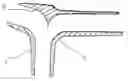
FIG. 1 represents a schematic view showing a stage of the manufacture of a composite part by means of the method according to the invention.
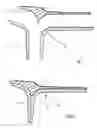
FIG. 2 represents a schematic view showing another stage of the manufacture of the same part.
DETAILED DESCRIPTION OF THE INVENTION
Referring to FIG. 1, one can see three elements 1, 2 and 3 made of a composite material, each manufactured according to a molding method consisting of placing, in a mold, a composite material comprised of fibers embedded in a thermoplastic matrix, while arranging said material so that the fibers contained therein are oriented along one or more preferred directions, then submitting said mold to particular pressure and temperature conditions.
Each one of the elements is manufactured and consolidated, and each has certain specificities because of the nature and dimensions of the fibers contained in the composite material used, but also according to the orientation given to said fibers when placing the composite material in the mold.
Referring now to FIG. 2, one can see that the three elements 1, 2 and 3 are assembled so as to be introduced into a mold and to then submit the latter to particular pressure and temperature conditions, in order to finally obtain, after consolidation, a part P the portions of which have different specificities.
Advantageously, the thermoplastic matrices used are fully recyclable and can be consolidated many times, which is not possible, for example, with thermosetting resins.
Also advantageously, the method is implemented with dry materials favoring optimal placement of the fibers in a structure. Said materials can be preformed and pre-welded in given parts, for proper maintaining of the geometry, and then consolidated or reconsolidated to the adequate shape.
Claims
1. Method for making a thermoplastic composite part by molding, the method comprising the steps of:
making a portion of the composite part, the composite part being formed by a molding method, said molding method being comprised of: placing, in a mold, a composite material comprised of fibers embedded in a thermoplastic matrix, while arranging said composite material so that the fibers contained therein are oriented along one or more preferred directions, and submitting said mold to particular pressure and temperature conditions;
making at least a second portion of the composite part, the second portion being formed by a molding method, said molding method being comprised of: placing, in a mold, either a composite material comprised of fibers embedded in a thermoplastic matrix, while arranging said composite material so that the fibers contained therein are oriented along one or more preferred directions, or a material comprised of said thermoplastic matrix, and submitting said mold to particular pressure and temperature conditions, each different portion of fibers, when they contain such, are capable of being of different natures and dimensions, and may be oriented in different directions, as well as be in different proportions, whereas the thermoplastic matrix and that of the material used for making the first portion are identical or compatible; and
assembling the different portions obtained, introducing them into a mold, then submitting the latter to particular pressure and temperature conditions.
2. Method according to claim 1, wherein said composite material is comprised of electrically conducive fibers, for either of the portions of the composite part to be made.
3. Method according to claim 1, wherein said composite material is comprised of thermally conducive fibers for either of the portions of the composite part.
4. Method according to claim 1, wherein the particular pressure conditions are comprised of high pressure conditions.
5. Method according to claim 4, wherein the high pressure is comprised of a pressure between 50 and 200 bars.
6. Method according to claim 1, wherein the particular temperature conditions is comprised of a heating temperature between 125 and 13520 C.
Images & Drawings included:
Sources:
- United States Patent and Trademark Office - verify current appl. status at the USPTO↗
Recent applications in this class:
- » 20250282108 2025-09-11
METHOD AND MOULD FOR FORMING A FIBER-REINFORCED DEVICE WITH ANGLE PLATE - » 20250205978 2025-06-26
STAMPING SYSTEM FOR FORMING A COMPOSITE COMPONENT FOR A STRUCTURE AND A METHOD OF STAMP FORMING - » 20250153448 2025-05-15
A MOULD TOOL - » 20250033299 2025-01-30
SYSTEMS AND METHODS FOR ROTARY TENSIONING OF FIBROUS PREFORMS - » 20240375361 2024-11-14
TOOLING SETS, SYSTEMS AND METHODS FOR STAMP FORMING A WORKPIECE - » 20240198608 2024-06-20
REINFORCING MEMBER, STRUCTURAL MEMBER, AND METHOD OF MANUFACTURING THE SAME - » 20240165894 2024-05-23
Systems and methods for rotary tensioning of fibrous preforms - » 20240075696 2024-03-07
Composite material manufacturing equipments - » 20240059031 2024-02-22
PREPREG LAMINATE, COMPOSITE STRUCTURE, AND METHOD FOR MANUFACTURING COMPOSITE STRUCTURE - » 20240001630 2024-01-04
METHOD FOR MANUFACTURING FIBER REINFORCED ARTICLE AND APPARATUS