Electrical connector with terminal soldering pattern
US20100167583A1
2010-07-01
12/384,366
2009-04-03
✅ Patent granted
US 7,918,688 B2
2011-04-05
-
-
Chandrika Prasad
2029-06-09
Abstract:
An electrical connector has an insulative housing, a plurality of terminals and a metal shell. The terminals are mounted through the insulative housing and each terminal has a mounting section, a contacting section and a soldering section. The soldering sections of all the terminals are arranged in triangular patterns. Each soldering section is located in a tip of one triangular pattern. Distances between one soldering section and adjacent soldering sections are substantially identical. The triangular patterns of the soldering section stabilize the impedance of the operating electrical connector. Therefore, the electrical connector is stable and reliable.
Inventors:
- Ching-Tien Chen 7 🇹🇼 Hsin-Tien City, Taiwan
- Pin-Yuan Hou 10 🇹🇼 Hsin-Tien City, Taiwan
- Sheng-Chan Lin 1 🇹🇼 Hsin-Tien City, Taiwan
- Wen-Hsien Tsai 2 🇹🇼 Hsin-Tien City, Taiwan
- Pin-Yuan Hou 15 🇹🇼 Hsin-Tien, Taiwan
- Sheng-Chan Lin 1 🇹🇼 Hsin-Tien, Taiwan
- Wen-Hsien Tsai 1 🇹🇼 Hsin-Tien, Taiwan
- Ching-Tien Chen 1 🇹🇼 Shin-Tien, Taiwan
Assignee:
- Advanced Connectek Inc. 33 🇹🇼 Taipei Hsien, Taiwan
Interested in similar patents?
Get notified when new applications in this technology area are published.
Classification:
H01R12/58 » CPC main
Structural associations of a plurality of mutually-insulated electrical connecting elements, specially adapted for printed circuits, e.g. printed circuit boards [PCBs], flat or ribbon cables, or like generally planar structures, e.g. terminal strips, terminal blocks; Coupling devices specially adapted for printed circuits, flat or ribbon cables, or like generally planar structures; Terminals specially adapted for contact with, or insertion into, printed circuits, flat or ribbon cables, or like generally planar structures; Fixed connections for rigid printed circuits or like structures characterised by the terminals terminals for insertion into holes
H01R13/6477 » CPC further
Details of coupling devices of the kinds covered by groups or - specially adapted for high-frequency, e.g. structures providing an impedance match or phase match; Impedance matching by variation of dielectric properties
H01R12/7052 » CPC further
Structural associations of a plurality of mutually-insulated electrical connecting elements, specially adapted for printed circuits, e.g. printed circuit boards [PCBs], flat or ribbon cables, or like generally planar structures, e.g. terminal strips, terminal blocks; Coupling devices specially adapted for printed circuits, flat or ribbon cables, or like generally planar structures; Terminals specially adapted for contact with, or insertion into, printed circuits, flat or ribbon cables, or like generally planar structures; Coupling devices; Guiding, mounting, polarizing or locking means; Extractors; Locking or fixing a connector to a PCB characterised by the locating members
H01R13/502 » CPC further
Details of coupling devices of the kinds covered by groups or -; Bases; Cases composed of different pieces
H01R13/516 » CPC further
Details of coupling devices of the kinds covered by groups or -; Bases; Cases Means for holding or embracing insulating body, e.g. casing, hoods
H01R13/648 IPC
Details of coupling devices of the kinds covered by groups or - Protective earth or shield arrangements on coupling devices, e.g. anti-static shielding
Description
BACKGROUND OF THE INVENTION
1. Field of the Invention
The present invention relates to a connector, and more particularly to an electrical connector that has a specific terminal layout to improve the stability of high frequency signal transmission.
2. Description of Related Art
Because people are more and more fussy about the movie and pictures qualities rendered on monitors, digital video protocols for video products have been developed and updated to have high transmission frequency for the high data flow rate.
Conventional video connectors are generally mounted on printed circuit boards (PCBs) by the surface mount technology (SMT) process. Few video connectors are mounted by the through hole process. However, mounting the video connector on the PCBs by any one process would cause the impedance of the terminals of the video connector unstable when the video connector is operating.
To overcome the shortcomings, the present invention provides an electrical connector to mitigate or obviate the aforementioned problems.
SUMMARY OF THE INVENTION
The main objective of the invention is to provide an electrical connector that has a specific terminal layout to improve the stability of high frequency signal transmission.
An electrical connector has an insulative housing, a plurality of terminals and a metal shell. The terminals are mounted through the insulative housing and each terminal has a mounting section, a contacting section and a soldering section. The soldering sections of all the terminals are arranged in triangular patterns. Each soldering section is located in a tip of one triangular pattern. Distances between one soldering section and adjacent soldering sections are substantially identical.
Other objectives, advantages and novel features of the invention will become more apparent from the following detailed description when taken in conjunction with the accompanying drawings.
BRIEF DESCRIPTION OF THE DRAWINGS
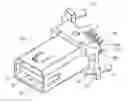
FIG. 1 is a front perspective view of an electrical connector in accordance with the present invention;
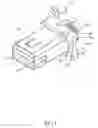
FIG. 2 is a rear perspective view of the electrical connector in FIG. 1;
FIG. 3 is an exploded front perspective view of the electrical connector in FIG. 1;
FIG. 4 is an exploded rear perspective view of the electrical connector in FIG. 1;
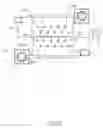
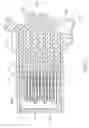
FIG. 5 is a rear view of the electrical connector in FIG. 1;
FIG. 6 is a cross sectional side view of the electrical connector in FIG. 1;
FIG. 7 is a top view in partial section of the electrical connector in FIG. 1; and
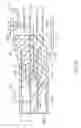
FIG. 8 is an impedance-time curve diagram showing curves of the electrical connector in FIG. 1 and a conventional connector during the signal transmission.
DETAILED DESCRIPTION OF THE PREFERRED EMBODIMENT
With reference to FIGS. 1 to 4, an electrical connector in accordance with the present invention may comply with the Display Port protocol set by the Video Electronics Standards Association (VESA) and comprises an insulative housing (1), a plurality of terminals (40a, 40b, 50a, 50b) and a metal shell (60).
The insulative housing (1) has a front end and a rear end and may further have a front bracket (10), an upper bracket (20) and a lower bracket (30).
With further reference to FIG. 6, the front bracket (10) has a connecting member (11) and a tongue (12). The connecting member (11) has a front, a rear, a plurality of upper mounting holes (110a), a plurality of lower mounting holes (110b) and a fastening hole (112). The upper mounting holes (110a) and the lower mounting holes (110b) are defined in the connecting member (11). The fastening hole (112) is defined in the rear of the connecting member (11). The tongue (12) is formed on and protrudes forwards from the front of the connecting member (11) and has a top, a bottom, a plurality of upper mounting slots (120a) and a plurality of lower mounting slots (120b). The upper mounting slots (120a) are defined in the top and correspond respectively to the upper mounting holes (110a). The lower mounting slots (120b) are defined in the bottom and correspond respectively to the lower mounting holes (110b).
The upper bracket (20) are mounted on the rear of the connecting member (11) and has a front end, a rear end, a plurality of upper terminal holes (200), at least one mounting post (27) and a fastening protrusion (25). The upper terminal holes (200) are defined in the upper bracket (20). The at least one mounting post (27) is formed on and protrudes from the rear end and may be mounted in a printed circuit board (PCB). The fastening protrusion (25) is formed on and protrudes from the front end and is mounted in the fastening hole (112) of the connecting member (11).
The lower bracket (30) is mounted under the upper bracket (20), is mounted in the rear of the connecting member (11) and has a front end, a rear end, a plurality of lower terminal holes (300), at least one mounting post (37) and a fastening protrusion (35). The lower terminal holes (300) are defined in the lower bracket (30). The at least one mounting post (37) is formed on and protrudes from the rear end of the lower bracket (30) and may be mounted in the PCB. The fastening protrusion (35) is formed on and protrudes from the front end of the lower bracket (30) and is mounted in the fastening hole (112) of the connecting member (11).
The terminals (40a, 40b, 50a, 50b) are mounted through the insulative housing (1) and each terminal (40a, 40b, 50a, 50b) has a mounting section (41, 51), a contacting section (42, 52) and a soldering section (43, 53).
The mounting section (41, 51) is mounted in the insulative housing (1) and may be mounted in one of the upper and lower terminal holes (200, 300) of the upper and lower brackets (20, 30).
The contacting section (42, 52) is formed on and protrudes forwards from the mounting section (41, 51) adjacent to the front end of the insulative housing (1) and may be mounted in one of the upper and lower mounting slots (120a, 120b).
With further reference to FIG. 5, the soldering section (43a, 43b, 53a, 53b) is formed on and protrudes backwards from the mounting section (41, 51) and outside the rear end of the insulative housing (10) and may be outside one of the rear ends of the upper and lower brackets (20, 30). The soldering sections (43a, 43b, 53a, 53b) of all the terminals (40, 50) are arranged in triangular patterns (T). In other words, when the upper and lower brackets (20, 30) are observed from the rear ends thereof, the soldering sections (43a, 43b, 53a, 53b) are arranged in a layout of a plurality of triangles with each soldering section (43a, 43b, 53a, 53b) located in a tip of one triangle (triangular pattern). Distances between one soldering section (43a, 43b, 53a, 53b) and adjacent soldering sections (43a, 43b, 53a, 53b) are substantially identical. Furthermore, each soldering section (43a, 43b, 53a, 53b) and two adjacent soldering sections (43a, 43b, 53a, 53b) may be arranged in an equilateral triangle.
In a preferred embodiment, the terminals (40a, 40b, 50a, 50b) may be a plurality of first terminals (40a), a plurality of second terminals (40b), a plurality of third terminals (50a) and a plurality of fourth terminals (50b).
The contacting sections (42) of the first and second terminals (40a, 40b) are staggered and arranged in a level row relative to the insulative housing (1). The soldering sections (43a, 43b) of the first and second terminals (40a, 40b) are staggered. The soldering sections (43a) of the first terminals (40a) are arranged in a first level row relative to the insulative housing (1). The soldering sections (43b) of the second terminals (40b) are arranged in a second level row relative to the insulative housing (1). Furthermore, the first and second terminals (40a, 40b) are mounted respectively through the upper terminal holes (200), are mounted respectively through the upper mounting holes (110a) and are mounted respectively in the upper mounting slots (120a).
The third and fourth terminals (50a, 50b) are located under the first and second terminals (40a, 40b). The contacting sections (52) of the third and fourth terminals (50a, 50b) are staggered and arranged in a level row relative to the insulative housing (1). The soldering sections (53a, 53b) of the third and fourth terminals (50a, 50b) are staggered. The soldering sections (53a) of the third terminals (50a) are arranged in a third level row relative to the insulative housing (1). The soldering sections (53b) of the fourth terminals (50b) are arranged in a fourth level row relative to the insulative housing (1). Furthermore, the third and fourth terminals (50a, 50b) are mounted respectively through the lower terminal holes (300), are mounted respectively through the lower mounting holes (110b) and are mounted respectively in the lower mounting slots (120b).
In a preferred embodiment, the first and second terminals (40a, 40b) have four signal transmitting terminals and two grounding terminals. The third and fourth terminals (50a, 50b) have four signal terminals and two grounding terminals.
The metal shell (60) covers the insulative housing (1) and the terminals (40a, 40b, 50a, 50b) and has an internal space defined in the metal shell (60) for receiving a corresponding plug connector.
With further reference to FIG. 8, an impedance-time curve diagram shows two curves respectively indicating the electrical connector of the present invention and a conventional connector without triangular layouts of terminals during the signal transmission. The unit of the impedance is “ohm” and that of the time is “10−2 second (Pico-second, PS)”. As indicated by the curves, when signal transmission is implemented, the impedance of the conventional connector vibrates up and down more violently than that of the electrical connector of the present invention. Therefore, the electrical connector of the present invention with the triangular terminal layout improves the stability of the impedance and advantages the high frequency signal transmission.
Even though numerous characteristics and advantages of the present invention have been set forth in the foregoing description, together with details of the structure and function of the invention, the disclosure is illustrative only. Changes may be made in the details, especially in matters of shape, size, and arrangement of parts within the principles of the invention to the full extent indicated by the broad general meaning of the terms in which the appended claims are expressed.
Claims
What is claimed is:1. An electrical connector comprising:
an insulative housing having a front end and a rear end;
a plurality of terminals mounted through the insulative housing and each terminal having
a mounting section mounted in the insulative housing;
a contacting section formed on and protruding forwards from the mounting section adjacent to the front end of the insulative housing; and
a soldering section formed on and protruding backwards from the mounting section outside the rear end of the insulative housing, and the soldering sections of all the terminals arranged in triangular patterns, each soldering section located in a tip of one triangular pattern and distances between one soldering section and adjacent soldering sections being substantially identical; and
a metal shell covering the insulative housing and the terminals.
2. The electrical connector as claimed in claim 1, wherein each soldering section and two adjacent soldering sections are arranged in an equilateral triangular.
3. The electrical connector as claimed in claim 2, wherein
the terminals have a plurality of first terminals and a plurality of second terminals;
the contacting sections of the first and second terminals are staggered and arranged in a level row relative to the insulative housing;
the soldering sections of the first and second terminals are staggered;
The soldering sections of the first terminals are arranged in a first level row relative to the insulative housing; and
the soldering sections of the second terminals are arranged in a second level row relative to the insulative housing.
4. The electrical connector as claimed in claim 3, wherein
the terminals further has a plurality of third terminals and a plurality of fourth terminals located under the first and second terminals;
the contacting sections of the third and fourth terminals are staggered and arranged in a level row relative to the insulative housing;
the soldering sections of the third and fourth terminals are staggered;
the soldering sections of the third terminals are arranged in a third level row relative to the insulative housing; and
the soldering sections of the fourth terminals are arranged in a fourth level row relative to the insulative housing.
5. The electrical connector as claimed in claim 4, wherein
the insulative housing further has
a front bracket having
a connecting member having a front, a rear, a plurality of upper mounting holes and a plurality of lower mounting holes defined in the connecting member; and
a tongue formed on and protruding forwards from the front of the connecting member and having a top and a bottom and further having a plurality of upper mounting slots defined in the top and a plurality of lower mounting slots defined in the bottom;
an upper bracket mounted on the rear of the connecting member and having a front end, a rear end and a plurality of upper terminal holes defined in the upper bracket; and
a lower bracket mounted under the upper bracket, mounted in the rear of the connecting member and having a front end, a rear end and a plurality of lower terminal holes defined in the lower bracket;
the first and second terminals are mounted respectively through the upper terminal holes, are mounted respectively through the upper mounting holes and are mounted respectively in the upper mounting slots; and
the third and fourth terminals are mounted respectively through the lower terminal holes, are mounted respectively through the lower mounting holes and are mounted respectively in the lower mounting slots.
6. The electrical connector as claimed in claim 5, wherein
the front bracket further has a fastening hole defined in the rear of the connector member;
the upper bracket further has a fastening protrusion formed on and protruding from the front end and mounted in the fastening hole of the connecting member; and
the lower bracket further has a fastening protrusion formed on and protruding from the front end of the lower bracket and mounted in the fastening hole of the connecting member.
7. The electrical connector as claimed in claim 6, wherein the electrical connector comply with the Display Port protocol.
8. The electrical connector as claimed in claim 7, wherein the upper bracket further has at least one mounting post formed on and protruding from the rear end of the upper bracket.
9. The electrical connector as claimed in claim 8, wherein the lower bracket further has at least one mounting post formed on and protruding from the rear end of the lower bracket.
Images & Drawings included:



Sources:
- United States Patent and Trademark Office - verify current appl. status at the USPTO↗
Recent applications in this class:
- » 20250293444 2025-09-18
METHODS FOR COMPLETING ELECTRICAL CONNECTIONS BETWEEN LENS AND IMAGER PCBA FOR AUTOMOTIVE CAMERAS - » 20250253558 2025-08-07
NETWORK DEVICE HAVING PORT CONNECTIONS WITH REDUCED SIGNAL LOSS - » 20250149809 2025-05-08
ELECTRICAL CONNECTION STRUCTURE - » 20250038436 2025-01-30
SLIDE-FIT ELECTRICAL CONTACT TERMINATION FOR MATING SOLID ROUND CONTACTS IN PCBS OR CYLINDRICAL SOCKETS - » 20240396238 2024-11-28
CONTACT SUPPORT FOR AN INTEGRATED CIRCUIT - » 20240178589 2024-05-30
ELECTRONIC COMPONENT CARRIER BOARD - » 20240113455 2024-04-04
NETWORK CONNECTOR - » 20240006787 2024-01-04
ELECTRICAL CONNECTOR, METHOD FOR MANUFACTURING ELECTRICAL CONNECTOR, AND METHOD FOR MOUNTING ELECTRICAL CONNECTOR - » 20230378670 2023-11-23
INTEGRATED CONNECTOR PORT MODULE - » 20230378669 2023-11-23
INTERFACE BOARD INTERCONNECTION APPARATUS
Recent applications for this Assignee:
- » 20120083163 2012-04-05
Backplane connector with guiding elements - » 20100308352 2010-12-09
Carrier structure for mounting LED chips - » 20100304609 2010-12-02
Coaxial connector - » 20100295458 2010-11-25
AC LED MODULE WITH AN IMPROVED POWER FACTOR - » 20100273360 2010-10-28
Crosstalk-free connector - » 20100208465 2010-08-19
LAMP ASSEMBLY AND HEAT DISSIPATING LAMPSHADE - » 20100148984 2010-06-17
LED (light emitting diode) module - » 20100136806 2010-06-03
Insulative housing and electrical connector with an insulative housing - » 20100120292 2010-05-13
Electrical connector - » 20090176414 2009-07-09
Audio jack connector